Summary
Table of Content

Asia-Pacific Eyelashes Serum Market
Get a free sample of this report
Form submitted successfully!
Error submitting form. Please try again.
Thank you!
Your inquiry has been received. Our team will reach out to you with the required details via email. To ensure that you don't miss their response, kindly remember to check your spam folder as well!
Request Sectional Data
Thank you!
Your inquiry has been received. Our team will reach out to you with the required details via email. To ensure that you don't miss their response, kindly remember to check your spam folder as well!
Form submitted successfully!
Error submitting form. Please try again.
Asia-Pacific Eyelashes Serum Market Size
The Asia-Pacific eyelashes serum market was estimated at USD 166.8 Million in 2025. The market is expected to grow from USD 180.6 Million in 2026 to USD 402.9 million in 2035, at a CAGR of 9.3% according to latest report published by Global Market Insights Inc.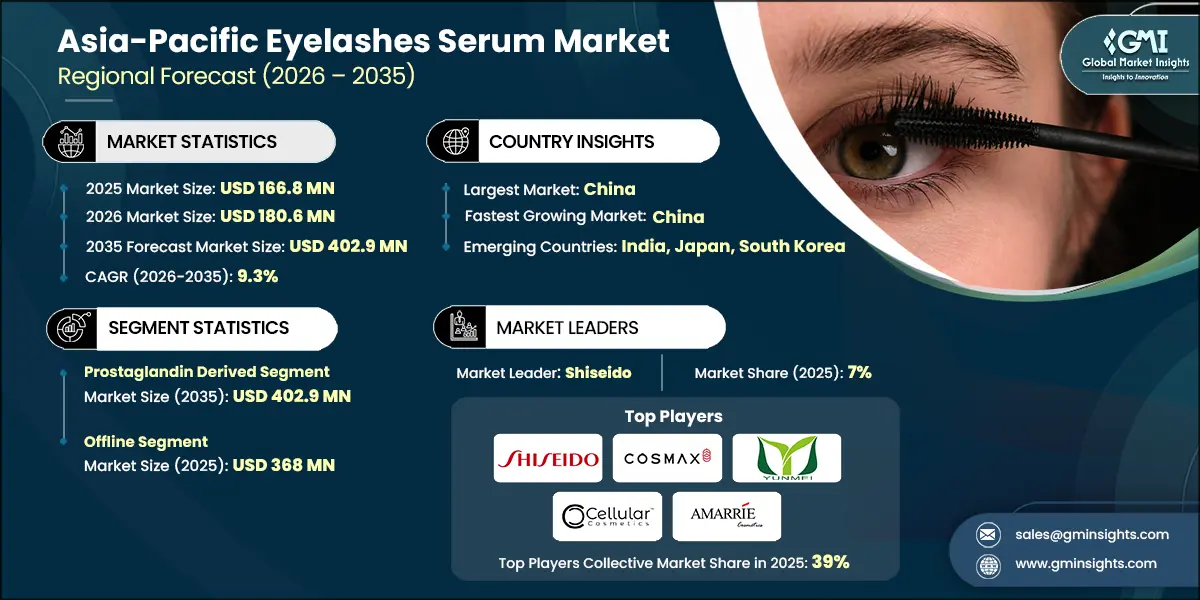
To get key market trends
The Asia-Pacific market for eyelash serums is currently undergoing a major boost, mainly due to the increasing focus on the "natural beauty" trend and the popularity of K-beauty and J-beauty trends in the region. This trend is further fueled by the increasing safety standards for ophthalmic-grade ingredients and the "clean beauty" movement, which focuses on the use of non-toxic and hormone-free ingredients. The key players in this market are increasingly adopting strategic partnerships and R&D initiatives to improve their botanical ingredients, making them optimal for the high-end and mass-market segments of China, South Korea, and Japan. This market trend is leading to major breakthroughs in peptide research, biotechnology-based nutrients, and eco-friendly packaging, specifically designed for the high-density population and the rising middle class in the emerging Southeast Asian markets.
Traditional lash enhancement techniques, including manual extensions and synthetic adhesives, are increasingly being replaced by cutting-edge, high-performance digitally integrated beauty solutions and bioactive serum systems. These cutting-edge conditioners, equipped with smart delivery peptides, amino acids, and precision digital applicators, enable more precise and effective follicular stimulation of the lash line.
These new systems reflect the need for the regional consumer to have highly efficient daily routines and strict compliance with new international safety standards, such as the 2026 regional constraints on prostaglandin analogs, and therefore reflect a significant driving force behind the overall market growth. This "skinification" of eye care ensures that the user is able to take advantage of real-time conditioning effects, reducing lash fallout and increasing density without the irritation associated with traditional chemical reagents.
Eyelash serums are becoming more and more common in emerging markets as a direct result of retail investment and health-conscious beauty campaigns, as well as the efforts of online marketing agencies. The decentralized beauty technologies in rural areas of the country are dependent on serums that are cost-effective, reliable, and precise enough for non-experts who do not have regular access to professional stylists. Furthermore, design advancements focused on safety, such as hypoallergenic self-cleaning applicators, anti-fouling packaging materials, and cloud-based beauty dashboard interfaces, are enhancing the user experience and making it possible to more actively manage personal grooming.
The increasing rate of industrial beauty growth, combined with the stringent water-less and clean-label transition policies in the advanced Asian markets, and the increasing infrastructure outlays in the regional e-commerce market, are some of the most significant considerations that make the next-generation serums a commercially viable reality. The managers of beauty salons and system integrators of retail are increasingly turning to technologically advanced serums that have increased durability of effects, increased safety in humid and extreme environmental conditions, and decreased long-term maintenance costs for the consumer. The current serums are self-preserving and come with anti-microbial applicators, reducing manual contamination and product downtime.
Asia-Pacific Eyelashes Serum Market Report Attributes
| Key Takeaway | Details |
|---|---|
| Market Size & Growth | |
| Base Year | 2025 |
| Market Size in 2025 | USD 166.8 Million |
| Market Size in 2026 | USD 180.6 Million |
| Forecast Period 2026-2035 CAGR | 9.3% |
| Market Size in 2035 | USD 402.9 Million |
| Key Market Trends | |
| Drivers | Impact |
| Rising demand for natural beauty aesthetics | The growing regional focus on "clean beauty" and sustainable self-care drives heavy investment in advanced botanical and peptide-based Eyelash Serums as an alternative to extensions. |
| Influence of K-beauty and J-beauty trends | The rapid urbanization and digital proliferation of Korean and Japanese beauty standards create a higher demand for high-performance serums that deliver "natural but enhanced" ocular aesthetics. |
| Expansion of the middle-class demographic | Growing disposable income in emerging economies accelerates the deployment of premium serums and professional-grade conditioners for early intervention in lash thinning and breakage. |
| Pitfalls & Challenges | Impact |
| High regulatory complexity | Stringent safety standards regarding prostaglandin analogs and hormone-based ingredients face limitations in approval speed and market entry, restricting widespread adoption of certain legacy formulas. |
| Stringent safety and clinical standards | The implementation of rigorous regional safety protocols (such as NMPA's 2026 standards) drives demand for high-performance, ophthalmologist-tested serums while creating barriers for low-cost, unverified products. |
| Opportunities: | Impact |
| Technological advancements in formulation | Advancements in nanotechnology-enabled delivery, IoT-integrated beauty apps, and airless antimicrobial packaging enable real-time lash health tracking and precision application. |
| Clean beauty and sustainability initiatives | The global emphasis on vegan, cruelty-free, and paraben-free management is increasing the implementation of hormone-free serums at both the luxury retail and professional salon levels. |
| Market Leaders (2025) | |
| Market Leader |
7% market share |
| Top Players |
Consolidate share of 39% |
| Competitive Edge |
|
| Regional Insights | |
| Largest Market | China |
| Fastest growing market | China |
| Emerging countries | India, Japan, South Korea |
| Future outlook |
|
What are the growth opportunities in this market?
Asia-Pacific Eyelashes Serum Market Trends
The industry of eyelash serums is facing an increasing demand for highly effective and specialty products in high-risk categories such as ophthalmologically tested lash restoration, post-procedure conditioning, and clean beauty biotechnology. High-growth markets such as South Korea, Japan, and China require accurate and reliable delivery of active nutrients to ensure visible efficacy, ocular safety, and follicle integrity. The industry is therefore facing the rapid development and adoption of highly advanced multi-functional serums that can resist varying humidity levels while remaining stable and irritant-free. These serums now feature highly sensitive peptide complexes and biotechnology-derived growth factors with precision applicators, airless containers, and hypoallergenic stability, significantly enhancing consumer convenience and efficacy.
The industry is also driven by the increasing awareness and regulation of safety and occupational health requirements regarding cosmetic ingredients and ocular safety. "Black market" or non-compliant serums pose a significant risk of irritation, iris coloration, and chronic follicular injury if not carefully monitored with high dermatological specificity. The industry is therefore facing a rapid increase in demand for serums that can provide real-time lash nourishment with hormone-free, clean-label ingredients and Total Botanical Integrity (TBI) to satisfy the most stringent regional safety regulations.
- Clean beauty & prostaglandin-free analysis:The rising demand for safe beauty in the energy-conscious global transition has created an ever-increasing demand for high-purity, non-hormonal lash serums. High-efficiency growth cycles require peptide-rich serums with purities near pharmaceutical-grade levels. Major players such as Shiseido and L’Oréal are developing innovative "clean" analysis systems for such giga-scale beauty projects, establishing a new benchmark for ocular resilience. This shift is encouraging firms to accelerate their R&D in anti-contamination packaging and ultra-high-precision peptide delivery systems.
- Digitalization & smart beauty integration: Digitalization is a paradigm shift in the beauty industry. The industry is embracing smart serums combined with AI-driven diagnostic apps, cloud-based lash growth analytics, and predictive reordering functionality. Major players in the industry are leading this paradigm shift, integrating virtual try-on functionality and diagnostic scanners into their consumer-facing interfaces. This allows the industry to transition from a "sparse lash" reactive paradigm to a proactive conditioning paradigm, preventing lash loss and ensuring 24/7 follicle health and regulatory compliance.
- Product diversification in the premium and sensitive markets: The growing need for ultra-clean formulations in the premium skincare and salon markets has resulted in a swift diversification of products. The industry is now experiencing the diversification of products to include medical-grade serums, post-extension repair kits, and hypoallergenic "lab-on-a-lash" applicators. These products include the use of advanced micronized filtration, medical-grade antimicrobial tips for resistance to contamination, and ultra-stable formula calibration. Additionally, the entry into such high-spec markets provides a constant revenue stream in the aftermarket through specialized refill subscriptions, conditioning primers, and accompanying eye care.
Asia-Pacific Eyelashes Serum Market Analysis
Learn more about the key segments shaping this market
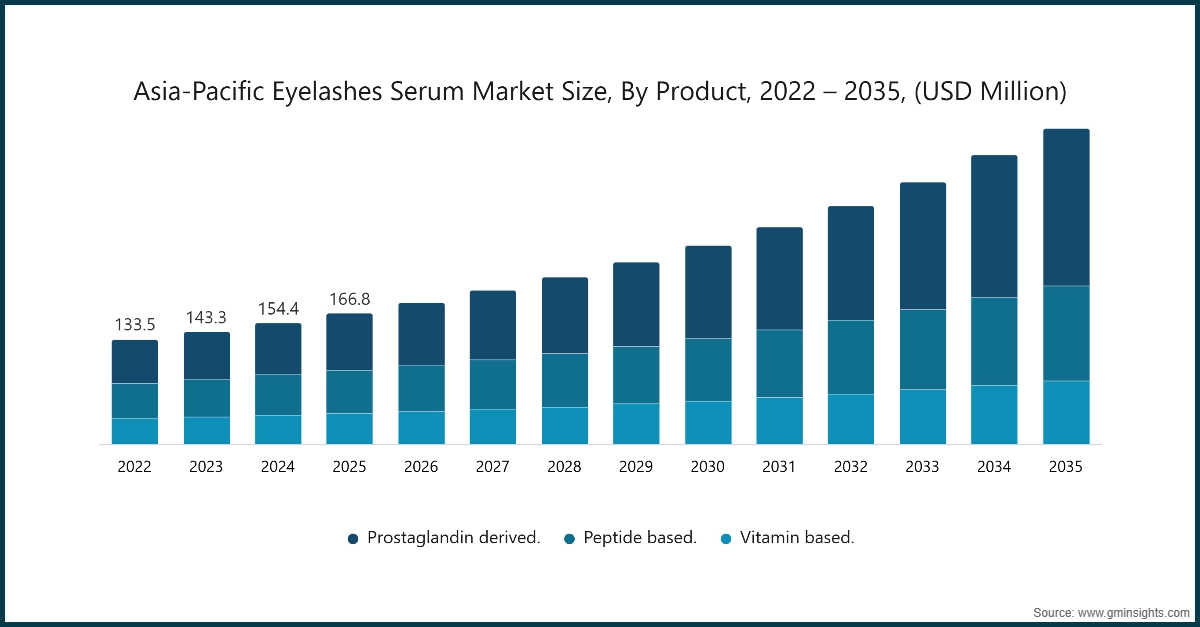
Based on the product type, the eyelash serum market is segmented into prostaglandin derived, peptide based, and vitamin based. The prostaglandin derived segment leads the market and was valued at USD 166.8 million in 2025 and is projected to reach USD 402.9 million by 2035.
- The eyelash serum category has been dominated by prostaglandin derivatives due to their overall superior performance compared to other types of eyelash serums that use alternative ingredients (such as peptides and vitamins) that work to condition and strengthen eyelashes but do not provide the dramatic or rapid results associated with prostaglandins.
- Prostaglandins are the most effective ingredient and have clinical proof that they extend and maintain the length of the growth (anagen) phase within the hair growth cycle hence, they produce longer, thicker and darker eyelashes than any other product.
- The fortified position of prostaglandin-derived eyelash serums as the leading type of eyelash serum in the marketplace comes from both regulatory approvals (where many prostaglandin serums have been clinically validated by dermatological research.
- The professional distribution channels available for these eyelash serums such as hair salons and dermatology clinics provide consumers an opportunity to make informed purchasing decisions based on the recommendations provided by these professionals. The combination of efficacy, regulatory approval, and branding have created the leader in the eyelash serum product category.
Learn more about the key segments shaping this market
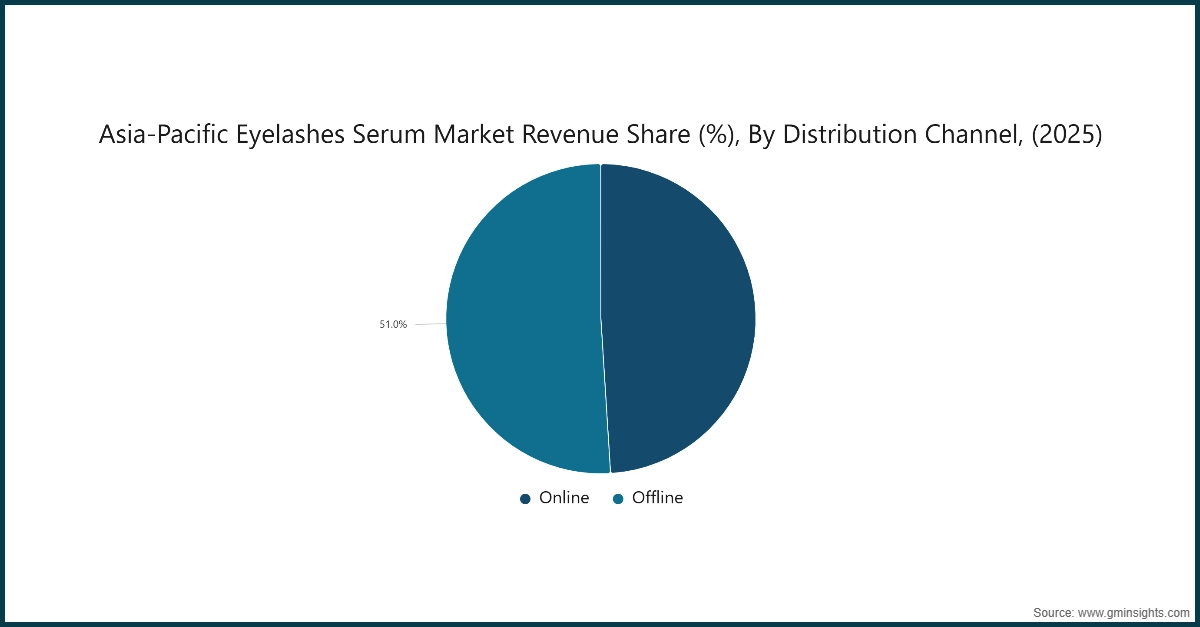
Based on distribution channel, the eyelash serum market is segmented into online and offline. The offline segment was the leading segment in this market in 2025 with a revenue of USD 368 million and has a market share of around 51%.
- In general, consumer trust and experience play a major role in the continued prosperity of offline sales channels, specifically regarding the purchase of eyeliner/eyelash serums. Eyelash serums contain ingredients that are used very close to the eye area, so consumers seek product assurance regarding safety and legitimacy.
- Thus, consumers prefer to verify product quality and availability, perform a check on the product expiration date, as well as consult with beauty advisors, prior to purchasing products from online retailers.
- For many premium and first-time eyelash serum buyers, consulting with a professional is more important than reading the online information about the product. Also, most major metropolitan and suburban cities have well-established retail networks, making it easy for consumers to access and purchase products without the wait time associated with delivery services.
Asia Pacific Eyelashes Serum Market
Looking for region specific data?
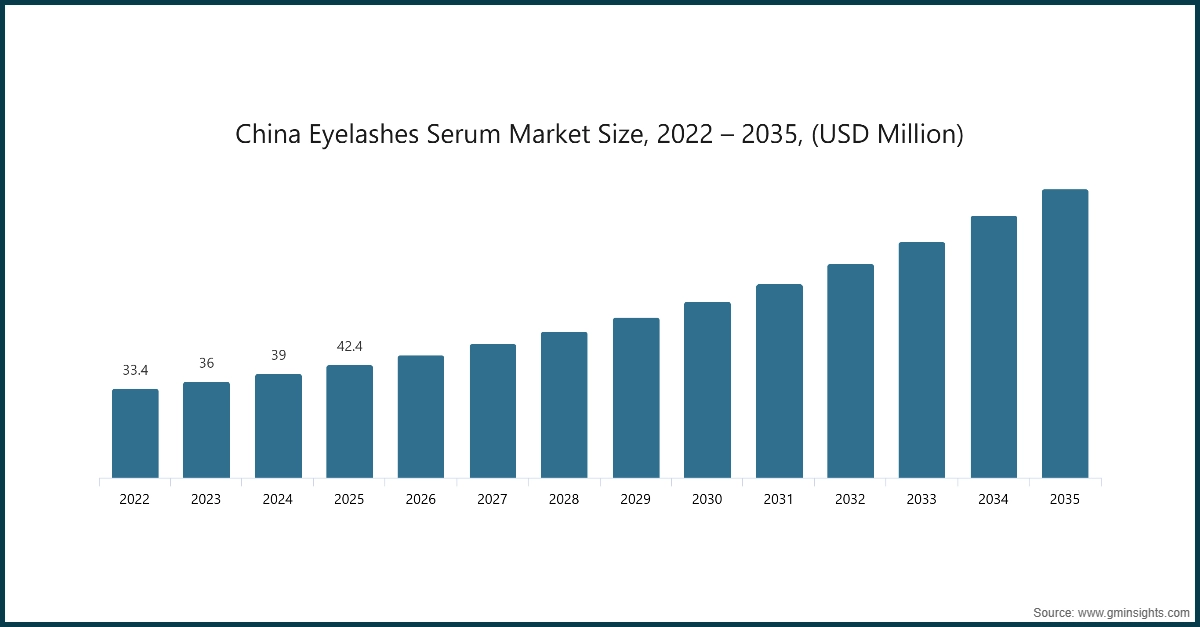
In Asia Pacific, China hold the largest market share in eyelash serum market was valued at around USD 42.4 million in 2025 and is anticipated to register a CAGR of 10% between 2026 and 2035.
- Asian-Pacific has been able to expand at a fast rate compared with other parts of the world. Countries such as India and China have implemented policies and launched programs that will stimulate consumer demand. For example, the 14th Five-Year Plan in China is focused on increasing the variety and quality of consumer goods available to consumers.
- In India, the Production Linked Incentive (PLI) Scheme and the Start Up India initiatives are designed to develop and increase local manufacturing and innovation in the beauty and personal care products sectors. These structural changes and the rapid growth of the Middle Class and Digital Inclusion efforts provide an ideal environment for the growth of Beauty and Cosmetics demand.
- Cultural trends and digital transformation are driving the continued rise in eCommerce and cross-border digital trade across Southeast Asia by increasing the rate at which consumers are adopting online channels for beauty products through online platforms like Amazon and eBay, which are now becoming the preferred method of purchasing beauty products in Southeast Asia.
- Regulatory frameworks that promote halal certification and clean beauty standards align with the growing demand for safe and ethical products from consumers in Southeast Asia. Japan's official survey of household expenditures has shown an ongoing increase in the amount spent on personal care and beauty products, demonstrating that premium products have gained popularity in mature markets.
- Meanwhile, the National Medical Products Administration (NMPA) in China created a fast-tracked approval mechanism for innovative cosmetic materials, enabling quicker introduction of new products into the marketplace.
Eyelashes Serum Market Share
Shiseido is leading the market with approximately 7% market share. Top players including Shiseido, Cosmax, Guangzhou Yunmei Cosmetics Co., Ltd.,Cellular Cosmetics and Amarrie Cosmetics are collectively held a substantial 39% market share. The market is highly fragmented. These industry leaders are actively engaged in strategic initiatives, such as mergers & acquisitions, facility expansions, and partnerships, to broaden their product portfolios, reach a wider customer base, and strengthen their market presence. These companies continuously invest in research & development to improve their products and incorporate new technologies, allowing them to stay ahead of the competition.
- Shiseido has focused primarily on growing in Asia by using science to create skincare products. Consumers who are health conscious appreciate that Shiseido offers high quality products developed through dermatological testing, (i.e.: “skin test”), which supports Shiseido's continued ability to dominate the Asia Pacific region. Currently, Shiseido has added new channels to reach customers in Asia, especially through worldwide e-commerce expansion. The use of eco-friendly packaging and ‘clean’ formulations supports Shiseido's continued success by creating unique products that set Shiseido apart from many other brands in the highly competitive global market by maintaining the perception of a premium brand.
Eyelashes Serum Market Companies
Major players operating in the eyelashes serum industry are:
- Amarrie Cosmetics
- Amorepacific
- Ariel Cosmetic
- Biocrown Biotechnology Co., Ltd.
- Cellular Cosmetics
- Cosmax
- DHC
- Freshdi
- Guangzhou Royax Cosmetics Co., Limited
- Guangzhou Yunmei Cosmetics Co., Ltd.
- Kolmar Korea
- Liang Guam (Biocrown International)
- Lomei Cosmetics Ent. Co., Ltd.
- Proya Cosmetics Co., Ltd.
- Shiseido
Amorepacific Group received its sixth consecutive CES Innovation Award for its generative AI-driven application, "Wanna-Beauty AI." This technology leverages a voice-activated chatbot and proprietary image diagnosis to deliver personalized makeup solutions and virtual try-ons by analyzing skin tone and facial features. The integration of AI into the consumer experience reinforces Amorepacific’s "AI First" strategy to redefine holistic beauty through biotechnology and digital transformation.
Eyelashes Serum Industry News
- In January 2026, Amorepacific Group received its sixth consecutive CES Innovation Award for its generative AI-driven application, "Wanna-Beauty AI." This technology leverages a voice-activated chatbot and proprietary image diagnosis to deliver personalized makeup solutions and virtual try-ons by analyzing skin tone and facial features. The integration of AI into the consumer experience reinforces Amorepacific’s "AI First" strategy to redefine holistic beauty through biotechnology and digital transformation.
- In February 2026, Kolmar Korea secured a final legal victory in a high-profile technology misappropriation case against Intercos Korea. The South Korean Supreme Court ordered the recovery of full litigation costs following a ruling that proprietary sunscreen formulation data and R&D materials had been unlawfully leaked. This decisive outcome underscores Kolmar Korea’s commitment to protecting its world-class UV protection patents and its position as a leading ODM for high-precision cosmetic formulations.
- In November 2025, Shiseido Company, Limited announced its "Action Plan 2025-2026," a strategic shift to maximize brand value through structural reforms and the integration of over ten cutting-edge technologies by 2028. This plan focuses on "skinification"—infusing skincare efficacy into core categories like makeup and suncare. By targeting a 7% core operating profit margin by 2026, Shiseido is positioning itself to lead the prestige beauty market through overwhelming innovation and the creation of new anti-aging categories.
- In December 2025, Cosmax announced a major expansion of its global production capacity, aiming for KRW 3 trillion in sales by 2026. This growth is centered on the completion of a new "Smart Factory" and a 73,000-square-meter R&I headquarters in Shanghai, China. The facility will integrate research, production, and marketing functions to support over 1,000 global clients, strengthening Cosmax’s dominance as the world’s leading cosmetics ODM in the high-growth Asia-Pacific region.
- In May 2025, Proya Cosmetics signed a strategic cooperation agreement with Bota Bio, marking its first partnership with a synthetic biology enterprise. This collaboration focuses on integrating synthetic biology and AI to develop innovative bio-based functional active ingredients for cosmetics and biomedical aesthetic materials. By building this "innovation matrix," Proya aims to provide consumers with greener, safer, and more effective products, aligning with the global shift toward sustainable and biotechnology-driven beauty.
- In March 2025, Biocrown Biotechnology Co., Ltd. launched a new advanced manufacturing factory in Dou Liu, Taiwan, to enhance its specialized OEM/ODM services. This facility features medical-grade cleanrooms and high-performance RO water systems designed for the production of high-purity skincare, including eye care and serum series. The expansion allows Biocrown to meet the rising demand for international safety certifications and customized formulation design for emerging brands across Southeast Asia.
The eyelashes serum market research report includes in-depth coverage of the industry with estimates & forecasts in terms of revenue (USD Million) and volume (Million Units) from 2022 to 2035, for the following segments:
Market, By Product Type
- Prostaglandin derived
- Peptide based
- Vitamin based
Market, By End-user
- Women
- Men
Market, By Price
- Low
- Medium
- High
Market, By Distribution Channel
- Online
- E-Commerce website
- Company owned website
- Offline
- Department stores
- Pharmaceutical stores
- Beauty salons
The above information is provided for the following regions and countries:
- Asia Pacific
- China
- India
- Japan
- Australia
- South Korea
Frequently Asked Question(FAQ) :
What is the market size of the Asia-Pacific eyelashes serum in 2025?
The Asia-Pacific eyelashes serum market was estimated at USD 166.8 million in 2025, growing at a CAGR of 9.3% through 2035.
What is the projected value of the Asia-Pacific eyelashes serum market by 2035?
The market is expected to reach USD 402.9 million by 2035, driven by clean beauty trends, K-beauty influence, and rising middle-class demand across the region.
What is the current Asia-Pacific eyelashes serum market size in 2026?
The market size is projected to reach USD 180.6 million in 2026.
Which product type leads the Asia-Pacific eyelashes serum market?
The prostaglandin-derived segment leads the market, valued at USD 166.8 million in 2025, due to its clinically proven effectiveness in extending lash growth cycles.
What was the revenue and share of the offline distribution channel in 2025?
The offline segment led with USD 368 million in revenue and approximately 51% market share in 2025, driven by consumer preference for product verification and professional consultation.
Which country leads the eyelashes serum market?
China holds the largest market share, valued at approximately USD 42.4 million in 2025, with an anticipated CAGR of 10% from 2026 to 2035.
What are the upcoming trends in the Asia-Pacific eyelashes serum market?
Key trends include clean beauty and prostaglandin-free formulations, AI-driven smart beauty integration, product diversification into medical-grade and post-extension repair serums, and expansion of digital and social commerce channels.
Who are the key players in the Asia-Pacific eyelashes serum market?
Key players include Amarrie Cosmetics, Amorepacific, Ariel Cosmetic, Biocrown Biotechnology, Cellular Cosmetics, Cosmax, DHC, Freshdi, Guangzhou Royax Cosmetics, Guangzhou Yunmei Cosmetics, Kolmar Korea, Proya Cosmetics, and Shiseido.
Asia-Pacific Eyelashes Serum Market Scope
Related Reports