Summary
Table of Content

Artificial Intelligence In Diagnostics Market
Get a free sample of this report
Form submitted successfully!
Error submitting form. Please try again.
Thank you!
Your inquiry has been received. Our team will reach out to you with the required details via email. To ensure that you don't miss their response, kindly remember to check your spam folder as well!
Request Sectional Data
Thank you!
Your inquiry has been received. Our team will reach out to you with the required details via email. To ensure that you don't miss their response, kindly remember to check your spam folder as well!
Form submitted successfully!
Error submitting form. Please try again.
Artificial Intelligence In Diagnostics Market Size
The global artificial intelligence in diagnostics market was valued at USD 1.5 billion in 2024. The market is expected to reach from USD 1.8 billion in 2025 to USD 10.5 billion in 2034, growing at a CAGR of 21.5% during the forecast period, according to the latest report published by Global Market Insights Inc. Increasing demand for the detection of early diseases, integration of AI into medical imaging, precision diagnostics, and enabling regulatory approvals propels market growth.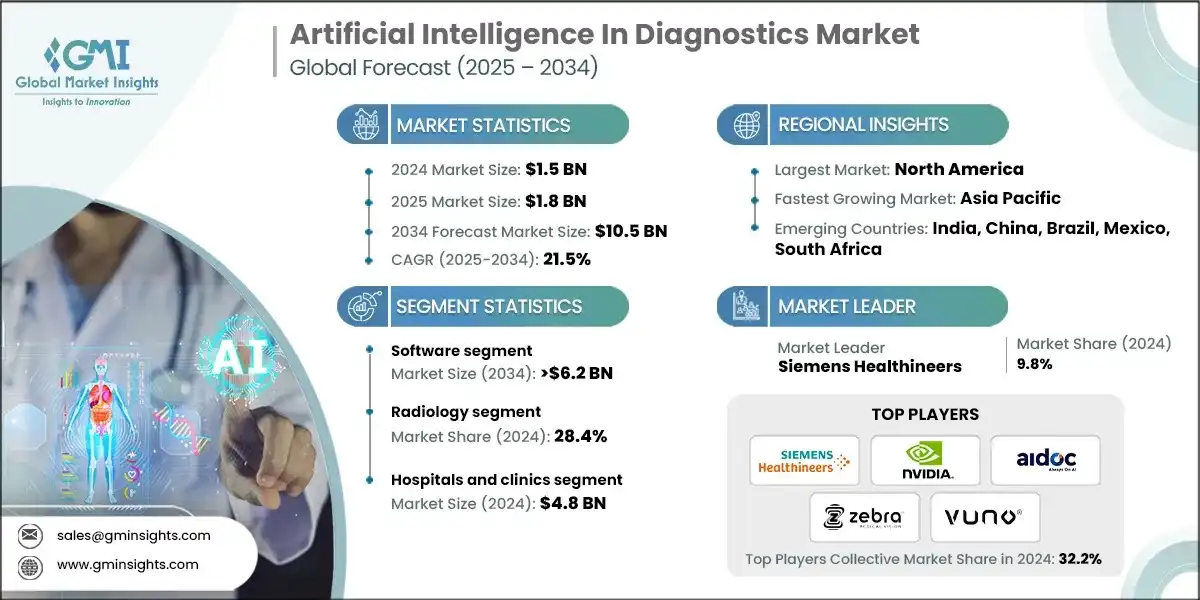
To get key market trends
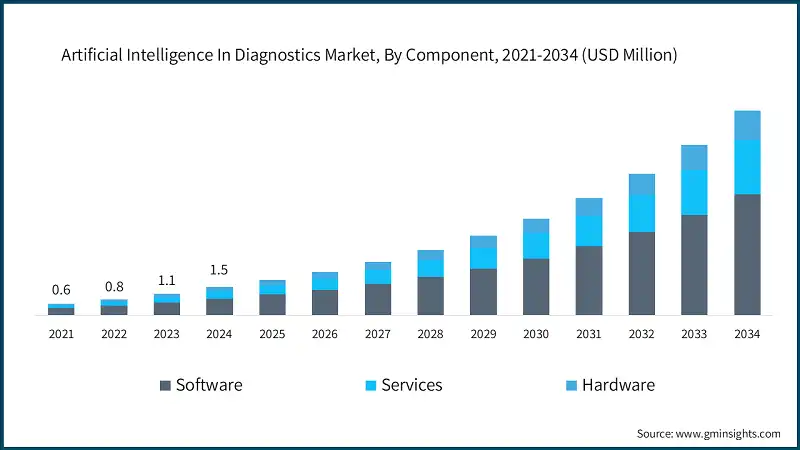
The market has increased from USD 606.2 million in 2021 and reached USD 1.1 billion in 2023. The artificial intelligence in diagnostics market is primarily driven by the rising demand for early and accurate disease detection, which is critical for improving patient outcomes and reducing healthcare costs. The increasing prevalence of chronic diseases, such as cancer, cardiovascular disorders, and neurological conditions, has amplified the need for efficient diagnostic solutions that can provide rapid, precise, and actionable insights. The integration of AI in medical imaging and diagnostic workflows has transformed traditional healthcare approaches by enabling automated image analysis, predictive analytics, and decision support systems, thereby reducing diagnostic errors and enhancing clinician efficiency.
Moreover, advancements in digital pathology platforms, cloud-based AI solutions, and predictive modeling tools have expanded the applications of AI across radiology, oncology, cardiology, and pathology. The growing adoption of AI-powered solutions is further supported by favorable regulatory frameworks and approvals, which encourage the deployment of these technologies in clinical settings. Additionally, increasing investments in research and development, along with strategic collaborations among technology providers, healthcare institutions, and life sciences companies, are accelerating innovation and market penetration.
The rising focus on personalized and precision medicine, coupled with the need for operational efficiency in hospitals, diagnostic laboratories, and imaging centers, continues to propel the market growth. Enhanced workflow automation, real-time diagnostics, and improved patient care are key factors motivating healthcare providers to adopt AI-based diagnostic solutions globally.
Artificial Intelligence in Diagnostics refers to the use of AI technologies, including machine learning and deep learning, to analyze medical data, imaging, and patient information. It enables accurate, rapid disease detection, predictive analytics, and decision support, improving diagnostic precision, patient outcomes, and operational efficiency across healthcare settings.
Artificial Intelligence In Diagnostics Market Report Attributes
| Key Takeaway | Details |
|---|---|
| Market Size & Growth | |
| Base Year | 2024 |
| Market Size in 2024 | USD 1.5 Billion |
| Market Size in 2025 | USD 1.8 Billion |
| Forecast Period 2025 - 2034 CAGR | 21.5% |
| Market Size in 2034 | USD 10.5 Billion |
| Key Market Trends | |
| Growth Drivers |
|
| Pitfalls & Challenges |
|
| Opportunities: | Impact |
| Expansion in emerging economies | Growing healthcare infrastructure, rising awareness, and increasing digital adoption in emerging markets offer vast growth potential and increased revenue streams for AI diagnostics. |
| Integration with telemedicine and remote diagnostics | Combining AI diagnostics with telehealth enables remote patient monitoring, expands access to quality care in rural areas, and strengthens early disease detection globally. |
| Regional Insights | |
| Largest Market | North America |
| Fastest growing market | Asia Pacific |
| Emerging countries | India, China, Brazil, Mexico, South Africa |
| Future outlook |
|
What are the growth opportunities in this market?
AI In Diagnostics Market Trends
The increasing incidence of chronic ailments, such as cardiovascular diseases, cancer, diabetes, and neurological disorders, is one of the key factors driving the expansion of the AI in Diagnostics market. As the diseases continue to rise around the world because of growing ages, lifestyle factors, and urbanization, the healthcare system becomes heavily loaded with high patient volumes, involved diagnostic needs, and increasing demand for rapid and accurate disease diagnosis.
- Artificial intelligence-based diagnostic solutions provide a revolutionary solution by making it possible to identify diseases on time, risk-stratify patients, and continuously monitor chronic conditions, thus enhancing patient outcomes and minimizing healthcare expenses.
- Machine learning, deep learning, and computer vision advancements have enormously boosted the capabilities of AI diagnostics. Advances in AI algorithms, high-resolution imaging modalities, predictive analytics, and digital pathology platforms enable rapid, accurate, and scalable interpretation of intricate medical data at accelerated clinical decision-making. These technology advancements also enable integration with electronic health records, telemedicine platforms, and remote monitoring devices, giving diagnostic services extended reach to urban and rural populations.
- From a microeconomic perspective, hospitals, diagnostic laboratories, and imaging centers are increasingly investing in AI tools to improve operational efficiency, optimize resource utilization, and maintain competitive advantage. Macroeconomic factors, including government initiatives, rising healthcare expenditure, favorable reimbursement policies, and growing awareness of preventive healthcare, further support adoption.
- Collectively, these factors underscore how the increasing prevalence of chronic diseases, combined with technological innovation and supportive economic environments, is driving robust growth in the market.
Artificial Intelligence In Diagnostics Market Analysis
Learn more about the key segments shaping this market
Based on the component, the AI in diagnostics market is segmented into software, services, and hardware. The software segment has asserted its dominance in the market by securing a significant market share of 58.5% in 2024, driven by rising adoption of AI-enabled diagnostic tools, advanced imaging software, and predictive analytics, which drive growth of the software segment in diagnostics. The segment is expected to exceed USD 6.2 billion by 2034, growing at a CAGR of 21.6% during the forecast period.
On the other hand, the services segment is expected to grow with a CAGR of 22.2%. The growth of this segment can be attributed to rising demand for AI-enabled clinical support, workflow optimization, and predictive analytics, which drive growth in the services segment of diagnostics.
- The software segment leads the Artificial Intelligence in Diagnostics market because of the increased usage of AI-powered diagnostic solutions, sophisticated imaging platforms, and predictive analytics solutions. Healthcare professionals increasingly utilize AI software to enhance the accuracy and efficiency of disease identification across various specialties such as radiology, oncology, cardiology, and pathology.
- Integration of AI-based software with electronic health records (EHRs) and digital pathology platforms allows for efficient workflows, automated interpretation, and accurate risk stratification, decreasing diagnostic errors and improving patient outcomes.
- Technological advancements such as deep learning algorithms, machine learning frameworks, and computer vision have further strengthened software capabilities, enabling real-time analysis of complex medical data.
- The services segment held a revenue of USD 369.8 million in 2024, with projections indicating a steady expansion at 22.2% CAGR from 2025 to 2034. The services segment is witnessing significant growth in the Artificial Intelligence in Diagnostics market due to increasing demand for AI-enabled clinical support, workflow optimization, and predictive analytics.
- Healthcare institutions are leveraging AI services to enhance operational efficiency, improve diagnostic accuracy, and reduce the burden on clinicians managing high patient volumes. AI-driven services include algorithm deployment, cloud-based diagnostic solutions, training, and maintenance, which facilitate seamless integration of AI tools into existing clinical workflows.
- The growth of telemedicine and remote diagnostics further supports the adoption of AI services, enabling real-time patient monitoring and remote analysis of imaging or lab data. Technological advancements in AI analytics, cloud computing, and digital platforms have improved scalability and accessibility of services, allowing hospitals, imaging centers, and diagnostic laboratories to adopt these solutions without heavy infrastructure investments.
Based on application, the artificial intelligence in diagnostics market is classified into radiology, oncology, cardiology, neurology, pathology, infectious diseases, and other applications. The radiology segment dominated the market with a revenue share of 28.4% in 2024 and is expected to reach USD 3 billion within the forecast period.
- The radiology segment leads the Artificial Intelligence in Diagnostics market because of the increasing need for quick, precise imaging analysis and detection of disease at an early stage. The rise in prevalence of acute and chronic conditions, such as cancer, cardiovascular disease, and neurological disorders, has led to an increase in the number of medical imaging tests.
- Radiology solutions based on AI automate interpretation of images, minimizing the scope for human error and delivering quicker diagnosis results that are essential for timely treatment choices. Advances in technology, like deep learning algorithms, 3D imaging, and workflow automation supported by AI, have further improved diagnostic precision and productivity. The integration of AI with PACS systems and cloud platforms enables radiologists to remotely access and analyze imaging information, which increases penetration to remote areas.
- The oncology segment held a revenue of USD 321.3 million in 2024, with projections indicating a steady expansion at 22.2% CAGR from 2025 to 2034. The oncology segment is propelled by the rising global incidence of cancer and the urgent need for early, precise, and personalized diagnostics. AI-powered oncology tools can analyze complex imaging, histopathology slides, and molecular data, enabling accurate tumor detection, staging, and treatment planning.
- These solutions improve workflow efficiency, reduce diagnostic errors, and facilitate evidence-based decision-making for oncologists. Technological advancements, including machine learning models, predictive analytics, and AI-enabled radiomics, enhance the ability to identify subtle patterns in imaging and genomic data.
- The cardiology segment held a revenue of USD 177.2 million in 2024, with projections indicating a steady expansion at 21.1% CAGR from 2025 to 2034.
- The cardiology segment is driven by the growing prevalence of cardiovascular diseases (CVDs), which remain the leading cause of mortality worldwide. AI-powered diagnostic tools enable accurate detection, monitoring, and prediction of heart-related conditions through analysis of ECGs, echocardiograms, CT scans, and other imaging modalities.
- These solutions provide early identification of arrhythmias, heart failure, coronary artery disease, and structural abnormalities, improving patient outcomes and reducing hospitalizations.
Learn more about the key segments shaping this market
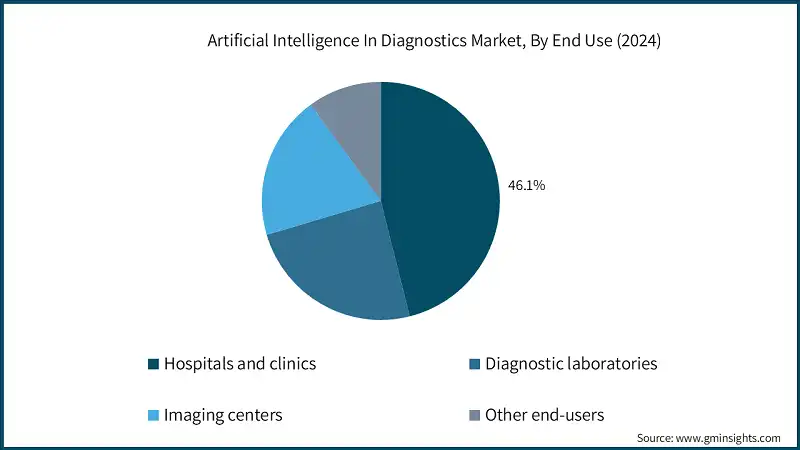
Based on end use, the AI in diagnostics market is classified into hospitals and clinics, diagnostic laboratories, imaging centers, and other end-users. The hospitals and clinics segment dominated the market with a revenue share of 46.1% in 2024 and is expected to reach USD 4.8 billion within the forecast period.
- The two largest segments account for over 70.4% of the total market value. The hospitals and clinics segment leads the artificial intelligence in diagnostics market because of the growing demand for effective, precise, and quick diagnostic solutions for inpatient and outpatient settings. The high volumes and sophisticated case mixes of hospitals and clinics necessitate sophisticated AI-driven tools for disease detection in real time, workflow optimization, and decision support.
- Artificial Intelligence-powered imaging solutions, predictive analytics platforms, and digital pathology platforms help clinicians minimize diagnostic mistakes, improve treatment planning, and enhance overall patient outcomes.
- Additionally, the increasing incidence of chronic diseases, cancer, cardiovascular diseases, and neurological disorders further fuels adoption, as timely and accurate diagnostics are essential for proper management.
- The diagnostic laboratories segment held a revenue of USD 356.1 million in 2024, with projections indicating a steady expansion at 22.3% CAGR from 2025 to 2034. Diagnostic laboratories are key adopters of AI technologies due to their pivotal role in disease screening, analysis, and reporting across diverse clinical applications. The increasing complexity of laboratory workflows, rising sample volumes, and demand for high-throughput testing have created a pressing need for automation and AI-driven decision support.
- AI-powered diagnostic software enhances laboratory efficiency by automating data interpretation, identifying anomalies, and predicting disease patterns, enabling faster and more accurate results. Growing prevalence of chronic and infectious diseases amplifies the need for precise laboratory diagnostics, while technological advancements such as digital pathology, next-generation sequencing, and AI-enabled imaging tools further improve accuracy and turnaround time.
Looking for region specific data?
North America Artificial Intelligence In Diagnostics Market
North America dominated the AI in diagnostics market with the highest market share of 40.7% in 2024.
- North America leads the market because of sophisticated healthcare infrastructure, large-scale adoption of digital technologies, and substantial research and development investment. The region takes advantage of the extensive availability of AI-facilitated medical imaging systems, predictive analytics solutions, and digital pathology platforms in hospitals, clinics, and diagnostic laboratories.
- Increasing incidence of chronic illnesses, such as cancer, cardiovascular diseases, and neurological disorders, fuels the demand for early and precise diagnostics. Facilitating government policies, reimbursement guidelines, and funding for AI-based healthcare solutions further boost market growth.
- Technological advancements in machine learning, deep learning, and cloud-based AI platforms enable efficient data analysis, rapid disease detection, and personalized treatment planning. Additionally, increasing awareness among healthcare providers about the benefits of AI diagnostics in improving patient outcomes and operational efficiency accelerates adoption.
- Strong collaborations between AI technology providers, hospitals, and research institutions reinforce North America’s leading position in the global market.
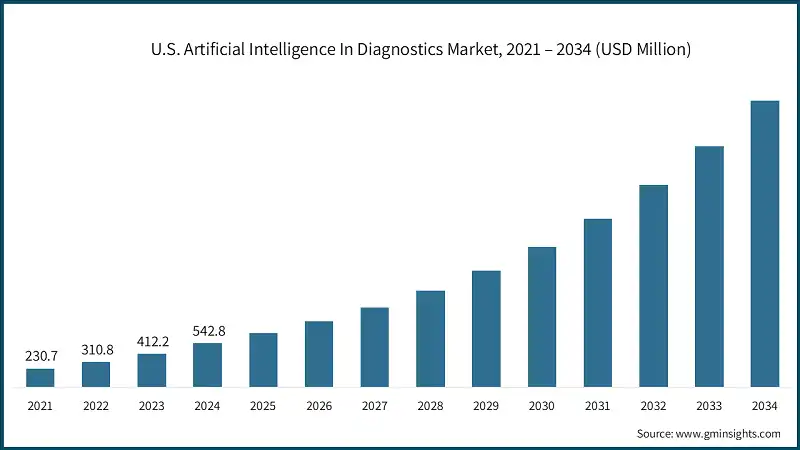
The U.S. artificial intelligence in diagnostics market was valued at USD 230.7 million and USD 310.8 million in 2021 and 2022, respectively. In 2024, the market size grew to USD 542.8 million from USD 412.2 Million in 2023.
- The U.S. is a major contributor to North America’s dominance in the market, driven by its advanced healthcare ecosystem, high healthcare expenditure, and strong technological capabilities. Widespread implementation of AI-powered diagnostic software, imaging systems, and predictive analytics platforms in hospitals, diagnostic laboratories, and imaging centers enables faster, more accurate, and cost-effective diagnostics.
- Increasing prevalence of chronic and lifestyle-related diseases, such as cardiovascular disorders, diabetes, and cancer, has heightened the need for early detection and precision medicine, fueling AI adoption. Government support through funding initiatives, regulatory approvals, and reimbursement policies encourages healthcare providers to integrate AI solutions into clinical workflows.
- Additionally, robust research and development activities, strategic partnerships between AI companies and healthcare organizations, and high digital literacy among medical professionals facilitate the deployment of innovative AI diagnostic tools.
Europe AI In Diagnostics Market
The Europe artificial intelligence in diagnostics market accounted for USD 391.3 million in 2024 and is anticipated to show lucrative growth over the forecast period.
- The European artificial intelligence in diagnostics market is driven by a combination of technological, clinical, and regulatory factors. Increasing prevalence of chronic diseases, including cancer, cardiovascular disorders, and neurological conditions, has intensified the demand for rapid, accurate, and cost-effective diagnostic solutions across the region.
- Technological advancements, such as AI-powered imaging systems, predictive analytics, and digital pathology platforms, have enhanced the accuracy, efficiency, and scalability of diagnostics in hospitals, clinics, and diagnostic laboratories.
- Supportive government initiatives, research funding, and favorable regulatory frameworks in countries across Europe encourage adoption of AI-based solutions.
Germany dominates the Europe artificial intelligence in diagnostics market, showcasing strong growth potential.
- Germany, as one of Europe’s leading healthcare markets, demonstrates significant growth potential for Artificial Intelligence in Diagnostics. The country’s robust healthcare infrastructure, high adoption of advanced medical technologies, and increasing prevalence of chronic and lifestyle-related diseases create strong demand for AI-powered diagnostic tools.
- Technological advancements, including machine learning algorithms, deep learning models, and AI-enabled imaging and laboratory solutions, facilitate precise and efficient detection of diseases across radiology, pathology, cardiology, and oncology segments. Government initiatives, public-private partnerships, and substantial investments in digital health programs promote the integration of AI solutions in hospitals, diagnostic centers, and research institutions.
- Furthermore, growing focus on personalized medicine and preventive care drives demand for predictive analytics and early diagnosis tools.
Asia Pacific Artificial Intelligence In Diagnostics Market
The Asia Pacific artificial intelligence in diagnostics market is anticipated to grow at the highest CAGR of 23.2% during the analysis timeframe.
- Urbanization at a high rate and growing incidences of chronic diseases, such as cardiovascular conditions, cancer, and diabetes, have boosted the need for effective, precise, and AI-based diagnostic technologies.
- Advances in machine learning, deep learning, and imaging software are making it possible for faster, accurate, and affordable diagnostics in hospitals, clinics, and diagnostic labs.
- Government incentives and funding programs for digital healthcare uptake, combined with positive reimbursement policies, further increase market penetration.
- Strategic partnerships between healthcare providers and AI solution developers also accelerate implementation, enhancing diagnostic efficiency, improving patient outcomes, and driving widespread adoption across the Asia Pacific region.
China artificial intelligence in diagnostics market is estimated to grow with a significant CAGR, in the Asia Pacific artificial intelligence in diagnostics market.
- China represents one of the fastest-growing markets for Artificial Intelligence in Diagnostics, driven by increasing prevalence of chronic and infectious diseases and a growing geriatric population. The government’s strong focus on digital health transformation, smart hospitals, and AI-enabled medical initiatives supports extensive adoption of AI diagnostics technologies.
- Rising investments from both public and private sectors in advanced imaging infrastructure, predictive analytics, and digital pathology tools enable healthcare providers to improve workflow efficiency and clinical accuracy.
- Technological innovations, including AI-powered imaging algorithms, machine learning-based predictive models, and integrated diagnostic platforms, facilitate early detection, personalized treatment, and real-time monitoring.
- Increasing awareness among patients and clinicians regarding the benefits of AI in diagnostics, coupled with favorable reimbursement policies, further enhances market growth.
Latin American Artificial Intelligence In Diagnostics Market
Brazil leads the Latin American artificial intelligence in diagnostics market, exhibiting remarkable growth during the analysis period.
- Brazil leads the Latin American Artificial Intelligence in Diagnostics market due to a combination of growing healthcare infrastructure, rising prevalence of chronic and infectious diseases, and increasing adoption of digital health solutions.
- The country’s expanding network of hospitals, diagnostic laboratories, and imaging centers has created a strong demand for AI-powered diagnostic tools that enhance accuracy, reduce turnaround times, and improve patient outcomes.
- Technological advancements in AI-enabled imaging, predictive analytics, and digital pathology are facilitating early disease detection and efficient workflow management.
- Favorable government initiatives, such as investments in healthcare modernization, funding for AI research, and regulatory support for digital diagnostics, are further accelerating market adoption.
Middle East and Africa Artificial Intelligence In Diagnostics Market
Saudi Arabia artificial intelligence in diagnostics market is expected to experience substantial growth in the Middle East and Africa region in 2024.
- The country is witnessing rising prevalence of chronic diseases, including diabetes, cardiovascular disorders, and cancer, which has intensified the need for early and precise diagnostics. AI-powered diagnostic solutions, such as imaging analytics, predictive modeling, and digital pathology platforms, are increasingly deployed to improve diagnostic accuracy, workflow efficiency, and patient outcomes.
- Technological advancements in machine learning, cloud computing, and AI-enabled medical devices further support adoption across hospitals, clinics, and specialized diagnostic centers.
- Macroeconomic factors, including increased healthcare expenditure, favorable reimbursement policies, and strategic partnerships with global technology providers, are facilitating the integration of AI solutions.
- Additionally, growing awareness among healthcare professionals and patients regarding the benefits of AI-driven diagnostics is driving demand, positioning Saudi Arabia as a leading AI diagnostics market in the Middle East.
Artificial Intelligence In Diagnostics Market Share
The global Artificial Intelligence in Diagnostics market is highly competitive, with leading companies focusing on advanced technologies, product innovation, and strategic collaborations to strengthen market positions. Rising prevalence of chronic diseases, increasing demand for early and precise diagnostics, and growing adoption of AI-powered imaging and predictive analytics are driving companies to leverage research and development, digital health integration, and data-driven solutions to enhance diagnostic accuracy and patient outcomes. The shift toward value-based and personalized healthcare is also encouraging players to develop scalable, patient-centric solutions and expand their presence in emerging markets.
Key players include Siemens Healthineers, NVIDIA, Aidoc, Zebra Medical Vision, and Vuno, collectively accounting for 32.2% of the global market. These companies maintain leadership through extensive AI-enabled diagnostic portfolios, strong global distribution networks, and continuous advancements in imaging software, predictive analytics platforms, and digital pathology solutions. Their dominance is reinforced by strategic partnerships with hospitals, clinics, and diagnostic laboratories to enhance adoption and accessibility.
Smaller and niche players are gaining traction by offering specialized, AI-powered, workflow-optimized solutions. Competitive differentiation increasingly depends on the ability to deliver accurate, non-invasive, and cost-efficient diagnostics tailored to diverse clinical environments. As the market evolves, competition is expected to intensify, with both established leaders and emerging firms pursuing innovation, digital integration, and strategic alliances to capture greater market share.
Artificial Intelligence In Diagnostics Market Companies
Few of the prominent players operating in the artificial intelligence in diagnostics industry include:
- Aidoc
- AliveCor
- Digital Diagnostics
- Enlitic
- HeartFlow
- Imagen
- NVIDIA
- PathAI
- Qure.ai
- Riverain Technologies
- Siemens Healthineers
- Sophia Genetics
- Tempus
- Ultromics
- Viz.ai
- Vuno
- Zebra Medical Vision
- Siemens Healthineers
Siemens Healthineers leads the artificial intelligence in diagnostics market with a share of 9.8% in 2024. Siemens Healthineers delivers AI-powered diagnostic imaging systems and digital pathology solutions that enhance accuracy, efficiency, and workflow automation. Its global presence, integrated healthcare platforms, and continuous innovation enable hospitals and diagnostic centers to improve patient outcomes, streamline clinical operations, and adopt advanced AI tools across radiology, cardiology, oncology, and laboratory diagnostics.
NVIDIA provides high-performance GPUs, AI frameworks, and accelerated computing platforms that power AI diagnostics solutions. Its technologies enable healthcare providers and developers to efficiently process complex medical data, implement machine learning algorithms, and scale AI applications across imaging, pathology, and predictive analytics, driving innovation, rapid diagnostics, and enhanced patient care globally.
Artificial Intelligence In Diagnostics Industry News:
- In September 2024, Roche expanded its digital pathology platform by integrating more than 20 advanced AI algorithms from eight new partners. These strategic collaborations aim to enhance the capabilities of pathologists and researchers in cancer diagnosis and research, leveraging AI technology to improve diagnostic accuracy and efficiency.
- In July 2024, AWS partnered with GE HealthCare to advance healthcare outcomes through the use of industry-specific AI foundation models (FMs) and innovative applications. This collaboration seeks to unlock critical healthcare insights, enabling the development of advanced solutions for improved patient wellness and clinical decision-making.
- In October 2023, NeuraSignal acquired NovaSignal, the original developer of the NovaGuide system. The robot-assisted transcranial Doppler (raTCD) system operates autonomously for data acquisition, expanding clinician access to critical information for detecting right-to-left shunt (RLS) and enhancing diagnostic capabilities.
The artificial intelligence in diagnostics market research report includes an in-depth coverage of the industry with estimates and forecast in terms of revenue in USD Million from 2021 – 2034 for the following segments:
Market, By Component
- Software
- Services
- Hardware
Market, By Application
- Radiology
- Oncology
- Cardiology
- Neurology
- Pathology
- Infectious diseases
- Other applications
Market, By End Use
- Hospitals and clinics
- Diagnostic laboratories
- Imaging centers
- Other End Use
The above information is provided for the following regions and countries:
- North America
- U.S.
- Canada
- Europe
- Germany
- UK
- France
- Spain
- Italy
- Netherlands
- Asia Pacific
- China
- Japan
- India
- Australia
- South Korea
- Latin America
- Brazil
- Mexico
- Argentina
- Middle East and Africa
- South Africa
- Saudi Arabia
- UAE
Frequently Asked Question(FAQ) :
Which region leads the AI in diagnostics market?
North America dominated the market with a 40.7% share in 2024, driven by advanced healthcare infrastructure and early adoption of AI technologies.
Who are the key players in the artificial intelligence in diagnostics market?
Key players include Aidoc, AliveCor, Digital Diagnostics, Enlitic, HeartFlow, Imagen, NVIDIA, PathAI, Qure.ai, Riverain Technologies, Siemens Healthineers, Sophia Genetics, and Tempus.
What are the upcoming trends in the artificial intelligence in diagnostics industry?
Key trends include the integration of AI with electronic health records, telemedicine platforms, and remote monitoring devices, as well as advancements in machine learning, deep learning, and digital pathology platforms.
What was the valuation of the radiology application segment in 2024?
The radiology segment held a 28.4% revenue share in 2024.
How much revenue did the software segment generate in 2024?
The software segment leading the market with a 58.5% share, driven by the adoption of AI-enabled diagnostic tools and advanced imaging software.
What is the projected size of the AI in diagnostics market in 2025?
The market is expected to reach USD 1.8 billion in 2025.
What was the market size of artificial intelligence in diagnostics in 2024?
The market size was USD 1.5 billion in 2024, with a CAGR of 21.5% expected through 2034, driven by increasing demand for early disease detection, integration of AI in medical imaging, and precision diagnostics.
What is the projected value of the artificial intelligence in diagnostics market by 2034?
The market is expected to reach USD 10.5 billion by 2034, fueled by advancements in AI algorithms, high-resolution imaging, and predictive analytics.
Artificial Intelligence In Diagnostics Market Scope
Related Reports