Summary
Table of Content

Anti-inflammatory Drugs Market
Get a free sample of this report
Form submitted successfully!
Error submitting form. Please try again.
Thank you!
Your inquiry has been received. Our team will reach out to you with the required details via email. To ensure that you don't miss their response, kindly remember to check your spam folder as well!
Request Sectional Data
Thank you!
Your inquiry has been received. Our team will reach out to you with the required details via email. To ensure that you don't miss their response, kindly remember to check your spam folder as well!
Form submitted successfully!
Error submitting form. Please try again.
Anti-inflammatory Drugs Market Size
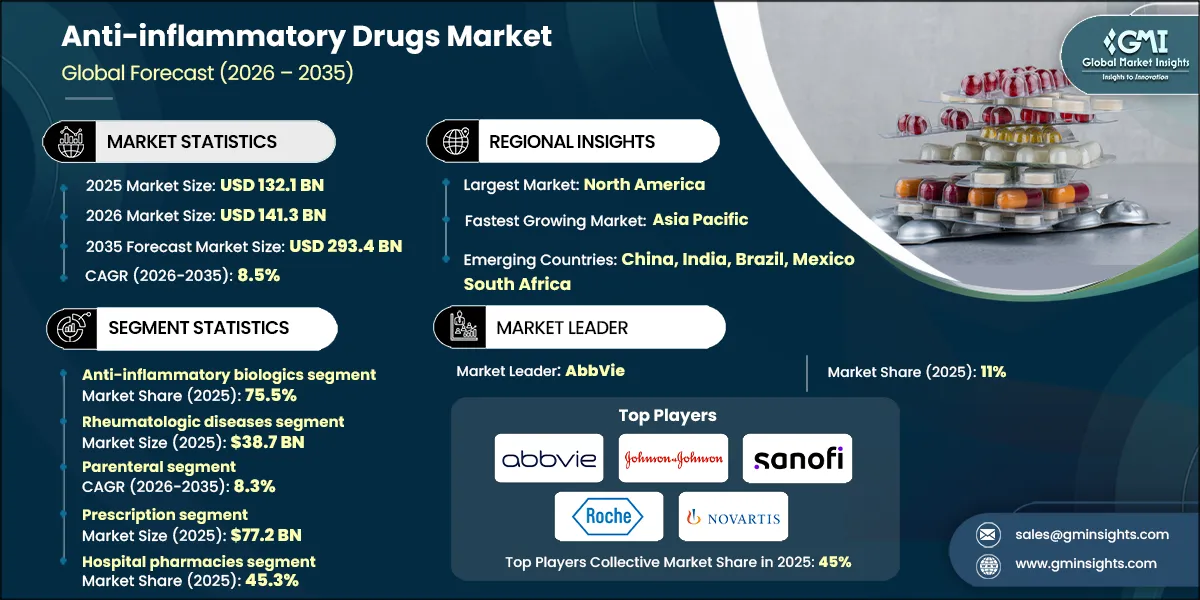
The global anti-inflammatory drugs market was valued at USD 132.1 billion in 2025. The market is expected to grow from USD 141.3 billion in 2026 to USD 293.4 billion in 2035, growing at a CAGR of 8.5% during the forecast period, according to the latest report published by Global Market Insights Inc.
Anti-inflammatory Drugs Market Key Takeaways
Market Size & Growth
- 2025 Market Size: USD 132.1 Billion
- 2026 Market Size: USD 141.3 Billion
- 2035 Forecast Market Size: USD 293.4 Billion
- CAGR (2026–2035): 8.5%
Regional Dominance
- Largest Market: North America
- Fastest Growing Region: Asia Pacific
Key Market Drivers
- Increasing prevalence of chronic inflammatory and autoimmune diseases.
- Advancements in targeted immunology and biologic drug development.
- Supportive regulatory pathways and accelerated approvals.
- Rising awareness, diagnosis rates, and access to specialty care.
Challenges
- High treatment costs and long term affordability concerns.
- Safety concerns and long term tolerability risks.
Opportunity
- Next‑generation oral therapies and improved patient convenience.
- Lifecycle management through biosimilars and combination therapies.
Key Players
- Market Leader: AbbVie led with over 11% market share in 2025.
- Leading Players: Top 5 players in this market include AbbVie, Johnson & Johnson, Sanofi, F. Hoffmann La Roche, Novartis, which collectively held a market share of 45% in 2025.
Get Market Insights & Growth Opportunities
The anti‑inflammatory drugs market growth can be attributed to the rising prevalence of chronic inflammatory and autoimmune disorders.According to NIH, over 50 million Americans (8% of the U.S. population) are affected by autoimmune diseases, and current data suggests that the prevalence of autoimmune diseases is rising. Epidemiological studies have shown that the incidence of global autoimmune diseases has risen yearly by 19.1%, with rheumatological diseases such as Sjogren’s and lupus rising 7.1% per year. Also, increasing aging populations and lifestyle‑related conditions such as obesity and cardiovascular disease further add to the inflammation‑driven disease burden, stimulating the need for pharmacological intervention.
Advancements in immunology and molecular biology, combined with targeted therapy development, continue to stimulate market expansion. The growing shift from conventional non‑steroidal anti‑inflammatory drugs and corticosteroids toward targeted biologics, small‑molecule inhibitors, and monoclonal antibodies has significantly enhanced treatment outcomes. The anti‑inflammatory drugs market focus on the prevention and treatment of acute and chronic inflammation‑driven disorders, encompassing a broad range of therapeutic classes such as NSAIDs, corticosteroids, biologics, and targeted small molecules. These treatments are aimed at reducing inflammation, alleviating symptoms, preventing disease progression, and improving life outcomes. The market benefits from strong reimbursement frameworks and sustained research investment, particularly in immunology‑focused drug development.
Key players in the anti‑inflammatory drugs market include AbbVie, Johnson & Johnson, Pfizer, Novartis, Amgen, Sanofi, AstraZeneca, Bristol‑Myers Squibb, GlaxoSmithKline, Eli Lilly, F. Hoffmann‑La Roche, and Sun Pharmaceutical Industries. These players actively drive innovation and market growth. They continue to strengthen their market position through robust research and development pipelines, label expansions, biosimilar strategies, and strategic collaborations aimed at addressing the long‑term global burden of inflammatory diseases.
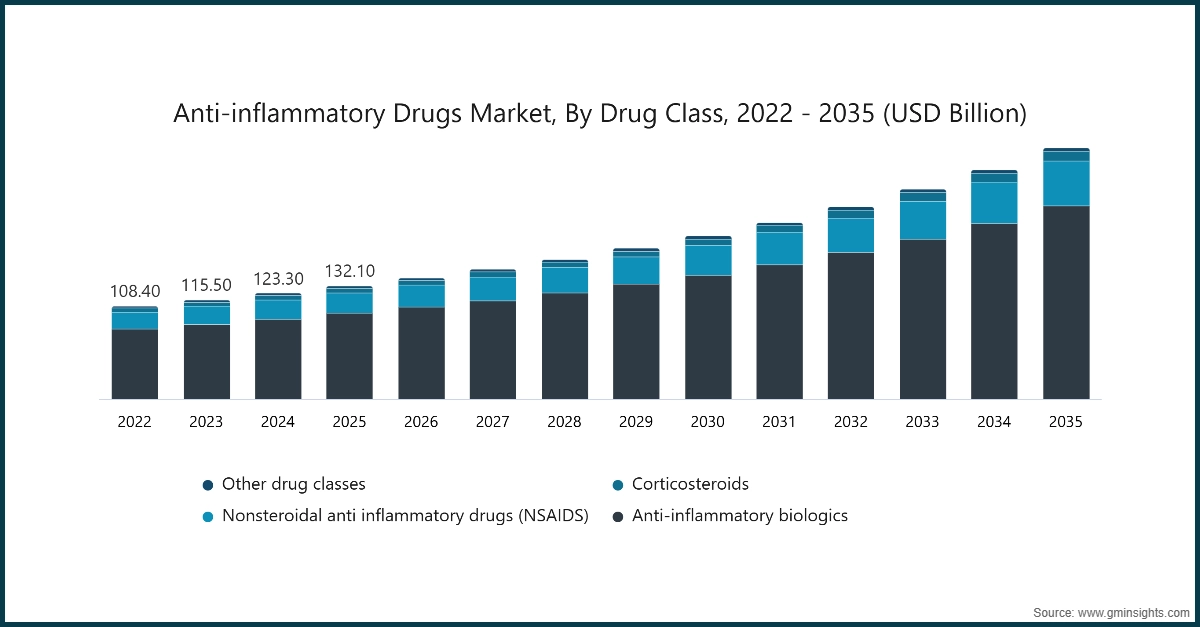
Between 2022 and 2024, the anti‑inflammatory drugs market experienced steady and sustained growth, driven by the expanding adoption of biologics and precision‑based immunotherapies. During this period, the global market increased from approximately USD 108.4 billion in 2022 to over USD 123.3 billion in 2024, supported by rising prescription volumes, lifecycle expansions of established biologics, and the introduction of next‑generation anti‑inflammatory agents, reinforced by the increasing diagnosis rates of autoimmune diseases and broader access to advanced therapies across both developed and emerging markets.
To get key market trends
Anti-inflammatory Drugs Market Trends
- A major trend is the shift from traditional therapies toward advanced, targeted immunotherapies. Conventional NSAIDs and corticosteroids are increasingly being complemented, and in many moderate-to-severe cases, replaced by biologics and small-molecule immunomodulators that act on specific cytokines and signaling pathways.
- Personalized and precision immunology is gaining traction across inflammatory diseases. With broader availability of biomarker-guided diagnostics and phenotype-based therapeutic selection, clinicians are increasingly tailoring therapy choices to patient phenotype and pathway biology, improving efficacy and minimizing adverse effects.
- The emergence of oral pathway‑selective agents is further broadening therapeutic options. For example, agents such as the TYK2 inhibitor deucravacitinib and subsets of JAK inhibitors expand options for patients who cannot tolerate injectables, aligning with a wider movement toward patient‑centric care in immune‑mediated disease.
- Further, regulatory support and expedited pathways are accelerating innovation and commercialization in immunology. Multiple biologics are receiving maintenance and induction approvals across indications, demonstrating the regulator's willingness to advance therapies with strong clinical benefit and safety. This momentum enables faster label expansions, subcutaneous/IV switching options, and long‑interval dosing that improve adherence and health‑system efficiency.
- Technological innovation and novel treatment modalities are also reshaping the immunology landscape beyond conventional biologics. Next-generation oral small molecules and advanced drug-delivery technologies, including ultra-long-acting injectables and once-monthly biologics, are emerging across respiratory and systemic inflammatory indications, improving patient convenience and driving adoption.
- Overall, the immunology market is rapidly evolving toward targeted, precision-driven, and patient-centric therapies. Advances in biologics, oral small molecules, and long-acting delivery technologies, supported by favorable regulatory pathways, are improving treatment outcomes and convenience, driving sustained market growth.
Anti-inflammatory Drugs Market Analysis
Learn more about the key segments shaping this market
Based on the drug class, the global market is segmented into anti-inflammatory biologics, non-steroidal anti-inflammatory drugs (NSAIDS), corticosteroids, and other drug classes. The anti-inflammatory biologics segment dominated the market with a significant market share of 75.5% in 2025 and is anticipated to grow at a CAGR of 8.6% over the forecast years.
- The dominance of anti-inflammatory biologics is due to their superior efficacy, targeted mechanism of action, and the ability to address moderate-to-severe autoimmune and inflammatory conditions.
- These therapies consist of monoclonal antibodies and cytokine inhibitors that include IL-17, IL-23, and IL-6 blockers, which provide disease-modifying benefits along with symptomatic relief.
- Moreover, biologics have become the preferred treatment option, especially for chronic inflammatory diseases such as rheumatoid arthritis, psoriasis, and inflammatory bowel disease, as they reduce disease progression, improve patients’ quality of life, and offer sustained remission compared to conventional NSAIDs and corticosteroids.
- The segment’s growth is further supported by continuous innovation in next-generation biologics, extended dosing intervals, and subcutaneous formulations, which enhance patient convenience and adherence.
- The nonsteroidal anti-inflammatory drugs (NSAIDS) segment, on the other hand, held a market share of 18.2% in 2025, reflecting their continued use in early-stage and mild disease management despite the growing shift toward targeted biologic therapies.
Based on the indications, the anti-inflammatory drugs market is classified into rheumatologic diseases, dermatological diseases, gastrointestinal diseases, respiratory diseases, neurological disorders, and other indications. The rheumatologic diseases segment accounted for the highest market revenue of USD 38.7 billion in 2025.
- The rheumatologic diseases segment is further bifurcated into rheumatoid arthritis, osteoarthritis (OA), psoriatic arthritis, ankylosing spondylitis, and other inflammatory arthritis.
- The segment is stimulated by the high global prevalence of rheumatoid arthritis, osteoarthritis, and psoriatic arthritis, which require long-term anti-inflammatory management to control pain, swelling, and disease progression. For instance, according to NIH, in 2020, OA affected an estimated 7.6% of the global population, with more than 595 million individuals living with OA.
- Moreover, biologic therapies such as TNF-α inhibitors, IL-6 blockers, and JAK inhibitors have transformed arthritis treatment, offering disease-modifying benefits and improved patient outcomes compared to traditional NSAIDs and corticosteroids.
- The dermatological diseases segment, on the other hand, held the second-largest market share of 21.7% in 2025. This growth is attributed to the rising prevalence of chronic inflammatory skin conditions, such as psoriasis and atopic dermatitis, coupled with increasing adoption of targeted biologic and topical anti-inflammatory therapies.
Based on the route of administration, the anti-inflammatory drugs market is classified into oral, topical, parenteral, and other routes of administration. The parenteral segment dominated the market in 2025 and is anticipated to witness growth at a CAGR of 8.3%.
- Parenteral anti-inflammatory drugs dominate the market due to their high clinical effectiveness, rapid onset of action, and strong preference in severe or advanced disease stages, particularly in chronic autoimmune and inflammatory conditions.
- In addition, the widespread use of biologic therapies such as TNF inhibitors, IL inhibitors, and monoclonal antibodies delivered primarily through subcutaneous or intravenous routes, along with growing adoption of next‑generation injectable targeted therapies, continues to strengthen this segment.
- Moreover, injectable formulations allow precise dose delivery, ensuring higher treatment compliance and consistent therapeutic outcomes. Their widespread availability in hospitals and specialty clinics, along with increasing reliance on injectable biologics for long-term disease management, further cements the parenteral segment’s leading position in the market.
Based on the type, the anti-inflammatory drugs market is classified into prescription and over the counter (OTC). The prescription segment dominated the market in 2025 with a revenue of USD 77.2 billion.
- Prescription drugs play a critical role in managing chronic autoimmune and inflammatory conditions, which require physician oversight and advanced therapies.
- Moreover, the segment benefits from the widespread adoption of biologics and targeted oral therapies, which are only available through prescription channels.
- Additionally, strong reimbursement frameworks and hospital-based distribution networks further support the dominance of prescription drugs in developed markets.
- On the other hand, over the counter drugs, primarily NSAIDs and topical formulations, are witnessing rapid growth due to rising self-medication trends, easy accessibility, and cost-effectiveness for mild pain and inflammation management.
Learn more about the key segments shaping this market
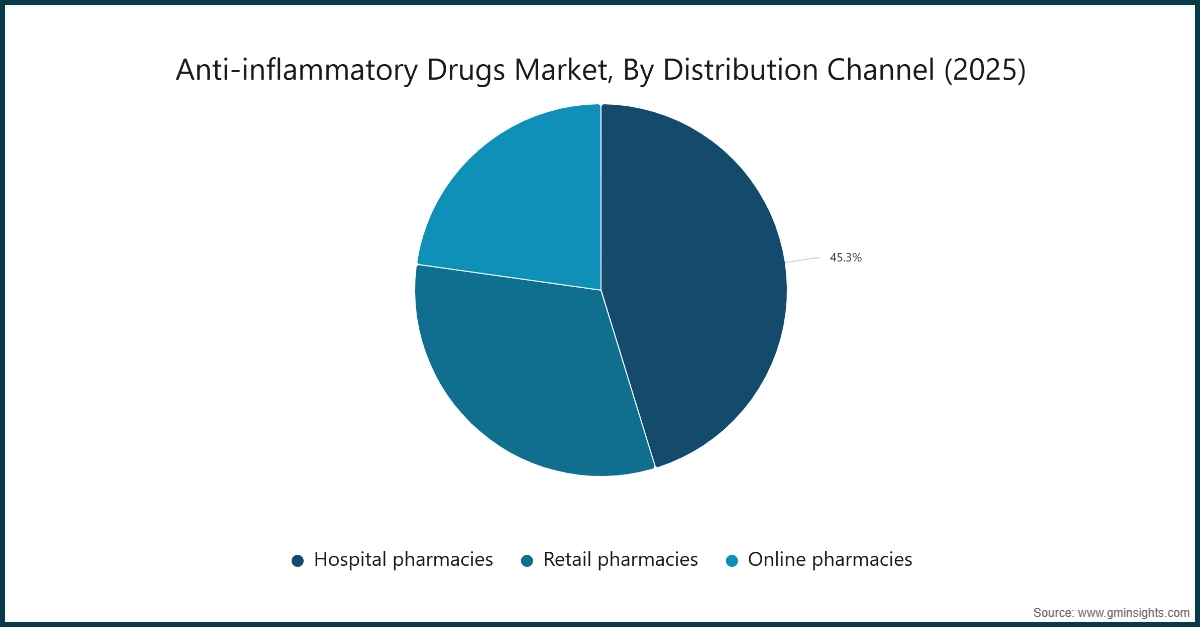
Based on the distribution channel, the anti-inflammatory drugs market is classified into hospital pharmacies, retail pharmacies, and online pharmacies. The hospital pharmacies segment held a market share of 45.3% in 2025 and is projected to grow at a CAGR of 8.2% during the analysis period.
- Hospital pharmacies lead the market due to their important role in acute and severe inflammatory conditions, along with strong presence in secondary and tertiary care settings, and ability to dispense high‑value prescription‑only injectable anti-inflammatory drugs.
- Additionally, the segment benefits from close coordination with clinicians, ensuring accurate dosing, continuous monitoring, and reliable supply for inpatient therapies, which supports consistent demand for hospital-administered treatments.
- Moreover, integration with institutional procurement systems and reimbursement pathways further holds the dominance of hospital pharmacies.
North America Anti-inflammatory Drugs Market
Looking for region specific data?
The North America anti-inflammatory drugs market dominated the market with a market share of 39.1% in 2025.
- North America holds a dominant share of the global market, driven by the high prevalence of chronic inflammatory and autoimmune diseases such as rheumatoid arthritis, osteoarthritis, psoriasis, and inflammatory bowel disease in the region.
- For instance, as per the National Psoriasis Foundation, more than 8 million Americans have psoriasis and approximately 600,000 adults in the U.S. live with undiagnosed psoriasis.
- In addition, the region benefits from advanced healthcare infrastructure, early adoption of innovative biologic and targeted therapies, and strong reimbursement frameworks that support access to high-cost treatments.
- Additionally, robust clinical research activity and the presence of major pharmaceutical companies actively developing next-generation anti-inflammatory drugs further reinforce North America’s leading position in the market.
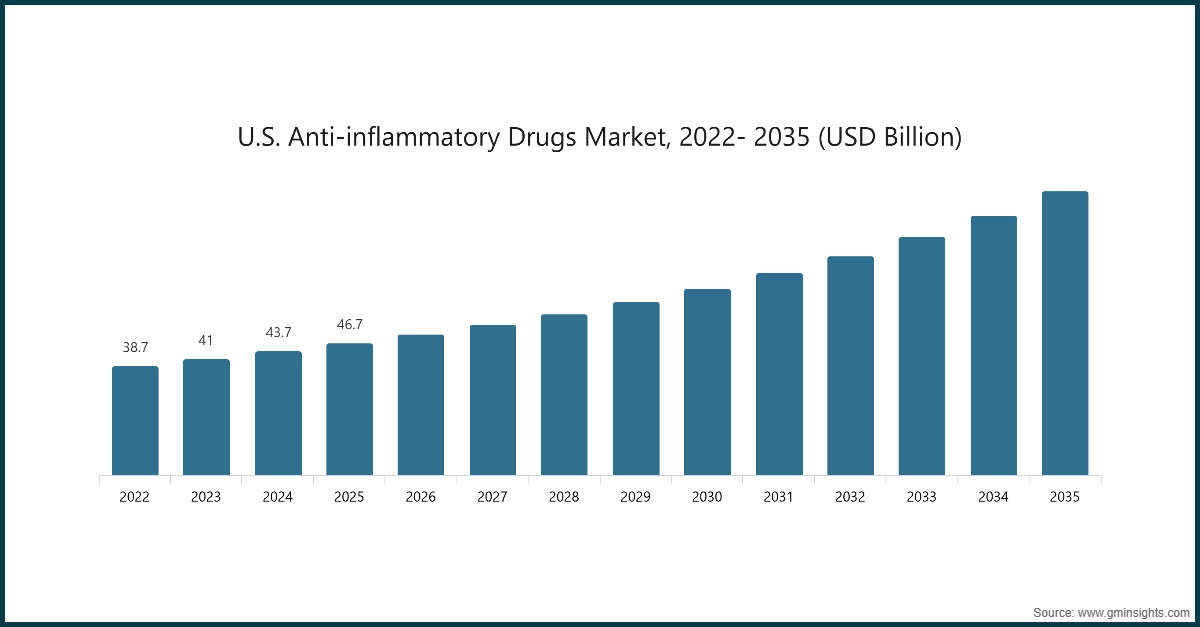
The U.S. anti-inflammatory drugs market was valued at USD 38.7 billion and USD 41 billion in 2022 and 2023, respectively. The market size reached USD 46.7 billion in 2025, growing from USD 43.7 billion in 2024.
- The market is stimulated by the rising prevalence of chronic inflammatory and autoimmune diseases, which require long‑term pharmacological management.
- According to NIH, during 2019–2021, 21.2% of U.S. adults, that is, approximately 53.2 million people, reported diagnosed arthritis.
- Further, a study led by the Crohn's & Colitis Foundation estimates nearly 1 in 100 Americans has inflammatory bowel disease (IBD). Such a high prevalence of chronic inflammatory diseases increases the demand for effective therapies.
- In addition, the country benefits from several approved biologic and oral targeted anti‑inflammatory drugs, supported by continuous label expansions and biosimilar introductions.
- Moreover, the presence of leading pharmaceutical companies and extensive clinical research activity promotes rapid commercialization and innovation of advanced therapies.
Europe Anti-inflammatory Drugs Market
Europe market accounted for USD 36.6 billion in 2025 and is anticipated to show lucrative growth over the forecast period.
- The market growth in the region is supported by a high prevalence of inflammatory disorders and aging populations. According to the European Commission, more than one-fifth of the population, about 21.6%, were aged above 65 years old, stimulating the demand.
- The region also benefits from a robust network of academic research institutions and biotech firms in countries such as Germany, UK, and France, facilitating continuous innovation in immunology and biologic drug development.
Germany dominates the Europe anti-inflammatory drugs market, showcasing strong growth potential.
- The country’s leadership is supported by advanced healthcare infrastructure, strong reimbursement coverage, and early uptake of biologics and targeted therapies.
- The presence of major pharmaceutical manufacturers and specialty care centers strengthens domestic production and distribution capabilities.
- Additionally, high screening rates and disease awareness contribute to consistent demand for long‑term inflammatory disease management solutions.
Asia Pacific Anti-inflammatory Drugs Market
The Asia Pacific market is anticipated to grow at the highest CAGR of 8.8% during the analysis timeframe.
- The Asia Pacific region is expected to witness the fastest growth in the market, driven by a rapidly expanding patient population suffering from chronic inflammatory and autoimmune disorders such as rheumatoid arthritis, osteoarthritis, and psoriasis.
- For example, according to Global Psoriasis Atlas (GPA) data, an estimated 3.59 million people in India are affected by psoriasis, with prevalence ranging between 0.44% and 2.8%.
- In addition, expanding healthcare infrastructure, growing healthcare expenditure, and increasing availability of advanced biologic and targeted therapies are further accelerating market growth in the region.
China anti-inflammatory drugs market is estimated to grow with a significant CAGR, in the Asia Pacific market.
- The market is supported by a large and expanding patient population affected by arthritis, respiratory inflammatory disorders, and autoimmune conditions.
- Rapid improvements in healthcare infrastructure and increasing availability of modern biologic and targeted therapies are accelerating treatment adoption.
- In addition, expanding reimbursement coverage and growing physician awareness are enhancing patient access to advanced anti-inflammatory drugs across the country.
Latin American Anti-inflammatory Drugs Market
Brazil leads the Latin American market, exhibiting remarkable growth during the analysis period.
- Improved access to healthcare services and expansion of specialty clinics in the country are driving treatment adoption rates.
- In addition, government initiatives to strengthen public healthcare systems and expand reimbursement coverage support broader therapy adoption.
Middle East and Africa Anti-inflammatory Drugs Market
Saudi Arabia market is expected to experience substantial growth in the Middle East and Africa market.
- Saudi Arabia is emerging as one of the fastest-growing markets in the Middle East & Africa, driven by a rising prevalence of chronic pain and inflammatory conditions such as rheumatoid arthritis and musculoskeletal disorders.
- Additionally, the country’s pharmaceutical and healthcare sectors are undergoing rapid expansion, supported by strong government investment in healthcare infrastructure, further fueling market growth.
Anti-inflammatory Drugs Market Share
The global anti‑inflammatory drugs market is fragmented, with a group of leading biopharmaceutical companies accounting for a substantial portion of total revenue, while innovation continues to emerge from specialized and mid‑sized players. The top five companies, Johnson & Johnson, AbbVie, Sanofi, Novartis, and F. Hoffmann‑La Roche, collectively account for approximately 45% of the global market, supported by extensive immunology portfolios, strong research and development infrastructure, and well‑established global commercialization networks. These players dominate key therapeutic segments such as rheumatoid arthritis, inflammatory bowel disease, psoriasis, and asthma through blockbuster biologics, next‑generation monoclonal antibodies, and targeted small‑molecule therapies.
The market landscape is further shaped by strategic acquisitions, partnering agreements, and licensing collaborations, enabling companies to accelerate pipeline development, expand indications, and enhance geographic reach, particularly in emerging markets. Leading firms continue to invest heavily in advanced biologics, cytokine inhibitors, and precision immunology platforms, while actively pursuing lifecycle management strategies including label expansions, formulation innovations, and biosimilar entry. At the same time, smaller biotechnology companies and niche immunology specialists contribute to competitive intensity by developing novel mechanisms of action, oral targeted therapies, and differentiated delivery platforms.
Anti-inflammatory Drugs Market Companies
Prominent players operating in the anti-inflammatory drugs industry are as mentioned below:
- Abbott Laboratories
- AbbVie
- Amgen
- AstraZeneca
- Bristol-Myers Squibb
- Eli Lilly and Company
- GlaxoSmithKline
- Hoffmann-La Roche
- Johnson & Johnson
- Merck & Co.
- Novartis
- Pfizer
- Sanofi
- Sun Pharmaceutical
- Teva Pharmaceutical
- UCB
Johnson & Johnson holds a leading position in the global anti‑inflammatory drugs market, supported by its strong immunology franchise and advanced biologic platforms targeting chronic inflammatory and autoimmune conditions. Continuous investments in clinical research, lifecycle management, combined with a robust global commercialization network.
AbbVie maintains a strong competitive position in the anti‑inflammatory drugs market through its deep focus on immunology and precision‑based therapies. The company’s portfolio, anchored by Skyrizi and Rinvoq, successfully addresses inflammatory bowel disease, rheumatoid arthritis, psoriatic disease, and other immune‑mediated disorders.
F. Hoffmann‑La Roche plays a significant role in the anti‑inflammatory drugs market, leveraging its expertise in biologics, personalized medicine, and immunology‑driven research. The company’s key anti‑inflammatory therapy, Actemra (tocilizumab), is widely used in rheumatoid arthritis and systemic inflammatory conditions, benefiting from Roche’s strong diagnostic‑therapeutic integration capabilities.
Anti-inflammatory Drugs Market Report Attributes
| Key Takeaway | Details |
|---|---|
| Market Size & Growth | |
| Base Year | 2025 |
| Market Size in 2025 | USD 132.1 Billion |
| Market Size in 2026 | USD 141.3 Billion |
| Forecast Period 2026-2035 CAGR | 8.5% |
| Market Size in 2035 | USD 293.4 Billion |
| Key Market Trends | |
| Drivers | Impact |
| Increasing prevalence of chronic inflammatory and autoimmune diseases | Rising incidence of rheumatoid arthritis, psoriasis, inflammatory bowel disease, asthma, and osteoarthritis driven by aging populations and sedentary lifestyles, is driving the demand for effective therapeutics. |
| Advancements in targeted immunology and biologic drug development | Innovations such as monoclonal antibodies, cytokine inhibitors, and oral targeted therapies are improving clinical outcomes. |
| Supportive regulatory pathways and accelerated approvals | Expedited review processes, therapy designations, and label expansion approvals from regulatory authorities are enabling faster commercialization. |
| Rising awareness, diagnosis rates, and access to specialty care | Improved disease awareness, broader adoption of diagnostic imaging and biomarker testing, and increasing availability of specialty biologic therapies are boosting demand. |
| Pitfalls & Challenges | Impact |
| High treatment costs and long term affordability concerns | Biologic and targeted anti inflammatory therapies are associated with high development, manufacturing, and administration costs. |
| Safety concerns and long term tolerability risks | Prolonged use of immunosuppressive anti inflammatory drugs is associated with risks such as infections, cardiovascular events, and malignancies. |
| Opportunities: | Impact |
| Next‑generation oral therapies and improved patient convenience | Development of oral anti‑inflammatory agents with safer profiles and convenient dosing presents significant future growth potential. |
| Lifecycle management through biosimilars and combination therapies | Strategic launch of biosimilars, fixed‑dose combinations, and new indication expansions offers strong opportunities for cost optimization. |
| Market Leaders (2025) | |
| Market Leader |
11% market share |
| Top Players |
Collective market share is 45% |
| Competitive Edge |
|
| Regional Insights | |
| Largest Market | North America |
| Fastest growing market | Asia Pacific |
| Emerging countries | China, India, Brazil, Mexico, South Africa |
| Future outlook |
|
What are the growth opportunities in this market?
Anti-inflammatory Drugs Industry News
- In January 2026, Sanofi entered a strategic collaboration with Earendil Labs to discover bispecific antibodies targeting autoimmune and inflammatory diseases using AI‑driven discovery platforms. This collaboration strengthened Sanofi’s early‑stage autoimmune and inflammation biologics pipeline.
- In July 2025, GSK agreed to acquire Aiolos Bio to expand its respiratory and inflammatory disease portfolio, adding AIO‑001, a phase II‑ready long‑acting antibody targeting the TSLP pathway. The acquisition enhanced GSK’s inflammation‑focused biologics pipeline and long‑acting antibody capabilities.
- In May 2024, Johnson & Johnson announced the acquisition of Proteologix to advance its dermatology and inflammatory disease portfolio, particularly in atopic dermatitis and asthma. This transaction expanded Johnson & Johnson’s bispecific immunology pipeline and addressed unmet needs in inflammatory skin disease.
The anti-inflammatory drugs market research report includes in-depth coverage of the industry with estimates and forecast in terms of revenue in USD Million from 2022 – 2035 for the following segments:
Market, By Drug Class
- Anti-inflammatory biologics
- Nonsteroidal anti-inflammatory drugs (NSAIDS)
- Corticosteroids
- Other drug classes
Market, By Indication
- Rheumatologic diseases
- Dermatological diseases
- Gastrointestinal diseases
- Respiratory diseases
- Neurological disorders
- Other indications
Market, By Route of Administration
- Oral
- Topical
- Injectable
- Other routes of
- administration
Market, By Type
- Prescription
- Over the counter (OTC)
Market, By Distribution Channel
- Hospital
- pharmacies
- Retail
- pharmacies
- Online
- pharmacies
The above information is provided for the following regions and countries:
- North America
- U.S.
- Canada
- Europe
- Germany
- UK
- France
- Italy
- Spain
- Netherlands
- Asia Pacific
- China
- Japan
- India
- Australia
- South Korea
- Latin America
- Brazil
- Mexico
- Argentina
- Middle East and Africa
- South Africa
- Saudi Arabia
- UAE
Frequently Asked Question(FAQ) :
What was the market size of the anti-inflammatory drugs market in 2025?
The market size was USD 132.1 billion in 2025, with a CAGR of 8.5% expected through 2035, driven by advancements in targeted immunotherapies and increasing prevalence of inflammatory diseases.
What is the projected value of the anti-inflammatory drugs market by 2035?
The market is expected to reach USD 293.4 billion by 2035, fueled by the adoption of biologics, small-molecule immunomodulators, and personalized immunology approaches.
What is the projected size of the anti-inflammatory drugs market in 2026?
The market is expected to reach USD 141.3 billion in 2026.
How much revenue did the anti-inflammatory biologics segment generate in 2025?
The anti-inflammatory biologics segment generated USD 99.8 billion in 2025, accounting for 75.5% of the market share and is anticipated to grow at a CAGR of 8.6% during the forecast period.
What was the valuation of the parenteral route of administration segment in 2025?
The parenteral segment dominated the market in 2025 and is projected to grow at a CAGR of 8.3% during the forecast period.
Which region leads the anti-inflammatory drugs market?
North America led the market with a 39.1% share in 2025, driven by advanced healthcare infrastructure and high adoption of innovative therapies.
What are the upcoming trends in the anti-inflammatory drugs industry?
Key trends include the shift towards targeted immunotherapies, the rise of personalized and precision immunology, the emergence of oral pathway-selective agents, and the growing focus on patient-centric care in immune-mediated diseases.
Who are the key players in the anti-inflammatory drugs market?
Key players include Abbott Laboratories, AbbVie, Amgen, AstraZeneca, Bristol-Myers Squibb, Eli Lilly and Company, GlaxoSmithKline, Hoffmann-La Roche, Johnson & Johnson, and Merck & Co.
Anti-inflammatory Drugs Market Scope
Related Reports