Summary
Table of Content

Anorexiants Market
Get a free sample of this report
Form submitted successfully!
Error submitting form. Please try again.
Thank you!
Your inquiry has been received. Our team will reach out to you with the required details via email. To ensure that you don't miss their response, kindly remember to check your spam folder as well!
Request Sectional Data
Thank you!
Your inquiry has been received. Our team will reach out to you with the required details via email. To ensure that you don't miss their response, kindly remember to check your spam folder as well!
Form submitted successfully!
Error submitting form. Please try again.
Anorexiants Market Size
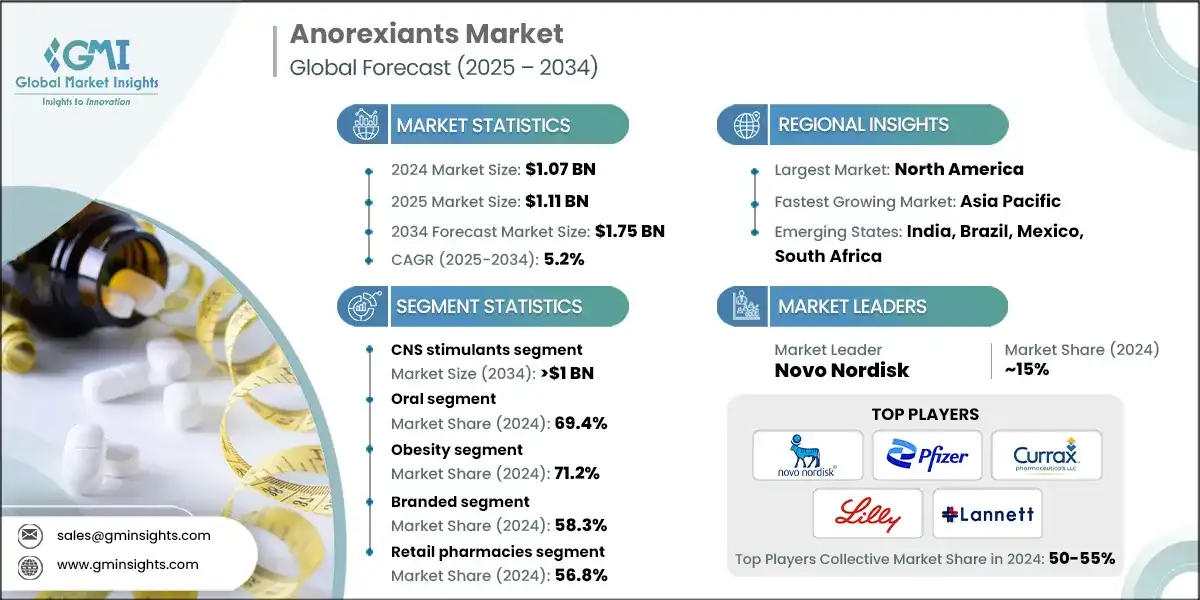
The global anorexiants market was estimated at USD 1.07 billion in 2024. The market is expected to grow from USD 1.11 billion in 2025 to USD 1.75 billion in 2034, at a CAGR of 5.2%, according to the latest report published by Global Market Insights Inc.
Anorexiants Market Key Takeaways
Market Size & Growth
- 2024 Market Size: USD 1.07 Billion
- 2025 Market Size: USD 1.11 billion
- 2034 Forecast Market Size: USD 1.75 Billion
- CAGR (2025–2034): 5.2%
Regional Dominance
- Largest Market: North America
- Fastest Growing Region: Asia Pacific
Key Market Drivers
- Increasing prevalence of obesity and metabolic disorders.
- Growing geriatric and adolescent populations.
- Enhanced clinical awareness and treatment guidelines.
- Expansion of digital health and telemedicine platforms.
Challenges
- High cost of branded and biologic therapies.
- Safety concerns and side effects.
Opportunity
- Rising demand in emerging markets.
- Growing shift toward personalized and combination therapies.
Key Players
- Market Leader: Novo Nordisk led with over 15% market share in 2024.
- Leading Players: Top 5 players in this market include Novo Nordisk, Pfizer, Currax Pharmaceuticals, Eli Lilly and Company, Lannett Company, which collectively held a market share of 55% in 2024.
Get Market Insights & Growth Opportunities
The increasing prevalence of obesity and demand for targeted weight management solutions are driving the growth of the anorexiants market. Obesity affects both adults and children globally. According to the World Health Organization (WHO) 2022 report, 1 in 8 people were found to be obese. The World Obesity Federation reports that more than 1 billion people live with obesity, including 880 million adults and 159 million children and teenagers aged 5 to 19 years. Obesity remains a significant public health concern, particularly in low- and middle-income countries, where lifestyle changes and urbanization have contributed to increased obesity rates.
Anorexiants are defined as the pharmaceutical agents that are used to suppress appetite and help in weight loss. Such drugs are used to treat obesity and metabolic disorders. The common prescribed anorexiants are CNS stimulants, GLP-1 receptor agonists and lipase inhibitors. Major players in the market include Novo Nordisk, Currax Pharmaceuticals, Pfizer, Teva Pharmaceuticals and Eli Lilly. These drugs are administered through oral or subcutaneous routes, and are used across many hospitals, specialty clinics and in homecare settings.
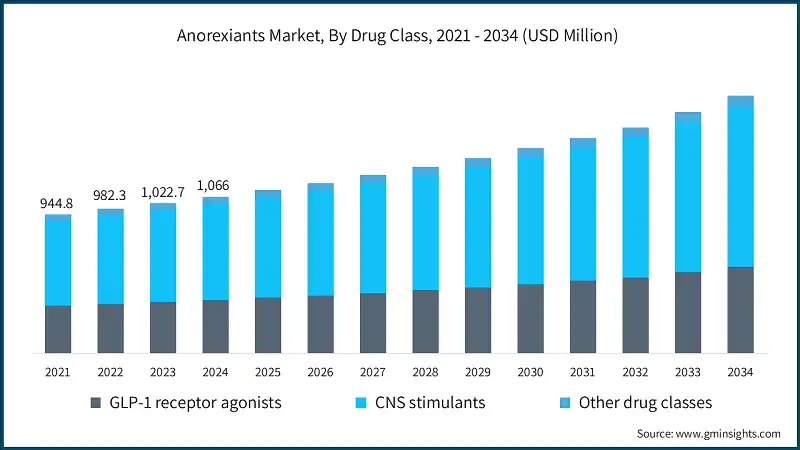
The market grew from USD 944.8 million in 2021 to USD 1.02 billion in 2023. This growth is primarily attributed to the increasing prevalence of obesity, rising sedentary lifestyles, and unhealthy dietary intake. Additionally, the integration of digital health platforms, such as AI-powered diagnostics and remote monitoring, is further escalating the market.
The high prevalence of chronic obesity and recurring weight gain drives the demand for long-term anorexiant medications. Patients who discontinue anorexiant treatment experience rebound weight gain, particularly those with underlying metabolic and psychological conditions. This has increased the adoption of combination therapies and personalized treatment approaches. According to the National Institutes of Health (NIH), patients regain approximately 30-50% of lost weight within one year, and about 50% return to their original weight by the fifth year. Similarly, as per another report published by Cleveland, it has been reported that 80-95% of individuals regain their lost weight. Thus, the high rate of long-term weight regain reported by NIH and Cleveland Clinic serves as a key driver for sustained demand in the anorexiants market, emphasizing the need for lasting obesity treatments.
Technological advancements in drug delivery systems and dual-action therapies, such as Currax Pharmaceuticals' combination of bupropion and naltrexone, continue to drive market innovation. Moreover, the increasing prevalence of chronic conditions, including type 2 diabetes, cardiovascular diseases, and hypertension, has heightened the demand for anorexiants, thereby contributing to market growth.
Emerging economies are witnessing rapid infrastructure improvements and rising awareness about obesity-related health risks. The rapidly growing elderly population, which faces higher exposure to obesity complications, is driving market growth.
Additionally, the integration of AI and machine learning in drug discovery is escalating the efficiency of solution development for anorexia. The rising demand for personalized weight management, along with digital therapeutics, is changing the market. Innovations in patient-centric novel drug delivery systems are improving compliance and treatment. Lastly, government initiatives and public-private partnerships focused on digitizing healthcare infrastructure are further supporting market expansion.
To get key market trends
Anorexiants Market Trends
The anorexiants industry is undergoing transformation driven by macro-level shifts in the global health market and micro-level innovations in obesity management and patient care. The high prevalence of obesity along with metabolic disorders continues to rise, escalating the demand for targeted therapies that focus on appetite regulation and long-term weight management. The market is transforming through the use of GLP-1 receptor agonists, combination therapies, along with digital health integration, emphasizing improved patient compliance and weight reduction.
- The rising use of GLP-1 receptor agonists, such as semaglutide and liraglutide, is gaining attention due to their dual role in appetite suppression and metabolic management. These therapies offer targeted action with sustained weight loss and improved life outcomes.
- The increasing shift toward personalized medicine with help of advanced treatment plans based on patient population analysis, body mass index, metabolic profile and behavioural patterns are gaining attention that stimulate the market growth. In addition, the growing utilisation of digital weight tracking devices, metabolic biomarkers and AI-driven tools are increasingly guiding therapy decisions, particularly for patients with psychological or hormonal effects.
- The upcoming patent expirations for Semaglutide by 2026-2027 will open new opportunities for biosimilars, especially in emerging markets like India. Meanwhile, Amycretin a novel GLP-1, amylin, and calcitonin receptor agonist has shown up to 24.3% weight loss in early trials without plateauing, significantly outperforming current therapies and advancing to Phase 3, driving innovation and competition in the anorexiants market.
- Moreover, the integration of telehealth platforms and remote monitoring tools into obesity management is changing long-term management. The use of digital therapeutics with mobile apps for tracking food intake and physical activity is expanding, especially in rural regions. These platforms are important where access to obesity specialists is limited, improving continuity of care.
- Lastly, the increasing cases of recurrent weight gain after initial weight loss are driving the demand for combination therapies. These therapies, which include GLP-1 agonists, behavioral counselling, and lifestyle changes, are being optimized to reduce appetite, improve metabolic health, and minimize side effects.
Anorexiants Market Analysis
Learn more about the key segments shaping this market
The anorexiants industry was valued at USD 944.8 million in 2021. The market size reached USD 1,022.7 million in 2023, from USD 982.3 million in 2022.
Based on drug class, the anorexiants market is categorized into GLP-1 receptor agonists, CNS stimulants and other drug classes. The CNS stimulants segment accounted for 61.3% of the market in 2024 due to enhanced clinical guidelines of CNS stimulants in weight management, and ability to be administered effectively across various healthcare settings. The segment is expected to exceed USD 1 billion by 2034, growing at a CAGR of 5.3% during the forecast period.
- The demand for rapid and effective weight management solutions continues to drive the growth of CNS stimulants in the global anorexiants market. The rising prevalence of obesity worldwide has established CNS stimulants as a preferred choice in clinical and outpatient settings, primarily due to their fast-acting appetite suppression and energy regulation properties.
- Moreover, the adoption of CNS stimulant-based anorexiants has increased with the growing focus on early intervention in obesity care. These medications deliver immediate appetite control, support behavioral therapy, and help reduce comorbidity risks. Primary care facilities and bariatric clinics particularly benefit from these interventions, as they further contribute to improved long-term patient outcomes.
- The rising incidence of lifestyle-related disorders and the increased emphasis on pharmacological weight loss solutions has intensified the demand for CNS stimulant therapies. In addition, the availability of oral formulations and structured dosing schedules enables treatment implementation, even in healthcare settings with limited resources.
- On the other hand, GLP-1 receptor agonists segment is expected to grow with a CAGR of 5% during the analysis period. The growth of this segment can be attributed to rising obesity rates, growing demand for long-acting injectable therapies, and strong clinical outcomes in weight reduction and metabolic improvement.
- The other drug classes segment is expected to grow with a CAGR of 4.7%. The growth of this segment is stimulated by innovation in novel mechanisms, increased focus on combination therapies, and expanding access to non-stimulant pharmacological options.
Based on the route of administration, the anorexiants market is segmented into oral and parenteral. The oral segment accounted for the highest market share of 69.4% in 2024 due to its accuracy in systemic drug absorption, and compatibility with long-term outpatient treatment protocols.
- The oral segment is gaining significant traction due to its superior ability to deliver anorexiants with consistent bioavailability and simplified dosing regimens.
- Oral medications are easy to administer compared to other routes such as injectables, resulting in higher patient compliance. Adherence to oral anorexiants is significantly greater than for parenteral options, as patients prefer taking a pill at home rather than visiting healthcare facilities for injections.
- Oral medications are more cost-effective than injectable treatments, as they require less infrastructure for administration and fewer healthcare resources. According to WHO, oral therapeutics contribute to reduced healthcare costs by minimizing hospital visits and the need for specialized staff, making them particularly accessible. This collectively drives market growth.
- Moreover, parenteral therapies are gaining momentum due to their critical role in clinical obesity management and inpatient care, where fast-acting results and precise dosing are essential for managing severe or treatment-resistant cases.
Based on indication, the market is segmented into obesity and overweight with comorbidities. The obesity segment accounted for the highest market share of 71.2% in 2024 due to increasing obesity cases, sedentary lifestyle and unhealthy food intake.
- The obesity segment holds a dominant share in the anorexiants market, stimulated by the rising global burden of obesity and increasing demand for effective pharmacological weight loss solutions. Obesity is now recognized as a chronic, relapsing condition that significantly impacts public health, prompting widespread adoption of therapeutic interventions across clinical and outpatient settings.
- The increasing incidence of obesity-related complications such as type 2 diabetes, cardiovascular disease, and sleep apnea is stimulating the need for targeted anorexiant therapies that support sustainable weight reduction and metabolic control.
- Anorexiants are frequently combined with lifestyle modifications and behavioural support programs to enhance treatment outcomes and improve long-term adherence. These integrated approaches help reduce relapse rates and support comprehensive weight management, contributing to market expansion.
- Moreover, the increasing availability and affordability of anorexiant medications are accelerating adoption rate, particularly in regions with expanding healthcare access and growing awareness of obesity-related health risks.
- On the other hand, the overweight with comorbidities segment is expanding steadily, supported by early intervention efforts, rising awareness of metabolic risk factors, and the development of combination therapies that address multiple health concerns.
- As healthcare providers focus on preventing disease progression and improving quality of life, pharmaceutical innovation in this segment is advancing with new formulations and delivery systems tailored to diverse patient needs.
Based on the drug type, the anorexiants market is segmented into branded and generics. The branded segment accounted for the highest market share of 58.3% in 2024 due to better efficacy of branded therapeutics as compared to generic drugs, strong clinical and regulatory support and premium branding with patient support programs.
- The branded segment holds a dominant share in the anorexiants market, stimulated due to its higher clinical efficacy, regulatory approvals, and strong physician preference for established therapies.
- Branded anorexiants such as GLP-1 receptor agonists and combination CNS stimulants are widely prescribed due to their proven outcomes and robust safety profiles, leading to greater demand for premium treatment options and long-term obesity management.
- Moreover, strong patient adherence, targeted marketing strategies, and higher prescription rates across specialized obesity care centers, drives the growth of the market. Branded therapies are often supported by comprehensive patient support programs, contributing to their widespread adoption and sustained market leadership.
- On the other hand, the generics segment is anticipated to expand quickly, due to increasing affordability, broader access in emerging markets, and growing demand for cost-effective obesity treatments. As healthcare systems prioritize budget-conscious solutions, generic anorexiants are expected to benefit from expanded formularies and increased use in public health programs.
Learn more about the key segments shaping this market
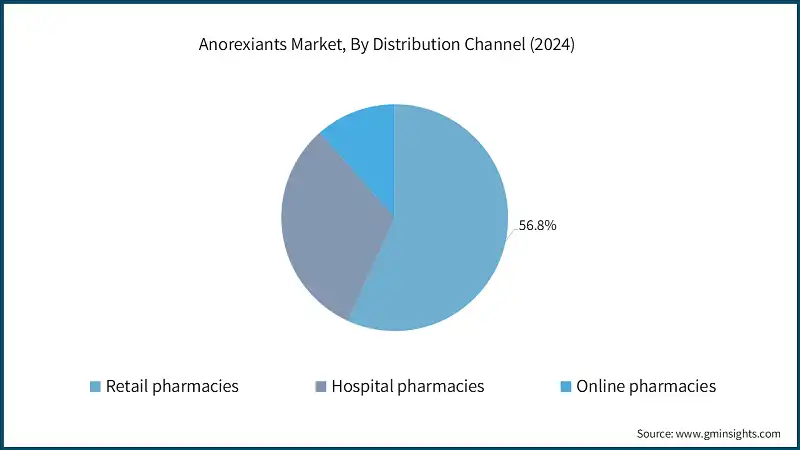
Based on distribution channel, the anorexiants market is categorized into retail pharmacies, hospital pharmacies and online pharmacies. The retail pharmacies segment accounted for the highest market share of 56.8% in 2024.
The retail pharmacies segment holds a dominant share in the anorexiants industry, owing to Increasing awareness of obesity-related health risks is pushing more consumers to seek over the counter and prescription anorexiants from retail outlets.
- Additionally, retail pharmacies continue to serve as a key distribution channel, offering in-person pharmacist support and immediate access to medications. Their role remains strong in urban and semi-urban areas where walk-in consultations are common.
- Many retail pharmacies now include wellness clinics, nutrition counseling, and weight management programs, creating a one-stop solution for obesity care.
- On the other hand, the online pharmacies segment holds a 11.5% share in the anorexiants market, driven by increasing consumer preference for discreet purchasing, digital convenience, and competitive pricing. Online platforms offer easy access to prescription and non-prescription anorexiants, especially for patients seeking privacy and flexibility in managing obesity.
- Moreover, the rising adoption of e-commerce in healthcare and the integration of telemedicine services are accelerating the growth of online pharmacies. These channels enable remote consultations, digital prescriptions, and doorstep delivery, making them particularly attractive for long-term weight management therapies.
- Hospital pharmacies are expanding steadily, driven by the increasing use of anorexiants in clinical obesity programs and inpatient care settings. These channels are critical for initiating therapy under medical supervision and managing complex cases with comorbidities.
Looking for region specific data?
North America Anorexiants Market
The North America market dominated the global anorexiants drugs market with a market share of 40.1% in 2024. The market is stimulated by the rising prevalence of obesity and increased spending on weight management care. Advancements in drug development and a growing focus on treatment efficiency also support market growth.
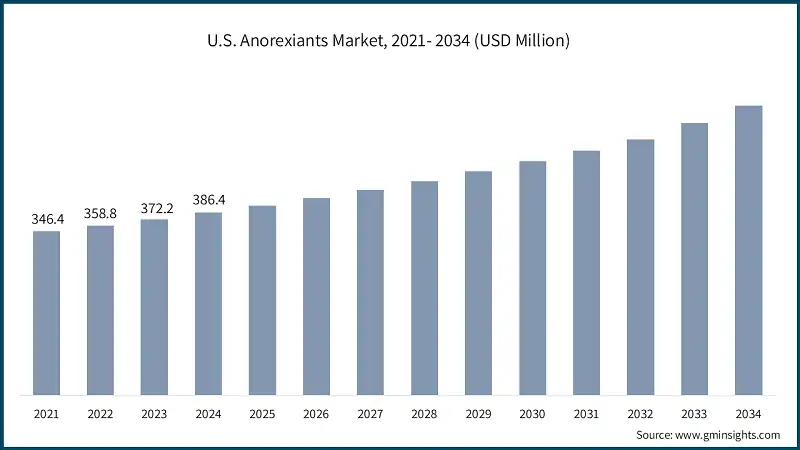
The U.S. anorexiants market was valued at USD 346.4 million and USD 358.8 million in 2021 and 2022, respectively. The market size reached USD 386.4 million in 2024, growing from USD 372.2 million in 2023.
- The rising prevalence of obesity in the U.S. is driving increased demand for anorexiant treatments. In addition, the growing patient population highlights the urgent need for effective pharmacological solutions, thereby contributing to market growth. For instance, according to the CDC, obesity rates between 2021 and 2023 averaged 40.3%, with 39.2% prevalence in men and 41.3% in women.
- Additionally, the WHO reported that in 2022, 2.5 billion individuals aged 18 and above were overweight in U.S. Thus, the growing expansion of large pharmacy chains and online pharmacies in U.S., increases reach and availability of anorexiants, especially in urban and semi-urban areas, thereby contributing to market growth.
- Moreover, the increasing prevalence of chronic obesity-related conditions, such as diabetes and cardiovascular disease, further stimulates market growth. The growth in prescriptions for anorexiants have grown, reflecting the need for long-term therapeutic support. According to NIH, 8.9% and 17.4% cases of cardiovascular diseases and diabetes comorbidities were reported in the country.
- The high incidence of severe obesity in elderly population further drives demand for anorexiants. These patients often require intensive interventions, with long-term drug therapy, to manage associated health risks. According to Population Reference Bureau, the number of Americans aged 65 and older will increase from 58 million in 2022 to 82 million by 2050.
- Lastly, the growing concerns about the impact of obesity such as fatigue, limited mobility, and increased healthcare utilization are also escalating market growth. These factors encourage regular medical supervision and the adoption of effective anorexiants to improve patient outcomes.
Europe Anorexiants Market
Europe market accounted for USD 284.6 million in 2024 and is anticipated to show lucrative growth over the forecast period.
- Rising awareness and adoption of advanced obesity therapies in Europe, combined with increasing government initiatives to strengthen healthcare infrastructure, are anticipated to drive growth in the anorexiants market.
- Moreover, advancements in drug technologies, such as GLP-1 receptor agonists and combination therapies, along with the introduction of scalable and cost-effective treatment options, boost the requirement for anorexiants across the European region.
- The presence of key pharmaceutical companies in the region strengthens the market. These companies actively participate in innovation through the development of next-generation weight management therapies, expanded clinical research, and partnerships with obesity and metabolic health associations, thereby advancing market growth.
Germany anorexiants market is anticipated to witness considerable growth over the analysis period.
- The growing burden of obesity-related comorbidities such as diabetes, hypertension and cardiovascular disease in Germany is stimulating the demand for weight loss and obesity management solutions, thereby contributing to market growth.
- The growing elderly population, which is more susceptible to diseases and weight gain, drives the market demand. According to NIH, 2 million hospital cases were reported among the elderly population in Germany in 2022. Thus, the increasing adult obesity rates heighten the demand for effective anorexiants, that further contribute to market growth. According to NIH, 53.5% of the German population is obese and overweight, with women accounting for 47% and men for 62%.
- Moreover, increasing public awareness of obesity’s impact on long-term health and quality of life is contributing to market growth. National strategies and community initiatives are encouraging healthier lifestyles and use of medical weight-loss therapies.
- Growing concerns about the psychological and physical impacts of obesity such as depression, fatigue, and reduced mobility are influencing treatment decisions. This is encouraging regular medical consultations and the adoption of anorexiants to improve patient health.
Asia Pacific Anorexiants Market
The Asia Pacific market is anticipated to grow at the highest CAGR of 5.7% during the analysis timeframe.
- The Asia Pacific anorexiants industry is witnessing rapid growth, driven by rising obesity rates, increasing digital health awareness, and improved healthcare infrastructure across both urban and rural settings.
- Countries like China, India, and Japan are adopting anorexiant treatments at an accelerated pace due to heightened demand for efficient care delivery, government-led digital health initiatives targeting obesity, and the expansion of cloud-based platforms supporting multi-specialty practices.
- Additionally, the surge in weight management centers and healthcare providers, along with supportive government policies promoting digitalization and integrating obesity care into national health strategies, is further propelling market expansion in the region.
China anorexiants market is predicted to grow significantly over the forecast period.
- The rapid urbanization and lifestyle shift in China are contributing to a rise in obesity rates, particularly among younger populations. This trend is stimulating demand for anorexiant therapies.
- The increasing government investment in metabolic health and the expansion of obesity treatment programs further stimulates the market growth.
- Moreover, the country has a high rate of unhealthy food consumptions, which is a major reason for obesity. According to a study by NIH, 74.5% people consumed processed foods, excluding edible oils and other condiments in China. Moreover, according to Statista, half of people in China consume spicy food and sugar which is the main reason for obesity.
Latin America Anorexiants Market
Brazil is experiencing significant growth in the Latin America anorexiants industry due to the increasing demand for obesity care management and easy availability of oral anorexiants.
- The rising incidence of obesity and metabolic disorders in Brazil is fueling demand for effective weight-loss treatments. With a high prevalence of eating disorders and limited research, healthcare providers are increasingly turning to anorexiants to improve outcomes, especially among youth and aging populations.
- Government initiatives to digitize healthcare such as expanding drug availability and strengthening regulatory frameworks are accelerating the adoption of anorexiants across public and private sectors.
- Furthermore, efforts to broaden access to obesity care and integrate AI-driven infrastructure in both urban and rural regions are enabling more personalized treatment strategies thereby driving market growth.
Middle East & Africa Anorexiants Market
Saudi Arabia market is poised to witness substantial growth in Middle East and Africa anorexiants industry during the forecast period.
- Increasing cases of obesity due to sedentary lifestyles and metabolic disorders are escalating market demand. According to Ministry of Health, 41 million children under age 5, 340 million between 5 to 19 year of age suffer from obesity.
- Improved access to obesity care across urban and rural regions is encouraging the adoption of advanced weight management solutions. Hospitals and clinics are increasingly integrating anorexiants into treatment plans, especially for high-risk and elderly populations, supported by enhanced diagnostic and patient monitoring capabilities.
- Moreover, government-led initiatives to modernize healthcare such as expanding telehealth services, incentivizing chronic disease management, and promoting digital health infrastructure are accelerating the uptake of anorexiant therapies across both public and private healthcare sectors.
- These efforts are enabling more personalized and accessible obesity care, further driving market growth.
Anorexiants Market Share
Leading companies such as Novo Nordisk, Pfizer, Currax Pharmaceuticals, Teva Pharmaceuticals, and Eli Lilly collectively hold between 55-60% of the market share in the global anorexiants market. These companies maintain dominance through extensive drug portfolios, strategic collaborations, regulatory strength, and continuous innovation. Novo Nordisk holds a strong competitive advantage with its GLP-1 receptor agonists, Saxenda and Wegovy, which are widely adopted for chronic weight management across hospitals and obesity clinics.
Pfizer, with its CNS stimulant-based drug Didrex, supports short-term obesity treatment protocols and maintains a strong presence in the prescription anorexiants segment. Currax Pharmaceuticals has gained market traction with Contrave, a combination therapy that targets both neurological and behavioral aspects of weight management, making it a preferred choice for long-term treatment.
Companies such as Teva Pharmaceuticals and KVK-Tech offer cost-effective stimulant-based anorexiants such as ADIPEX-P and Phentermine HCl, catering to budget-conscious healthcare providers and retail pharmacies. These firms are addressing market gaps by expanding access to generic therapies and integrating digital tools for patient adherence and monitoring.
New entrants and niche players such as Vivus, Elite Pharma, and Zydus Pharmaceuticals are disrupting the market with innovative formulations and targeted therapies. Their focus on combination drugs and stimulant-based solutions positions them as agile competitors in the evolving anorexiants market. Meanwhile, CHEPLAPHARM, GlaxoSmithKline, and Aventis Pharmaceuticals contribute to the lipase inhibitor and stimulant categories, supporting broader therapeutic options.
Anorexiants Market Companies
Few prominent players operating in the industry includes:
- Aventis Pharmaceuticals
- Currax Pharmaceuticals
- Eli Lilly and Company
- KVK-Tech
- Lannett Company
- Novo Nordisk
- Pfizer
- Teva Pharmaceuticals
- Valeant Pharmaceuticals
- Vivus
- Zydus Pharmaceuticals
- Novo Nordisk
Novo Nordisk leads the anorexiants market with a share of 15% in 2024. Novo Nordisk leads the anorexiants industry with its innovative GLP-1 receptor agonists, Saxenda and Wegovy, designed for chronic weight management. These biologic therapies offer dual benefits in appetite suppression and metabolic regulation, making them a breakthrough in obesity care. Novo Nordisk’s deep expertise in endocrinology, commitment to long-term outcomes, and integration with digital health platforms make it a trusted partner for obesity specialists worldwide.
Currax Pharmaceuticals holds a strong position with Contrave, a combination therapy targeting both neurological and behavioral pathways in weight management. Its unique approach to chronic obesity treatment, supported by strategic marketing and patient engagement tools, makes it a standout in the segment.
Pfizer brings scale and accessibility to the anorexiants market through its stimulant-based therapy Didrex, used for short-term obesity treatment. Its strength lies in affordability, global distribution, and clinical support. Pfizer’s focus on real-world evidence, patient adherence tools, and integration with telehealth platforms positions it as a preferred provider for clinics and hospitals managing acute weight loss interventions.
Eli Lilly is advancing the market with Zepbound, a dual GLP-1/GIP receptor agonist offering next-generation weight loss solutions. Focused on sustainable care and metabolic health, Lilly’s innovation lies in its biologic pipeline, AI-enhanced clinical research, and strategic investments in obesity-related therapeutics. Its scalable delivery systems and commitment to precision medicine make it a key player in long-term obesity care.
Anorexiants Market Report Attributes
| Key Takeaway | Details |
|---|---|
| Market Size & Growth | |
| Base Year | 2024 |
| Market Size in 2024 | USD 1.07 Billion |
| Market Size in 2025 | USD 1.11 billion |
| Forecast Period 2025 - 2034 CAGR | 5.2% |
| Market Size in 2034 | USD 1.75 Billion |
| Key Market Trends | |
| Drivers | Impact |
| Increasing prevalence of obesity and metabolic disorders | Rising global obesity rates are driving demand for appetite suppressants and long-term weight management therapies. |
| Growing geriatric and adolescent populations | Older adults and teens are increasingly affected by obesity, expanding the target demographic for anorexiant drugs. |
| Enhanced clinical awareness and treatment guidelines | Improved understanding of obesity as a chronic disease is encouraging broader use of GLP-1 agonists and combination therapies. |
| Expansion of digital health and telemedicine platforms | Remote monitoring and AI-based diagnostics are increasing access to anorexiant prescriptions and follow-up care. |
| Pitfalls & Challenges | Impact |
| High cost of branded and biologic therapies | Premium pricing of GLP-1 and dual agonists limits affordability, especially in low-income populations. |
| Safety concerns and side effects | CNS stimulants and long-term use of anorexiants may lead to adverse effects, impacting patient adherence and regulatory scrutiny. |
| Opportunities: | Impact |
| Rising demand in emerging markets | Expanding healthcare access in Asia-Pacific and Latin America is creating new demand for affordable weight loss medications. |
| Growing shift toward personalized and combination therapies | Increasing focus on individualized treatment plans is boosting the adoption of dual-action and targeted anorexiants. |
| Market Leaders (2024) | |
| Market Leaders |
15% market share |
| Top Players |
Collective Market Share is 50-55% |
| Competitive Edge |
|
| Regional Insights | |
| Largest Market | North America |
| Fastest Growing Market | Asia Pacific |
| Emerging Countries | India, Brazil, Mexico, South Africa |
| Future outlook |
|
What are the growth opportunities in this market?
Anorexiants Industry News
- In July 2022, U.S. FDA approved QSYMIA a combination of phentermine and topiramate ER capsules for treating obesity in adolescents aged 12-17. This expanded VIVUS market reach into the adolescent obesity segment, strengthening in the weight therapeutics.
- In June 2021, U.S. FDA approved Novo Nordisk’s Wegovy for chronic weight management in adults with obesity or overweight with related conditions. This expanded its presence in the U.S. weight management market.
The anorexiants drugs market research report includes in-depth coverage of the industry with estimates and forecast in terms of revenue in USD Million from 2021 - 2034 for the following segments:
Market, By Drug Class
- GLP-1 receptor agonists
- CNS stimulants
- Other drug classes
Market, By Route of Administration
- Oral
- Parenteral
Market, By Indication
- Obesity
- Overweight with comorbidities
Market, By Drug Type
- Branded
- Generics
Market, By Distribution Channel
- Retail pharmacies
- Hospital pharmacies
- Online pharmacies
The above information is provided for the following regions and countries:
- North America
- U.S.
- Canada
- Europe
- Germany
- UK
- France
- Italy
- Spain
- Netherlands
- Asia Pacific
- China
- Japan
- India
- Australia
- South Korea
- Latin America
- Brazil
- Mexico
- Argentina
- Middle East and Africa
- South Africa
- Saudi Arabia
- UAE
Frequently Asked Question(FAQ) :
What is the market size of the anorexiants industry in 2024?
The market size was USD 1.07 billion in 2024, with a CAGR of 5.2% expected through 2034 driven by the growing prevalence of obesity and expansion of digital health platforms.
What is the current anorexiants market size in 2025?
The market size is projected to reach USD 1.11 billion in 2025.
What is the projected value of the anorexiants market by 2034?
The anorexiants industry is expected to reach USD 1.75 billion by 2034, supported by demand for targeted obesity therapies and adoption of combination and digital health-driven treatments.
How much revenue did the CNS stimulants segment generate in 2024?
The CNS stimulants segment held 61.3% share in 2024, leading the anorexiants market due to its wide clinical adoption and fast-acting appetite suppression.
What was the valuation of the oral route of administration segment in 2024?
Oral anorexiants accounted for 69.4% share in 2024, driven by ease of use, high patient compliance, and long-term outpatient treatment suitability.
What is the growth outlook for GLP-1 receptor agonists from 2025 to 2034?
GLP-1 receptor agonists are projected to grow at a 5% CAGR till 2034.
Which region leads the anorexiants market?
North America held 40.1% share in 2024. Growth is driven by high obesity prevalence, advanced drug development, and expanding pharmacy networks in the U.S.
What are the upcoming trends in the anorexiants industry?
Key trends include adoption of GLP-1 receptor agonists, integration of telemedicine and digital therapeutics, personalized weight management approaches, and development of biosimilars post-patent expirations.
Who are the key players in the anorexiants market?
Key players include Novo Nordisk, Pfizer, Currax Pharmaceuticals, Eli Lilly and Company, Teva Pharmaceuticals, Lannett Company, KVK-Tech, Valeant Pharmaceuticals, Vivus, Zydus Pharmaceuticals, and Aventis Pharmaceuticals.
Anorexiants Market Scope
Related Reports