Summary
Table of Content

Animal Healthcare Market
Get a free sample of this report
Form submitted successfully!
Error submitting form. Please try again.
Thank you!
Your inquiry has been received. Our team will reach out to you with the required details via email. To ensure that you don't miss their response, kindly remember to check your spam folder as well!
Request Sectional Data
Thank you!
Your inquiry has been received. Our team will reach out to you with the required details via email. To ensure that you don't miss their response, kindly remember to check your spam folder as well!
Form submitted successfully!
Error submitting form. Please try again.
Animal Healthcare Market Size
This market is primarily driven by rising pet ownership and increasing livestock populations. According to Pet Palace, 45.5% of households own a dog and 32.1% own a cat globally. Additionally, Symrise reports that 23% of households globally own a pet, with approximately 522 million dogs and 445 million cats worldwide. Moreover, expanding demand for protein‑rich animal‑derived food products, greater awareness of animal welfare, and the global emphasis on preventing disease transmission from animals to humans further contribute to market growth.
Further, the increasing burden of animal diseases, including chronic and infectious conditions, has also intensified the need for advanced veterinary intervention. Growing incidence of zoonotic diseases, along with the rising human‑animal interface across farms, homes, and urban environments, continues to shape healthcare priorities globally.
Animal Healthcare Market Key Takeaways
Market Size & Growth
- 2025 Market Size: USD 220.8 Billion
- 2026 Market Size: USD 237.8 Billion
- 2035 Forecast Market Size: USD 399.4 Billion
- CAGR (2026–2035): 5.9%
Regional Dominance
- Largest Market: North America
- Fastest Growing Region: Asia Pacific
Key Market Drivers
- Increasing population of pet animals.
- Increasing support offered by government and public organizations for animal care.
- Growing demand for online veterinary pharmacies.
- Increase in animal healthcare expenditure.
Challenges
- High cost associated with animal health drugs.
- Limited access in rural areas.
Opportunity
- Expansion of telemedicine and remote veterinary consultation.
- Rising adoption of preventive and wellness focused animal health solutions.
Key Players
- Market Leader: Zoetis led with over 11% market share in 2025.
- Leading Players: Top 5 players in this market include Zoetis, Merck, Boehringer Ingelheim, Elanco Animal Health, IDEXX Laboratories, which collectively held a market share of 40% in 2025.
Get Market Insights & Growth Opportunities
The animal healthcare market refers to the global industry focused on the prevention, diagnosis, and treatment of diseases affecting companion and production animals. It encompasses pharmaceuticals, vaccines, diagnostic tools, medicinal feed additives, equipment and disposables that collectively help maintain animal health, enhance livestock productivity, prevent disease outbreaks, and support public health through the reduction of zoonotic risks.
Key players in the animal healthcare market include Zoetis, Merck Animal Health, Boehringer Ingelheim, Elanco Animal Health, Ceva Sante Animale, Virbac, Vetoquinol, Dechra Pharmaceuticals, Neogen Corporation, Phibro Animal Health Corporation, and Biogenesis Bagó. These companies continue to drive innovation through robust R&D pipelines, expansion of vaccine and biologics portfolios, digital diagnostic advancements, and strategic acquisitions aimed at strengthening global manufacturing and distribution networks. Their combined efforts are instrumental in addressing the long‑term healthcare needs of companion animals and livestock populations worldwide.
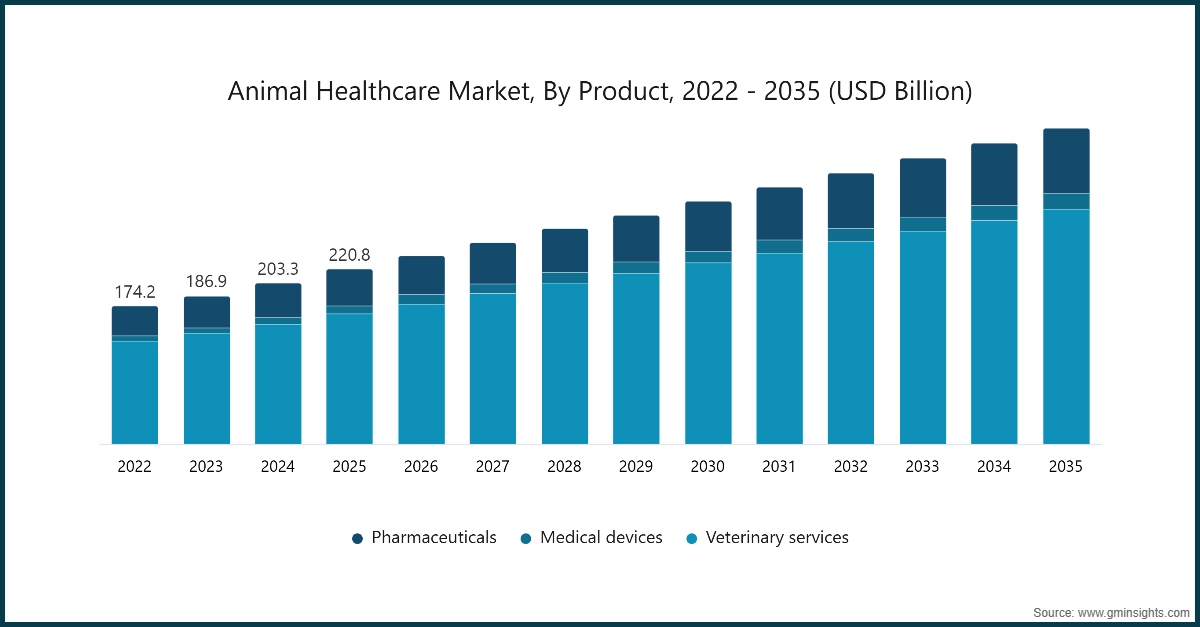
Between 2022 and 2024, the animal healthcare market experienced steady and sustained growth, supported by the rising adoption of biologics, increased utilization of advanced diagnostics, and strong demand for preventive veterinary care. During this period, the global market expanded from approximately USD 174.2 billion in 2022 to USD 203.3 billion in 2024. Growth was further reinforced by expanding livestock production, increased investment in veterinary pharmaceuticals and broader access to modern veterinary treatments across both developed and emerging markets.
The global animal healthcare market was valued at USD 220.8 billion in 2025. The market is expected to grow from USD 237.8 billion in 2026 to USD 399.4 billion in 2035, at a CAGR of 5.9% during the forecast period, according to the latest report published by Global Market Insights Inc. 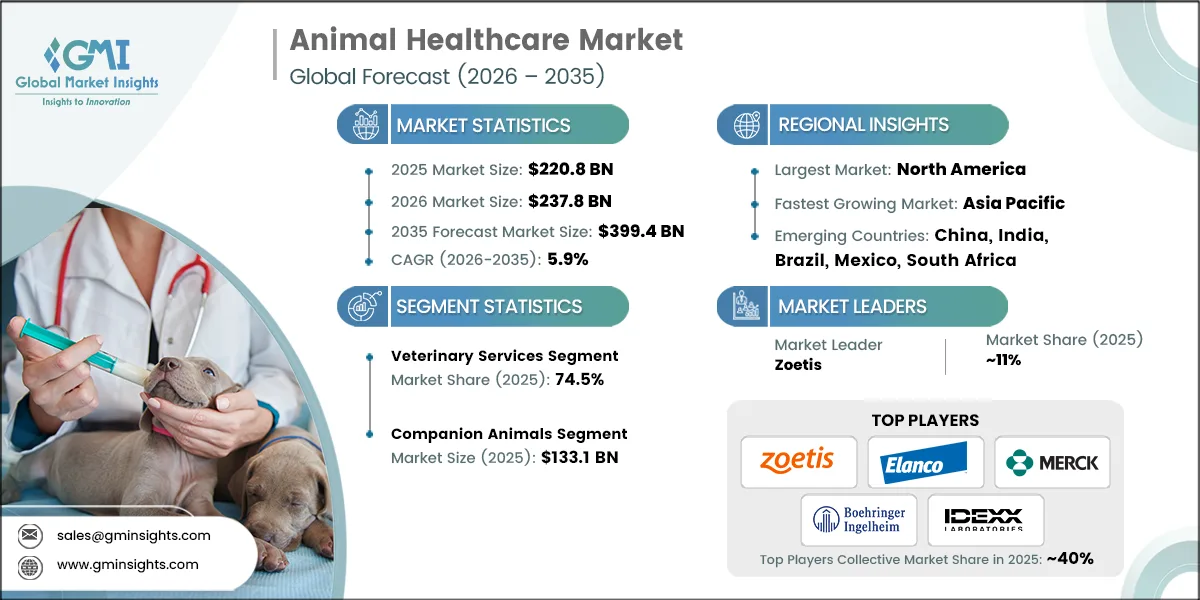
To get key market trends
Animal Healthcare Market Trends
- A major trend is the shift from broad, conventional treatments toward advanced, targeted and preventive modalities with wider adoption of biologics and species‑specific monoclonal antibodies in companion animals, while livestock health increasingly relies on modern vaccine platforms and herd‑level prevention.
- Also, personalized and precision approaches are gaining traction as diagnostics and biomarker‑guided care become more accessible in clinics and reference labs, enabling veterinarians to tailor therapy and monitoring to species, breed, and condition and to intervene earlier with point‑of‑care and reference tests.
- The emergence of novel, patient-friendly modalities is expanding options beyond daily pills or frequent injections. For example, monthly mAb injectables for chronic conditions in pets and needle‑free intradermal vaccination in swine aligning with the broader move to convenience, adherence, and earlier disease control.
- Moreover, epidemiology and improved detection are advancing market growth, the rising pet ownership and medicalization of companion animals, together with sustained demand for safe, high‑quality livestock protein, are enlarging the treated population and increasing uptake of animal drugs, vaccines, parasiticides, and diagnostics across species.
- Further, digital innovation and new technology stacks are reshaping care delivery such as precision livestock farming is moving management from reactive to predictive, while telemedicine/telehealth and connected platforms support remote triage, adherence, and continuous follow‑up reducing treatment burden and improving real‑world outcomes.
- Lastly, data-driven, on-farm monitoring is becoming foundational to herd and flock health, including tag ecosystems that detect heat, illness, and behavioral changes earlier, as well as integrated software platforms linking identification, reproduction, feeding, and welfare metrics.
Animal Healthcare Market Analysis
Learn more about the key segments shaping this market
Based on the product, the market is segmented into pharmaceuticals, medical devices, and veterinary services. The veterinary services segment has asserted its dominance in the market by securing a significant revenue share of 74.5% in 2025 and is anticipated to grow at a CAGR of 6% over the forecast years.
- This highest market growth is primarily attributable to the rising disposable income and surged demand for veterinary services. The increasing focus on pet care services has surged due to the higher pet adoption.
- For instance, according to a published research article, approximately 20% more dogs were purchased in a year in comparison with the earlier years in Germany. The increasing adoption of pets is set to promote the demand for pet care services.
- In addition, several developments in the veterinary healthcare technologies have increased the range of veterinary services. Availability of wide range of services for pets such as diagnostic services, pet grooming and day care, pet boarding, and telemedicine services has further improved the adoption rates.
- Also, the increasing spending capacity of the population coupled with growing emphasis on pet care is projected to positively influence the segmental size over the coming years. As a result, these factors are projected to significantly influence the segmental revenue share over the forecast period.
- The pharmaceuticals segment is the fastest growing segment, which accounted for a CAGR of 5.8%, driven by rising pet ownership, increasing prevalence of infectious and chronic animal diseases and rapid innovation in veterinary drugs including vaccines, parasiticides, and specialty therapeutics leading to higher demand for effective preventive and treatment solutions.
Learn more about the key segments shaping this market
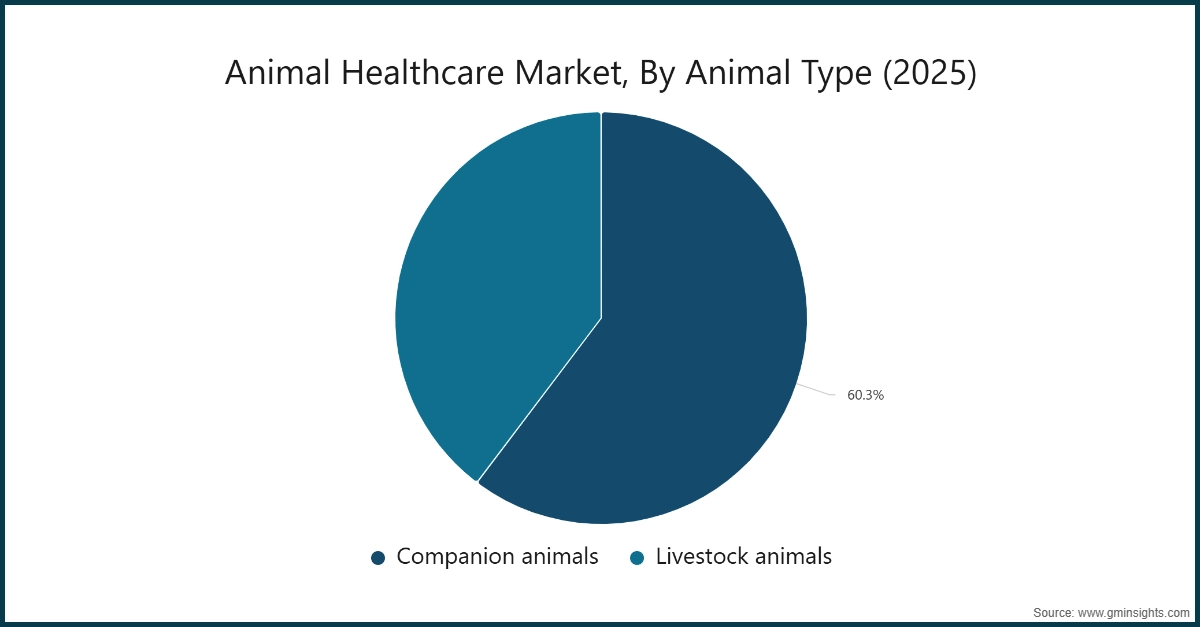
Based on animal type, the animal healthcare market is classified as companion animals and livestock animals. The companion animals segment held the highest revenue of USD 133.1 billion in 2025 and is expected to witness a notable growth during the forecast time. The companion animals' segment is sub-segmented into dogs, cats, horses, and other companion animals.
- This substantial growth is attributed to the rising adoption rate of animals such as dogs, cats, birds, and horses as pets.
- More than half of the global population is estimated to have a pet at home. Globally, dogs are the most popular pet, present in around one in three homes. Almost a quarter of pet owners have a cat. Thus, the sheer number of companion animals along with increased spending is expected to propel the segmental growth.
- Growing disposable income in developing economies and launch of advanced animal healthcare products will spur segment growth during the forecast timeframe.
- Moreover, the increasing focus of manufacturers to develop and launch more innovative animal healthcare solutions to meet the growing demand of pet owners is set to further propel market growth.
On the other hand, the livestock animals' segment is growing, driven by the rising demand for high‑quality animal protein, increasing prevalence of infectious and production‑limiting diseases, and greater adoption of preventive healthcare practices.
North America Animal Healthcare Market
Looking for region specific data?
The North America animal healthcare market dominated the global market with a share of 38.5% in 2025.
- North America leads the global market, stimulated by well‑developed veterinary infrastructure, and strong uptake of advanced therapeutics, parasiticides, and vaccines across companion and livestock segments.
- The region benefits from early adoption of advanced diagnostics and precision health technologies, supported by major players with strong innovation capacity, including rapid adoption of AI‑enabled analyzers and integrated diagnostic ecosystems.
- Also, demand is further stimulated by high prevalence of zoonotic and chronic conditions in pets and a broader shift toward preventive care and premium pet treatments.
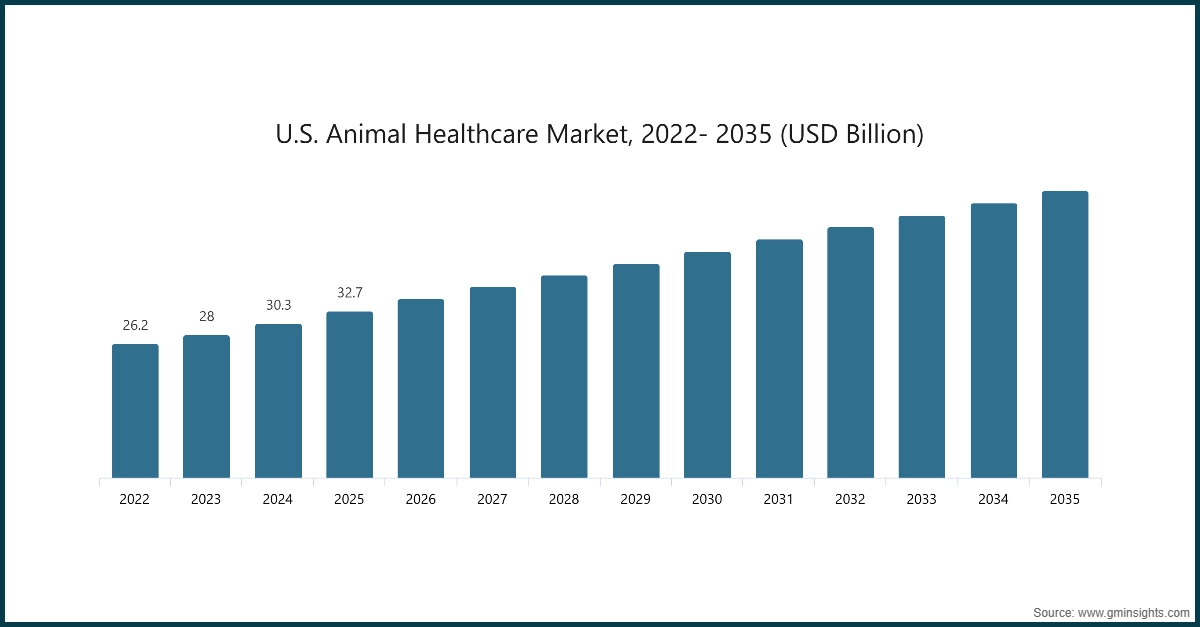
The U.S. animal healthcare market was valued at USD 26.2 billion and USD 28 billion in 2022 and 2023, respectively. The market size reached USD 32.7 billion in 2025, growing from USD 30.3 billion in 2024.
- The U.S. dominates regional growth due to high spending on pet care, robust livestock production systems, and rapid adoption of innovative diagnostics and biologics. According to American Pet Products Association, in 2024, the country experienced USD 152 billion spent on pets, stimulating the market demand.
- Also, U.S. veterinary practices show strong utilization of point‑of‑care analysers, AI‑driven diagnostics, and telehealth services, enabling faster, more precise decision‑making.
- The U.S. market benefits from steady innovation in monoclonal antibody therapies, with rapid uptake of species‑specific biologics for chronic conditions in pets.
Europe Animal Healthcare Market
Europe market accounted for USD 61.5 billion in 2025 and is anticipated to show lucrative growth over the forecast period.
Europe maintains strong momentum due to high pet ownership, established livestock vaccination programs, and widespread availability of veterinary biopharmaceuticals. According to European pet food industry, in Europe, about 90 million households own a pet, stimulating the market demand.
- Also, advanced species‑specific vaccine portfolios and rapid biologics adoption in companion animals support sustained growth.
Germany dominates the Europe animal healthcare market, with strong growth potential.
- The country’s leadership is supported by advanced healthcare infrastructure, strong reimbursement coverage along with early focus on targeted therapies for animals.
- Also, the country’s high population livestock sector adopts high‑precision monitoring tools, supporting healthier herds and improved production outcomes. According to Foodtech Now, in November 2025, Germany had approximately 10.5 million cattle, including 3.6 million dairy cows, driving market demand.
- As of 2023, 45% of German households have a pet and 14% of households have two pets or more. This totals approximately 34.3 million pets. Cats and dogs are the most popular house pets, with 25% of German households owning cats and 21% of households owning dogs.
Asia Pacific Animal Healthcare Market
The Asia Pacific market is anticipated to grow at the highest CAGR of 6.3% during the analysis timeframe.
- The regional growth is stimulated by rapid improvements in veterinary infrastructure, expansion of animal protein production, and increasing adoption of diagnostics and preventive vaccines.
- Also, expansion of precision livestock farming, driven by AI, IoT sensors, and herd‑monitoring platforms, is transforming livestock management across China, India, and Japan.
China animal healthcare market is estimated to grow with a significant CAGR, in the Asia Pacific region.
- The country is driven by a large companion animal base and extensive livestock farming operations, improved biosecurity, and adoption of digital herd‑management tools.
- Expanding biotech capabilities and partnerships are facilitating increased development of advanced vaccines and biologics tailored to local disease burdens.
- Government initiatives to strengthen animal disease surveillance, food safety, and traceability accelerate adoption of monitoring and diagnostic systems.
- Companion animal care is expanding rapidly due to growing urbanization and rising demand for premium pet diagnostics and therapies.
Latin American Animal Healthcare Market
Brazil leads the Latin American animal healthcare industry, exhibiting remarkable growth during the analysis period.
- Expanding poultry, cattle, and swine production is driving higher demand for vaccines, parasiticides, and productivity-enhancing therapeutics.
- Moreover, growing penetration of private veterinary clinics and pet insurance is boosting prescription rates for innovative companion animal treatments.
- Also, increased investments from multinational players in local manufacturing and distribution are improving product availability and affordability.
Middle East and Africa Animal Healthcare Market
Saudi Arabia animal healthcare industry is expected to experience substantial growth in the Middle East and Africa.
- Saudi Arabia’s market expansion is driven by the increasing prevalence of animal diseases, rising investments in healthcare infrastructure, and government-led programs under Vision 2030.
- The country is actively upgrading animal healthcare capabilities and establishing specialized treatment centers, creating greater demand for drugs and advanced therapies.
Animal Healthcare Market Share
The global animal healthcare industry is characterized by a concentrated yet competitive landscape, with a small group of leading companies generating a substantial share of global revenues. Zoetis, Merck Animal Health, Boehringer Ingelheim, Elanco Animal Health, and IDEXX Laboratories collectively account for approximately 40% of the global market, supported by their broad product portfolios, deep research and development capabilities, and extensive international distribution networks. These companies dominate key therapeutic and diagnostic categories across both livestock and companion animal segments, leveraging leadership in vaccines, pharmaceuticals, parasiticides, diagnostics, and digital veterinary solutions.
Strategic expansion through acquisitions, technology partnerships, and manufacturing investments continues to shape the competitive landscape. For instance, Zoetis has recently strengthened its global production footprint through acquisitions of new manufacturing sites, while Merck Animal Health has expanded its portfolio through targeted M&A activities. Leading companies are actively stimulating development pipelines focused on advanced vaccines, biologics, precision diagnostics, and integrated digital health platforms, driven by rising prevalence of zoonotic diseases, growing pet ownership, and increasing demand for protein-rich livestock products.
Animal Healthcare Market Companies
Prominent players operating in the animal healthcare industry are as mentioned below:
B. Braun Vet Care (B Braun Melsungen)
- Boehringer Ingelheim
- Ceva Sante Animale
- Dechra Pharmaceuticals
- Elanco Animal Health
- Endovac Animal Health
- HIPRA
- IDEXX Laboratories
- Merck
- Medtronic
- Neogen
- Sklar Surgical Instruments
- Symrise
- Vetoquinol
- Virbac
- Zoetis
- Phibro Animal Health
- Indian Immunologicals
- Kyoritsu Seiyaku
- Ourofino Saude Animal
Zoetis holds the leading position in the global animal healthcare market, supported by its extensive portfolio spanning vaccines, pharmaceuticals, diagnostics, and genetics for both livestock and companion animals. The company’s strong market presence is reinforced by consistent revenue growth, making it the largest player in the sector. Its leadership is further strengthened by the strategic global expansion of manufacturing facilities to enhance vaccine development and production capacity demonstrating Zoetis continued investment in innovation and global supply capabilities.
Merck Animal Health maintains a strong competitive standing in the global market, driven by its broad-spectrum portfolio of vaccines, pharmaceuticals, and advanced technology platforms designed for both companion animals and livestock. The company continues to invest in next‑generation vaccines, digital platforms, and sustainability-focused initiatives, while leveraging strategic acquisitions such as expanding into specialized segments of animal health to reinforce its long‑term growth and leadership.
Boehringer Ingelheim plays a pivotal role in the global animal healthcare landscape, supported by its research-driven approach and deep expertise in biotechnology, preventive care, and advanced animal therapeutics. Its strong global distribution network and integrated solutions spanning vaccines, biologics, and digital tools allow Boehringer Ingelheim to address growing demand across both livestock and companion animal segments.
Animal Healthcare Market Report Attributes
| Key Takeaway | Details |
|---|---|
| Market Size & Growth | |
| Base Year | 2025 |
| Market Size in 2025 | USD 220.8 Billion |
| Market Size in 2026 | USD 237.8 Billion |
| Forecast Period 2026-2035 CAGR | 5.9% |
| Market Size in 2035 | USD 399.4 Billion |
| Key Market Trends | |
| Drivers | Impact |
| Increasing population of pet animals | Rising pet adoption globally is boosting demand for veterinary care and health products. |
| Increasing support offered by government and public organizations for animal care | Strengthened policies subsidies and welfare programs are improving access to quality animal healthcare services. |
| Growing demand for online veterinary pharmacies | Expansion of e commerce platforms is enabling convenient access to veterinary medicines and supplements. |
| Increase in animal healthcare expenditure | Higher spending on preventive care diagnostics and advanced treatments is driving market growth. |
| Pitfalls & Challenges | Impact |
| High cost associated with animal health drugs | Premium pricing of vaccines specialty drugs and advanced therapies limits affordability for many pet owners. |
| Limited access in rural areas | Shortage of veterinary professionals and clinics in rural regions restricts timely treatment and disease management. |
| Opportunities: | Impact |
| Expansion of telemedicine and remote veterinary consultation | Growing use of digital platforms will enhance access to veterinary advice and routine care especially in underserved areas. |
| Rising adoption of preventive and wellness focused animal health solutions | Increased focus on diagnostics, nutrition, and early stage disease management offers strong long term growth potential. |
| Market Leaders (2025) | |
| Market Leader |
~11% market share |
| Top Players |
Collective market share in 2025 is ~40% |
| Competitive Edge |
|
| Regional Insights | |
| Largest Market | North America |
| Fastest growing market | Asia Pacific |
| Emerging countries | China, India, Brazil, Mexico, South Africa |
| Future outlook |
|
What are the growth opportunities in this market?
Animal Healthcare Industry News
- In January 2026, Boehringer Ingelheim India entered into an agreement with Alivira Animal Health Limited for the distribution and promotion of its companion animal portfolio in India. The move strengthened Boehringer Ingelheim India’s commercial coverage and operational efficiency.
- In November 2025, Zoetis launched Vanguard Recombishield, an injectable Bordetella bronchiseptica vaccine for dogs in the U.S. The launch broadened Zoetis’ respiratory vaccine offering.
- In December 2024, Zoetis revealed the global launch plan for Vetscan OptiCell, an AI‑enabled hematology analyzer for veterinary clinics. The launch strengthened Zoetis’ diagnostics portfolio.
- In April 2023, Mars announced a definitive agreement to acquire Heska, a global provider of veterinary diagnostics and specialty products. The acquisition expanded Mars diagnostics capabilities and enhanced its veterinary health ecosystem.
The animal healthcare market research report includes in-depth coverage of the industry with estimates and forecast in terms of revenue in USD Million from 2022 – 2035 for the following segments:
Market, By Product
- Pharmaceuticals
- Type
- Drugs
- Antiparasitic
- Anti-inflammatory
- Anti-infectives
- Corticosteroids
- Tranquilizers
- Cardiovascular drugs
- Gastrointestinal drugs
- Other drugs
- Vaccines
- Modified live vaccines (MLV)
- Killed inactivated vaccines
- Other vaccines
- Medicated feed additives
- Antibiotics
- Vitamins
- Amino acids
- Enzymes
- Antioxidants
- Prebiotics and probiotics
- Minerals
- Other medicated feed additives
- Drugs
- Indication
- Dermatology
- Cardiovascular diseases
- Gastrointestinal diseases
- Respiratory diseases
- Other indications
- Distribution channel
- Veterinary hospital pharmacies
- E-commerce
- Retail pharmacies
- Type
- Medical devices
- Veterinary diagnostic equipment
- Anesthesia equipment
- Patient monitoring equipment
- Veterinary surgical equipment
- Veterinary consumables
- Other medical devices
- Veterinary services
Market, By Animal Type
- Companion animals
- Dogs
- Cats
- Horses
- Other companion animals
- Livestock animals
- Poultry
- Swine
- Cattle
- Fish
- Other livestock animals
The above information is provided for the following regions and countries:
- North America
- U.S.
- Canada
- Europe
- Germany
- UK
- France
- Spain
- Italy
- Netherlands
- Asia Pacific
- China
- India
- Japan
- Australia
- South Korea
- Latin America
- Brazil
- Mexico
- Argentina
- Middle East and Africa
- South Africa
- GCC Countries
- Israel
Frequently Asked Question(FAQ) :
What is the market size of the animal healthcare in 2025?
The market size was valued at USD 220.8 billion in 2025, with a CAGR of 5.9% expected through 2035, driven by rising pet ownership, increasing livestock populations, and growing demand for preventive veterinary care.
What is the projected value of the animal healthcare market by 2035?
The animal healthcare market is expected to reach USD 399.4 billion by 2035, propelled by expanding biologics adoption, digital veterinary innovation, and increased awareness of zoonotic disease prevention globally.
What is the current animal healthcare industry size in 2026?
The market size is projected to reach USD 237.8 billion in 2026, supported by rising pet medicalization and accelerating uptake of vaccines, pharmaceuticals, and veterinary services worldwide.
How much revenue did the veterinary services segment generate in 2025?
Veterinary services dominated the market with a revenue share of 74.5% in 2025, driven by surging pet adoption rates, and the expanding availability of diagnostic, grooming, boarding, and telemedicine services.
What was the valuation of the companion animals segment in 2025?
The companion animals segment held the highest revenue of USD 133.1 billion in 2025, fueled by rising global pet ownership and growing launches of advanced animal healthcare products targeting dogs, cats, and horses.
What is the growth outlook for the Asia Pacific animal healthcare market from 2026 to 2035?
The Asia Pacific animal healthcare market is anticipated to grow at the highest CAGR of 6.3% during the forecast period, driven by rapid improvements in veterinary infrastructure.
Which region leads the animal healthcare market?
North America dominated the global animal healthcare market with a 38.5% share in 2025, valued at USD 32.7 billion in the U.S. alone, supported by high pet care spending and rapid adoption of AI-driven diagnostics and biologics.
What are the key trends shaping the animal healthcare market?
Key trends include rising use of biologics and monoclonal antibodies, growth in precision veterinary care, expansion of needle-free treatments, digital livestock innovations, and increasing telemedicine adoption.
Who are the key players in the animal healthcare market?
Key players include Zoetis, Merck Animal Health, Boehringer Ingelheim, Elanco Animal Health, IDEXX Laboratories, Ceva Sante Animale, Virbac, Vetoquinol, Dechra Pharmaceuticals, Neogen Corporation, Phibro Animal Health, and Indian Immunologicals, among others.
Animal Healthcare Market Scope
Related Reports