
What If Your Stomach Holds the Secret to Your Overall Wellness?
Published Date: August 25, 2025
Gut health is rapidly gaining prominence from just being a niche scientific topic to a key focus in mainstream wellness. Microbiome testing is gaining attention as a revolutionary tool for understanding more than just digestive health. It’s helping to uncover the relation between gut health and overall well-being, influencing everything from mental wellbeing and immune function to skin health and metabolism. A gut microbiome test provides insights into the types of microbes present in the gut and their potential impact on a person’s well-being.

What is gut microbiome?
The human gastrointestinal (GI) tract harbours nearly 100 trillion microorganisms, predominantly located in the distal small intestine and colon. Along with bacteria, other microorganisms such as viruses, fungi, archaea, and eukaryotes also play crucial roles in maintaining the GI ecosystem. As per the July 2021 study published by the World Journal of Gastroenterology, over 2,000 bacterial species across 12 phyla, with four major groups, Firmicutes, Bacteroidetes, Proteobacteria, and Actinobacteria account for 93.5% of these species. These microorganisms perform vital functions, including:
- Breaking down food and synthesizing essential nutrients
- Regulating immune system responses
- Producing neurotransmitters like serotonin and dopamine
- Defending against harmful pathogens
- Influencing metabolism and body weight
Maintaining a balanced microbiome is essential for good health. An imbalance, known as dysbiosis, has been associated with various health issues, including irritable bowel syndrome (IBS), obesity, depression, and autoimmune disorders.
Dysbiosis, or an imbalance in the gut microbiome, can trigger the activation of the gut's immune system, leading to low-grade inflammation. This condition significantly raises the likelihood of developing diseases such as IBS following acute gastroenteritis. As per the International Foundation for Gastrointestinal Disorders, globally, it is estimated that 5-10% of the population experiences IBS. While most patients with IBS are under the age of 50, a significant number of older adults are also affected. Notably, IBS accounts for approximately 20-40% of all visits to gastroenterologists. In the U.S. alone, there are an estimated 2.4 to 3.5 million physician visits annually due to IBS symptoms. Microbiome-based treatments such as prebiotics and probiotics help to recover the healthy gut, complementing the antibiotics-based treatments.
Similarly, gut microbiota plays a key role in obesity management. As highlighted in a July 2021 study by the World Journal of Gastroenterology, gut microbiota relies on undigested food, mucus, and shed cells for nutrients, producing both beneficial compounds like short-chain fatty acids and harmful substances like neurotoxins. These products impact immunity, metabolism, and gene expression. Maintaining a balanced gut microbiota is essential for energy regulation, as imbalances can lead to metabolic disorders and obesity.
The increasing prevalence of obesity and irritable bowel syndrome (IBS) is significantly driving the demand for microbiome testing. As per the World Obesity Atlas, adults with obesity are expected to rise from 1.01 billion in 2025 to 1.53 billion in 2035.
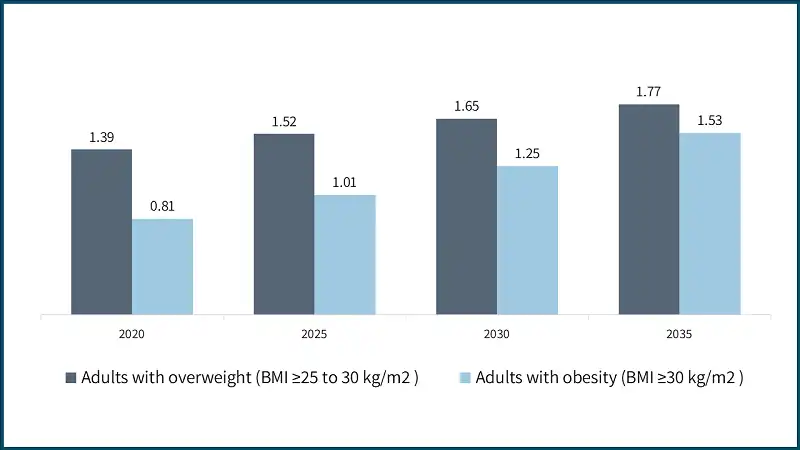
As obesity rates rise globally, patients and healthcare providers are turning to microbiome testing to identify microbial imbalances contributing to weight gain, personalize dietary and probiotic interventions, and monitor metabolic health and inflammation markers.
What does microbiome test reveal?
Microbiome testing analyses a stool sample to identify the types and quantities of microorganisms in the gut. Advanced sequencing technologies, such as 16S rRNA and metagenomic sequencing, provide detailed microbial profiling.
Key insights provided by microbiome testing include:
- Microbial diversity: Microbiome testing offers a diverse microbiome profiling, which is linked to better overall health.
- Pathogen detection: Identifies harmful bacteria or overgrowths.
- Probiotic levels: Assesses beneficial bacteria like Lactobacillus and Bifidobacterium.
- Digestive efficiency: Evaluates how well the gut processes food and absorbs nutrients.
- Inflammatory markers: Measures markers associated with gut inflammation.
- Metabolic potential: Predicts how the microbiome may impact weight, blood sugar, and cholesterol levels.
How is microbiome testing performed?
- Sample collection: Patients collect a stool sample at home using a provided kit, which includes a sterile container and instructions for hygienic collection.
- Preservation and shipping: The sample is sealed, stabilized with a preservative solution, and shipped to a laboratory for analysis.
- DNA extraction: Technicians isolate microbial DNA from the sample using chemical and mechanical methods.
- Sequencing and analysis: Advanced technologies like 16S rRNA and shotgun metagenomics identify microbial species and their functions.
- Data interpretation: The lab evaluates microbial diversity, abundance, and functional potential, highlighting beneficial and harmful microbes.
- Report generation: A detailed report provides insights into gut health, including microbial composition and personalized recommendations.
- Follow-up monitoring: Some platforms such as Viome, ZOE, and DayTwo offer ongoing testing to track changes in the microbiome over time for better health management.
How is gut health connected to overall wellness?
-
Mental health – Gut-brain axis:
The gut and brain communicate through the gut-brain axis, involving the vagus nerve, hormones, and neurotransmitters. As per the California Institute of Technology the gut produces about 90% of the body’s serotonin, a key mood regulator. An imbalanced microbiome can contribute to anxiety, depression, and sleep issues. Research into “psychobiotics” highlights the gut’s role in emotional and cognitive health.
-
Immune system regulation:
As per the National Gaucher Foundation, about 70% of the immune system resides in the gut. A healthy microbiome trains immune cells to differentiate between harmful and harmless substances, supporting a balanced immune response and reducing chronic inflammation. Dysbiosis, or an imbalanced microbiome, can lead to autoimmune conditions and higher infection risks.
-
Digestive Health:
Gut bacteria aid in breaking down food, synthesizing essential nutrients like vitamins B12 and K, and absorbing minerals such as calcium and magnesium. Poor gut health can impair digestion, leading to nutrient deficiencies, fatigue, and weakened immunity.
-
Metabolic Health:
The gut microbiome influences how the body processes food, stores fat, and regulates blood sugar. Certain bacterial profiles are linked to obesity, insulin resistance, and type 2 diabetes. A balanced microbiome supports weight management and reduces the risk of metabolic disorders.
-
Skin Health – Gut-Skin Axis:
The gut-skin axis connects gut health to skin conditions. Poor digestion and inflammation can lead to acne, eczema, and psoriasis. A balanced microbiome reduces systemic inflammation, promoting healthier skin.
-
Hormonal Balance:
Gut bacteria help metabolize and regulate hormones like estrogen, cortisol, and thyroid hormones. Disruptions in the microbiome can cause hormonal imbalances, affecting mood, fertility, and energy levels.
-
Detoxification and Liver Function:
The gut plays a critical role in filtering and eliminating toxins. A healthy microbiome supports liver function, enhancing the body’s detoxification process and overall vitality.
Key technology trends in microbiome testing
-
Next-Generation Sequencing (NGS)
- has become a cornerstone of microbiome testing. Techniques such as 16S rRNA sequencing and shotgun metagenomics enable precise identification and quantification of microbial species. These advanced methods provide detailed insights into microbial diversity and functionality, paving the way for accurate health assessments and tailored interventions.
-
Multi-omics integration
The integration of multi-omics technologies is reshaping microbiome analysis into a comprehensive science. By combining genomics with metabolomics, proteomics, and transcriptomics, researchers can uncover not only the presence of microbes but also their functions and interactions with the host. This holistic approach is helping to decode complex links between the microbiome and conditions such as obesity, diabetes, and autoimmune diseases.
-
Artificial intelligence (AI) and machine learning
AI and machine learning are revolutionizing microbiome testing by analyzing the vast datasets generated. These technologies identify patterns, predict disease risks, and provide personalized health recommendations based on microbial profiles. Additionally, AI is being used to create predictive models for therapeutic outcomes and to refine probiotic formulations.
-
Real-time and longitudinal microbiome monitoring
Real-time and longitudinal microbiome monitoring is gaining popularity. Emerging platforms allow individuals to track changes in their gut microbiome over time, offering insights into how factors like diet, lifestyle, medications, or supplements impact gut health. This trend supports preventive care and chronic disease management by enabling continuous health optimization.
-
Expansion beyond gut microbiome
Microbiome testing is expanding beyond the gut to include other areas such as the oral, skin, and vaginal microbiomes. These applications are addressing conditions ranging from dental and dermatological issues to reproductive health, broadening the scope of microbiome diagnostics and interventions.
-
Portable and at-home testing devices
Advances in biosensor technology and microfluidics are driving the development of portable and at-home microbiome testing devices. These user-friendly kits provide faster results without requiring laboratory processing, making microbiome analysis more accessible and fueling consumer interest in personalized health solutions.
-
Synthetic biology and microbiome engineering
Synthetic biology and microbiome engineering are emerging as transformative technologies. Researchers are designing engineered probiotics to perform specific functions, such as producing therapeutic compounds or targeting harmful bacteria. Tools like CRISPR are being explored to edit microbial genomes, potentially revolutionizing microbiome-based therapies.
-
Gut-brain syncing
Microbiome testing is advancing mental wellness through the use of targeted psychobiotics. Companies like InnerBuddies offer tests that analyze gut-brain interactions, providing personalized solutions to enhance mood and cognitive health.
Future of microbiome testing and gut health
The microbiome testing demand is expected to witness a remarkable growth, driven by ongoing research, technological innovation, and shifting consumer preferences toward proactive health management. Key trends shaping the rising demand for microbiome testing include:
-
Standardization and validation
Standardization and validation of microbiome tests have become essential for integrating microbiome testing into mainstream healthcare. Currently, the lack of universally accepted protocols hampers clinical adoption. Industry stakeholders are working toward establishing standardized testing methods and clinical guidelines endorsed by organizations such as the American Gastroenterological Association, which will enhance test reliability, reproducibility, and clinician confidence.
-
Expansion of functional testing
The expansion of functional testing marks a shift from merely cataloguing microbial composition to understanding microbial activity and metabolite production. This approach provides actionable insights into how microbes influence host health, such as production of short-chain fatty acids (SCFAs) that support gut barrier integrity and immune regulation. Currently, limited microbiome tests incorporate functional analysis, but this is expected to grow significantly as companies are focusing on developing platforms capable of measuring microbial metabolites in real-time, thus enabling more precise interventions.
-
Personalized therapeutics:
Personalized therapeutics are emerging as a promising frontier, with the potential to customize probiotics, prebiotics, and microbiota transplants based on individual microbiome profiles. Recent clinical trials demonstrate that personalized probiotics can improve conditions like irritable bowel syndrome (IBS). As microbiome sequencing becomes more affordable, estimated costs for personalized microbiome-based therapies are expected to decline, making tailored treatments more accessible.
-
Regulatory Frameworks:
Establishing clear Regulatory Frameworks is critical for widespread clinical adoption. Currently, microbiome tests and therapies face regulatory hurdles similar to those for pharmaceuticals, delaying approval and reimbursement. Governments and agencies like the FDA are working to develop guidelines for clinical validation, safety, and efficacy, which will facilitate insurance coverage and reimbursement pathways.
-
Data Privacy and Ethics:
Data privacy and ethics are paramount, given the sensitive nature of microbiome data, which can reveal health predispositions and personal biological information. Ensuring robust data security protocols and establishing ethical use standards are essential as consumer interest surges. As per the Privacy and Consumer Trust Report 2023 of International Association of Privacy Professionals, about 68% of consumers are concerned about online data privacy. Future regulations are likely to mandate comprehensive data protection policies, similar to GDPR standards, to maintain consumer trust and ethical integrity.
Conclusion
Microbiome testing is revolutionizing the healthcare market by enabling personalized health management through advanced diagnostic tools. This testing provides valuable insights into various aspects of health, including digestion, immunity, mood regulation, skin health, and metabolic balance. As research in microbiome science progresses, the market is shifting toward precision wellness solutions that are both targeted and comprehensive.
The growing consumer demand for personalized healthcare is driving the adoption of microbiome testing across the diagnostics and wellness markets. Individuals are increasingly seeking to understand the role of their gut microbiome in overall health, leading to a surge in interest in this innovative technology. Whether the focus is on improving digestive health, enhancing mental well-being, or achieving better metabolic outcomes, microbiome testing is paving the way for tailored health interventions.
Additionally, the integration of microbiome testing with digital health platforms is further expanding its accessibility and usability. These platforms allow users to track their microbiome data over time, enabling continuous monitoring and adjustments to health strategies. Moreover, advancements in artificial intelligence and machine learning are enhancing the accuracy and predictive capabilities of microbiome analysis, making it a critical tool in preventive healthcare.
Key trends shaping the microbiome testing market include the increasing availability of at-home testing kits, the rising focus on gut-brain axis research, and the growing collaboration between healthcare providers and technology companies. These developments are expected to drive significant growth in the market during the forecast period, as consumers and healthcare professionals alike recognize the potential of microbiome testing in improving health outcomes.