Companion Animal Drugs Market Size & Share 2026-2035

Market Size By Product (Drugs, Vaccines, Medicated Feed Additives), By Animal Type (Dogs, Cats, Horses, Other Animal Types), By Indication (Dermatology, Cardiovascular Diseases, Gastrointestinal Diseases, Respiratory Diseases, Other Indications), By Route of Administration (Oral, Injectable, Topical, Other Routes of Administration), and By Distribution Channel (Veterinary Hospital Pharmacies, E-commerce, Retail Pharmacies). The market forecasts are provided in terms of value (USD).
Report ID: GMI4981
   |
Published Date: March 2026
 | 
Report Format: PDF

Download Free PDF

Companion Animal Drugs Market Size

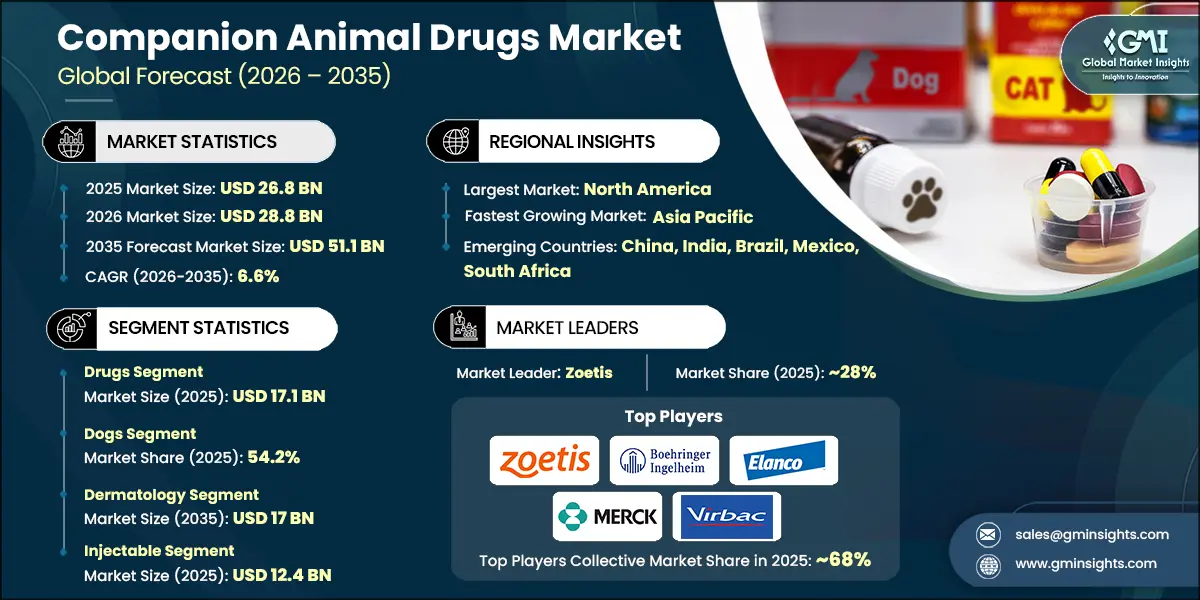
The global companion animal drugs market was valued at USD 26.8 billion in 2025. The market is expected to grow from USD 28.8 billion in 2026 to USD 51.1 billion in 2035, growing at a CAGR of 6.6% during the forecast period, according to the latest report published by Global Market Insights Inc.
Companion Animal Drugs Market Research Report

The market is experiencing considerable growth driven by the increasing adoption of companion animals, rising prevalence of chronic diseases in pets, growing willingness of pet owners to spend on animal healthcare, and increasing expenditure on veterinary care. Pet owners are increasingly willing to spend on advanced treatments, vaccinations, and preventive medications to ensure the well-being of their pets. This shift in perception that pets are not just animals, but members of the family, has greatly aided in expanding this market.

Another important factor is the rising chronic and infectious disease burden in pet animals. The prevalence of arthritis, diabetes, cardiovascular conditions, and even parasitic infections has made effective drug treatments crucial to market growth. For instance, in the U.S., approximately 14 million adult dogs are affected by osteoarthritis, making it a top health concern for owners. Similarly, studies suggest that approximately 90% of cats over the age of 10 years experience osteoarthritis (OA) in at least one joint. The occurrence of such chronic diseases increases the demand for effective therapies, thereby driving market growth. Furthermore, the evolution of veterinary medicine, such as advanced drug delivery systems and improved formulation of existing medicines, has also boosted the growth of this market.
 

Between 2022 and 2024, the global companion animal drugs market witnessed considerable growth, growing from USD 21.1 billion in 2022 to USD 24.9 billion in 2024. The growth can be attributed to the increasing pet ownership, rising expenditure on veterinary care, and growing awareness regarding preventive animal healthcare. For example, according to the World Animal Foundation, the companion animal population reached approximately 967 million worldwide, including 522 million dogs and 445 million cats. This expanding pet population increases the demand for various animal healthcare products, including pharmaceuticals, vaccines, and feed additives, thereby boosting overall market growth.
 

Companion animal drugs refer to the pharmaceutical and biological products formulated to treat, prevent, or manage diseases in pets. These drugs are categorized into a broad range of products, such as drugs, vaccines, and medicated feed additives. These drugs are increasingly used to cure medical conditions and help limit the spread of infectious diseases among companion animals. Key players operating in the market include Zoetis, Merck Animal Health, Elanco Animal Health Incorporated, Boehringer Ingelheim, and Virbac. These companies contribute significantly to market growth through continuous investment in research and development, expansion of their companion animal drug portfolios, and the launch of innovative therapeutics and vaccines aimed at improving pet health and disease management.

Companion Animal Drugs Market Trends

  • The growing trend of pet adoption and increased consumer spending on pet health is positively influencing the market growth. According to recent data, nearly 68% of households in the U.S. at present own a pet. This has created a substantial demand for pet products such as veterinary drugs.
     
  • Furthermore, as owners increasingly consider pets as a part of their family, the average amount spent per household on pets is rising. As per the World Animal Foundation, pet spending in the U.S. increased 67% from USD 460 per year in 2013 to USD 770 per year in 2021. In 2022, average annual pet spending slightly declined to USD 741. Thus, as households increase their spending on pets, there is a higher spending on animal pharmaceutical products, thereby fueling market growth.
     
  • Additionally, the rising incidence of chronic diseases in pets, such as obesity, osteoarthritis, respiratory diseases, dental problems, diabetes, and cancer, increases the demand for drugs, further enhancing the market growth. 
     
  • As per the North American Veterinary Community (NAVC), the incidence of diabetes is rising faster in pets than in humans, with more than half a million cats and dogs diagnosed with diabetes each year. Such a rise in chronic diseases increases the demand for effective treatment modalities, thereby fostering market growth.
     
  • Moreover, high adoption of pet insurance is expected to be an instrumental factor in driving the market expansion. According to the North American Pet Health Insurance Association, in 2023, the U.S. experienced 17.1% growth in total insured pets. Thus, surging demand for pet insurance, coupled with the growing number of insured animals, will drive the market expansion.
     
  • Further, several technological advancements in the field of veterinary medicine are set to positively influence the animal health industry. Recent innovations such as monoclonal antibodies and gene therapies are transforming treatment options for complex diseases in companion animals. These technological developments have led to more effective and targeted therapies, improving the quality of life for pets and expanding the range of available treatments.
     
  • Similarly, developments such as telemedicine platforms and veterinary point-of-care diagnostics, coupled with ongoing research and development activities in veterinary medicine are expected to accelerate market expansion in the market.
     

Companion Animal Drugs Market Analysis

Based on the product, the companion animal drugs market is segmented into drugs, vaccines, and medicated feed additives. In 2025, the drugs segment accounted for the highest market share with a revenue of USD 17.1 billion.
 

  • The drugs segment dominates in the market due to increasing cases of chronic diseases and infections in pets such as arthritis, cancer, and skin conditions. Increased pet ownership and the emerging trend of pet humanization have further fueled the demand for advanced veterinary medicine, such as antibiotics, anti-inflammatory medicines, and parasiticides.
     
  • Pharmaceutical companies are also investing heavily in research and development to introduce novel formulations, such as chewable tablets and flavoured medications, improving compliance among pet owners and driving higher sales.
     
  • Additionally, the rising prevalence of chronic diseases in animals, coupled with growing awareness among pet owners, is increasing the adoption of veterinary pharmaceuticals, thereby boosting the segmental growth.

  • Furthermore, regulatory approvals and advancements in veterinary medicine have contributed to the sustained growth of the drugs segment. Also, the availability of advanced drug formulations and novel biologic drugs further enhances the market growth.
     
  • On the other hand, the vaccines segment is anticipated to witness strong growth at a CAGR of 7.5% over the forecast period, driven by the increasing focus on preventive animal healthcare, rising incidence of infectious diseases among companion animals, and growing awareness among pet owners regarding timely vaccination.
     

Based on the animal type, the companion animal drugs market is classified into dogs, cats, horses, and other animal types. The dogs segment held the highest revenue in 2025 with a market share of 54.2%.
 

  • This substantial growth is attributed to the rising adoption rate of dogs as companion animals, coupled with growing expenditure on dogs.
     
  • According to the American Pet Products Association's 2021-2022 National Pet Owners Survey, around 69 million households own a dog. Moreover, a dog owner spends on average USD 1,400 on a dog throughout the year.
     
  • Thus, the higher adoption rates along with increased spending is expected to propel the segmental growth.
     
  • Further, there has been a significant increase in the incidence of various diseases among dogs. According to data published in the National Institute of Health (NIH), cancer is the leading cause of death in 47% of dogs, especially dogs over age ten. Similarly, it is estimated that the prevalence of diabetes in pet dogs ranges between 0.2% and 1.2%. This rising burden of chronic diseases in dogs translates to greater demand for drugs.
     
  • Lastly, the presence of several veterinary pharmaceutical companies that primarily focus on developing drugs for canines has also played a crucial role in maintaining the segment’s dominance.
     

Based on the indication, the companion animal drugs market is classified into dermatology, cardiovascular diseases, gastrointestinal diseases, respiratory diseases, and other indications. The dermatology segment dominated the market in 2025 and is anticipated to reach USD 17 billion by 2035.
 

  • The dermatology segment holds a significant share in the market, primarily due to the high prevalence of skin disorders among pets such as allergic dermatitis, parasitic infections, and bacterial or fungal skin diseases.
     
  • According to studies published by the Royal Veterinary College, skin disorders are among the most commonly diagnosed health conditions in dogs, affecting around 20–25% of veterinary consultations.
     
  • Companion animals, particularly dogs, are highly susceptible to dermatological conditions caused by environmental allergens, parasites, and food sensitivities, which increases the demand for dermatology drugs, including anti-allergy medications, antifungals, antibiotics, and parasiticides.
     
  • Additionally, increasing awareness among pet owners regarding early diagnosis and treatment of skin conditions, along with the availability of advanced dermatology therapeutics from major animal health companies, further supports the dominance of this segment in the market.
     
  • The gastrointestinal segment held second largest market share in 2025, owing to the increasing prevalence of digestive disorders and parasitic infections among companion animals. Conditions such as diarrhea, vomiting, intestinal parasites, and inflammatory bowel disease are commonly observed in pets, particularly dogs and cats, which increases the demand for gastrointestinal drugs.
     

Based on the route of administration, the companion animal drugs market is classified into oral, injectable, topical, and other routes of administration. The injectable segment dominated the market in 2025 with a revenue of USD 12.4 billion and is anticipated to witness growth at a CAGR of 6.1% over the forecast years.
 

  • The injectable route involves the administration of medication via intramuscular, subcutaneous, and intravenous techniques. This method is favored due to the rapid onset of action and precise dosing, making it ideal for emergencies and acute treatments.
     
  • Most vaccines, antibiotics, and analgesic medications that require quick and effective delivery of the drug are administered via the parenteral route. For example, increasing use of biologics such as monoclonal antibodies and recombinant vaccines has led to a high usage of injector devices.
     
  • Moreover, innovations in injectable drug delivery by manufacturers further increase its adoption. As an example, in June 2022, NuGen Medical Devices Inc. launched the PetJet, a needle-free injector for use in pet cats and dogs. This device enables pet owners and veterinarians to conveniently administer medications without the need for needles. The PetJet allows for fast, pain-free delivery of medications, making it less stressful for pets and easier for people to administer.
     
  • Lastly, the growing global burden of chronic diseases like diabetes and arthritis, which require frequent injectable therapies, is also anticipated to fuel the growth of this market.
     

Based on the distribution channel, the companion animal drugs market is bifurcated into veterinary hospital pharmacies, E-commerce, and retail pharmacies. In 2025, the veterinary hospital pharmacies segment dominated the market and is expected to grow at a CAGR of 6.4% from 2026 to 2035.
 

  • The growing number of veterinary hospitals across the globe also fuels the high market share for veterinary hospital pharmacies.
     
  • Veterinary hospital pharmacies are dedicatedly established to dispense medications for animals. A wide range of animal healthcare products, including prescription drugs, over-the-counter medications, vaccines, and supplements, are available in pharmacies. As they provide a comprehensive range of medications, it makes them a convenient and reliable source for purchasing animal healthcare products.
     
  • Factors such as their brand recognition, high reputation for quality products, and expertise in medication dispensing are responsible for market dominance.
     
  • The e-commerce segment, on the other hand, is expected to witness rapid growth at a CAGR of 7% over the forecast period. Factors such as the increasing adoption of online pet pharmacies, growing internet penetration, convenience of home delivery, wider product availability, and competitive pricing offered by online platforms are contributing to the growth of this segment.
     

North America Companion Animal Drugs Market

North America market held the largest market share of 42.9% in 2025 in the global market, and it is anticipated to expand at a 6.3% CAGR over the forecast period.
 

  • North America accounted for the largest share of the market, driven by the region’s high pet ownership rates, well-established veterinary healthcare infrastructure, and strong spending on pet care.
     
  • The U.S. represents a major contributor to regional growth due to the growing humanization of pets and increasing demand for advanced veterinary therapeutics and preventive treatments.
     
  • According to the American Pet Products Association, U.S. pet industry expenditures reached USD 147 billion in 2023, reflecting significant spending on veterinary care and pet medications.
     
  • In addition, the strong presence of leading animal health companies such as Zoetis, Elanco Animal Health, and Merck Animal Health further supports market growth through continuous product innovation, extensive distribution networks, and increased investment in companion animal healthcare solutions.
     

The U.S. companion animal drugs market was valued at USD 8.4 billion and USD 9.2 billion in 2022 and 2023, respectively. The market size reached USD 10.5 billion in 2025, growing from USD 9.8 billion in 2024.
 

  • Well-developed veterinary healthcare system, high pet ownership, and increasing spending on pet healthcare are key factors driving the market growth.
     
  • According to IBIS World's May 2024 research, there are approximately 196.9 million pets in the country, including dogs, cats, birds, fish, reptiles and small mammals.
     
  • Such a high volume of companion animals in the country increases the demand for various animal pharmaceuticals such as drugs, vaccines, and medicated feed additives, thus boosting the growth of the U.S. market.
     
  • The pharmaceutical market is also well-developed, which fortifies the market by providing a constant supply of innovative and effective drugs.
     

Europe Companion Animal Drugs Market

Europe market accounted for USD 7.7 billion in 2025 and is anticipated to show lucrative growth over the forecast period.
 

  • Due to the presence of large pharmaceutical companies, advanced infrastructure for veterinary healthcare, and the high rates of pet ownership, Europe commands a strong market share in the market.
     
  • The increasing humanization of pets in the region has led to greater spending on pet healthcare, including pharmaceuticals for disease prevention, treatment, and wellness.
     
  • Moreover, advancements in veterinary medicine with frequent introduction and approval of novel pharmaceuticals will boost the market in the Europe region.
     

Germany companion animal drugs market is anticipated to witness significant growth in coming years.

  • As of 2023, 45% of German households have a pet and 14% of households have two pets or more. This totals approximately 34.3 million pets. Cats and dogs are the most popular house pets, with 25% of German households owning cats and 21% of households owning dogs.
     
  • The rising adoption of pet animals, coupled with surging expenditure on veterinary care, is set to augment the market size in Germany.
     
  • Additionally, the presence of a strong network of veterinary clinics and hospitals in the country, supported by advanced pharmaceutical companies that develop and distribute a wide range of companion animal drugs, further aids in the market growth.
     

Asia Pacific Companion Animal Drugs Market

The Asia Pacific market demonstrates significant growth potential.
 

  • The market in the Asia Pacific region is growing rapidly due to the rise in pet ownership, advancements in animal health awareness, and the improvement of veterinary care infrastructure.
     
  • Additionally, a rise in the number of veterinary clinics and hospitals, coupled with government policies aimed at animal health care contribute to the rapid growth of the market in the region.
     

India companion animal drugs market is poised to witness high growth over the analysis period.
 

  • India has a large pet population with over 31 million pet dogs and 2.44 million pet cats. The increasing pet ownership and rising disposable income in the country, coupled with high expenditure on pet healthcare, will offer a lucrative market growth opportunity in the country.
     
  • In addition, the rapidly expanding veterinary infrastructure in the country, such as veterinary hospitals and clinics, will further enhance the market growth.
     
  • Moreover, the growing investment of multinational and domestic companies into companion animal healthcare is a critical growth factor.
     

Latin America Companion Animal Drugs Market

Brazil market is anticipated to witness rapid growth over the forecast years.
 

  • Brazil holds significant growth potential in the Latin America market due to its large and expanding pet population. Brazil has one of the largest pet populations globally, with approximately 160 million pets, of which 60 million are dogs, 30 million cats, and 32 million pet-owning households.
     
  • Additionally, Brazil's improving veterinary infrastructure and expanding network of pet clinics and hospitals contribute to the rising adoption of companion animal medications.
     
  • Additionally, the presence of several international as well as local veterinary companies in the country further aids in the market growth.
     

Middle East & Africa Companion Animal Drugs Market

Saudi Arabia market is set for lucrative growth in the Middle East and Africa market.
 

  • The increasing pet ownership in the country, rising disposable income, coupled with a rapidly expanding veterinary infrastructure, will offer a lucrative market growth opportunity in the country.
     
  • The growing trend of pet humanization, particularly among urban populations, has led to higher spending on veterinary care, including pharmaceuticals for disease prevention and treatment.
     
  • In addition, rising government initiatives to develop the veterinary sector and support businesses in the veterinary industry further aid in market growth.
     

Companion Animal Drugs Market Share

The market is highly competitive, with several key companies striving to develop novel formulations in the market. The market is moderately consolidated in nature, with major organizations, local small players, and start-ups joining the industry competition. The top 5 companies in the market, such as Zoetis, Elanco Animal Health, Merck, Virbac, and Boehringer Ingelheim International, account for approximately 68% of the global market share.
 

Additionally, there are several local and regional players operating in the market that are boosting competition by providing affordable options at lower costs. These players are also involved in several strategies, such as mergers, acquisitions, and novel product launches, to expand their product offerings. For instance, in February 2021, Vetoquinol announced the acquisition of the Canadian rights to the Profender product family from Elanco Animal Health. The Profender range consists of spot-on de-wormer products for cats. Such initiatives by market players enhance the competitive landscape in the market, thereby boosting the market growth.
 

Companion Animal Drugs Market Companies

Prominent players operating in the companion animal drugs industry include:

  • Agrolabo
  • Boehringer Ingelheim International
  • Ceva Santé Animale
  • Chanelle Pharma
  • Dechra Pharmaceuticals
  • Elanco Animal Health Incorporated
  • Endovac Animal Health
  • HIPRA
  • Indian Immunologicals
  • Merck.
  • Norbrook
  • Symrise
  • Vetoquinol
  • Virbac
  • Zoetis


Zoetis is one of the leading global animal health companies with a dominant market share of ~28% in the global companion animal drugs market. The company discovers, develops, manufactures, and commercializes a diverse portfolio of animal health medicines and vaccines and has operations in over 100 countries. The company's dedication to R&D stimulates innovation in animal healthcare, allowing the launch of novel, effective, and safe treatments.
 

Boehringer Ingelheim has a notable presence in the companion animal drugs market. The company offers a wide array of products, including vaccines, anti-infectives, parasiticides, and therapeutic solutions designed to improve animal health. NexGard SPECTRA is a chewable product designed for dogs. The launch leverages the rising trend of pet ownership and increasing awareness about pet health and wellness in India. This strategy is expected to add value to the company’s business portfolio.
 

Companion Animal Drugs Industry News:

  • In September 2025, Virbac launched Vikaly, the first-ever medicated feed for cats, which blends prescription-medication with renal kibble to treat chronic kidney disease. This feed aims to simplify treatment by delivering this external medicine through daily meals, thus improving compliance and reducing stress for cats and their owners.
     
  • In April 2025, MSD Animal Health launched Bravecto TriUNO, a first all-in-one monthly chew for dogs combining flea, tick, and worm protection. This tablet uses three active ingredients, fluralaner, moxidectin, and pyrantel, for the treatment of fleas, ticks, roundworms and hookworms, and prevents heartworm and lungworm.
     
  • In January 2025, Ceva Sante Animale partnered with Touchlight to utilize its proprietary dBDNA technology to initiate the manufacturing of DNA-based animal vaccines.
     
  • In September 2024, Elanco Animal Health announced the approval of Zenrelia to control pruritus (itching) associated with allergic dermatitis and atopic dermatitis in dogs. This launch facilitated the company to boost revenue growth by adding a new product.
     
  • In April 2024, Boehringer Ingelheim introduced NexGard SPECTRA for dogs in India. NexGard SPECTRA is a chewable product designed for dogs. The launch leverages the rising trend of pet ownership and increasing awareness about pet health and wellness in India. This strategy is expected to add value to the company’s business portfolio. 
     
  • In January 2024, Ceva Sante Animale acquired Scout Bio, a biotechnology company focusing on cutting-edge therapies for pets, including monoclonal antibodies and gene therapy. This strategic acquisition is expected to enhance Ceva's innovative capabilities and provide access to key advancements in pet therapeutics.
     
  • In September 2023, Elanco Animal Health launched Varenzin-CA1. Varenzin-CA1 is a first-of-its-kind oral treatment for anemia in cats with chronic kidney disease. This strategy is expected to drive revenue growth for the company.
     

The companion animal drugs market research report includes an in-depth coverage of the industry with estimates and forecast in terms of revenue in USD Million from 2022 - 2035 for the following segments:

Market, By Product

  • Drugs
    • Antiparasitic
    • Anti-inflammatory
    • Anti-infectives
    • Corticosteroids
    • Tranquilizers
    • Cardiovascular drugs
    • Gastrointestinal drugs
    • Other drugs
  • Vaccines
    • Modified live vaccines (MLV)
    • Killed inactivated vaccines
    • Recombinant vaccines
  • Medicated feed additives
    • Antibiotics
    • Vitamins
    • Amino acids
    • Enzymes
    • Antioxidants
    • Prebiotics and probiotics
    • Minerals
    • Other medicated feed additives

Market, By Animal Type

  • Dogs
  • Cats
  • Horses
  • Other animal types

Market, By Indication

  • Dermatology
  • Cardiovascular diseases
  • Gastrointestinal diseases
  • Respiratory diseases
  • Other indications

Market, By Route of Administration

  • Oral
  • Injectable
  • Topical
  • Other routes of administration

Market, By Distribution Channel

  • Veterinary hospital pharmacies
  • E-commerce
  • Retail pharmacies
     

The above information is provided for the following regions and countries:

  • North America
    • U.S.
    • Canada
  • Europe
    • Germany
    • UK
    • France
    • Spain
    • Italy
    • Poland
    • Netherlands
  • Asia Pacific
    • China
    • Japan
    • India
    • Australia
    • South Korea
    • Taiwan
  • Latin America
    • Brazil
    • Mexico
    • Argentina
  • Middle East and Africa
    • South Africa
    • GCC countries
    • Israel
Authors: Mariam Faizullabhoy, Gauri Wani
Companion Animal Drugs Market Scope
  • Companion Animal Drugs Market Size
  • Companion Animal Drugs Market Trends
  • Companion Animal Drugs Market Analysis
  • Companion Animal Drugs Market Share

Report Content

Chapter 1   Methodology and Scope

1.1    Market scope and definition

1.2    Research approach

1.3    Quality commitments

1.3.1    GMI AI policy and data integrity commitment

1.3.1.1    Source consistency protocol

1.4    Research trail and confidence scoring

1.4.1    Research trail components

1.4.2    Scoring components

1.5    Data collection

1.5.1    Partial list of primary sources

1.6    Data mining sources

1.6.1    Paid sources

1.6.1.1    Sources, by region

1.7    Base estimates and calculations

1.7.1    Revenue share analysis

1.7.2    Base year calculation

1.8    Forecast model

1.9    Research transparency addendum

1.9.1    Source attribution framework

1.9.2    Quality assurance metrics

1.9.3    Our commitment to trust

Chapter 2   Executive Summary

2.1    Industry 360° synopsis

2.2    Key market trends

2.2.1    Regional trends

2.2.2    Product trends

2.2.3    Animal type trends

2.2.4    Indication trends

2.2.5    Route of administration trends

2.2.6    Distribution channel trends

2.3    CXO perspectives: Strategic imperatives

Chapter 3   Industry Insights

3.1    Industry ecosystem analysis

3.2    Industry impact forces

3.2.1    Growth drivers

3.2.1.1    Rising companion animal population

3.2.1.2    Increasing prevalence of animal diseases

3.2.1.3    Advancements in veterinary pharmaceuticals

3.2.1.4    Expansion of veterinary healthcare infrastructure

3.2.2    Industry pitfalls and challenges

3.2.2.1    High cost of veterinary drugs and treatments

3.2.2.2    Limited access to veterinary services in developing regions

3.2.3    Market opportunities

3.2.3.1    Development of novel biologics and immunotherapies

3.2.3.2    Expansion of e-commerce veterinary pharmacies

3.3    Growth potential analysis

3.4    Regulatory landscape (Driven by Primary Research)

3.4.1    North America

3.4.1.1    U.S.

3.4.1.2    Canada

3.4.2    Europe

3.4.3    Asia Pacific

3.5    Pipeline/clinical trial landscape (Driven by Primary Research)

3.6    Pricing analysis (Driven by Primary Research)

3.7    Pet population statistics, by country (Driven by Primary Research)

3.8    Future market trends

3.9    Impact of AI & generative AI on the market

3.10    Porter's analysis

3.11    PESTEL analysis

Chapter 4   Competitive Landscape, 2025

4.1    Introduction

4.2    Company market share analysis

4.2.1    North America

4.2.2    Europe

4.2.3    Asia Pacific

4.3    Company matrix analysis

4.4    Competitive analysis of major market players

4.5    Competitive positioning matrix

4.6    Key developments

4.6.1    Merger and acquisition

4.6.2    Partnership and collaboration

4.6.3    New product launches

4.6.4    Expansion plans

Chapter 5   Market Estimates and Forecast, By Product, 2022 - 2035 ($ Mn)

5.1    Key trends

5.2    Drugs

5.2.1    Antiparasitic

5.2.2    Anti-inflammatory

5.2.3    Anti-infectives

5.2.4    Corticosteroids

5.2.5    Tranquilizers

5.2.6    Cardiovascular drugs

5.2.7    Gastrointestinal drugs

5.2.8    Other drugs

5.3    Vaccines

5.3.1    Modified live vaccines (MLV)

5.3.2    Killed inactivated vaccines

5.3.3    Recombinant vaccines

5.4    Medicated feed additives

5.4.1    Antibiotics

5.4.2    Vitamins

5.4.3    Amino acids

5.4.4    Enzymes

5.4.5    Antioxidants

5.4.6    Prebiotics and probiotics

5.4.7    Minerals

5.4.8    Other medicated feed additives

Chapter 6   Market Estimates and Forecast, By Indication, 2022 - 2035 ($ Mn)

6.1    Key trends

6.2    Dermatology

6.3    Cardiovascular diseases

6.4    Gastrointestinal diseases

6.5    Respiratory diseases

6.6    Other indications

Chapter 7   Market Estimates and Forecast, By Animal Type, 2022 - 2035 ($ Mn)

7.1    Key trends

7.2    Dogs

7.3    Cats

7.4    Horses

7.5    Other animal types

Chapter 8   Market Estimates and Forecast, By Route of Administration, 2022 - 2035 ($ Mn)

8.1    Key trends

8.2    Oral

8.3    Injectable

8.4    Topical

8.5    Other routes of administration

Chapter 9   Market Estimates and Forecast, By Distribution Channel, 2022 - 2035 ($ Mn)

9.1    Key trends

9.2    Veterinary hospital pharmacies

9.3    E-commerce

9.4    Retail pharmacies

Chapter 10   Market Estimates and Forecast, By Region, 2022 - 2035 ($ Mn)

10.1    Key trends

10.2    North America

10.2.1    U.S.

10.2.2    Canada

10.3    Europe

10.3.1    Germany

10.3.2    UK

10.3.3    France

10.3.4    Spain

10.3.5    Italy

10.3.6    Poland

10.3.7    Netherlands

10.4    Asia Pacific

10.4.1    China

10.4.2    Japan

10.4.3    India

10.4.4    Australia

10.4.5    South Korea

10.4.6    Taiwan

10.5    Latin America

10.5.1    Brazil

10.5.2    Mexico

10.5.3    Argentina

10.6    Middle East and Africa

10.6.1    South Africa

10.6.2    GCC Countries

10.6.3    Israel

Chapter 11   Company Profiles

11.1    Agrolabo

11.2    Boehringer Ingelheim International

11.3    Ceva Santé Animale

11.4    Chanelle Pharma

11.5    Dechra Pharmaceuticals

11.6    Elanco Animal Health Incorporated

11.7    Endovac Animal Health

11.8    HIPRA

11.9    Indian Immunologicals

11.10    Merck

11.11    Norbrook

11.12    Symrise

11.13    Vetoquinol

11.14    Virbac

11.15    Zoetis

Authors: Mariam Faizullabhoy, Gauri Wani

For inquiries regarding discounts, bulk purchases, or customization requests, please contact us at [email protected]

Explore Our Licensing Options:
Premium Report Details

Base Year: 2025

Companies covered: 15

Tables & Figures: 250

Countries covered: 21

Pages: 148

Download Free PDF
