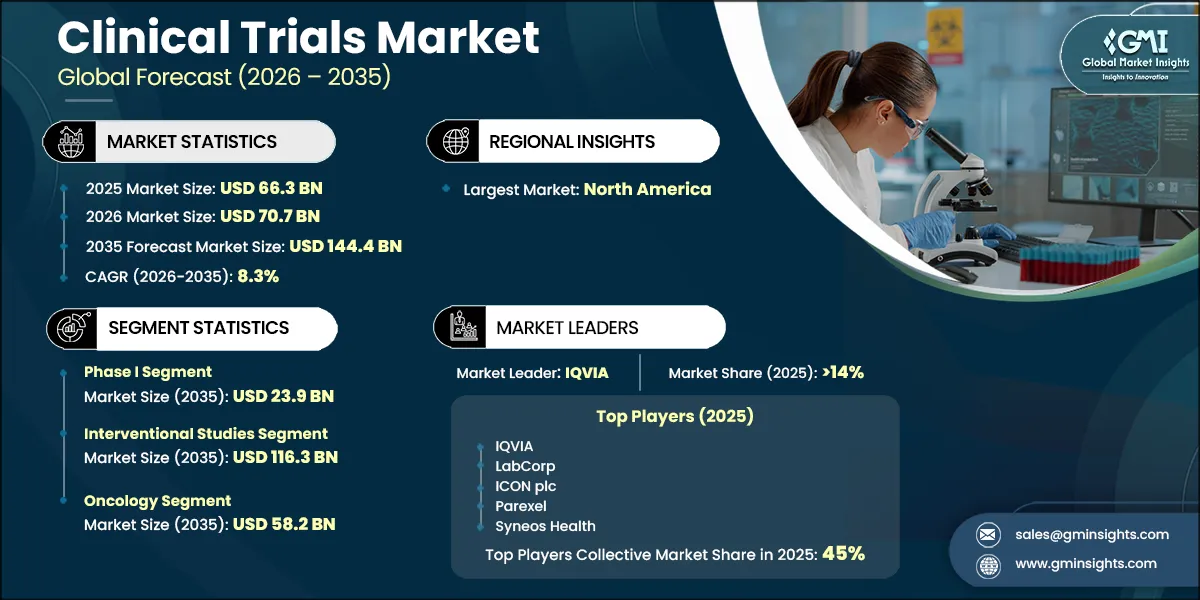
The global clinical trials market was valued at USD 66.3 billion in 2025, is projected to reach USD 70.7 billion in 2026, and is expected to expand at a CAGR of 8.3% from 2026 to 2035, reaching USD 144.4 billion by 2035. The market comprises services, technologies, and operating infrastructure used to plan, execute, monitor, and manage studies evaluating drugs, biologics, medical devices, and diagnostics. Its scope includes CRO services, site management, patient recruitment and retention, regulatory consulting, clinical data management, and clinical trial technology across Phase I through Phase IV programs.
The market's evolution is being shaped by a larger and more complex development pipeline, a continued transfer of execution responsibility to specialist providers, and technology adoption that changes how sponsors deploy trial budgets. Late-stage global studies remain the principal volume base, while adaptive designs, decentralized operating models, and data-enabled feasibility tools are increasing the value and operational intensity of individual programs.
GMI Analyst View
Our engagement with industry participants and stakeholders across the global clinical research supply chain confirms that the market registered USD 62.1 billion in revenue in 2024, reflecting the rebound in biopharma R&D commitment following post-pandemic normalization of trial activity. This base positions the market on a steepening growth curve entering the forecast period, as sponsors bring previously delayed pipeline assets into active development and engagement with full-service CRO models intensifies.
Report Coverage &Key Takeaways
This report covers the global clinical trials market from 2022 to 2035, with 2025 as the base year. It examines demand across North America, Europe, Asia Pacific, Latin America, and Middle East &Africa; analyzes phase, study design, therapeutic area, and service type; and assesses the competitive position of global, specialist, and regional clinical research providers. Core market themes include increasing outsourcing depth, oncology-led protocol complexity, wider use of digitally enabled operating models, and the growing strategic importance of geographically diversified site networks.
Clinical Trials Market Trends, Growth Drivers &GMI Forecast Outlook
Clinical development demand is advancing as sponsor pipelines recover and protocol complexity rises, but the translation of pipeline activity into new trial capacity remains conditioned by recruitment performance, budget discipline, and regulatory execution. The outlook favors providers that can combine operational reach with data, technology, and therapeutic specialization.
Key Drivers
Driver
Evidence signal
Market-demand implication
GMI forecast condition
Accelerating global biopharma R&D investment
Biopharma funding reached USD 102 billion in 2024, a 10-year high outside the pandemic period [1]
Higher sponsor investment directly expands active development pipelines, increasing concurrent Phase II-IV trial programs and broadening addressable CRO and trial-services demand
Sustained funding at or above 2024 levels through 2028 supports above-trend market volume expansion, with outsourcing penetration deepening as sponsors prioritize pipeline acceleration over internal infrastructure build
Rising global clinical trial initiation
10,503 Phase I-III clinical trials were initiated globally in 2024, a 5.5% year-over-year increase [2]
A larger and more complex active pipeline raises concurrent demand for site management, patient recruitment, data management, biostatistics, and regulatory submission services
Pipeline recovery trend continuing at a moderate rate through 2027 before normalizing, as sponsor capacity absorbs programs deferred during the 2022-2023 slowdown
AI-enabled and adaptive trial design adoption
Regulatory frameworks across the U.S., EU, and major Asian jurisdictions are progressively formalizing guidance on adaptive protocols, umbrella studies, basket designs, and AI-assisted trial operations
Adoption of adaptive and master protocol designs compresses enrollment windows and reduces trial duration for qualifying programs, enabling sponsors to advance more pipeline assets within equivalent R&D budgets
Formal regulatory guidance consolidation in the U.S. and EU by 2026-2027 is the critical threshold event for broad sponsor adoption; timing governs the pace of demand uplift in early-phase and platform-trial services
*Evidence anchors use cited external data; demand implications and forecast conditions represent GMI analysis.*
A fuller funding environment affects clinical trial demand through more than the number of assets entering development. Sponsors with better-funded portfolios can run parallel programs, invest in complex eligibility screening, and use specialist partners for site activation, data operations, and regulatory planning rather than sequencing those capabilities internally. The U.S. Food and Drug Administration's Center for Drug Evaluation and Research approved 50 novel drugs in 2024, and approximately 48% were first-in-class therapies, illustrating the continued importance of differentiated development programs that often require more elaborate evidence-generation strategies [5].
Outsourcing magnifies this pipeline effect. Variable-capacity models allow sponsors to access global investigator networks and therapeutic expertise without constructing equivalent fixed clinical operations. Adaptive protocols and AI-assisted operational tools can further improve the productivity of trial budgets by helping sponsors identify feasible sites, target eligible populations, and make earlier evidence-based development decisions. The resulting opportunity favors providers that can integrate technology with execution rather than treat digital tools as a standalone offering.
Key Restraints
Restraint
Evidence signal
Market-demand implication
GMI forecast condition
Persistent patient enrollment and retention failure
Nearly 30% of randomized trial participants drop out before study completion, per Tufts Center for the Study of Drug Development research [3]
High attrition forces over-enrollment planning that inflates per-program site costs, extends timelines, and compresses sponsor margins - limiting the number of concurrent trials sponsors can sustain
Dropout rates remaining above 25% through 2028 will sustain timeline overruns that constrain sponsor capacity to initiate concurrent Phase II/III programs at the rate the pipeline size implies
Escalating per-program drug development costs
The average cost to develop a drug from discovery through launch reached USD 2.23 billion in 2024, per Deloitte analysis of the top-20 global pharmaceutical companies [4]
Rising cost per approved program compresses the number of candidates sponsors can advance simultaneously, creating prioritization pressure that concentrates activity in programs with the highest commercial visibility
Cost inflation above general R&D budget growth rates through 2028 limits net new trial capacity additions, particularly in therapeutic areas with high Phase III attrition
Regulatory fragmentation and insurance coverage gaps
Divergent clinical trial authorization frameworks across jurisdictions - including EU CTR implementation timelines, regional ICH guideline interpretations, and evolving FDA guidance on decentralized protocol elements - create heterogeneous site-setup and submission environments for multi-regional programs
Multi-jurisdictional compliance raises site activation costs and extends regulatory preparation timelines, particularly for Phase III programs targeting simultaneous FDA and EMA approval
Absence of consolidated global trial authorization harmonization before 2027 sustains per-site cost premiums and moderates new site openings in emerging-market regions
*Evidence anchors use cited external data; demand implications and forecast conditions represent GMI analysis.*
Enrollment remains the practical constraint that most directly affects trial throughput. Recruitment shortfalls require additional sites, extended outreach, and protocol amendments, while withdrawal after randomization reduces the efficiency of every downstream operational activity. Phase II and Phase III trials take 36% longer on average to complete than comparable programs did a decade ago, reinforcing the commercial importance of retention design, participant convenience, and early feasibility discipline [3].
Higher program costs also alter sponsors' portfolio choices. Capital tends to concentrate in assets with clearer registration potential, which can preserve spending while narrowing the number of programs that progress simultaneously. Cross-border regulatory variation adds further friction, especially where trial authorization, data handling, insurance, and decentralized procedures are not operationally aligned. These constraints create a premium for providers that can coordinate country-level execution without adding avoidable setup complexity.
GMI Analyst View
We see the market's expansion as a disciplined capacity story rather than a simple function of pipeline volume. Sponsors are increasing their reliance on external expertise, but durable demand will accrue most strongly to organizations that improve recruitment quality, compress operational handoffs, and protect program timelines under tighter capital-allocation scrutiny.
Clinical Trials Market Segment Analysis
By Phase
The global clinical trials market's phase mix remains anchored in late-stage development, although earlier development programs are becoming more operationally sophisticated. Phase I is projected to reach USD 23.9 billion by 2035 and expand at an 8.6% CAGR from 2026 to 2035. Phase I demand is benefiting from the growth of biologics, cell therapies, gene therapies, and precision-oncology assets, where first-in-human study design can require intensive safety monitoring, specialized sites, and complex biomarker work. These requirements increase the value of early engagement with providers that combine clinical pharmacology, translational capabilities, and regulatory expertise.
Phase II generated USD 11.8 billion in 2025 and is projected to reach USD 27.1 billion by 2035. This phase has become more strategically consequential as sponsors use mid-stage evidence to refine patient populations, dosing, and endpoint selection before committing to large registration programs. Trial partners with strong feasibility, biostatistics, and patient-identification capabilities are positioned to benefit from the emphasis on decision-quality evidence at this stage.
Phase III accounted for 48.4% of market revenue in 2025 and is projected to reach USD 67.5 billion by 2035. The segment retains its central position because pivotal trials require broad site networks, high patient volumes, rigorous monitoring, and coordinated multi-country regulatory operations. The scale of these studies sustains demand for full-service CRO models, particularly where sponsors are managing concurrent global programs or complex comparator, safety, and pharmacovigilance requirements.
Phase IV is projected to reach USD 25.9 billion by 2035 and advance at an 8.4% CAGR from 2026 to 2035. Post-marketing commitments, confirmatory evidence requirements, and real-world evidence generation are expanding the strategic relevance of Phase IV activity. Demand is supported by sponsors seeking to sustain product differentiation, address regulatory commitments, and generate evidence for label expansion, reimbursement, and clinical adoption after approval.
By Study Design
Interventional studies generated USD 52.2 billion in 2025 and are projected to reach USD 116.3 billion by 2035. Interventional protocols form the principal demand base for trial execution services because they involve direct treatment evaluation, site monitoring, participant management, clinical supply coordination, and intensive regulatory documentation. The growing use of platform, multi-arm, and adaptive designs further raises the operational sophistication required from delivery partners.
Observational studies are expected to account for 18.4% of market revenue by 2035 and grow at a 7.3% CAGR from 2026 to 2035. Their role remains important in post-approval evidence, disease registries, and outcomes research, but sponsor budgets continue to favor programs with a direct path to registration or label expansion. Providers that can link observational evidence with clinical development strategy may be better positioned than those offering data collection in isolation.
Expanded access studies accounted for 1.1% of market revenue in 2025 and are projected to grow at a 7.5% CAGR from 2026 to 2035. These programs serve patients with serious conditions who have limited treatment alternatives and can require careful coordination among sponsors, clinicians, regulators, and treatment sites. Their specialized nature favors providers that can manage access pathways while maintaining robust safety reporting and patient-support processes.
By Therapeutic Area
Oncology generated USD 25.4 billion in 2025 and is projected to reach USD 58.2 billion by 2035. Oncology remains the most demanding therapeutic area for clinical operations because molecular stratification, companion diagnostics, multi-arm protocols, and fast-moving treatment standards complicate site selection and patient enrollment. Its scale supports sustained demand for global site access, biomarker logistics, and therapeutic-area expertise.
Neurology is projected to reach USD 15.0 billion by 2035 and grow at an 8.4% CAGR from 2026 to 2035. Neurology trials frequently require long follow-up periods, specialized assessments, and highly engaged caregivers and investigators. As development activity broadens across neurodegenerative and neuroinflammatory conditions, operational success will depend increasingly on recruitment strategies that accommodate demanding visit schedules and complex eligibility requirements.
Infectious disease accounted for 9.7% of market revenue in 2025 and is expected to grow at an 8.0% CAGR from 2026 to 2035. Demand is supported by vaccine development, antimicrobial-resistance programs, and continued work in respiratory, hepatitis, and HIV indications. The segment also benefits from trial infrastructure that can mobilize geographically dispersed populations, although program intensity is normalizing from pandemic-era levels.
Cardiology is projected to reach USD 13.5 billion by 2035 and advance at an 8.6% CAGR from 2026 to 2035. Cardiometabolic innovation, renewed interest in heart failure and atherosclerosis, and the broader implications of metabolic therapies are sustaining the development pipeline. Large patient pools can support enrollment, but endpoint complexity and the need for long-duration outcomes data continue to make operational discipline essential.
Hematology generated USD 6.0 billion in 2025 and is expected to grow at a 7.7% CAGR from 2026 to 2035. The segment includes programs that can face demanding eligibility requirements, specialized treatment settings, and execution challenges associated with rare or genetically defined patient populations. Providers with established investigator relationships and experience in complex safety monitoring hold an advantage in these studies.
Ophthalmology accounted for 6.4% of market revenue in 2025 and is expected to represent 5.9% by 2035. Retinal disease, age-related macular degeneration, and diabetic eye disease remain active development areas, but specialized imaging, site capabilities, and constrained patient populations limit the addressable trial base. Operational differentiation depends on access to qualified ophthalmic investigators and consistent endpoint assessment.
Dermatology is projected to reach USD 3.4 billion by 2035 and grow at a 7.2% CAGR from 2026 to 2035. The development landscape is supported by biologics, targeted immunology therapies, and novel approaches to chronic inflammatory skin conditions. Sponsors are increasingly attentive to participant convenience, long-term adherence, and real-world treatment patterns, creating opportunities for digitally supported study operations.
Autoimmune disease is projected to reach USD 2.4 billion by 2035 and advance at a 7.9% CAGR from 2026 to 2035. Programs in systemic lupus erythematosus, rheumatoid arthritis, and inflammatory bowel disease require careful cohort definition and sustained patient engagement. The category's clinical heterogeneity creates demand for providers able to support biomarker-informed enrollment and consistent disease-activity measurement across sites.
By Service Type
Outsourcing services generated USD 42.7 billion in 2025 and are expected to grow at an 8.5% CAGR from 2026 to 2035. The outsourcing model is expanding because sponsors seek flexible capacity, global site access, therapeutic specialization, and technology-enabled execution without replicating those capabilities internally. Full-service relationships are particularly attractive when portfolios involve multiple geographies, compressed timelines, or complex data and regulatory requirements.
In-house services are projected to reach USD 49.6 billion by 2035 and advance at a 7.9% CAGR from 2026 to 2035. Internal clinical operations remain important for strategically sensitive assets and for large sponsors that retain deep development infrastructure. However, the model increasingly operates alongside specialist external partnerships, with sponsors reserving internal resources for portfolio governance, scientific oversight, and selected high-priority programs.
GMI Analyst View
We view segment performance as increasingly determined by revenue intensity per program, not only by the number of studies initiated. Complex protocols, more selective patient populations, and expanding data requirements are raising the value of execution expertise, which should favor CROs that can connect therapeutic knowledge, technology, and site operations within a single delivery model.
Clinical Trials Market Regional Analysis
North America Clinical Trials Market Analysis
North America accounted for 50.7% of clinical trials market revenue in 2025 and is projected to reach USD 71.7 billion by 2035. The region remains the principal commercial and regulatory anchor for global development programs because it combines sponsor concentration, advanced clinical sites, specialist investigators, and deep CRO infrastructure. Capacity constraints and cost pressure may shift incremental execution elsewhere, but North America's role in early development, pivotal studies, and regulatory strategy remains structurally important.
U.S.
The U.S. clinical trials market generated USD 30.5 billion in 2025 and is projected to reach USD 65.7 billion by 2035. The United States benefits from a dense biopharma ecosystem, extensive academic medical-center networks, and a regulatory environment that supports innovative development pathways. Its position is reinforced by the concentration of first-in-human studies and the continuing need for U.S.-based evidence in global registration strategies.
Canada
Canada is projected to reach USD 6.0 billion by 2035 and grow at a 7.0% CAGR from 2026 to 2035. Canada functions as a valuable complementary jurisdiction for North American programs, offering established sites, a diverse population, and regulatory alignment with major international standards. Its strengths are most relevant where sponsors seek broader enrollment reach without substantially increasing cross-border operating complexity.
Europe Clinical Trials Market Analysis
Europe is projected to reach USD 29.4 billion by 2035 and expand at a 7.8% CAGR from 2026 to 2035. Europe remains essential for multinational programs seeking simultaneous engagement with major regulatory markets and access to specialist academic centers. The transition to more harmonized authorization processes can reduce fragmentation over time, although sponsors must still manage country-specific operational practices, contracting requirements, and site activation conditions.
Germany
Germany generated USD 2.1 billion in 2025 and is expected to grow at an 8.1% CAGR from 2026 to 2035. Germany's university medical centers and established regulatory infrastructure support complex programs in oncology, neurology, and rare disease. The country is particularly valuable for studies requiring specialized investigator expertise and access to well-developed hospital research systems.
UK
The UK is projected to reach USD 4.4 billion by 2035 and advance at an 8.7% CAGR from 2026 to 2035. The United Kingdom's integrated health-system data assets and clinical research networks support pragmatic studies, real-world evidence integration, and efficient patient identification. Its regulatory independence also creates opportunities for differentiated authorization approaches, although sponsors must account for a distinct operating framework.
France
France generated USD 1.8 billion in 2025 and is expected to grow at an 8.5% CAGR from 2026 to 2035. France offers strong academic research capabilities, especially in early-phase oncology and immunology. Its hospital-based research infrastructure and experience in biomarker-driven protocols make the country a meaningful contributor to multi-country European development programs.
Asia Pacific Clinical Trials Market Analysis
Asia Pacific accounted for 22.4% of clinical trials market revenue in 2025 and is expected to grow at a 9.0% CAGR from 2026 to 2035.The region's expansion reflects improving regulatory capacity, a broadening investigator base, large patient populations, and cost advantages relative to traditional trial hubs. Asia Pacific is becoming more strategically relevant not only as an enrollment source, but also as a setting for locally initiated innovation and globally relevant clinical evidence.
China
China is projected to reach USD 7.4 billion by 2035 and expand at a 9.6% CAGR from 2026 to 2035. Regulatory reform and the growth of domestic biopharma have strengthened China's role in multinational and locally sponsored development. Its large patient base and expanding precision-medicine infrastructure are particularly attractive for oncology programs, although execution still requires close attention to local site and regulatory practices.
Japan
Japan generated USD 2.6 billion in 2025 and is expected to grow at an 8.5% CAGR from 2026 to 2035. Japan's high-quality investigator base, protocol adherence, and mature pharmaceutical market make it an important inclusion in regional and global Phase III programs. Its regulatory alignment with international standards supports the use of Japanese data within broader development strategies.
India
India is projected to reach USD 5.2 billion by 2035 and advance at a 9.4% CAGR from 2026 to 2035. India's large and diverse patient population, growing CRO ecosystem, and relatively favorable operating cost structure support its importance in Phase II and Phase III programs. The country is particularly relevant for sponsors seeking broader access to treatment-naïve populations while building more diversified global recruitment strategies.
Australia
Australia generated USD 2.3 billion in 2025 and is expected to grow at a 9.1% CAGR from 2026 to 2035. Australia is a favored early-development destination because of its established clinical research environment, experienced investigators, and efficient trial-notification framework. Its appeal is strongest for sponsors seeking to initiate studies rapidly while maintaining high-quality data and access to a mature research ecosystem.
South Korea
South Korea accounted for 14.0% of Asia Pacific clinical trials market revenue in 2025 and is projected to grow at an 8.8% CAGR from 2026 to 2035. South Korea combines advanced hospital systems, electronic health record infrastructure, and a trained investigator base suitable for protocol-dense studies. Its growing domestic biopharma sector also broadens demand beyond multinational trials, particularly in oncology and biologics.
Latin America Clinical Trials Market Analysis
Latin America is projected to reach USD 6.5 billion by 2035 and grow at an 8.6% CAGR from 2026 to 2035. The region offers cost-competitive execution and access to large patient populations with substantial unmet need across cardiometabolic, infectious, and chronic disease indications. Its value to global programs depends on continued gains in regulatory predictability, site capability, and sponsor confidence in cross-border coordination.
Brazil
Brazil is projected to reach USD 2.4 billion by 2035 and expand at a 9.2% CAGR from 2026 to 2035. Brazil is Latin America's principal trial market because of its scale, diverse population, and expanding regulatory capacity. It is increasingly important for sponsors seeking more representative enrollment and a meaningful regional platform for registration-oriented studies.
Mexico
Mexico accounted for 13.4% of Latin America clinical trials market revenue in 2025 and is expected to grow at an 8.7% CAGR from 2026 to 2035. Mexico's geographic proximity to the United States and expanding investigator networks support coordinated North American enrollment strategies. Its urban research centers are relevant for multicenter programs in oncology, diabetes, and infectious disease, where patient access and operational coordination are central considerations.
Middle East &Africa Clinical Trials Market Analysis
The Middle East &Africa clinical trials market generated USD 945.8 million in 2025 and is projected to grow at an 8.4% CAGR from 2026 to 2035. The region is smaller in absolute terms but is gaining relevance as regulatory institutions, research hospitals, and sponsor interest develop. Clinical need across infectious and non-communicable diseases provides a clear rationale for capacity expansion, while uneven site maturity means that country selection remains highly consequential.
South Africa
South Africa accounted for 33.7% of Middle East &Africa clinical trials market revenue in 2025 and is expected to grow at a 9.2% CAGR from 2026 to 2035. South Africa is the region's principal sub-Saharan trial hub, supported by an established investigator network and significant experience in infectious disease research. Its capabilities also position it for broader work in chronic disease, where sponsors need access to diverse populations and experienced academic sites.
Saudi Arabia
Saudi Arabia is projected to reach USD 352.1 million by 2035 and expand at a 7.5% CAGR from 2026 to 2035. Government-backed health-system investment and the development of research hospitals are improving the country's long-term clinical trial potential. Saudi Arabia is particularly relevant for cardiometabolic studies, though continued progress in investigator depth and operational experience will determine the pace of market development.
GMI Analyst View
We expect geographic diversification to become a core operating requirement for both sponsors and CROs. North America and Europe will remain central to regulatory strategy, but the most resilient delivery models will be those that can deploy comparable quality standards across Asia Pacific, Latin America, and selected Middle East &Africa markets without sacrificing patient experience or execution control.
The global clinical trials market share is moderately concentrated, with the top five companies collectively accounting for approximately 45% of revenue in 2025. Scale matters because leading providers can combine global site access, therapeutic expertise, data assets, laboratory capabilities, and regulatory support, while specialist and regional firms remain important where sponsors require focused services or local operating depth.
IQVIA held approximately 14% of clinical trials market revenue in 2025. IQVIA's position reflects the integration of clinical research services with healthcare data, analytics, and technology-enabled trial operations. Its ability to connect feasibility, patient identification, trial execution, and real-world evidence gives it a differentiated role in complex, multi-regional development programs, particularly where sponsors require both operational scale and data-driven planning.
Labcorp held approximately 11% of global clinical trials market revenue in 2025. Labcorp's clinical development offering benefits from its laboratory-services foundation, which is particularly relevant to biomarker-intensive studies and companion diagnostic work. The combination of central laboratory operations, sample logistics, and clinical development support can be valuable to sponsors conducting complex Phase II and Phase III programs.
ICON plc held approximately 9% of global clinical trials market revenue in 2025. ICON is differentiated by its site-network infrastructure and its ability to support sponsors through operationally demanding studies. Its combination of direct site relationships, technology capabilities, and full-service delivery supports a competitive position in programs where activation speed, patient access, and coordinated global execution are critical.
Parexel maintains a significant position in full-service clinical research, with particular depth in regulatory consulting, biologics development, and multi-regional submission strategy. Its competitive relevance is tied to the ability to support sponsors through complex development decisions as well as trial execution. Continued investment in technology and early-phase capabilities strengthens its role in programs that require integrated development planning rather than isolated functional services.
Syneos Health competes through a development-to-commercialization model that combines clinical execution with commercial and patient-engagement capabilities. The company's positioning is especially relevant to sponsors that seek continuity between clinical development, patient recruitment, decentralized operating approaches, and launch planning. This model can create value where operational decisions made during trials have downstream commercial implications.
Beyond the largest providers, Charles River Laboratories, PPD within Thermo Fisher Scientific, Medpace, WuXi AppTec, The Emmes Company, Worldwide Clinical Trials, ClinChoice, Veeda, Qserve, SGS SA, Celerio, and Cadiya (Clinipace) address distinct parts of the market. Competitive intensity remains high because sponsors increasingly assess providers not only on scale and price, but also on therapeutic specialization, site access, technology integration, quality systems, and their ability to execute consistently across jurisdictions.
Recent Industry Developments
Labcorp acquisition of BioReference Health oncology assets: Labcorp completed its acquisition of select oncology and related clinical testing assets from BioReference Health in September 2025. The transaction expands its oncology testing capabilities and reinforces the strategic value of integrated laboratory and clinical development support for biomarker-rich precision-oncology programs [6].
IQVIA-Flagship Pioneering strategic collaboration: IQVIA and Flagship Pioneering announced a strategic collaboration in August 2025 to support life sciences companies in Flagship's ecosystem through analytics, healthcare intelligence, clinical development, and valuation capabilities. The arrangement highlights the increasing use of data and AI-enabled services as a competitive differentiator in early-stage biopharma development [7].
Need a specific section of this report?
Purchase regional analysis, country-level analysis, company profiles, or any other segment-level insights separately
based on your research needs.
Authors: Monali Tayade, Shreya Gajanan Meshram
Clinical Trials Market Scope
Clinical Trials Market Size
Clinical Trials Market Trends
Clinical Trials Market Analysis
Clinical Trials Market Share
Report Content
Chapter 1 Methodology and Scope
1.1 Market scope and definition
1.2 Research approach
1.3 Quality commitments
1.3.1 GMI AI policy and data integrity commitment
1.3.1.1 Source consistency protocol
1.4 Research trail and confidence scoring
1.4.1 Research trail components
1.4.2 Scoring components
1.5 Data collection
1.5.1 Partial list of primary sources
1.6 Data mining sources
1.6.1 Paid sources
1.6.1.1 Sources, by region
1.7 Base estimates and calculations
1.7.1 Revenue share analysis
1.7.2 Base year calculation
1.8 Forecast model
1.9 Research transparency addendum
1.9.1 Source attribution framework
1.9.2 Quality assurance metrics
1.9.3 Our commitment to trust
Chapter 2 Executive Summary
2.1 Industry 360° synopsis
2.2 Key market trends
2.2.1 Regional trends
2.2.2 Phase trends
2.2.3 Study design trends
2.2.4 Therapeutic area trends
2.2.5 Service type trends
2.3 CXO perspectives: Strategic imperatives
Chapter 3 Industry Insights
3.1 Industry ecosystem analysis
3.2 Industry impact forces
3.2.1 Growth drivers
3.2.1.1 Increasing prevalence of chronic diseases across the globe
3.2.1.2 Growing demand for outsourcing clinical trials to CROs
3.2.1.3 Rise in government and non-government funding for clinical trials
3.2.1.4 Growing opportunities for conducting clinical trials in countries in Asia Pacific
3.2.2 Industry pitfalls and challenges
3.2.2.1 Lack of standard-of-care coverage from insurance providers
3.2.2.2 Infrastructural barriers and social hurdles
3.2.3 Market opportunities
3.2.3.1 Growth of decentralized clinical trials (DCTs)
3.2.3.2 Integration of artificial intelligence and advanced analytics
3.3 Clinical trials volume analysis (Driven by Primary Research)
3.3.1 Clinical trials volume analysis, by region, 2022 - 2025
3.3.2 Clinical trials volume analysis, by phase of development, 2022 - 2025
3.3.3 Clinical trials volume analysis, by indication, 2022 - 2025
3.4 Regulatory landscape (Driven by Primary Research)
3.4.1 U.S.
3.4.2 Europe
3.4.3 Asia Pacific
3.4.3.1 Singapore
3.4.3.2 Malaysia
3.4.3.3 Indonesia
3.4.3.4 Thailand
3.4.3.5 South Korea
3.4.3.6 Philippines
3.5 Clinical trials - Asia Pacific advantage (Driven by Primary Research)
3.6 Impact of AI and Gen AI on the market
3.7 Porters analysis
3.8 PESTEL analysis
Chapter 4 Competitive Landscape, 2025
4.1 Introduction
4.2 Company market share analysis
4.3 Company matrix analysis
4.4 Competitive analysis of major market players
4.5 Competitive positioning matrix
4.6 Key developments
4.6.1 Merger and acquisition
4.6.2 Partnership and collaboration
4.6.3 New product launches
4.6.4 Expansion plans
Chapter 5 Market Estimates and Forecast, By Phase, 2022 - 2035 ($ Mn)
5.1 Key trends
5.2 Phase I
5.3 Phase II
5.4 Phase III
5.5 Phase IV
Chapter 6 Market Estimates and Forecast, By Study Design, 2022 - 2035 ($ Mn)
6.1 Key trends
6.2 Interventional study
6.3 Observational study
6.4 Expanded access study
Chapter 7 Market Estimates and Forecast, By Therapeutic Area, 2022 - 2035 ($ Mn)
7.1 Key trends
7.2 Autoimmune disease
7.3 Oncology
7.4 Cardiology
7.5 Infectious disease
7.6 Dermatology
7.7 Ophthalmology
7.8 Neurology
7.9 Hematology
7.10 Other therapeutic areas
Chapter 8 Market Estimates and Forecast, By Service Type, 2022 - 2035 ($ Mn)
8.1 Key trends
8.2 Outsourcing service
8.3 In-house service
Chapter 9 Market Estimates and Forecast, By Region, 2022 - 2035 ($ Mn)
9.1 Key trends
9.2 North America
9.2.1 U.S.
9.2.2 Canada
9.3 Europe
9.3.1 Germany
9.3.2 UK
9.3.3 France
9.3.4 Spain
9.3.5 Italy
9.3.6 Poland
9.3.7 Netherlands
9.3.8 Switzerland
9.3.9 Russia
9.4 Asia Pacific
9.4.1 China
9.4.2 Japan
9.4.3 India
9.4.4 Australia
9.4.5 South Korea
9.4.6 Singapore
9.4.7 Malaysia
9.4.8 Indonesia
9.4.9 Thailand
9.4.10 Philippines
9.5 Latin America
9.5.1 Brazil
9.5.2 Mexico
9.5.3 Argentina
9.5.4 Colombia
9.5.5 Peru
9.6 Middle East and Africa
9.6.1 Saudi Arabia
9.6.2 South Africa
9.6.3 UAE
Chapter 10 Company Profiles
Don't see your key competitors?
The companies listed in this report are a curated selection - not the full competitive universe.
Our market revenue calculations use a bottom-up methodology that accounts for all players across all regions - including manufacturers, distributors, and specialists not individually profiled. The profiles section spotlights strategically significant players; it does not define the scope of our market sizing.
Your competitive landscape may also include
Regional or domestic-only leaders not in the global top tier
Distributors and channel partners who control market access
Emerging disruptors, startups, or adjacent-industry entrants
Niche players focused on a specific application or end-use
Free customization - up to 20% of report value
Need specific data? Request customization and get the insights tailored to your exact requirements.
For inquiries regarding discounts, bulk purchases, or customization requests, please contact us at[email protected]
Over 70% of our clients customize reports to fit their needs. Please tell us how you would like to customize yours below
Share Content
Add Citations
Monali Tayade. 2026, September. Clinical Trials Market – By Phase, By Study Design, Therapeutic Area, By Service Type, Global Forecast (2026 - 2035) (Report ID: GMI5029). Global Market Insights Inc. Retrieved October 25, 2026, from https://www.gminsights.com/toc/details/clinical-trials-market
Clinical Trials Market
Get a free sample of this report
Get a free sample of this report Clinical Trials Market
Is your requirement urgent? Please give us your business email for a speedy delivery!



Clinical Trials Market Size
The global clinical trials market was valued at USD 66.3 billion in 2025, is projected to reach USD 70.7 billion in 2026, and is expected to expand at a CAGR of 8.3% from 2026 to 2035, reaching USD 144.4 billion by 2035. The market comprises services, technologies, and operating infrastructure used to plan, execute, monitor, and manage studies evaluating drugs, biologics, medical devices, and diagnostics. Its scope includes CRO services, site management, patient recruitment and retention, regulatory consulting, clinical data management, and clinical trial technology across Phase I through Phase IV programs.
The market's evolution is being shaped by a larger and more complex development pipeline, a continued transfer of execution responsibility to specialist providers, and technology adoption that changes how sponsors deploy trial budgets. Late-stage global studies remain the principal volume base, while adaptive designs, decentralized operating models, and data-enabled feasibility tools are increasing the value and operational intensity of individual programs.
GMI Analyst View
Our engagement with industry participants and stakeholders across the global clinical research supply chain confirms that the market registered USD 62.1 billion in revenue in 2024, reflecting the rebound in biopharma R&D commitment following post-pandemic normalization of trial activity. This base positions the market on a steepening growth curve entering the forecast period, as sponsors bring previously delayed pipeline assets into active development and engagement with full-service CRO models intensifies.
Report Coverage &Key Takeaways
This report covers the global clinical trials market from 2022 to 2035, with 2025 as the base year. It examines demand across North America, Europe, Asia Pacific, Latin America, and Middle East &Africa; analyzes phase, study design, therapeutic area, and service type; and assesses the competitive position of global, specialist, and regional clinical research providers. Core market themes include increasing outsourcing depth, oncology-led protocol complexity, wider use of digitally enabled operating models, and the growing strategic importance of geographically diversified site networks.
Clinical Trials Market Trends, Growth Drivers &GMI Forecast Outlook
Clinical development demand is advancing as sponsor pipelines recover and protocol complexity rises, but the translation of pipeline activity into new trial capacity remains conditioned by recruitment performance, budget discipline, and regulatory execution. The outlook favors providers that can combine operational reach with data, technology, and therapeutic specialization.
Key Drivers
*Evidence anchors use cited external data; demand implications and forecast conditions represent GMI analysis.*
A fuller funding environment affects clinical trial demand through more than the number of assets entering development. Sponsors with better-funded portfolios can run parallel programs, invest in complex eligibility screening, and use specialist partners for site activation, data operations, and regulatory planning rather than sequencing those capabilities internally. The U.S. Food and Drug Administration's Center for Drug Evaluation and Research approved 50 novel drugs in 2024, and approximately 48% were first-in-class therapies, illustrating the continued importance of differentiated development programs that often require more elaborate evidence-generation strategies [5].
Outsourcing magnifies this pipeline effect. Variable-capacity models allow sponsors to access global investigator networks and therapeutic expertise without constructing equivalent fixed clinical operations. Adaptive protocols and AI-assisted operational tools can further improve the productivity of trial budgets by helping sponsors identify feasible sites, target eligible populations, and make earlier evidence-based development decisions. The resulting opportunity favors providers that can integrate technology with execution rather than treat digital tools as a standalone offering.
Key Restraints
*Evidence anchors use cited external data; demand implications and forecast conditions represent GMI analysis.*
Enrollment remains the practical constraint that most directly affects trial throughput. Recruitment shortfalls require additional sites, extended outreach, and protocol amendments, while withdrawal after randomization reduces the efficiency of every downstream operational activity. Phase II and Phase III trials take 36% longer on average to complete than comparable programs did a decade ago, reinforcing the commercial importance of retention design, participant convenience, and early feasibility discipline [3].
Higher program costs also alter sponsors' portfolio choices. Capital tends to concentrate in assets with clearer registration potential, which can preserve spending while narrowing the number of programs that progress simultaneously. Cross-border regulatory variation adds further friction, especially where trial authorization, data handling, insurance, and decentralized procedures are not operationally aligned. These constraints create a premium for providers that can coordinate country-level execution without adding avoidable setup complexity.
GMI Analyst View
We see the market's expansion as a disciplined capacity story rather than a simple function of pipeline volume. Sponsors are increasing their reliance on external expertise, but durable demand will accrue most strongly to organizations that improve recruitment quality, compress operational handoffs, and protect program timelines under tighter capital-allocation scrutiny.
Clinical Trials Market Segment Analysis
By Phase
The global clinical trials market's phase mix remains anchored in late-stage development, although earlier development programs are becoming more operationally sophisticated. Phase I is projected to reach USD 23.9 billion by 2035 and expand at an 8.6% CAGR from 2026 to 2035. Phase I demand is benefiting from the growth of biologics, cell therapies, gene therapies, and precision-oncology assets, where first-in-human study design can require intensive safety monitoring, specialized sites, and complex biomarker work. These requirements increase the value of early engagement with providers that combine clinical pharmacology, translational capabilities, and regulatory expertise.
Phase II generated USD 11.8 billion in 2025 and is projected to reach USD 27.1 billion by 2035. This phase has become more strategically consequential as sponsors use mid-stage evidence to refine patient populations, dosing, and endpoint selection before committing to large registration programs. Trial partners with strong feasibility, biostatistics, and patient-identification capabilities are positioned to benefit from the emphasis on decision-quality evidence at this stage.
Phase III accounted for 48.4% of market revenue in 2025 and is projected to reach USD 67.5 billion by 2035. The segment retains its central position because pivotal trials require broad site networks, high patient volumes, rigorous monitoring, and coordinated multi-country regulatory operations. The scale of these studies sustains demand for full-service CRO models, particularly where sponsors are managing concurrent global programs or complex comparator, safety, and pharmacovigilance requirements.
Phase IV is projected to reach USD 25.9 billion by 2035 and advance at an 8.4% CAGR from 2026 to 2035. Post-marketing commitments, confirmatory evidence requirements, and real-world evidence generation are expanding the strategic relevance of Phase IV activity. Demand is supported by sponsors seeking to sustain product differentiation, address regulatory commitments, and generate evidence for label expansion, reimbursement, and clinical adoption after approval.
By Study Design
Interventional studies generated USD 52.2 billion in 2025 and are projected to reach USD 116.3 billion by 2035. Interventional protocols form the principal demand base for trial execution services because they involve direct treatment evaluation, site monitoring, participant management, clinical supply coordination, and intensive regulatory documentation. The growing use of platform, multi-arm, and adaptive designs further raises the operational sophistication required from delivery partners.
Observational studies are expected to account for 18.4% of market revenue by 2035 and grow at a 7.3% CAGR from 2026 to 2035. Their role remains important in post-approval evidence, disease registries, and outcomes research, but sponsor budgets continue to favor programs with a direct path to registration or label expansion. Providers that can link observational evidence with clinical development strategy may be better positioned than those offering data collection in isolation.
Expanded access studies accounted for 1.1% of market revenue in 2025 and are projected to grow at a 7.5% CAGR from 2026 to 2035. These programs serve patients with serious conditions who have limited treatment alternatives and can require careful coordination among sponsors, clinicians, regulators, and treatment sites. Their specialized nature favors providers that can manage access pathways while maintaining robust safety reporting and patient-support processes.
By Therapeutic Area
Oncology generated USD 25.4 billion in 2025 and is projected to reach USD 58.2 billion by 2035. Oncology remains the most demanding therapeutic area for clinical operations because molecular stratification, companion diagnostics, multi-arm protocols, and fast-moving treatment standards complicate site selection and patient enrollment. Its scale supports sustained demand for global site access, biomarker logistics, and therapeutic-area expertise.
Neurology is projected to reach USD 15.0 billion by 2035 and grow at an 8.4% CAGR from 2026 to 2035. Neurology trials frequently require long follow-up periods, specialized assessments, and highly engaged caregivers and investigators. As development activity broadens across neurodegenerative and neuroinflammatory conditions, operational success will depend increasingly on recruitment strategies that accommodate demanding visit schedules and complex eligibility requirements.
Infectious disease accounted for 9.7% of market revenue in 2025 and is expected to grow at an 8.0% CAGR from 2026 to 2035. Demand is supported by vaccine development, antimicrobial-resistance programs, and continued work in respiratory, hepatitis, and HIV indications. The segment also benefits from trial infrastructure that can mobilize geographically dispersed populations, although program intensity is normalizing from pandemic-era levels.
Cardiology is projected to reach USD 13.5 billion by 2035 and advance at an 8.6% CAGR from 2026 to 2035. Cardiometabolic innovation, renewed interest in heart failure and atherosclerosis, and the broader implications of metabolic therapies are sustaining the development pipeline. Large patient pools can support enrollment, but endpoint complexity and the need for long-duration outcomes data continue to make operational discipline essential.
Hematology generated USD 6.0 billion in 2025 and is expected to grow at a 7.7% CAGR from 2026 to 2035. The segment includes programs that can face demanding eligibility requirements, specialized treatment settings, and execution challenges associated with rare or genetically defined patient populations. Providers with established investigator relationships and experience in complex safety monitoring hold an advantage in these studies.
Ophthalmology accounted for 6.4% of market revenue in 2025 and is expected to represent 5.9% by 2035. Retinal disease, age-related macular degeneration, and diabetic eye disease remain active development areas, but specialized imaging, site capabilities, and constrained patient populations limit the addressable trial base. Operational differentiation depends on access to qualified ophthalmic investigators and consistent endpoint assessment.
Dermatology is projected to reach USD 3.4 billion by 2035 and grow at a 7.2% CAGR from 2026 to 2035. The development landscape is supported by biologics, targeted immunology therapies, and novel approaches to chronic inflammatory skin conditions. Sponsors are increasingly attentive to participant convenience, long-term adherence, and real-world treatment patterns, creating opportunities for digitally supported study operations.
Autoimmune disease is projected to reach USD 2.4 billion by 2035 and advance at a 7.9% CAGR from 2026 to 2035. Programs in systemic lupus erythematosus, rheumatoid arthritis, and inflammatory bowel disease require careful cohort definition and sustained patient engagement. The category's clinical heterogeneity creates demand for providers able to support biomarker-informed enrollment and consistent disease-activity measurement across sites.
By Service Type
Outsourcing services generated USD 42.7 billion in 2025 and are expected to grow at an 8.5% CAGR from 2026 to 2035. The outsourcing model is expanding because sponsors seek flexible capacity, global site access, therapeutic specialization, and technology-enabled execution without replicating those capabilities internally. Full-service relationships are particularly attractive when portfolios involve multiple geographies, compressed timelines, or complex data and regulatory requirements.
In-house services are projected to reach USD 49.6 billion by 2035 and advance at a 7.9% CAGR from 2026 to 2035. Internal clinical operations remain important for strategically sensitive assets and for large sponsors that retain deep development infrastructure. However, the model increasingly operates alongside specialist external partnerships, with sponsors reserving internal resources for portfolio governance, scientific oversight, and selected high-priority programs.
GMI Analyst View
We view segment performance as increasingly determined by revenue intensity per program, not only by the number of studies initiated. Complex protocols, more selective patient populations, and expanding data requirements are raising the value of execution expertise, which should favor CROs that can connect therapeutic knowledge, technology, and site operations within a single delivery model.
Clinical Trials Market Regional Analysis
North America Clinical Trials Market Analysis
North America accounted for 50.7% of clinical trials market revenue in 2025 and is projected to reach USD 71.7 billion by 2035. The region remains the principal commercial and regulatory anchor for global development programs because it combines sponsor concentration, advanced clinical sites, specialist investigators, and deep CRO infrastructure. Capacity constraints and cost pressure may shift incremental execution elsewhere, but North America's role in early development, pivotal studies, and regulatory strategy remains structurally important.
U.S.
The U.S. clinical trials market generated USD 30.5 billion in 2025 and is projected to reach USD 65.7 billion by 2035. The United States benefits from a dense biopharma ecosystem, extensive academic medical-center networks, and a regulatory environment that supports innovative development pathways. Its position is reinforced by the concentration of first-in-human studies and the continuing need for U.S.-based evidence in global registration strategies.
Canada
Canada is projected to reach USD 6.0 billion by 2035 and grow at a 7.0% CAGR from 2026 to 2035. Canada functions as a valuable complementary jurisdiction for North American programs, offering established sites, a diverse population, and regulatory alignment with major international standards. Its strengths are most relevant where sponsors seek broader enrollment reach without substantially increasing cross-border operating complexity.
Europe Clinical Trials Market Analysis
Europe is projected to reach USD 29.4 billion by 2035 and expand at a 7.8% CAGR from 2026 to 2035. Europe remains essential for multinational programs seeking simultaneous engagement with major regulatory markets and access to specialist academic centers. The transition to more harmonized authorization processes can reduce fragmentation over time, although sponsors must still manage country-specific operational practices, contracting requirements, and site activation conditions.
Germany
Germany generated USD 2.1 billion in 2025 and is expected to grow at an 8.1% CAGR from 2026 to 2035. Germany's university medical centers and established regulatory infrastructure support complex programs in oncology, neurology, and rare disease. The country is particularly valuable for studies requiring specialized investigator expertise and access to well-developed hospital research systems.
UK
The UK is projected to reach USD 4.4 billion by 2035 and advance at an 8.7% CAGR from 2026 to 2035. The United Kingdom's integrated health-system data assets and clinical research networks support pragmatic studies, real-world evidence integration, and efficient patient identification. Its regulatory independence also creates opportunities for differentiated authorization approaches, although sponsors must account for a distinct operating framework.
France
France generated USD 1.8 billion in 2025 and is expected to grow at an 8.5% CAGR from 2026 to 2035. France offers strong academic research capabilities, especially in early-phase oncology and immunology. Its hospital-based research infrastructure and experience in biomarker-driven protocols make the country a meaningful contributor to multi-country European development programs.
Asia Pacific Clinical Trials Market Analysis
Asia Pacific accounted for 22.4% of clinical trials market revenue in 2025 and is expected to grow at a 9.0% CAGR from 2026 to 2035.The region's expansion reflects improving regulatory capacity, a broadening investigator base, large patient populations, and cost advantages relative to traditional trial hubs. Asia Pacific is becoming more strategically relevant not only as an enrollment source, but also as a setting for locally initiated innovation and globally relevant clinical evidence.
China
China is projected to reach USD 7.4 billion by 2035 and expand at a 9.6% CAGR from 2026 to 2035. Regulatory reform and the growth of domestic biopharma have strengthened China's role in multinational and locally sponsored development. Its large patient base and expanding precision-medicine infrastructure are particularly attractive for oncology programs, although execution still requires close attention to local site and regulatory practices.
Japan
Japan generated USD 2.6 billion in 2025 and is expected to grow at an 8.5% CAGR from 2026 to 2035. Japan's high-quality investigator base, protocol adherence, and mature pharmaceutical market make it an important inclusion in regional and global Phase III programs. Its regulatory alignment with international standards supports the use of Japanese data within broader development strategies.
India
India is projected to reach USD 5.2 billion by 2035 and advance at a 9.4% CAGR from 2026 to 2035. India's large and diverse patient population, growing CRO ecosystem, and relatively favorable operating cost structure support its importance in Phase II and Phase III programs. The country is particularly relevant for sponsors seeking broader access to treatment-naïve populations while building more diversified global recruitment strategies.
Australia
Australia generated USD 2.3 billion in 2025 and is expected to grow at a 9.1% CAGR from 2026 to 2035. Australia is a favored early-development destination because of its established clinical research environment, experienced investigators, and efficient trial-notification framework. Its appeal is strongest for sponsors seeking to initiate studies rapidly while maintaining high-quality data and access to a mature research ecosystem.
South Korea
South Korea accounted for 14.0% of Asia Pacific clinical trials market revenue in 2025 and is projected to grow at an 8.8% CAGR from 2026 to 2035. South Korea combines advanced hospital systems, electronic health record infrastructure, and a trained investigator base suitable for protocol-dense studies. Its growing domestic biopharma sector also broadens demand beyond multinational trials, particularly in oncology and biologics.
Latin America Clinical Trials Market Analysis
Latin America is projected to reach USD 6.5 billion by 2035 and grow at an 8.6% CAGR from 2026 to 2035. The region offers cost-competitive execution and access to large patient populations with substantial unmet need across cardiometabolic, infectious, and chronic disease indications. Its value to global programs depends on continued gains in regulatory predictability, site capability, and sponsor confidence in cross-border coordination.
Brazil
Brazil is projected to reach USD 2.4 billion by 2035 and expand at a 9.2% CAGR from 2026 to 2035. Brazil is Latin America's principal trial market because of its scale, diverse population, and expanding regulatory capacity. It is increasingly important for sponsors seeking more representative enrollment and a meaningful regional platform for registration-oriented studies.
Mexico
Mexico accounted for 13.4% of Latin America clinical trials market revenue in 2025 and is expected to grow at an 8.7% CAGR from 2026 to 2035. Mexico's geographic proximity to the United States and expanding investigator networks support coordinated North American enrollment strategies. Its urban research centers are relevant for multicenter programs in oncology, diabetes, and infectious disease, where patient access and operational coordination are central considerations.
Middle East &Africa Clinical Trials Market Analysis
The Middle East &Africa clinical trials market generated USD 945.8 million in 2025 and is projected to grow at an 8.4% CAGR from 2026 to 2035. The region is smaller in absolute terms but is gaining relevance as regulatory institutions, research hospitals, and sponsor interest develop. Clinical need across infectious and non-communicable diseases provides a clear rationale for capacity expansion, while uneven site maturity means that country selection remains highly consequential.
South Africa
South Africa accounted for 33.7% of Middle East &Africa clinical trials market revenue in 2025 and is expected to grow at a 9.2% CAGR from 2026 to 2035. South Africa is the region's principal sub-Saharan trial hub, supported by an established investigator network and significant experience in infectious disease research. Its capabilities also position it for broader work in chronic disease, where sponsors need access to diverse populations and experienced academic sites.
Saudi Arabia
Saudi Arabia is projected to reach USD 352.1 million by 2035 and expand at a 7.5% CAGR from 2026 to 2035. Government-backed health-system investment and the development of research hospitals are improving the country's long-term clinical trial potential. Saudi Arabia is particularly relevant for cardiometabolic studies, though continued progress in investigator depth and operational experience will determine the pace of market development.
GMI Analyst View
We expect geographic diversification to become a core operating requirement for both sponsors and CROs. North America and Europe will remain central to regulatory strategy, but the most resilient delivery models will be those that can deploy comparable quality standards across Asia Pacific, Latin America, and selected Middle East &Africa markets without sacrificing patient experience or execution control.
Clinical Trials Market Share &Competitive Landscape
The global clinical trials market share is moderately concentrated, with the top five companies collectively accounting for approximately 45% of revenue in 2025. Scale matters because leading providers can combine global site access, therapeutic expertise, data assets, laboratory capabilities, and regulatory support, while specialist and regional firms remain important where sponsors require focused services or local operating depth.
IQVIA held approximately 14% of clinical trials market revenue in 2025. IQVIA's position reflects the integration of clinical research services with healthcare data, analytics, and technology-enabled trial operations. Its ability to connect feasibility, patient identification, trial execution, and real-world evidence gives it a differentiated role in complex, multi-regional development programs, particularly where sponsors require both operational scale and data-driven planning.
Labcorp held approximately 11% of global clinical trials market revenue in 2025. Labcorp's clinical development offering benefits from its laboratory-services foundation, which is particularly relevant to biomarker-intensive studies and companion diagnostic work. The combination of central laboratory operations, sample logistics, and clinical development support can be valuable to sponsors conducting complex Phase II and Phase III programs.
ICON plc held approximately 9% of global clinical trials market revenue in 2025. ICON is differentiated by its site-network infrastructure and its ability to support sponsors through operationally demanding studies. Its combination of direct site relationships, technology capabilities, and full-service delivery supports a competitive position in programs where activation speed, patient access, and coordinated global execution are critical.
Parexel maintains a significant position in full-service clinical research, with particular depth in regulatory consulting, biologics development, and multi-regional submission strategy. Its competitive relevance is tied to the ability to support sponsors through complex development decisions as well as trial execution. Continued investment in technology and early-phase capabilities strengthens its role in programs that require integrated development planning rather than isolated functional services.
Syneos Health competes through a development-to-commercialization model that combines clinical execution with commercial and patient-engagement capabilities. The company's positioning is especially relevant to sponsors that seek continuity between clinical development, patient recruitment, decentralized operating approaches, and launch planning. This model can create value where operational decisions made during trials have downstream commercial implications.
Beyond the largest providers, Charles River Laboratories, PPD within Thermo Fisher Scientific, Medpace, WuXi AppTec, The Emmes Company, Worldwide Clinical Trials, ClinChoice, Veeda, Qserve, SGS SA, Celerio, and Cadiya (Clinipace) address distinct parts of the market. Competitive intensity remains high because sponsors increasingly assess providers not only on scale and price, but also on therapeutic specialization, site access, technology integration, quality systems, and their ability to execute consistently across jurisdictions.
Recent Industry Developments
Labcorp acquisition of BioReference Health oncology assets: Labcorp completed its acquisition of select oncology and related clinical testing assets from BioReference Health in September 2025. The transaction expands its oncology testing capabilities and reinforces the strategic value of integrated laboratory and clinical development support for biomarker-rich precision-oncology programs [6].
IQVIA-Flagship Pioneering strategic collaboration: IQVIA and Flagship Pioneering announced a strategic collaboration in August 2025 to support life sciences companies in Flagship's ecosystem through analytics, healthcare intelligence, clinical development, and valuation capabilities. The arrangement highlights the increasing use of data and AI-enabled services as a competitive differentiator in early-stage biopharma development [7].
Need a specific section of this report?
Purchase regional analysis, country-level analysis, company profiles, or any other segment-level insights separately
based on your research needs.