Animal Antibiotics and Antimicrobials Market Size & Share 2026-2035
Market Size By Product (Penicillins, Tetracyclines, Sulfonamides, Macrolides, Aminoglycosides, Lincosamides, Fluoroquinolones, Cephalosporins, Other Antibiotics and Antimicrobial Products), By Animal Type (Livestock Animals, Companion Animals), By Mode of Delivery (Oral, Topical, Injections, Other Modes of Delivery), and By Distribution Channel (Veterinary Hospital Pharmacy, Retail Pharmacy, E-Commerce). The market forecasts are provided in terms of value (USD).
Report ID: GMI5608
|
Published Date: March 2026
|
Report Format: PDF
Download Free PDF
Animal Antibiotics and Antimicrobials Market Size
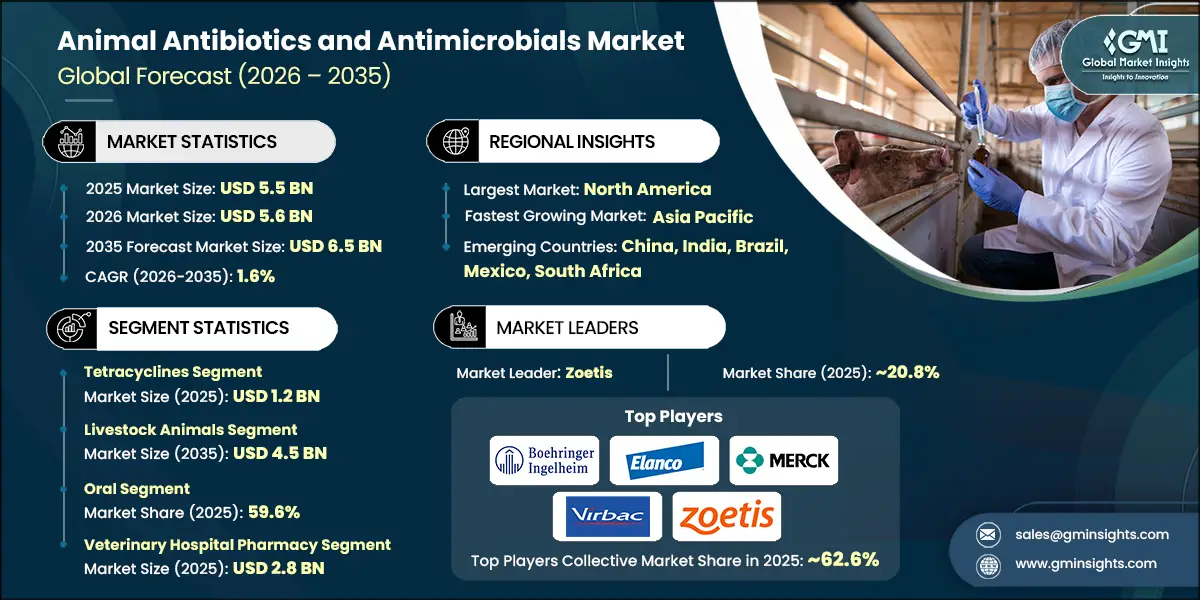
The global animal antibiotics and antimicrobials market was valued at USD 5.5 billion in 2025. The market is expected to grow from USD 5.6 billion in 2026 to USD 6.5 billion in 2035, growing at a CAGR of 1.6% during the forecast period, according to the latest report published by Global Market Insights Inc.
The market is experiencing growth driven by the rising incidence of animal and zoonotic diseases. For instance, as per World Health Organization, nearly 60% of the total emerging infectious diseases (EIDs) reported worldwide originate from animals, either wild or domestic. Additionally, the WHO stated that more than 30 new human pathogens have been discovered in the past 3 decades, and 75% of these have come from animals. This increasing disease burden has intensified the need for effective disease prevention, control, and treatment in animals; thus, animal antibiotics and antimicrobials remain in considerable demand to keep animals healthy, prevent disease transmission, and ensure food safety.
Animal antibiotics and antimicrobials are medicines used in veterinary medicine to treat, control, and prevent infections in animals caused by bacteria, fungi, parasites, and other microorganisms. Antibiotics specifically target and kill or inhibit the growth of bacteria, while antimicrobials is a broader term that includes antibiotics as well as antiviral, antifungal, and antiparasitic drugs. They are used in livestock, poultry, companion animals, and aquaculture to maintain animal health, ensure productivity, and reduce the spread of infectious diseases. Key players driving the growth of the market include Boehringer Ingelheim International, Elanco Animal Health, Merck, Virbac, Zoetis, among others.
These players have been actively focusing on formulating new products, investing in innovations that address antimicrobial resistance, and launching alternative therapies. They have strengthened their market presence through strategic partnerships, mergers, and licensing agreements, while expanding their global manufacturing capabilities and distribution networks to provide easier access to livestock, companion animal, and aquaculture segments.
Between 2022 and 2024, the global animal antibiotics and antimicrobials market witnessed considerable growth to reach USD 5.3 billion in 2024 from USD 5 billion in 2022. This expansion was backed by the advancements in veterinary healthcare infrastructure, better availability of both over the counter (OTC) and prescription animal health products, and the expansion of organized farming practices. Furthermore, regulatory frameworks promoting responsible antimicrobial usage encouraged the adoption of high-quality, approved formulations, thereby supporting steady market expansion during the period.
Animal Antibiotics and Antimicrobials Market Trends
The animal antibiotics and antimicrobials market is witnessing steady year-on-year expansion, with overall market value continuing to increase. Although the market size is growing consistently the pace of growth is gradually moderating, reflecting a trend of decreasing annual growth rates over time. This indicates a maturing market environment supported by sustained demand rather than rapid acceleration.
The rising R&D activities are fueling the development of novel formulations not only aimed at improving drug efficacy but minimizing adverse effects, thereby supporting overall market growth. A stronger scientific emphasis on targeted antimicrobial therapies and advanced drug delivery systems is improving treatment precision and helping address the growing concern of antimicrobial resistance (AMR), which is sustaining demand across both companion, and livestock animal segments, although growth rates are gradually moderating as the market matures.
The growing number of government and non-government efforts to combat AMR are significantly strengthening the need for responsible treatment practices. For instance, in December 2024, ReAct started an initiative that promotes responsible use of antibiotics in the human health, animal health, agricultural, and environmental sectors. ReAct also took part in the “Go Blue for AMR” campaign, which was organized by the World Health Organization (WHO), with the aim of promoting global action against AMR.
Such awareness initiatives are pushing the innovation of alternatives to traditional antibiotics and supporting the development of advanced antimicrobial therapies; thus, this is anticipated to sustain positive market momentum in the coming years.
The growing investments in R&D is also fueling the innovation pace in the animal antibiotics and antimicrobials market. The rising investment by government agencies, non-profit organizations, and veterinary pharmaceutical firms are making it possible to develop innovative and targeted antimicrobial treatments aimed at improving therapeutic efficacy while reducing resistance development in animals.
For instance, the International Consortium for Antimicrobial Stewardship in Agriculture (ICASA) awarded three funding awards amounting to approximately USD 377,503 to facilitate the surveillance of antimicrobial use and improve treatment approaches for swine and beef cattle bacterial infections. The funding awards are intended to improve the understanding of bovine respiratory disease (BRD), encourage responsible antibiotic use, improve animal healthcare and welfare, increase transparency in food production, and reduce antibiotic misuse.
Similarly, in November 2024, the U.S. Department of Agriculture (USDA) Animal and Plant Health Inspection Service (APHIS) granted a total of USD 5 million to six partners to improve the tracking systems for AMR in farm animals, poultry, and domestic pets. The grant recipients are Iowa State University, Cornell University, Texas Tech University, University of Washington, University of Minnesota, and National Association of State Departments of Agriculture.
The aim of these AMR dashboards is to monitor the development of drug-resistant microorganisms, track resistance patterns, and improve correlations between antibiotic use, animal health management practices, and AMR, thereby fostering improved animal health management and sustainable industry growth.
Furthermore, the rising prevalence of zoonotic diseases, increasing pet ownership rates, expanding livestock production to meet growing global protein demand, and rising expenditure on animal healthcare products and services are collectively contributing to steady market growth.
The growing focus on novel treatment development, enhanced veterinary care infrastructure, and responsible antibiotic stewardship continues to support sustained growth in the animal antibiotics and antimicrobials market.
Moreover, increasing shift towards alternative therapies such as probiotics, prebiotics, vaccines, and plant-based antimicrobials, is reducing the reliance on animal antibiotics, limiting the market growth.
Additionally, other factors such as growing consumer awareness about antibiotic residues in meat and dairy products in developing countries and enforcement of tighter import/export standards related to antibiotic use in livestock are pushing producers to reduce the use of antibiotics, thereby slowing the market expansion.
Animal Antibiotics and Antimicrobials Market Analysis
Based on the product, the animal antibiotics and antimicrobials market is segmented into tetracyclines, penicillins, sulfonamides, macrolides, aminoglycosides, lincosamides, fluoroquinolones, cephalosporins, and other antibiotics and antimicrobial products. The tetracyclines segment holds the largest market revenue of USD 1.2 billion in 2025 and is expected to witness its prominence throughout the forecast period.
The growth of the tetracyclines segment in the market is mainly attributable to the broad-spectrum effectiveness and the wide range of applications in various conditions for different types of livestock.
This is further augmented by the availability of tetracycline drugs in diverse dosage forms ranging from orals, and expanding to suspensions, and injectables as well. This along with lower cost of drugs as compared to other drug classes is further boosting the demand and uptake of tetracycline drugs.
Furthermore, their long-standing regulatory approval in many countries, established safety record, and the widespread familiarity of the veterinarians with the products further consolidate their position in the market.
On the other hand, the macrolides segment is expected to grow at 2.5% CAGR due to the increasing need for targeted and highly effective therapy for respiratory and systemic infections in livestock and companion animals.
Additionally, increasing concerns over antimicrobial resistance (AMR) and regulatory restrictions on the routine use of older antibiotic classes are encouraging a shift toward more advanced and carefully administered alternatives such as macrolides, thereby driving growth.
Based on animal type, the global animal antibiotics and antimicrobials market is classified into livestock animals and companion animals. The livestock animals segment dominated the market in 2025 and is estimated to reach USD 4.5 billion by 2035. The livestock animals segment is further categorized into cattle, swine, poultry, fish, and other livestock animals.
The livestock animals segment dominated the market due to the high demand for animal products such as meat, dairy, and seafood, thus necessitating the use of antibiotics and antimicrobials to ensure animal health and production.
Moreover, poultry and pig stock farming with high production levels and intensive methods are the main factors leading the livestock animals segment to grow in the animal antibiotics and antimicrobials market.
On the other hand, the companion animals segment is anticipated to witness growth at a CAGR of 1.8% over the forecast period, driven by the rising prevalence of companion animals combined with the growing trends of pet humanization.
Additionally, the increasing expenditure on pet healthcare, supported by rising disposable incomes and expanding pet insurance coverage in developed markets, is further supporting segment expansion.
Based on the mode of delivery, the global animal antibiotics and antimicrobials market is segmented into oral, topical, injections, and other modes of delivery. The oral segment dominated the market with a market share of 59.6% in 2025.
The dominance of this segment is due to its ease of administration, particularly in large-scale livestock operations, medications can be conveniently delivered through the feed or drinking water.
Additionally, oral drugs are more economical and preferred for mass medication, hence they are extensively used in poultry, swine, and aquaculture farming where it is very crucial to treat large animal populations efficiently.
Furthermore, this segment also benefits from higher compliance and reduced handling stress, as oral administration minimizes the need for restraining animals compared to injectable formulations.
The topical segment, on the other hand, is anticipated to witness growth at a CAGR of 1.5% in the coming years, because of the increasing incidence of skin infections, wounds, and dermatological conditions in both companion and livestock animals.
The rising adoption of pets and growing pet humanization trends are encouraging the use of localized and targeted treatments, where topical antimicrobials are preferred to minimize systemic side effects, thereby driving the growth of this segment.
Based on the distribution channel, the global animal antibiotics and antimicrobials market is classified into veterinary hospital pharmacy, retail pharmacy, and e-commerce. The veterinary hospital pharmacy segment held the largest market size with a revenue of USD 2.8 billion in 2025.
The highest growth of veterinary hospital pharmacy is primarily attributed to the increasing number of veterinary visits for both companion and livestock animals, where antibiotics and antimicrobials are commonly prescribed and dispensed directly at the point of care.
The growing prevalence of infectious and zoonotic diseases has increased reliance on diagnostic-supported treatments, which are typically administered and supplied through veterinary hospitals, thereby reinforcing their market share.
North America Animal Antibiotics and Antimicrobials Market
The North America animal market dominated the global market with a market share of 31.9% in 2025.
The North American animal market is experiencing steady growth, driven by intensive livestock production, heightened disease management requirements, and stringent antimicrobial stewardship initiatives.
The FDA’s ongoing monitoring of antimicrobial sales for food-producing animals underscores the continued reliance on antibiotics to maintain herd health, ensuring a stable demand for these products. This is necessary owing to the high consumption of meat and beef in the region.
For example, the following data including historic and forecast numbers published by the National Chicken Council based on a survey by the U.S. Department of Agriculture, shows the per capita consumption of red meat in the U.S. This sustained consumption trend reflects the strong and ongoing demand for livestock production in the region.
The U.S. animal antibiotics and antimicrobials market was valued at USD 1.45 billion and USD 1.49 billion in 2022 and 2023, respectively. The market size reached USD 1.56 billion in 2025, growing from USD 1.52 billion in 2024.
The presence of a large-scale livestock industry in the U.S., particularly in cattle, poultry, and swine production, requires consistent disease prevention and treatment interventions, contributing to the growth of this market.
Additionally, high per capita consumption of meat and dairy products across the country sustains intensive farming practices and continuous antimicrobial usage, thereby driving the market growth.
Moreover, well-established veterinary healthcare infrastructure and advanced diagnostic capabilities enable early disease detection and targeted antimicrobial therapy, thereby driving the market growth.
Europe Animal Antibiotics and Antimicrobials Market
Europe animal market accounted for USD 1.1 billion in 2025 and is anticipated to show lucrative growth over the forecast period.
Europe's market for animal antibiotics and antimicrobials is primarily driven by stringent antimicrobial resistance (AMR) monitoring, regulatory frameworks, and the ongoing need for effective therapeutic solutions in livestock systems.
Joint reports from the European Food Safety Authority (EFSA) and European Centre for Disease Prevention and Control (ECDC) consistently highlight high resistance levels to commonly used antimicrobials, such as ampicillin, tetracyclines, and sulfonamides, in pathogens like Salmonella, Campylobacter, and E. coli. This underscores the continued demand for targeted antimicrobial products to manage disease outbreaks and ensure food safety.
Germany dominates the Europe animal antibiotics and antimicrobials market, showcasing strong growth potential.
Germany dominates the Europe animal market, showcasing strong growth potential due to its well-established and technologically advanced livestock sector, particularly in swine and dairy production, driving consistent demand for antimicrobial treatments and thereby contributing to market growth.
The country’s strong veterinary healthcare infrastructure and strict disease surveillance systems ensure timely diagnosis and appropriate antimicrobial usage, supporting steady product demand and driving the market growth.
Asia Pacific Animal Antibiotics and Antimicrobials Market
The Asia Pacific animal market is anticipated to grow at the highest CAGR of 2.2% during the analysis timeframe.
The region accounts for significant share of global antimicrobial use in livestock, exceeding other regions, primarily due to its large-scale poultry, pig, and aquaculture industries. With population and income growth, antimicrobial consumption in the region is expected to rise steadily through 2030, positioning Asia-Pacific as a key driver of global market volume.
In addition, WOAH’s (World Organization for Animal Health) Antimicrobial Use (AMU) report (2020–2022) indicates that Asia-Pacific achieved only a marginal reduction in antimicrobial use (-2%), lagging behind Europe and Africa. This underscores the region's heavy reliance on antimicrobials for maintaining animal health, thereby contributing to the market growth.
China animal antibiotics and antimicrobials market is estimated to grow with a significant CAGR in the Asia Pacific animal market.
The rising pet ownership in the country is majorly contributing to market growth. Pet ownership has surged significantly in China, reflecting changing lifestyles and higher disposable incomes. According to the Global Agricultural Information Network (GAIN), China’s pet population reached 124.1 million in 2024, comprising 52.6 million dogs and 71.5 million cats. This marks a 1.6% increase in dogs and 2.5% in cats compared to 2023, with cats gaining preference due to their lower outdoor activity requirements.
This rising pet population, combined with increasing awareness of preventive healthcare and veterinary services, is driving sustained demand for antibiotics and antimicrobial products, thereby contributing to the steady growth of China’s animal market.
Latin American Animal Antibiotics and Antimicrobials Market
Brazil leads the Latin American market, exhibiting remarkable growth during the analysis period.
Brazil leads the Latin American market due to its large-scale livestock industry, particularly in poultry, cattle, and swine production, which relies heavily on antibiotics for disease prevention and growth optimization. The country’s expanding meat export market drives the need for healthy, high-yield livestock, sustaining antimicrobial demand.
Additionally, rising awareness of animal healthcare and disease management among farmers, coupled with increasing investments in veterinary infrastructure and adoption of modern farming practices, are further contributing to the growth of this market.
Middle East and Africa Animal Antibiotics and Antimicrobials Market
Saudi Arabia market is expected to experience substantial growth in the Middle East and Africa market.
The Saudi Arabia market is expected to experience substantial growth due to rapid expansion of livestock farming and poultry production to meet rising domestic protein demand. Increasing pet ownership and companion animal care awareness, particularly in urban areas, is driving veterinary visits and prescription-based antimicrobial usage.
Furthermore, government initiatives aimed at strengthening veterinary healthcare infrastructure and disease surveillance systems, alongside growing import of high-quality veterinary pharmaceuticals, are contributing to the growth of the Middle East and Africa market.
Animal Antibiotics and Antimicrobials Market Share
The global market is dominated by leading animal health and veterinary pharmaceutical companies, while innovation continues to thrive among specialized firms. Major market players are leveraging strategic initiatives such as acquisitions, partnerships, product innovation, and geographic expansion to strengthen their market positions and maintain a competitive edge. Key companies in the market such as Elanco Animal Health Incorporated, Virbac, Merck, Zoetis, and Boehringer Ingelheim accounted for 62.6% market share in the global market. These industry leaders are focused on advancing antibiotic and antimicrobial solutions and enhancing treatment protocols to improve livestock health, disease prevention, and sustainable animal farming practices.
Notable trends include the development of targeted antimicrobial formulations, improved delivery systems for medicated feeds and injectables, and integration of diagnostic tools to enable precise treatment. Additionally, collaborations with livestock producers and research institutions, increased investment in R&D, and targeted expansion into emerging animal health markets are central strategies to meet evolving regulatory standards and sustainability goals while broadening global access to effective veterinary solutions.
Animal Antibiotics and Antimicrobials Market Companies
Prominent players operating in the animal antibiotics and antimicrobials industry are as mentioned below:
The company accounted for approximately 20.8% and has established a leading position in the animal antibiotics and antimicrobials market through its broad portfolio of anti-infectives targeting both livestock and companion animals. Zoetis focuses on therapeutic solutions for respiratory diseases, mastitis, enteric infections, and dermatological conditions, supported by strong R&D capabilities and global distribution networks.
Elanco has built a strong presence in the market with a diversified portfolio serving poultry, swine, cattle, and companion animals. The company emphasizes innovation in targeted antimicrobial therapies and responsible usage programs aligned with global AMR reduction strategies.
Merck Animal Health has secured a significant share in the animal antibiotics and antimicrobials market through its comprehensive range of anti-infective treatments and preventive healthcare solutions. The company leverages strong scientific research and global manufacturing capabilities to develop innovative antibiotics aimed at respiratory, gastrointestinal, and systemic infections in livestock and companion animals.
Animal Antibiotics and Antimicrobials Industry News
In November 2025, Dechra Veterinary Products announced its upcoming U.S. launch of Solovecin (cefovecin sodium), a long-acting injectable antibiotic designed for treating skin infections in dogs and cats. The product was intended to provide veterinarians with a convenient single-dose solution for managing bacterial infections in companion animals. This launch reflected Dechra’s commitment to expanding its portfolio of advanced antibiotic solutions for companion animals.
In February 2025, Ceva Santé Animale launched Kesium, an oral antibiotic combining amoxicillin and clavulanate in a chewable tablet format. Marketed as a bioequivalent to Clavamox, Kesium was indicated for treating skin and soft tissue infections in dogs and cats, offering improved palatability and compliance for pet owners. This product launch highlighted Ceva’s dedication to enhancing treatment convenience and effectiveness in companion animal care.
In February 2025, Elanco Animal Health announced the launch of Pradalex (pradofloxacin injection) for treating bovine respiratory disease (BRD) and swine respiratory disease (SRD). This marks the first new injectable antibiotic molecule approved by the U.S. FDA for BRD and SRD in approximately twenty years. This approval strengthened Elanco’s antibiotic portfolio and provides a differentiated treatment option, potentially increasing market share in livestock respiratory disease management.
In September 2024, the FDA approved Elanco’s oral drug Zenrelia for managing itching and atopic dermatitis in dogs over 12 months, boosting the company’s shares by 2%. This approval expanded Elanco’s canine dermatology portfolio, potentially increasing market share and revenue.
The animal antibiotics and antimicrobials market research report includes in-depth coverage of the industry with estimates and forecast in terms of revenue in USD Million from 2022 – 2035 for the following segments:
Market, By Product
Penicillins
Tetracyclines
Sulfonamides
Macrolides
Aminoglycosides
Lincosamides
Fluoroquinolones
Cephalosporins
Other antibiotics and antimicrobial products
Market, By Animal Type
Livestock animals
Cattle
Swine
Poultry
Fish
Other livestock animals
Companion animals
Dogs
Cats
Horses
Other companion animals
Market, By Mode of Delivery
Oral
Topical
Injections
Other modes of delivery
Market, By Distribution Channel
Veterinary hospital pharmacy
Retail pharmacy
E-commerce
The above information is provided for the following regions and countries:
North America
U.S.
Canada
Europe
Germany
UK
France
Spain
Italy
Netherlands
Asia Pacific
China
India
Japan
Australia
South Korea
Latin America
Brazil
Mexico
Argentina
Middle East and Africa
South Africa
Saudi Arabia
UAE
Authors: Monali Tayade, Sakshi
Animal Antibiotics and Antimicrobials Market Scope
Animal Antibiotics and Antimicrobials Market Size
Animal Antibiotics and Antimicrobials Market Trends
Animal Antibiotics and Antimicrobials Market Analysis
Animal Antibiotics and Antimicrobials Market Share
Report Content
Chapter 1 Methodology and Scope
1.1 Market scope and definition
1.2 Research approach
1.3 Quality commitments
1.3.1 GMI AI policy and data integrity commitment
1.3.1.1 Source consistency protocol
1.4 Research trail and confidence scoring
1.4.1 Research trail components
1.4.2 Scoring components
1.5 Data collection
1.5.1 Partial list of primary sources
1.6 Data mining sources
1.6.1 Paid sources
1.6.1.1 Sources, by region
1.7 Base estimates and calculations
1.7.1 Revenue share analysis
1.7.2 Base year calculation
1.8 Forecast model
1.9 Research transparency addendum
1.9.1 Source attribution framework
1.9.2 Quality assurance metrics
1.9.3 Our commitment to trust
Chapter 2 Executive Summary
2.1 Industry 360° synopsis
2.2 Key market trends
2.2.1 Regional trends
2.2.2 Product trends
2.2.3 Animal type trends
2.2.4 Mode of delivery trends
2.2.5 Distribution channel trends
2.3 CXO perspectives: Strategic imperatives
2.3.1 Key decision points for industry executives
2.3.2 Critical success factors for market players
2.4 Future outlook and strategic recommendations
2.4.1 Future outlook
2.4.2 Strategic recommendations
Chapter 3 Industry Insights
3.1 Industry ecosystem analysis
3.2 Industry impact forces
3.2.1 Growth drivers
3.2.1.1 Increasing pet ownership rate
3.2.1.2 Expanding livestock production
3.2.1.3 Rise in R&D funding accelerating the research efforts
3.2.1.4 Growing awareness for animal healthcare spurring demand for preventive treatment
3.2.2 Industry pitfalls and challenges
3.2.2.1 Adverse effects of treatments
3.2.2.2 Stringent regulatory requirements
3.2.3 Market opportunities
3.2.3.1 Expansion of aquaculture sector
3.2.3.2 Growing adoption of digital and tele-veterinary services
3.3 Growth potential analysis
3.4 Regulatory landscape (Driven by Primary Research)
3.4.1 North America
3.4.2 Europe
3.4.3 Asia Pacific
3.4.4 Latin America
3.4.5 Middle East and Africa
3.5 Technology landscape (Driven by Primary Research)
3.5.1 Current technological trends
3.5.2 Emerging technologies
3.6 Future market trends (Driven by Primary Research)
3.7 Pricing analysis (Driven by Primary Research)
3.8 Supply chain analysis (Driven by Primary Research)
3.9 Porter’s analysis
3.10 Impact of AI and generative AI on the market
3.11 PESTEL analysis
Chapter 4 Competitive Landscape, 2025
4.1 Introduction
4.2 Company market share analysis
4.2.1 Global
4.2.2 North America
4.2.3 Europe
4.2.4 Asia Pacific
4.3 Company matrix analysis
4.4 Competitive analysis of major market players
4.5 Competitive positioning matrix
4.6 Key developments
4.6.1 Merger and acquisition
4.6.2 Partnership and collaboration
4.6.3 New product launches
4.6.4 Expansion plans
Chapter 5 Market Estimates and Forecast, By Product, 2022 – 2035 ($ Mn)
5.1 Key trends
5.2 Penicillins
5.3 Tetracyclines
5.4 Sulfonamides
5.5 Macrolides
5.6 Aminoglycosides
5.7 Lincosamides
5.8 Fluoroquinolones
5.9 Cephalosporins
5.10 Other antibiotics and antimicrobial products
Chapter 6 Market Estimates and Forecast, By Animal Type, 2022 – 2035 ($ Mn)
6.1 Key trends
6.2 Livestock animals
6.2.1 Cattle
6.2.2 Swine
6.2.3 Poultry
6.2.4 Fish
6.2.5 Other livestock animals
6.3 Companion animals
6.3.1 Dogs
6.3.2 Cats
6.3.3 Horses
6.3.4 Other companion animals
Chapter 7 Market Estimates and Forecast, By Mode of Delivery, 2022 – 2035 ($ Mn)
7.1 Key trends
7.2 Oral
7.3 Topical
7.4 Injections
7.5 Other modes of delivery
Chapter 8 Market Estimates and Forecast, By Distribution Channel, 2022 – 2035 ($ Mn)
8.1 Key trends
8.2 Veterinary hospital pharmacy
8.3 Retail pharmacy
8.4 E-commerce
Chapter 9 Market Estimates and Forecast, By Region, 2022 – 2035 ($ Mn)
9.1 Key trends
9.2 North America
9.2.1 U.S.
9.2.2 Canada
9.3 Europe
9.3.1 Germany
9.3.2 UK
9.3.3 France
9.3.4 Spain
9.3.5 Italy
9.3.6 Netherlands
9.4 Asia Pacific
9.4.1 China
9.4.2 India
9.4.3 Japan
9.4.4 Australia
9.4.5 South Korea
9.5 Latin America
9.5.1 Brazil
9.5.2 Mexico
9.5.3 Argentina
9.6 Middle East and Africa
9.6.1 South Africa
9.6.2 Saudi Arabia
9.6.3 UAE
Chapter 10 Company Profiles
10.1 AdvaCare Pharma
10.2 Bimeda
10.3 Boehringer Ingelheim
10.4 Ceva Santé Animale
10.5 Dechra Pharmaceuticals
10.6 ECO Animal Health Group
10.7 Elanco Animal Health Incorporated
10.8 HIPRA
10.9 Lutim Pharma Private Limited
10.10 Meiji Holdings
10.11 Merck
10.12 Norbrook
10.13 Phibro Animal Health
10.14 Vetoquinol
10.15 Virbac
10.16 Zoetis
10.17 Zydus (Zyvet Animal Health)
Don't see your key competitors?
The companies listed in this report are a curated selection - not the full competitive universe.
Our market revenue calculations use a bottom-up methodology that accounts for all players across all regions - including manufacturers, distributors, and specialists not individually profiled. The profiles section spotlights strategically significant players; it does not define the scope of our market sizing.
Your competitive landscape may also include
Regional or domestic-only leaders not in the global top tier
Distributors and channel partners who control market access
Emerging disruptors, startups, or adjacent-industry entrants
Niche players focused on a specific application or end-use
Free customization - up to 20% of report value
Need specific data? Request customization and get the insights tailored to your exact requirements.
Authors: Monali Tayade, Sakshi
For inquiries regarding discounts, bulk purchases, or customization requests, please contact us at[email protected]
Explore our licensing options:
Starting at: $2,450
Premium Report Details
Base Year: 2025
Companies Profiled: 17
Tables and Figures: 186
Countries covered: 19
Pages: 178
Download Free PDF
Premium Report Details
Base Year: 2025
Companies Profiled: 17
Tables and Figures: 186
Countries covered: 19
Pages: 178
Download Free PDF
Share Content
Add Citations
Monali Tayade. 2026, March. Animal Antibiotics and Antimicrobials Market – By Product, By Animal Type, By Mode of Delivery, By Distribution Channel - Global Forecast, 2026-2035 (Report ID: GMI5608). Global Market Insights Inc. Retrieved July 3, 2026, from https://www.gminsights.com/toc/details/animal-antibiotics-and-antimicrobials-market
Animal Antibiotics and Antimicrobials Market
Get a free sample of this report
Get a free sample of this report Animal Antibiotics and Antimicrobials Market
Is your requirement urgent? Please give us your business email for a speedy delivery!



Animal Antibiotics and Antimicrobials Market Size
The global animal antibiotics and antimicrobials market was valued at USD 5.5 billion in 2025. The market is expected to grow from USD 5.6 billion in 2026 to USD 6.5 billion in 2035, growing at a CAGR of 1.6% during the forecast period, according to the latest report published by Global Market Insights Inc.
The market is experiencing growth driven by the rising incidence of animal and zoonotic diseases. For instance, as per World Health Organization, nearly 60% of the total emerging infectious diseases (EIDs) reported worldwide originate from animals, either wild or domestic. Additionally, the WHO stated that more than 30 new human pathogens have been discovered in the past 3 decades, and 75% of these have come from animals. This increasing disease burden has intensified the need for effective disease prevention, control, and treatment in animals; thus, animal antibiotics and antimicrobials remain in considerable demand to keep animals healthy, prevent disease transmission, and ensure food safety.
Animal antibiotics and antimicrobials are medicines used in veterinary medicine to treat, control, and prevent infections in animals caused by bacteria, fungi, parasites, and other microorganisms. Antibiotics specifically target and kill or inhibit the growth of bacteria, while antimicrobials is a broader term that includes antibiotics as well as antiviral, antifungal, and antiparasitic drugs. They are used in livestock, poultry, companion animals, and aquaculture to maintain animal health, ensure productivity, and reduce the spread of infectious diseases. Key players driving the growth of the market include Boehringer Ingelheim International, Elanco Animal Health, Merck, Virbac, Zoetis, among others.
These players have been actively focusing on formulating new products, investing in innovations that address antimicrobial resistance, and launching alternative therapies. They have strengthened their market presence through strategic partnerships, mergers, and licensing agreements, while expanding their global manufacturing capabilities and distribution networks to provide easier access to livestock, companion animal, and aquaculture segments.
Between 2022 and 2024, the global animal antibiotics and antimicrobials market witnessed considerable growth to reach USD 5.3 billion in 2024 from USD 5 billion in 2022. This expansion was backed by the advancements in veterinary healthcare infrastructure, better availability of both over the counter (OTC) and prescription animal health products, and the expansion of organized farming practices. Furthermore, regulatory frameworks promoting responsible antimicrobial usage encouraged the adoption of high-quality, approved formulations, thereby supporting steady market expansion during the period.
Animal Antibiotics and Antimicrobials Market Trends
The animal antibiotics and antimicrobials market is witnessing steady year-on-year expansion, with overall market value continuing to increase. Although the market size is growing consistently the pace of growth is gradually moderating, reflecting a trend of decreasing annual growth rates over time. This indicates a maturing market environment supported by sustained demand rather than rapid acceleration.
Animal Antibiotics and Antimicrobials Market Analysis
Based on the product, the animal antibiotics and antimicrobials market is segmented into tetracyclines, penicillins, sulfonamides, macrolides, aminoglycosides, lincosamides, fluoroquinolones, cephalosporins, and other antibiotics and antimicrobial products. The tetracyclines segment holds the largest market revenue of USD 1.2 billion in 2025 and is expected to witness its prominence throughout the forecast period.
Based on animal type, the global animal antibiotics and antimicrobials market is classified into livestock animals and companion animals. The livestock animals segment dominated the market in 2025 and is estimated to reach USD 4.5 billion by 2035. The livestock animals segment is further categorized into cattle, swine, poultry, fish, and other livestock animals.
Based on the mode of delivery, the global animal antibiotics and antimicrobials market is segmented into oral, topical, injections, and other modes of delivery. The oral segment dominated the market with a market share of 59.6% in 2025.
Based on the distribution channel, the global animal antibiotics and antimicrobials market is classified into veterinary hospital pharmacy, retail pharmacy, and e-commerce. The veterinary hospital pharmacy segment held the largest market size with a revenue of USD 2.8 billion in 2025.
North America Animal Antibiotics and Antimicrobials Market
The North America animal market dominated the global market with a market share of 31.9% in 2025.
The North American animal market is experiencing steady growth, driven by intensive livestock production, heightened disease management requirements, and stringent antimicrobial stewardship initiatives.
The U.S. animal antibiotics and antimicrobials market was valued at USD 1.45 billion and USD 1.49 billion in 2022 and 2023, respectively. The market size reached USD 1.56 billion in 2025, growing from USD 1.52 billion in 2024.
Europe Animal Antibiotics and Antimicrobials Market
Europe animal market accounted for USD 1.1 billion in 2025 and is anticipated to show lucrative growth over the forecast period.
Germany dominates the Europe animal antibiotics and antimicrobials market, showcasing strong growth potential.
Asia Pacific Animal Antibiotics and Antimicrobials Market
The Asia Pacific animal market is anticipated to grow at the highest CAGR of 2.2% during the analysis timeframe.
China animal antibiotics and antimicrobials market is estimated to grow with a significant CAGR in the Asia Pacific animal market.
Latin American Animal Antibiotics and Antimicrobials Market
Brazil leads the Latin American market, exhibiting remarkable growth during the analysis period.
Middle East and Africa Animal Antibiotics and Antimicrobials Market
Saudi Arabia market is expected to experience substantial growth in the Middle East and Africa market.
Animal Antibiotics and Antimicrobials Market Share
The global market is dominated by leading animal health and veterinary pharmaceutical companies, while innovation continues to thrive among specialized firms. Major market players are leveraging strategic initiatives such as acquisitions, partnerships, product innovation, and geographic expansion to strengthen their market positions and maintain a competitive edge. Key companies in the market such as Elanco Animal Health Incorporated, Virbac, Merck, Zoetis, and Boehringer Ingelheim accounted for 62.6% market share in the global market. These industry leaders are focused on advancing antibiotic and antimicrobial solutions and enhancing treatment protocols to improve livestock health, disease prevention, and sustainable animal farming practices.
Notable trends include the development of targeted antimicrobial formulations, improved delivery systems for medicated feeds and injectables, and integration of diagnostic tools to enable precise treatment. Additionally, collaborations with livestock producers and research institutions, increased investment in R&D, and targeted expansion into emerging animal health markets are central strategies to meet evolving regulatory standards and sustainability goals while broadening global access to effective veterinary solutions.
Animal Antibiotics and Antimicrobials Market Companies
Prominent players operating in the animal antibiotics and antimicrobials industry are as mentioned below:
The company accounted for approximately 20.8% and has established a leading position in the animal antibiotics and antimicrobials market through its broad portfolio of anti-infectives targeting both livestock and companion animals. Zoetis focuses on therapeutic solutions for respiratory diseases, mastitis, enteric infections, and dermatological conditions, supported by strong R&D capabilities and global distribution networks.
Elanco has built a strong presence in the market with a diversified portfolio serving poultry, swine, cattle, and companion animals. The company emphasizes innovation in targeted antimicrobial therapies and responsible usage programs aligned with global AMR reduction strategies.
Merck Animal Health has secured a significant share in the animal antibiotics and antimicrobials market through its comprehensive range of anti-infective treatments and preventive healthcare solutions. The company leverages strong scientific research and global manufacturing capabilities to develop innovative antibiotics aimed at respiratory, gastrointestinal, and systemic infections in livestock and companion animals.
Animal Antibiotics and Antimicrobials Industry News
The animal antibiotics and antimicrobials market research report includes in-depth coverage of the industry with estimates and forecast in terms of revenue in USD Million from 2022 – 2035 for the following segments:
Market, By Product
Market, By Animal Type
Other companion animals
Market, By Mode of Delivery
Market, By Distribution Channel
The above information is provided for the following regions and countries: