Summary
Table of Content

Vitamin K Market
Get a free sample of this report
Form submitted successfully!
Error submitting form. Please try again.
Thank you!
Your inquiry has been received. Our team will reach out to you with the required details via email. To ensure that you don't miss their response, kindly remember to check your spam folder as well!
Request Sectional Data
Thank you!
Your inquiry has been received. Our team will reach out to you with the required details via email. To ensure that you don't miss their response, kindly remember to check your spam folder as well!
Form submitted successfully!
Error submitting form. Please try again.
Vitamin K Market Size
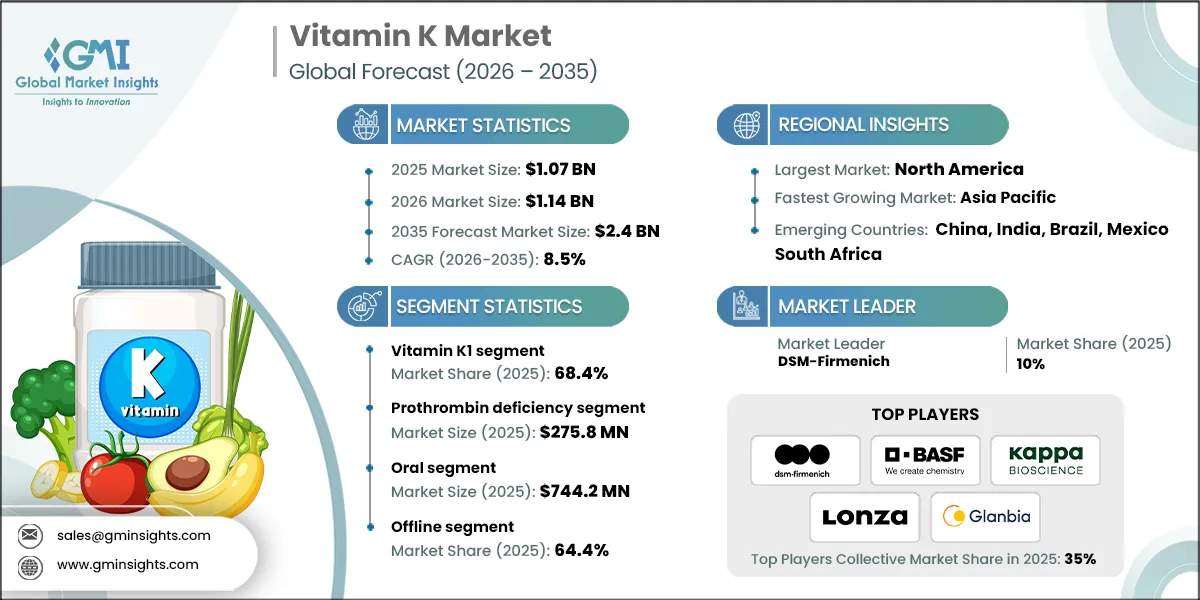
The global vitamin K market was valued at USD 1.07 billion in 2025. The market is expected to grow from USD 1.14 billion in 2026 to USD 2.4 billion in 2035, growing at a CAGR of 8.5% during the forecast period, according to the latest report published by Global Market Insights Inc.
To get key market trends
The market is witnessing high growth primarily driven by the increasing awareness of vitamin K’s role in blood clotting and cardiovascular health, coupled with the rising prevalence of cardiovascular disorders, and vitamin K deficiency among aging populations. For example, according to the WHO, cardiovascular diseases worldwide are causing 17.9 million deaths annually. Furthermore, the growing burden of chronic diseases globally with one out of three individuals suffering from at least one chronic disease, further stimulates the market demand.
In addition, the growing adoption of vitamin K2 supplements for osteoporosis prevention and heart health has surged significantly, supported by clinical evidence linking vitamin K to calcium regulation and arterial flexibility. For instance, according to International Osteoporosis Foundation, 37 million fragility fractures occur in people older than 55 age annually, that denotes 70 fractures per minute. Further, the expansion of dietary supplements and nutraceuticals, as well as pharmaceutical applications such as neonatal care and warfarin reversal therapy, is creating a favorable environment for manufacturers to innovate and expand globally.
Vitamin K refers to a group of fat-soluble vitamins essential for blood coagulation, bone metabolism, and cardiovascular health. It exists mainly in two forms, vitamin K1 (phylloquinone), which is commonly found in green leafy vegetables and widely used in pharmaceutical and dietary supplements, and vitamin K2 (menaquinone), which is synthesized by gut bacteria and increasingly incorporated into nutraceuticals for bone and heart health. These vitamins act as cofactors for enzymes involved in activating proteins that regulate blood clotting and calcium deposition, making them indispensable in clinical and preventive healthcare. The growing preference for vitamin K2 MK?7 due to its superior bioavailability and longer half-life compared to other forms is shaping product development strategies across the industry.
Key players in the vitamin K market include DSM-Firmenich, BASF SE, Kappa Bioscience, NattoPharma, Amphastar Pharmaceuticals, Pfizer, NOW Foods, and Solgar, which are actively engaged in product innovation, global distribution expansion, and strategic collaborations to strengthen their market presence. These companies play a critical role in introducing advanced vitamin K1 and K2 formulations, supporting regulatory approvals, and promoting fortified food and supplement adoption worldwide. Amphastar and Pfizer remain key suppliers of injectable vitamin K1 for clinical use, ensuring availability for hospitals and emergency care settings.
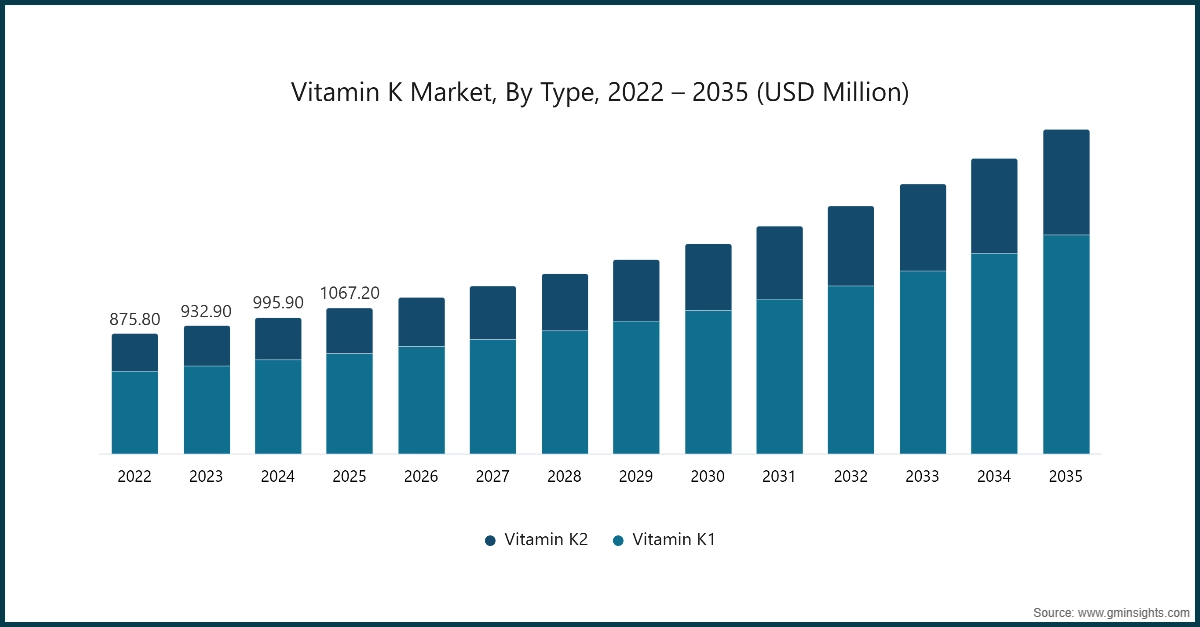
Between 2022 and 2024, the vitamin K market witnessed notable growth, rising from approximately USD 875.8 million in 2022 to USD 995.9 million in 2024. This growth can be attributed to increasing consumer awareness, technological advancements in MK?7 fermentation, and the availability of high-purity formulations that enhance bioavailability. Additionally, the shift toward preventive healthcare and the popularity of dietary supplements contributed significantly to market expansion during this timeframe.
Vitamin K Market Report Attributes
| Key Takeaway | Details |
|---|---|
| Market Size & Growth | |
| Base Year | 2025 |
| Market Size in 2025 | USD 1.07 Billion |
| Market Size in 2026 | USD 1.14 Billion |
| Forecast Period 2025-2034 CAGR | 8.5% |
| Market Size in 2034 | USD 2.4 Billion |
| Key Market Trends | |
| Drivers | Impact |
| Increasing awareness of bone and cardiovascular health | Rising prevalence of osteoporosis and cardiovascular disorders is boosting demand for vitamin K supplements globally. |
| Growing adoption of nutraceuticals and dietary supplements | Consumers are increasingly seeking preventive healthcare solutions, driving the inclusion of vitamin K supplements in diet. |
| Advancements in formulation and bioavailability | Innovations such as MK 7 fermentation, microencapsulation, and improved delivery formats are enhancing absorption and expanding product offerings. |
| Expanding pharmaceutical applications | Injectable vitamin K1 for neonatal care, warfarin reversal, and treatment of vitamin?K deficiency bleeding is increasing demand in hospital and clinical settings |
| Pitfalls & Challenges | Impact |
| Regulatory complexity and compliance requirements | Stringent approval processes and varying global regulations for supplements and pharmaceuticals can delay product launches and increase costs. |
| Risk of overdosing and side effects | Excessive vitamin K intake may lead to adverse effects, requiring careful dosage control and consumer education to avoid health risks. |
| Opportunities: | Impact |
| Emerging markets with rising health awareness | Growing disposable incomes and healthcare investments will create significant potential for vitamin K supplements. |
| Integration with personalized nutrition and digital health | Combining vitamin K supplementation with personalized diet plans and digital health platforms will enhance consumer engagement, adherence, and preventive care adoption. |
| Market Leaders (2025) | |
| Market Leader |
10% market share |
| Top Players |
Collective market share is 35% in 2025 |
| Regional Insights | |
| Largest Market | North America |
| Fastest growing market | Asia Pacific |
| Emerging countries | China, India, Brazil, Mexico, South Africa |
| Future outlook |
|
What are the growth opportunities in this market?
Vitamin K Market Trends
- A key trend in the vitamin K industry is the growing shift toward highly bioavailable forms of vitamin K2, particularly MK?7, due to its superior absorption and longer half-life compared to other variants. This preference is stimulating innovation in supplement formulations, including capsules, gummies, and liquid drops, as well as fortified food products such as dairy and beverages. The consistency, safety profile, and proven clinical benefits of vitamin K2 make it a preferred choice for large-scale preventive healthcare applications, especially in bone and cardiovascular health management.
- Additionally, there is a growing adoption of injectable vitamin K1 formulations in hospital and clinical settings due to their critical role in emergency coagulation management, neonatal care, and warfarin reversal therapy. These injectable products offer rapid action and predictable outcomes, making them indispensable in surgical and trauma care environments. This trend aligns with the broader healthcare shift toward advanced treatment protocols and improved patient safety, particularly in aging populations and high-risk patients requiring immediate intervention.
- Furthermore, the increasing prevalence of osteoporosis, cardiovascular disorders, and vitamin K deficiency is a major catalyst for the vitamin K market. As global life expectancy rises and lifestyle-related health risks escalate, the burden of bone fractures, arterial calcification, and coagulation disorders continues to expand across both developed and emerging regions.
- Moreover, technological innovations such as microencapsulated vitamin K2 and controlled-release formulations are gaining traction. These advancements allow enhanced stability, improved absorption, and targeted delivery, reducing reliance on traditional dietary sources and ensuring consistent therapeutic benefits. This trend is particularly important for populations with malabsorption issues and for specialized clinical applications where precise dosing is critical.
- In addition, beyond its traditional role in coagulation, vitamin K is increasingly being used in cardiovascular health management, osteoporosis prevention, and even dermatological formulations for wound healing and skin care. Its role in stabilizing calcium metabolism and reducing arterial calcification is expanding clinical and consumer demand. As preventive healthcare and personalized nutrition gain momentum globally, the need for advanced vitamin K formulations will continue to rise, further stimulating market growth.
Vitamin K Market Analysis
Learn more about the key segments shaping this market
The global market was valued at USD 875.8 million and USD 932.9 million in 2022 and 2023, respectively. The market size reached USD 1.07 billion in 2025, growing from USD 1 billion in 2024.
Based on the type, the vitamin K market is segmented into vitamin K1 and vitamin K2. The vitamin K1 segment has asserted its dominance in the market by securing a significant market share of 68.4% in 2025 and is anticipated to grow at a CAGR of 8.3% over the forecast years.
- The vitamin K1 segment holds a significant share of the market owing to its critical role in blood coagulation and anticoagulant therapy management, especially in treating vitamin K deficiency bleeding and reversing anticoagulant effects such as warfarin therapy. The Wiley Library mentions, 35 among 100,000 births suffer from VKDB, that stimulate market demand for vitamin K1.
- Moreover, vitamin K1, also known as phytonadione, is the most commonly prescribed form in hospital environments, with formulations including injectable routinely administered for neonatal care, trauma, and also surgical settings.
- Additionally, vitamin K1 is extensively incorporated into oral clinical nutrition, parenteral formulations, and food fortification programs due to its well-documented safety profile and predictable pharmacokinetics.
- The vitamin K2 segment, on the other hand, represents a rapidly growing portion of the market and is expected to witness high growth during the forecast period.This growth is stimulated by increasing scientific evidence linking vitamin K2 especially MK?7 to bone mineralization, cardiovascular health, and calcium regulation.
Based on the application, the vitamin K market is classified into osteoporosis, vitamin K-dependent clotting factors deficiency (VKCFD), prothrombin deficiency, vitamin K deficiency bleeding (VKDB), dermal applications, and other applications. The prothrombin deficiency segment accounted for the highest market revenue of USD 275.8 million in 2025.
- The prothrombin deficiency segment dominated the market in 2025, accounting for a significant share due to the essential role of Vitamin K in prothrombin synthesis and blood coagulation.
- Prothrombin (factor II) is a vitamin K?dependent clotting protein, and insufficiency of vitamin K directly impairs its activation, leading to increased bleeding risk. As a result, vitamin K administration remains the primary therapeutic intervention for managing both congenital and acquired prothrombin deficiency, particularly in hospital and emergency care settings.
- Moreover, the high prevalence of acquired prothrombin deficiency, particularly among patients receiving anticoagulant therapy (such as warfarin), has substantially contributed to the dominance of this segment.
- With the rising burden of cardiovascular diseases and widespread use of oral anticoagulants globally, demand for injectable and oral vitamin K formulations for prothrombin correction has increased steadily, reinforcing this segment’s leading market position.
- On the other hand, dermal applications segment is expected to register the fastest growth in the market over the forecast period, stimulated by rising utilization of vitamin K in skincare, wound healing, and cosmetic formulations.
Based on the route of administration, the vitamin K market is classified into oral, parenteral, and topical. The oral segment accounted for the highest market revenue of USD 744.2 million in 2025.
- The oral segment is further bifurcated into pills, powders, and liquids.
- The oral drugs hold the largest share due to their convenience, ease of administration, and strong patient compliance.
- Moreover, oral vitamin K particularly K1 and K2 (MK?7) is commonly available in tablets, capsules, gummies, powders, and liquid drops, making it highly accessible to a broad consumer base.
- This dominance is further reinforced by growing consumer awareness of vitamin K’s role in calcium regulation and arterial health, which has significantly boosted demand for oral supplements in developed markets such as North America and Europe.
- Furthermore, the rapid expansion of the nutraceutical and dietary supplements industry has played a critical role in sustaining the dominance of the oral segment.
- On the other hand, the parenteral segment is anticipated to be the fastest growing, stimulated by its critical role in hospital and emergency settings, particularly for neonatal care, vitamin K deficiency bleeding (VKDB), warfarin reversal, and acute coagulation disorders.
Learn more about the key segments shaping this market
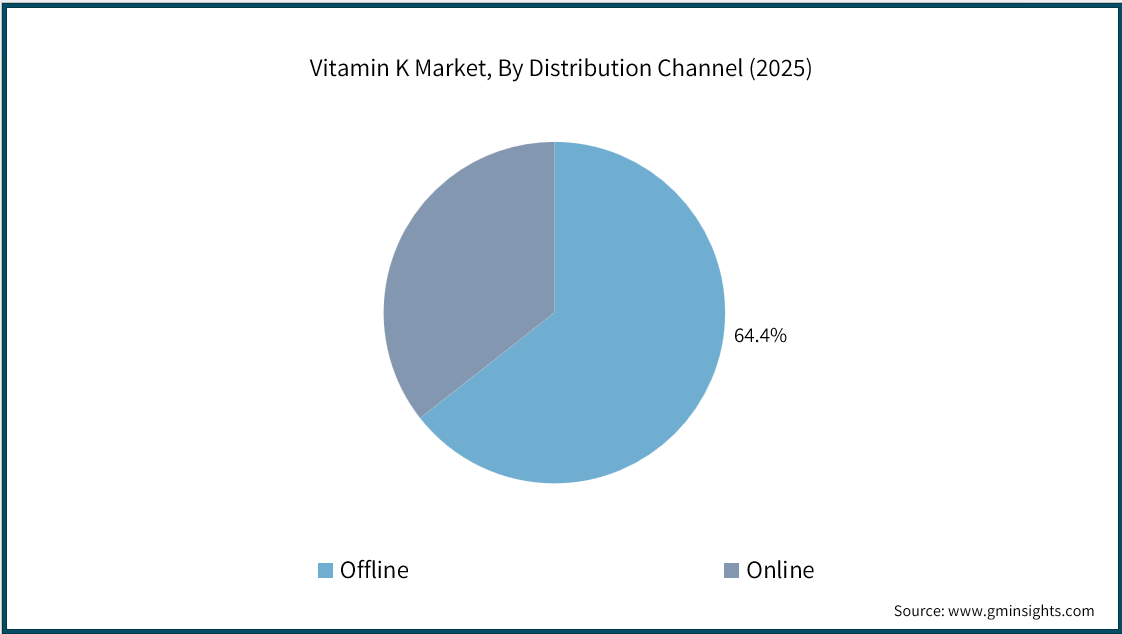
Based on the distribution channel, the global vitamin K market is classified as offline and online. The offline segment held a market share of 64.4% in 2025 and is projected to grow at a CAGR of 8.6% during the analysis period.
- The offline segment is further bifurcated into hypermarkets/supermarkets, specialty stores, and pharmacy stores.
- Offline channels remain the preferred mode for purchasing vitamin K products, particularly pharmaceutical formulations (injectable vitamin K1) and clinically recommended supplements, as these products often require professional guidance, prescription validation, or pharmacist consultation.
- Additionally, pharmacies and retail drug chains benefit from high consumer trust, established reimbursement pathways, and physician recommendations, which encourage patients to continue purchasing vitamin K through brick?and?mortar outlets.
- On the other hand, the online distribution channel is expected to growth at a CAGR 8.2% supported by increasing digitalization, expanding e?commerce platforms, and growing consumer preference for convenience and direct consumer access.
Looking for region specific data?
North America Vitamin K Market
The North America market dominated the global vitamin K industry with a market share of 41.1% in 2025.
- North America holds the highest market share in the market due to the region's well-established healthcare infrastructure along with strong preventive health culture.
- Moreover, the region benefits from early adoption of advanced vitamin K2 (MK-7) formulations in nutraceutical applications, alongside the widespread clinical use of injectable vitamin K1 in neonatal care and anticoagulation reversal. This, coupled with increasing investment in research and development to enhance bioavailability, is supporting market growth.
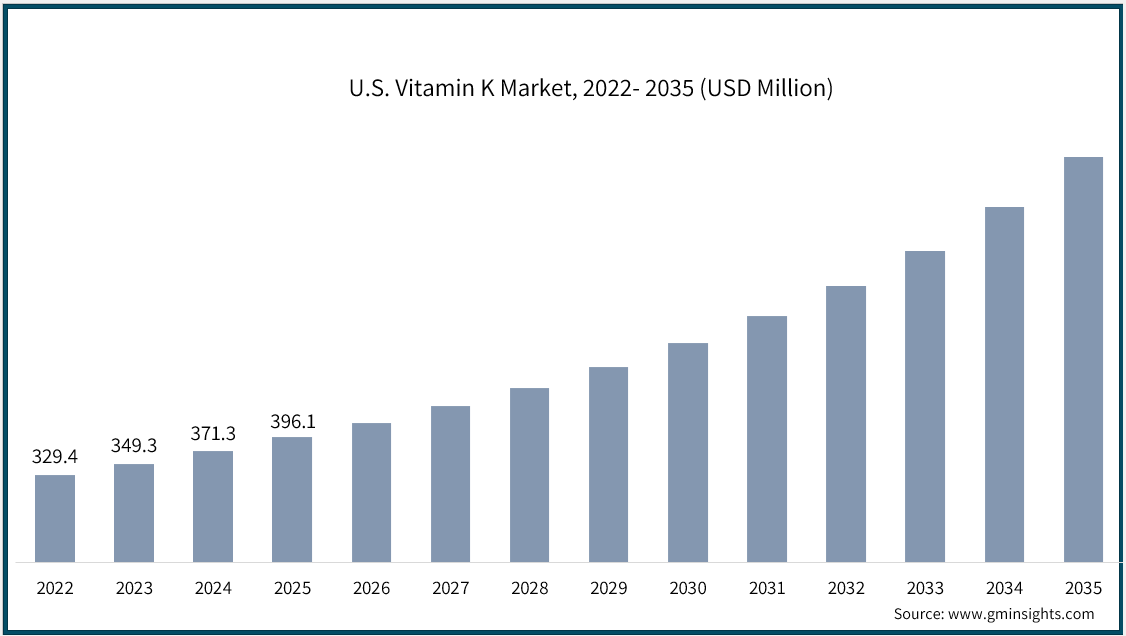
The U.S. vitamin K market was valued at USD 329.4 million and USD 349.3 million in 2022 and 2023, respectively. The market size reached USD 396.1 million in 2025, growing from USD 371.3 million in 2024.
- The U.S. holds a dominant position in the North America market driven by high penetration rate and adoption of dietary supplements and strong clinical utilization.
- For instance, hospital protocols widely use injectable phytonadione (vitamin K1) for coagulation management and neonatal prophylaxis, while consumer demand for MK?7 supplements continues to rise due to proven benefits for bone and arterial health.
- These factors highlight the large preventive healthcare base and strong clinical adoption in the U.S., stimulating the country’s dominant share in market growth.
Europe Vitamin K Market
Europe market accounted for USD 299.9 million in 2025 and is anticipated to show lucrative growth over the forecast period.
- Europe holds a substantial share of the vitamin K industry, supported by one of the world’s fastest-aging populations.
- As of 2024, more than 21.6% of the European Union population is aged 65 years and over, and this share continues to rise as median ages increase across member states.
- The region also faces a significant burden of age-related bone disorders such as osteoporosis, with tens of millions affected and fracture risk rising steeply with age. Osteoporosis becomes increasingly prevalent after age 50, contributing to a growing demand for bone health nutrients and preventive care, further amplifying demand for supplements that support bone and cardiovascular health.
Germany dominates the Europe vitamin K market, showcasing strong growth potential.
- Germany represents a dominant market within the European vitamin K landscape, supported by its mature nutraceutical industry, strong consumer preference for preventive healthcare, and high supplement consumption rates.
- The country has one of the largest dietary supplement markets in Europe, with a substantial proportion of adults regularly using vitamin and mineral products, creating a favorable environment for vitamin K formulations. For instance, according to Mintel Store, in 2024, 66% of the Germans consumed vitamins and supplements that indirectly stimulate the market demand for vitamin K supplements.
- Moreover, an aging population and rising incidence of bone and cardiovascular disorders further reinforce demand for vitamin K, particularly vitamin K2 (MK-7) products.
Asia Pacific Vitamin K Market
The Asia Pacific market is anticipated to grow at the highest CAGR of 8.9% during the analysis timeframe.
- The Asia Pacific region is poised for high growth in the vitamin K industry, stimulated by a rapidly growing geriatric population, rising prevalence of osteoporosis, and expanding healthcare infrastructure.
- According to NIH, osteoporosis affects 10-30% of women that are aged above 40+ and almost 10% of men in developing economies.
- Additionally, increasing consumer awareness and the popularity of MK?7 supplements in countries such as Japan, India, and China are stimulating market expansion.
China vitamin K market is estimated to grow with a significant CAGR in the Asia Pacific market.
- China is emerging as a strong growth market for vitamin K due to its rapidly aging population, urbanization, rising incidence of bone and cardiovascular disorders, and evolving neonatal care practices.
- Rising awareness of micronutrient deficiencies, coupled with increasing focus on bone and cardiovascular health, has accelerated adoption of vitamin K supplements, among urban consumers.
- In addition, China benefits from a strong domestic manufacturing ecosystem for nutraceutical ingredients and finished supplements, enabling competitive pricing and broad product availability.
- Further, the widespread use of e-commerce and digital health retail platforms has improved consumer access to vitamin K products, positioning China as a leading market in the Asia Pacific market.
Latin American Vitamin K Market
Brazil leads the Latin American market, exhibiting remarkable growth during the analysis period.
- As one of the region’s most populous economies, Brazil has seen rapid growth in dietary supplement consumption, with more consumers turning to vitamins and nutraceuticals to support bone health and overall wellness.
- The prevalence of age-related conditions, including osteoporosis and cardiovascular risk factors, has further boosted interest in vitamin K products.
- Additionally, expanding distribution channels in the country have made supplements more accessible across both urban and smaller cities, thus driving market growth.
Middle East and Africa Vitamin K Market
South Africa vitamin K industry is expected to experience substantial growth in the Middle East and Africa market.
- South Africa holds a prominent share of the market within the Middle East and Africa region, supported by increasing health awareness, growing demand for preventive nutrition, and improving access to dietary supplements.
- The country has a well-established pharmacy and wellness channel, which has facilitated the widespread availability of vitamin K products.
- In addition, rising concerns about bone health and chronic conditions among aging consumers have driven more individuals to adopt supplements that support long-term wellness.
Vitamin K Market Share
Top 5 companies such as DSM-Firmenich, BASF SE, Kappa Bioscience, Lonza, and Glanbia hold a combined market share of approximately 35% in the global vitamin K industry. These players are continuously investing in research and development to improve bioavailability, stability, and delivery formats for vitamin K1 and K2, while expanding their global distribution networks. The market also sees strategic partnerships, mergers, and acquisitions aimed at accelerating the commercialization of advanced formulations and accessing emerging markets.
Additionally, smaller players and niche firms such as NattoPharma, Amphastar Pharmaceuticals, NOW Foods, Solgar, and Country Life contribute by focusing on specialized products such as MK?7 fermentation-based supplements and injectable vitamin K1 for clinical use. This dynamic environment fosters rapid technological advancements and competitive differentiation, driving overall growth and diversification of the market.
Vitamin K Market Companies
Prominent players operating in the vitamin K industry are as mentioned below:
- Amphastar Pharmaceuticals
- BASF SE
- Country Life (Kikkoman)
- DSM-Firmenich
- Glanbia
- Gnosis by Lesaffre
- Kappa Bioscience
- Livealth Biopharma
- Lonza
- Nature's Bounty (Nestle Health Science)
- Nature Made (Pharmavite)
- NOW Foods
- Pfizer
- Solgar
DSM-Firmenich holds a leading position in the vitamin K market with a market share of ~10%, driven by its extensive portfolio of high-purity vitamin K1 and K2 ingredients and strong global distribution network. The company’s focus on innovation, sustainability, and advanced formulation technologies enables it to meet growing demand for dietary supplements and nutraceuticals worldwide.
BASF SE maintains a competitive edge through its expertise in producing premium-quality vitamin k ingredients for dietary supplements and pharmaceutical applications. Its commitment to research and development, coupled with global manufacturing capabilities, reinforces its role as a key supplier in the market.
Kappa Bioscience hold a significant market share in the vitamin K2 segment with its proprietary K2VITAL MK?7 technology, offering superior bioavailability and stability. The company’s specialization in fermentation-based production and strategic partnerships positions it as a leading innovator in the global market.
Vitamin K Industry News
- In November 2024, Balchem launched a three-in-one concept with the formulation of vitamin K2, vitamin D3, and magnesium bisglycinate that provided health benefits and efficacy for immune, cardiovascular and bone health. The product had a positive feedback report for the initial surveys conducted in North America and Europe. This helped the company expand its sales in Europe and North America.
- In March 2024, Gnosis and SunWay Biotech by Lefsaffre launched MenaQ7 Metabolic. It is a blend of vitamin K2 and stalin-free red yeast rice fermentate, Ankascin 568-R which is designed to support heart and bone health. This new ingredient is free of Monaclin K with an NDI status. Over 130 scientific studies on its metabolic advantages. This product launch helped the company accomplish new innovative products.
- In April 2022, Gf Fermentech which is a subsidiary of Genofocus, introduced vitamin K2 capsule named MediQ7 Pure, nautral source from Bacillus subtilis natto. This product boosts 96% menaquinone-7. This helped the company expand its product range.
- In June 2022, Balchem acquired Kappa Bioscience, a Norwegian manufacturer of vitamin K2. The deal marked Balchem’s entry into the vitamin K2 segment, expanding its specialty nutrient portfolio and strengthening its position in human health ingredients.
The vitamin K market research report includes in-depth coverage of the industry with estimates and forecast in terms of revenue in USD Million from 2022 – 2035 for the following segments:
Market, By Type
- Vitamin K1
- Vitamin K2
Market, By Application
- Osteoporosis
- Vitamin K-dependent clotting factors deficiency (VKCFD)
- Prothrombin deficiency
- Vitamin K deficiency bleeding (VKDB)
- Dermal applications
- Other applications
Market, By Route of Administration
- Oral
- Pills
- Powders
- Liquids
- Parenteral
- Topical
Market, By Distribution Channel
- Offline
- Hypermarkets/supermarkets
- Specialty stores
- Specialty stores
- Online
The above information is provided for the following regions and countries:
- North America
- U.S.
- Canada
- Europe
- Germany
- UK
- France
- Italy
- Spain
- Netherlands
- Asia Pacific
- China
- India
- Japan
- Australia
- South Korea
- Latin America
- Brazil
- Mexico
- Argentina
- Middle East and Africa
- South Africa
- Saudi Arabia
- UAE
Frequently Asked Question(FAQ) :
Which region leads the vitamin K market?
North America dominated the global market with a 41.1% share in 2025. The region’s leadership is driven by high awareness of preventive healthcare, strong adoption of dietary supplements, and advanced healthcare infrastructure.
What are the upcoming trends in the vitamin K industry?
Key trends include advancements in formulation technologies such as MK 7 fermentation and microencapsulation, integration with personalized nutrition and digital health platforms, and increasing adoption of fortified foods. Emerging markets with rising health awareness and disposable incomes also present significant growth opportunities.
What is the growth outlook for the offline distribution channel from 2025 to 2034?
The offline distribution channel held a market share of 64.4% in 2025 and is projected to grow at a CAGR of 8.6% during the forecast period. The segment benefits from strong consumer trust in physical retail outlets and pharmacies.
Who are the key players in the vitamin K market?
Prominent players include DSM-Firmenich, BASF SE, Kappa Bioscience, Lonza, Glanbia, Amphastar Pharmaceuticals, Country Life (Kikkoman), Gnosis by Lesaffre, and Livealth Biopharma.
How much revenue did the prothrombin deficiency segment generate in 2025?
The prothrombin deficiency segment accounted for the highest market revenue of USD 275.8 million in 2025, driven by its critical role in addressing clotting factor deficiencies.
What was the valuation of the oral segment in 2025?
The oral segment generated USD 744.2 million in revenue in 2025, making it the largest route of administration category. Its dominance is attributed to ease of consumption and widespread availability of oral vitamin K supplements.
What is the market size of the vitamin K industry in 2026?
The market size for vitamin K reached USD 1.14 billion in 2026, reflecting steady growth driven by the adoption of nutraceuticals and dietary supplements.
What is the projected value of the vitamin K market by 2035?
The market size for vitamin K is expected to reach USD 2.4 billion by 2035, growing at a CAGR of 8.5%. This growth is supported by advancements in bioavailability technologies, expanding pharmaceutical applications, and increasing demand in emerging markets.
What is the vitamin K market size in 2025?
The global market size for vitamin K was valued at USD 1.07 billion in 2025. Increasing awareness of vitamin K’s role in bone and cardiovascular health, along with rising prevalence of related disorders, is driving market growth.
Vitamin K Market Scope
Related Reports