Summary
Table of Content

U.S. Nuclear Medicine Market
Get a free sample of this report
Form submitted successfully!
Error submitting form. Please try again.
Thank you!
Your inquiry has been received. Our team will reach out to you with the required details via email. To ensure that you don't miss their response, kindly remember to check your spam folder as well!
Request Sectional Data
Thank you!
Your inquiry has been received. Our team will reach out to you with the required details via email. To ensure that you don't miss their response, kindly remember to check your spam folder as well!
Form submitted successfully!
Error submitting form. Please try again.
U.S. Nuclear Medicine Market Size
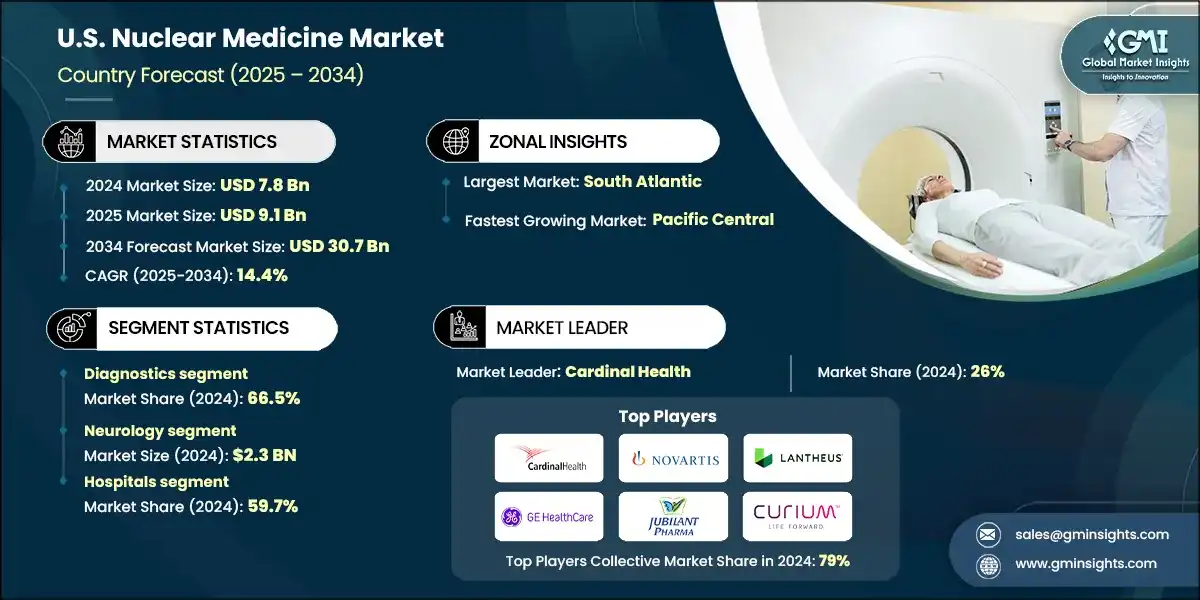
The U.S. nuclear medicine market was valued at USD 7.8 billion in 2024. The market is expected to reach from USD 9.1 billion in 2025 to USD 30.7 billion in 2034, growing at a CAGR of 14.4% during the forecast period, according to the latest report published by Global Market Insights Inc. The high market growth is attributed to the ongoing advancements in radiopharmaceuticals, rising prevalence of chronic diseases, growing adoption of personalized medicine, and favorable reimbursement policies and government support, among other contributing factors.
U.S. Nuclear Medicine Market Key Takeaways
Market Size & Growth
- 2024 Market Size: USD 7.8 Billion
- 2025 Market Size: USD 9.1 Billion
- 2034 Forecast Market Size: USD 30.7 Billion
- CAGR (2025–2034): 14.4%
Regional Dominance
- Largest Market: South Atlantic
- Fastest Growing Region: Pacific Central
Key Market Drivers
- Rising prevalence of cancer and cardiovascular diseases.
- Increasing demand for early and accurate disease diagnosis.
- Technological advancements in imaging systems (PET, SPECT).
- Expanding applications of radiopharmaceuticals in therapy.
- Supportive government initiatives and funding.
Challenges
- High cost of nuclear medicine procedures and equipment.
- Short half-life and limited availability of radioisotopes.
Opportunity
- Growing adoption of targeted radionuclide therapies.
- Advancements in hybrid imaging technologies.
- Increasing research in novel radiopharmaceuticals.
Key Players
- Market Leader: Cardinal Health led with over 26% market share in 2024.
- Leading Players: Top 5 players in this market include Cardinal Health, Novartis, Lantheus, GE Healthcare, Jubilant Pharma, Curium Pharma, which collectively held a market share of 79% in 2024.
Get Market Insights & Growth Opportunities
Nuclear medicine is a specialized branch of medical imaging and therapy that uses small amounts of radioactive materials (radiopharmaceuticals) to diagnose, monitor, and treat various disorders. Additionally, it provides functional and molecular information about organs and tissues, offering insights that traditional imaging techniques cannot capture.
The major contributors to the U.S. nuclear medicine market are Cardinal Health, Novartis, Lantheus (SHINE Technologies), GE Healthcare, Jubilant Pharma, and Curium Pharma. These companies strengthen their competitive position through ongoing product originality, worldwide market presence, and significant investments in research and development area.
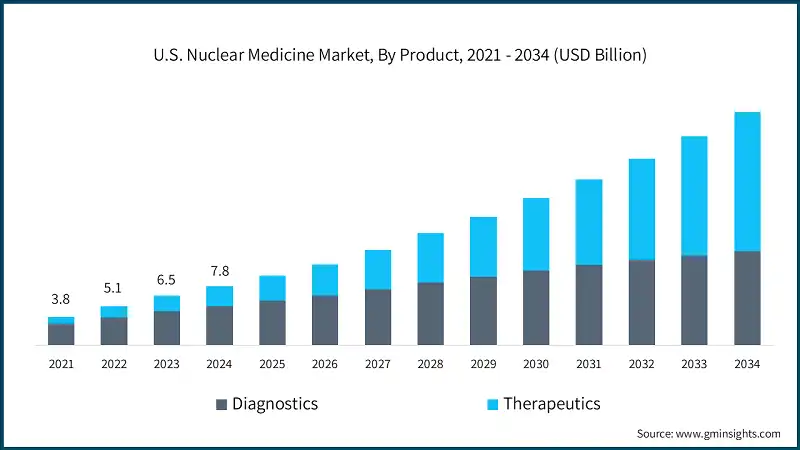
The market has increased from USD 3.8 billion in 2021 and reached USD 6.5 billion in 2023, with the historic growth rate of 31.4%. The growth is attributed to the rising prevalence of chronic and oncological diseases and increasing demand for advanced nuclear imaging techniques. Technological advancements in radiopharmaceuticals and supportive government initiatives have further driven market expansion.
Moreover, the rising cases of cancer, cardiovascular disorders, and neurological diseases in the U.S. drive the demand for nuclear medicine procedures. For instance, according to the American Cancer Society, approximately 1.9 million new cancer cases were diagnosed in 2022, and 1.96 million cases were estimated for 2023.
Similarly, the Centres for Disease Control and Prevention (CDC) reported that 695,000 Americans died from heart disease in 2021, while 868,000 Americans were expected to have at least one stroke in 2023. Nuclear medicine techniques enable accurate diagnosis and monitoring, which helps in early disease detection and development of personalized treatment plans.
Furthermore, improvements in PET, SPECT, and hybrid imaging systems have increased image resolution, reduced scan times, and improved patient comfort. Enhanced imaging technology boosts diagnostic accuracy and workflow efficiency, fuelling market growth.
To get key market trends
U.S. Nuclear Medicine Market Trends
The U.S. nuclear medicine industry is experiencing several notable trends that are shaping its growth and development. Factors such as expansion of theranostics in oncology, advancements in imaging technology, increased investment in radiopharmaceuticals, and growth of diagnostic centres, among other factors collectively driving industry growth.
- Theranostic modalities, which combine diagnostic imaging with targeted treatment, are being rapidly adopted in cancer therapy. The use of radiopharmaceuticals that enable precise tumor targeting and real-time tracking is the key driver, improving treatment effectiveness while minimizing side effects.
- The adoption of artificial intelligence (AI) has emerged as a major technological breakthrough in nuclear imaging modalities such as PET and SPECT. AI enhances diagnostic accuracy, streamlines workflow, and accelerates interpretation, making diagnoses faster and more reliable, particularly in complex cases.
- Furthermore, nuclear medicine is playing a pivotal role in personalized healthcare by providing molecular-level insights into disease mechanisms. This enables tailored treatment plans, improves patient outcomes, and aligns with the broader shift toward personalized medicine, thereby supporting sustained market growth.
U.S. Nuclear Medicine Market Analysis
Learn more about the key segments shaping this market
Based on the product, the U.S. nuclear medicine market is segmented into diagnostics and therapeutics. The diagnostics segment has asserted its dominance in the market by securing a significant market share of 66.5% in 2024 owing to the rising demand for early and accurate disease detection, widespread adoption of advanced imaging techniques such as PET and SPECT, and the increasing prevalence of cancer and cardiovascular disorders. The segment is expected to exceed USD 12.4 billion by 2034, growing at a CAGR of 8.7% during the forecast period.
On the other hand, the therapeutics segment is expected to grow with a CAGR of 21%. The growth of this segment is driven by the increasing adoption of targeted radionuclide therapies, advancements in radiopharmaceuticals, and expanding clinical applications in oncology and neurology.
- The diagnostics segment continues to dominate the market. One of the major factors that drives the demand for nuclear medicine diagnostics is the increasing occurrence of chronic diseases such as cancer, cardiovascular diseases, and neurological disorders. The nuclear imaging methods based on PET and SPECT have the potential to detect diseases very early and accurately, thus making prompt intervention and patient-specific therapy plans possible. The trend is most obvious in oncology, where molecular imaging facilitates correct staging and follow-up treatment effectiveness.
- Further, the shift towards personalized medicine is one of the factors that nuclear medicine diagnostics have been widely embraced. Nuclear imaging techniques provide detailed molecular information, which allows the physician to choose treatment that is most suitable for the individual, which is based on the specific disease characteristics of the patient. This personalized approach to therapy has the virtue of increasing the likelihood of success and decreasing the risk of side effects, which is in line with the general trend of precision healthcare.
- The therapeutics segment held a revenue of USD 2.6 billion in 2024, with projections indicating a steady expansion at 21% CAGR from 2025 to 2034. The segmental growth is driven by the rising adoption of targeted radionuclide therapies, which offer precise treatment for cancers and neurological disorders. Advancements in radiopharmaceutical development have expanded therapeutic options, improving efficacy and patient outcomes.
- Additionally, growing clinical awareness and supportive regulatory initiatives are accelerating the integration of nuclear medicine therapies into standard treatment protocols.
Based on application, the U.S. nuclear medicine market is segmented into neurology, cardiology, oncology, thyroid, pulmonary, and other applications. The neurology segment dominated the market in 2024, accounting for USD 2.3 billion and is anticipated to grow at a CAGR of 14.1% during the forecast period.
- The development of specialized radiopharmaceuticals, such as those targeting amyloid plaques in Alzheimer's disease or dopamine transporters in Parkinson's disease, has enhanced diagnostic accuracy. These innovations enable early detection and differentiation of neurodegenerative conditions, leading to more effective management.
- Moreover, as the U.S. population ages, the prevalence of age-related neurological diseases, such as dementia and stroke, rises. Nuclear medicine imaging plays a crucial role in diagnosing and monitoring these conditions, driving demand for advanced imaging techniques in neurology.
- The cardiology segment accounted for significant revenue in 2024 and is anticipated to grow at a CAGR of 14.6% over the forecast period. The cardiology segment is driven by the increasing prevalence of cardiovascular diseases and the growing demand for early and accurate cardiac diagnostics. Advanced nuclear imaging techniques, such as SPECT and PET, enable precise assessment of cardiac function, fuelling market adoption.
- The oncology segment held a revenue of USD 1.7 billion in 2024, with projections indicating a steady expansion at 15.6% CAGR from 2025 to 2034. The segmental growth is driven by the rising incidence of cancer and the need for early detection and targeted treatment. Innovations in PET imaging and radiopharmaceuticals have enhanced tumour diagnosis and therapy, boosting adoption in clinical oncology.
- The thyroid segment accounted for significant revenue in 2024 and is anticipated to grow at a CAGR of 13.3% over the forecast period. The growth of the segment is driven by the increasing prevalence of thyroid disorders and the demand for precise functional imaging for diagnosis and treatment planning. The use of specialized radiotracers for thyroid scans and therapy has improved clinical outcomes, supporting market growth.
- The pulmonary segment accounted for significant revenue in 2024 and is anticipated to grow at a CAGR of 13.5% over the forecast period. The segment is driven by the rising incidence of respiratory diseases and the need for accurate assessment of lung function and perfusion. Advanced nuclear imaging techniques, such as ventilation-perfusion (V/Q) scans, have enhanced diagnosis and treatment monitoring, supporting market expansion.
Learn more about the key segments shaping this market
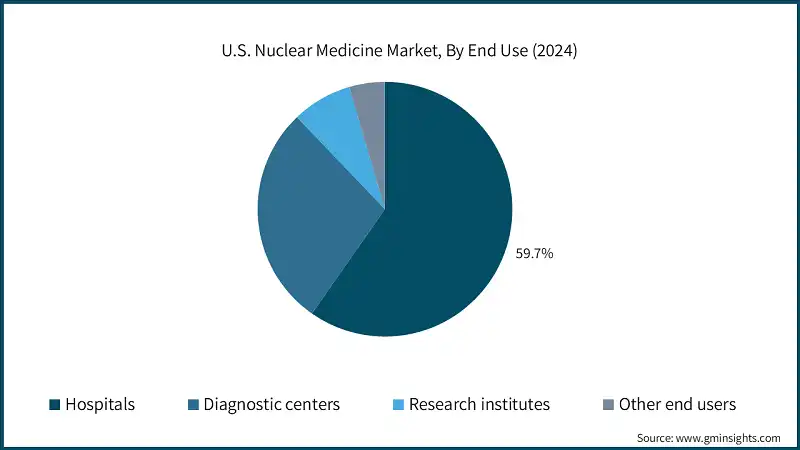
Based on end use, the U.S. nuclear medicine market is segmented into hospitals, diagnostic centers, research institutes, and other end users. The hospitals segment dominated the market with a revenue share of 59.7% in 2024 and is expected to reach USD 18.8 billion within the forecast period.
- Hospitals are increasingly adopting nuclear medicine due to the rising demand for accurate diagnostics and effective therapies. Procedures such as PET and SPECT are very important in the detection and monitoring of cancer, cardiovascular diseases, and neurological disorders, besides other diseases. These imaging methods allow for the detection of diseases at an early stage; hence, better patient outcomes and treatment plans are possible.
- Additionally, hospitals with access to trained nuclear medicine technologists and radiologists are better positioned to implement nuclear imaging procedures. The presence of skilled professionals ensures the safe and effective use of radiopharmaceuticals, adherence to safety protocols, and accurate interpretation of imaging results. This capability enhances the hospital's diagnostic and therapeutic services.
- The diagnostic centers segment held a revenue of USD 2.2 billion in 2024, with projections indicating a steady expansion at 14.3% CAGR from 2025 to 2034. The expansion of the segment is due to the rising need for specialized, cost-effective, and more accessible nuclear imaging services in ambulatory locations rather than hospitals. The market growth has been triggered by the presence of advanced imaging apparatus and relative services focused on outpatients, which makes the patient flow easier.
- The research institutes segment held a revenue of USD 590.6 million in 2024, with projections indicating a steady expansion at 13.5% CAGR from 2025 to 2034. The segmental growth is driven by rising investments in nuclear medicine research and the development of novel radiopharmaceuticals and imaging techniques. Collaborative initiatives with healthcare providers and government funding further support innovation and market expansion in this segment.
Looking for region specific data?
South Atlantic Nuclear Medicine Market
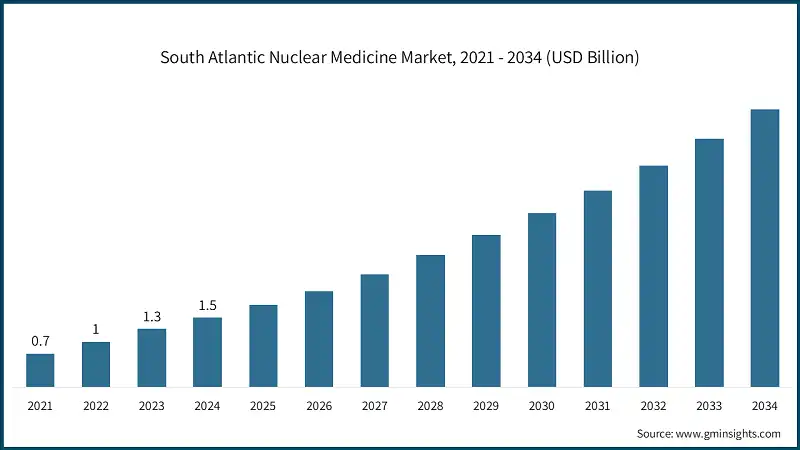
The South Atlantic zone dominated the U.S. nuclear medicine market with the leading market share of 19.4% in 2024.
- The South Atlantic region has witnessed substantial investments in healthcare facilities, which have enhanced access to nuclear medicine services. For instance, states like Florida and Georgia have expanded their nuclear imaging capabilities in hospitals and outpatient diagnostic centers. Moreover, advancements in nuclear imaging technologies, such as the development of more efficient radiopharmaceuticals and imaging systems, have bolstered the adoption of nuclear medicine in this region.
- For example, the growing utilization of Positron Emission Tomography (PET) and Single Photon Emission Computed Tomography (SPECT) imaging for oncology and cardiology has been significant. Additionally, the rising awareness of nuclear medicine's benefits among healthcare providers and patients has spurred its growth. These factors collectively highlight the dynamic growth potential of the market.
Pacific Central Nuclear Medicine Market
The Pacific Central nuclear medicine market accounted for USD 1 billion in 2024 and is anticipated to show lucrative growth over the forecast period.
- Clinicians in the region are increasingly utilizing targeted radiopharmaceuticals for tailored treatment plans, particularly in oncology, where therapies like lutetium-177 (Lu-177) are being used to treat specific tumors. The adoption of such precision medicine approaches is reflected in the expanding number of nuclear medicine facilities across the Pacific Central states. For example, California has seen a notable increase in the establishment of centers specializing in radiopharmaceutical therapies, highlighting the region's leadership in this field.
- Moreover, government initiatives aimed at improving healthcare access and funding for nuclear medicine advancements are further boosting the market. Ongoing research and development efforts in the region are expected to introduce new radiopharmaceuticals and expand treatment options, positioning the Pacific Central region as a key hub for growth within the U.S. nuclear medicine market.
Northeast Nuclear Medicine Market
The Northeast nuclear medicine market is anticipated to grow at the highest CAGR of 15.6% during the analysis timeframe.
- The region is home to some of the country's most prominent medical centers, which invest significantly in advanced nuclear medicine technologies. For instance, hospitals in states like Massachusetts and New York have expanded their nuclear imaging facilities, incorporating state-of-the-art PET and SPECT systems to enhance diagnostic capabilities.
- Additionally, the increasing incidence of cancers and cardiovascular diseases in the Northeast has led to a surge in demand for diagnostic imaging procedures.
U.S. Nuclear Medicine Market Share
Leading industry players such as Cardinal Health, Novartis, Lantheus, GE Healthcare, Jubilant Pharma, and Curium Pharma hold around 79% of the market share in the competitive market. These companies maintain a strong market presence through extensive portfolios of nuclear medicine, diagnostic, and therapeutic products, supported by technological innovations and wide market reach.
Continuous agreements, partnerships, and product launches by key players are driving the nuclear medicine market. These launches stimulate competition and differentiation, prompting companies to invest in research and development to stay ahead of competitors and meet evolving market demands. This competitive environment fosters innovation and drives the development of new features, functionalities, and applications in nuclear medicine, ultimately benefiting patients and health professionals by offering a broader range of treatment options and improving overall healthcare quality.
Other industry players, including Theragenics, Siemens Healthineers, and RLS Radiopharmacies, have also implemented various strategies such as product development, agreements, and new product launches to expand their offerings.
U.S. Nuclear Medicine Market Companies
A few of the prominent players operating in the U.S. nuclear medicine industry include:
- Actinium Pharmaceuticals
- Boston Scientific
- Bracco
- Cardinal Health
- Curium Pharma
- GE Healthcare
- Jubilant Pharma
- Lantheus
- Novartis
- RadioMedix
- RLS Radiopharmacies
- Siemens Healthineers
- Sirtex
- Sun Pharma
- Theragenics
- Cardinal Health
Cardinal Health leads with its robust radiopharmaceutical distribution network and reliable supply chain, ensuring timely delivery to hospitals and imaging centers across the globe. Its broad diagnostic isotope portfolio and strong partnerships with healthcare providers reinforce its market leadership.
Novartis stands out with its innovative theranostic approach, offering targeted radionuclide therapies like Lutathera and Pluvicto. Its strong R&D capabilities and global commercialization reach allow it to lead in both therapeutic and diagnostic nuclear medicine.
Lantheus differentiates itself through a focus on advanced diagnostic imaging agents and nuclear cardiology solutions. Its pipeline of novel radiopharmaceuticals and commitment to enhancing clinical outcomes strengthen its competitive position in the market.
U.S. Nuclear Medicine Market Report Attributes
| Key Takeaway | Details |
|---|---|
| Market Size & Growth | |
| Base Year | 2024 |
| Market Size in 2024 | USD 7.8 Billion |
| Market Size in 2025 | USD 9.1 Billion |
| Forecast Period 2025 - 2034 CAGR | 14.4% |
| Market Size in 2034 | USD 30.7 Billion |
| Key Market Trends | |
| Drivers | Impact |
| Rising prevalence of cancer and cardiovascular diseases | The growing incidence of cancer and cardiac disorders has significantly increased the demand for nuclear imaging, driving consistent adoption of PET and SPECT scans for precise diagnosis and treatment planning. |
| Increasing demand for early and accurate disease diagnosis | The shift toward preventive healthcare and early disease detection has boosted the use of nuclear medicine imaging, enhancing diagnostic accuracy and patient outcomes across clinical settings. |
| Technological advancements in imaging systems (PET, SPECT) | Continuous innovation in PET and SPECT technologies, including hybrid imaging and improved resolution, has enhanced diagnostic precision, encouraging greater clinical utilization. |
| Expanding applications of radiopharmaceuticals in therapy | The growing use of targeted radiopharmaceuticals for oncology and neurology has expanded therapeutic capabilities, transforming nuclear medicine from diagnosis to disease management. |
| Supportive government initiatives and funding | Federal funding and regulatory support for nuclear medicine research have accelerated innovation, production, and availability of advanced radioisotopes and imaging systems. |
| Pitfalls & Challenges | Impact |
| High cost of nuclear medicine procedures and equipment | The elevated cost of imaging systems and diagnostic procedures continues to limit accessibility, particularly in smaller healthcare facilities and community hospitals. |
| Short half-life and limited availability of radioisotopes | The dependence on short-lived isotopes and supply chain constraints hampers continuous clinical operations, restricting the timely execution of nuclear imaging procedures. |
| Opportunities: | Impact |
| Growing adoption of targeted radionuclide therapies | The expanding use of radionuclide therapies for precision oncology is expected to revolutionize treatment protocols, driving substantial growth in the therapeutic segment of the U.S. nuclear medicine market. |
| Advancements in hybrid imaging technologies | Ongoing innovation in hybrid modalities such as PET/CT and PET/MRI will enhance diagnostic accuracy and workflow efficiency, boosting demand across hospitals and diagnostic centers. |
| Increasing research in novel radiopharmaceuticals | Rising investments in developing new radiotracers and theranostic agents will broaden clinical applications, opening new revenue streams and strengthening the market’s long-term growth potential. |
| Market Leaders (2024) | |
| Market Leaders |
26% market share |
| Top Players |
Collective Market Share is 79% |
| Competitive Edge |
|
| Regional Insights | |
| Largest Market | South Atlantic |
| Fastest growing market | Pacific Central |
| Future outlook |
|
What are the growth opportunities in this market?
U.S. Nuclear Medicine Industry News:
- In October 2024, Curium announced it has entered into a strategic partnership with PDRadiopharma Inc., a wholly owned subsidiary of PeptiDream, for the clinical development, regulatory filing, and commercialization in Japan of 177Lu-PSMA-I&T and 64Cu-PSMA-I&T. This collaboration not only expands Curium's product portfolio in the rapidly evolving field of nuclear medicine but also strengthens its market presence in Japan, allowing for faster development and access to innovative therapies for prostate cancer patients.
- In October 2022, Siemens Healthineers, Blue Earth Diagnostics, and the University Hospital of the Technical University of Munich (TUM) announced a data-sharing agreement focused on improving prostate-specific membrane antigen (PSMA)-targeted radioligands for diagnosing and treating prostate cancer. This product agreement helped Siemens leverage its advanced imaging technologies in conjunction with new insights gained from the partnership to develop more precise imaging solutions for prostate cancer detection.
The U.S. nuclear medicine market research report includes an in-depth coverage of the industry with estimates and forecasts in terms of revenue in USD Million from 2021 – 2034 for the following segments:
Market, By Product
- Diagnostics
- Single photon emission computed tomography (SPECT) isotopes
- TC-99m
- I-123
- GA-67
- TL-201
- Other SPECT isotopes
- Positron emission tomography (PET) isotopes
- F-18
- RB-82
- Other PET isotopes
- Single photon emission computed tomography (SPECT) isotopes
- Therapeutics
- Beta emitters
- I-131
- Lu-177
- Y-90
- SM-153
- Re-186
- Other beta emitters
- Brachytherapy isotopes
- Iridium-192
- Iodine-125
- Cesium-131
- Palladium-103
- Other brachytherapy isotopes
- Alpha emitters
- RA-223
- Other alpha emitters
- Beta emitters
Market, By Application
- Neurology
- Cardiology
- Oncology
- Thyroid
- Pulmonary
- Other applications
Market, By End Use
- Hospitals
- Diagnostic centers
- Research institutes
- Other end use
The above information is provided for the following zones:
- East North Central
- West South Central
- South Atlantic
- Northeast
- East South Central
- West North Central
- Pacific Central
- Mountain States
Frequently Asked Question(FAQ) :
What was the market size of the U.S. nuclear medicine in 2024?
The market size was USD 7.8 billion in 2024, with a CAGR of 14.4% projected through 2034, driven by advancements in radiopharmaceuticals, rising chronic disease prevalence, and increasing adoption of personalized medicine.
What is the projected value of the U.S. nuclear medicine market by 2034?
The market is expected to reach USD 30.7 billion by 2034, fueled by technological advancements, favorable reimbursement policies, and government support.
What is the projected size of the U.S. nuclear medicine market in 2025?
The market is expected to reach USD 9.1 billion in 2025.
How much revenue did the diagnostics segment generate in 2024?
The diagnostics segment capturing a 66.5% market share, driven by demand for early and accurate disease detection and advanced imaging techniques like PET and SPECT.
What was the valuation of the neurology application segment in 2024?
The neurology segment was valued at USD 2.3 billion in 2024 and is anticipated to grow at a CAGR of 14.1% during the forecast period.
Which end-use segment dominated the U.S. nuclear medicine market in 2024?
The hospitals segment dominated the market with a 59.7% revenue share in 2024 and is projected to reach USD 18.8 billion by 2034.
Which region leads the U.S. nuclear medicine market?
The South Atlantic zone led the market with a 19.4% share in 2024, driven by a strong healthcare infrastructure and increasing adoption of nuclear medicine technologies.
What are the upcoming trends in the U.S. nuclear medicine industry?
Key trends include the expansion of theranostics in oncology, adoption of AI in imaging modalities like PET and SPECT, and increased investment in radiopharmaceuticals for precise tumor targeting and real-time tracking.
Who are the key players in the U.S. nuclear medicine market?
Key players include Actinium Pharmaceuticals, Boston Scientific, Bracco, Cardinal Health, Curium Pharma, GE Healthcare, Jubilant Pharma, Lantheus, Novartis, RadioMedix, and RLS Radiopharmacies.
U.S. Nuclear Medicine Market Scope
Related Reports