Summary
Table of Content

U.S. Ambulatory Surgical Centers Market
Get a free sample of this report
Form submitted successfully!
Error submitting form. Please try again.
Thank you!
Your inquiry has been received. Our team will reach out to you with the required details via email. To ensure that you don't miss their response, kindly remember to check your spam folder as well!
Request Sectional Data
Thank you!
Your inquiry has been received. Our team will reach out to you with the required details via email. To ensure that you don't miss their response, kindly remember to check your spam folder as well!
Form submitted successfully!
Error submitting form. Please try again.
U.S. Ambulatory Surgical Centers Market Size
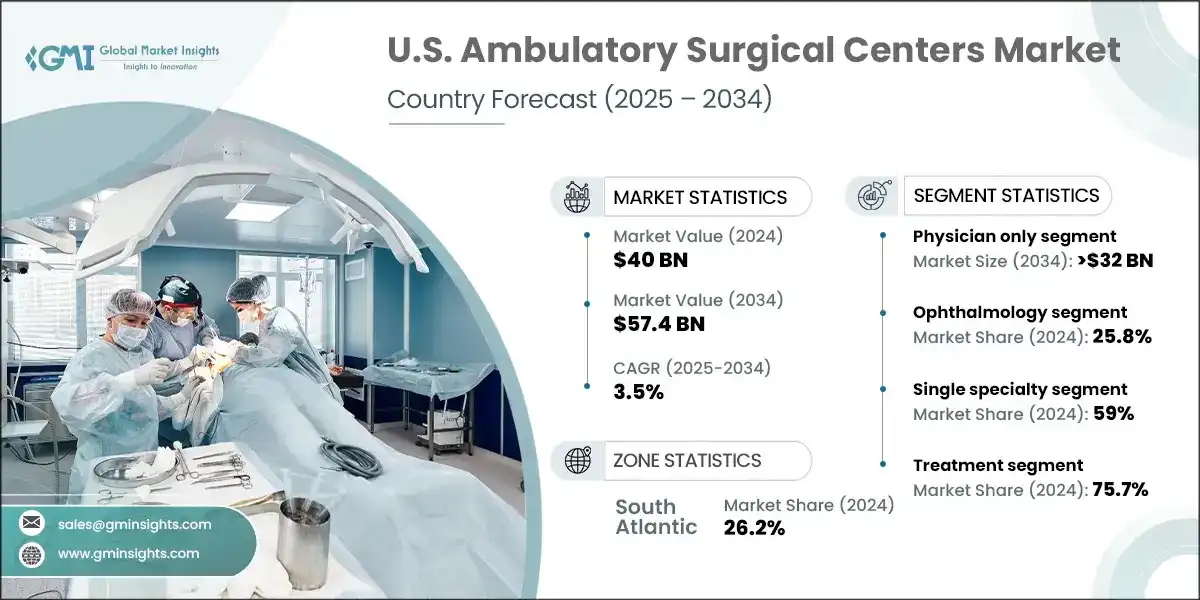
The U.S. ambulatory surgical centers market was estimated at USD 40 billion in 2024. The market is expected to grow from USD 42 billion in 2025 to USD 57.4 billion in 2034, at a CAGR of 3.5%. This high growth is attributed to several factors including rising prevalence of chronic diseases such as cancer, favorable reimbursements and government policies, increase in number of surgical procedures, and availability of treatments at comparatively lower rates than other healthcare facilities among other factors.
To get key market trends
Ambulatory surgery centers (ASCs) serve as outpatient healthcare facilities where patients can receive surgical care, including diagnostic and preventive procedures. Major healthcare providers in the industry include Tenet Health, SCA HEALTH, and AMSURG, among other players. Physicians prefer to own these facilities, which represent the largest share in the ownership model segment, as it provides them with an additional source of income beyond professional fees, making these facilities a financially attractive option compared to other healthcare settings.
The market experienced strong growth, increasing from USD 33.2 billion in 2021 to USD 37.9 billion in 2023, with a CAGR of 3.5% over the analysis period. Several factors drove this growth, including more surgical procedures being performed, the expansion of ambulatory facilities across the country, and the availability of treatments at lower costs compared to hospital settings. The Leapfrog Group reports that outpatient facilities in the U.S. perform more than 60 million surgical procedures each year. This substantial number of procedures and the healthy growth rate suggest the market will continue its upward trend.
The rising number of chronic diseases such as cancer, heart disorders, and diabetes continues to be a leading cause of disability and deaths across the country. For instance, according to the statistics reported by Centers for Disease Control and Prevention (CDC), around 60% of Americans live with at least one chronic disease, while the other 40 percent manage two or more chronic conditions. As more patients seek early diagnosis and treatment for these conditions, the industry is positioned for continued growth.
Additionally, favorable reimbursements and government policies for ambulatory surgical centers continue to drive market growth. In 2023, the U.S. Department of Defense (DoD) made significant changes to TRICARE reimbursement policies for ambulatory surgery centers (ASCs) and outpatient services at Cancer and Children's Hospitals (CCHs). This change allows TRICARE to align with Medicare's payment system for both ASCs and outpatient services at CCHs, making healthcare more accessible to patients.
Ambulatory surgery centers (ASCs) serve as outpatient healthcare facilities where patients can receive surgical care, including diagnostic and preventive procedures. These facilities provide same day care for a range of surgical procedures.
U.S. Ambulatory Surgical Centers Market Report Attributes
| Key Takeaway | Details |
|---|---|
| Market Size & Growth | |
| Base Year | 2024 |
| Market Size in 2024 | USD 40 Billion |
| Forecast Period 2025 - 2034 CAGR | 3.5% |
| Market Size in 2034 | USD 57.4 Billion |
| Key Market Trends | |
| Drivers | Impact |
| Increasing prevalence of chronic diseases | • The increasing chronic burden drives sustained demand for outpatient procedures such as orthopedics, GI, and ophthalmology within ASCs. |
| Rise in number of surgical procedures | • Contributes to higher procedure volumes at ASCs, especially for elective and same-day surgeries. |
| Favorable reimbursements and government policies | • Encourages payer and provider participation in ASC care models, enhancing profitability and adoption trends. |
| Lower risk of infections in ASCs than hospitals | • Promotes patient preference and improves utilization rate amid infection-conscious healthcare decision-making. |
| Pitfalls & Challenges | Impact |
| High costs of medical devices | • Increases the financial burden on smaller and independent ASCs, thus affecting their margins and capital investment. |
| Low physician-to-patient ratio | • It limits the capacity to expand surgical volumes, especially in high-demand specialties. |
| Opportunities: | Impact |
| Shift from inpatient to outpatient settings | • Expected to accelerate ASC adoption across procedures traditionally performed in hospitals, thereby expanding the market scope. |
| Integration of AI and robotics in ASC surgeries | • Provide enhanced access to surgical care with improved precision and imaging capabilities |
| Market Leaders (2024) | |
| Market Leaders |
8% market share in 2024 |
| Top Players |
Collective market share in 2024 is 17% |
| Competitive Edge |
|
| Regional Insights | |
| Largest Market | South Atlantic |
| Fastest growing market | West North Central |
| Emerging states | Maryland, Pennsylvania, Georgia, Arizona, Ohio, etc. |
| Future outlook |
|
What are the growth opportunities in this market?
U.S. Ambulatory Surgical Centers Market Trends
The market is expected to fuel the industry growth owing to trends including shift from inpatient to outpatient settings, integration of advanced equipment and solutions in the facility and expansion of ambulatory surgical center networks in the rural areas of country.
- Healthcare providers are shifting more medical procedures from expensive inpatient hospitals to more affordable outpatient facilities, a trend that has grown significantly over the past decade. Healthcare systems now use value-based payment models that reward providers for reducing care costs while ensuring patients receive high-quality treatment with positive outcomes.
- While large hospitals were once the primary location for medical care, ambulatory surgery centers (ASCs) and outpatient laboratories now play an equally important role. More patients are receiving non-emergency procedures and diagnostic tests in outpatient facilities. Many people appreciate outpatient care because they can get treatment quickly and return home the same day. This approach helps reduce return trips to the facility and offers patients more personal, easy to access, and cost-effective care.
- Further, clinical studies show that when patients undergo certain surgeries in ambulatory facilities, their recovery and results are as good as or even better than in traditional hospitals. This result has encouraged healthcare providers to perform more procedures in outpatient settings.
- Moreover, traditionally only large hospitals with substantial resources could afford surgical robots. Now, these advanced tools are becoming more common in ambulatory surgery centers. As technology improves, surgical robots will likely become standard equipment in outpatient facilities, creating more possibilities for ASC operators to expand their services.
U.S. Ambulatory Surgical Centers Market Analysis
Learn more about the key segments shaping this market
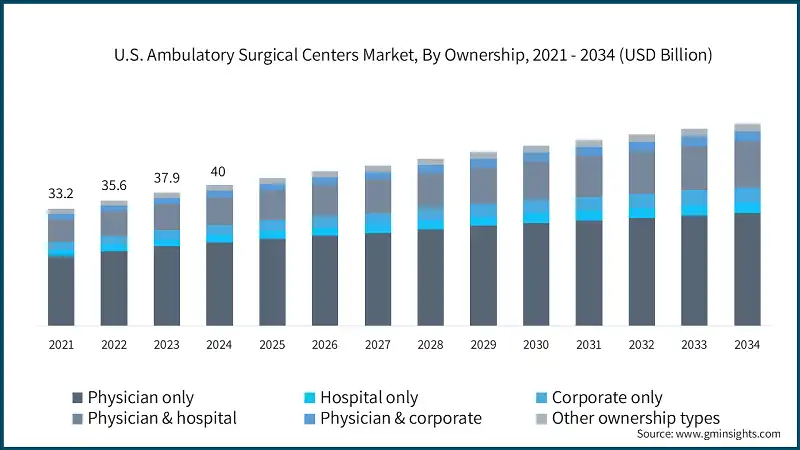
The U.S. ambulatory surgical centers market was valued at USD 33.2 billion in 2021. The market size reached USD 37.9 billion in 2023, from USD 35.6 billion in 2022.
Based on the ownership, the market is segmented into physician only, hospital only, corporate only, physician and hospital, physician and corporate, and other ownership types. The physician only segment accounted for 59.3% of the market in 2024 as the physician-led ambulatory settings have a comparatively better alignment of clinical and financial performance and have more control in the decision making. The segment is expected to exceed USD 32 billion by 2034, growing at a CAGR of 2.9% during the forecast period. Whereas the physician and hospital ownership category is expected to grow with the highest CAGR of 5% over the forecast timeline. This growth is attributed to growing dependency and involvement of physicians in a co-management role in this ownership model.
- When doctors fully own an ambulatory surgery center (ASC), they have complete control over management decisions and profits. This ownership model gives surgeons and healthcare professionals more freedom to run their practices efficiently and make decisions that work best for their patients.
- Currently, physicians have some form of ownership stakes in about 85% of all ASCs. This high percentage reflects how this model allows doctors to easily schedule surgeries, build their preferred medical teams, choose the right equipment for their procedures, and create medical facilities that match their specific needs.
- Additionally, patients also find it easier to communicate with their doctors in these centers. Instead of dealing with multiple layers of hospital administration, they can speak directly with the physician in charge of their care. This direct line of communication helps ensure patients receive personalized attention and quick solutions to their concerns.
- On the other hand, ASCs jointly owned by physicians and hospitals make up about 19.5% of the market. These centers combine the benefits of hospital resources with physician independence, which helps improve patient care coordination and attracts both patient referrals and insurance contracts.
- Furthermore, corporate-owned ambulatory facilities represent 7.1% of the market. These facilities continue to grow steadily owing to their ability to expand operations, invest capital, and maintain efficient operations.
Based on the surgery type, the U.S. ambulatory surgical centers market is segmented into ophthalmology, endoscopy, orthopedic, neurology, pain management, plastic surgery, podiatry, otolaryngology, obstetrics/gynecology, dental, and others surgery types. The ophthalmology segment accounted for the highest market share of 25.8% in 2024 owing to high demand for various ophthalmic procedures such as cataract surgery, cost-effectiveness and growing aging population.
- Ophthalmology-related procedures play a crucial role in ambulatory surgery centers (ASCs), helping patients access efficient and cost-effective solutions for eye conditions. Common outpatient procedures include cataract surgery, LASIK, and glaucoma treatments.
- More patients are choosing ASCs for their ophthalmic procedures, following a broader shift toward ambulatory surgery across medical specialties. This change helps reduce healthcare costs, improves efficiency, and enhances the overall patient experience. As the population ages, the need for ophthalmic procedures continues to grow. Those over 65 years show much higher growth rates compared to younger age groups between 2020-2030. Those between 75-85 years, who often develop conditions like acute macular degeneration and glaucoma, are expected to represent the fastest-growing age group.
- Endoscopy procedures make up the second-largest share at 14.4% in 2024, as more patients opt for minimally invasive procedures, particularly in gastroenterology-related treatments.
- Orthopedic procedures accounted for 10.9% of ASC services in 2024, driven by an increasing number of patients needing treatment for injuries and falls. This growth is particularly notable given the current shortage of surgeons compared to the rising demand for orthopedic care in the country.
- Pain management services are growing the fastest, with an expected growth rate of 4.8% in the coming years. The Medicare Payment Policy Report 2024 confirms this trend, showing that pain management has experienced the most rapid growth among all specialties between 2017-2022.
Based on specialty type, the U.S. ambulatory surgical centers market is segmented into single specialty and multi-specialty. The single specialty segment accounted for the highest market share of 59% in 2024 as these centers focus on specific surgical areas and are favored for their high reimbursement rates and strict safety standards.
- Single-specialty ambulatory surgery centers (ASCs) are meeting growing patient needs, especially in commonly sought-after specialties such as gastroenterology, ophthalmology, and orthopedics. These centers provide personalized care in an efficient environment where patients spend less time waiting and receiving more attention, leading to better experiences and more affordable treatment options.
- For physicians, these specialized centers create an ideal working environment with well-trained teams and purpose-built equipment designed for their specific procedures. Insurance companies recognize the value of single-specialty ASCs, as patients receive quality care at lower costs than traditional hospital settings.
- In addition, single-specialty centers play a vital role in communities where specific medical services are in high demand. However, as urban markets become increasingly competitive, and payment systems evolve, some single-specialty ASCs are beginning to diversify their medical services.
- Further, multi-specialty ambulatory surgery centers (ASCs) are gaining popularity because they provide flexible medical services that meet the varied needs of patients. Healthcare payers and systems prefer these centers because they deliver comprehensive, cost-effective care under one roof.
Learn more about the key segments shaping this market
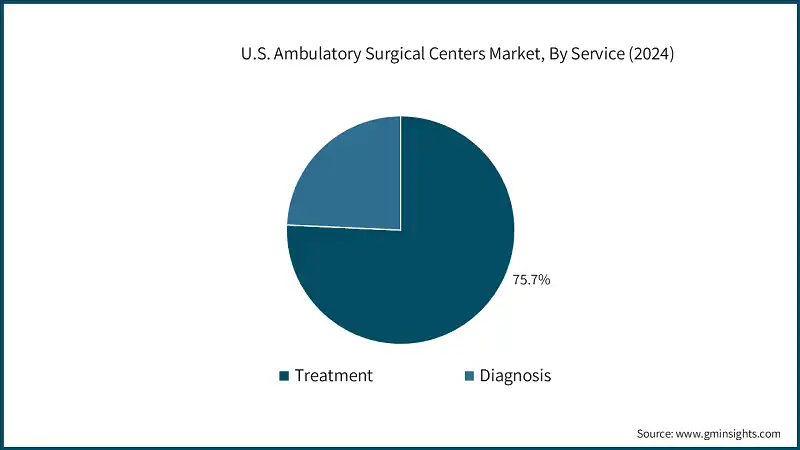
Based on service, the U.S. ambulatory surgical centers market is segmented into treatment and diagnosis. The treatment segment accounted for the highest market share of 75.7% in 2024 owing to the rising incidence of chronic disorders, availability of cost-effective treatments with supportive reimbursement schemes.
- High prevalence of chronic conditions such as cancer, obesity, diabetes, among other diseases is resulting in increased footfall in ambulatory surgical centers for better and shorter treatment span. For instance, as per the estimates by American Cancer Society, more than 2 million new cancer cases and over 618 thousand cancer related deaths are projected in the U.S. in 2025.
- In addition, coverage of a wide range of treatment procedures, patient convenience due to outpatient support, preference for minimally invasive surgeries, coupled with growing number of ASCs in the country are expected to further propel segmental progression in the coming years.
- Further, the diagnosis segment was valued at USD 9.7 billion in 2024. It is anticipated to witness healthy growth over the projected timeline owing to growing preference for preventive checkups and early diagnosis, high footfall in ASCs, and availability of advanced diagnostic and imaging equipment in these facilities.
Looking for region specific data?
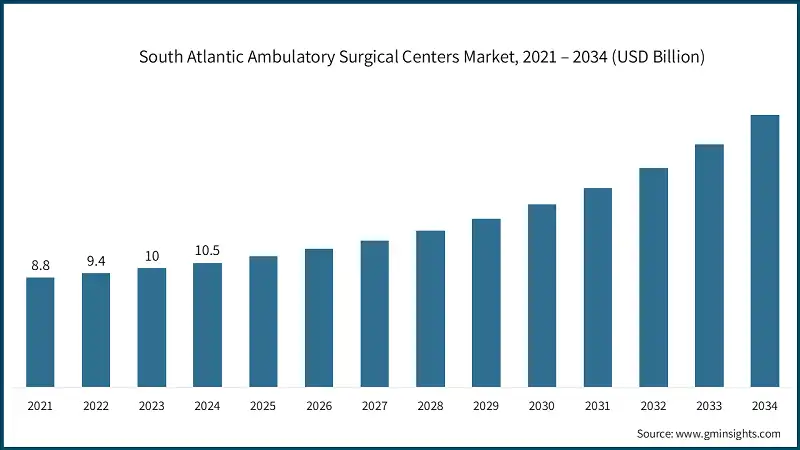
South Atlantic zone dominated the U.S. ambulatory surgical centers market with the leading market share of 26.2% in 2024.
- Leading states in the zone such as Florida, Georgia, and Maryland among other states are anticipated to witness healthy growth in number of newly developed and established ambulatory surgical centers in the South Atlantic region. For example, Florida is projected to experience significant population growth in the coming years. Over the next five years, the state expects to add almost 300 thousand new residents per year that translates to over 800 per day. Such a high population rise will in turn fuel the demand for additional healthcare facilities, thereby driving industry growth.
- In addition, the concentration of ASCs varies widely between states. For instance, according to the data reported in Medicare Payment Policy Report, Maryland had the most ambulatory surgical centers per Medicare beneficiary (35 ASCs per 100,000 Part B beneficiaries) in 2023. Thus, such variability in states leads to a competitive environment among all participants, thereby supporting market growth.
The Pacific Central zone ambulatory surgical centers market accounted for USD 8 billion in 2024.
- In the Pacific Central zone, California stands at the forefront of healthcare innovation with the highest number of Medicare-certified Ambulatory Surgery Centers (ASCs) in the U.S., operating approximately 900 facilities as of March 2025. The state surpasses other large states, including Florida and Texas, due to its dense population, growing elderly community, and strong relationships with insurance providers.
- Additionally, as healthcare needs evolve, California's medical facilities are increasingly moving toward outpatient services, driven by practical considerations and improved efficiency. Patients benefit from ASCs through lower costs, quicker appointment scheduling, and reduced risk of infections compared to traditional hospitals. The state's healthcare regulations and policies provide strong support for expanding these outpatient facilities.
- Moreover, California's reputation as a healthcare innovation center continues to attract significant investment from hospitals, private equity firms, and physician groups. This investment drives the creation of new hybrid facilities and patient-focused ASC models that prioritize value-based care.
- On the other hand, other states including Oregon and Washington are also supporting zonal growth owing to the growing patient footfall in outpatient facilities, increasing preference for minimally-invasive surgical procedures and difference in cost structure compared to hospital settings.
U.S. Ambulatory Surgical Centers Market Share
Leading companies such as Tenet Health, SCA HEALTH, and AMSURG, together hold around 17% of the market share in the fragmented U.S. ambulatory surgical centers market. Major players are adopting key strategies, including joint ventures with physicians and health systems, integration of value-based care and technology, development of new ASCs, and specialty-focused expansion.
Major ASC operators, such as Tenet (through USPI) and SCA Health, are building joint ventures with physicians and hospitals to create better alignment between clinical and financial goals. When physicians and hospitals work together, it leads to more engaged doctors, better results for patients, and stronger networks for patient referrals. These partnerships help ASCs grow their presence in key markets while building integrated healthcare networks that bring in more patients, improve negotiations with insurance companies, and foster long-term collaboration.
Further, companies such as AMSURG and Regent Surgical Health are taking a focused approach by concentrating on specific medical specialties, particularly procedures that are both common and financially viable in areas like eye care, digestive health, and orthopedics. By specializing in this manner, these surgical centers can work more efficiently, complete procedures faster, and achieve better results for their patients.
Other industry operators such as HCA Healthcare, Regent Surgical and SURGERY PARTNERS have a substantial share of the market owing to the presence of ASCs across the country, better planning with physicians and adoption of advanced equipment in the facilities.
U.S. Ambulatory Surgical Centers Market Companies
Few of the prominent players operating in the U.S. ambulatory surgical centers industry include:
- AMBULATORY SURGICAL CENTER of AMERICA (ASCOA)
- AMSURG
- ASD MANAGEMENT
- HCA Healthcare
- Physicians endoscopy
- Pinnacle III
- Proliance SURGEONS
- Regent Surgical
- SCA HEALTH
- SURGCENTER DEVELOPMENT
- SURGERY PARTNERS
- Surgical Management Professionals
- Tenet Health
- Trias MD
- SCA Health
SCA Health builds its ambulatory surgery center (ASC) network by collaborating with physicians and health systems. The organization enhances clinical quality, streamline operations, and integrates digital solutions while adopting value-based care approaches to deliver better patient outcomes and satisfy payer needs across medical specialties.
- Tenet Health
Tenet Health, via USPI, focuses on aggressive ASC expansion through acquisitions and physician joint ventures. It emphasizes multi-specialty centers, integration with hospital systems, and value-based care models to strengthen its national footprint and drive outpatient surgical volume growth.
- AMSURG
AMSURG concentrates on developing single-specialty ASCs, especially in gastroenterology and ophthalmology. It pursues joint ventures with physicians, emphasizes data-driven performance improvement, and expands its footprint through de novo facilities to maintain a leading position in the outpatient surgery market.
U.S. Ambulatory Surgical Centers Industry News:
- In April 2024, Commons Clinic announced an investment of USD 9.75 million in Marina Orthopedic & Spine Institute (MOSI). This investment may enable the company to improve its capabilities in surgical care and expand its network of ambulatory surgery centers (ASCs) in the country.
- In March 2024, UT Health San Antonio announced that it has opened a new outpatient location and surgery center in northwest Bexar County to cater the region's growing population. This development may allow the company to improve its regional presence in the industry.
- In August 2021, Regent Surgical Health announced the opening of its second headquarters in Nashville, marking a significant milestone in the company's growth. This expansion followed a strategic investment from Tower Brook Capital Partners L.P. and Ascension Capital, which strengthened Regent Surgical Health's business operations and positioned the company for continued growth and success.
The U.S. ambulatory surgical centers market research report includes an in-depth coverage of the industry with estimates and forecast in terms of revenue in USD Million and from 2021 - 2034 for the following segments:
Market, By Ownership
- Physician only
- Hospital only
- Corporate only
- Physician and hospital
- Physician and corporate
- Other ownership types
Market, By Surgery Type
- Ophthalmology
- Endoscopy
- Orthopedic
- Neurology
- Pain management
- Plastic Surgery
- Podiatry
- Otolaryngology
- Obstetrics / Gynecology
- Dental
- Others surgery types
Market, By Specialty Type
- Single specialty
- Multi-specialty
Market, By Service
- Treatment
- Diagnosis
The above information is provided for the following zones and states:
- South Atlantic
- Delaware
- Florida
- Georgia
- Maryland
- North Carolina
- South Carolina
- Virginia
- West Virginia
- Washington, D.C.
- Pacific Central
- Alaska
- California
- Hawaii
- Oregon
- Washington
- Northeast
- Connecticut
- Maine
- Massachusetts
- New Hampshire
- Rhode Island
- Vermont
- New Jersey
- New York
- Pennsylvania
- East North Central
- Illinois
- Indiana
- Michigan
- Ohio
- Wisconsin
- West South Central
- Arkansas
- Louisiana
- Oklahoma
- Texas
- West North Central
- Iowa
- Kansas
- Minnesota
- Missouri
- Nebraska
- North Dakota
- South Dakota
- East South Central
- Alabama
- Kentucky
- Mississippi
- Tennessee
- Mountain States
- Arizona
- Colorado
- Utah
- Nevada
- New Mexico
- Idaho
- Montana
- Wyoming
Frequently Asked Question(FAQ) :
Who are the key players in the U.S. ambulatory surgical centers market?
Key players include AMBULATORY SURGICAL CENTER of AMERICA (ASCOA), AMSURG, ASD MANAGEMENT, HCA Healthcare, Physicians Endoscopy, Pinnacle III, Proliance SURGEONS, Regent Surgical, and SCA HEALTH.
What are the key trends in the U.S. ambulatory surgical centers market?
Key trends include the shift from inpatient to outpatient settings, adoption of value-based payment models, integration of advanced equipment, and expansion of ambulatory surgical center networks in rural areas.
What was the market share of the single specialty segment in 2024?
The single specialty segment accounted for 59% of the market in 2024, as these centers focus on specific surgical areas and are preferred for their high reimbursement rates and strict safety standards.
Which service segment led the U.S. ambulatory surgical centers market in 2024?
The treatment segment dominated the market with a 75.7% share in 2024, driven by the rising incidence of chronic disorders and the availability of cost-effective treatments supported by reimbursement schemes.
Which segment accounted for the highest market share in 2024?
The ophthalmology segment held the highest market share of 25.8% in 2024, driven by the demand for procedures like cataract surgery, cost-effectiveness, and the aging population.
What is the market size of the U.S. ambulatory surgical centers in 2024?
The market size was USD 40 billion in 2024, with a CAGR of 3.5% expected through 2034, driven by the rising prevalence of chronic diseases, favorable government policies, and an increase in surgical procedures.
What is the projected value of the U.S. ambulatory surgical centers market by 2034?
The market is expected to reach USD 57.4 billion by 2034, supported by the shift to outpatient settings, integration of advanced equipment, and expansion into rural areas.
U.S. Ambulatory Surgical Centers Market Scope
Related Reports