Summary
Table of Content

Turkey Medical Tourism Market
Get a free sample of this report
Form submitted successfully!
Error submitting form. Please try again.
Thank you!
Your inquiry has been received. Our team will reach out to you with the required details via email. To ensure that you don't miss their response, kindly remember to check your spam folder as well!
Request Sectional Data
Thank you!
Your inquiry has been received. Our team will reach out to you with the required details via email. To ensure that you don't miss their response, kindly remember to check your spam folder as well!
Form submitted successfully!
Error submitting form. Please try again.
Turkey Medical Tourism Market Size
The market is driven by numerous factors such as increasing prevalence of hair loss and dental issues, high cost of medical care in developed countries, favorable government incentives & visa facilitation programs, and growing awareness and acceptance of cosmetic and dental procedures, among other factors.
Turkey Medical Tourism Market Key Takeaways
Market Size & Growth
- 2025 Market Size: USD 3.5 Billion
- 2026 Market Size: USD 4.1 Billion
- 2035 Forecast Market Size: USD 17.3 Billion
- CAGR (2026–2035): 17.2%
Key Market Drivers
- Growing awareness and acceptance of cosmetic and dental procedures.
- Increasing prevalence of hair loss and dental issues.
- Favorable government incentives & visa facilitation programs.
- High cost of medical care in developed countries.
Challenges
- Rising competition from other medical tourism destinations.
- Challenges in post-procedure follow-up & continuity-of-care.
Opportunity
- Investment in robotic surgery and advanced technologies.
- Rising interest from GCC and European patients.
Get Market Insights & Growth Opportunities
Growth potential in oncology and cardiology medical tourism, development of specialized health tourism zones, and short waiting times for procedures are important factors that are expected to fuel the industry growth. ACIBADEM Healthcare Group, Anadolu Medical Center, Florence Nightingale Hospitals, Medical Park Hospitals Group, Memorial Healthcare Group, and Medicana Health Group are among the key players operating in the market. These players mainly focus on geographic expansion, integration of advanced technologies, and collaboration with regional and international healthcare providers, among others.
The market has increased from USD 1.9 billion in 2022 and reached USD 2.9 billion in 2024, with the historic growth rate of 25%. One of the key factors supporting the market growth is the increasing prevalence of hair loss and dental issues. The global increase in incidences of hair thinning, baldness and also the deterioration of dental health caused by lifestyle-related factors such as stress, hormonal imbalances, poor diet, etc., in conjunction with the natural aging process, have created a demand for such solutions. Turkey has become a preferred destination for solutions related to hair loss (transplantation) and dental issues. According to the data reported in a International Society of Hair Restoration Surgery (ISHRS) document, of the total percentage of patient undergoing hair transplantation, around one-third need to go for second procedure.
Thus, the growing volume of overall global hair transplantation along with repeat interventions is anticipated to fuel the patient footfall in Turkey. In addition to providing patients with advanced hair transplant options, such as FUE and DHI procedures, many dental clinics also provide patients with affordable implant options and comprehensive full mouth restoration services. Hence, the growing number of patients affected by these conditions has resulted in a consistently high demand for these types of treatments.
Additionally, greater global openness toward aesthetic enhancement and oral health improvement is significantly increasing patient inflow to Turkey. The influence of social media, influencer‑driven transformations, and the testimonials from patients who have had experience with cosmetic procedures has raised the demand for procedures including rhinoplasty, veneers, and smile makeovers as normal. By showcasing the before and after photos of successful treatments, transparent prices, and promoting the use of minimally invasive procedures, and by achieving high levels of patient satisfaction, clinics in Turkey foster trust among potential medical travelers.
Further, due to increasing costs for elective, dental, dermatology, fertility, and cosmetic treatments in developed countries (especially the U.S. and Europe), many patients look for less expensive options that also deliver high-quality results. In Turkey, many of these procedures can be performed at a significant cost savings ranging from approximately 50-70% compared to Western European or American costs, yet with similarly modern surgical facilities and qualified specialists. Patients looking to avoid high insurance deductibles or non-allowed procedures abroad may find Turkey’s combination of open pricing policies, bundled packages, and shorter waiting periods to be especially attractive. As healthcare costs continue to rise globally, Turkey presents itself as a preferable option for medical care.
Medical tourism refers to when individuals travel to another country to receive medical, dental, or cosmetic treatments, seeking better affordability, specialized expertise, shorter wait times, or higher-quality healthcare services.
The Turkey medical tourism market was estimated at USD 3.5 billion in 2025. The market is expected to grow from USD 4.1 billion in 2026 to USD 17.3 billion in 2035, at a CAGR of 17.2% during the forecast period, according to the latest report published by Global Market Insights Inc.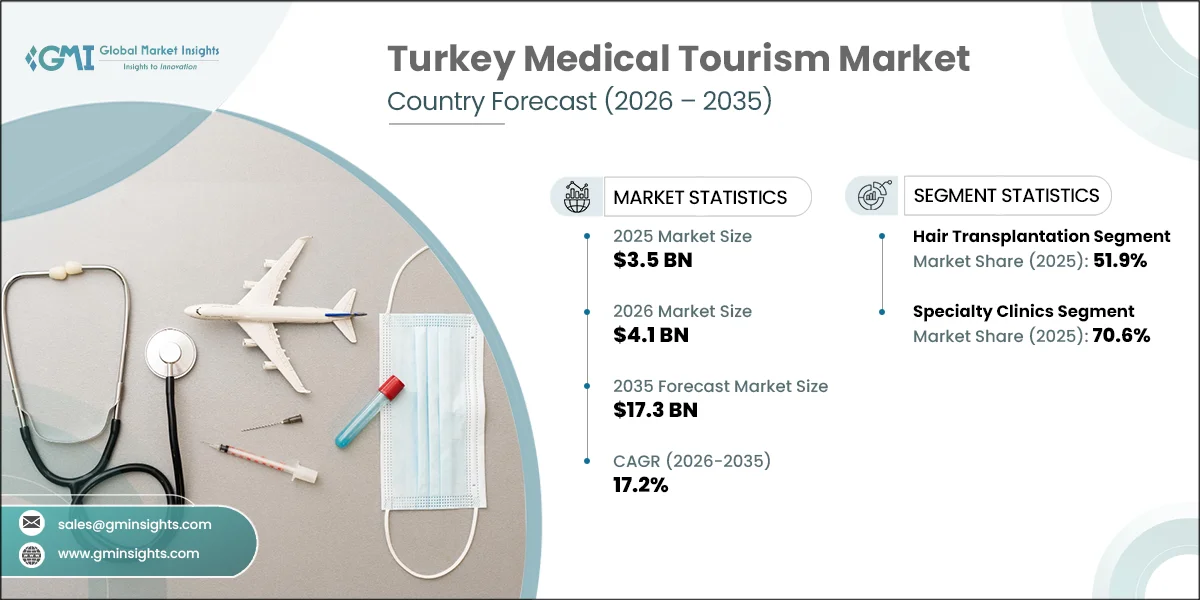
To get key market trends
Turkey Medical Tourism Market Trends
Rising demand for high-quality surgical and aesthetic procedures, strong inflows of foreign patients driven by accessibility, rapid expansion of modern hospitals and advanced technologies, and government-led regulatory and infrastructure strengthening are among the key trends fueling the market growth.
- With the support of hospital and surgeon enhancements through JCI accreditations, Istanbul has emerged as a key destination for aesthetic surgery, ophthalmic surgery, and organ transplant procedures. Minimally invasive and high success rate aesthetic procedures like hair reconstruction, rhinoplasty, and liposuction make Turkey an attractive option for patients who want affordable and high-quality medical treatments. As a result, the number of international patients visiting Turkey is increasing at a substantial rate.
- Additionally, due to expanded healthcare services in Istanbul, Ankara, and Antalya, as well as the combination of cultural diversity and easy access to international flights, these cities have become major centers for healthcare in Turkey. Patients' end-to-end experience is supported by the presence of multilingual personnel, 24-hour concierge assistance, and affordable pricing structures.
- In addition, the development of hospital infrastructure and advanced technology through multimillion-dollar investments is improving the quality of patient care in Turkey. The advancements in technologies allow the country to attract more patients looking for modern, cost-effective, efficient medical solutions, thereby providing significant long-term growth for the industry.
- Further, under recently introduced regulations in Turkey, every facility offering services to international patients is now required to comply with licensing and reporting requirements as well as provide multilingual service to patients, improving both the consistency of care and the safety of patients. Such initiatives increase the trust from international patients, thus enhancing Turkey's position as an attractive and reliable medical tourism destination.
Turkey Medical Tourism Market Analysis
Learn more about the key segments shaping this market
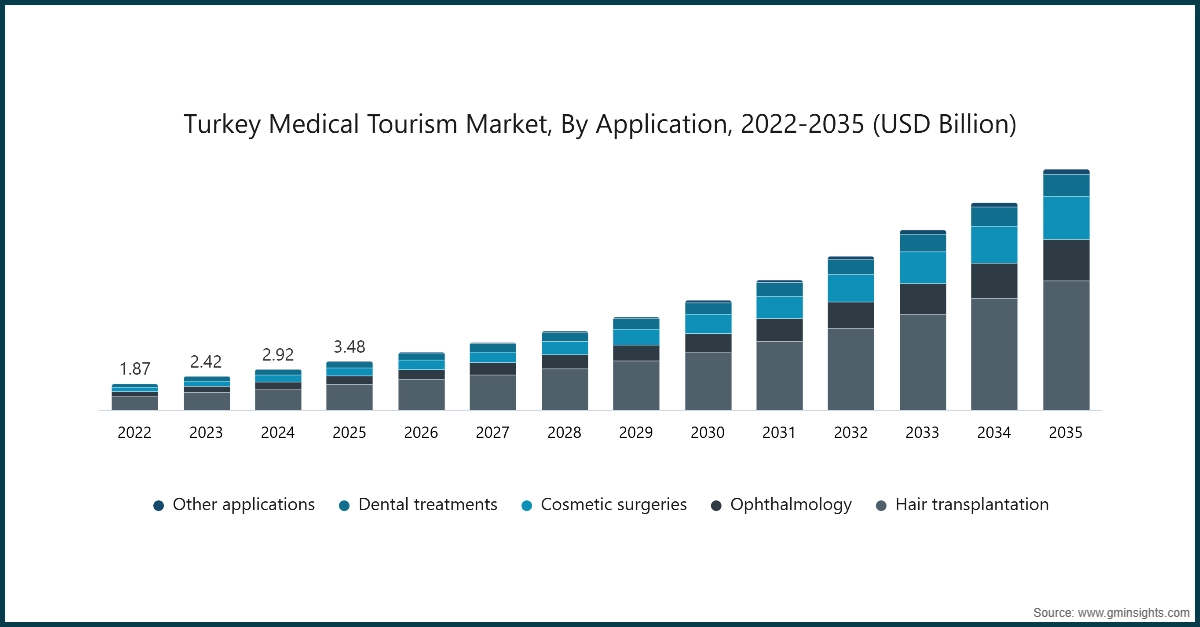
In 2022, the market was valued at USD 1.9 billion and grew to USD 2.4 billion in 2023, reaching USD 2.9 billion by 2024. Partnerships with international insurance providers is a key factor contributing to industry growth.
Based on application, the Turkey medical tourism market is segmented into hair transplantation, ophthalmology, cosmetic surgeries, dental treatments, and other applications. The hair transplantation segment accounted for a majority share of 51.9% in 2025. Strong reputation in cosmetic and aesthetic surgery is anticipated to fuel the segmental growth. The segment is expected to reach USD 9.3 billion by 2035, growing at a CAGR of 17.6% during the forecast period.
- Hair transplants are a major part of Turkey's medical tourism market due to advanced technologies like Follicular Unit Extraction (FUE), Direct Hair Implant (DHI), and Sapphire FUE, which provide excellent results, natural-looking hair, quicker healing time, and higher success rates.
- Istanbul has some of the top-rated clinics in the world where individuals seek treatment from highly qualified medical practitioners. Prices at Turkish clinics tend to be much lower than pricing for comparable surgical procedures performed in Western countries while achieving the same or better clinical outcomes.
- Additionally, various specialized clinics have developed complete hair restoration packages, which include consultation appointments, surgical procedures, postoperative care, and travel accommodations, allowing international patients to navigate the process easily from start to finish. As Turkey continues to be recognized for its enhanced techniques and skilled surgeons, it is fast becoming the world's preferred destination for people seeking safe and affordable solutions to their hair restoration needs.
- The ophthalmology segment was valued at USD 600.4 million in 2025. Ophthalmology is one of the fastest-growing areas of medical tourism in Turkey owing to the rapid growth of advanced eye hospitals offering a wide range of corrective surgeries, including LASIK and SMILE, and cataract surgery, with state-of-the-art equipment and technology.
- Further, there are well-established eye service networks that provide patients with high-precision diagnostic and treatment plans, which makes Turkey attractive to patients searching for quick, effective, and cost-effective solutions to their eye surgery needs. Compared to other regions such as North America or Western Europe, surgery prices in Turkey are substantially less, which is beneficial for financially underserved patients as they have to pay high procedure costs in their own country along with the extended wait time for the procedure.
- Turkey has a number of well-trained multilingual staff, modern facilities, and high rates of success with their surgical procedures, which all contribute to patient comfort and confidence that Turkey is an excellent choice for eye surgery and other technologically advanced procedures.
- The cosmetic segment is projected to grow at a fastest CAGR of 18.3% through 2035. Cosmetic surgery is among Turkey's most popular medical tourism fields. Procedures such as rhinoplasty, liposuction, breast augmentation, tummy tucks, and facelifts, as well as reconstructive procedures, have attracted patients from all over the world.
- In addition, the country provides a competitive price point and high quality, as many surgeons have had training abroad and practice in state-of-the-art facilities with high-tech capabilities. The high quality of the results bundled travel packages, and transparent cost structures have raised confidence and increased access to patients.
- The dental treatments segment was valued at USD 441.6 million in 2025. Dental care is one of the most vital aspects of Turkey's medical tourism. With its advanced dental technology, experienced professionals, and competitive pricing, it attracts patients seeking dental work such as implants, veneers, crowns, full mouth restoratives, and 'Hollywood Smiles.'
- Moreover, patients can save 60%-80% compared to what they would pay at home (especially in western nations). Clinics located in cities like Antalya, Izmir, and Istanbul use the latest procedures and techniques, combined with short turnaround times on treatments, to offer patients attractive packages that often include consultations, imaging, and accommodations.
Learn more about the key segments shaping this market
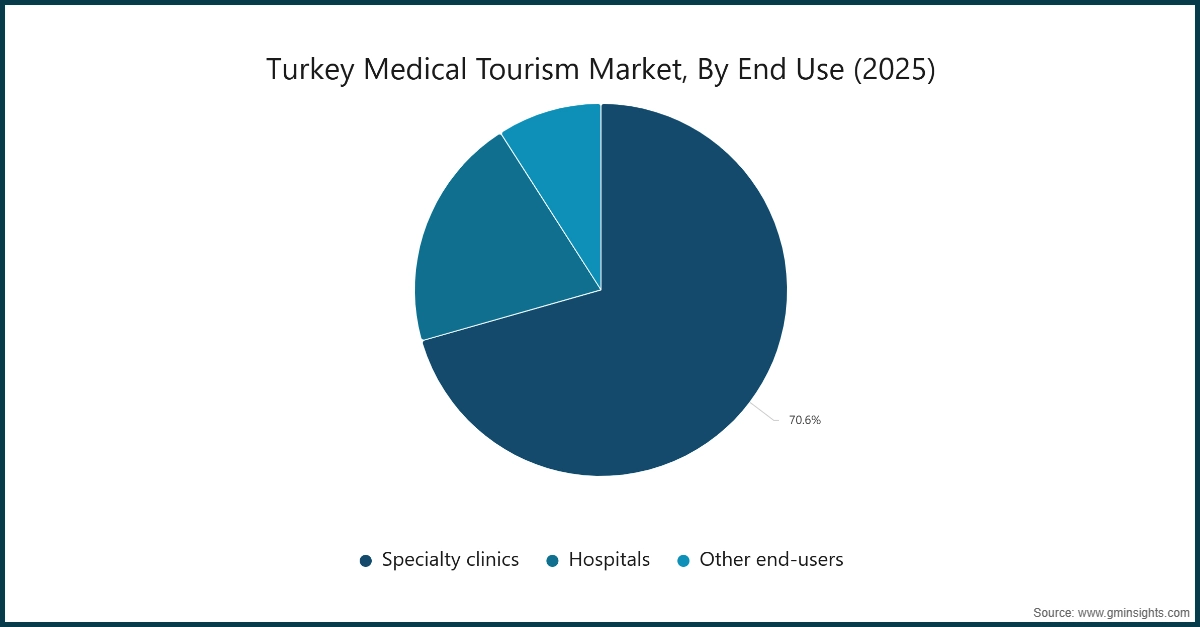
Based on end use, the Turkey medical tourism market is segmented into specialty clinics, hospitals, and other end users. The specialty clinics segment accounted for the leading market share of 70.6% in 2025.
- Turkey's medical tourism industry is significantly influenced by specialized clinics that provide a wide range of procedures, including hair restoration, cosmetic surgeries, dental restorations, bariatric treatments, and advanced ophthalmic surgeries.
- Additionally, these clinics attract international patients due to their procedural specialization, competitive prices, and high success rates. For example, some clinics utilize the latest technologies for hair restoration and are equipped with trained professionals.
- Further, their business models utilize streamlined service, multilingual personnel, and transparent pricing with bundled treatment/travel packages, making them attractive for patients seeking cost-effective, specific medical solutions quickly.
- The hospital segment was valued at USD 707.9 million in 2025. Hospital services are available for patients who need specialty care in various fields, including cardiology, oncology, orthopedics, transplantation, and other categories.
- Furthermore, there are currently more than 50 JCI-accredited hospitals in Turkey that meet international standards, are equipped with state-of-the-art equipment, and have physicians and surgeons who have completed their training in either Europe or the U.S.
- In addition, Turkey's hospitals offer low-cost care with shorter wait times than hospitals in Western countries. As a result, major cities in Turkey, such as Istanbul, Ankara, Antalya, and Izmir, have developed all-inclusive programs to assist overseas patients with a smooth transition from booking to discharge. These all-inclusive programs include multilingual staff, well-established treatment plans, complimentary airport transfers, and comprehensive aftercare services. The combination of these features creates a safe and supportive environment for patients receiving complex, multi-stage procedures.
Turkey Medical Tourism Market Share
The Turkish medical tourism industry is fragmented in nature among a notable percentage of very large private hospital chains, university or public hospitals, and specialty clinics. The key industry players include private hospital groups such as Acıbadem Healthcare Group, Memorial Healthcare Group, and Florence Nightingale Hospitals. These organizations have developed notable market presence through their Joint Commission International (JCI) accreditation, advanced treatment offerings, and large international patient outreach capabilities.
Additionally, private multispecialty hospital chains are among the leading categories that are able to provide premium facilities with an emphasis on providing high-quality services for international patients. These hospitals have developed networks that attract international patients from Europe, the Middle East, the U.S., and North Africa by combining treatment and travel packages, providing bilingual support, and offering competitive prices relative to local options for healthcare.
Ankara, Antalya, and Istanbul are the primary centers of medical tourism in Turkey because they offer excellent healthcare infrastructure, ease of access, and a reputation in elective procedures and specialist services. There are many clinics specializing in hair transplants, cosmetic surgery, and dental procedures. In addition, there are numerous clinics in the country with a proven track record of performing successful high‑demand aesthetic procedures.
Further, increasing government regulations, such as mandatory authorization of facilities serving international patients, are raising service quality standards and shaping competitive dynamics by favoring accredited, large-scale providers. The competitive environment among providers continues to evolve with the growing use of technology to enhance the patient experience, more investment in marketing to reach patients abroad, and greater emphasis being placed on providing patient-centered care models to help providers appeal to the global market.
Turkey Medical Tourism Market Companies
A few of the prominent players operating in the Turkey medical tourism industry include:
- ACIBADEM Healthcare Group
- Anadolu Medical Center
- Dentakademi
- estethica hospital
- Florence Nightingale Hospitals
- GETFUE Hair Transplantation Clinic
- Liv Hospital
- Medical Park Hospitals Group
- Medicana Health Group
- Memorial Healthcare Group
- Quartz Clinique
- Turkey Hair Center Clinic
- Vera Clinic
- Vera Smile
ACIBADEM focuses on expanding its global hospital network, adopting cutting‑edge medical technologies, strengthening international patient programs, and delivering JCI‑accredited, patient‑centered care to enhance global competitiveness and healthcare accessibility.
Memorial advances integrated care delivery through modern infrastructure, physician recruitment, expanded specialty services, and efficiency‑driven initiatives to support growth, patient access, and long‑term operational sustainability across its hospital network.
Medicana prioritizes digital transformation, telemedicine, AI‑driven personalized care, and international‑standard service quality while expanding domestic and global hospital networks to deliver accessible, technology‑enhanced, patient‑centric healthcare experiences.
Turkey Medical Tourism Market Report Attributes
| Key Takeaway | Details |
|---|---|
| Market Size & Growth | |
| Base Year | 2025 |
| Market Size in 2025 | USD 3.5 Billion |
| Market Size in 2026 | USD 4.1 Billion |
| Forecast Period 2026-2035 CAGR | 17.2% |
| Market Size in 2035 | USD 17.3 Billion |
| Key Market Trends | |
| Drivers | Impact |
| Growing awareness and acceptance of cosmetic and dental procedures | Increasing awareness is rapidly boosting patient inflow, especially for aesthetic, dental, and elective treatments, making Turkey a preferred destination for affordable quality enhancements |
| Increasing prevalence of hair loss and dental issues | Rising cases of hair thinning and dental deterioration globally significantly elevate demand for Turkey’s specialized, cost-effective clinics, strengthening consistent international patient traffic |
| Favorable government incentives & visa facilitation programs | Government-backed incentives and streamlined visa processes are actively improving accessibility, enhancing patient confidence, and boosting Turkey’s competitiveness in attracting health tourists |
| High cost of medical care in developed countries | Escalating treatment costs in the U.S. and Europe are driving more patients to Turkey, where similar procedures remain affordable without compromising clinical quality |
| Pitfalls & Challenges | Impact |
| Rising competition from other medical tourism destinations | Countries like India, Thailand, and the UAE are intensifying competition by offering comparable quality and pricing, challenging Turkey’s ability to retain market position |
| Challenges in post-procedure follow-up & continuity-of-care | Limited structured follow?up systems for international patients reduce trust and increase perceived risks, affecting decision-making for complex or long?term medical treatments |
| Opportunities: | Impact |
| Investment in robotic surgery and advanced technologies | Greater adoption of robotic and precision-based technologies will elevate Turkey’s clinical capability, attract high-value patients, and position the country as a leader in advanced procedures |
| Rising interest from GCC and European patients | Growing medical travel demand from GCC and European regions is expected to significantly increase revenue potential, fostering specialized packages and expanding Turkey’s cross‑border care footprint |
| Market Leaders (2025) | |
| Competitive Edge |
|
| Regional Insights | |
| Future outlook |
|
What are the growth opportunities in this market?
Turkey Medical Tourism Industry News:
- In January 2026, Liv Hospital in Turkey announced the opening of a new international patient lounge at Istanbul Airport. The purpose of the lounge is to assist in the coordination of international patients bound for the hospital, establishing a single point of contact upon arrival in Turkey. This development is expected to further improve the provider's brand image and its industry position in the coming years.
- In August 2025, Acıbadem Healthcare Group acquired an 80% stake in Bayındır Healthcare Group for USD 55 million, which increased its total number of hospitals in Turkey. This acquisition strengthened Acıbadem’s hospital network and expanded its clinical capacity across key metropolitan locations. The deal enhanced service availability, improved patient intake for international medical tourists, and supported higher procedural volumes through expanded infrastructure.
- In June 2024, Vera Smile announced the launch of its cutting-edge dental implant services, reinforcing its commitment to improving oral health and delivering advanced smile restoration solutions. The introduction positioned the clinic as a technologically advanced provider capable of setting higher standards in implant dentistry. This development supported growth in the market by strengthening international patient confidence, enhancing treatment differentiation, and increasing Turkey’s attractiveness as a premium destination for advanced dental care.
The Turkey medical tourism market research report includes an in-depth coverage of the industry with estimates and forecasts in terms of revenue in (USD Million) from 2022 - 2035 for the following segments:
Market, By Application
- Hair transplantation
- Follicular Unit Extraction (FUE)
- Follicular Hair Transplantation (FUT)
- Direct Hair Implantation (DHI)
- Ophthalmology
- Cosmetic surgeries
- Liposuction
- Rhinoplasty
- Breast augmentation
- Other cosmetic surgeries
- Dental treatments
- Dental implants
- Orthodontics
- Dental cosmetics
- Dental prosthetics
- Other dental services
- Other applications
Market, By End Use
- Specialty clinics
- Hospitals
- Other end users
Frequently Asked Question(FAQ) :
What was the market size of Turkey's medical tourism in 2025?
The market size was USD 3.5 billion in 2025, with a CAGR of 17.2% expected through 2035. Factors such as the rising prevalence of hair loss and dental issues, high medical costs in developed countries, and favorable government incentives are driving market growth.
What is the projected value of Turkey's medical tourism market by 2035?
The market is poised to reach USD 17.3 billion by 2035, driven by growth in oncology and cardiology medical tourism, specialized health tourism zones, and short waiting times for procedures.
What is the expected size of Turkey's medical tourism industry in 2026?
The market size is projected to reach USD 4.1 billion in 2026.
How much revenue did the hair transplantation segment generate in 2025?
The hair transplantation segment accounted for a majority share of 51.9% in 2025 and is expected to grow to USD 9.3 billion by 2035, with a CAGR of 17.6% till 2035.
What was the valuation of the cosmetic segment in 2025?
The cosmetic segment is set to expand at the fastest CAGR of 18.3% through 2035, led by demand for procedures such as rhinoplasty, liposuction, and breast augmentation.
What is the growth outlook for the specialty clinics segment?
The specialty clinics segment held a leading market share of 70.6% in 2025, offering services such as hair restoration, cosmetic surgeries, dental restorations, and advanced ophthalmic surgeries.
What was the valuation of the hospital segment in 2025?
The hospital segment was valued at USD 707.9 million in 2025, catering to specialty care needs in cardiology, oncology, orthopedics, transplantation, and other fields.
What are the upcoming trends in Turkey's medical tourism market?
Key trends include growing demand for minimally invasive procedures, improved hospital infrastructure, multilingual patient services, and stronger regulations to enhance safety and care quality.
Who are the key players in Turkey's medical tourism industry?
Key players include ACIBADEM Healthcare Group, Anadolu Medical Center, Dentakademi, estethica hospital, Florence Nightingale Hospitals, GETFUE Hair Transplantation Clinic, Liv Hospital, Medical Park Hospitals Group, and Medicana Health Group.
Turkey Medical Tourism Market Scope
Related Reports