Summary
Table of Content

Surgical Gloves Market
Get a free sample of this report
Form submitted successfully!
Error submitting form. Please try again.
Thank you!
Your inquiry has been received. Our team will reach out to you with the required details via email. To ensure that you don't miss their response, kindly remember to check your spam folder as well!
Request Sectional Data
Thank you!
Your inquiry has been received. Our team will reach out to you with the required details via email. To ensure that you don't miss their response, kindly remember to check your spam folder as well!
Form submitted successfully!
Error submitting form. Please try again.
Surgical Gloves Market Size
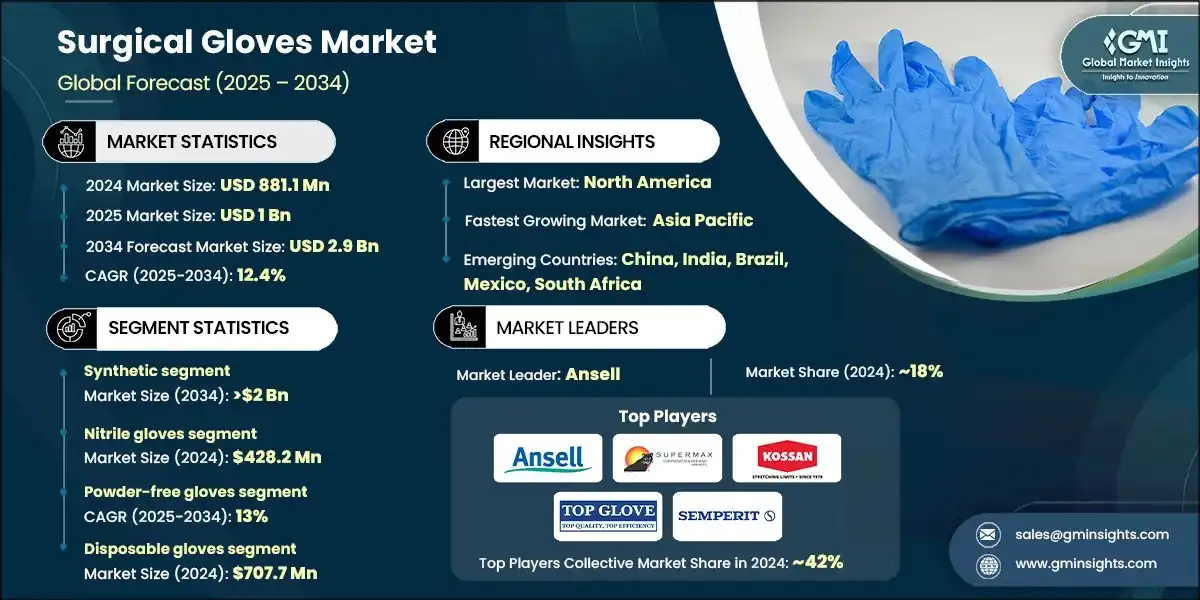
The global surgical gloves market was valued at USD 881.1 million in 2024. The market is expected to grow from USD 1 billion in 2025 to USD 2.9 billion in 2034, at a CAGR of 12.4% from 2025 to 2034, according to the latest report published by Global Market Insights Inc. The market is mainly driven by the rise of healthcare spending, the increasing surgical volumes, the developing hospital infrastructure across both the developed and the emerging countries, the heightened infection control awareness, the supportive regulatory standards, and the developments in glove materials.
Surgical Gloves Market Key Takeaways
Market Size & Growth
- 2024 Market Size: USD 881.1 Million
- 2025 Market Size: USD 1 Billion
- 2034 Forecast Market Size: USD 2.9 Billion
- CAGR (2025–2034): 12.4%
Key Market Drivers
- Growing surgical procedures across the globe.
- Increase in awareness regarding cross-contamination and contagious diseases.
- Rise in the number of healthcare facilities and medical professionals.
- Increasing adoption of powder-free gloves.
Challenges
- Possible infections due to latex gloves.
Opportunity
- Rising demand in emerging markets.
- Development of eco-friendly, biodegradable gloves.
Key Players
- Market Leader: Ansell led with over 18% market share in 2024.
- Leading Players: Top 5 players in this market include Ansell, SUPERMAX CORPORATION BERHAD, Kossan Rubber Industries, TOP GLOVE, Semperit AG Holding, which collectively held a market share of 42% in 2024.
Get Market Insights & Growth Opportunities
The global surgical gloves market focuses on producing important protective supplies used during surgeries and patient care. These supplies are utilized throughout hospitals, clinics as well and ambulatory centers. These gloves ensure sterility, safety, and precision in medical procedures. Key players such as Ansell, Top Glove Corporation, Cardinal Health Inc., Hartalega Holdings, Sempermed, and Medline Industries control the industry through calculated product portfolio diversification, constant material innovation, and extensive global distribution networks.
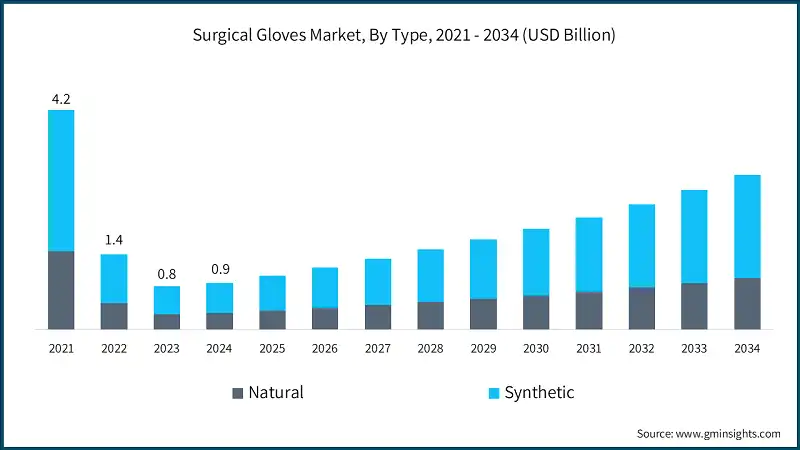
Surgical gloves market was valued at USD 4.2 billion in 2021 and declined to USD 824.9 million in 2023, due to sudden drop in demand as COVID-19 cases declined. Post COVID-19, one of the most significant drivers is the rising volume of surgical procedures worldwide, driven by a growing aging population, increasing prevalence of chronic diseases, and expanding access to healthcare in emerging economies. With surgical interventions becoming more common for both life-saving and elective purposes, the need for surgical gloves as a basic yet critical protective barrier continues to expand.
Healthcare institutions are placing stronger emphasis on adopting high-quality, sterile gloves to safeguard both patients and medical professionals. Additionally, advancements in glove materials, such as the growing adoption of powder-free, nitrile, and latex-alternative gloves, are improving durability, sensitivity, and comfort, addressing concerns over allergies while enhancing usability. Regulatory standards and compliance requirements by agencies such as the FDA, WHO, and regional health authorities further support market growth by ensuring safety and quality benchmarks are consistently met.
Moreover, rising healthcare spending and investments in hospital infrastructure, particularly across Asia-Pacific and Latin America, are creating new opportunities for expansion, as surgical gloves are indispensable across hospitals, clinics, and ambulatory centers. Global manufacturers are also focusing on sustainability and eco-friendly materials to align with environmental goals, further driving innovation. Collectively, these factors highlight a growing emphasis on patient safety, technological advancements, and evolving healthcare delivery models, positioning surgical gloves as an essential component in the modern medical ecosystem.
Surgical gloves are sterile, disposable medical accessories worn by healthcare professionals during surgical procedures to prevent cross-contamination between patients and providers. Made from materials like latex, nitrile, or neoprene, they ensure safety, precision, and infection control while offering high tactile sensitivity, durability, and comfort in critical medical environments.
To get key market trends
Surgical Gloves Market Trends
Growing surgical procedures across the globe define a very important impetus of the surgical gloves market since microeconomic and macroeconomic factors increase demand. On a macroeconomic level, the global burden of chronic diseases such as cardiovascular disorders and diabetes, along with cancer, rises sharply. This rise fuels the need for surgical interventions because they serve in effect as both treatment and preventive measures.
- Higher surgical volumes can be further affected because of the aging population, especially in more developed regions such as North America, Europe, and certain parts of Asia-Pacific, as elderly patients tend to be more likely to undergo procedures such as joint replacements, cardiovascular surgeries, and cataract removals.
- Growing healthcare infrastructure in developing economies, backed by increasing healthcare spending and government initiatives to expand surgical care accessibility, is also growing the number of operating rooms and medical facilities equipped to perform complex procedures. Additionally, medical tourism in countries such as India, Thailand, and Mexico is further expanding surgical volumes, supported by cost advantages and advancements in healthcare delivery.
- At the microeconomic level, improvements in surgical techniques, such as minimally invasive and robotic-assisted surgeries, have increased patient willingness to opt for procedures due to faster recovery times and reduced risks. This, in turn, drives consistent demand for high-quality surgical gloves as they remain indispensable in ensuring sterility and safety, regardless of the surgical approach.
- Insurance penetration and favorable reimbursement policies in many countries have also made surgeries more affordable, fueling demand across different socioeconomic groups. With rising awareness of healthcare-associated infection risks, hospitals and ambulatory surgical centers are prioritizing premium, durable, and powder-free gloves to enhance both patient safety and healthcare worker protection.
Surgical Gloves Market Analysis
Learn more about the key segments shaping this market
Based on type, the global surgical gloves market is bifurcated into synthetic and natural. The synthetic segment accounted for 65.1% of the market in 2024, driven by increasing demand for latex-free, allergy-safe gloves offering improved durability and chemical resistance. The segment is expected to exceed USD 2 billion by 2034, growing at a CAGR of 12.7% during the forecast period.
On the other hand, the natural segment is expected to grow with the fastest CAGR of 11.8%. The growth of this segment can be attributed to the increasing demand for eco-friendly and biodegradable materials in health care is driving the rapid development of the natural surgical gloves segment.
- The synthetic segment is driven by increasing demand for latex-free alternatives, mainly due to rising awareness of latex allergies among health care authorities and patients. Synthetic gloves, comprising nitrile, neoprene, and polyisoprene, offer superior puncture resistance, improved durability, and improved chemical protection compared to traditional natural latex gloves, making them extremely appropriate for complex and long surgeries.
- Macroeconomic factors such as regulatory frameworks promoting safer, allergy-free items, plus the global shift to high-performance materials, are drivers of synthetic glove adoption. Microeconomic factors such as hospitals’ procurement strategies and bulk purchasing patterns increasingly favor synthetic gloves. This is likewise because of synthetic gloves' consistent quality as well as reliability.
- Growing investments by leading manufacturers in research and development have led to the development of advanced synthetic formulations that closely mimic the elasticity and comfort of latex while eliminating allergy risks.
- The natural segment is expected to grow with a 11.8% CAGR during the analysis period. The segment is primarily driven by the rising demand for eco-friendly, sustainable, and biodegradable medical products, reflecting the global shift toward greener healthcare practices. Natural latex gloves are derived from renewable resources, making them highly appealing amid growing concerns over plastic waste and environmental degradation.
- Natural latex gloves also continue to be preferred for their exceptional tactile sensitivity, flexibility, and comfort, which remain critical in delicate surgical procedures. With increasing awareness of climate change and rising demand from healthcare systems aiming to reduce their carbon footprint, hospitals and clinics are progressively incorporating biodegradable surgical gloves into their procurement plans.
Based on the product, the surgical gloves market is segmented into latex gloves, nitrile gloves, vinyl gloves, neoprene gloves, and other products. The nitrile gloves segment dominated the market in 2024 with a revenue of USD 428.2 million.
- The nitrile gloves segment is experiencing strong growth because of superior puncture resistance, chemical durability, also hypoallergenic nature in comparison to latex. As latex allergies among healthcare professionals and patients remain a persistent concern, nitrile gloves have emerged as the preferred alternative, especially in regions with stringent occupational health standards.
- They are able to give better protection from bloodborne pathogens as well as cytotoxic drugs plus harsh chemicals, so they are indispensable within high-risk surgical environments like oncology, along with orthopedic procedures.
- The second largest segment, latex gloves, held a market share of 33.2% in 2024. Its long-standing reliability alongside cost-effectiveness drives this segment. Latex gloves provide exceptional fitness and flexibility that enhances dexterity and reduces hand fatigue during long surgeries, which is especially important in specialties such as cardiology, neurology, and microsurgery.
- Furthermore, continuous advancements in powder-free latex gloves help mitigate allergy concerns, widening adoption across hospitals and surgical centers. With the rising number of surgical procedures and stringent infection control policies, latex gloves maintain strong market traction, particularly in resource-limited settings where cost and performance are crucial.
- On the other hand, the market for the vinyl gloves segment is expected to expand more rapidly, driven primarily by its affordability, easy availability, and suitability for short-duration, low-risk procedures. Manufactured from polyvinyl chloride (PVC), vinyl gloves offer a cost-effective alternative to latex and nitrile, making them attractive in budget-sensitive healthcare systems, particularly in developing economies.
- Although they provide lower elasticity and barrier protection compared to premium gloves, their widespread adoption is supported by healthcare facilities where cost containment and high-volume usage are critical, such as general wards, outpatient centers, and basic surgical setups.
Based on form, the surgical gloves market is bifurcated into powder-free gloves and powdered gloves. The powder-free gloves segment dominated the market in 2024 and is growing with a CAGR of 13% during the forecast period.
- The powder-free gloves segment dominates within the surgical gloves market, and it continues to grow because regulatory bodies strongly support it, infection prevention standards rise, and material innovations improve. Awareness about latex allergies increased, and respiratory issues from cornstarch powder arose. These issues did prompt some people to shift widely toward some powder-free alternatives.
- Regulatory bodies like the U.S. FDA banned powdered medical gloves back in 2016, and this accelerated adoption all over the world to make powder-free gloves a new gold standard throughout surgical settings. Hospitals as well as surgical centers prefer these gloves because they reduce postoperative complications such as granulomas and adhesions, so the gloves ensure better patient safety.
- Furthermore, macroeconomic factors such as rising surgical procedures, higher healthcare budgets, and improved hospital infrastructure in emerging markets continue to fuel demand. Growing emphasis on infection control protocols and international safety guidelines further cements powder-free gloves as the preferred choice in modern surgical practices.
Based on usage, the surgical gloves market is bifurcated into disposable gloves and reusable gloves. The disposable gloves segment was anticipated to be worth USD 707.7 million in 2024 and is expected to grow at a 12.9% CAGR during the forecast period.
- The disposable surgical gloves segment is dominant in the market, mainly driven by growing awareness of infection prevention along with cross-contamination risks in healthcare facilities. Hospitals and surgical centers have been prioritizing single-use sterile gloves since surgical volumes have been rising worldwide for the reduction of hospital-acquired infections (HAIs) and to ensure patient safety.
- Organizations such as the WHO, FDA, and CDC issue stringent regulatory standards as well as guidelines. These standards and guidelines further reinforce the adoption of disposable gloves into standard practice in surgeries.
- The growing trend toward powder-free gloves, coupled with cost-effectiveness in bulk procurement, further supports market growth, positioning disposable gloves as the most widely adopted option in surgical settings.
- On the other hand, the market for the reusable gloves segment is expected to grow at a 10.2% CAGR. Hospitals and healthcare institutions, particularly in resource-constrained regions, prefer reusable gloves due to their ability to be sterilized and used multiple times, offering long-term cost savings compared to disposables. Additionally, advancements in sterilization techniques and high-grade materials like latex and neoprene have improved the safety and durability of reusable gloves, addressing concerns about infection risks.
Based on sterility, the surgical gloves market is bifurcated into sterile gloves and non-sterile gloves. The sterile gloves segment was anticipated to be worth USD 804 million in 2024.
- Sterile surgical gloves represent the largest as well as most critical segment of the market, mainly because they play an indispensable role in maintaining aseptic conditions during surgeries and invasive procedures. Demand that is steady for sterile gloves across hospitals and ambulatory surgical centers, and specialty clinics is created by the rising global surgical volumes that are fueled by the increasing prevalence of chronic diseases and trauma cases, and elective surgeries.
- Sterile gloves are mandated for use in the operating room due to those stringent regulatory standards, such as EU and FDA medical device guidelines, with increasing adoption. Also, initiatives for prevention of healthcare-associated infections (HAI) strengthen. A key concern continues to be infection control, notably in rich areas.
- Additionally, the rise of advanced procedures such as orthopedic implants, cardiac bypass surgeries, and organ transplants necessitates highly reliable sterile gloves to ensure patient safety and precision.
- On the other hand, the market for the non-sterile gloves segment is expected to grow at 11% CAGR. The segment, though smaller compared to sterile gloves, plays a vital role in supporting routine patient care and minor medical procedures. These gloves are widely used for examinations, dressing wounds, and non-invasive clinical interventions where absolute sterility is not required but barrier protection remains essential.
Based on distribution channel, the surgical gloves market is bifurcated into brick and mortar and e-commerce. The brick-and-mortar segment was anticipated to be worth USD 577.7 million in 2024.
- The segment continues to dominate the market because it is driven by established procurement practices, and physical supply chains are relied on by strong institutional forces. In order to ensure product authenticity as well as timely delivery and compliance with regulatory standards, hospitals, clinics, together with ambulatory surgical centers typically prefer direct procurement. They do this by way of authorized distributors as well as wholesalers.
- Healthcare institutions can negotiate competitive pricing plus ensure uninterrupted supply, because offline channels can provide large-scale bulk purchases. Moreover, healthcare providers prioritize direct vendor relationships for personalized support, technical guidance, and after-sales service, which are critical when handling sterile medical products.
- On the other hand, the market for the e-commerce segment is expected to grow at a 14% CAGR. The segment is experiencing rapid growth, fueled by digital transformation in healthcare procurement and the increasing adoption of online platforms by hospitals, clinics, and even individual practitioners. One of the key drivers is convenience online channels that allow buyers to compare multiple brands, product types, and prices in real-time, ensuring cost efficiency and faster decision-making.
- The global shift toward digitization and automation in supply chains post-pandemic has accelerated the adoption of e-commerce platforms, with many offering subscription-based models for recurring purchases of surgical gloves.
Learn more about the key segments shaping this market
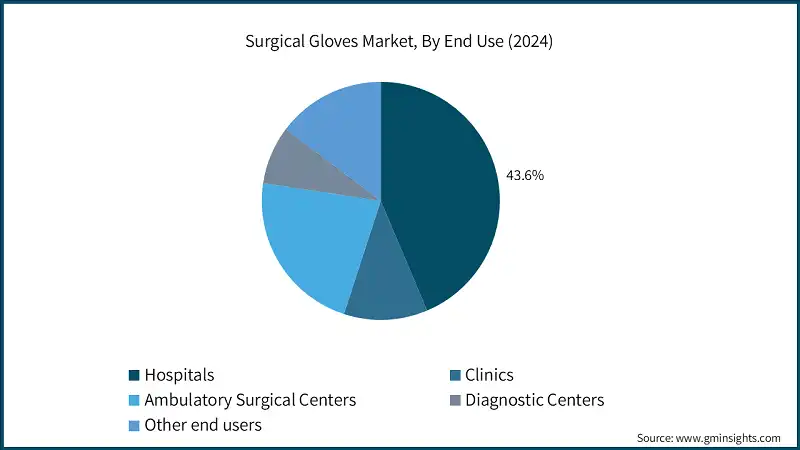
Based on end use, the surgical gloves market is classified into hospitals, clinics, ambulatory surgical centers, diagnostic centers, and other end users. The hospitals segment dominated the market in 2024 and is expected to reach USD 1.3 billion within the forecast period.
- Hospitals are driven mainly by the wide-ranging need to control infection and the high volume of surgeries. Surgeries as complex as cardiovascular, orthopedic, and even organ transplants are occurring now at increasing rates, so more reliable sterile protection is needed. This kind of need is fueling the consistent glove adoption. Hospitals also have stringent regulatory compliance requirements since these requirements mandate the use of surgical gloves to ensure patient and staff safety, further driving consumption.
- Hospital admissions are rising globally, meanwhile hospital infrastructure is expanding throughout emerging economies. These concurrent trends increase the demand for surgical gloves in developed along developing nations. Glove materials, like nitrile and neoprene, have improved in technology, and they improve durability and comfort, so hospitals find them appealing.
- On the other hand, the market for the ambulatory surgical centers segment is expected to grow at a 13.1% CAGR. Ambulatory surgical centers are emerging as a fast-growing segment in the surgical gloves market, primarily driven by the global shift toward outpatient surgeries. Patients increasingly prefer ASCs due to lower costs, shorter recovery times, and high-quality care, resulting in a rising volume of surgical procedures conducted outside hospitals.
- This growing trend directly elevates the demand for surgical gloves, as ASCs are mandated to maintain stringent sterile environments for a variety of surgical interventions, including orthopedic, ophthalmic, gastrointestinal, and cosmetic procedures. Regulatory bodies emphasize strict infection prevention measures in these centers, further fueling glove adoption.
- Lastly, the diagnostic centers segment is expected to grow at 12.7% CAGR. Diagnostic centers play an important role in driving the surgical gloves market, especially as they increasingly incorporate interventional and invasive diagnostic procedures requiring sterile conditions.
- Rising demand for biopsy procedures, endoscopies, and minimally invasive diagnostic interventions has elevated glove usage within these facilities. With the global burden of chronic diseases such as cancer, cardiovascular disorders, and gastrointestinal illnesses on the rise, diagnostic centers are witnessing higher patient inflow, fueling glove consumption.
Looking for region specific data?
North America Surgical Gloves Market
The North America market dominated the global market with a market share of 31.2% in 2024.
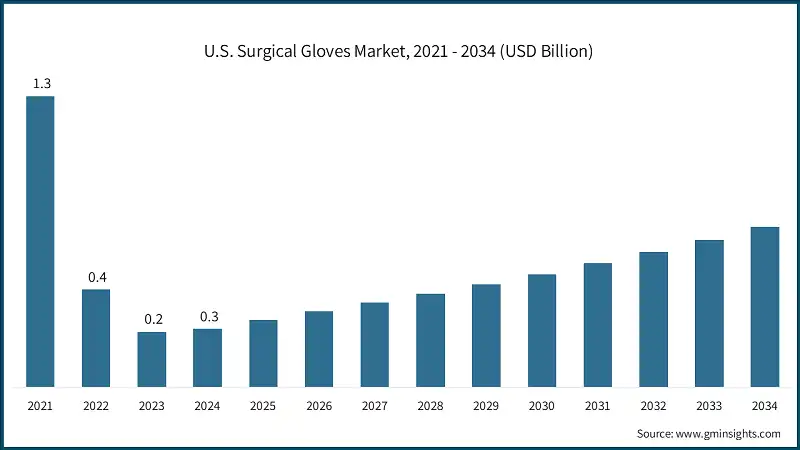
The U.S. surgical gloves market was valued at USD 1.3 billion and USD 422.7 million in 2021 and 2022, respectively. In 2024, the market size grew to USD 252.7 million from USD 240.5 million in 2023.
- The U.S. market is growing due to improvements in healthcare infrastructure and an increasing number of surgeries.
- Moreover, there is a significant shift towards sustainable materials and more use of nitrile gloves owing to latex allergies, which is supporting the growth of the market in the country.
- Furthermore, the availability of several market players who invest in research developments and innovations of these gloves is also likely to contribute positively toward market development.
Europe Surgical Gloves Market
The Europe market accounted for USD 250.9 million in 2024.
- One of the key factors contributing to Europe's prominence in this sector is its stringent regulatory environment. The European Union (EU) has implemented strong regulations under the Medical Device Regulation (MDR) that provide robust requirements for manufacturing and marketing of medical devices, such as surgical gloves. Compliance with these regulations enhances safety and quality standards, hence fostering confidence among users and improving aggregate demand in the healthcare industry.
- Additionally, the heightened focus on infection control, driven by regulatory requirements since the COVID-19 health crisis, has notably boosted the demand for surgical gloves in the region.
Asia Pacific Surgical Gloves Market
The Asia Pacific surgical gloves market is anticipated to grow at a substantial CAGR of 16.6% during the analysis timeframe.
- This region accounts for a significant share due to the rapid expansion of healthcare infrastructure, increasing healthcare expenditures, and a rising awareness of infection prevention practices among healthcare professionals and institutions.
- Countries such as China, India, Japan, and Australia are heavily investing in healthcare infrastructure and services to cope with an increasing population and rising health awareness. This growth is evident in the increasing number of hospitals, clinics, and surgical centers seeking high-quality medical supplies, including surgical gloves.
- As healthcare facilities expand their operations, the necessity for reliable infection control measures propels the demand for surgical gloves, particularly in surgical and procedural settings.
Latin America Surgical Gloves Market
Latin America market is anticipated to record robust growth throughout the forecast period.
- Many countries in Latin America, such as Brazil, Mexico, and Argentina, have been investing in their healthcare systems, improving access to medical care and facilities. This investment results in a growing number of hospitals and clinics that require surgical gloves, boosting market demand.
- Governments and private entities in the region are increasing their healthcare budgets to enhance the quality of care services. This increase in spending has resulted in higher demand for medical supplies, including surgical gloves, as healthcare providers prioritize patient safety and compliance with infection control protocols
MEA Surgical Gloves Market
The MEA market is anticipated to grow at a notable CAGR of 15.3% during the analysis timeframe.
- The rise in the number of surgical procedures performed in the region, driven by an aging population and increased prevalence of chronic diseases, has directly influenced the demand for surgical gloves. With more surgeries being carried out, the necessity for safe and sterile environments has amplified, further propelling the market.
- Manufacturers are increasingly introducing advanced surgical glove products that cater to the specific needs of healthcare providers in MEA. Innovations such as latex-free gloves, biodegradable options, and gloves with enhanced tactile sensitivity are gaining popularity, which helps attract more healthcare facilities looking for better alternatives.
Surgical Gloves Market Share
The market is fragmented, with leading players like Ansell Limited, Supermax Corporation Berhad, Kossan Rubber Industries, Semperit AG Holding, and Top Glove Corporation together holding around 42% share in the global market. These companies maintain their leadership through innovation in glove materials, manufacturing automation, and sustainability-focused production practices.
Ansell Limited continues to lead with its advanced surgical glove portfolio, offering high-performance solutions made from latex, neoprene, and polyisoprene. Its focus on ergonomic design, allergen-free materials, and infection control technologies positions it as a trusted partner across hospitals and surgical centers.
Similarly, Supermax Corporation Berhad leverages its vertically integrated operations and global distribution network to deliver cost-effective, high-quality surgical gloves. The company’s emphasis on scalability, compliance with international standards, and expansion into synthetic glove lines strengthens its competitive edge.
Furthermore, other key players in the market maintain their dominance through high-volume production capacity and continuous investment in research and development. By focusing on eco-friendly manufacturing, automation, and diversification into nitrile and powder-free gloves, these players are shaping the future of surgical hand protection worldwide.
Surgical Gloves Market Companies
A few of the prominent players operating in the surgical gloves industry include:
- Global players
- Ansell
- Cardinal Health
- GLOBUS
- Hartalega
- INTCO Medical
- Kossan Rubber Industries
- MEDLINE
- Semperit AG Holding
- SUPERMAX CORPORATION BERHAD
- TOP GLOVE
- Regional players
- Dynarex Corporation
- F. Bosch
- PROTECTCARE
- SWEAR HealthCare
- Emerging players
- ADVENTA Healthcare
- Angiplast
- ERENLER MEDIKAL
- NULIFE
Ansell leads the surgical gloves market with a share of 18% in 2024. Ansell’s USP lies in its advanced material technology and ergonomic glove design, offering superior tactile sensitivity and barrier protection. Its commitment to skin-friendly, latex-free options and sustainability-driven manufacturing makes it a preferred choice in high-risk surgical environments.
Supermax stands out with its vertically integrated production and global distribution capabilities, enabling consistent quality and cost-efficiency. Its USP is the ability to deliver high-volume, FDA-compliant surgical gloves tailored to diverse clinical needs across international markets.
Top Glove’s USP is its unmatched scale and innovation in glove production, including powder-free and nitrile surgical gloves. Its focus on automation, eco-friendly processes, and rapid response to global demand positions it as a leader in both performance and accessibility.
Surgical Gloves Market Report Attributes
| Key Takeaway | Details |
|---|---|
| Market Size & Growth | |
| Base Year | 2024 |
| Market Size in 2024 | USD 881.1 Million |
| Market Size in 2025 | USD 1 Billion |
| Forecast Period 2025 - 2034 CAGR | 12.4% |
| Market Size in 2034 | USD 2.9 Billion |
| Key Market Trends | |
| Drivers | Impact |
| Growing surgical procedures across the globe | Rising surgical volumes worldwide are directly boosting demand for surgical gloves, ensuring consistent market growth and heightened focus on infection prevention. |
| Increase in awareness regarding cross-contamination and contagious diseases | Greater awareness of infection risks in hospitals is driving mandatory glove use, significantly enhancing demand and supporting strict hygiene compliance. |
| Rise in the number of healthcare facilities and medical professionals | Expansion of healthcare infrastructure and workforce increases surgical procedures, fueling higher consumption of surgical gloves across diverse medical specialties. |
| Increasing adoption of powder-free gloves | Regulatory bans and safety concerns over powdered gloves accelerate the adoption of powder-free variants, supporting market growth with safer, allergen-free alternatives. |
| Pitfalls & Challenges | Impact |
| Possible infections due to latex gloves | Latex gloves may cause allergic reactions and cross-contamination, limit their adoption, and push hospitals toward non-latex alternatives, restraining overall latex glove demand. |
| Opportunities: | Impact |
| Rising demand in emerging markets | Future expansion in developing regions with improved healthcare access will unlock significant growth potential for surgical glove manufacturers worldwide. |
| Development of eco-friendly, biodegradable gloves | Sustainable glove innovations will address environmental concerns, offering future market opportunities aligned with global demand for eco-conscious medical products. |
| Market Leaders (2024) | |
| Market Leaders |
~18% market share |
| Top Players |
Collective market share in 2024 is ~42% |
| Competitive Edge |
|
| Regional Insights | |
| Largest Market | North America |
| Fastest Growing Market | Asia Pacific |
| Emerging Country | China, India, Brazil, Mexico, South Africa |
| Future Outlook |
|
What are the growth opportunities in this market?
Surgical Gloves Industry News:
- In September 2022, Molnlycke opened a new surgical glove plant in Kulim Hi-Tech Park, Kedah, with sustainable production as its backbone. This strategy expanded the company’s market presence and enabled it to increase its customer base.
- In September 2022, Cardinal Health announced the development of a second advanced surgical glove manufacturing facility in Rayong, Thailand. The new plant has increased Cardinal Health's surgical glove manufacturing presence in Rayong to more than 1.3 million square feet. The expansion strategy helped the company acquire an enhanced customer base.
The surgical gloves market research report includes an in-depth coverage of the industry with estimates and forecasts in terms of revenue in USD Million and volume in Units from 2021 - 2034 for the following segments:
Market, By Type
- Natural
- Synthetic
Market, By Product
- Latex gloves
- Nitrile gloves
- Vinyl gloves
- Neoprene gloves
- Other products
Market, By Form
- Powder-free gloves
- Powdered gloves
Market, By Usage
- Disposable gloves
- Reusable gloves
Market, By Sterility
- Sterile gloves
- Non-sterile gloves
Market, By Distribution Channel
- Brick and mortar
- E-commerce
Market, By End Use
- Hospitals
- Clinics
- Ambulatory surgical centers
- Diagnostic centers
- Other end use
The above information is provided for the following regions and countries:
- North America
- U.S.
- Canada
- Europe
- Germany
- UK
- France
- Spain
- Italy
- Netherlands
- Asia Pacific
- China
- India
- Japan
- Australia
- South Korea
- Latin America
- Brazil
- Mexico
- Argentina
- Middle East and Africa
- South Africa
- Saudi Arabia
- UAE
Frequently Asked Question(FAQ) :
What is the market size of the surgical gloves in 2024?
The market size was USD 881.1 million in 2024, driven by rising surgical volumes, healthcare spending, and infection control awareness.
What is the projected value of the surgical gloves market by 2034?
The market is expected to reach USD 2.9 billion by 2034, growing at a CAGR of 12.4% from 2025 to 2034.
What is the projected size of the surgical gloves industry in 2025?
The surgical gloves market is expected to reach USD 1 billion in 2025.
How much revenue did the nitrile gloves segment generate?
The nitrile gloves segment generated USD 428.2 million in 2024, leading the market due to superior puncture resistance and hypoallergenic properties.
What was the valuation of the powder-free gloves segment?
The powder-free gloves segment dominated with strong adoption and is projected to grow at 13% CAGR during 2025–2034, supported by FDA bans on powdered gloves.
Which region leads the surgical gloves market?
North America held the largest share with 31.2% of the global market in 2024, driven by strong healthcare infrastructure and high surgical volumes.
What are the upcoming trends in the surgical gloves industry?
Key trends include adoption of powder-free and latex-free gloves, innovation in biodegradable and eco-friendly gloves, and rising demand in emerging markets.
Who are the key players in the surgical gloves market?
Key players include Ansell, Cardinal Health, Top Glove, Supermax Corporation Berhad, Kossan Rubber Industries, Hartalega, Semperit AG Holding, Medline Industries, INTCO Medical, and Globus.
Surgical Gloves Market Scope
Related Reports