Summary
Table of Content

Smart Bandage with Sensor Technology Market
Get a free sample of this report
Form submitted successfully!
Error submitting form. Please try again.
Thank you!
Your inquiry has been received. Our team will reach out to you with the required details via email. To ensure that you don't miss their response, kindly remember to check your spam folder as well!
Request Sectional Data
Thank you!
Your inquiry has been received. Our team will reach out to you with the required details via email. To ensure that you don't miss their response, kindly remember to check your spam folder as well!
Form submitted successfully!
Error submitting form. Please try again.
Smart Bandage with Sensor Technology Market Size
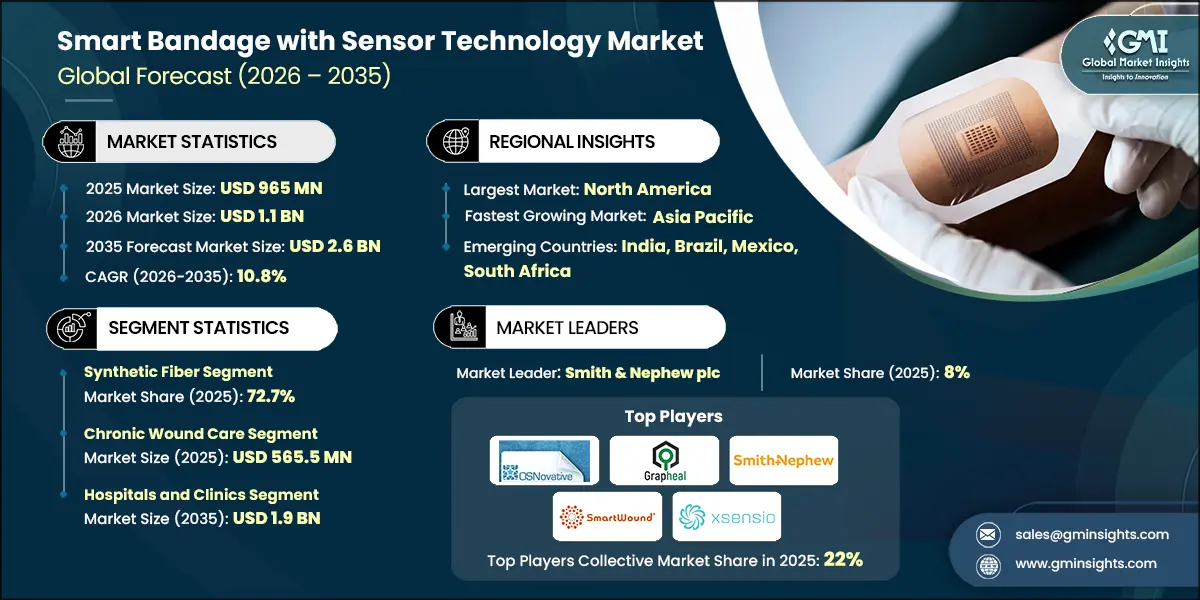
The global smart bandage with sensor technology market was valued at USD 965 million in 2025 and is projected to grow from USD 1.1 billion in 2026 to USD 2.6 billion by 2035, expanding at a CAGR of 10.8%, according to the latest report published by Global Market Insights Inc.
Smart Bandage with Sensor Technology Market Key Takeaways
Market Size & Growth
- 2025 Market Size: USD 965 Million
- 2026 Market Size: USD 1.1 Billion
- 2035 Forecast Market Size: USD 2.6 Billion
- CAGR (2026–2035): 10.8%
Regional Dominance
- Largest Market: North America
- Fastest Growing Region: Asia Pacific
Key Market Drivers
- Rising prevalence of diabetes.
- Advancements in sensor and material technologies.
- Shift toward remote patient monitoring and homecare.
- Growing aging population.
Challenges
- High cost of smart bandages.
- Stringent regulatory scenario.
Opportunity
- Integration with advanced digital health and AI platforms.
- Growth potential in emerging markets.
Key Players
- Market Leader: Smith & Nephew plc led with over 8% market share in 2025.
- Leading Players: Top 5 players in this market include OSNovative Systems, Inc., Grapheal, Smith & Nephew plc, SmartWound Ltd, Xsensio SA, which collectively held a market share of 22% in 2025.
Get Market Insights & Growth Opportunities
This fairly considerable growth is driven by numerous factors such as rising prevalence of diabetes, advancements in sensor and material technologies, shift toward remote patient monitoring and homecare, and growing aging population.
Smart bandage with sensor technology solutions play an increasingly important role in modern wound care by enabling continuous monitoring of the wound healing process in real‑world clinical and home‑care settings. These smart bandages consist of embedded sensors, adaptable electronic components, and wireless connectivity that provide access to physiological data related to the wound at the site where the injury occurred. Smart bandages can provide key physiological parameters about the wound such as moisture content, skin temperature, pH level, oxygen level, and infection indicators.
Smart bandages have been used widely for the management of both acute and chronic wounds, post-surgical care, burn treatment, and pressure ulcer prevention. Advances in smart bandage technologies are continuing as the market evolves through improved flexible material technologies, miniaturization of sensors, Internet of Medical Things (IoMT), artificial intelligence (AI) driven analytics, and cloud-based data platforms. These advances enable real-time data collection and integration into electronic health records (EHRs) to develop personalized plans to manage wounds.
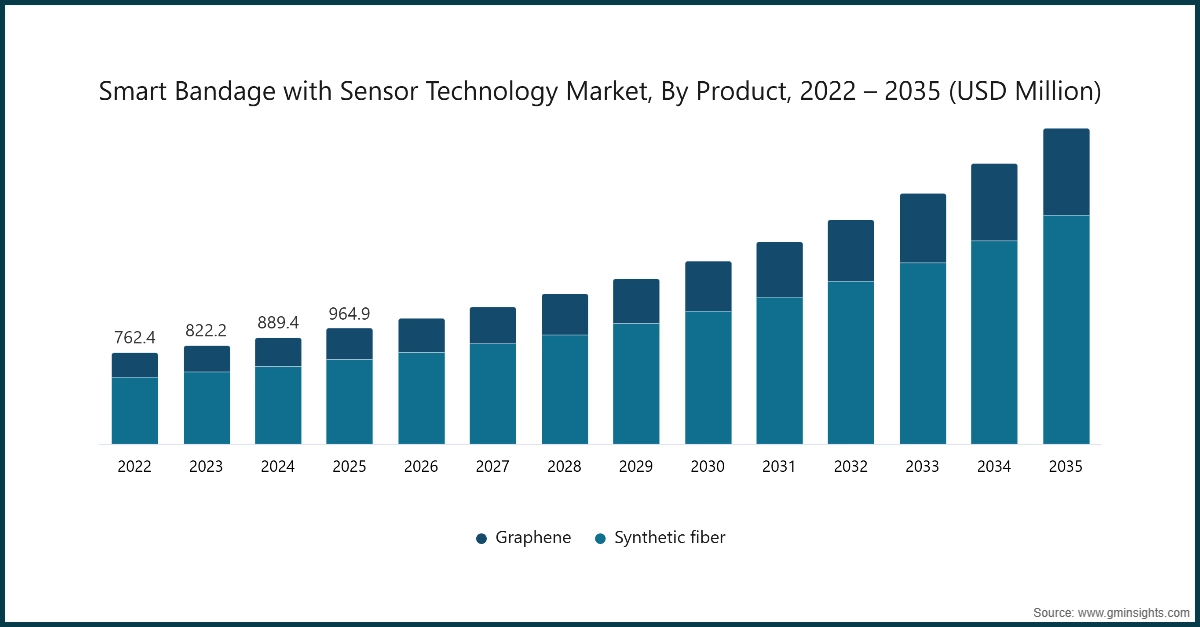
The market grew from USD 762.3 million in 2022 to USD 889.4 million in 2024. The rising global prevalence of diabetes is a powerful driver accelerating the growth of the smart bandage with sensor technology market, largely because diabetes significantly increases the risk of chronic, slow‑healing wounds such as diabetic foot ulcers. According to the International Diabetes Federation, 589 million adults worldwide are living with diabetes as of 2024–2025, representing 11.1% (1 in 9) of the global adult population.
This large and expanding patient base directly contributes to increased incidence of wound complications, thereby boosting demand for smart bandages. Furthermore, the projected increase in diabetes cases from 589 million in 2025 to 853 million by 2050 highlights a long‑term, sustained demand for innovative wound‑care solutions. This rising prevalence not only intensifies the clinical need but also encourages greater investment, research, and adoption of advanced wound‑care technologies, positioning smart bandages as a crucial solution in managing the future global diabetes burden.
Additionally, the growing global aging population is significantly accelerating the demand for smart bandages with sensor technology, primarily because older adults are more susceptible to chronic wounds, slower healing, and age‑related conditions that require continuous monitoring. According to the World Health Organization (WHO), by 2030, 1 in 6 people globally will be aged 60 years or older, with the number of individuals aged 60+ rising from 1 billion in 2020 to 1.4 billion by 2030. As aging weakens the immune system, reduces skin elasticity, and increases the prevalence of conditions like diabetes, vascular diseases, and mobility limitations, the need for advanced wound‑care solutions becomes more pressing.
Smart bandages equipped with sensors that monitor moisture, temperature, pH, and infection markers offer real‑time data, enabling early intervention and preventing complications, which is particularly valuable for elderly populations at higher risk of pressure ulcers, venous leg ulcers, and chronic skin breakdown. This demographic shift fuels long‑term market growth, as healthcare systems increasingly emphasize remote monitoring, reduced hospital visits, and cost‑efficient management of chronic wounds.
Smart bandages are sophisticated wound-care dressings that feature entreated, small monitoring devices that continuously monitor such parameters of healing such as level of moisture, temperature, pH level, pressure, or infection status, and wirelessly transmit this information to a healthcare provider or device in real-time. These smart bandages will enhance clinical decision-making by supporting earlier identification of problems, such as inflammation or delayed healing, and permit more personalized treatment interventions; as well as delivery of therapy in a controlled manner.
To get key market trends
Smart Bandage with Sensor Technology Market Trends
- Rapid progress in miniaturized sensors, flexible electronics, and biocompatible materials is accelerating the adoption of next‑generation smart bandages, as clinicians increasingly seek real‑time, data‑driven insights into wound healing.
- These innovations enable continuous monitoring of parameters such as temperature, pH, humidity, bacterial activity, and tissue response, supporting timely detection of complications and improving wound‑care efficacy.
- Traditional wound dressings, which rely on periodic manual assessment, cannot provide the immediate insights required to manage chronic or high‑risk wounds effectively. As a result, the market is rapidly shifting toward sensor‑embedded bandages capable of delivering real‑time diagnostic and therapeutic feedback, enabling more informed clinical decisions and reducing avoidable complications.
- Some product innovations exemplify this technological momentum. For example, the University of Glasgow introduced a wirelessly powered, drug‑free smart bandage using UVC radiation for disinfection.
- Another notable example is ENLUXTRA Smart Self‑Adaptive Wound Dressing, which uses proprietary feedback‑driven polymers to sense the wound’s changing physical conditions and automatically adjust its local hydration or absorption levels. As the first and only self‑regulating, super‑absorbent fiber dressing, ENLUXTRA maintains an optimal healing environment across wounds of any etiology or drainage level, demonstrating how advanced material technologies are expanding the functional capabilities of smart dressings.
- The continued advancement of smart materials, embedded sensors, and flexible electronics is redefining the standard of modern wound care. These technologies support earlier detection of complications and enable more personalized, responsive treatment approaches. Collectively, they are positioning next‑generation smart bandages as essential tools for improving outcomes across diverse wound‑care settings.
Smart Bandage with Sensor Technology Market Analysis
Learn more about the key segments shaping this market
Based on the product, the smart bandage with sensor technology market is segmented into graphene and synthetic fiber. The synthetic fiber segment held a significant market share of 72.7% in 2025.
- The synthetic fiber segment represents a foundational component of the market, offering the structural flexibility, durability, and biocompatibility required for embedding advanced sensing elements. Synthetic fibers enable the creation of lightweight, breathable, and stretchable wound dressings capable of supporting integrated electronics and maintaining consistent performance across varied clinical environments.
- A major advantage of synthetic fiber‑based smart bandages is their ability to support the integration of multiple sensor types, including temperature, pH, moisture, oxygen, and bacterial‑detection systems. These fibers provide stable mechanical properties that ensure reliable sensor contact with the wound surface, enabling continuous real‑time monitoring.
- The segment is further strengthened by manufacturers leveraging synthetic fibers to improve comfort, sensor stability, and wound‑healing outcomes across diverse patient populations. Their ease of scaling and compatibility with mass‑manufacturing processes make synthetic fiber bandages ideal for widespread clinical adoption. The growing global demand for remote wound monitoring, digital health integration, and personalized care is making synthetic fiber‑based smart bandages essential components of modern wound‑care infrastructure.
Based on applications, the smart bandage with sensor technology market is segmented into chronic wound care, sports injuries and rehabilitation, surgical and post‑operative wounds, and other applications. The chronic wound care segment was worth USD 565.5 million in 2025.
- The chronic wound care segment is gaining strategic importance in the market, driven by the growing burden of diabetes‑related complications such as diabetic foot ulcer and the escalating clinical need for continuous wound monitoring.
- For instance, according to International Diabetes Federation, in Europe alone, 65.6 million adults aged 20–79 were living with diabetes in 2024, a number projected to rise to 72.4 million by 2050, highlighting a consistently expanding high‑risk population for chronic wounds such as diabetic foot ulcers. As the prevalence of diabetes accelerates, demand is rising for advanced digital health solutions capable of enabling early detection of wound deterioration, reducing infection rates, and improving patient adherence through real‑time data insights.
- Smart bandages with integrated sensors are increasingly being adopted to overcome the limitations of traditional wound assessment, which often depends on manual observation. This shift toward data‑driven wound management supports broader healthcare digitalization and enables faster, more accurate clinical decisions across diverse care settings.
- With diabetic population growing, healthcare systems are increasingly prioritizing proactive, data‑driven wound management to reduce complications and improve patient outcomes. As a result, sensor‑enabled wound monitoring platforms are emerging as a critical driver of innovation and long‑term adoption in the market.
Learn more about the key segments shaping this market
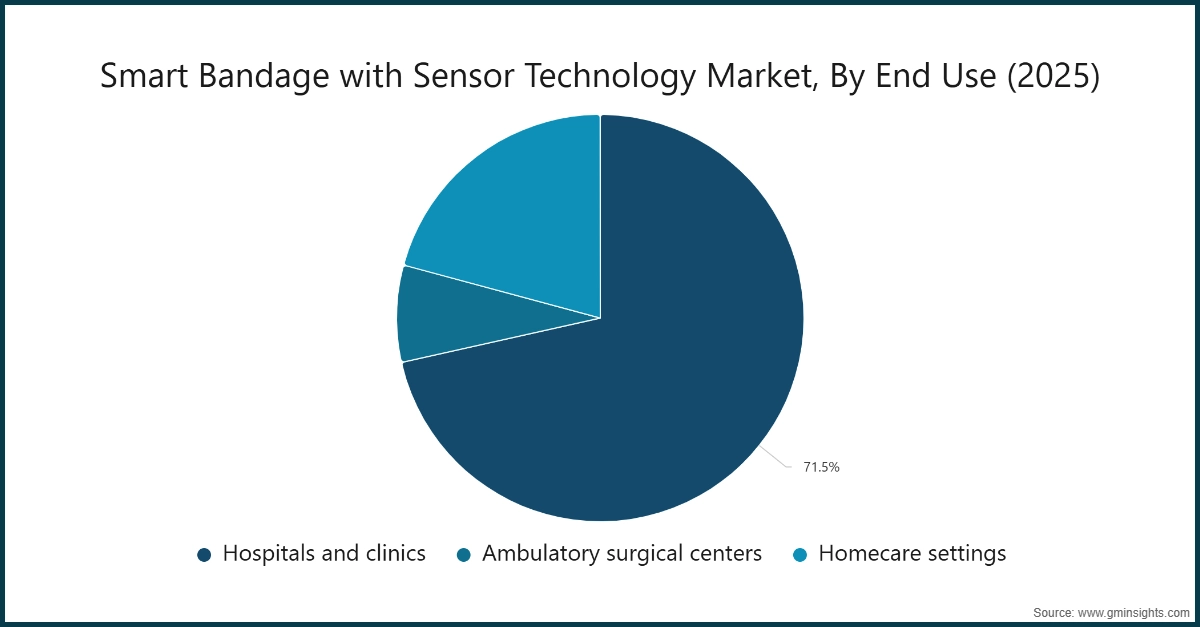
- The hospital and clinic segment is becoming an important driver of the smart bandage with sensor technology market, supported by the growing focus on advanced wound care and data‑guided clinical decision‑making. As chronic and acute wounds such as diabetic ulcers, pressure injuries, and surgical‑site complications increase, hospitals are prioritizing technologies that enhance healing, lower infection risks, and streamline care delivery.
- According to the 2024 AHA Annual Survey, the U.S. has 6,100 hospitals, creating a strong foundation for integrating connected wound‑care technologies into routine practice. Of these, 5,121 are community hospitals, which serve as the primary centers for wound management across diverse patient groups. This large institutional base increases the need for smart bandages capable of continuously assessing temperature, moisture, and biochemical markers to help clinicians detect worsening conditions early and intervene more effectively.
- Together, hospitals and clinics represent a strong and expanding end user segment for smart wound‑monitoring technologies. Their increasing use of sensor‑enabled dressings supports better clinical outcomes, reduces complications and readmissions, and enhances patient satisfaction.
Looking for region specific data?
North America Smart Bandage with Sensor Technology Market
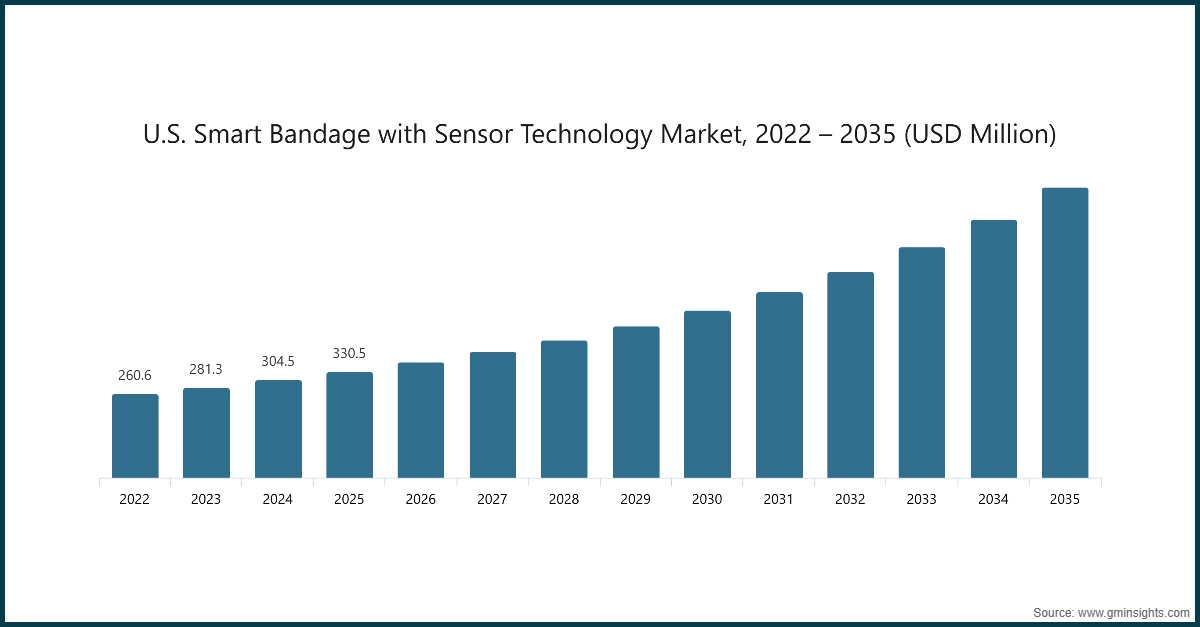
North America dominated the global smart bandage with sensor technology industry with a market share of 38.4% in 2025.
- North America continues to lead the market, supported by the escalating burden of chronic conditions such as diabetes, which require continuous assessment and proactive intervention. According to the International Diabetes Federation, the North America and Caribbean region is home to 56 million adults (20–79 years) living with diabetes, reflecting a substantial at‑risk population for chronic wound complications such as diabetic foot ulcers. As the prevalence of diabetes drives demand for real‑time monitoring and data‑enabled care, hospitals, clinics, and long‑term care providers are increasingly adopting sensor‑integrated bandages to detect early signs of inflammation, infection, or impaired healing.
- The growing aging population further accelerates technology adoption, as older adults experience a higher incidence of slow‑healing wounds, mobility‑related injuries, and comorbidities that heighten the need for continuous wound surveillance. U.S. Census Bureau data shows that the number of U.S. population aged 65 and older will rise from 58 million in 2022 to 82 million by 2050, marking a 42% increase and expanding the population segment most dependent on long‑term wound care solutions. This demographic shift intensifies the need for smart bandages capable of remote monitoring, early detection of complications, and automated alerts that reduce the burden on healthcare facilities. North America continues to witness both rising diabetes prevalence and rapid population aging, the region remains at the forefront of innovation, clinical integration, and commercialization in the market.
Europe Smart Bandage with Sensor Technology Market
Europe smart bandage with sensor technology accounted for USD 262.5 million in 2025 and is anticipated to show lucrative growth over the forecast period.
- Europe is witnessing accelerating adoption of smart bandage and sensor‑integrated wound monitoring solutions, driven by rising chronic disease burden, rapid digital health transformation, and growing demand for advanced wound‑care technologies across hospitals, clinics, and home‑care settings. Diabetes remains one of the most prevalent chronic conditions in the WHO European Region, which also holds the highest global burden of type 1 diabetes, and projections show that 1 in 10 people in the region will have diabetes by 2045, further amplifying long‑term wound‑care needs. In parallel, pressure‑related skin injuries remain a major public health challenge. These clinical pressures are accelerating Europe’s shift toward sensor‑enabled dressings that allow clinicians to detect early signs of deterioration, track physiological changes, and intervene earlier to prevent infection and avoidable hospitalizations.
- Demographic aging further intensifies the need for advanced wound monitoring across the continent. Eurostat reports that 22.0% of the EU population was aged 65 years and older in 2025, reflecting a sustained demographic shift that increases susceptibility to slow‑healing wounds, mobility‑related skin breakdown, and pressure leg ulcers. Collectively, these factors are positioning Europe as a rapidly advancing region within the market.
Germany smart bandage with sensor technology market is projected to experience steady growth between 2026 and 2035.
- Germany represents one of Europe’s most advanced and innovation‑driven healthcare markets, making it a key adopter of smart bandage and sensor‑enabled wound‑care technologies. The country’s aging population, high prevalence of chronic conditions, and strong emphasis on clinical quality contribute to rising demand for continuous wound monitoring solutions in both inpatient and outpatient settings.
- As one of the most procedure‑intensive healthcare systems globally, Germany performs a remarkably high volume of clinical interventions. According to the German Federal Statistical Office’s DRG‑based hospital statistics, a total of 16,531,491 surgeries were performed in German hospitals in 2023, reflecting the extensive scale of surgical care and the growing need for postoperative wound monitoring technologies that can detect complications early and reduce hospital readmissions. Smart bandages equipped with sensors offer German clinicians real‑time data on healing progress, enabling more efficient follow‑up and improved patient outcomes, strengthening Germany’s position as a key growth market within the market.
Asia Pacific Smart Bandage with Sensor Technology Market
The Asia Pacific region is projected to be valued at USD 236.4 million in 2025.
- The Asia Pacific region is emerging as a high‑growth market for smart bandage and sensor‑integrated wound‑care technologies, driven by a rapidly expanding chronic disease burden, increasing healthcare digitalization, and rising demand for remote and continuous monitoring solutions. Diabetes represents one of the most critical clinical drivers in the region. According to the International Diabetes Federation, 1 in 10 adults in South‑East Asia has diabetes, with 107 million adults aged 20–79 affected in 2024. As diabetic foot ulcers and other chronic wounds become more prevalent, hospitals, specialty wound‑care clinics, and home‑care providers are turning to sensor‑enabled dressings that offer continuous tracking of moisture levels, temperature changes, and biochemical markers to detect early signs of complication and improve healing outcomes.
- Demand for next‑generation wound‑care solutions is further amplified by the region’s projected surge in diabetic populations. IDF data indicates that the number of adults with diabetes in South‑East Asia is expected to increase by 73%, rising from 106.9 million in 2024 to 184.5 million by 2050. This dramatic rise places growing pressure on healthcare systems, encouraging adoption of digitally enhanced wound‑care technologies capable of reducing hospitalization rates, supporting large‑scale remote monitoring, and improving care accessibility in both urban and rural settings. As a result, Asia‑Pacific is becoming a pivotal growth hub for the market, driven by demographic expansion, chronic disease escalation, and strong momentum toward digital health innovation.
Japan smart bandage with sensor technology market is poised to witness lucrative growth between 2026 and 2035.
- Japan is one of the world’s most advanced and rapidly aging societies, making it a critical market for smart bandage and sensor‑integrated wound‑care technologies. Government data shows that 36.19 million people in Japan were aged 65 and older in 2025, representing 29.4% of the population, the highest elderly share among all major economies. With such a large senior population, the need for continuous wound monitoring and proactive intervention is escalating across hospitals, long‑term‑care facilities, and home‑care settings. Smart bandages equipped with sensors offer clinicians real‑time physiological data, enabling early detection of infection, improved care coordination, and reduced risk of complications that disproportionately impact older adults.
- Japan’s strong investment in elder‑care technologies, and growing pressure on healthcare resources, smart bandages with sensor technology are increasingly viewed as essential tools for improving outcomes, reducing care burden, and supporting sustainable wound‑care workflows in one of the world’s most rapidly aging populations.
Latin America Smart Bandage with Sensor Technology Market
- Brazil is experiencing rising demand for advanced wound‑care technologies such as smart bandages with sensor integration, driven in part by the country’s significant burden of traumatic injuries. In 2023, Brazil recorded more than 34,000 fatalities due to road traffic injuries (RTIs), highlighting the scale of acute trauma cases requiring continuous monitoring, infection detection, and improved healing pathways. Smart bandage technologies align with Brazil’s broader healthcare digitization efforts, as hospitals and emergency care networks increasingly adopt connected devices to strengthen post‑injury care management and reduce complications.
- Adoption of sensor‑enabled wound‑care solutions is also accelerating as Brazil’s healthcare ecosystem focuses on cost‑efficient treatment, real‑time monitoring, and better long‑term outcomes, particularly in environments where resource constraints and regional disparities create challenges in care continuity. These solutions are increasingly integrated into clinical workflows to improve healing timelines, reduce hospitalization burdens, and enhance patient follow‑up through digital health platforms.
Middle East and Africa Smart Bandage with Sensor Technology Market
The smart bandage with sensor technology industry in Saudi Arabia is expected to experience significant and promising growth from 2026 to 2035.
- Saudi Arabia is rapidly advancing in sensor‑enabled healthcare technologies, driven by strong national digital‑health initiatives and significant investment in IoT‑based medical innovation. Government‑backed digital transformation under Vision 2030, supported by widespread adoption of telemedicine, mobile health apps, electronic health records, and IoT health platforms has accelerated demand for high‑precision biosensors, real‑time monitoring capabilities, and interoperable wound‑care solutions.
- A major shift toward remote patient monitoring (RPM) and home‑based care is further propelling adoption of smart bandages with integrated sensors across Saudi Arabia, as healthcare providers increasingly rely on connected technologies to reduce hospital burden and improve chronic‑wound management. The Saudi RPM market is experiencing substantial growth, driven by rising chronic diseases, expanding telehealth services, and government investments in digital infrastructure. This trend aligns with broader national goals to modernize care delivery, improve accessibility, and enhance cost‑efficiency, making sensor‑based smart bandages a natural fit within the fast‑growing homecare ecosystem.
Smart Bandage with Sensor Technology Market Share
- Leading companies such as OSNovative Systems, Inc., Grapheal, Xsensio SA, Smith & Nephew plc, SmartWound Ltd are steadily expanding their global presence through a combination of strategic mergers, partnerships, and innovation‑focused initiatives. Together, these companies account for an estimated 22% share of the global smart bandage with sensor technology market, reflecting their strong influence and broad customer reach.
- Leading companies are scaling smart bandage and digital wound‑care portfolios through acquisitions, patents, and connected‑care launches. For instance, the Smith+Nephew’s LEAF patient‑worn sensor system is a wireless monitoring solution that tracks a patient’s real‑time position and activity to support adherence to turning schedules and reduce pressure‑injury risk. It provides visual alerts and automatically documents turn events, helping clinicians improve care quality and prevent hospital‑acquired pressure injuries. Their strategies combine advanced materials (foams, hydrofibers, antimicrobials) with embedded sensing and interoperability to extend reach across hospital and home settings.
- A top strategic priority is integrating AI, microfluidics, and IoT into smart dressings so clinicians can detect infection risk and healing delays earlier and act remotely.
- Overall, continuous advances in sensor technology, smart materials, and data analytics are shifting wound care from periodic dressing changes to proactive, remote management. As smart bandages and digital wound‑care systems become more widely adopted through telehealth and remote‑monitoring workflows, they help reduce readmissions, support home‑based care, and improve clinical outcomes, establishing sensor‑enabled dressings as an essential component of next‑generation wound management.
Smart Bandage with Sensor Technology Market Companies
Few of the prominent players operating in the smart bandage with sensor technology industry include:
- Grapheal
- Healables Digital Health
- NexLife
- OSNovative Systems, Inc.
- SmartWound Ltd
- Smith & Nephew plc
- WINDGO Inc.
- Xsensio SA
- Grapheal
Grapheal is an emerging innovator in the smart bandages with sensor market, leveraging graphene‑based flexible biosensing technology to enable continuous, real‑time wound monitoring and digital diagnostics. The company develops electronic wound patches such as WoundLAB, which integrate ultra‑thin, transparent graphene sensors to track wound biomarkers, detect early signs of infection, and transmit data via smartphones to cloud platforms for remote clinical oversight.
SmartWound Ltd operates within the smart bandage and wound‑sensor ecosystem by contributing to the development of advanced dressings that integrate microelectronic sensors and wireless technologies for improved wound diagnosis and therapy. Positioned in a rapidly growing market driven by chronic wounds, the company participates in the broader shift toward intelligent wound dressings that continuously capture chemical and physical wound parameters including pH, temperature, and infection biomarkers to support faster diagnosis and personalized treatments.
Smith & Nephew plc is a major global player in advanced wound care and has expanded its portfolio into sensor‑enabled wound monitoring technologies within the smart bandages market. The company has patented wound dressings embedded with sensor arrays capable of measuring wound characteristics and transmitting data for precise wound assessment, complemented by digital solutions such as the LEAF Patient Monitoring System, which uses wearable sensors to monitor patient orientation and pressure‑related injury risks.
Smart Bandage with Sensor Technology Market Report Attributes
| Key Takeaway | Details |
|---|---|
| Market Size & Growth | |
| Base Year | 2025 |
| Market Size in 2025 | USD 965 Million |
| Market Size in 2026 | USD 1.1 Billion |
| Forecast Period 2026-2035 CAGR | 10.8% |
| Market Size in 2035 | USD 2.6 Billion |
| Key Market Trends | |
| Drivers | Impact |
| Rising prevalence of diabetes | Drives increasing adoption of sensor‑enabled smart bandages to support early detection of diabetic wound complications such as diabetic foot ulcer treatment and reduce the burden of chronic wound management. |
| Advancements in sensor and material technologies | Accelerates the development of more accurate, flexible, and responsive smart bandages, enhancing clinical utility and expanding application possibilities |
| Shift toward remote patient monitoring and homecare | Increases reliance on connected smart bandages that provide continuous wound data and reduces the need for frequent clinical visits. |
| Growing aging population | Boosts demand for intelligent wound‑care solutions to manage age‑related chronic and slow‑healing wounds more effectively. |
| Pitfalls & Challenges | Impact |
| High cost of smart bandages | Limits widespread adoption and slows market penetration, particularly across cost‑sensitive healthcare systems and low‑resource settings. |
| Stringent regulatory scenario | Extends time‑to‑market for new sensor‑integrated bandages and raises compliance burdens for manufacturers, hindering rapid innovation. |
| Opportunities: | Impact |
| Integration with advanced digital health and AI platforms | Enhances clinical decision‑making by enabling predictive analytics, personalized wound‑care insights, and automated alerts through intelligent wound‑monitoring ecosystems. |
| Growth potential in emerging markets | Expands access to modern wound‑care technologies and opens new revenue streams as digital health adoption increases globally. |
| Market Leaders (2025) | |
| Market Leader |
8% Market share |
| Top Players |
Collective market share is 22% |
| Competitive Edge |
|
| Regional Insights | |
| Largest Market | North America |
| Fastest Growing Market | Asia Pacific |
| Emerging Countries | India, Brazil, Mexico, South Africa |
| Future Outlook |
|
What are the growth opportunities in this market?
Smart Bandage with Sensor Technology Industry News:
- In June 2021, researchers at the Zhejiang University College of Biomedical Engineering & Instrument Science developed a fully battery‑free, wireless smart wound dressing designed to detect infections and deliver medication on demand through integrated flexible electronics. This innovative dressing monitored wound biomarkers such as temperature, pH, and uric acid while enabling controlled antibiotic release via NFC‑powered circuitry. Overall, the technology demonstrated a promising step toward closed‑loop wound monitoring and treatment systems for improved clinical outcomes.
- In June 2021, researchers at RMIT University in Australia created an antimicrobial wound dressing fitted with nanoscale sensors capable of reducing inflammation and monitoring healing progress. The dressing incorporated fluorescent magnesium‑based nanosensors that glowed brightly under UV light when infection was beginning, allowing clinicians or patients to visually track wound status without removing the bandage. This advancement highlighted major potential for safer, more efficient wound care through real‑time infection detection and reduced disruption to the healing tissue.
The smart bandages with sensor technology market research report includes an in-depth coverage of the industry with estimates and forecast in terms of revenue in USD Million and from 2022 – 2035 for the following segments:
Market, By Product
- Graphene
- Synthetic fiber
Market, By Application
- Chronic wound care
- Sports injuries and rehabilitation
- Surgical and post‑operative wounds
- Other applications
Market, By End Use
- Hospitals and clinics
- Ambulatory surgical centers
- Homecare settings
The above information is provided for the following regions and countries:
- North America
- U.S.
- Canada
- Europe
- Germany
- UK
- France
- Italy
- Spain
- Netherlands
- Asia Pacific
- China
- India
- Japan
- Australia
- South Korea
- Latin America
- Brazil
- Mexico
- Argentina
- Middle East and Africa
- Saudi Arabia
- South Africa
- UAE
Frequently Asked Question(FAQ) :
What was the market size of the smart bandage with sensor technology in 2025?
The market size was valued at USD 965 million in 2025, expanding at a CAGR of 10.8% till 2035. The market is driven by advancements in sensor and material technologies, rising diabetes prevalence.
What is the projected value of the smart bandage with sensor technology market by 2035?
The market is projected to reach USD 2.6 billion by 2035, fueled by innovations in flexible electronics, biocompatible materials, and the growing aging population.
What is the expected market size of the smart bandage with sensor technology industry in 2026?
The market size is projected to reach USD 1.1 billion in 2026.
What was the market share of the synthetic fiber segment in 2025?
The synthetic fiber segment held a significant market share of 72.7% in 2025, owing to its flexibility, durability, and biocompatibility, which support advanced sensing elements in smart bandages.
What was the valuation of the chronic wound care segment in 2025?
The chronic wound care segment was valued at USD 565.5 million in 2025, led by the increasing burden of diabetes-related complications and the need for continuous wound monitoring.
What is the growth outlook for the hospitals and clinics segment by 2035?
The hospitals and clinics segment, which dominated the market with a 71.5% share in 2025, is projected to reach USD 1.9 billion by 2035.
Which region leads the smart bandage with sensor technology sector?
North America leads the market with a 38.4% share in 2025, supported by the rising prevalence of chronic conditions like diabetes that require continuous monitoring and proactive intervention.
What are the upcoming trends in the smart bandage with sensor technology market?
Trends include advancements in miniaturized sensors, flexible electronics, biocompatible materials, real-time wound monitoring, and innovations like UVC-powered disinfection bandages and self-adaptive wound dressings.
Who are the key players in the smart bandage with sensor technology industry?
Key players include Grapheal, Healables Digital Health, NexLife, OSNovative Systems, Inc., SmartWound Ltd, Smith & Nephew plc, WINDGO Inc., and Xsensio SA.
Smart Bandage with Sensor Technology Market Scope
Related Reports