Summary
Table of Content

Saudi Arabia Self-monitoring Blood Glucose Devices Market
Get a free sample of this report
Form submitted successfully!
Error submitting form. Please try again.
Thank you!
Your inquiry has been received. Our team will reach out to you with the required details via email. To ensure that you don't miss their response, kindly remember to check your spam folder as well!
Request Sectional Data
Thank you!
Your inquiry has been received. Our team will reach out to you with the required details via email. To ensure that you don't miss their response, kindly remember to check your spam folder as well!
Form submitted successfully!
Error submitting form. Please try again.
Saudi Arabia Self-monitoring Blood Glucose Devices Market Size
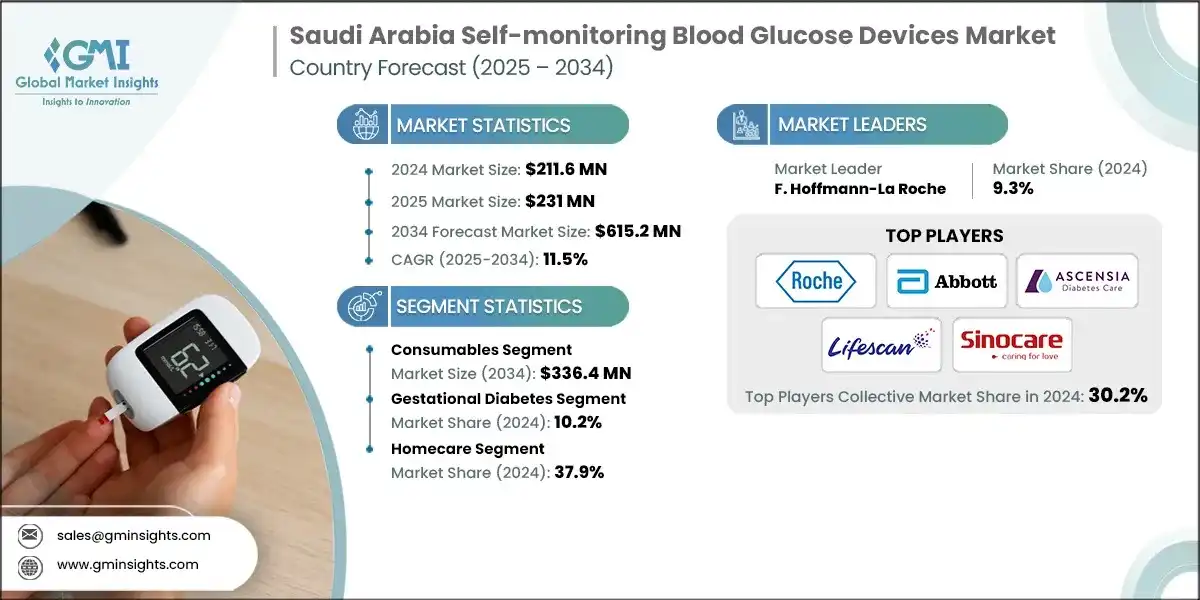
The Saudi Arabia self-monitoring blood glucose devices market was valued at USD 211.6 million in 2024 and is projected to grow from USD 231 million in 2025 to USD 615.2 million by 2034, expanding at a CAGR of 11.5%, according to the latest report published by Global Market Insights Inc. This steady growth is stimulated by various factors such as the growing prevalence of diabetes across Saudi Arabia, technological advancements in self-monitoring blood glucose monitoring devices, the expansion of national health infrastructure, government-led health initiatives, and rising public awareness.
To get key market trends
These devices enable patients to manage their diabetes effectively by providing real-time blood sugar data, helping them make informed decisions about diet, physical activity, and medication. Major companies in the industry include F. Hoffmann-La Roche, Abbott Laboratories, Sinocare, LifeScan, and Ascensia Diabetes Care. The devices consist of components such as blood glucose meters, test strips, and lancet devices, which efficiently monitor blood glucose levels.
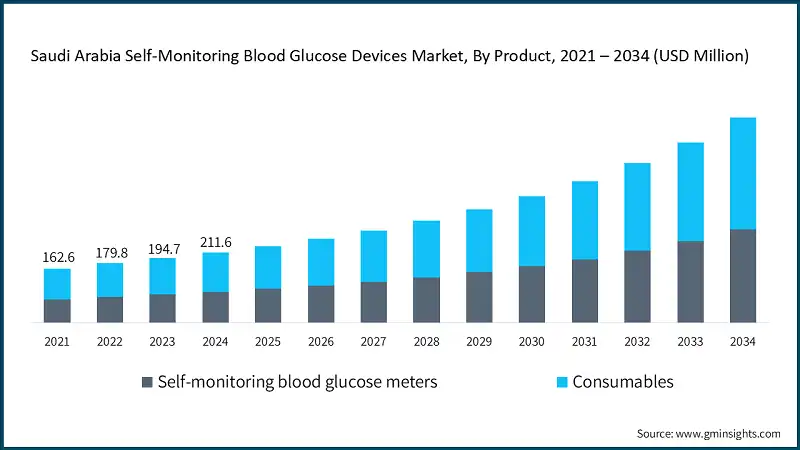
The market increased from USD 162.6 million in 2021 to USD 194.7 million in 2023. The adoption of self-monitoring blood glucose (SMBG) devices in Saudi Arabia has increased significantly, driven by government-led health initiatives and growing public awareness. Under Vision 2030, the Saudi government has made chronic disease prevention and management a national priority. This includes launching comprehensive programs focused on early diabetes screening, lifestyle education, and the integration of digital health solutions. These efforts are further supported by widespread public health campaigns, mobile clinics, and school-based screening initiatives, all of which are enhancing awareness about diabetes risks and emphasizing the importance of regular glucose monitoring.
The rising prevalence of diabetes in Saudi Arabia is a key factor driving the growth of self-monitoring blood glucose (SMBG) devices. For instance, according to the International Diabetes Federation, approximately 5.3 million adults aged 20–79 were living with diabetes in Saudi Arabia as of 2024, a figure projected to reach 9.5 million by 2050. This expanding patient population underscores the urgent need for scalable and accessible diabetes care technologies. Thus, the increasing burden of diabetes is fueling the growth of the SMBG device market.
Moreover, Saudi Arabia's national health infrastructure is expanding steadily, significantly increasing the demand for advanced monitoring and management tools. In the 2025 budget, the Ministry of Finance allocated USD 69 billion to the 'Health and Social Development' sector. The Ministry of Health received USD 28 billion, accounting for 41% of the sector's budget, up from 35% in 2010. This growing investment reflects the government's commitment to modernizing healthcare through the adoption of advanced medical technologies and digital health systems, including self-monitoring blood glucose (SMBG) devices.
Self-monitoring blood glucose devices have been in use for decades. These devices operate by pricking a finger with a sharp lancet, applying the blood sample to a strip, and inserting the strip into the glucometer, which is estimated to reach USD 46.8 billion by 2032, to measure an individual's blood glucose level.
Saudi Arabia Self-monitoring Blood Glucose Devices Market Report Attributes
| Key Takeaway | Details |
|---|---|
| Market Size & Growth | |
| Base Year | 2024 |
| Market Size in 2024 | USD 211.6 million |
| Market Size in 2025 | USD 231 Million |
| Forecast Period 2025 - 2034 CAGR | 11.5% |
| Market Size in 2034 | USD 615.2 million |
| Key Market Trends | |
| Drivers | Impact |
| Growing prevalence of diabetes across Saudi Arabia | Drives demand for SMBG devices, expanding the patient base and encouraging early diagnosis and regular monitoring. |
| Technological advancements of self-monitoring blood glucose monitoring devices | Enhances device accuracy, convenience, and user engagement, driving market growth. |
| Expansion of national health infrastructure | Accelerates SMBG adoption by expanding healthcare access and integrating glucose monitoring into routine care across newly developed health facilities. |
| Government-led health initiatives and rising public awareness | Encourages preventive care and adoption of SMBG technologies through education campaigns and subsidized programs. |
| Pitfalls & Challenges | Impact |
| High cost of diabetes care devices | Limits accessibility and adoption among low-income populations, slowing market penetration. |
| Stringent regulatory requirements | Delays product approvals and increases compliance costs for manufacturers. |
| Opportunities: | Impact |
| Growing adoption of AI-powered SMBG devices for predictive analysis | Enhances device accuracy, convenience, and adoption among tech-savvy users, supporting proactive diabetes management and personalized insights. |
| Market Leaders (2024) | |
| Market Leaders |
9.3% |
| Top Players |
Collective market share in 2024 is 30.2% |
| Competitive Edge |
|
| Regional Insights | |
| Future outlook |
|
What are the growth opportunities in this market?
Saudi Arabia Self-monitoring Blood Glucose Devices Market Trends
- Technological advancements are significantly driving the growth of the self-monitoring blood glucose (SMBG) market in Saudi Arabia. Modern SMBG devices now feature Bluetooth and USB connectivity, enabling seamless integration with smartphone applications for real-time data tracking and lifestyle management.
- For example, B. Braun’s Omnitest 5 allows users to transfer glucose data effortlessly and log workout details, enhancing user engagement. Key players are also focusing on cloud-based data integration. Abbott’s FreeStyle Lite connects to the LibreView platform, enabling remote monitoring by healthcare professionals and supporting the country’s expanding telehealth services.
- Additionally, innovations in device accuracy, powered by AI algorithms and multi-factor calibration, are reducing errors and improving diagnostic reliability. Enhanced strip designs that require minimal blood and offer no-wipe technology further improve user comfort.
- Devices have also become more portable and ergonomic. For instance, Ascensia’s CONTOUR NEXT ONE features Second Chance Sampling, minimizing waste and improving usability. These advancements are making SMBG devices more appealing to Saudi consumers and align with the nation’s digital health goals under Vision 2030.
Saudi Arabia Self-monitoring Blood Glucose Devices Market Analysis
Learn more about the key segments shaping this market
The Saudi Arabia self-monitoring blood glucose devices market was valued at USD 162.6 million in 2021. The market size reached USD 194.7 million in 2023, from USD 179.8 million in 2022. Based on product, the Saudi Arabia market is segmented into self-monitoring blood glucose meters and consumables.
The consumables segment is further bifurcated into testing strips and lancets. The consumables segment was valued at USD 118.2 million in 2024 and is projected to reach USD 336.4 million by 2034, growing at a CAGR of 11.3%. In comparison, the self-monitoring blood glucose meters segment, valued at USD 93.3 million in 2024, is expected to grow to USD 278.8 million by 2034.
- Self-monitoring blood glucose (SMBG) meters are compact, user-friendly devices that help individuals in Saudi Arabia to manage diabetes at home by providing quick and reliable blood glucose readings using minimal blood samples.
- With diabetes rates increasing due to urbanization, lifestyle changes, and genetic predisposition, the need for accessible and effective management tools is more critical than ever. SMBG devices play a crucial role in this shift by enabling patients to take control of their health decisions related to diet, exercise, and medication.
- Innovations such as Roche’s Accu-Chek Guide, which includes features such as spill-resistant strip containers, low-light displays, and Bluetooth connectivity, enhance usability for both tech-savvy users and older adults. As Saudi Arabia intensifies its focus on chronic disease management, the widespread adoption of SMBG meters is bridging the gap between clinical care and personal health empowerment.
- Additionally, Saudi Arabia’s growing emphasis on chronic disease management is positioning SMBG meters as essential tools for connecting personal health tracking with professional medical care, giving individuals greater control over their diabetes.
Based on applications, the Saudi Arabia self-monitoring blood glucose devices market is segmented into type 1 diabetes, type 2 diabetes, and gestational diabetes. The gestational diabetes segment accounts for 10.2% of revenue share in 2024 and is expected to reach USD 61.7 million in 2034.
- Gestational diabetes mellitus (GDM) is a condition characterized by elevated blood glucose levels during pregnancy, which typically resolves after childbirth. It occurs when the body cannot produce enough insulin to meet the increased demands of pregnancy.
- For instance, according to a report by the National Institute of Health (NIH), in 2021, the prevalence of gestational diabetes mellitus (GDM) among pregnant women aged 30 years and above was notably high, reaching 25%.
- Early detection and continuous monitoring are essential for improving health outcomes. Self-monitoring blood glucose (SMBG) devices play a crucial role by enabling expectant mothers to track their glucose levels regularly, make informed lifestyle choices, and ensure safer pregnancies.
- Additionally, gestational diabetes is becoming a growing concern in Saudi Arabia, making SMBG devices vital for helping expectant mothers monitor their blood glucose levels, manage their health, and ensure safer pregnancies through better personal and clinical care coordination.
Learn more about the key segments shaping this market
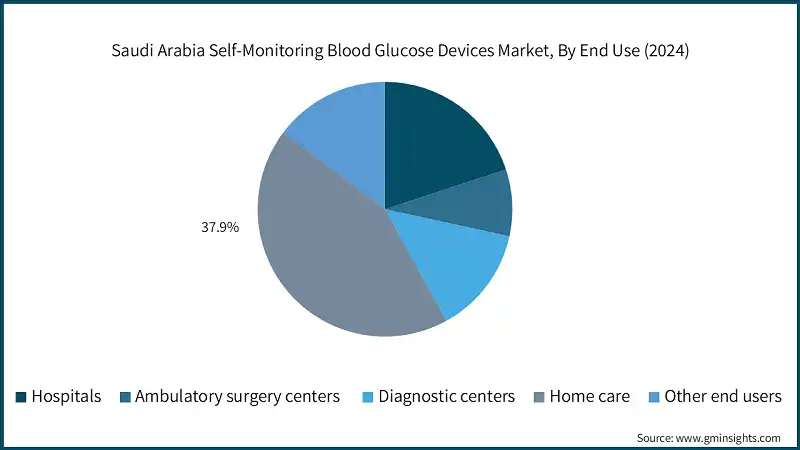
Based on end use, the Saudi Arabia self-monitoring blood glucose devices market is segmented into hospitals, ambulatory surgery centers, diagnostic centers, home care, and other end users. Homecare accounted for the largest revenue share of 37.9% in 2024.
- Self-monitoring blood glucose (SMBG) devices have transformed diabetes care in Saudi Arabia by enabling patients to check their blood glucose levels at home. This reduces the need for frequent clinic visits and improves self-management.
- This is particularly beneficial for elderly individuals and those with mobility challenges, as it provides them with greater control over their health. With a growing shift toward decentralized healthcare and home-based treatment for chronic conditions such as diabetes, the demand for SMBG devices is increasing.
- Additionally, the home care model is especially valuable for older adults and pregnant women with gestational diabetes, who require regular monitoring. Supported by government initiatives promoting digital health and self-care awareness, there is a rising demand for SMBG devices that are easy to use and compatible with home care practices, further driving market growth.
Saudi Arabia Self-monitoring Blood Glucose Devices Market Share
- The self-monitoring blood glucose devices market is competitive, with the top five companies F. Hoffmann-La Roche, Abbott Laboratories, Ascensia Diabetes Care Holdings, LifeScan, and Sinocare holding approximately 30.2% of the market share. Their dominance is attributed to extensive product portfolios, robust distribution networks, regulatory compliance, and continuous innovation.
- In Saudi Arabia’s evolving diabetes care landscape, companies such as LifeScan and F. Hoffmann-La Roche stand out for their innovative SMBG products, which are widely adopted in both clinical and home settings, giving them a competitive edge. The market is witnessing a shift toward advanced features such as Bluetooth-enabled meters, smartphone integration, and cloud-based data tracking, making self-monitoring more convenient and effective.
- LifeScan’s OneTouch glucose meters offer user-friendly designs with ColorSure technology, Bluetooth connectivity, and fast, accurate results, making them ideal for daily home-based diabetes management. Growing competition in the market is fueled by government initiatives focused on chronic disease management and increasing consumer demand for health-focused solutions. This dynamic environment highlights the need for continuous innovation and strategic agility among market players to maintain and expand their presence.
- Furthermore, competition within the market has increased due to government initiatives aimed at diabetes management, in addition to the growing consumer appetite for health-focused solutions. This complex environment illustrates the perpetual innovation and strategic flexibility required by market players to maintain and develop their market positions.
Saudi Arabia Self-monitoring Blood Glucose Devices Market Companies
Few of the prominent players operating in the Saudi Arabia self-monitoring blood glucose devices industry include:
- Abbott Laboratories
- AgaMatrix
- Arkray
- Ascensia Diabetes Care Holdings
- B. Braun Melsungen
- Bionime Corporation
- F. Hoffmann-La Roche
- HemoCue
- LifeScan
- Nova Biomedical
- Sanofi
- Menarini
- Rossmax International
- Sinocare
- Ypsomed Holding
Ascensia Diabetes Care Holdings is a prominent player in the self-monitoring blood glucose (SMBG) devices market, known for delivering innovative and highly accurate glucose monitoring solutions. The company focuses on simplicity and precision in its product design, supporting effective diabetes management for users across various age groups and lifestyles.
Nova Biomedical is known for its advanced glucose meters that deliver fast and highly accurate readings, helping patients manage diabetes more effectively and confidently.
F. Hoffmann-La Roche is a leading player in Saudi Arabia’s SMBG market, known for its Accu-Chek product line, which includes devices such as Accu-Chek Instant and Accu-Chek Guide Me. These meters offer easy-to-read displays, Bluetooth connectivity, and integration with Roche’s mySugr app for digital diabetes management.
Saudi Arabia Self-monitoring Blood Glucose Devices Industry News:
- In March 2021, F. Hoffmann-La Roche Ltd introduced the Accu-Chek Instant system, which is a Bluetooth-enabled blood glucose monitoring system connected to the mySugr app for easy data transfer. This launch strengthened Roche's position in the Saudi Arabia self-monitoring blood glucose devices market.
The Saudi Arabia self-monitoring blood glucose devices market research report includes in-depth coverage of the industry with estimates and forecast in terms of revenue in USD Million and from 2021 - 2034 for the following segments:
Market, By Product
- Self-monitoring blood glucose meters
- Consumables
- Testing strips
- Lancets
Market, By Application
- Type 1 diabetes
- Type 2 diabetes
- Gestational diabetes
Market, By End Use
- Hospital
- Ambulatory surgical centres
- Diagnostic centres
- Homecare
- Other end use
Frequently Asked Question(FAQ) :
What are the upcoming trends in the Saudi Arabia self-monitoring blood glucose devices industry?
Key trends include AI-powered predictive analysis, Bluetooth-enabled connectivity, smartphone integration, and cloud-based data monitoring that aligns with Saudi Arabia’s digital health goals.
Who are the key players in the Saudi Arabia self-monitoring blood glucose devices market?
Key players include F. Hoffmann-La Roche, Abbott Laboratories, Ascensia Diabetes Care Holdings, LifeScan, Sinocare, AgaMatrix, Arkray, B. Braun Melsungen, Bionime Corporation, HemoCue, Nova Biomedical, Sanofi, Menarini, Rossmax International, and Ypsomed Holding.
What was the valuation of the homecare segment?
Homecare accounted for 37.9% of the market share and generated the largest revenue among end-use segments in 2024.
How much revenue did the consumables segment generate?
The consumables segment, including test strips and lancets, generated USD 118.2 million in 2024 and is projected to reach USD 336.4 million by 2034.
What is the market size of the Saudi Arabia self-monitoring blood glucose devices in 2024?
The market size was USD 211.6 million in 2024, with a CAGR of 11.5% expected through 2034 driven by rising diabetes prevalence, technological advancements, and strong government health initiatives.
What is the projected value of the Saudi Arabia self-monitoring blood glucose devices market by 2034?
The market is expected to reach USD 615.2 million by 2034, supported by Vision 2030 healthcare reforms, digital health integration, and growing adoption of AI-powered glucose monitoring devices.
What is the projected size of the Saudi Arabia self-monitoring blood glucose devices industry in 2025?
The market is expected to reach USD 231 million in 2025.
Saudi Arabia Self-monitoring Blood Glucose Devices Market Scope
Related Reports