Summary
Table of Content

Railway Brake Pads Market
Get a free sample of this report
Form submitted successfully!
Error submitting form. Please try again.
Thank you!
Your inquiry has been received. Our team will reach out to you with the required details via email. To ensure that you don't miss their response, kindly remember to check your spam folder as well!
Request Sectional Data
Thank you!
Your inquiry has been received. Our team will reach out to you with the required details via email. To ensure that you don't miss their response, kindly remember to check your spam folder as well!
Form submitted successfully!
Error submitting form. Please try again.
Railway Brake Pads Market Size
The increasing global emphasis on railway safety, higher axle loads, and rising rail traffic density is driving a structural shift in the development and maintenance of railway braking systems. Railway brake pads are transitioning from standardized consumables to engineered safety-critical components that directly influence stopping distance, wheel life, noise emissions, and regulatory compliance. As passenger trains operate at higher speeds and freight wagons carry heavier loads over longer distances, brake pad performance has become a decisive factor in operational reliability and asset protection.
The evolution of railway brake pad technology is being driven by the need to address thermal stress, wear consistency, and environmental impact under demanding operating conditions. Advanced composite and low-metal friction materials are increasingly adopted to replace traditional cast-iron brake blocks, particularly in passenger and urban rail applications. These next-generation brake pads enable controlled friction behavior, reduced wheel damage, lower noise generation, and compliance with tightening environmental and noise regulations across major rail markets.
The growing reliance on preventive and condition-based maintenance frameworks is reinforcing the importance of brake pads within rolling stock lifecycle management. Rail operators are increasingly using maintenance data, inspection intervals, and braking performance feedback to optimize replacement schedules and reduce unexpected failures. This shift has elevated brake pads from low-cost spare parts to strategically managed components that directly impact fleet availability, safety certification, and total cost of ownership.
For example, in February 2025, Wabtec expanded its long-term braking systems supply and maintenance agreement with Indian Railways-linked locomotive programs, reinforcing the growing reliance on high-performance brake pads designed for heavy axle loads and high-utilization rail corridors, which highlights increasing emphasis on durability and lifecycle efficiency in emerging rail markets.
Strategic collaboration across the railway value chain is accelerating innovation and standardization in brake pad design and deployment. Rolling stock OEMs, braking system manufacturers, and friction material suppliers are working closely to align brake pad formulations with specific vehicle platforms, braking architectures, and regional standards. Long-term supply agreements and maintenance contracts are increasingly common, allowing operators to secure consistent quality, predictable costs, and assured regulatory compliance over extended fleet lifecycles.
The post-pandemic emphasis on operational efficiency and cost optimization has further strengthened demand for durable, longer-life brake pads that reduce maintenance frequency and workshop downtime. Rail operators are prioritizing components that support higher fleet utilization while maintaining strict safety margins. At the same time, public investment programs focused on rail modernization and modal shift from road to rail are indirectly expanding brake pad demand through increased rolling stock deployment and network utilization.
Europe dominates the railway brake pads market due to its highly regulated rail ecosystem, dense passenger rail networks, and strong emphasis on safety, noise reduction, and environmental compliance. The region has been at the forefront of transitioning from traditional cast-iron brake blocks to advanced composite and low-emission brake pads, particularly across passenger rail, high-speed trains, and urban transit systems. Strict regulatory frameworks related to noise pollution, wheel-rail interaction, and braking performance have driven consistent replacement demand and the adoption of premium brake pad solutions.
Asia-Pacific is the fastest-growing region in the railway brake pads market, driven by rapid rail infrastructure expansion, rising urbanization, and increasing freight and passenger traffic volumes. Countries such as China and India operate the world’s largest rail networks, with high train frequencies and dense traffic conditions leading to accelerated brake pad wear and replacement cycles. Large-scale investments in metro rail, high-speed rail, and dedicated freight corridors are significantly expanding the installed base of rolling stock. Furthermore, increasing localization of brake pad manufacturing and growing focus on safety and performance standards are supporting faster adoption rates, making Asia-Pacific the key growth engine for the market.
The global railway brake pads market was estimated at USD 2.96 billion in 2025. The market is expected to grow from USD 3.14 billion in 2026 to USD 4.96 billion in 2035, at a CAGR of 5.2%, according to latest report published by Global Market Insights Inc.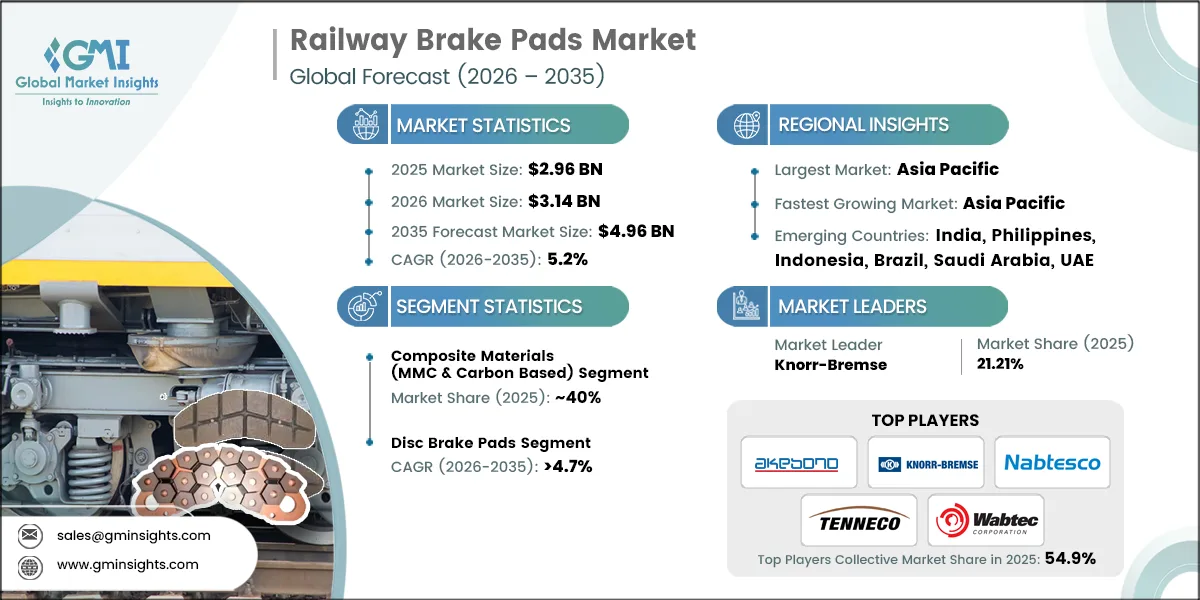
Railway Brake Pads Market Key Takeaways
Market Size & Growth
- 2025 Market Size: USD 2.96 Million
- 2026 Market Size: USD 3.14 Billion
- 2035 Forecast Market Size: USD 4.96 Billion
- CAGR (2026–2035): 5.2%
Regional Dominance
- Largest Market: Asia Pacific
- Fastest Growing Region: Asia Pacific
Key Market Drivers
- Rise in global passenger and freight rail traffic volumes.
- Increase in railway safety and braking performance regulations.
- Surge in high-speed rail and urban transit projects.
- Rise in adoption of preventive and condition-based maintenance.
Challenges
- Long Replacement Cycles in Low-Utilization Rail Networks.
- Price Sensitivity and Cost-Driven Procurement Practices.
Opportunity
- Rise in demand for low-noise and low-emission brake pad materials.
- Surge in rail infrastructure investments in emerging economies.
- Increase in long-term maintenance and lifecycle service contracts.
- Rise in demand for high-durability brake pads for heavy-haul freight.
Key Players
- Market Leader: Knorr-Bremse led with over 21.21% market share in 2025.
- Leading Players: Top 5 players in this market include Akebono Brake Industry., Knorr-Bremse, Nabtesco, Tenneco, Wabtec, which collectively held a market share of 54.9% in 2025.
Get Market Insights & Growth Opportunities
To get key market trends
Railway Brake Pads Market Trends
Rail operators are increasingly replacing traditional cast-iron brake pads with composite and advanced friction materials to improve braking consistency, reduce wheel wear, and comply with tightening noise and environmental regulations. These materials offer better thermal stability and longer service life under high-speed and high-load conditions. The transition supports improved safety performance while lowering lifecycle maintenance costs across passenger, freight, and urban rail applications.
In September 2024, Keolis Lyon, in partnership with Wabtec, began testing eco-responsible ‘Green Friction’ brake pads that reduce particulate emissions by up to 90% without compromising braking efficiency, indicating rising adoption of environmentally friendly brake pad solutions.
Railway operators and rolling stock OEMs are increasingly standardizing brake pad specifications across multiple vehicle platforms to reduce part complexity and simplify maintenance operations. Standardization enables efficient inventory management, faster replacement cycles, and reduced training requirements for maintenance personnel. This trend also encourages suppliers to develop versatile brake pad solutions that meet diverse operational and regulatory requirements across regions.
Collaboration between rolling stock OEMs, braking system manufacturers, and brake pad suppliers is increasing to ensure optimized braking performance across specific rail platforms. Co-development initiatives allow brake pad formulations to be tailored to vehicle design, duty cycles, and regional regulations. These partnerships shorten development timelines, enhance safety validation, and support long-term supply agreements aligned with fleet lifecycle requirements.
Railway Brake Pads Market Analysis
Learn more about the key segments shaping this market
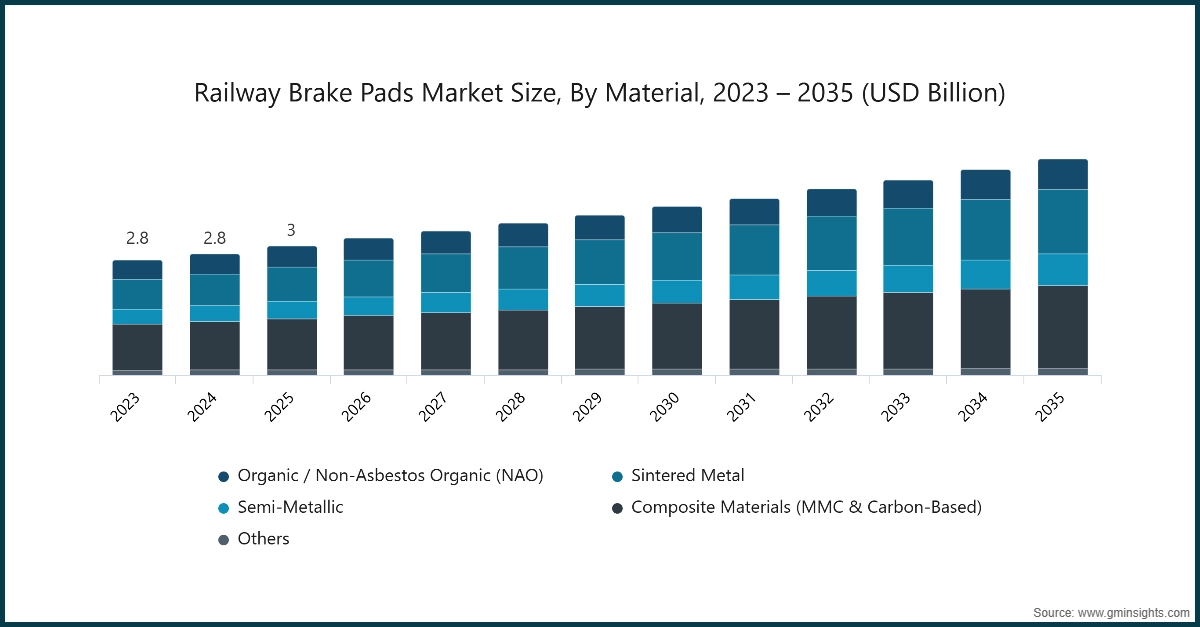
Based on material, the market is divided into organic / non-asbestos organic (NAO), sintered metal, semi-metallic, composite materials (mmc & carbon-based), and others. The composite materials (MMC & Carbon‑Based) segment accounted for around 40% share in 2025 and is expected to grow at a CAGR of more than 4.9% through 2035.
- The railway brake pads industry is largely dominated by composite materials (MMC & Carbon‑Based) due to their superior performance characteristics compared to traditional materials. These pads offer higher thermal resistance, lower wear rates, and better friction stability under heavy-duty and high-speed operations, making them ideal for modern passenger trains, metros, and freight locomotives. The ability of composites to operate efficiently at extreme temperatures reduces noise and minimizes brake dust also aligns with regulatory requirements and environmental standards, driving widespread adoption across developed and emerging rail networks.
- Furthermore, the shift toward advanced rolling stock and high-speed rail systems has increased demand for durable and reliable brake pads capable of handling frequent braking cycles and heavy loads. OEMs and rail operators are increasingly favoring composite brake pads to extend maintenance intervals, reduce operational costs, and improve overall train safety. These factors have established Composite Materials as the leading choice in the railway brake pads market.
- For example, in March 2025, Brembo launched a new carbon‑composite brake pad platform designed specifically for high‑speed rail and heavy‑duty freight applications, promising reduced wear and noise while meeting stringent emissions and performance standards, highlighting the increasing industry emphasis on composite material adoption in premium braking solutions.
- The sintered metal segment is expected to witness a CAGR of over 6.5% during the forecast period driven by its widespread use in heavy-duty freight locomotives, high-speed passenger trains, and industrial rail applications. Sintered metal brake pads are known for their superior thermal resistance, high friction stability, and durability under extreme load and temperature conditions, making them ideal for high-performance and high-wear applications. Their ability to maintain braking efficiency even under prolonged or continuous use ensures reliability and safety across demanding rail networks, which is particularly crucial in regions with high freight volumes and challenging operational conditions.
Learn more about the key segments shaping this market
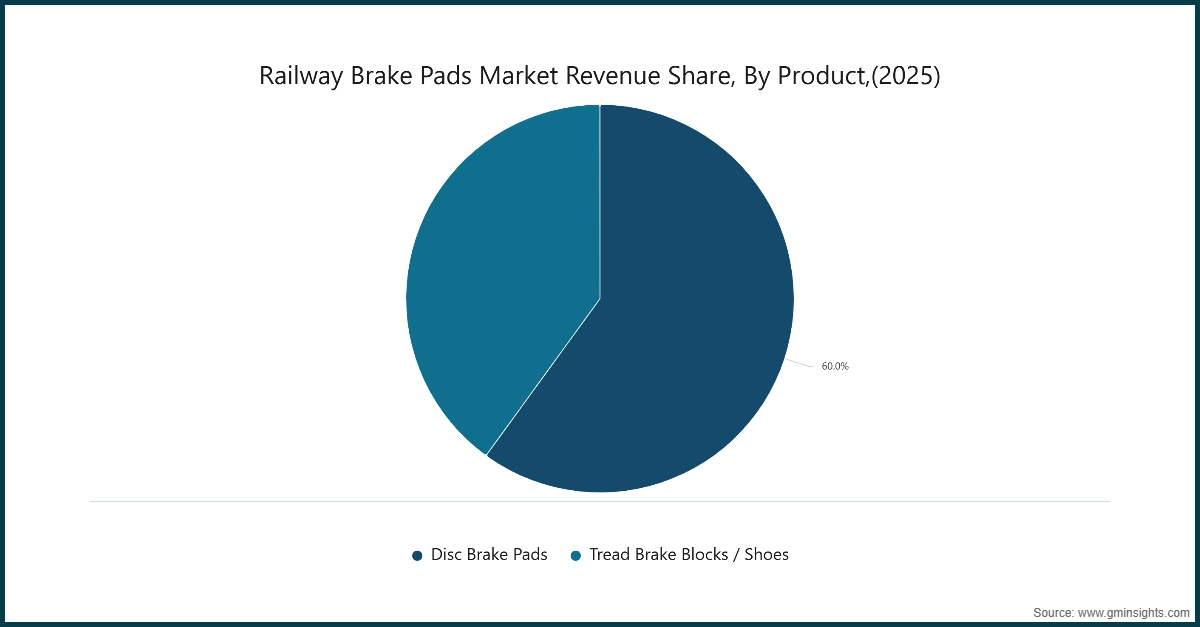
Based on product, the market is segmented into disc brake pads, and tread brake blocks / shoes. The disc brake pads segment dominates the market accounting for around 60% share in 2025, and the segment is expected to grow at a CAGR of over 4.7% from 2026-2035.
- The railway brake pads market is dominated by the disc brake pads segment due to their superior performance, reliability, and compatibility with modern rolling stock. Disc brake pads provide consistent and high braking efficiency, especially at high speeds, and are better suited for heavy passenger trains, metros, and freight locomotives. They offer advantages such as reduced noise, lower vibration, and precise braking control, which are increasingly critical in urban transit systems and high-speed rail corridors. The shift from traditional tread brake blocks to disc brake pads has accelerated as operators aim to improve safety, reduce maintenance costs, and enhance operational efficiency.
- Additionally, disc brake pads are preferred in new rolling stock introduced by OEMs and modernized fleets due to their longer service life and adaptability to advanced braking systems. Technological advancements, including composite and carbon-based friction materials, have further enhanced their durability, thermal stability, and performance under extreme conditions. The growing adoption of disc brake technology globally, combined with regulatory emphasis on safety, environmental compliance, and passenger comfort, reinforces its dominant position in the railway brake pads market.
- For example, in January 2024, MASU’s railway composite brake blocks and disc pads meeting UIC and AAR standards were acquired by Wabtec to expand its brakes portfolio, demonstrating sustained investment in disc brake pad technology to serve metro, regional, and high‑speed trains worldwide.
- The tread brake blocks / shoes segment is expected to experience faster growth of more than 5.9% over the forecast period driven by ongoing modernization and maintenance of legacy rail fleets, particularly in emerging economies and freight-dominated networks. While disc brakes dominate new and high-speed rolling stock, tread brake blocks remain widely used in older passenger, freight, and light rail systems due to their lower upfront cost and simpler design. Replacement cycles, fleet expansions, and refurbishment projects are fueling recurring demand for these components, especially in regions where large portions of the network still rely on traditional braking systems.
Based on train type, the market is divided into passenger trains, freight trains, metro / urban transit, light rail / trams, locomotives, and monorail. The freight trains segment held the major market share in 2025.
- The freight trains segment is the largest market segment in the railway brake pads market because freight operations involve heavy loads, long distances, and continuous braking cycles that place significant stress on brake components. Bulk commodity transportation, including coal, minerals, agricultural products, and industrial goods, requires high-performance and durable brake pads capable of withstanding extreme pressure, heat, and wear. The frequent start-stop cycles on congested rail corridors and steep gradients further increase brake pad consumption, making freight operations the primary driver of global demand.
- Freight operators are increasingly modernizing rolling stock and adopting preventive and predictive maintenance strategies, which result in recurring replacement of brake pads. Investments in long-haul freight corridors, particularly in North America, Europe, and Asia-Pacific, coupled with the expansion of industrial rail networks in emerging economies, reinforce the dominance of freight trains in the railway brake pads market. High operational intensity, safety requirements, and extended service life demands collectively ensure that freight trains remain the largest segment in brake pad consumption.
- For example, in January 2024, Union Pacific and Wabtec extended their long‑term agreement for digital freight braking systems and maintenance services, reflecting the high replacement frequency and continued focus on brake component performance in North America’s freight rail sector.
The metro / urban transit segment is expected to grow with a CAGR of more than 6.9% due to the rapid expansion of urban rail networks and metro systems in major cities worldwide. Rising urbanization, increasing population density, and government initiatives to reduce traffic congestion and pollution are driving investments in high-capacity metro and light rail transit systems. These systems require frequent stopping and starting, which leads to higher brake pad consumption and shorter replacement cycles, fueling demand for advanced, durable, and low noise braking solutions designed specifically for urban transit operations.
Based on sales channel, the market is divided into OEMs, and aftermarket.
- The OEMs segment dominates the railway brake pads market due to its direct integration into new rolling stock production and modernization projects. OEMs supply brake pads as part of complete braking systems during train assembly, ensuring optimal performance, safety, and regulatory compliance. OEM-supplied brake pads are preferred by operators for their guaranteed compatibility with vehicles, reduced installation issues, and adherence to international quality standards, which is critical for high-speed passenger trains, freight locomotives, and metro systems. The preference for OEM parts also stems from warranty considerations and long-term service agreements that tie brake component quality directly to rolling stock performance.
- The growth of global rail infrastructure, the launch of new high-speed corridors, and urban transit projects are driving demand for OEM-supplied braking solutions. OEMs often collaborate with key brake system suppliers to introduce advanced materials such as composite and sintered metal pads, improving durability, thermal resistance, and noise reduction. These factors ensure that OEM-supplied brake pads capture the largest market share, as rail operators prioritize reliability, safety, and long-term operational efficiency over aftermarket alternatives.
- For example, in October 2023, Alstom revealed that its new Coradia Stream trains for European operators would be equipped with factory‑integrated brake systems sourced through OEM agreements, reinforcing the preference for OEM brake pads in new rolling stock builds and fleet upgrades.
- The aftermarket segment is expected to grow with a CAGR of more than 6.1% due to the increasing age of global rail fleets and the need for regular maintenance, repair, and replacement of braking components. As rolling stock in mature markets such as North America, Europe, and parts of Asia-Pacific continues to operate beyond its initial service life, operators rely on aftermarket suppliers to provide cost-effective and compatible brake pads. The aftermarket offers flexibility for fleet operators to replace worn-out components without waiting for OEM supply cycles, which helps maintain safety and operational efficiency across passenger, freight, and urban transit networks.
Looking for region specific data?
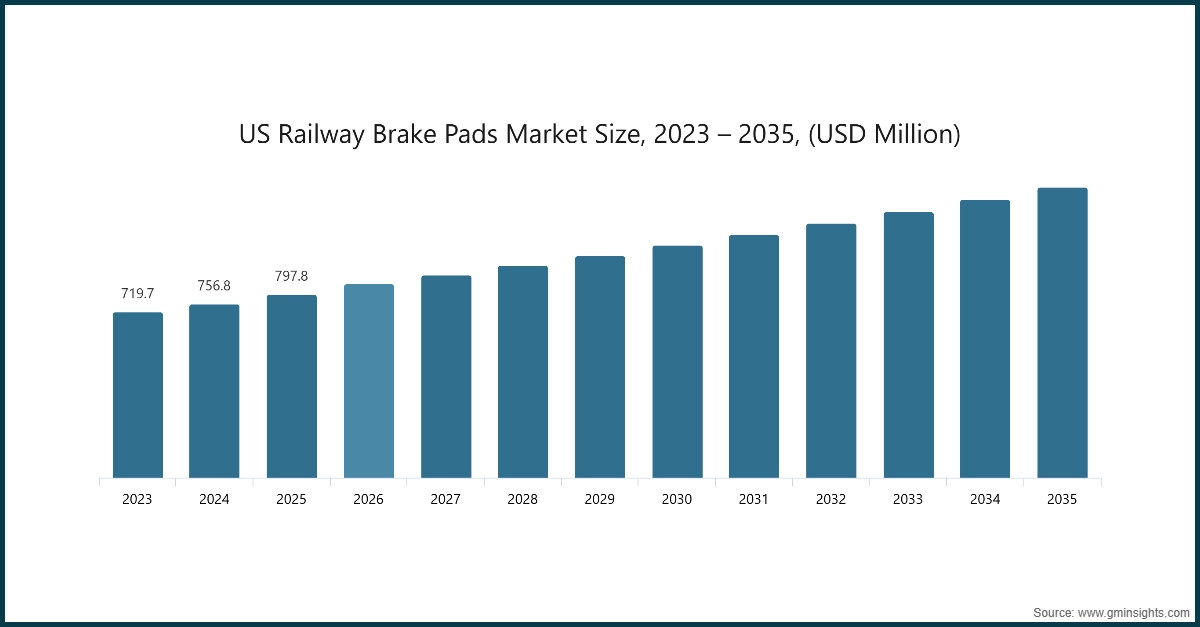
The railway brake pads market in US is expected to experience significant and promising growth from 2026 to 2035.
- North America accounts for over 32% of the railway brake pads industry share in 2025 and is expected to grow at a CAGR of around 4.9% due to the region’s extensive freight rail network and high utilization of rolling stock. The United States and Canada operate some of the world’s busiest freight corridors, where heavy axle loads and long-distance hauling accelerate brake wear, driving recurring demand for high-performance and durable brake pads. The replacement of aging fleets and ongoing investment in commuter rail and urban transit systems further contribute to the steady growth of brake pad consumption.
- The US is a strong railway brake pads market leader due to its vast and highly utilized freight rail network, which is among the largest in the world. Heavy axle loads, long-haul operations, and frequent braking cycles in freight corridors create significant wear on brake systems, driving consistent demand for high-performance brake pads. Additionally, the US has a mature passenger rail segment, including commuter and urban transit systems, where safety, reliability, and noise reduction are critical, further supporting the adoption of advanced friction materials and high-durability brake solutions.
- Furthermore, stringent safety and regulatory standards enforced by the Federal Railroad Administration (FRA) and industry-wide preventive maintenance initiatives promote the use of modern, certified brake pads. Continuous investment in fleet modernization, integration of condition-based monitoring, and partnerships between OEMs and brake pad suppliers enhance innovation, product quality, and operational efficiency, solidifying the US’s leadership position in the railway brake pads market.
- For instance, in May 2025, Brembo introduced a new carbon‑composite brake pad platform designed for high‑speed and freight rail applications that promise reduced wear and noise, signaling increased industry investment in next‑generation friction materials that are increasingly adopted in regulated markets such as North America and Europe.
- Canada is emerging with a strong CAGR of around 6.4% for railway brake pads market due to ongoing expansion and modernization of its freight and passenger rail networks. The country operates some of the most heavily utilized freight corridors in North America, including major transcontinental routes that require frequent braking and high-durability components. Increasing investments in commuter and urban transit systems, particularly in Ontario and Quebec, are also driving demand for advanced brake pads that can withstand heavy operational cycles and deliver consistent performance.
Germany dominated the railway brake pads industry in Europe with around 35% share and generated USD 244.4 million in revenue in 2025.
- The Germany market is experiencing robust growth due to the country’s strong focus on rail infrastructure modernization, high rail network density, and continuous investments in high-speed and regional passenger rail systems. Germany’s national rail operator, Deutsche Bahn, is actively upgrading rolling stock and expanding maintenance cycles to improve safety, reliability, and energy efficiency. These initiatives are increasing the recurring demand for high-performance brake pads that offer durability, noise reduction, and compliance with stringent European safety standards.
- Additionally, Germany’s emphasis on sustainability and environmental compliance is accelerating the adoption of advanced composite and low-emission brake pad materials. Strict regulations related to noise pollution and particulate emissions are pushing operators to replace conventional brake pads with eco-friendly alternatives. The presence of leading braking system manufacturers and material technology suppliers further strengthens innovation, local production, and rapid adoption of next-generation railway brake pad solutions.
- For instance, in April 2025, Knorr‑Bremse was selected to supply braking and coupling systems for more than 90 new Munich S‑Bahn suburban trains ordered by Siemens Mobility, demonstrating strong regional growth in brake system installations linked to urban rail expansion.
- UK is projected to grow at a significant CAGR for the railway brake pads market due to extensive investment in rail infrastructure modernization, including upgrades to high-speed lines, urban transit systems, and freight corridors. Programs such as HS2 and regional rail electrification projects are increasing the operational intensity of trains, driving higher demand for reliable and high-performance brake pads. The emphasis on reducing maintenance downtime and improving safety compliance is also boosting the adoption of advanced brake pad materials across passenger and freight rolling stock.
The China market is expected to experience significant and promising growth from 2026-2035.
- Asia Pacific accounts for over 39% of the railway brake pads market in 2025 and is expected to grow at a CAGR of around 6.5% between 2026 and 2035 owing to rapid expansion of rail infrastructure and increasing freight and passenger traffic across the region. Countries such as China, India, Japan, and South Korea are investing heavily in high-speed rail, metro networks, and urban transit projects. The region’s densely populated cities and high-density freight corridors result in frequent braking cycles, driving substantial demand for durable, high-performance brake pads that meet operational and safety requirements.
- China is the market leader in the railway brake pads segment due to its massive investment in high-speed rail, metro systems, and freight corridors, which together form the world’s largest and most heavily utilized rail network. The country’s rapid urbanization, growing population density, and expanding industrial freight demand result in high train operational intensity, leading to frequent braking cycles and elevated wear on brake components. This drives consistent demand for high-performance, durable brake pads capable of withstanding heavy loads and extreme operating conditions across passenger and freight trains.
- Furthermore, China’s focus on advanced manufacturing, technological innovation, and compliance with stringent safety and environmental regulations supports the adoption of composite and low-emission brake pads. Partnerships between OEMs and local suppliers enable development of customized, region-specific solutions that improve braking efficiency, reduce maintenance downtime, and extend service life. These factors collectively position China as the global leader in railway brake pad consumption and technological adoption.
- For instance, in in May 2025, Knorr‑Bremse announced it secured new contracts from CRRC the world’s largest rail vehicle manufacturer to equip more than 1,000 metro railcars for major Chinese cities with complete braking systems, underscoring China’s dominant rail market and strong demand for brake components including brake pads.
- India is becoming one of the fastest-growing markets in the railway brake pads sector due to rapid expansion of its rail network, modernization of passenger and freight corridors, and growing urban transit projects. With initiatives like the Dedicated Freight Corridor (DFC), high-speed rail projects, and metro expansions across major cities, trains operate at higher speeds and frequencies, increasing brake wear and driving consistent demand for high-performance, durable brake pads. The push for increased safety, efficiency, and reliability across the Indian Railways network further supports market growth.
The Brazil market is expected to experience significant and promising growth from 2026 to 2035.
- Latin America holds around 3% of the railway brake pads market in 2025 and is growing steadily at a CAGR of around 1.2% between 2026 and 2035 due to ongoing expansion and modernization of freight and passenger rail networks across the region. Countries such as Brazil, Mexico, and Argentina are investing in high-density freight corridors to support industrial and agricultural exports, while urban rail and metro projects are also increasing in major cities. The growing operational intensity of trains in these networks is driving demand for high-performance, durable brake pads capable of withstanding frequent braking cycles and heavy loads.
- Brazil dominates the railway brake pads market in Latin America due to its extensive freight rail network, which is one of the largest in the region and primarily supports the transportation of bulk commodities such as iron ore, soybeans, and agricultural products. The heavy freight traffic and long-distance hauling result in frequent braking cycles and accelerated wear of brake components, driving strong demand for high-performance and durable brake pads. Additionally, Brazil’s investments in modernizing existing rail lines and expanding urban transit systems in cities like São Paulo and Rio de Janeiro are further boosting consumption of advanced braking solutions.
- Brazilian rail operators are increasingly adopting preventive maintenance and fleet modernization programs to enhance operational safety and reduce downtime. Local manufacturing and collaborations with international OEMs are facilitating the supply of high-quality, composite, and low-noise brake pad materials. These factors, combined with stringent safety and environmental regulations, position Brazil as the leading market for railway brake pads within Latin America.
- The railway brake pads market in Mexico is experiencing high growth due to ongoing investments in freight and passenger rail infrastructure, aimed at enhancing the efficiency and capacity of the country’s rail network. Mexico is a key freight corridor for North America, with heavy industrial and agricultural transportation requiring reliable braking systems. Expansion of urban transit systems in cities such as Mexico City, Monterrey, and Guadalajara is also driving demand for high-performance brake pads capable of handling frequent stop-and-go operations while ensuring passenger safety and comfort.
The UAE imarket s expected to experience significant and promising growth from 2026-2035.
- MEA holds around 2% of the railway brake pads market in 2025 and is growing steadily at a CAGR of around 2% between 2026 and 2035 due to increasing investments in rail infrastructure development, particularly in high-capacity freight corridors and urban metro networks. Countries such as Saudi Arabia, UAE, and South Africa are modernizing existing rail lines and launching new commuter and cargo routes, resulting in higher operational intensity and frequent braking cycles that drive demand for durable, high-performance brake pads.
- The UAE dominates the MEA railway brake pads market due to substantial investments in high-speed rail, metro, and freight corridors aimed at enhancing national connectivity and logistics efficiency. Projects such as the Etihad Rail network and urban metro expansions in Dubai and Abu Dhabi are increasing train operational intensity, leading to higher brake wear and driving demand for durable, high-performance brake pads. The country’s focus on modernizing fleets and adopting advanced rolling stock technologies further supports the adoption of sophisticated braking solutions that ensure safety, reliability, and compliance with international standards.
- Additionally, the UAE government is promoting sustainable transport initiatives, encouraging the use of low-noise, low-emission composite brake pads. Partnerships between international OEMs and local suppliers have strengthened technological capabilities, enabling region-specific solutions and efficient maintenance programs. These factors position the UAE as the leading market for railway brake pads within the MEA region, driving steady growth and innovation.
- Saudi Arabia is expected to grow at the fastest CAGR in the MEA railway brake pads market due to large-scale investments in high-speed rail, freight corridors, and metro networks under national initiatives like the Saudi Railway Master Plan. The expansion of industrial and cargo rail lines, particularly for transporting minerals, oil, and other bulk goods, is increasing operational intensity and frequent braking cycles, driving strong demand for high-performance, durable brake pads capable of withstanding heavy loads and extreme climatic conditions.
Railway Brake Pads Market Share
- The top 7 companies in the railway brake pads industry are Knorr-Bremse, Wabtec, Akebono Brake Industry, Nabtesco Corporation, Tenneco, Miba, and SGL Carbon contributed around 62.2% of the market in 2025.
- Knorr-Bremse focuses on deepening OEM integration by supplying brake pads as part of complete braking systems for new rolling stock and fleet upgrades. The company prioritizes advanced composite and low-noise materials to meet environmental and safety regulations. It also strengthens aftermarket recurring revenues through long-term service contracts, digital diagnostics, and lifecycle management solutions across freight, passenger, and metro rail.
- Wabtec’s strategy centers on dominance in freight rail and long-term service agreements that lock in brake pad replacement demand. The company integrates brake pads into system-level offerings, emphasizing durability and thermal performance for heavy-haul operations. It leverages predictive maintenance, digital monitoring, and large installed base advantages to expand aftermarket penetration while maintaining strong OEM partnerships for new locomotives.
- Akebono emphasizes high-performance friction material innovation, targeting low wear, low noise, and consistent braking performance. Its strategy prioritizes high-speed rail, metro, and premium passenger segments where quality and compliance are critical. The company leverages precision manufacturing, strong Asian OEM relationships, and selective global expansion to position its brake pads as premium, safety-focused components.
- Nabtesco focuses on integrated braking and control solutions, positioning brake pads as part of technologically advanced railway systems. The company prioritizes reliability, safety certification, and compatibility with sophisticated train control architectures. Its strategy includes strengthening domestic leadership in Japan while expanding international OEM collaborations, particularly in urban transit and automated rail systems requiring high-precision braking components.
- Tenneco’s railway brake pad strategy leverages its global friction materials expertise and cost-efficient manufacturing footprint. The company targets both OEM and aftermarket channels by offering durable, standardized brake pads that meet regulatory requirements while controlling lifecycle costs. It emphasizes volume manufacturing, regional supply flexibility, and cross-industry material know-how to maintain competitiveness in price-sensitive rail markets.
- Miba focuses on advanced sintered and composite friction materials engineered for high thermal loads and extended service life. Its strategy targets freight rail, locomotives, and heavy-duty applications where durability is critical. The company positions itself as a technology partner to OEMs, investing in material science, customized solutions, and long-term supply agreements rather than mass-market commoditization.
- SGL Carbon’s strategy centers on carbon-based and high-performance composite materials for demanding railway braking applications. The company targets premium segments such as high-speed rail and urban transit where weight reduction, thermal stability, and low wear are prioritized. It leverages deep materials expertise, sustainability positioning, and niche specialization rather than competing on high-volume conventional brake pads.
Railway Brake Pads Market Companies
Major players operating in the Railway brake pads industry are:
- Akebono Brake Industry
- Alstom
- Hitachi Rail
- Knorr-Bremse
- Miba
- Nabtesco
- SGL Carbon
- Siemens
- Tenneco
- Wabtec
- Global railway brake pads providers are increasingly adopting advanced material engineering platforms, digital performance modeling tools, and condition-based monitoring frameworks to enhance braking efficiency, durability, and safety compliance. Simulation-driven material testing and virtual braking performance analysis allow manufacturers to validate friction behavior, thermal stability, wear patterns, and noise emissions across diverse operating conditions before physical deployment. These digital engineering approaches enable suppliers to optimize brake pad formulations for freight, passenger, and metro applications while reducing development cycles, minimizing costly field failures, and ensuring compliance with evolving rail safety and environmental standards.
- Strategic collaborations between rolling stock OEMs, brake system suppliers, material science specialists, and rail operators are reshaping the railway brake pads ecosystem. These partnerships support co-development of next-generation composite and sintered brake pads that are tailored to specific train platforms, duty cycles, and regional regulations. Integrated development programs reduce compatibility risks, improve lifecycle performance, and streamline certification processes. Such collaborative ecosystems are accelerating the transition toward high-performance, low-noise, and low-emission braking solutions, while supporting predictive maintenance models and long-term service agreements that strengthen aftermarket revenues and operational reliability across global rail networks.
Railway Brake Pads Market Report Attributes
| Key Takeaway | Details |
|---|---|
| Market Size & Growth | |
| Base Year | 2025 |
| Market Size in 2025 | USD 2.96 Million |
| Market Size in 2026 | USD 3.14 Billion |
| Forecast Period 2026-2035 CAGR | 5.2% |
| Market Size in 2035 | USD 4.96 Billion |
| Key Market Trends | |
| Drivers | Impact |
| Rise in global passenger and freight rail traffic volumes | Increasing reliance on rail for passenger mobility and bulk freight transportation is raising train utilization and braking frequency. Higher traffic density and longer operating hours accelerate brake pad wear, resulting in more frequent replacements and sustained demand across passenger coaches and freight wagons. |
| Increase in railway safety and braking performance regulations | Regulatory authorities worldwide are tightening safety standards related to braking efficiency, stopping distance, and system reliability. These regulations compel rail operators to adopt certified, high-performance brake pads, increasing demand for advanced friction materials and ensuring consistent replacement cycles. |
| Surge in high-speed rail and urban transit projects | The expansion of high-speed rail, metro, and light rail systems increases the need for brake pads capable of handling higher speeds, frequent stops, and intense thermal loads. Such applications typically require premium brake pad solutions with higher unit values and shorter replacement intervals. |
| Rise in adoption of preventive and condition-based maintenance | Rail operators are shifting from reactive to planned maintenance strategies using inspections and performance monitoring. This approach improves safety and fleet availability while increasing predictable brake pad replacements, thereby supporting steady and recurring market demand. |
| Pitfalls & Challenges | Impact |
| Long Replacement Cycles in Low-Utilization Rail Networks | In low-traffic or underutilized rail networks, brake pads experience slower wear rates, extending replacement cycles. This reduces annual consumption volumes and limits market growth, particularly in regions with limited passenger or freight rail activity. |
| Price Sensitivity and Cost-Driven Procurement Practices | Many rail operators prioritize upfront cost reduction over lifecycle performance, especially in developing markets. This pricing pressure restricts the adoption of advanced brake pad materials and compresses supplier margins, slowing innovation-driven market expansion. |
| Opportunities: | Impact |
| Rise in demand for low-noise and low-emission brake pad materials | Growing environmental awareness and urban noise regulations are driving demand for brake pads that reduce noise and particulate emissions. Suppliers offering eco-friendly and low-noise solutions have significant opportunities in metro, passenger rail, and regulated markets. |
| Surge in rail infrastructure investments in emerging economies | Large-scale investments in rail networks, metros, and freight corridors across Asia-Pacific and other emerging regions are expanding rolling stock fleets. This growth directly increases the installed base requiring brake pads, creating long-term demand opportunities. |
| Increase in long-term maintenance and lifecycle service contracts | Rail operators are increasingly adopting multi-year maintenance agreements to control costs and ensure reliability. These contracts provide brake pad suppliers with predictable demand, recurring revenues, and opportunities to strengthen long-term customer relationships. |
| Rise in demand for high-durability brake pads for heavy-haul freight | Increasing axle loads, longer train lengths, and demanding operating conditions in freight rail are driving demand for brake pads with superior durability and thermal resistance, creating opportunities for specialized and higher-margin products. |
| Market Leaders (2025) | |
| Market Leader |
21.21 % market share |
| Top Players |
Collective Market Share in 2025 is 54.9% |
| Competitive Edge |
|
| Regional Insights | |
| Largest Market | Asia Pacific |
| Fastest growing market | Asia Pacific |
| Emerging countries | India, Philippines, Indonesia, Brazil, Saudi Arabia, UAE |
| Future outlook |
|
What are the growth opportunities in this market?
Railway Brake Pads Industry News
- In December 2025, China State Railway Group announced the expansion of its high-speed rail network beyond 50,000 km, with 2,862 km of new HSR lines commissioned in 2025 and a long-term target of nearly 60,000 km by 2030, reinforcing sustained demand for high-performance brake pads designed for sustained operations at 250–450 km/h.
- In November 2025, the European Commission launched a comprehensive initiative to accelerate high-speed rail development across the EU, targeting a faster, interoperable rail network by 2040, alongside the 2026 Europe’s Rail research call supporting next generation rolling stock and braking technologies.
- In November 2025, the Railway Supply Institute (RSI) restructured its Quality Assurance Committee (QAC) to emphasize innovation, component reliability, and failure prevention, including greater use of advanced inspection and testing methods for critical components such as braking systems.
- In October 2025, the International Union of Railways (UIC) reported that global rail passenger traffic surpassed pre-pandemic levels, registering 7% growth in 2024, with Asian railways led by China and India accounting for more than 2.6 trillion passenger-kilometers, increasing operational wear on brake components.
- In September 2025, the World Bank highlighted an active global railway investment portfolio of approximately USD 4.5 billion, spanning 15 projects, with expectations to exceed USD 6 billion within five years, supporting rail infrastructure upgrades and rolling stock component demand.
- In August 2025, the Government of India announced a ₹10–12 lakh crore railway modernization program over five years, covering high-speed rail, dedicated freight corridors, and electrification, directly supporting brake pad demand across OEM and aftermarket channels.
The railway brake pads market research report includes in-depth coverage of the industry with estimates & forecasts in terms of revenue ($Bn), Shipment (units) from 2022 to 2035, for the following segments:
Market, By Material
- Organic / Non-Asbestos Organic (NAO)
- Sintered Metal
- Semi-Metallic
- Composite Materials (MMC & Carbon-Based)
- Others
Market, By Product
- Disc Brake Pads
- Tread Brake Blocks / Shoes
Market, By Train Type
- Passenger Trains
- Freight Trains
- Metro / Urban Transit
- Light Rail / Trams
- Locomotives
- Monorail
Market, By Sales Channel
- OEMs
- Aftermarket
The above information is provided for the following regions and countries:
- North America
- US
- Canada
- Europe
- Germany
- UK
- France
- Italy
- Spain
- Russia
- Belgium
- Netherlands
- Sweden
- Asia Pacific
- China
- India
- Japan
- Australia
- South Korea
- Philippines
- Indonesia
- Singapore
- Latin America
- Brazil
- Mexico
- Argentina
- MEA
- South Africa
- Saudi Arabia
- UAE
Frequently Asked Question(FAQ) :
What is the market size of the railway brake pads in 2025?
The market size was USD 2.96 billion in 2025, with a CAGR of 5.2% expected through 2035, driven by rising rail traffic, stricter safety regulations, and growing adoption of condition-based maintenance frameworks.
What is the projected value of the railway brake pads industry by 2035?
The railway brake pads market is expected to reach USD 4.96 billion by 2035, propelled by advancements in composite friction materials, and rising demand for low-noise and low-emission braking solutions.
What is the current railway brake pads industry size in 2026?
The market size is projected to reach USD 3.14 billion in 2026.
What was the valuation of composite materials segment in 2025?
Composite materials (MMC & Carbon-Based) dominated with approximately 40% share in 2025, growing at a CAGR of over 4.9% through 2035, driven by superior thermal resistance, lower wear rates, and compliance with environmental and safety standards.
What is its growth outlook for disc brake pads segment from 2026 to 2035?
Disc brake pads dominate with approximately 60% share in 2025, expected to grow at a CAGR of over 4.7% through 2035, driven by superior high-speed braking efficiency.
Which country leads railway brake pads?
Asia Pacific leads with over 39% share in 2025, expected to grow at a CAGR of around 6.5% through 2035, driven by rapid rail expansion in China and India and large-scale metro and freight corridor investments.
What are the key trends shaping the railway brake pads market?
Key trends include replacement of cast-iron pads with composite materials, growing OEM co-development partnerships, rising adoption of eco-friendly green friction solutions, and expanding condition-based maintenance programs for lifecycle management.
Who are the key players in the railway brake pads market?
Key players include Akebono Brake Industry, Alstom, Hitachi Rail, Knorr-Bremse, Miba, Nabtesco, SGL Carbon, Siemens, Tenneco, and Wabtec.
Railway Brake Pads Market Scope
Related Reports