Summary
Table of Content

Precision Diagnostics and Medicine Market
Get a free sample of this report
Form submitted successfully!
Error submitting form. Please try again.
Thank you!
Your inquiry has been received. Our team will reach out to you with the required details via email. To ensure that you don't miss their response, kindly remember to check your spam folder as well!
Request Sectional Data
Thank you!
Your inquiry has been received. Our team will reach out to you with the required details via email. To ensure that you don't miss their response, kindly remember to check your spam folder as well!
Form submitted successfully!
Error submitting form. Please try again.
Precision Diagnostics and Medicine Market Size
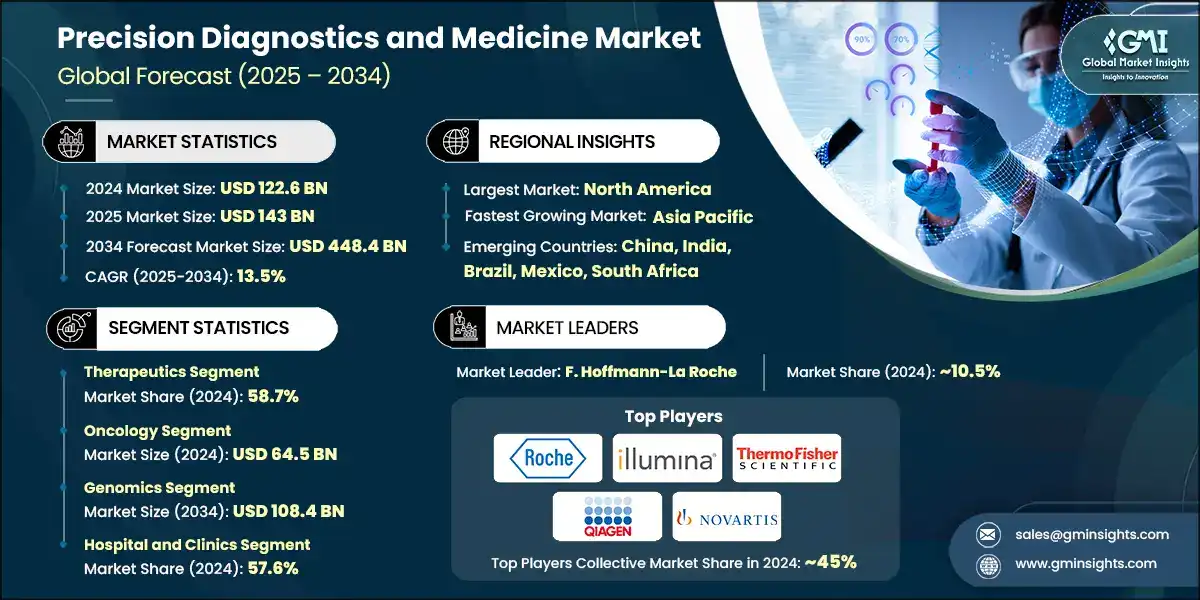
The global precision diagnostics and medicine market size was valued at USD 122.6 billion in 2024. The market is expected to grow from USD 143 billion in 2025 to USD 448.4 billion in 2034, at a CAGR of 13.5% during the forecast period, according to the latest report published by Global Market Insights Inc.
Precision Diagnostics and Medicine Market Key Takeaways
Market Size & Growth
- 2024 Market Size: USD 122.6 Billion
- 2025 Market Size: USD 143 Billion
- 2034 Forecast Market Size: USD 448.4 Billion
- CAGR (2025–2034): 13.5%
Regional Dominance
- Largest Market: North America
- Fastest Growing Region: Asia Pacific
Key Market Drivers
- Advancements in genomics and biotechnology.
- Rising prevalence of chronic and genetic diseases.
- Increasing government initiatives and funding.
- Increased adoption of companion diagnostics.
Challenges
- High cost of personalized therapies and diagnostics.
- Limited reimbursement policies.
- Complex regulatory pathways.
Opportunity
- Rapid expansion into non-oncology fields.
- Growth in emerging markets.
Key Players
- Market Leader: F. Hoffmann-La Roche led with over 10.5% market share in 2024.
- Leading Players: Top 5 players in this market include F. Hoffmann-La Roche, Illumina, Thermo Fisher Scientific, QIAGEN, Novartis, which collectively held a market share of 45% in 2024.
Get Market Insights & Growth Opportunities
One of the primary drivers is the increasing prevalence of chronic diseases, such as cancer, cardiovascular diseases, and diabetes. For instance, as per the WHO, about 1 in 5 people develop cancer in their lifetime, and approximately 1 in 9 men and 1 in 12 women die from the disease. Similarly, in 2023, 919,032 people died from cardiovascular diseases. These conditions require tailored treatments, and precision medicine offers personalized approaches based on individual genetic, environmental, and lifestyle factors. Thus, the growing incidence of these chronic diseases is anticipated to drive market growth.
Precision diagnostics and medicine is a medical approach that tailors disease prevention, diagnostics, and treatment to individual patients based on unique genetic, environmental, and lifestyle characteristics. Key players driving market growth include pharmaceutical and biotechnology companies such as Roche, Pfizer, and Novartis, which are developing targeted therapies, as well as diagnostic firms such as Illumina, Thermo Fisher Scientific, and Qiagen, which provide advanced genomic testing and companion diagnostics. These companies play critical roles in innovation, regulatory advancement, and large-scale data integration, collectively accelerating the adoption and expansion of precision diagnostics and medicine globally.
Between 2021 and 2023, the precision diagnostics and medicine market experienced significant growth, driven by advancements in genomics, artificial intelligence (AI), and increased healthcare investments. In 2021, the market was valued at approximately USD 78.4 billion and reached USD 105 billion in 2023, growing at a compound annual growth rate (CAGR) of 15.8%. This growth was fueled by the rising prevalence of chronic diseases, coupled with the rapid rise in the aging global population. Furthermore, technological innovations, including high-throughput sequencing and AI-driven analytics, enhanced the development of targeted therapies and companion diagnostics. These factors contributed to the robust growth and evolution of the market during this period.
Precision medicine is an approach to healthcare that takes into account individual differences in genes, environment, and lifestyle when designing medical treatment plans and interventions. Rather than applying a one-size-fits-all approach, precision medicine aims to tailor medical decisions and treatments to the specific characteristics of each patient.
To get key market trends
Precision Diagnostics and Medicine Market Trends
- One of the key trends in the precision diagnostics and medicine industry is the combination of multi-omics data, that is, combining genomics, proteomics, metabolomics, and transcriptomics to gain an understanding of the various disease processes. This allows researchers and clinicians to identify novel biomarkers and therapeutic targets and improve diagnoses, and tailor treatments more effectively.
- With rapid progress in multi-omics technologies, along with lowering costs and easy accessibility, their adoption is expected to accelerate across research and clinical settings.
- In addition, rapid growth in the discovery and regulatory approvals of targeted drugs, including gene therapies, immunotherapies, and personalized biologics, is driving the market growth. For instance, the number of personalized medicines on the market grew significantly, increasing from 132 to 286 between 2016 and 2020.
- Additionally, personalized medicines accounted for 25% of the new drugs approved by the FDA in 2019, a substantial increase from 5% in 2005.
- Further, in 2023, the U.S. FDA approved 26 new personalized treatments, a figure that includes 16 new personalized treatments for rare diseases and 7 for cancer, with the remaining 3 for other conditions.
- Increased understanding of disease biology, as well as advancements in drug development, is accelerating the pipeline of new drugs. Regulatory authorities are also shifting policies to facilitate faster approvals without compromising safety. As a result, precision medicines are becoming increasingly available globally, enabling more patients to receive customized treatment.
- Further, although precision diagnostics and medicine initially gained momentum in oncology, applications are now expanding to other therapy fields such as cardiology, neurology, and orphan genetic diseases. Development of targeted therapy and companion diagnostics in these new therapeutic areas is opening new market opportunities and addressing unmet clinical demands.
Precision Diagnostics and Medicine Market Analysis
Learn more about the key segments shaping this market
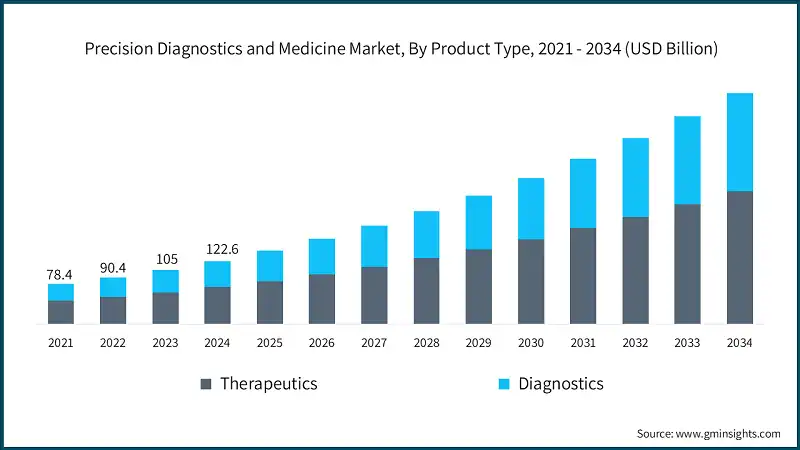
The global market was valued at USD 78.4 billion and USD 90.4 billion in 2021 and 2022, respectively. The market size reached USD 122.6 billion in 2024, growing from USD 105 billion in 2023.
Based on the product type, the global market is divided into therapeutics and diagnostics. The therapeutics segment includes inhibitor drugs, monoclonal antibodies, cell and gene therapy, antiviral and anti-retroviral drugs, and other therapeutics. The therapeutics segment accounted for 58.7% of the market in 2024 and is anticipated to grow at a CAGR of 13.3% over the forecast years.
- The growing focus on developing targeted therapies tailored to individual patient characteristics has significantly contributed to the growth of this segment.
- Breakthroughs in gene therapy, immunotherapy, and cell-based treatments have transformed the management of complex illnesses such as cancer and rare genetic disorders. These cutting-edge therapies involve high development costs and premium pricing, which significantly contribute to the segment’s market share.
- Additionally, the increasing number of regulatory approvals for personalized therapies, along with rising preference among patients and healthcare providers, will continue to drive strong segment growth.
- Meanwhile, the diagnostics segment is projected to grow at a CAGR of 13.8% between 2025 and 2034. Rising demand for precision therapies, supportive regulatory policies, increased investments in genomic research, and the shift toward preventive healthcare are key factors fueling this growth.
Based on the indication, the precision diagnostics and medicine market is segmented into oncology, neurology, infectious diseases, immunology, rare and genetic disorders, cardiology, and other indications. The oncology segment dominated the market in 2024 with a revenue of USD 64.5 billion.
- Cancer remains one of the leading causes of morbidity and mortality worldwide, posing a substantial public health burden.
- According to the American Cancer Society 2024 statistics, lung cancer was the most commonly diagnosed cancer globally, with 2.5 million new cases (12.4% of all diagnoses). Female breast cancer ranked second with 2.3 million cases (11.6%), followed by colorectal cancer (1.9 million cases, 9.6%), prostate cancer (1.5 million cases, 7.3%), and stomach cancer (970,000 cases, 4.9%).
- The high and growing incidence of these cancers significantly contributes to the dominant market share of the oncology segment within the market.
- Meanwhile, the neurology segment accounted for the second-largest share at 15.2% in 2024, driven by rising cases of neurological disorders such as Alzheimer’s and Parkinson’s disease.
- Ongoing advances in genetic testing and biomarker discovery are facilitating earlier diagnosis and more tailored treatment options, further accelerating growth within this segment.
Based on technology, the precision diagnostics and medicine market is segmented into genomics, bioinformatics, big data analytics, biomarker detection, high-throughput screening, and other technologies. The genomics segment dominated the market and is anticipated to reach USD 108.4 billion by 2034. The biomarker detection segment, on the other hand, is anticipated to witness high growth at a CAGR of 14.7% over the analysis timeframe.
- Genomics aids in understanding a person's genetic differences that influence disease risk, progression, and response to therapies.
- Clinicians can identify particular mutations and tailor treatments more effectively, owing to the increasing use of genomic testing such as next-generation sequencing (NGS) and whole genome sequencing.
- Genomics also plays a fundamental role in drug development and companion diagnostics and is therefore an essential element in research and clinical applications.
Learn more about the key segments shaping this market
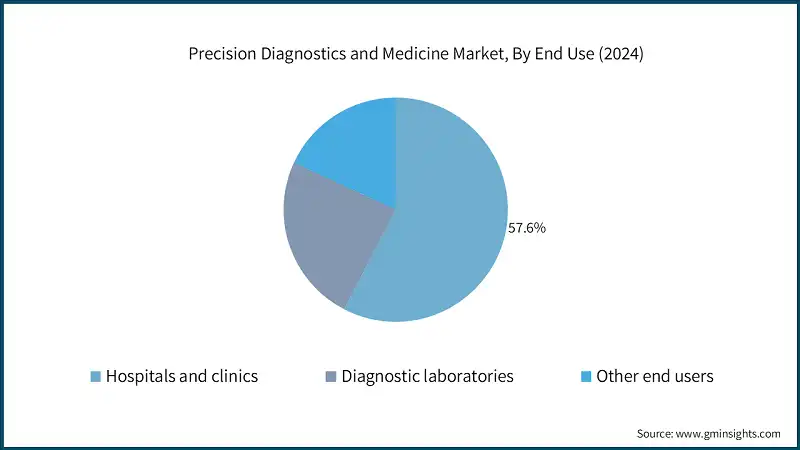
Based on the end use, the precision diagnostics and medicine market is classified into hospitals and clinics, diagnostic laboratories, and other end users. The hospital and clinics segment dominated the market in 2024 with a market share of 57.6%.
- Hospitals and clinics serve as the primary health institutions where tailored treatments and diagnostic tests are administered. Their growing deployment of advanced genomic testing, companion diagnostics, and targeted therapies allows for more specific patient care and improved outcomes.
- In addition, increasing awareness among healthcare professionals and the integration of precision medicine into routine clinical practice have driven demand.
- Further, growing infrastructure and investments in precision health within these institutions also support their dominant market share.
Looking for region specific data?
North America Precision Diagnostics and Medicine Market
The North America market dominated the global market with a market share of 43.5% in 2024.
- North America leads in the market with the largest share, due to having a well-established healthcare infrastructure and significant investment in research and development.
- The region has the benefit of leading biotechnology and pharmaceutical companies, advanced genomic sequencing technology, and strong regulatory support, facilitating faster approvals for precision therapeutics and diagnostics.
- Apart from increasing government interventions, widespread application of companion diagnostics, and high healthcare spending propel North America to the forefront in the advancement of personalized medicine.
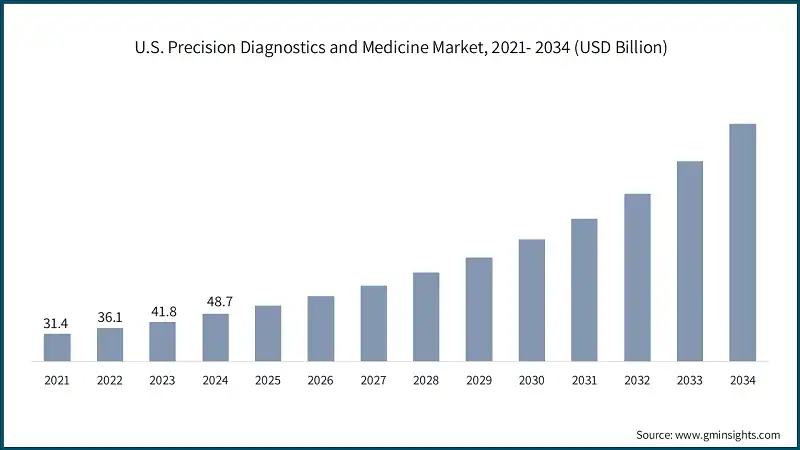
The U.S. precision diagnostics and medicine market was valued at USD 31.4 billion and USD 36.1 billion in 2021 and 2022, respectively. The market size reached USD 48.7 billion in 2024, growing from USD 41.8 billion in 2023.
- The U.S. holds a dominant position in the global market, largely due to its advanced healthcare infrastructure, substantial investment in biomedical research, and supportive government initiatives to support precision medicine.
- For instance, according to the National Institutes of Health (NIH), the All of Us Research Program has enrolled over 750,000 participants to date, aiming to gather genetic, health, and lifestyle data from at least one million individuals, making it one of the largest precision medicine initiatives worldwide.
- Additionally, the presence of leading research institutions and extensive clinical trial activities further accelerates the development and commercialization of new therapies, thereby driving market growth.
Europe Precision Diagnostics and Medicine Market
Europe market accounted for USD 30.4 billion in 2024 and is anticipated to show lucrative growth over the forecast period.
- Europe holds a significant share of the global market due to its strong healthcare system, increasing government support, and growing investment in biotechnology development.
- The region benefits from a collaborative ecosystem involving academic institutions, research organizations and pharmaceutical companies that accelerates the development and adoption of precision therapies.
Germany dominates the Europe precision diagnostics and medicine market, showcasing strong growth potential.
- Within Europe, Germany holds a substantial market share in the precision diagnostics and medicine sector, owing to its advanced medical research facilities, strong industrial base, and supportive government policies.
- The country’s focus on precision medicine and biotechnology has fostered a dynamic environment for developing and commercializing these therapies.
- Germany’s robust healthcare system and high patient access rates further support the uptake of innovative treatments.
Asia Pacific Precision Diagnostics and Medicine Market
The Asia Pacific market is anticipated to grow at the highest CAGR of 14.2% during the analysis timeframe.
- The Asia Pacific region is witnessing rapid expansion in the global market owing to increasing investment in healthcare, an escalating incidence of cancer and chronic diseases, and increased access to advanced medical technologies.
- Countries in the region are expanding their healthcare infrastructure and accelerating clinical research through government support and global collaborations.
- Additionally, the large patient pool, growing awareness about genetic and rare diseases, and the availability of local biotech firms are stirring up demand for new therapies.
China precision diagnostics and medicine market is estimated to grow with a significant CAGR, in the Asia Pacific market.
- China dominates the Asia Pacific market, fueled by favorable government policies and a strong local R&D and manufacturing landscape in the country.
- The Chinese government has prioritized genomics and advanced therapies as part of its national health and innovation agenda, providing substantial funding and regulatory reforms to encourage growth.
- With its strong manufacturing potential, expanding healthcare infrastructure, and rising domestic demand, China is at the forefront of precision diagnostics and medicine innovation in the Asia Pacific region.
Latin American Precision Diagnostics and Medicine Market
Brazil leads the Latin American market, exhibiting remarkable growth during the analysis period.
- Brazil is emerging as a key growth center in the Latin America market, owing to its expanding healthcare sector, increasing investment in biotechnology, and growing prevalence of chronic diseases.
- The country’s large population and improving access to advanced medical treatments are creating a strong demand for innovative therapies.
- In addition, supportive regulatory changes and the establishment of public-private partnerships are encouraging clinical research, further driving the market growth.
Middle East and Africa Precision Diagnostics and Medicine Market
South Africa market is expected to experience substantial growth in the Middle East and Africa market in 2024.
- South Africa is showing significant growth potential in the Middle East and Africa market due to its rapidly developing medical infrastructure and a rising focus on precision medicine.
- The country is home to several prominent research institutions and has a growing interest in addressing inherited and chronic diseases through innovative treatments.
- Increased collaboration with global biotech firms and the government's efforts to strengthen healthcare delivery are anticipated to drive market growth.
Precision Diagnostics and Medicine Market Share
The competitive landscape of the market is characterized by rapid innovation and collaboration among established pharmaceutical giants, emerging biotech startups, and academic institutions. Top players such as F. Hoffmann-La Roche, Illumina, Thermo Fisher Scientific, QIAGEN, and Novartis hold a combined market share of 40-50% in the global market. These players are continuously investing in research and development to expand their pipelines and enhance their product pipelines. The market also sees strategic partnerships, mergers, and acquisitions aimed at accelerating the commercialization of novel therapies and accessing new markets.
Additionally, smaller players and niche biotech firms contribute by focusing on specialized therapies and cutting-edge technologies. This dynamic environment fosters rapid technological advancements and competitive differentiation, driving the overall growth and diversification of the market.
Precision Diagnostics and Medicine Market Companies
Prominent players operating in the precision diagnostics and medicine industry are as mentioned below:
- Agilent Technologies
- Abbott
- AbbVie
- AstraZeneca
- bioMerieux
- Bristol-Myers Squibb Company
- Cepheid (Danaher Corporation)
- Eli Lilly & Company
- F. Hoffmann-La Roche
- GlaxoSmithKline
- Illumina
- Laboratory Corporation of America Holdings (Labcorp)
- Myriad Genetics
- Novartis
- Natera
- Pfizer
- Qiagen
- Quest Diagnostics
- Takeda Pharmaceutical Company Limited
- Thermo Fisher Scientific
- F. Hoffmann-La Roche
F. Hoffmann-La Roche is a key player in precision diagnostics and medicine, holding a substantial market share of ~ 10.5% in the global market. Due to its unique integration of pharmaceuticals and diagnostics, the company develops highly targeted therapies based on individual genetic profiles. This integrated approach allows for more accurate diagnosis and tailored treatment strategies, especially in cancer.
Thermo Fisher Scientific provides advanced platforms for genetic analysis, molecular diagnostics, and companion diagnostics development. The company supports healthcare and research institutions in identifying disease-specific biomarkers and tailoring treatments to individual patients. With a strong focus on next-generation sequencing and data-driven solutions, Thermo Fisher plays a critical role in enabling more targeted and effective therapies across a range of diseases.
Novartis is a key player in precision diagnostics and medicine, with a strong focus on developing targeted therapies based on genetic and molecular insights. The company integrates biomarker research into drug development to create more effective, personalized treatments, especially in oncology and rare diseases. The company’s working in radioligand therapy and gene-based treatments highlights its commitment to advancing personalized healthcare.
Precision Diagnostics and Medicine Market Report Attributes
| Key Takeaway | Details |
|---|---|
| Market Size & Growth | |
| Base Year | 2024 |
| Market Size in 2024 | USD 122.6 Billion |
| Market Size in 2025 | USD 143 Billion |
| Forecast Period 2025 - 2034 CAGR | 13.5% |
| Market Size in 2034 | USD 448.4 Billion |
| Key Market Trends | |
| Drivers | Impact |
| Advancements in genomics and biotechnology | Cutting-edge genomic sequencing and biotechnological innovations enable precise identification of disease markers, driving personalized treatment development. |
| Rising prevalence of chronic and genetic diseases | The increasing incidence of chronic conditions such as cancer, diabetes, and rare genetic disorders fuels the demand for tailored therapies. |
| Increasing government initiatives and funding | Governments worldwide are boosting investments and policies supporting precision medicine research and infrastructure. |
| Increased adoption of companion diagnostics | Companion diagnostics help match patients with optimal therapies, enhancing treatment efficacy and expanding precision medicine use. |
| Pitfalls & Challenges | Impact |
| High cost of personalized therapies and diagnostics | Expensive development and manufacturing of personalized therapies limit affordability and widespread access to precision medicine solutions. |
| Limited reimbursement policies | Lack of comprehensive insurance coverage restricts patient access and market growth. |
| Complex regulatory pathways | Lengthy and stringent approval processes delay product launches and increase development costs. |
| Opportunities: | Impact |
| Rapid expansion into non-oncology fields | Precision medicine is increasingly applied in cardiovascular, neurological, and rare disease areas, broadening market potential. |
| Growth in emerging markets | Rising healthcare infrastructure and awareness in developing regions will create new avenues for precision medicine adoption. |
| Market Leaders (2024) | |
| Market Leaders |
~10.5% market share |
| Top Players |
Collective market share in 2024 is Collective Market Share is ~45% |
| Competitive Edge |
|
| Regional Insights | |
| Largest Market | North America |
| Fastest growing market | Asia Pacific |
| Emerging countries | China, India, Brazil, Mexico, South Africa |
| Future outlook |
|
What are the growth opportunities in this market?
Precision Diagnostics and Medicine Industry News
- In January 2025, OMNY Health and Scipher Medicine entered into a partnership to advance precision medicine in autoimmune diseases. Under this partnership, Scipher Medicine will combine its clinico-transcriptomic data with OMNY Health’s vast electronic medical record (EMR) network to enhance treatment options and outcomes for millions of patients worldwide.
- In May 2024, Dragonfly Therapeutics, a biotechnology company focused on developing innovative immunotherapies, announced a clinical collaboration with Merck (known as MSD outside the U.S. and Canada). The integration of targeted therapies, such as DF9001 and KEYTRUDA, highlights the growing importance of precision medicine in oncology, offering highly personalized treatment approaches that are tailored to the genetic and molecular characteristics of individual tumors.
- In November 2023, Bristol-Myers Squibb Company announced the FDA approval of Augtyro (repotrectinib), a next-generation tyrosine kinase inhibitor (TKI), for the treatment of locally advanced or metastatic ros1-positive non-small cell lung cancer (NSCLC). This approval helped the company broaden its product portfolio and generate revenue.
- In January 2022, Pfizer announced the U.S. FDA approval of Cibinqo (abrocitinib) for adults with moderate-to-severe atopic dermatitis. This FDA approval helped the company commercialize a new drug and boost their revenue growth.
The precision diagnostics and medicine market research report includes in-depth coverage of the industry with estimates and forecast in terms of revenue in USD Million from 2021 – 2034 for the following segments:
Market, By Product Type
- Diagnostics
- Genetic tests
- Biomarker-based tests
- Esoteric tests
- Other diagnostic tests
- Therapeutics
- Inhibitor drugs
- Monoclonal antibodies
- Cell and gene therapy
- Antiviral and anti-retroviral drugs
- Other therapeutics
Market, By Indication
- Oncology
- Neurology
- Infectious diseases
- Immunology
- Rare and genetic disorders
- Cardiology
- Other indications
Market, By Technology
- Genomics
- Bioinformatics
- Big data analytics
- Biomarker detection
- High-throughput screening
- Other technologies
Market, By End Use
- Hospitals and clinics
- Diagnostic laboratories
- Other end use
The above information is provided for the following regions and countries:
- North America
- U.S.
- Canada
- Europe
- Germany
- UK
- France
- Spain
- Italy
- Netherlands
- Asia Pacific
- China
- India
- Japan
- Australia
- South Korea
- Latin America
- Brazil
- Mexico
- Argentina
- Middle East and Africa
- South Africa
- Saudi Arabia
- UAE
Frequently Asked Question(FAQ) :
What is the market size of the precision diagnostics and medicine market in 2024?
The market size was USD 122.6 billion in 2024, driven by advancements in genomics, biotechnology, and increasing prevalence of chronic and genetic diseases requiring personalized healthcare solutions.
What is the projected market value of the precision diagnostics and medicine industry by 2034?
The market is expected to reach USD 448.4 billion by 2034, growing at a CAGR of 13.5%, propelled by government funding, growing use of companion diagnostics, and expansion into non-oncology fields such as neurology and cardiology.
What is the estimated market size of the market in 2025?
The market is projected to reach USD 143 billion in 2025, supported by increasing adoption of targeted therapies, next-generation sequencing technologies, and the rise in healthcare digitization.
Which product type segment led the precision diagnostics and medicine market in 2024?
The therapeutics segment led the market with 58.7% share in 2024, driven by breakthroughs in gene therapy, immunotherapy, and monoclonal antibodies for cancer and rare diseases.
Which indication segment dominated the market in 2024?
The oncology segment dominated with USD 64.5 billion in revenue in 2024, due to the high incidence of cancer and increasing adoption of precision oncology for tailored treatment approaches.
Which technology segment accounted for the largest share in 2024?
The genomics segment held the largest market share in 2024 and is expected to reach USD 108.4 billion by 2034, fueled by growing use of genomic sequencing, bioinformatics, and biomarker discovery in personalized medicine.
Which end-use segment generated the highest revenue in 2024?
The hospitals and clinics segment dominated the market with 57.6% share in 2024, supported by increased deployment of genomic testing, companion diagnostics, and advanced infrastructure for precision health programs.
Which region leads the market?
North America led the global market with a 43.5% share in 2024, driven by strong healthcare infrastructure, major biotechnology companies, and significant investments in genomic research and development.
Which region is expected to be the fastest growing in the market?
The Asia Pacific region is projected to grow at a CAGR of 14.2% through 2034, driven by expanding healthcare access, rising awareness of genetic disorders, and government support for genomics and biotechnology innovation.
Who are the key players in the precision diagnostics and medicine market?
Key players include F. Hoffmann-La Roche, Illumina, Thermo Fisher Scientific, QIAGEN, Novartis, Pfizer, Abbott, AstraZeneca, Myriad Genetics, Takeda Pharmaceutical, Natera, Quest Diagnostics, and Labcorp.
What are the key trends shaping the precision diagnostics and medicine market?
Key trends include integration of multi-omics data (genomics, proteomics, metabolomics), growth in targeted therapies and immunotherapies, AI-driven predictive analytics, and expansion of precision medicine into cardiovascular, neurological, and rare disease applications.
Precision Diagnostics and Medicine Market Scope
Related Reports