Summary
Table of Content

Pre Analytical Automation Market
Get a free sample of this report
Form submitted successfully!
Error submitting form. Please try again.
Thank you!
Your inquiry has been received. Our team will reach out to you with the required details via email. To ensure that you don't miss their response, kindly remember to check your spam folder as well!
Request Sectional Data
Thank you!
Your inquiry has been received. Our team will reach out to you with the required details via email. To ensure that you don't miss their response, kindly remember to check your spam folder as well!
Form submitted successfully!
Error submitting form. Please try again.
Pre Analytical Automation Market Size
Increasing test volumes in clinical diagnostics, rising demand for laboratory automation, and growing investments in advanced instrumentation by clinical laboratories for faster turnaround time, are key factors driving the market growth.
There is an increasing need to reduce pre-analytical errors and reduce the overall turnaround time for analysis among the clinical laboratories globally. This is primarily driven by increasing awareness towards early diagnosis, rising prevalence of chronic and acute conditions, and increasing volume of tests ordered. Hence, to tackle the current and future workload, clinical laboratories are focusing on increasing digitalization and adoption of connected systems in their operational ecosystems, which is driving the demand for automation systems. Roche, SHIMADZU, Beckman Coulter, Thermo Fisher Scientific, and QIAGEN are among the leading players operating in the market. These players mainly focus on product innovation, geographic expansion, adoption of the latest technologies in devices, and collaboration with local or regional healthcare providers, aiming to establish a stronghold in the global pre-analytical automation market.
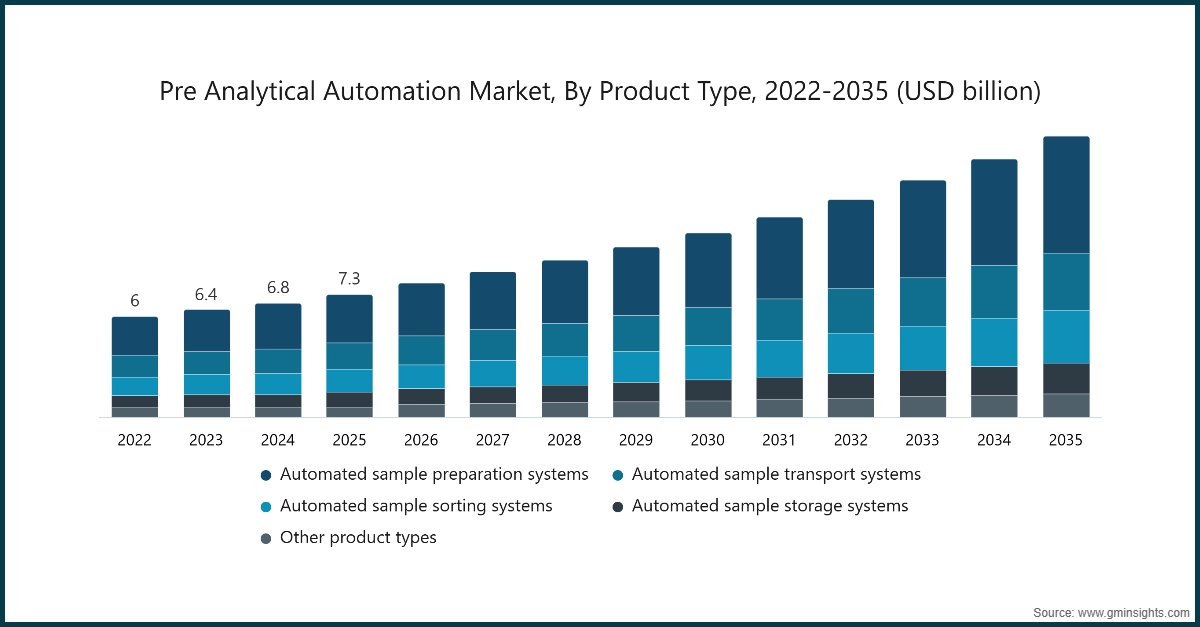
The market increased from USD 6 billion in 2022 and reached USD 6.8 billion in 2024, with the historical growth rate of 7%. The market growth is attributed to the rise in demand for automation systems within clinical laboratories with emphasis on reducing human errors, which are responsible for around 30% to 86% of all pre-analytical errors in laboratories. This is driving the shift of preference from manual workflows to automated laboratory systems in developed and emerging countries. Clinical, operational and economical benefits offered by automation systems such as increased process accuracy, decrease variability, and increase reproducibility among other repeated processes such as handling, preparing, and storing samples for laboratories, are some of the key factors boosting their demand in the global market. As the complexity of diagnostic testing continues to grow, the need for laboratory systems to maintain their quality as well as reduce the number of operator-dependent variances increases, thus creating a demand for automated platforms. By creating automated pre-analytical platforms, laboratories are transforming the clinical testing landscape.
Pre Analytical Automation Market Key Takeaways
Market Size & Growth
- 2025 Market Size: USD 7.3 Billion
- 2026 Market Size: USD 7.9 Billion
- 2035 Forecast Market Size: USD 16.6 Billion
- CAGR (2026–2035): 8.6%
Regional Dominance
- Largest Market: North America
- Fastest Growing Region: Asia Pacific
Key Market Drivers
- Rising demand for laboratory automation.
- Increasing test volumes in clinical diagnostics.
- Growing investments in clinical laboratories for faster turnaround times.
Challenges
- High capital and installation costs.
- Integration challenges with existing LIS systems.
Opportunity
- Expansion of automation in emerging markets.
Key Players
- Market Leader: Roche led with over 18% market share in 2025.
- Leading Players: Top 5 players in this market include Roche, Danaher, Thermo Fisher Scientific, QIAGEN, SHIMADZU, which collectively held a market share of 55% in 2025.
Get Market Insights & Growth Opportunities
Further, clinical laboratories are facing rapidly rising sample volumes due to expanded disease screening, chronic illness monitoring, and molecular testing. Laboratories that utilize high-throughput automation solutions such as the Roche pre-analytical systems have achieved operational benefits such as avoiding bottlenecks and delivering timely results to their customers even when testing volumes are high. Automated pre-analytical systems are enabling laboratories to combine multiple sample inputs into one single tube, automatically sort samples by urgency and other criteria, and accelerate testing efforts without increasing staffing levels compared to the rise in testing volume. Laboratories’ needs for faster and more error-resistant pre-analytical processing directly lead to growing acceptance of pre-analytical automation with a focus on maintaining precision and accuracy in their results and meeting customer service expectations.
Additionally, to speed up diagnostic throughput and provide the best possible care to patients, laboratories are making substantial investments in automated processes within their workflows. By streamlining sample preparation with a pre-analytical system, laboratories can reduce the number of manual tasks required to prepare samples for analytical processing as well as the overall time required to complete the tasks as compared to manual operations. Moreover, pre-analytical systems help laboratories standardize sample management processes, which are critical components in achieving rapid turnaround times. For example, Beckman Coulter’s automated solutions focus on providing consistent turnaround times and intelligent routing, thereby helping to eliminate process delays and create seamless workflows for laboratories.
Pre‑analytical automation refers to the automation of all processes that occur before a laboratory test is actually analyzed. These are the steps where most laboratory errors traditionally occur, so automating them improves accuracy, efficiency, and turnaround time.
The global pre-analytical automation market was valued at USD 7.3 billion in 2025. The market is expected to grow from USD 7.9 billion in 2026 to USD 16.6 billion in 2035, at a CAGR of 8.6% during the forecast period, according to the latest report published by Global Market Insights Inc.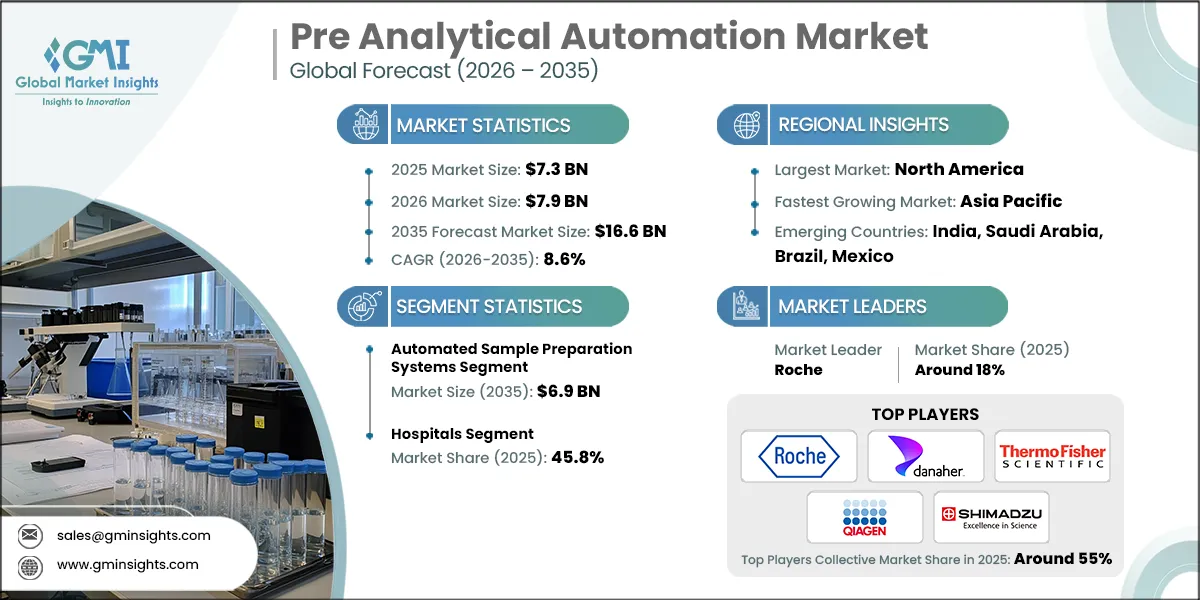
To get key market trends
Pre Analytical Automation Market Trends
Growing demand for high-throughput laboratory workflows, integration of AI, robotics, and intelligent routing, rising need to reduce human error in pre‑analytical processes, and increasing volume of diagnostic testing and sample diversity are among the key trends shaping the market growth.
- With the rise in diagnostic testing and complex laboratory workloads, there is an increasing pressure on laboratories to transition to automated systems that provide faster sample handling, sample sorting, and sample preparation. An increase in high-throughput automation eliminates bottlenecks, provides shorter turnaround times for samples, and allows laboratories to scale up without the same proportionate increase in workforce required.
- In addition to high-throughput automation, the use of artificial intelligence (AI), robotics, and intelligent sample routing systems is driving automation evolution. Enhanced speed, reduced manual steps, increased detection error rate, and streamlined workflow are the primary forces behind the trend toward integrated and fully automated solutions in both molecular and clinical laboratories.
- Further, human errors account for a considerable percentage of pre-analytic errors, with a reported range of around 30%-86% across all laboratory processes. Therefore, there is rapid adoption of automated technology to remove steps associated with human error, provide reproducibility, and improve capacity for high volumes of testing with a more reliable and consistent output.
- Moreover, the evolution of test techniques, and associated patient specimens and testing methods, are further driving the laboratories to adopt automated systems that can process large number of samples, and different types of samples and workflow combinations at the same time. Standardizing the pre-analytical sample process across multiple disciplines (tests that utilize the same procedure) has proven more efficient in providing consistent testing results, reducing the potential for cross-contamination of samples, and creating a consistent testing environment.
Pre Analytical Automation Market Analysis
Learn more about the key segments shaping this market
Based on product type, the global pre analytical automation market is segmented into automated sample preparation systems, automated sample transport systems, automated sample sorting systems, automated sample storage systems, and other product types. The automated sample preparation systems segment accounted for a leading share of 39.5% in 2025. Growing need for faster turnaround times is a key factor fueling the segmental growth. The segment is expected to reach USD 6.9 billion by 2035, growing at a CAGR of 9.1% during the forecast period.
- Automated sample preparation systems offer simplified workflow of the complex pre-analytical stages by performing essential functions like pipetting, diluting, mixing, extracting, purifying, and isolating nucleic acids automatically. This automation has enabled clinical laboratories to eliminate human error and decrease the manual efforts associated with preparing samples, making automated sample preparation systems integral for laboratories that have either high volume of tests or very complex workflows.
- In addition, features such as batch-processing of samples, automated preparation systems have minimized the time to result (TTR) and provide support for high-throughput testing processes, including next-generation sequencing (NGS), liquid chromatography-mass spectrometry (LC-MS), and clinical diagnostics.
- Automated sample preparation systems have also enabled consolidation of preparation protocol within the laboratory, leading to enhanced data quality, reduced risk of cross-contamination, and allowing personnel to focus their efforts on higher-value analyses.
- Lastly, automated sample preparation systems offer consistent precision, which provides an improved level of efficiency and reliability for future analyses.
- Further, the automated sample transport systems segment was valued at USD 1.5 billion in 2025. Automated sample transport systems move specimens rapidly and reliably across laboratory and hospital environments, replacing manual hand‑carrying methods. Solutions like Roche’s cobas 8100 use intelligent tube transport, enabling predictable turnaround times, STAT prioritization, multi‑level routing, and early error detection to maintain sample integrity.
- Pneumatic tube systems and robotic systems have further improved the ability to transport samples, reduced time delays, improved the ability to track samples through a chain of custody, and eliminated sample loss due to misplacement, mishandling, and delays in transportation.
- Moreover, long-distance automated transport systems have improved the ability to transport samples from a collection point to an analytical laboratory securely. Automated sample transport technology streamlines workflows, increases the ability to process samples at high rates, and significantly improves diagnostic efficiency.
Learn more about the key segments shaping this market
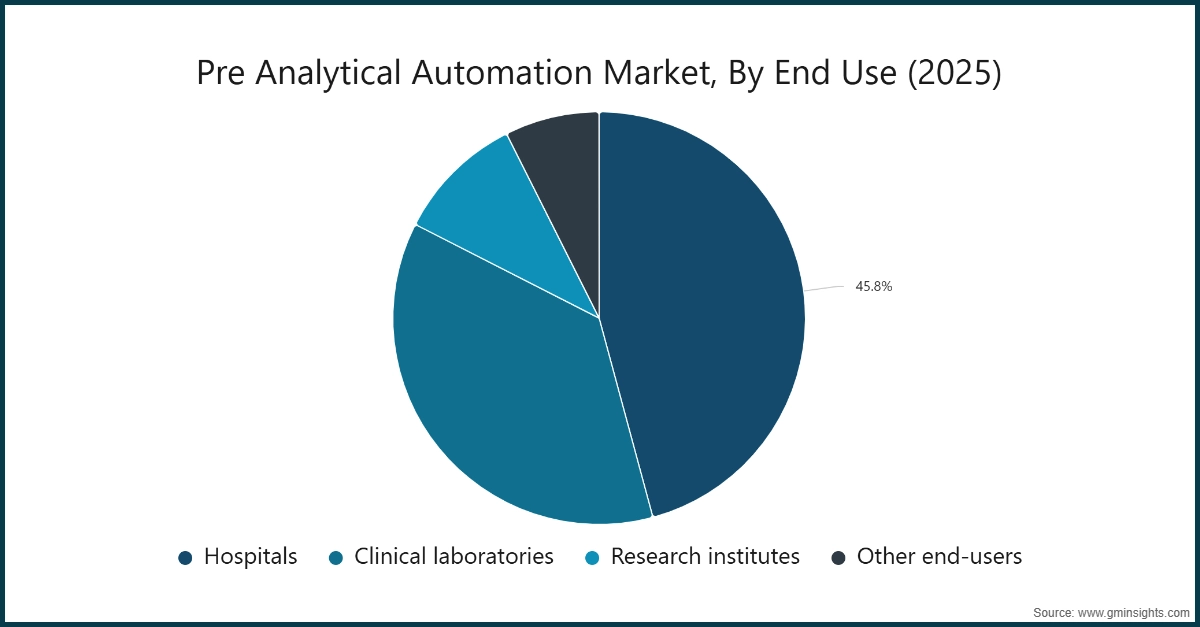
Based on end use, the pre analytical automation market is segmented into hospitals, clinical laboratories, research institutes and other end users. The hospitals segment accounted for the leading market share of 45.8% in 2025.
- Growing workload in diagnostics is mandating hospital laboratories to automate some or all parts of their preanalytical process. Laboratories associated with large tertiary care hospitals have reported significant test volume growth across inpatient and outpatient services, making automation essential for maintaining turnaround times and reducing staff burden.
- Additionally, automated systems such as integrated pre‑analytical and total laboratory automation lines have improved workflow by standardizing accessioning, inspection, centrifugation, decapping, and sorting. Evidence from high‑volume hospital laboratories has demonstrated that automation supports prompt, accurate, quality‑assured reporting, strengthens quality control, and minimizes manual intervention.
- Hence, these improvements support improved patient care, increased operational efficiency, and maximized resource utilization within the modern health care delivery systems.
- The clinical laboratories segment was valued at USD 2.7 billion in 2025. Automated systems are used extensively in clinical laboratories to allow high volumes of samples to be processed quickly, accurately, and conveniently. Automation increases efficiency through decreased human error, increased production capacity, and reduced turnaround time between receiving and reporting tests.
- Further, automation has allowed laboratories to process samples consistently, even when tested at maximum capacity. Automation technologies such as sample reception, barcode scanners, aliquoting, centrifuge operations, and analytical integration have provided more efficient and effective means of processing samples compared to manual processing methods.
- Moreover, research has established that automation contributes to greater accuracy, compliance with regulatory requirements, and greater preservation of sample integrity from pre-analytical to analytical and then post-analytical stages of testing and reporting.
- Automation technologies have enabled laboratories to meet growing demand for testing services while improving quality and reducing costs through optimized use of labor resources.
Looking for region specific data?
North America Pre Analytical Automation Market
North America pre analytical automation industry accounted for leading share of 38.6% in 2025 and is anticipated to show considerable growth over the forecast period.
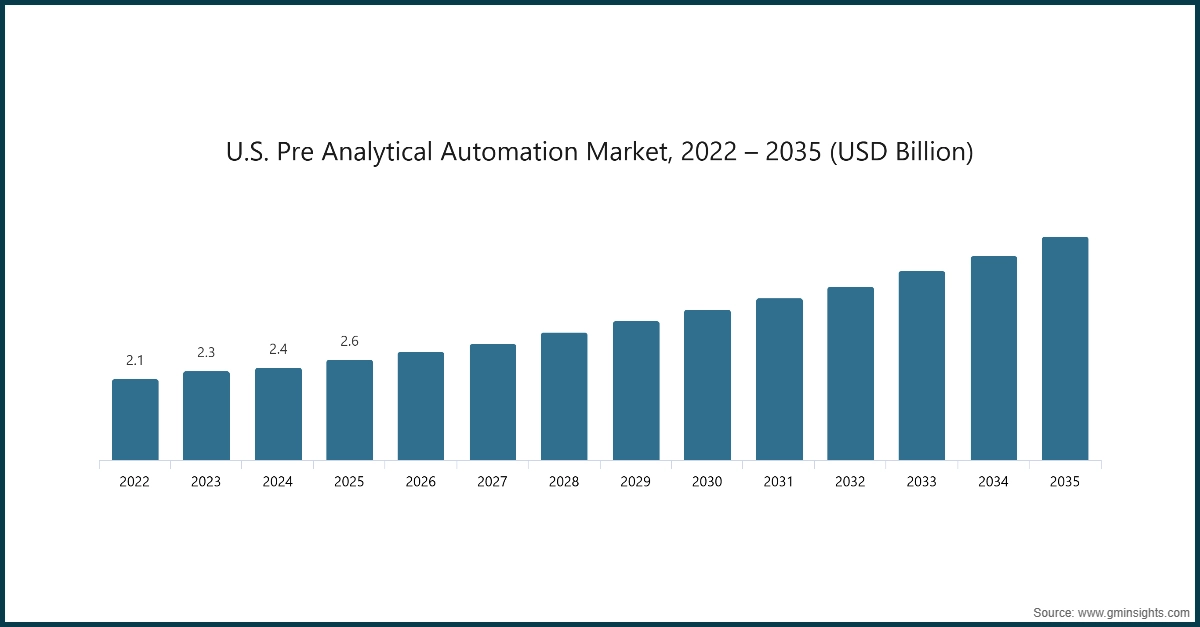
- The U.S. market was valued at USD 2.1 billion and USD 2.3 billion in 2022 and 2023, respectively. In 2025 the market size was valued at USD 2.6 billion from USD 2.4 billion in 2024. Rising use of automation in sample tracking and logistics in the country is projected to fuel market growth.
- North America is experiencing rapid growth in laboratory automation due to increasing test volumes, and extensive investments in R&D and operations by large and mid-sized clinical laboratories. North America holds the leading position in the laboratory automation market and has continued to expand its position due to increasing need for high-throughput screening, advanced molecular diagnostic capabilities, and AI-powered systems that improve both accuracy and efficiencies in workflows.
- Furthermore, innovation in molecular diagnostics, automated sample handling, and data analytics is projected to continue to strengthen the laboratory automation ecosystem. Public and private funding accelerates modernization efforts, while established healthcare infrastructure supports the integration of robotics, automated workflows, and digital platforms.
Europe Pre Analytical Automation Market
Europe accounted for a significant share of the global pre analytical automation industry and was valued at USD 1.98 billion in 2025.
- The expansion of automation technologies in European laboratories has resulted from the increased demand for high-throughput tests, increase in robots used in laboratories, and an increase in stringent quality standards across European countries. The rising pressure on laboratories to generate results faster and more accurately is creating opportunities for using automated systems to minimize human error and increase reproducibility.
- Additionally, the biotechnology and pharmaceutical sectors in Western Europe are driving the adoption of integrated robotic systems and digitized laboratory processes. As a result, Western Europe is at the forefront of laboratory automation adoption because of its established healthcare systems, while Eastern Europe is working on upgrading its capacity through modernization.
- Further, increased spending on healthcare, growing automation within the clinical diagnostics laboratory, and a rise in molecular testing requirements are projected to contribute to the ongoing development of the market. Various technologies, including artificial intelligence (AI)-enabled laboratory processes, automatic clinical chemistry analysis platforms, and advanced sample management solutions, are a necessity for increasing laboratory operational efficiencies.
Asia Pacific Pre Analytical Automation Market
The Asia Pacific market was valued at USD 1.8 billion in 2025.
- The Asia Pacific region has witnessed a significant increase in the number of laboratories automating processes as new healthcare systems and advanced technologies for diagnosing diseases become available worldwide. Over 60% of diagnostic laboratories in the region are reportedly adopting automation systems to reduce errors and improve operational efficiency. Growth is supported by large‑scale investments in R&D across pharmaceuticals, biotechnology, and precision medicine, especially as cancer and chronic disease burdens rise.
- Additionally, the modernization of laboratories combined with support from the regional agencies and national government bodies in countries such as India and other Southeast Asian countries for implementing digital transformation, has led to the increased demand for automated sample handling, liquid handling systems, and integrated laboratory software, across the clinical laboratory ecosystem in these countries. These factors collectively make Asia Pacific the fastest‑growing region in global laboratory automation.
Latin America Pre Analytical Automation Market
The Latin American market is anticipated to exhibit remarkable growth during the analysis period.
- Latin America’s laboratory automation growth is driven by modernization of diagnostic services, increasing adoption of advanced technologies, and rising burden of chronic diseases such as cancer, diabetes, and cardiovascular disorders.
- In addition, healthcare providers are accelerating automation to improve accuracy, expand testing capacity, and reduce disparities in healthcare access caused by geographic and infrastructural limitations.
- Further, growing investments in diagnostic imaging, laboratory services, and AI‑powered solutions are reshaping workflows across public and private sectors. Regional countries are embracing telemedicine, remote diagnostics, and automated sample‑handling systems to address workforce shortages and improve turnaround times.
Middle East and Africa Pre Analytical Automation Market
The Middle East and Africa market is expected to experience substantial growth over the analysis timeframe.
- The Middle East and Africa region is increasingly adopting laboratory automation due to rising healthcare digitization, modernization initiatives, and growing demand for high‑quality diagnostic services. Countries across the region are integrating automated pre‑analytical and analytical systems to improve testing accuracy, reduce manual workload, and enhance turnaround times.
- Additionally, large medical exhibitions in the region, such as Medlab Middle East, highlight rapid adoption of next‑generation automation technologies, including robotics, smart sample‑handling platforms, and advanced workflow software.
- Further, healthcare facilities are investing in automation to address rising test volumes driven by chronic disease prevalence, population growth, and expanding hospital networks. Efforts to improve diagnostic capacity, strengthen quality assurance, and meet global accreditation standards further accelerate implementation.
Pre Analytical Automation Market Share
The competitive landscape is shaped by a mix of both large diagnostic companies and laboratory automation businesses with complete automation systems that encompass all aspects of assay development, from specimen acquisition to assay confirmation in real-time via cloud or web technologies.
As a leading player in this evolving industry, Roche Diagnostics offers cobas-branded automated pre-analytical systems, specifically the cobas p 512 and cobas p 612 systems that perform high-volume automatic inspection and labeling of samples as well as automated and real-time integration with laboratory analyzers. Roche's extensive experience with workflow integration and complete lab connectivity gives them a significant competitive advantage.
Additionally, Beckman Coulter (Danaher) competes by offering clinical laboratory automation systems that streamline the workflow of clinical laboratory personnel by minimizing manual input using automated technology and maximizing the efficiency of both pre- and post-analytical processes via a fully integrated platform. This allows the manufacturer to be recognized as one of the leading providers of reliable products and services with better turnaround time, thus presenting themselves as a key partner for hospitals and diagnostic laboratories.
Similarly, through its broad product offering and vast distribution reach, Thermo Fisher Scientific competes on a larger scale in the laboratory automation equipment market. Thus, it is among the top automation companies with its automation products backed by superior instrumentation and extensive workflow technology. Collectively, these companies drive competition through automation depth, integration capability, technological innovation, and global distribution strength.
Pre Analytical Automation Market Companies
Few of the prominent players operating in the global pre analytical automation industry include:
Abbott
- Beckman Coulter (Danaher Corporation)
- Becton Dickinson and Company
- Copan Diagnostics
- Greiner Bio-One
- HAMILTON
- Inpeco
- QIAGEN
- Roche
- SARSTEDT
- SHIMADZU
- SIEMENS Healthineers
- Sysmex
- TECAN
- Thermo Fisher SCIENTIFIC
- Roche
Advances end‑to‑end laboratory automation via cobas pre‑analytical systems, focusing on workflow standardization, error reduction, and full connectivity to create integrated, high‑throughput molecular and clinical diagnostic ecosystems.
Drives Laboratory 4.0 transformation through AI‑enabled automation, cross‑vendor integration, autonomous laboratory development, and strategic investments in robotics to build intelligent, fully connected analytical ecosystems.
Executes a Sample‑to‑Insight growth strategy by strengthening high‑growth pillars such as digital PCR, QIAstat‑Dx, automation platforms, and geographic diversification while targeting higher margins through portfolio streamlining, efficiency initiatives, and disciplined capital allocation.
Pre Analytical Automation Market Report Attributes
| Key Takeaway | Details |
|---|---|
| Market Size & Growth | |
| Base Year | 2025 |
| Market Size in 2025 | USD 7.3 Billion |
| Market Size in 2026 | USD 7.9 Billion |
| Forecast Period 2026-2035 CAGR | 8.6% |
| Market Size in 2035 | USD 16.6 Billion |
| Key Market Trends | |
| Drivers | Impact |
| Rising demand for laboratory automation | Automation adoption is accelerating, reducing manual errors, improving consistency, and helping laboratories manage growing workloads more efficiently |
| Increasing test volumes in clinical diagnostics | Higher diagnostic workloads are straining manual processes, making automation essential to maintain accuracy, speed, and reliability across expanding test menus |
| Growing investments in clinical laboratories for faster turnaround times | Laboratories are upgrading automation infrastructure to deliver quicker results, enhance workflow efficiency, and meet rising expectations for rapid diagnostic reporting |
| Pitfalls & Challenges | Impact |
| High capital and installation costs | Upfront expenses continue to limit adoption, especially for smaller facilities, slowing modernization and widening capability gaps across laboratory environments |
| Integration challenges with existing LIS systems | Compatibility issues disrupt workflow continuity, requiring additional customization and technical support, delaying seamless automation deployment in many laboratories |
| Opportunities: | Impact |
| Expansion of automation in emerging markets | Growing healthcare infrastructure, rising diagnostic demand, and technology investments will accelerate automation adoption, creating new growth avenues and reducing regional disparities in diagnostic capabilities |
| Market Leaders (2025) | |
| Market Leader |
Around 18% |
| Top Players |
Around 55% |
| Competitive Edge |
|
| Regional Insights | |
| Largest Market | North America |
| Fastest growing market | Asia Pacific |
| Emerging countries | India, Saudi Arabia, Brazil, Mexico |
| Future outlook |
|
What are the growth opportunities in this market?
Pre Analytical Automation Industry News:
- In June 2025, Sysmex Corporation announced the completion of the relocation and expansion of its subsidiary Sysmex RA Co., Ltd. in Nagano, Japan. Sysmex RA is a key factory within the overall group, responsible for the comprehensive design and production of sample transportation system products. The new factory has enhanced its capability to manufacture a wide variety of products for diverse needs.
- In November 2024, Sakura Finetek Europe and MEDIPATH partnered to enhance cancer diagnostics in France by deploying fully automated embedding systems in key pathology centers. As part of this initiative, MEDIPATH deployed four of Sakura’s Tissue-Tek AutoTEC a120s for automated embedding in their pathology centers. Implementing these innovative instruments enabled MEDIPATH to standardize embedding while sampling pre-analytical treatment, ensuring timely report delivery.
- In January 2021, Tecan and QIAGEN collaborated to automate pre-analytical processing of whole blood samples. Tecan has launched the Fluent Mix and Pierce Workstation to provide end-to-end automation for whole blood pipetting in clinical environments. This new collaboration with QIAGEN allowed the company to optimize sample preparation for latent tuberculosis (TB) testing.
The global pre analytical automation market research report includes in-depth coverage of the industry with estimates and forecasts in terms of revenue in (USD Million) from 2022 - 2035 for the following segments:
Market, By Product Type
- Automated sample preparation systems
- Automated sample transport systems
- Automated sample sorting systems
- Automated sample storage systems
- Other product types
Market, By End Use
- Hospitals
- Clinical laboratories
- Research institutes
- Other end users
The above information is provided for the following regions and countries:
- North America
- U.S.
- Canada
- Europe
- Germany
- UK
- France
- Spain
- Italy
- Netherlands
- Asia Pacific
- China
- Japan
- India
- Australia
- South Korea
- Latin America
- Brazil
- Mexico
- Argentina
- MEA
- South Africa
- Saudi Arabia
- UAE
Frequently Asked Question(FAQ) :
What is the market size of the pre-analytical automation in 2025?
The market size was USD 7.3 billion in 2025, with a CAGR of 8.6% expected through 2035 driven by rising demand for laboratory automation, increasing test volumes in clinical diagnostics, and growing investments in clinical laboratories for faster turnaround times.
What is the projected value of the pre-analytical automation market by 2035?
The pre-analytical automation market is expected to reach USD 16.6 billion by 2035, propelled by expansion of automation in emerging markets and shift toward fully integrated AI-driven automation ecosystems.
What is the current pre-analytical automation market size in 2026?
The market size is projected to reach USD 7.9 billion in 2026.
What was the market share of the hospitals segment in 2025?
The hospitals segment held 45.8% market share in 2025, driven by growing diagnostic workloads and need to maintain turnaround times and reduce staff burden.
What is the growth outlook for automated sample preparation systems segment from 2026 to 2035?
The automated sample preparation systems segment held 39.5% market share in 2025 and is expected to reach USD 6.9 billion by 2035, growing at a CAGR of 9.1%.
Which region leads the pre-analytical automation market?
The U.S. market was valued at USD 2.6 billion in 2025, up from USD 2.4 billion in 2024, with North America accounting for 38.6% of the global market.
What are the upcoming trends in the pre-analytical automation market?
Key trends include growing demand for high-throughput laboratory workflows, integration of AI, robotics, and intelligent routing systems, rising need to reduce human error in pre-analytical processes, and growth of modular and scalable automation systems.
Who are the key players in the pre-analytical automation market?
Key players include Roche, Danaher (Beckman Coulter), Thermo Fisher Scientific, QIAGEN, SHIMADZU, Abbott, Becton Dickinson, Copan Diagnostics, Greiner Bio-One, HAMILTON, Inpeco, SARSTEDT, Siemens Healthineers, Sysmex, and TECAN.
Pre Analytical Automation Market Scope
Related Reports