Summary
Table of Content

Pots and Planters Market
Get a free sample of this report
Form submitted successfully!
Error submitting form. Please try again.
Thank you!
Your inquiry has been received. Our team will reach out to you with the required details via email. To ensure that you don't miss their response, kindly remember to check your spam folder as well!
Request Sectional Data
Thank you!
Your inquiry has been received. Our team will reach out to you with the required details via email. To ensure that you don't miss their response, kindly remember to check your spam folder as well!
Form submitted successfully!
Error submitting form. Please try again.
Pots and Planters Market Size
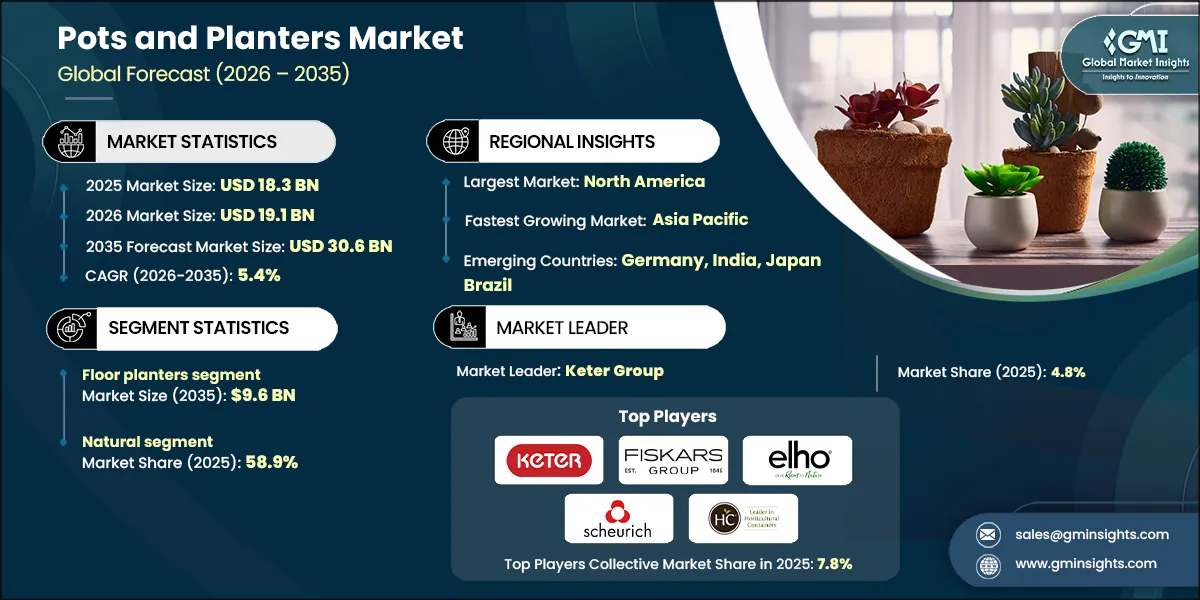
The pots and planters market was valued at USD 18.3 billion in 2025. The market is expected to grow from USD 19.1 billion in 2026 to USD 30.6 billion in 2035, at a CAGR of 5.4%, according to latest report published by Global Market Insights Inc.
Pots and Planters Market Key Takeaways
Market Size & Growth
- 2025 Market Size: USD 18.3 Billion
- 2026 Market Size: USD 19.1 Billion
- 2035 Forecast Market Size: USD 30.6 Billion
- CAGR (2026–2035): 5.4%
Regional Dominance
- Largest Market: North America
- Fastest Growing Region: Asia Pacific
Key Market Drivers
- Urbanization and small-space gardening trends.
- Rising demand for sustainable and eco-friendly products.
- Increase in DIY gardening and landscaping projects.
Challenges
- Changing consumer preferences and trends.
- Counterfeit and imitation products.
Opportunity
- Growth in sustainable and eco-friendly socks.
- Expansion of smart and functional socks.
Key Players
- Market Leader: Keter Group led with over 4.8% market share in 2025.
- Leading Players: Top 5 players in this market include Keter Group, Fiskars Group, Elho, Scheurich Group, HC Companies, which collectively held a market share of 7.8% in 2025.
Get Market Insights & Growth Opportunities
The pots and planters market is experiencing strong growth due to the increasing popularity of urban gardening and home decorating. As more people live in cities, there has also been a rise in the number of people gardening indoors including balconies. These gardening trends have created a greater need for both functional and attractive indoor planters.
The National Gardening Association (NGA) states that by 2023, over 30% of the urban population in the US will be growing indoors, which indicates that the growing trend of indoor gardening is not going away anytime soon. As more consumers learn about the physical and mental health benefits of gardening, more are deciding to add green plants to their homes.
Companies like The Sill and Bloomscape are taking advantage of this by selling more indoor planters than ever before. In addition to these two companies, a number of government agencies (including programs from the USDA) are creating programs to promote urban gardening, which will help further support the growth of this market.
The increasing popularity of environmentally friendly products is also driving growth in this market. An increasing number of consumers are seeking plans made from sustainable materials such as bamboo, recycled plastic, and terracotta and are willing to pay extra for these types of products. The Sustainable Furnishings Council (SFC) indicates that there has been a 25% increase in demand for sustainable furnishings within the last two years, which supports the global objective of sustainability.
The rise in urbanization along with a focus on sustainable development, will grow demand & growth within the industry therefore allowing for increased Competition & better options for customers over the past decade as more consumers become interested in low-maintenance gardening solutions. Through the use of product developments such as self-watering planters introduced by Lechuza as well as eco-friendly options introduced by Elho, will provide customers with additional access to products that meet their specific needs.
To get key market trends
Pots and Planters Market Trends
Changing innovation and technology transformation are important for the growth of the pots and planters industry.
- The market for pots and planters is changing as more and more urban dwellers want vertical gardening options to fit their smaller living spaces. By coming up with integrated and compact planter designs, manufacturers are helping people who want to make the most of limited space when it comes to gardening.
- New environmentally friendly materials, including bamboo and recycled plastics, have become a strong selling point for consumers and are driving the trend of using sustainable products. The U.S. EPA has developed several initiatives to encourage people to make use of recycled materials, which coincides with consumers' interest in having more environmentally responsible gardening options.
- As a result of the environmental and consumer trends described above, many leading brands in the industry have identified an opportunity to create new, innovative products. One example is EcoForms, which produces compostable planters. Remarkably, Bloem also produces planters from recycled items. The introduction of innovative products like these will shape the future of the industry based on satisfying environmental and consumer demands.
- Online platforms have a major impact on market development. According to the National Gardening Association (NGA), more consumers are becoming aware of and participating in sustainable gardening efforts, primarily due to the effectiveness of online marketing and Social Media advertising for displaying innovative product designs and eco-friendly solutions, supported by both consumer demand and social media trends.
- Urban population growth is driving the demand for small, sustainable gardening solutions and increasing numbers of government policies and consumer demand will continue to facilitate the market growth of the over the projected period.
Pots and Planters Market Analysis
Learn more about the key segments shaping this market
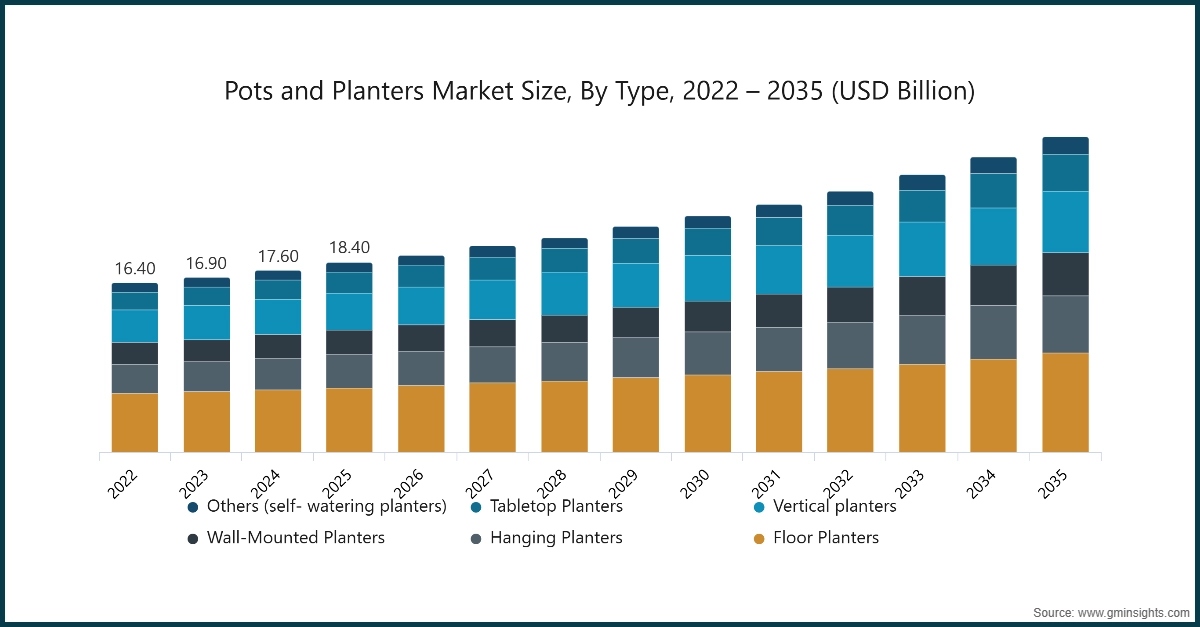
Based on type, the pots and planters' industry is segmented into floor planters, hanging planters, wall-mounted planters, tabletop planters, vertical planters and others (self-watering plants, etc.). The floor planters segment accounts for revenue of around USD 6.2 billion in the year 2025 and is expected to reach USD 9.6 billion by 2035.
- The pots and planters market has been expanding rapidly, with floor planters capturing the largest market share. Floor planters provide the easiest way to add greenery to both residential and commercial environments, driving widespread adoption of floor planters.
- The market growth is being supported through multiple initiatives from many governments. The goal of the EU’s Green City Accord is to create greater amounts of green space within cities by 2030. Governments in the U.S., like the EPA, are also promoting indoor vegetation to improve indoor air quality. This support for indoor agriculture and the creation of green spaces are both important reasons for the increasing use of floor planters.
- Leading manufacturers like Lechuza and Crescent Garden are developing innovative floor planters to meet the needs of consumers. Lechuza has seen double-digit growth in sales of self-watering floor planters which require very little maintenance. Crescent Garden's new line of weatherproof and lightweight planters has also experienced double-digit growth due to their combination of style and function.
- More than ever, customized floor planters draw in many more consumers as they allow users to select from countless materials such as ceramic, metal, plastic, sizes/ shapes/colors. As a result, these items can be easily incorporated into virtually any kind of interior and/or exterior design scheme.
- Governments support for these types of products combined with consumers being more willing to purchase innovative products will help ensure that floor planters continue to dominate the pots and planters industry. The combination of fulfilling aesthetic and functional needs will ensure continued growth throughout the forecast period for floor planters.
Learn more about the key segments shaping this market
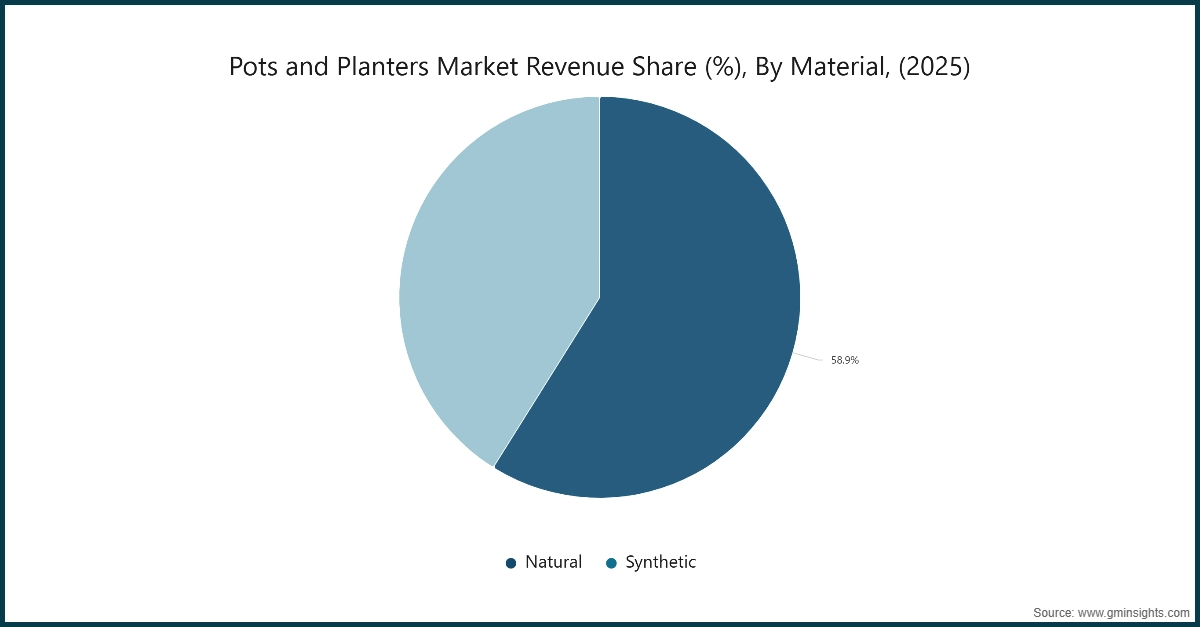
Based on the materials, the market is bifurcated into natural and synthetic. The natural segment accounted for over 58.9 % of the market share in 2025.
- The pots and planters market is experiencing rapid growth due to a strong preference among consumers for products made from natural materials. Naturally made pots and planters, such as terracotta, ceramic, clay, and wood, have become very popular with environmentally conscious consumers because they combine sustainability with aesthetics, therefore, manufacturers are responding to an increase in consumer demand for eco-friendly products.
- Government data has shown an increase in the popularity of using sustainable materials. For example, the U.S. Environmental Protection Agency (EPA) reports that, in 2023, consumer purchases of biodegradable/natural products increased by 15%, which supports the fact that terracotta pots and planters are now preferred by people interested in gardening due to their breathable nature and their ability to stimulate plant growth.
- Industrial groups have also reported the opportunity for profit associated with using natural materials in the manufacture of pots and planters. The National Gardening Association (NGA) has documented that terracotta planters constituted 25% of total planter sales in 2023 and are sought after because of their durability and aesthetic beauty. Manufacturers, such as The Sill and Terrain, have taken advantage of this trend and are producing large quantities of terracotta and clay planters.
- Concrete planters target buyers who want an industrial appearance. Last year, concrete planters had 12% higher sales than the previous year, with retailers offering minimalist designs to meet this increasing demand, such as West Elm.
- Overall, the overall market for flower pots and planters continues to grow as it evolves, with natural materials taking the lead in this category because of their sustainability, functionality, and versatility of design.
Looking for region specific data?
North America Pots and Planters Market
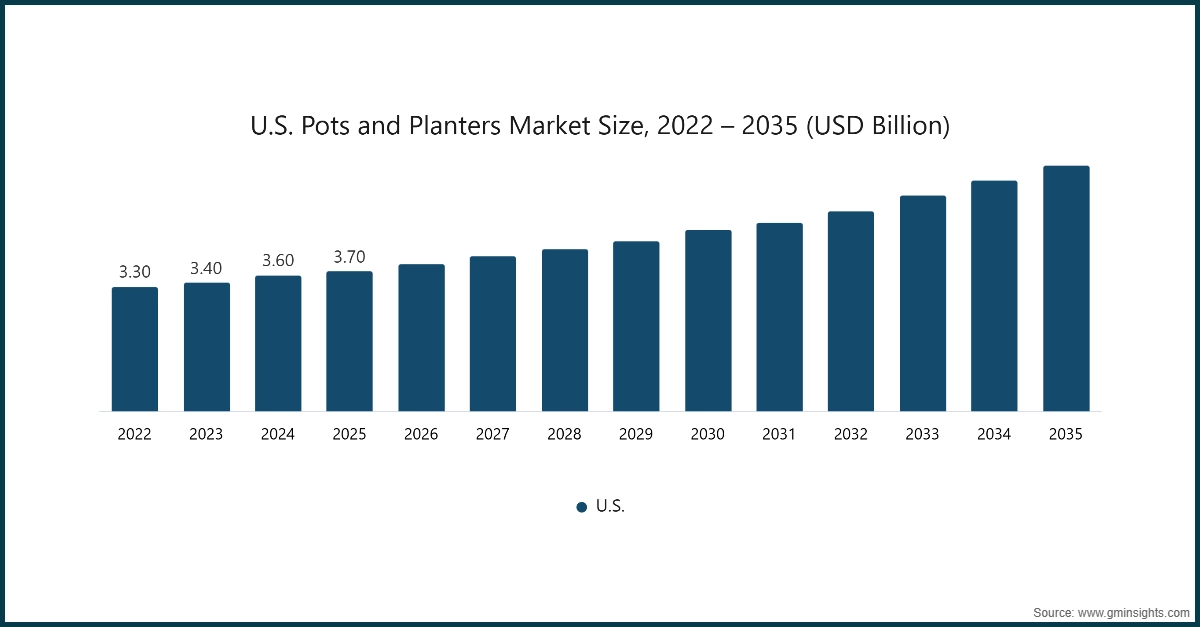
In 2025, the U.S. dominated the pots and planters industry growth in North America, accounting for 64.3% of the share in the region.
The U.S. dominates the North American market due to strong demand from residential landscaping and urban gardening trends. Rising home improvement spending and popularity of indoor plants have boosted sales significantly. Government initiatives promoting sustainable landscaping and water-efficient gardening also support market expansion. Additionally, the presence of major retailers and e-commerce platforms ensures easy product accessibility.
- According to the U.S. Census Bureau, residential construction spending reached over USD 980 billion in 2025, reflecting a surge in home improvement projects that often include garden and patio enhancements. This trend directly drives demand for decorative and functional pots and planters.
Asia Pacific Pots and Planters Market
Asia Pacific market is expected to grow at 6% CAGR during the forecast period.
- Asia Pacific is projected to grow at 6% CAGR during the forecast period, driven by rapid urbanization and rising disposable incomes. Increasing adoption of balcony and indoor gardening in high-density cities like Tokyo, Shanghai, and Mumbai fuels demand. Government initiatives promoting green spaces and smart city projects further support market expansion. Additionally, the surge in e-commerce platforms enhances accessibility to premium and decorative planters. .
Europe Pots and Planters Market
Europe market is expected to grow at 5.3% CAGR during the forecast period.
- Europe’s growth at 5.3% is supported by strong sustainability trends and eco-friendly consumer preferences. The European Commission’s Green Deal and urban greening programs encourage the use of planters for biodiversity and climate adaptation. Rising popularity of home gardening and DIY landscaping in countries like Germany, France, and the UK adds momentum. Moreover, strict environmental regulations push manufacturers toward recyclable and sustainable materials.
Middle East and Africa Pots and Planters Market
Middle East and Africa market is expected to grow at 5.1% CAGR during the forecast period.
- Europe’s growth at 5.3% is supported by strong sustainability trends and eco-friendly consumer preferences. The European Commission’s Green Deal and urban greening programs encourage the use of planters for biodiversity and climate adaptation. Rising popularity of home gardening and DIY landscaping in countries like Germany, France, and the UK adds momentum. Moreover, strict environmental regulations push manufacturers toward recyclable and sustainable materials. .
Pots and Planters Market Shares
The top companies in the pots and planters industry include Keter Group, Fiskars Group, Elho, Scheurich Group and HC Companies and collectively hold a share of 7.8% of the market in 2025. These prominent players are proactively involved in strategic endeavors, such as mergers & acquisitions, facility expansions & collaborations, to expand their product portfolios, extend their reach to a broad customer base, and strengthen their market position.
Keter Group is a leading producer of resin-based planters, including self-watering and wood-look outdoor containers, widely available through major retailers like Amazon and Walmart. The brand emphasizes durable, weather-resistant materials and modular designs that appeal to both home and commercial gardeners. By combining functional innovation with accessible distribution, Keter secures a strong market foothold in the self-watering planter segment. Fiskars offers a range of plastic and resin pots and planters, featuring both classic and contemporary designs with UV resistance and drainage solutions. Frequently sold through big-box retailers like Lowe’s, Walmart, and Target, Fiskars leverages widespread retail channels to ensure brand visibility. Their product mix balances aesthetic appeal and practicality, catering to casual gardeners and DIY enthusiasts. Elho is a sustainable, family-owned Dutch company specializing in designer flowerpots and planters made from 100% recycled plastic. The brand is a certified B Corp and focuses on eco-friendly production powered by wind energy. Elho offers colorful, indoor/outdoor collections—including hanging and balcony options—emphasizing both style and environmental responsibility.
Pots and Planters Market Companies
Major players operating in the pots and planters industry are:
- Anderson Pots
- Belden Plastics
- Bloem Living
- Crescent Garden
- Deroma
- East Jordan Plastics
- Elho
- Fiskars
- HC Companies
- Keter
- Lechuza
- Novelty Manufacturing
- Pöppelmann
- Scheurich
- Teraplast
Scheurich is Europe’s market leader in ceramic and plastic planters, offering one of the most expansive and sustainable product lines worldwide. With trend-conscious designs, high-quality craftsmanship, and eco-friendly production, Scheurich supports over 130,000 articles daily across 80 countries. Their blend of traditional craftsmanship and modern sustainability sets them apart in the planter industry.
The HC Companies specialize in horticultural containers for greenhouse, nursery, and consumer markets across North America. Their product offerings include round and square planters, trays, and self-watering pots, distributed widely through a robust network of distributors and retailers like Lowe’s, Walmart, Amazon, Target, and Wayfair. HC Companies emphasize smart growing solutions tailored to professional growers and home gardeners alike.
Pots and Planters Market Report Attributes
| Key Takeaway | Details |
|---|---|
| Market Size & Growth | |
| Base Year | 2025 |
| Market Size in 2025 | USD 18.3 Billion |
| Market Size in 2026 | USD 19.1 Billion |
| Forecast Period 2026-2035 CAGR | 5.4% |
| Market Size in 2035 | USD 30.6 Billion |
| Key Market Trends | |
| Drivers | Impact |
| Urbanization and small-space gardening trends | Urban living and limited outdoor spaces are driving demand for compact, stylish planters suitable for balconies and indoor gardens. This trend boosts premium and space-saving designs. |
| Rising demand for sustainable and eco-friendly products | Consumers increasingly prefer planters made from recycled or biodegradable materials, creating strong growth for green product lines. Sustainability is becoming a key purchase driver. |
| Increase in DIY gardening and landscaping projects | The surge in home gardening and DIY landscaping encourages sales of decorative and functional planters. Social media gardening trends amplify this demand. |
| Pitfalls & Challenges | Impact |
| Changing consumer preferences and trends | Intense market competition limits pricing flexibility, pushing brands to differentiate through design and value-added features. Margins remain under pressure. |
| Counterfeit and imitation products | Sales peak during spring and summer, creating revenue fluctuations and inventory challenges. Off-season demand remains relatively weak. |
| Opportunities: | Impact |
| Growth in sustainable and eco-friendly socks | Eco-conscious consumers present a major opportunity for brands offering certified green products. Marketing sustainability can drive premium positioning. |
| Expansion of smart and functional socks | Smart and self-watering planters cater to urban lifestyles and commercial spaces, reducing maintenance needs. This segment offers strong innovation-led growth. |
| Market Leaders (2025) | |
| Market Leader |
4.8% market share |
| Top Players |
Collective market share in 2025 is 7.8% |
| Competitive Edge |
|
| Regional Insights | |
| Largest Market | North America |
| Fastest growing market | Asia Pacific |
| Emerging countries | Germany, India, Japan, Brazil |
| Future outlook |
|
What are the growth opportunities in this market?
Pots and Planters Industry News
- In July 2025, Lechuza expanded its distribution network in the UK and Ireland through a strategic partnership with Instadecor Ltd. This move enhances accessibility for both online and retail customers, strengthening Lechuza’s presence in key European markets. The collaboration aims to deliver premium planters to a broader audience.
- In June 2025, Crescent Garden unveiled the Mod Large Self-Watering TruDrop Trough Planter, tailored for commercial spaces. Its modular design and integrated self-watering system ensure low-maintenance care while enhancing visual appeal. The product reflects Crescent Garden’s focus on innovation and convenience in modern landscaping.
- In May 2025, Bloem introduced the Saturn Planter collection, designed for both indoor and outdoor use. The range features vibrant colors paired with matching saucers, offering a stylish yet practical solution for gardening enthusiasts. This launch reinforces Bloem’s commitment to affordable and aesthetic gardening products.
- In May 2024, HC Companies acquired Classic Home & Garden (CHG) to strengthen its decorative garden product portfolio. The acquisition creates a comprehensive offering for growers and retailers, positioning HC Companies as a one-stop solution provider. This strategic move enhances market competitiveness and product diversity.
- In March 2024, Scheurich launched its “1 Pot = 1 Tree” campaign, pledging to plant a tree for every pot sold in select product lines. The initiative is in partnership with Eden Reforestation Projects, reinforcing Scheurich’s commitment to environmental responsibility. This program aligns with growing consumer demand for sustainable gardening solutions.
The pots and planters market research report includes in-depth coverage of the industry, with estimates & forecasts in terms of revenue (USD Billion) volume (Million Units) (from 2022 to 2035), for the following segments:
Market, By Type
- Floor planters
- Hanging planters
- Wall-mounted planters
- Tabletop planters
- Vertical planters
- Others (self-watering planters)
Market, By Material
- Natural
- Terracotta
- Ceramic
- Clay
- Stone
- Wood
- Concrete
- Synthetic
- Plastic
- Fiberglass
- Others (recycled materials, etc.)
Market, By Price
- Low
- Medium
- High
Market, By Installation
- Interior space
- Exterior space
Market, By Category
- Smart
- Conventional
Market, By End Use
- Residential
- Commercial
- Institutes
- HoReCa
- Retail
- Healthcare
- Corporates
- Others (spa centers, airports and transportation hubs, etc.)
Market, By Distribution Channel
- Online
- E-Commerce
- Company website
- Offline
- Supermarkets/Hypermarkets
- Specialty Stores
- Others (Individual stores, Departmental stores, etc.)
The above information is provided for the following regions and countries:
- North America
- U.S.
- Canada
- Europe
- Germany
- France
- UK
- Italy
- Spain
- Asia Pacific
- China
- Japan
- India
- Australia
- South Korea
- Latin America
- Brazil
- Mexico
- Argentina
- MEA
- Saudi Arabia
- UAE
- South Africa
- Saudi Arabia
Frequently Asked Question(FAQ) :
What is the market size of the pots and planters in 2025?
The market size was USD 18.3 billion in 2025, with a CAGR of 5.4% expected through 2035 driven by urbanization, small-space gardening trends, and rising demand for sustainable products.
What is the projected value of the pots and planters market by 2035?
The pots and planters market is expected to reach USD 30.6 billion by 2035, propelled by eco-friendly materials adoption, smart planter innovations, and increasing DIY gardening projects.
What is the current pots and planters market size in 2026?
The market size is projected to reach USD 19.1 billion in 2026.
How much revenue did the floor planters segment generate in 2025?
Floor planters generated USD 6.2 billion in 2025 and are expected to reach USD 9.6 billion by 2035, driven by their versatility in residential and commercial environments.
What was the market share of the natural materials segment in 2025?
The natural materials segment held 58.9% market share in 2025, with terracotta, ceramic, clay, and wood products leading due to consumer preference for sustainable and aesthetically appealing options.
What is the growth outlook for the Asia Pacific region from 2026 to 2035?
Asia Pacific is projected to grow at 6% CAGR during 2026 to 2035, driven by rapid urbanization, rising disposable incomes, and increasing adoption of balcony and indoor gardening in high-density cities.
Which region leads the pots and planters market?
North America leads the market, with the U.S. accounting for 64.3% of the regional share in 2025. Strong residential landscaping demand, home improvement spending, and government initiatives promoting sustainable gardening fuel the region's dominance.
What are the upcoming trends in the pots and planters market?
Key trends include adoption of smart and self-watering planters with IoT-enabled sensors, integration of recycled and biodegradable materials, and increasing popularity of vertical gardening solutions for small urban spaces.
Who are the key players in the pots and planters market?
Key players include Keter Group, Fiskars Group, Elho, Scheurich Group, HC Companies, Anderson Pots, Belden Plastics, Bloem Living, Crescent Garden, Deroma, East Jordan Plastics, Lechuza, Novelty Manufacturing, Pöppelmann, and Teraplast.
Pots and Planters Market Scope
Related Reports