Summary
Table of Content

Pneumonia Therapeutics Market
Get a free sample of this report
Form submitted successfully!
Error submitting form. Please try again.
Thank you!
Your inquiry has been received. Our team will reach out to you with the required details via email. To ensure that you don't miss their response, kindly remember to check your spam folder as well!
Request Sectional Data
Thank you!
Your inquiry has been received. Our team will reach out to you with the required details via email. To ensure that you don't miss their response, kindly remember to check your spam folder as well!
Form submitted successfully!
Error submitting form. Please try again.
Pneumonia Therapeutics Market Size
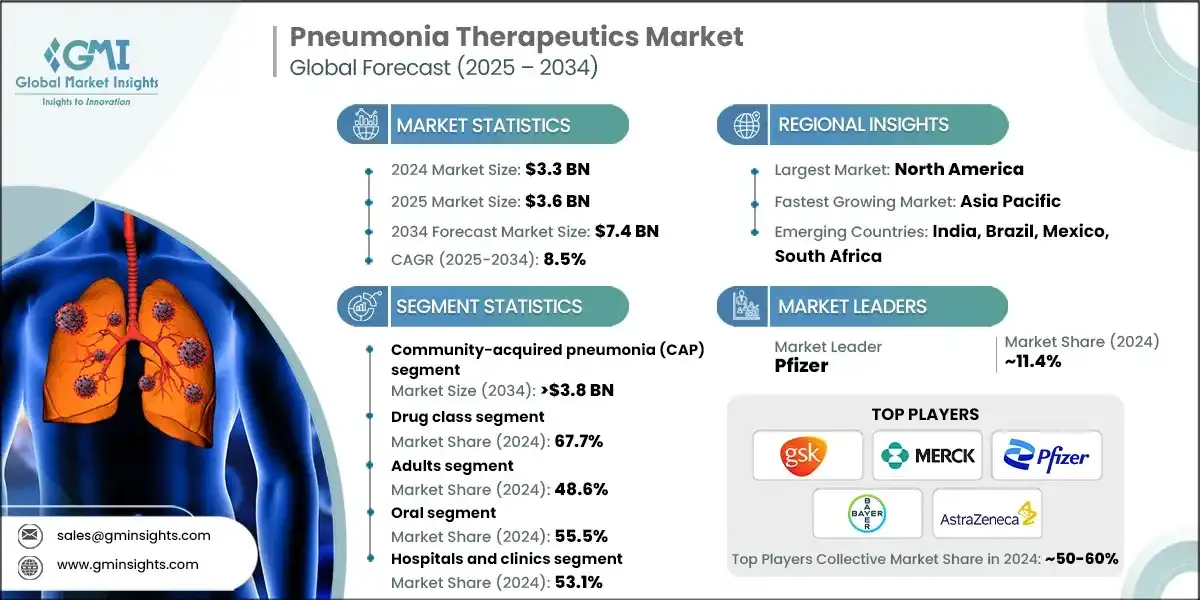
The global pneumonia therapeutics market size was estimated at USD 3.3 billion in 2024. The market is expected to grow from USD 3.6 billion in 2025 to USD 7.4 billion in 2034, at a CAGR of 8.5% during the forecast period, according to the latest report published by Global Market Insights Inc. Pneumonia cases are climbing worldwide, particularly hitting vulnerable groups like elderly patients, young children, and those with weakened immune systems. According to UNICEF data, approximately 1 in every 71 children suffers from pneumonia.
Pneumonia Therapeutics Market Key Takeaways
Market Size & Growth
- 2024 Market Size: USD 3.3 Billion
- 2025 Market Size: USD 3.6 Billion
- 2034 Forecast Market Size: USD 7.4 Billion
- CAGR (2025–2034): 8.5%
Key Market Drivers
- Rising global pneumonia cases.
- Aging population and immunocompromised patients.
- Expansion of telehealth and e-pharmacy.
- Government vaccination programs.
Challenges
- High cost of branded drugs and vaccines.
- Limited awareness in developing regions.
Opportunity
- Development of combination therapies.
- Emerging markets with rising healthcare investment.
Key Players
- Market Leader: Pfizer led with over 11.4% market share in 2024.
- Leading Players: Top 5 players in this market include GlaxoSmithKline, Merck & Co., Pfizer, Bayer, AstraZeneca, which collectively held a market share of 60% in 2024.
Get Market Insights & Growth Opportunities
Moreover, the increasing prevalence of respiratory failure, a severe complication of pneumonia, occurs when the lungs are unable to efficiently transfer oxygen into the bloodstream or remove carbon dioxide. This condition significantly heightens the risk of mortality, particularly among vulnerable populations.
Additionally, hospital-acquired and ventilator-associated pneumonia are rising due to longer hospital stays and increased use of mechanical ventilation. According to a study by NIH, 25.4% of cases of pneumonia disease occur due to hospital-acquired infections.
Pneumonia therapeutics include antibacterial, antiviral, and antifungal drugs, as well as vaccines and supportive therapies such as oxygen therapy. These treatments differ from general respiratory medications that target specific pathogens such as Streptococcus pneumoniae, RSV, influenza, and SARS-CoV-2, and are often prescribed based on diagnostic testing. Innovations in molecular diagnostics and point-of-care testing have enabled more precise identification of pneumonia-causing agents, allowing for tailored therapy and reduced antibiotic misuse. Key players such as Pfizer, Merck, Bayer, GSK, Abbott, Novartis, and Lupin lead the market with robust portfolios including drugs such as Zerbaxa, Levaquin, Avelox, Tamiflu, and vaccines such as Prevnar 13/20 and Pneumovax 23.
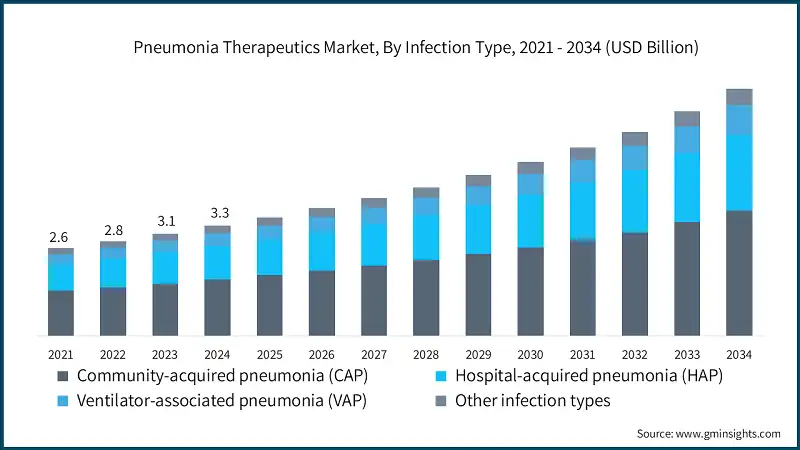
The market has shown steady growth, increasing from USD 2.6 billion in 2021 to USD 3.1 billion in 2023, mainly due to the rising adoption of vaccines and the growing focus on prevention. Additionally, the aging global population, particularly in developed regions, is contributing to increased susceptibility to pneumonia, thereby stimulating market growth.
Moreover, the growing shift toward online pharmacies and direct-to-consumer channels has enhanced access to both prescription and over the counter (OTC) drug therapies, while also increasing awareness among patients and caregivers. Regionally, North America dominates the market due to high healthcare spending and a robust diagnostic infrastructure. Meanwhile, the Asia-Pacific region is rapidly emerging, driven by rising healthcare investments and proactive government initiatives aimed at combating pneumonia.
Pneumonia therapeutics—also referred to as respiratory anti-infectives—play a vital role in modern healthcare. These therapies complement clinical care and are often prescribed based on pathogen type and patient condition. They address a wide range of health issues including bacterial infections, viral pneumonia, fungal pneumonia, and drug-resistant strains, making them a critical component of global respiratory healthcare.
To get key market trends
Pneumonia Therapeutics Market Trends
- The market is gaining momentum, driven by the rising global burden of pneumonia, growing awareness of respiratory health, and continued innovation in targeted drugs and vaccines.
- A key trend shaping the market is the growing demand for pathogen-specific therapies covering bacterial, viral, and fungal pneumonia, which is pushing manufacturers to focus on pathogen-targeted treatments that complement clinical care.
- As more elderly and immunocompromised patients are diagnosed, specialized therapies are increasingly preferred over broad-spectrum options.
- Physician and pulmonologist recommendations play a critical role, as treatment choices are often guided by diagnostic testing and clinical evaluations, making professional advice a strong driver of adoption.
- The rapid expansion of digital health platforms and e-pharmacies is changing how patients access care, improving the availability of prescription medicines and vaccines through online consultations and doorstep delivery.
- Personalized medicine and age-specific immunization strategies are also gaining traction, with companies investing in AI-driven diagnostics and tailored therapy protocols to improve outcomes.
- Finally, the move toward integrated respiratory care—combining preventive vaccination, oxygen therapy, and rehabilitation—is being embraced by healthcare providers, further boosting adoption of pneumonia therapeutics worldwide.
Pneumonia Therapeutics Market Analysis
Learn more about the key segments shaping this market
The market was valued at USD 2.6 billion in 2021. The market size reached USD 3.1 billion in 2023, from USD 2.8 billion in 2022.
Based on infection type, the pneumonia therapeutics industry is categorized into community-acquired pneumonia (CAP), hospital-acquired pneumonia (HAP), ventilator-associated pneumonia (VAP), and other infection types. The community-acquired pneumonia (CAP) segment accounted for 51.4% of the market share in 2024 due to the diverse range of pathogens, patient risk factors such as age, smoking and medical conditions, and environmental influences, which collectively contribute to its high incidence and mortality rate. The segment is expected to exceed USD 3.8 billion by 2034, growing at a CAGR of 8.4% during the forecast period.
- The community-acquired pneumonia (CAP) segment has emerged as the dominant category in the global pneumonia therapeutics market, stimulated by increasing prevalence among both paediatrics and adult populations. According to NIH, community-acquired pneumonia causes more than 3 million deaths per year globally, with hospitalization costs of up to USD 9 billion in the U.S., and 30-day hospital mortality accounting for more than 22% of cases.
- Additionally, the requirement for hospitalization caused by community-acquired pneumonia is increasing the need for innovative solutions in the market. According to ClinMed International Library, the incidence of community-acquired pneumonia varies from 4 to 5 million cases per year of which more than 25% require hospitalization.
- Moreover, the growing demand for early diagnosis and outpatient care is accelerating the adoption of oral and intravenous formulations. Community-acquired pneumonia therapies are widely preferred due to their effectiveness in managing symptoms and preventing complications when administered within the first 48-72 hours of onset. This trend is further supported by growing awareness and accessibility of treatment options in both developed and developing regions.
- On the other hand, the hospital-acquired pneumonia (HAP) segment is expected to grow with a CAGR of 8.6%. The growth of this segment can be attributed due to the increasing complexity of hospital-acquired infections and the need for tailored treatment protocols that address resistant pathogens and comorbid conditions.
- On the other hand, ventilator-associated pneumonia (VAP) segment is expected to grow with a CAGR of 8.9%. The growth of this segment is due to the microaspiration of bacteria that colonize the oropharynx and upper airways in seriously ill patients.
Based on the treatment type, the pneumonia therapeutics market is segmented into drug class, vaccines, and oxygen therapy. The drug class segment accounted for the highest market share of 67.7% in 2024 due to its effectiveness and responsiveness from acute to serious conditions.
- The drug class is further bifurcated into antibacterial drugs, antiviral drugs, antifungal drugs, and other drug classes. Further, the antibacterial drugs segment is classified into quinolones, macrolides and other antibacterial drugs.
- This dominance is driven by effectiveness in treating bacterial pneumonia, which remains the most prevalent form of the disease. The rising incidence of multidrug-resistant pathogens has further accelerated the demand for novel drug formulations and combination therapies. Pharmaceutical companies are increasingly investing in targeted therapies and biologics to address resistant strains and reduce treatment duration.
- Moreover, the increasing cases of bacterial pneumonia globally, further escalates the market demand for antibacterial drugs that provide safety and effectiveness against bacterial infections such as Streptococcus pneumoniae, which is the most common causative factor especially among children and people aged above 65 years old. According to NIH, more than 25% of cases in U.S. are caused by S. pneumoniae.
- On the other hand, vaccines are also gaining attention by the rising awareness of preventive care and immunization, which is stimulating the vaccine segment in the market. For instance, CDC recommends routine vaccination for pneumonia, especially for children aged below 5 years.
- The oxygen therapy segment is anticipated to grow steadily, supported by its critical role in managing severe pneumonia cases. Increasing clinical trials have validated the effectiveness of oxygen therapy in intensive care settings, particularly for patients with respiratory distress.
Based on age group, the pneumonia therapeutics market is segmented into pediatrics, adults, and geriatrics. The adults segment accounted for the highest market share of 48.6% in 2024 as they have less immunization exposure and therefore are easy susceptible to diseases.
- The adult population represents the largest share of the market, primarily due to rising exposure to environmental pollutants, lifestyle-related risk factors, and increasing prevalence of comorbidities. According to Pfizer, more than 6.8 million adults are hospitalized due to pneumonia, with 1.1 million deaths, which stimulates market demand.
- Adults often present with more complex clinical profiles, requiring a combination of antibiotics, antivirals, and supportive therapies. The growing demand for outpatient care and early intervention is further escalating the adoption of oral and intravenous formulations tailored for adult patients.
- On the other hand, the geriatrics segment is gaining momentum due to the growing elderly population, rising incidence of chronic diseases, and low immunological factors, the geriatric population is more susceptible to infections and diseases, especially those that are hospital-acquired.
- On the other hand, the paediatrics segment is also growing due to rising concerns over lifestyle health issues in children, such as obesity and poor nutrition, which are stimulating the need for strong immunization. Public health initiatives and school-based immunization programs are playing a key role in expanding treatment coverage among children.
Based on route of administration, the pneumonia therapeutics market is segmented into oral, parenteral, and other routes of administration. The oral segment accounted for the highest market share of 55.5% in 2024 as easy convenience and patient compliance is high.
- The segment is driven by its superior ability to deliver pneumonia therapeutics with consistent absorption and simplified dosing regimens.
- Oral medications are easy to administer compared to other routes such as injectables, causing higher patient compliance. Adherence to oral therapies is significantly higher than for injectable treatments. Patients also prefer taking a pill at home rather than visiting healthcare facilities for injections.
- Moreover, the effectiveness of antibacterial drugs also stimulated the market demand for oral solutions.
- Parenteral therapies are gaining momentum due to their critical role in emergency care and inpatient settings, where fast-acting relief and precise dosing are essential for managing severe or refractory pneumonia cases.
Learn more about the key segments shaping this market
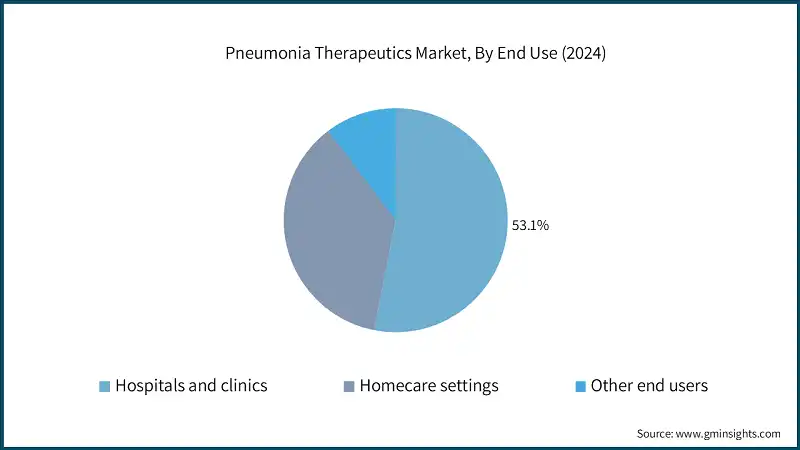
Based on end use, the pneumonia therapeutics market is categorized into hospitals and clinics, homecare settings and other end users. The hospitals and clinics segment accounted for the highest market share of 53.1% in 2024 due to easy availability and convenience, hospitals and clinics are a primary channel in the market.
- Hospitals and clinics represent a major end-use segment in the market due to centralized infrastructure, access to trained medical staff, and ability to manage large-scale immunization programs. They play a critical role in both routine and emergency vaccination, offering timely administration and follow-up care for pediatric and adult populations.
- Moreover, they also support government-led initiatives and public health campaigns by serving as key distribution points for pneumonia therapeutics. As of 2021, there were 6,090 hospitals in the U.S. and over 165,000 worldwide, providing a vast network for vaccine access and outreach.
- On the other hand, homecare settings contribute significantly to the market, as rising demand for outpatient management and self-administered therapies has led to the adoption of oral antivirals, topical agents, and supportive care kits that can be used at home.
Looking for region specific data?
The North America pneumonia therapeutics market dominated the global market with a market share of 40.1% in 2024.
- The market is stimulated by the rising prevalence of pneumonia infections and increased investment in vaccination programs targeting susceptible populations.
- Presence of major pharmaceutical companies like Pfizer, Merck, and AstraZeneca, which are actively developing pneumonia therapeutics, drive market growth. In addition, significant investment in novel antibiotics, antivirals, and immunomodulators to combat drug-resistant strains, further contributes to market growth.
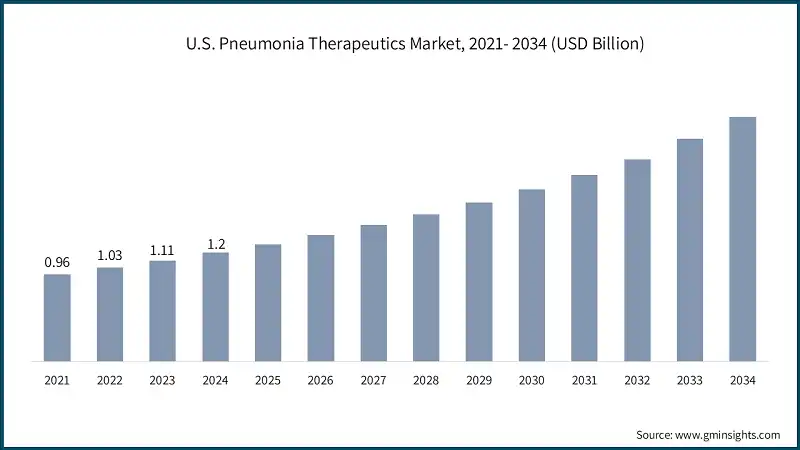
The U.S. pneumonia therapeutics industry was valued at USD 959.1 million in 2021 and USD 1 billion in 2022, respectively. The market size reached USD 1.2 billion in 2024, growing from USD 1.1 billion in 2023.
- Increasing pneumonia prevalence in the U.S. is stimulating market growth. Additionally, rising deaths and the increasing number of hospitalizations due to pneumonia further escalates the market demand. According to American Lung Association, there were 1.4 million emergency visits to hospitals due to pneumonia and over 40,000 deaths occur due to pneumonia.
- Moreover, low adult vaccination rates are stimulating awareness and demand, American Lung Association mentions, in 2022, only 64% of adults aged over 65 and 23% of adults aged between 19-64 who were at high risk received a vaccination for pneumonia.
- Additionally, growing elderly population increases therapeutic demand for pneumonia, with over 58 million people in America in 2022 were aged above 65. The risk of pneumonia is significantly higher, prompting increased use of vaccines such as Prevnar 20 and targeted drug therapies.
Europe pneumonia therapeutics market accounted for USD 877.6 million in 2024 and is anticipated to show lucrative growth over the forecast period.
- Rising awareness and adoption of advanced immunization strategies in Europe, along with increasing government initiatives to strengthen healthcare infrastructure, are anticipated to spur growth in the market across the region.
- Moreover, advancements in vaccine technologies, such as conjugate and protein-based formulations, and the introduction of scalable and cost-effective antibacterial, antiviral, and antifungal therapies, are boosting the demand for pneumonia therapeutics throughout Europe.
- Also, the presence of key pharmaceutical companies in the region strengthens the market. These companies actively contribute to innovation through the development of next-generation pneumonia treatments, expanded clinical trials, and collaborations with infectious disease and public health organizations, thereby accelerating market growth.
Germany pneumonia therapeutics market is anticipated to witness considerable growth over the analysis period.
- The growing cases of pneumonia in Germany are stimulating market demand for innovative solutions for pneumonia. According to Gesund Bund De, pneumonia is one of the ten most common causes of death in Germany, affecting over 500,000 people annually.
- The country has a well-established healthcare infrastructure, which supports the recommendation and adoption of pneumonia therapeutics including vaccines and targeted drug therapies.
- In addition, Germany’s robust pharmaceutical and hospital network, including specialized respiratory clinics, pharmacies, and digital health platforms, ensures wide availability and accessibility of pneumonia treatments.
The Asia Pacific pneumonia therapeutics market is anticipated to grow at the highest CAGR of 8.9% during the analysis timeframe.
- Key markets include China, India, Japan, South Korea, and Australia, where rising pneumonia cases and growing healthcare investments are fueling demand for advanced therapeutics and vaccines.
- Growing awareness campaigns by health ministries, NGOs, medical associations, and pharmaceutical companies are educating the public about pneumonia prevention and the importance of timely treatment, especially among children and the elderly.
- Lastly, increasing growth in the number of hospitals, diagnostic centers, and respiratory care clinics particularly in urban areas is stimulating the expansion of the market.
China pneumonia therapeutics market is predicted to grow significantly over the forecast period.
- China has the highest market share in the region, due to rapid urbanization and healthcare modernization in the country, which are contributing to a rise in disease cases, particularly among children and the elderly. This is stimulating demand for pneumonia therapeutics with long-term protection.
- Additionally, the government is investing in healthcare infrastructure and digital platforms to improve vaccine distribution and treatment access across urban and rural areas. For instance, recent initiatives have focused on expanding cold chain logistics and immunization tracking systems.
- Moreover, the expansion of clinical services and greater public health education are supporting market growth, with increased uptake of antiviral therapies and vaccines among aging and at-risk populations.
Brazil is experiencing significant growth in the Latin America pneumonia therapeutics market due to the increasing demand for pneumonia solutions and long-term care.
- The low vaccine coverage and rising pneumonia cases in Brazil are stimulating the market demand for effective solutions.
- Moreover, with an aging population of 22.2 million people aged above 65 in 2022, as stated by GMDP Academy, further escalates market demand.
- Additionally, the government is investing in healthcare infrastructure and digital platforms to improve vaccine distribution and treatment access across urban and rural areas.
Saudi Arabia pneumonia therapeutics industry is poised to witness substantial growth in Middle East and Africa market during the forecast period.
- The rising incidence of pneumonia and the growing need for preventive care are escalating market demand in Saudi Arabia. Government-led immunization campaigns and increased healthcare access are stimulating the adoption of pneumonia therapeutics, especially among paediatric and elderly populations, thereby stimulating demand for pediatric vaccines.
- Government incentives under Vision 2030, along with the expansion of digital health infrastructure and local vaccine production, are boosting demand across public and private healthcare sectors.
Pneumonia Therapeutics Market Share
Leading companies such as Pfizer, Merck & Co., GlaxoSmithKline (GSK), Bayer, and AstraZeneca collectively hold between 50-60% of the global market. These companies maintain dominance through extensive vaccine portfolios, strategic collaborations, regulatory strength, and continuous innovation. Pfizer leads with its Prevnar series, widely adopted across hospitals and immunization programs. Merck & Co. maintains a strong position with Pneumovax and a diversified pipeline serving both pediatric and adult populations. GSK contributes with broad-spectrum antibiotics and respiratory vaccines, supported by global reach and infectious disease expertise. Bayer enhances market presence with Avelox (moxifloxacin) and other anti-infectives, leveraging strong hospital networks. AstraZeneca supports pneumonia treatment through targeted respiratory therapies and ongoing R&D investments.
Emerging and niche players such as Johnson & Johnson, Abbott Laboratories, Teva Pharmaceuticals, Mylan, Lupin Pharmaceuticals, Cipla, Baxter International, F. Hoffmann-La Roche, Daiichi Sankyo, and Sanofi are gaining traction through specialized therapies, regional distribution networks, and focus on affordability. These companies contribute to the broader pneumonia therapeutic landscape through generics, biologics, and diagnostic tools, while also investing in innovation and expanding access in underserved markets.
Pneumonia Therapeutics Market Companies
Few prominent players operating in the pneumonia therapeutics industry includes:
- Abbott Laboratories
- AbbVie
- AstraZeneca
- Baxter International
- Bayer
- Bristol Myers Squibb
- Cipla
- Daiichi Sankyo
- F. Hoffmann-La Roche
- GlaxoSmithKline
- Johnson & Johnson
- Lupin Pharmaceuticals
- Merck & Co.
- Mylan
- Novartis
- Pfizer
- Teva Pharmaceuticals
GSK contributes to pneumonia care through its broad-spectrum antibiotics and respiratory vaccines, supported by recombinant technologies and global partnerships. Its emphasis on adult immunization and personalized care models enhances its reach across healthcare systems. GSK’s innovation-driven approach and strong distribution networks reinforce its competitive edge.
Pfizer leads the market with a share of ~11.4% in 2024 with its Prevnar vaccine series, offering high efficacy and broad protection against pneumococcal strains. Its global immunization programs, integration with digital health platforms, and strong clinical support make it a preferred partner for public health systems. Pfizer’s commitment to real-world data and patient-centric tools enhances its role in preventive care and treatment adherence.
Merck maintains a strong position with Pneumovax and a diversified pipeline of respiratory therapies. Its legacy in vaccine development, advanced research and development capabilities, and scalable delivery systems support its leadership in pneumonia prevention. Merck’s strategic focus on biologics and digital integration strengthens its long-term impact on respiratory health.
Bayer plays a vital role with products such as Avelox, combining vaccine innovation and antibiotic development to address pneumonia across age groups. Its affordability, global presence, and collaborations with healthcare providers support access in both developed and emerging markets. Bayer’s investment in scalable solutions and preventive care strengthens its position in the pneumonia therapeutics landscape.
Pneumonia Therapeutics Market Report Attributes
| Key Takeaway | Details |
|---|---|
| Market Size & Growth | |
| Base Year | 2024 |
| Market Size in 2024 | USD 3.3 Billion |
| Market Size in 2025 | USD 3.6 Billion |
| Forecast Period 2025 - 2034 CAGR | 8.5% |
| Market Size in 2034 | USD 7.4 Billion |
| Key Market Trends | |
| Drivers | Impact |
| Rising global pneumonia cases | Increasing incidence is driving demand for effective therapeutics and vaccines. |
| Aging population and immunocompromised patients | Greater vulnerability is boosting the need for vaccines and treatments. |
| Expansion of telehealth and e-pharmacy | Easier access to prescriptions and consultations is accelerating therapy adoption. |
| Government vaccination programs | National campaigns and public health initiatives are raising awareness and uptake of pneumonia therapeutics. |
| Pitfalls & Challenges | Impact |
| High cost of branded drugs and vaccines | Limits affordability in low-income regions, restricting global market reach. |
| Limited awareness in developing regions | Lack of education and outreach delays early diagnosis and treatment. |
| Opportunities: | Impact |
| Development of combination therapies | Dual-action drugs and vaccines improve treatment outcomes and reduce resistance. |
| Emerging markets with rising healthcare investment | Asia-Pacific and Latin America hold strong growth potential due to expanding infrastructure. |
| Market Leaders (2024) | |
| Market Leaders |
~11.4% Market Share |
| Top Players |
Collective Market Share in 2024 is ~50-60% |
| Competitive Edge |
|
| Regional Insights | |
| Largest Market | North America |
| Fastest Growing Market | Asia Pacific |
| Emerging Country | India, Brazil, Mexico, South Africa |
| Future Outlook |
|
What are the growth opportunities in this market?
Pneumonia Therapeutics Industry News
- In November 2024, Zai Lab and Pfizer collaborated to commercialize the antibacterial drug XACDURO (sulbactam-durlobactam) in mainland China.The agreement granted Pfizer exclusive rights to perform commercialization,xacduro was approved for treating hospital-acquired and ventilator-associated bacterial pneumonia.
- In June 2024, Orchid Pharma partnered with Cipla to launch the antibiotic Cefepime-Enmetazobactam in India, approved for treating hospital-acquired pneumonia, and ventilator-associated pneumonia. The collaboration aimed to ensure rapid and widespread distribution of the drug across the country.
- In November 2023, Sumitomo Pharma received approval in China for XENLETA in both injection and tablet forms for the treatment of community-acquired pneumonia in adults. This regulatory expanded Sumitomo Pharma’s respiratory portfolio.
The pneumonia therapeutics drugs market research report includes in-depth coverage of the industry with estimates and forecast in terms of revenue in USD Million from 2021 - 2034 for the following segments:
Market, By Infection Type
- Community-acquired pneumonia (CAP)
- Hospital-acquired pneumonia (HAP)
- Ventilator-associated pneumonia (VAP)
- Other infection types
Market, By Treatment Type
- Drug class
- Antibacterial drugs
- Quinolones
- Macrolide
- Other antibacterial drugs
- Antiviral drugs
- Antifungal drugs
- Other drug classes
- Antibacterial drugs
- Vaccines
- Oxygen therapy
Market, By Age Group
- Pediatrics
- Adults
- Geriatrics
Market, By Route of Administration
- Oral
- Parenteral
- Other routes of administration
Market, By End Use
- Hospitals and clinics
- Homecare settings
- Other end use
The above information is provided for the following regions and countries:
- North America
- U.S.
- Canada
- Europe
- Germany
- UK
- France
- Italy
- Spain
- Netherlands
- Asia Pacific
- China
- Japan
- India
- Australia
- South Korea
- Latin America
- Brazil
- Mexico
- Argentina
- Middle East and Africa
- South Africa
- Saudi Arabia
- UAE
Frequently Asked Question(FAQ) :
What is the market size of the pneumonia therapeutics market in 2024?
The market size was USD 3.3 billion in 2024, supported by rising pneumonia incidence among elderly, children, and immunocompromised patients.
What is the market valuation in 2025?
The market size is projected at USD 3.6 billion in 2025, marking the beginning of the forecast period with steady growth.
What is the projected value of the pneumonia therapeutics market by 2034?
The market is expected to reach USD 7.4 billion by 2034, growing at a CAGR of 8.5% driven by increasing pneumonia prevalence, vaccination programs, and adoption of pathogen-specific therapies.
Which infection type segment dominated the market in 2024?
Community-acquired pneumonia (CAP) accounted for 51.4% of the market share in 2024, due to its high global incidence and hospitalization rates.
What was the share of the drug class segment in 2024?
The drug class segment dominated with 67.7% share in 2024, led by antibacterial drugs addressing widespread bacterial pneumonia.
Which region leads the pneumonia therapeutics market?
North America dominated with 40.1% share in 2024, driven by strong healthcare spending, advanced diagnostic infrastructure, and presence of key pharmaceutical companies.
Which route of administration led the market in 2024?
Oral administration held 55.5% market share in 2024, driven by patient convenience, high compliance, and effectiveness of oral antibacterial drugs.
Which end-use segment generated the highest revenue in 2024?
Hospitals and clinics accounted for 53.1% of the market in 2024, supported by centralized infrastructure, immunization programs, and access to trained medical staff.
Who are the key players in the pneumonia therapeutics market?
Key players include Pfizer, Merck & Co., GlaxoSmithKline (GSK), Bayer, AstraZeneca, Abbott, Novartis, Lupin, Johnson & Johnson, Roche, Teva, and Cipla.
Pneumonia Therapeutics Market Scope
Related Reports