Summary
Table of Content

Pharmaceutical Blister Packaging Market
Get a free sample of this report
Form submitted successfully!
Error submitting form. Please try again.
Thank you!
Your inquiry has been received. Our team will reach out to you with the required details via email. To ensure that you don't miss their response, kindly remember to check your spam folder as well!
Request Sectional Data
Thank you!
Your inquiry has been received. Our team will reach out to you with the required details via email. To ensure that you don't miss their response, kindly remember to check your spam folder as well!
Form submitted successfully!
Error submitting form. Please try again.
Pharmaceutical Blister Packaging Market Size
The growth of the pharmaceutical blister packaging market is attributed to rising global pharmaceutical consumption, increasing demand for unit-dose patient safety packaging, the implementation of regulatory mandates for tamper-evident and traceable drug packaging, and the growing adoption of high-barrier materials to protect moisture- and oxygen-sensitive medications.
Pharmaceutical Blister Packaging Market Key Takeaways
Market Size & Growth
- 2025 Market Size: USD 23.3 Billion
- 2026 Market Size: USD 24.9 Billion
- 2035 Forecast Market Size: USD 48.6 Billion
- CAGR (2026–2035): 7.7%
Regional Dominance
- Largest Market: North America
- Fastest Growing Region: Asia Pacific
Key Market Drivers
- Rising global pharmaceutical consumption rates.
- Increasing demand for unit‑dose patient safety packaging.
- Regulatory mandates for tamper‑evidence and traceability.
- Adoption of high‑speed automated packaging lines.
- Need for moisture/oxygen barrier protection for drugs.
Challenges
- Rigid regulatory compliance burden.
- Difficult recyclability of multilayer packs.
Opportunity
- Shift to recyclable mono‑material blisters.
- Smart/serialized packaging innovation.
Key Players
- Market Leader: Amcor plc led with over 14.5% market share in 2025.
- Leading Players: Top 5 players in this market include Amcor plc, Constantia Flexibles, Sonoco Products Company, Westrock Company, Winpak Control Group, which collectively held a market share of 43.8% in 2025.
Get Market Insights & Growth Opportunities
The pharmaceutical blister packaging market is driven by the increasing global pharmaceutical consumption rates, as the production of pharmaceuticals increases in both developed and emerging nations. This increase in medicine consumption rates is because of the rising incidence of chronic diseases, aging population, and improved access to healthcare facilities, which are propelling the consumption of medicines at a global level. According to the IQVIA Institute for Human Data Science, the global medicine consumption rates are likely to reach nearly 4 trillion defined daily doses by 2028, which indicates a continuous increase in the demand for pharmaceuticals. This expansion demands efficient and scalable packaging solutions and hence, blister packaging emerges as the best option due to its cost-effectiveness and the capacity to support the expansion of the pharmaceutical industry.
Furthermore, the growth in the pharmaceutical blister packaging industry is driven by the increase in the demand for pharmaceutical blister packaging as governments and regulatory authorities implement stricter anti-counterfeiting regulations. This has resulted in the acceleration of the adoption of blister packaging solutions that satisfy the regulatory requirements, for instance, the Drug Supply Chain Security Act requires the implementation of enhanced drug traceability and secure package identification in the supply chain. This has resulted in the increase in the adoption of blister packaging solutions in the pharmaceutical industry. Similarly, the EU Falsified Medicines Directive requires safety features such as unique identifiers and tamper evidence for prescription medications. These regulations are pushing pharmaceutical companies to use blister packaging solutions that are suitable for serialization, authentication, and transparency in supply chains.
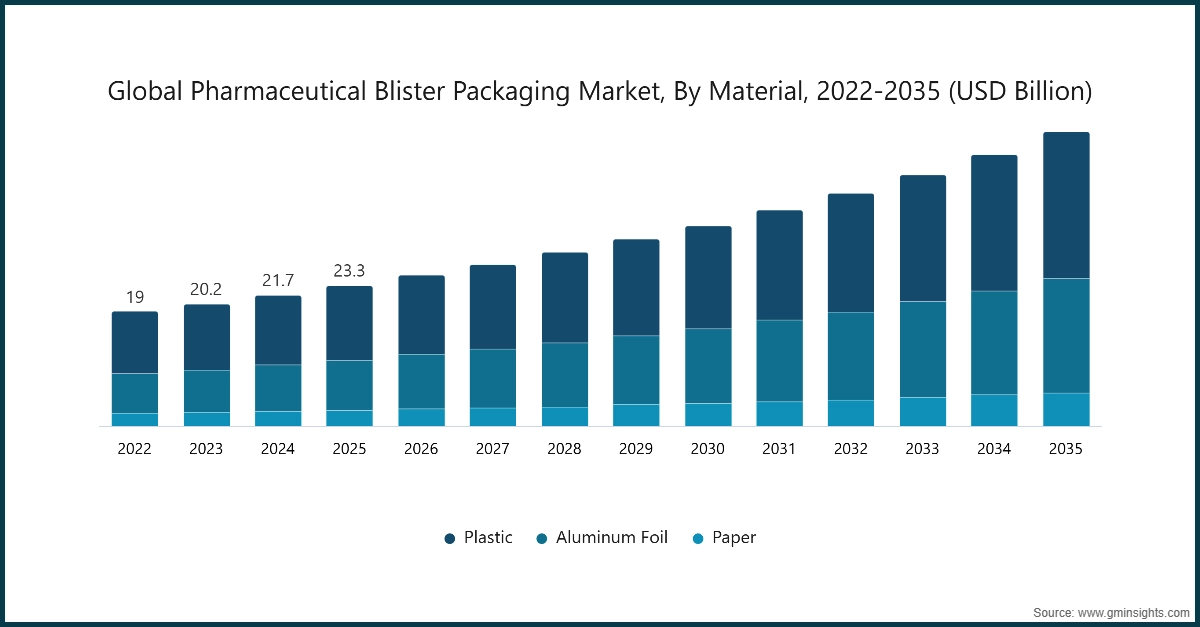
The pharmaceutical blister packaging market increased steadily from USD 19 billion in 2022 and reached USD 21.7 billion in 2024. Factors contributing to the growth of this market are increased pharmaceutical production volumes, packaging compliance requirements for pharmaceuticals, and increased use of blister packaging for oral solid-dose pharmaceuticals. Other contributing factors for the increasing rate of market penetration are the growth in generic pharmaceutical manufacturing, increasing patient-centric packaging formats, and the increasing rate of using high-speed automated blister packaging in pharmaceutical manufacturing plants.
The global pharmaceutical blister packaging market was valued at USD 23.3 billion in 2025. The market is expected to grow from USD 24.9 billion in 2026 to USD 35.8 billion in 2031 & USD 48.6 billion in 2035, at a CAGR of 7.7% during the forecast period according to the latest report published by Global Market Insights Inc.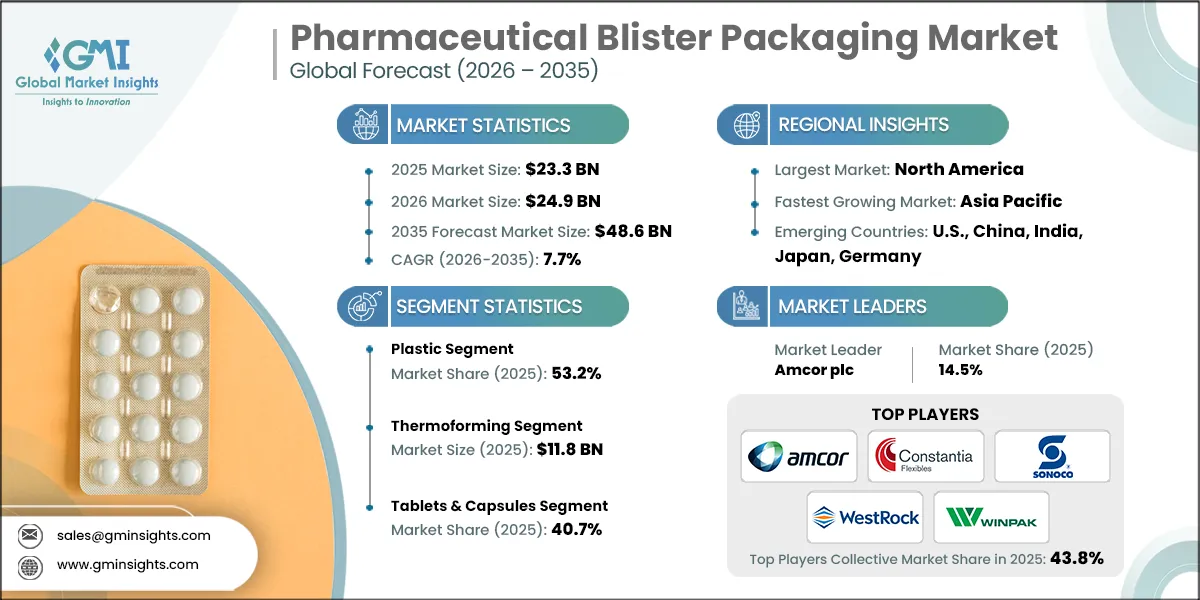
To get key market trends
Pharmaceutical Blister Packaging Market Trends
- The trend toward the adoption of child-resistant and senior-friendly blister packaging is growing as the importance of patient safety is being emphasized by different regulatory authorities and medical professionals. This trend is anticipated to have begun around 2019 with the increase in the number of geriatric and pediatric medication users and is expected to continue until 2032 as the global geriatric population is growing. The impact includes improved patient compliance, prevention of accidental overdoses, and enhanced regulatory compliance in markets.
- The transition to high-barrier films and oxygen/moisture protective laminates started in 2020, because of the increased demand for stability in sensitive pharmaceuticals. The industry will continue to grow until 2031 because producers need to meet new requirements for product shelf life. The current pattern of drug delivery keeps medications effective while decreasing waste and creating market demand for materials which maintain product quality during storage.
- Serialised and track-and-trace blister packaging is becoming an integral part of the pharmaceutical supply chain, starting in 2018 in response to anti-counterfeiting legislation in Europe and the US. The trend will continue until 2033 because worldwide regulatory requirements are increasing. The system improves drug protection while making product recalls easier and building customer trust through confirmed medicine distribution.
- The trend toward eco-friendly and recyclable blister packaging began in 2021 in response to growing environmental sustainability and pharmaceutical waste legislation in Europe and North America. This trend is likely to increase through 2035, driven by the hospitals, pharmacies, and manufacturer ESG goals. This will result in reduced packaging waste, brand reputation, and access to new market segments in green healthcare solutions.
Pharmaceutical Blister Packaging Market Analysis
Learn more about the key segments shaping this market
Based on material, the market is divided into plastic, aluminum foil, and paper.
- The plastic segment led the market in 2025, holding a 53.2% share. Plastic dominates the pharmaceutical blister packaging market because it provides excellent formability, transparency, and cost efficiency for high-volume drug packaging. Materials such as PVC and PET enable precise cavity formation and compatibility with automated blister packaging lines, making them widely used for oral solid dose products across global pharmaceutical manufacturing.
- The aluminum foil segment is anticipated to grow at a CAGR of 8.6% over the forecast period. This growth is driven by the increasing demand for superior barrier protection against moisture, oxygen, and light for sensitive pharmaceutical formulations. Aluminum-based blister materials are gaining popularity in cold-form blister packs for drugs requiring extended shelf life and enhanced product stability.
Based on technology, the global pharmaceutical blister packaging market is divided into cold forming, thermoforming, and heat seal.
- The thermoforming segment dominated the market in 2025 and valued at USD 11.8 billion due to its extensive use in high-volume pharmaceutical packaging applications. Thermoforming technology allows manufacturers to produce transparent blister cavities efficiently using plastic films, enabling product visibility and cost-effective large-scale production. Its compatibility with automated blister packaging equipment and suitability for tablets and capsules sustain its strong demand across pharmaceutical production facilities.
- The cold forming segment is expected to witness growth at a CAGR of 6.9% during the forecast period. This is because the demand is rising due to the requirement for high-barrier blister materials that can protect pharmaceutical products from moisture, oxygen, and light. Cold forming technology, coupled with the application of aluminum blisters, is gaining popularity in the pharmaceutical industry, as this packaging format is used to package moisture-sensitive as well as high-value drugs.
Learn more about the key segments shaping this market
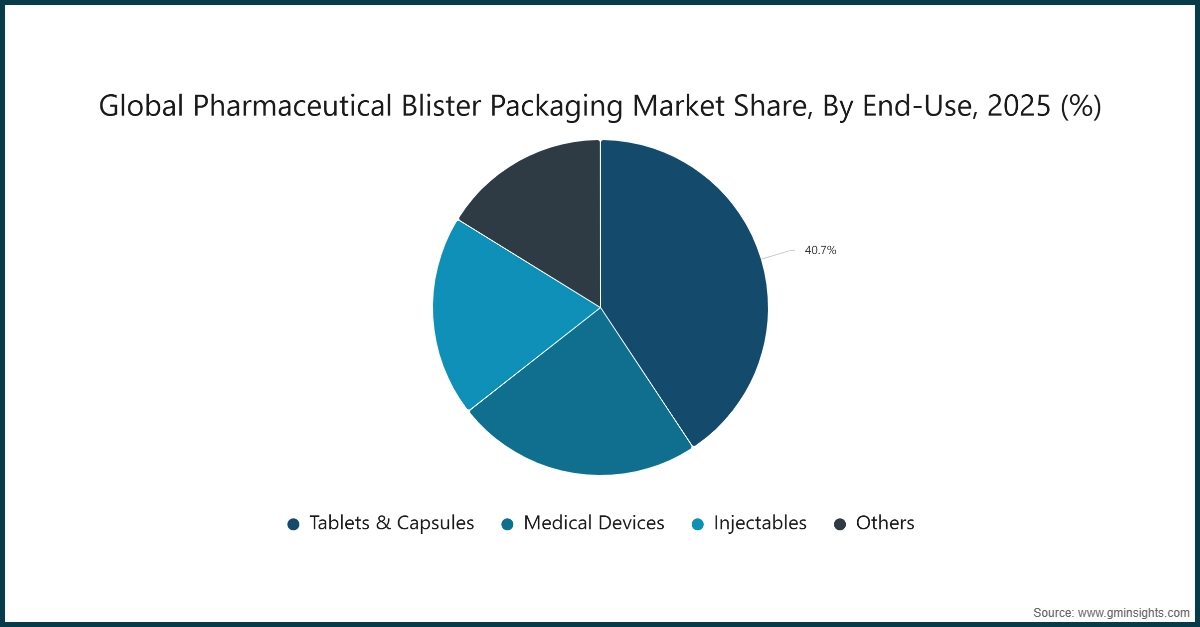
Based on end-use, the global pharmaceutical blister packaging market is divided into tablets & capsules, medical devices, injectables, and others.
- The tablets & capsules segment led the market in 2025 with a revenue share of 40.7% because blister packaging serves as the standard method for distributing oral solid dosage forms in pharmaceuticals. The world recognizes tablets and capsules as the primary medication formats which doctors prescribe, while blister packaging delivers unit-dose protection, improves patient compliance and enables pharmaceutical companies to produce their products in large quantities.
- The medical devices segment is expected to grow at a CAGR of 7.4% during the forecast period because of rising demand for sterile and protective packaging which companies use to package diagnostic kits, inhalers and small medical components. Blister packaging provides three essential functions as it shows tamper evidence, allows users to see the product and it protects against contamination which makes it suitable for distributing delicate medical devices through healthcare facilities and retail outlets.
Looking for region specific data?
North America Pharmaceutical Blister Packaging Market
North America held around 34.7% of pharmaceutical blister packaging industry share in 2025.
- In North America, the pharmaceutical blister packaging market is growing due to the region’s large pharmaceutical manufacturing base and stringent drug packaging regulations. Increasing demand for unit-dose packaging in hospitals and retail pharmacies is accelerating adoption of blister packs for tablets and capsules. According to the U.S. Food and Drug Administration (FDA) and regional healthcare regulators, pharmaceutical packaging must meet strict tamper-evidence and product protection requirements, encouraging the use of high-barrier blister materials.
- Additionally, pharmaceutical companies and packaging suppliers are investing in sustainable blister packaging technologies and advanced automation systems to improve efficiency and regulatory compliance. The region is expected to remain a major market through 2035, supported by strong pharmaceutical production, innovation in packaging materials, and expanding demand for patient-centric packaging solutions.
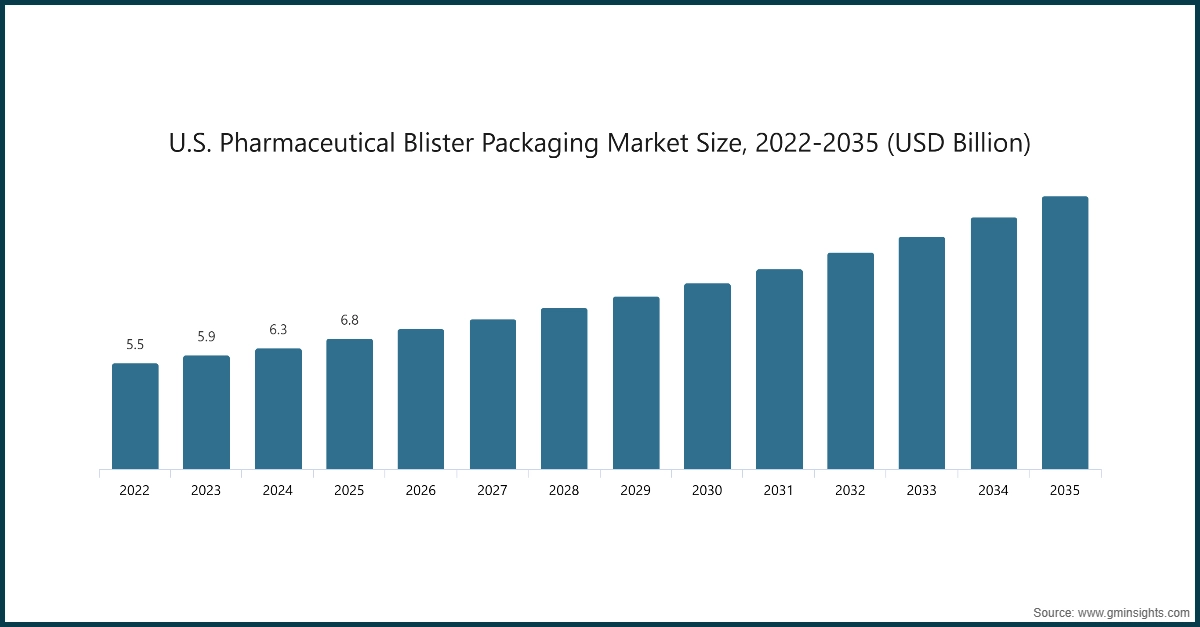
The U.S. pharmaceutical blister packaging market was valued at USD 5.5 billion and USD 5.9 billion in 2022 and 2023, respectively. The market size reached USD 6.8 billion in 2025, growing from USD 6.3 billion in 2024.
- The growth of the pharmaceutical blister packaging industry in the United States is particularly strong due to high prescription medicine utilization and strict pharmaceutical supply chain regulations. According to the IQVIA Institute for Human Data Science, prescription medicine use in the U.S. reached approximately 215 billion days of therapy in 2024, reflecting a 14% increase over the past five years as treatment for chronic diseases and long-term therapies expands.
- Additionally, the U.S. Drug Supply Chain Security Act (DSCSA) requires package-level traceability and serialization of prescription drugs across the supply chain, with enhanced electronic tracking systems being implemented across manufacturers, distributors, and dispensers through 2025–2026. These regulatory requirements, combined with the country’s large pharmaceutical manufacturing sector and strong retail pharmacy network, are accelerating adoption of compliant packaging formats such as blister packs, making the United States the leading market for pharmaceutical blister packaging in North America.
Europe Pharmaceutical Blister Packaging Market
Europe market accounted for USD 2 billion in 2025 and is anticipated to show lucrative growth over the forecast period.
- Europe’s market is expanding due to strict pharmaceutical safety and packaging regulations along with strong regional drug manufacturing. The EU Falsified Medicines Directive requires prescription medicines to carry tamper-evident packaging and serialized safety features, which has accelerated adoption of blister packs capable of supporting traceability and product protection. In addition, the European Medicines Agency (EMA) reports that Europe accounts for a large share of global oral solid-dose production, particularly in Western and Central Europe, increasing demand for high-barrier blister materials such as PVC/PVDC and aluminum cold-form laminates.
- Countries including Germany, France, Italy, and the United Kingdom are also strengthening pharmaceutical packaging sustainability initiatives, with packaging suppliers investing in recyclable blister materials and mono-polymer solutions to comply with the EU Packaging and Packaging Waste Regulation (PPWR). These regulatory and manufacturing factors are supporting sustained adoption of advanced blister packaging solutions across the European pharmaceutical supply chain.
Germany dominates the Europe pharmaceutical blister packaging market, showcasing strong growth potential.
- Germany is one of the largest pharmaceutical packaging markets in Europe because of its established pharmaceutical industry and advanced pharmaceutical packaging machines. According to the German Trade and Invest organization, there are more than 600 pharmaceutical and biotech companies in the country, including leading pharmaceutical manufacturers that demand large-scale pharmaceutical packaging solutions for tablets and capsules. Moreover, there are leading pharmaceutical packaging machine manufacturers like the Uhlmann Group and Romaco, who have specialized in the production of automated blister packaging machines used in the production of drugs in Europe.
- In addition, the implementation of the EU Falsified Medicines Directive serialization requirements in 2019 significantly increased demand for blister packaging formats compatible with tamper-evident and traceable pharmaceutical packaging. The combination of large-scale drug manufacturing, advanced packaging machinery capabilities, and strict regulatory compliance requirements positions Germany as a leading market for pharmaceutical blister packaging in Europe.
Asia Pacific Pharmaceutical Blister Packaging Market
The Asia Pacific market is anticipated to grow at the highest CAGR of 9.1% during the forecast period.
- The Asia Pacific market is growing significantly with the rise in pharmaceutical manufacturing capacity in the region and increasing pharmaceutical drug consumption in the region. Countries such as India, China, and Japan have become major hubs for generic drug production, increasing demand for cost-efficient and high-volume blister packaging solutions. According to the India Brand Equity Foundation, India contributes nearly 20% of the world’s generic medicines in terms of volume. This is significantly increasing the need for efficient pharmaceutical blister packaging solutions in the region for the packaging of oral solid dosage forms of drugs.
- In addition, many multinational pharmaceutical companies are planning to expand their manufacturing facilities in Southeast Asia to meet the increasing pharmaceutical drug demand in the region, which is encouraging packaging suppliers to invest in thermoforming films, cold-form laminates, and high-barrier blister materials and hence supporting strong growth of blister packaging adoption across the Asia pacific region.
China pharmaceutical blister packaging market is estimated to grow with a significant CAGR, in the Asia Pacific market.
- China is one of the most significant pharmaceutical packaging markets in Asia because of its highly developed pharmaceutical manufacturing industry and the ongoing modernization of drug production quality. According to the National Medical Products Administration, the country has been improving the quality of its pharmaceutical packaging through the implementation of updated Good Manufacturing Practice (GMP) regulations and promoting the use of premium quality blister packaging.
- The country is one of the largest producers of active pharmaceutical ingredients (APIs) in the world and provides a substantial portion of the global pharmaceutical manufacturing industry's demand for APIs. In addition, the country's pharmaceutical companies are increasingly using modern automated blister packaging machinery for improving the efficiency of drug production and exporting drug products to other countries such as the EU and the US. These factors position China as a key growth market for pharmaceutical blister packaging in the Asia Pacific region.
Middle East and Africa Pharmaceutical Blister Packaging Market
Saudi Arabia pharmaceutical blister packaging industry to experience substantial growth in the Middle East and Africa.
- Saudi Arabia is experiencing rapid growth in the pharmaceutical blister packaging industry, mainly due to the increasing domestic pharmaceutical manufacturing industry in the country. According to the Saudi Vision 2030 plan, the Saudi government is encouraging pharmaceutical companies to establish domestic manufacturing units in the country to reduce dependence on imported pharmaceutical products. Recently, the Saudi government has approved many pharmaceutical products manufactured domestically, along with the implementation of pharmaceutical packaging quality standards in the country, thereby increasing the demand for blister packaging for tablets and capsules.
- Additionally, investments in domestic manufacturing units by pharmaceutical companies in cities such as Riyadh and Jeddah are increasing the requirement for automated blister packaging lines and high-barrier packaging materials to support large-scale drug manufacturing and distribution within the country.
Pharmaceutical Blister Packaging Market Share
The pharmaceutical blister packaging industry is led by players such as Amcor, Constantia Flexibles, Sonoco Products Company, WestRock Company, and Winpak Ltd. These five companies collectively held a 43.8% market share in 2025. The companies are backed by diversified packaging solutions, high engineering materials, and wide global manufacturing footprint for pharmaceutical manufacturers in North America, Europe, and Asia-Pacific regions. These companies' wide portfolio in thermoformed plastic blisters, cold-form aluminum laminates, and high-barrier pharmaceutical films positions them well to retain their competitive edge in the market.
These companies also help sustain their presence in the market through continuous investments in sustainable packaging solutions, advanced barrier materials, and manufacturing technologies. In addition, strategic partnerships with pharmaceutical companies and expanded recyclable blister packaging solutions help these companies sustain their ability to win more market share in a growing pharmaceutical packaging market driven by increasing demand for compliant pharmaceutical solutions worldwide.
Pharmaceutical Blister Packaging Market Companies
Prominent players operating in the pharmaceutical blister packaging industry are as mentioned below:
- ACG
- Amcor plc
- AptarGroup, Inc.
- Borealis AG
- Caprihans India Limited
- Carcano Antonio S.p.A.
- Constantia Flexibles
- Dow
- Honeywell International Inc.
- Huhtamaki
- RENOLIT SE
- Rohrer Corporation
- Romaco Group
- Sonoco Products Company
- SUDPACK
- Syensqo
- Tekni-Plex, Inc.
- Tjoapack LLC
- VinylPlus
- WestRock Company
- Winpak Control Group
- Amcor plc
Amcor plc provides high-performance thermoforming films and cold-form laminates together with eco-friendly packaging products which safeguard drugs from both moisture and oxygen. The company develops recyclable packaging solutions together with advanced material solutions which help pharmaceutical companies achieve their worldwide regulatory compliance needs, product safety requirements and sustainability objectives.
Constantia Flexibles provides pharmaceutical flexible packaging solutions which include aluminum-based blister laminates and high-barrier packaging materials. The company develops anti-counterfeiting technologies and sustainable packaging solutions which protect products while fulfilling regulatory requirements for secure drug delivery in international pharmaceutical markets.
Sonoco offers protective and specialized packaging solutions to pharmaceutical companies, particularly blister packaging components and packaging design solutions for pharmaceutical packaging applications. The company specializes in integrated packaging solutions to improve product protection, supply chain efficiency, and sustainability for pharmaceutical companies, as well as providing advanced packaging engineering and testing solutions for pharmaceutical packaging solutions.
WestRock delivers pharmaceutical packaging solutions including blister cards, secondary packaging cartons, and patient adherence packaging formats. The company integrates paper-based sustainability solutions with blister packaging systems to improve medication safety, tamper evidence, and environmental performance across pharmaceutical supply chains.
Pharmaceutical Blister Packaging Market Report Attributes
| Key Takeaway | Details |
|---|---|
| Market Size & Growth | |
| Base Year | 2025 |
| Market Size in 2025 | USD 23.3 Billion |
| Market Size in 2026 | USD 24.9 Billion |
| Forecast Period 2026-2035 CAGR | 7.7% |
| Market Size in 2035 | USD 48.6 Billion |
| Key Market Trends | |
| Drivers | Impact |
| Rising global pharmaceutical consumption rates | Drives 23% growth by increasing demand for secure, patient‑ready packaging across chronic, acute, and over‑the‑counter drug portfolios, as aging populations and expanding healthcare access elevate global medicine volumes. |
| Increasing demand for unit‑dose patient safety packaging | Drives 19% growth by promoting single dose blister packs that improve medication adherence, reduce dosing errors, and enhance patient safety across hospitals, outpatient care, and home therapy settings. |
| Regulatory mandates for tamper‑evidence and traceability | Contributes 21% growth as governments and health authorities require serialized, tamper‑evident, and track‑and‑trace capable blister packs to combat counterfeiting, ensure patient safety, and comply with Falsified Medicines regulations. |
| Adoption of high‑speed automated packaging lines | Adds 17% growth by enabling pharmaceutical manufacturers to deploy high‑speed blister forming, filling, and sealing systems that increase productivity and reduce per‑unit packaging costs. |
| Need for moisture/oxygen barrier protection for drugs | Accounts for 20% growth through greater uptake of barrier materials and advanced foil/film laminates that protect sensitive compounds from degradation, prolonging shelf life and ensuring product integrity. |
| Pitfalls & Challenges | Impact |
| Rigid regulatory compliance burden | Restrains market growth as blister packaging must constantly adapt to evolving global regulatory frameworks such as serialization, tamper‑evidence, and drug safety labeling requiring costly system upgrades, audits, and documentation that slow time‑to‑market and raise compliance costs. manufacturers face complex country‑specific requirements for materials, printing, and child‑resistant designs. Lengthy approval cycles and stringent quality systems increase operational overhead, particularly for mid‑tier and regional packagers. |
| Difficult recyclability of multilayer packs | Restricts market expansion because traditional PVC/ALU multi‑layer blister laminates are hard to recycle, leading to higher waste processing costs and environmental compliance pressures from sustainability regulations. Recyclability concerns push healthcare buyers toward mono‑material or alternative formats, slowing investment in new material technologies and complicating supply chain decisions. |
| Opportunities: | Impact |
| Shift to recyclable mono‑material blisters | Presents significant growth potential by reducing environmental impact and meeting rising sustainability mandates from regulators, healthcare systems, and pharmacies. Wider adoption of mono‑polymer films enables easier recycling, enhances brand ESG positioning, and opens new contracts with eco‑focused pharmaceutical customers. |
| Smart/serialized packaging innovation | Unlocks growth through integration of serialization, QR codes, and NFC tags into blister cards, enabling secure track‑and‑trace, real‑time authentication, and patient engagement via mobile apps. Pharma companies can deploy connected packaging solutions that improve supply chain visibility, support adherence tracking, and deliver value‑added services such as dosing reminders strengthening brand loyalty and reducing medication errors. |
| Market Leaders (2025) | |
| Market Leader |
14.5% market share in 2025 |
| Top Players |
Collective Market Share for top 5 players is 43.8% in 2025 |
| Competitive Edge |
|
| Regional Insights | |
| Largest Market | North America |
| Fastest growing market | Asia Pacific |
| Emerging countries | U.S., China, India, Japan, Germany |
| Future outlook |
|
What are the growth opportunities in this market?
Pharmaceutical Blister Packaging Industry News
- In October 2025, Romaco Group introduced the Noack N 950E blister packaging machine at CPHI & PMEC India, featuring locally manufactured format parts for the first time. The initiative supports faster delivery times, strengthens the company’s manufacturing presence in Asia, and enhances access to advanced pharmaceutical blister packaging equipment for regional drug manufacturers.
- In April 2025, Amcor plc opened a new advanced coating facility in the Asia-Pacific region to strengthen supply of high-performance healthcare packaging materials. The plant integrates air-knife coating technology to improve barrier performance and reduce lead times for pharmaceutical packaging customers across the region.
- In January 2025, Huhtamaki Flexibles presented its latest healthcare packaging innovations at the Pharmapack exhibition in Paris. The company highlighted advanced pharmaceutical packaging technologies and flexible blister packaging solutions aimed at improving product protection, regulatory compliance, and supply chain efficiency for global pharmaceutical manufacturers.
The pharmaceutical blister packaging market research report includes in-depth coverage of the industry with estimates and forecast in terms of revenue (USD Million) from 2022 – 2035 for the following segments:
Market, By Material
- Plastic
- Aluminum Foil
- Paper
Market, By Technology
- Cold Forming
- Thermoforming
- Heat Seal
Market, By End Use
- Tablets & Capsules
- Medical Devices
- Injectables
- Others
The above information is provided for the following regions and countries:
- North America
- U.S.
- Canada
- Europe
- Germany
- UK
- France
- Spain
- Italy
- Netherlands
- Asia Pacific
- China
- India
- Japan
- Australia
- South Korea
- Latin America
- Brazil
- Mexico
- Argentina
- Middle East and Africa
- South Africa
- Saudi Arabia
- UAE
Frequently Asked Question(FAQ) :
What is the market size of the pharmaceutical blister packaging in 2025?
The market size was USD 23.3 billion in 2025, with a CAGR of 7.7% expected through 2035, driven by rising global pharmaceutical consumption, increasing demand for unit-dose patient safety packaging, regulatory mandates for tamper-evident and traceable drug packaging.
What is the projected value of the pharmaceutical blister packaging industry by 2035?
The pharmaceutical blister packaging market is expected to reach USD 48.6 billion by 2035, propelled by advancements in sustainable recyclable and mono-material films.
What is the current pharmaceutical blister packaging industry size in 2026?
The market size is projected to reach USD 24.9 billion in 2026.
What was the market share of the plastic material segment in 2025?
The plastic segment led the material market with a 53.2% share in 2025, driven by excellent formability, transparency, and cost efficiency for high-volume drug packaging.
What was the revenue of the thermoforming technology segment in 2025?
The thermoforming segment was valued at USD 11.8 billion in 2025, driven by its extensive use in high-volume pharmaceutical packaging applications.
What is the growth outlook for the medical devices end-use segment?
The medical devices segment is expected to grow at a CAGR of 7.4% till 2035 driven by rising demand for sterile and protective packaging for diagnostic kits, inhalers, and small medical components.
Which region leads the pharmaceutical blister packaging market?
North America leads the global pharmaceutical blister packaging market with a 34.7% share in 2025, supported by a large pharmaceutical manufacturing base, stringent FDA drug packaging regulations requiring tamper-evidence and product protection.
What are the key trends shaping the pharmaceutical blister packaging market?
Key trends include rising geriatric and pediatric drug usage, growing adoption of high-barrier and moisture-protective blister films, and increasing implementation of serialized track-and-trace packaging to prevent pharmaceutical counterfeiting.
Who are the key players in the pharmaceutical blister packaging market?
Key players include ACG, Amcor plc, AptarGroup Inc., Borealis AG, Caprihans India Limited, Carcano Antonio S.p.A., Constantia Flexibles, Dow, Honeywell International Inc., Huhtamaki, RENOLIT SE, Rohrer Corporation, Romaco Group, Sonoco Products Company, SUDPACK, Syensqo, Tekni-Plex Inc., Tjoapack LLC.
Pharmaceutical Blister Packaging Market Scope
Related Reports