Summary
Table of Content

Peritoneal Dialysis Market
Get a free sample of this report
Form submitted successfully!
Error submitting form. Please try again.
Thank you!
Your inquiry has been received. Our team will reach out to you with the required details via email. To ensure that you don't miss their response, kindly remember to check your spam folder as well!
Request Sectional Data
Thank you!
Your inquiry has been received. Our team will reach out to you with the required details via email. To ensure that you don't miss their response, kindly remember to check your spam folder as well!
Form submitted successfully!
Error submitting form. Please try again.
Peritoneal Dialysis Market Size
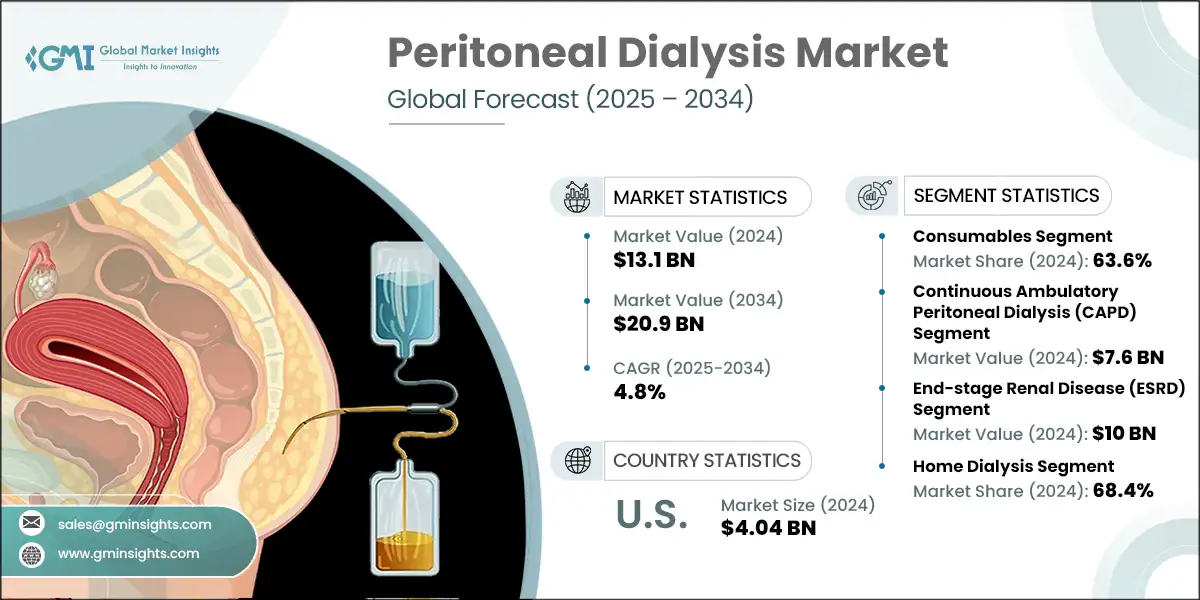
The global peritoneal dialysis market size was valued at USD 13.1 billion in 2024. The market is expected to reach from USD 13.6 billion in 2025 to USD 20.9 billion in 2034, growing at a CAGR of 4.8% during the forecast period. The high market growth is attributed to the growing prevalence of kidney disorders, favourable reimbursement scenario for dialysis treatment, cost advantages over hemodialysis treatment model, and shortage of donor kidneys among other contributing factors.
Peritoneal Dialysis Market Key Takeaways
Market Size & Growth
- 2024 Market Size: USD 13.1 Billion
- 2034 Forecast Market Size: USD 20.9 Billion
- CAGR (2025–2034): 4.8%
Regional Dominance
- Largest Market: North America
- Fastest Growing Region: Asia Pacific
Key Market Drivers
- Rising number of end stage renal diseases (ESRD) patients.
- Shortage of donor kidneys.
- Cost advantages over hemodialysis.
- Favourable reimbursement scenario for dialysis treatment.
- Growing prevalence of diabetes and hypertension.
Challenges
- Complications in the treatment.
Opportunity
- Growth in home dialysis adoption.
- Increasing demand in emerging countries.
Key Players
- Market Leader: Fresenius Medical Care led with over 38.2% market share in 2024.
- Leading Players: Top 5 players in this market include Fresenius Medical Care, Vantive (Baxter), B. Braun, which collectively held a market share of 75% in 2024.
Get Market Insights & Growth Opportunities
Peritoneal dialysis is a type of dialysis treatment for patients with different kidney related conditions. It removes the waste products from blood, when kidneys are not able to function efficiently. It is used for patients suffering from end-stage renal disease (ESRD) and acute kidney injuries. Leading companies operating in the industry includes Vantive (Baxter), Davita Kidney Care, Fresenius Medical Care, and B. Braun, among other players. The continuous ambulatory peritoneal dialysis (CAPD) method involves around 3 to 5 sessions/exchanges during the daytime, with each session lasting about 40 mins and then one with a longer dwell time when the patient is in sleep.
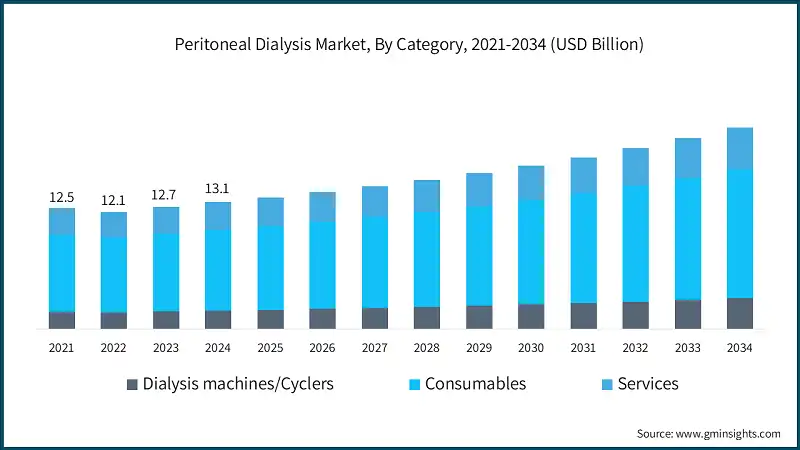
The market has witnessed slight increase from USD 12.5 billion in 2021 to USD 12.7 billion in 2023, with the historic growth rate of 0.6%. The market growth was driven by the growing elderly population and need for dialysis treatments. For example, according to the data reported in a 2021 report by USRDS ESRD, the ESRD incidence was significantly high in the above 75 years age group in Europe. The report highlighted that, the highest ESRD incidence in Europe was recorded in Greece for the 75 years and above category with an incidence of 1,175 per million population. Thus, the significant rise in percentage of elderly individuals is fueling the demand for industry growth.
Additionally, the growing preference for home based dialysis sessions is a key factor contributing to industry growth. For instance, according to the data reported by National Kidney Foundation, only 14 percent of the people suffering from dialysis uses at-home dialysis for treatment in the U.S. Thus, it highlights the available potential for home based treatment model that offers additional cost-benefits in comparison to traditional in-center services.
The increasing prevalence of people suffering from end stage renal diseases (ESRD) is projected to be a key variable in the market growth. For instance, as per the statistics reported in a 2024 annual report by The United States Renal Data System (USRDS), the number of newly diagnosed patients with ESRD recorded a considerable rise between 2002 to 2022 from 99,956 to 131,194 in the U.S. The patients suffering from ESRD needs kidney transplantation or renal replacement therapy. Thus, the rise in target population is anticipated to propel the demand for dialysis services globally.
Further, the cost advantages offered by peritoneal dialysis over hemodialysis are an important growth driver. Factors such as less staff related cost, home-based modalities, and fewer medications for PD patients in comparison to in-center HD patients are expected to support the market growth. Furthermore, better clinical outcomes for PD patients is another pointer contributing to growing adoption rate.
To get key market trends
Peritoneal Dialysis Market Trends
Growing awareness regarding the available treatment modalities, an increase in the adoption rate of PD in emerging countries, coupled with demand for home-based dialysis models, are among the key trends shaping the industry's growth.
- The rise in kidney-related disorders is leading to a high patient population that requires dialysis, including both hemodialysis and peritoneal dialysis. Home dialysis model offers several benefits, such as better clinical outcomes, improved quality of life, and cost-effectiveness, among other advantages. There is a substantial rise in the number of people opting for home-based dialysis treatments, especially PD.
- For instance, according to the data reported in The United States Renal Data System (USRDS) 2024 report, from the total 131,194 newly diagnosed patients, 17,939 or around 13.7 percent of people, opted for peritoneal dialysis in 2022 in the U.S. Hence, the growing preference of patients towards at-home care is expected to spur the market growth over the analysis period.
- Additionally, countries such as China, India, Brazil, and Mexico account for a significant percentage of the overall patient population globally. The rise in the number of patients that require dialysis is fueling the demand for PD products and services.
- For example, as per a recent article published by Bright Nikkiso, the total number of dialysis patients is projected to reach 4.9 million in 2025 globally, and China is anticipated to account for around 27 percent, or approximately 1.34 million of it. Thus, the significantly high patient population in the country is projected to boost peritoneal dialysis adoption in the country, contributing to overall market growth.
- Moreover, favorable reimbursement policies and supportive programs by government authorities and various global and local NGO’s in developing nations is another factor contributing to increased market growth.
Peritoneal Dialysis Market Analysis
Learn more about the key segments shaping this market
The global market was valued at USD 12.5 billion in 2021. The market size reached USD 12.7 billion in 2023, from USD 12.1 billion in 2022.
Based on category, the market is segmented into dialysis machines/cyclers, consumables, and services. The consumables segment accounted for leading market share of 63.6% in 2024 owing to increasing incidence of ESRD patients, demand for peritoneal dialysis solutions, and preference for home based therapies. The segment is expected to exceed USD 13.3 billion by 2034, growing at a CAGR of 4.9% during the forecast period. On the other hand, dialysis machines/cyclers segment is expected to grow with a CAGR of 5.5% over the forecast period. The growth of this segment can be attributed to the advancements in dialysis machines, rise in awareness, and increasing demand for automated peritoneal dialysis.
- PD catheters, PD solutions/dialysate, access products and several other consumables are part of the regular PD therapy session. The increasing burden of kidney failure, especially among elder age groups, is a key factor propelling the industry growth. Rise in number of patients due to chronic and acute kidney injuries is resulting in overall demand for home based modalities including PD therapy.
- For instance, according to the data reported by The International Society of Nephrology, the prevalence of chronic kidney diseases worldwide is 10.4 percent and 11.8 percent for men and women, respectively. Thus, such high target patient population results in increased demand for peritoneal dialysis services owing to cost-effective nature of the treatment. In addition, rise in number of patients leads to increase in number of total sessions/exchanges conducted per patient. This directly spurs the demand for consumables required during the PD procedure.
- Further, the advancements in consumables such as catheters is expected to promote the adoption rate. For example, in July 2022, a medical device manufacturer, Light Line Medical, Inc., signed a license agreement with Mayo Clinic to advance its infection prevention technology for different catheters. This partnership covers urinary catheters, PD catheters and various other catheter types. Such developments further push the adoption of high-quality PD catheters during the process to minimize infection levels.
- Moreover, services segment accounted for second-largest share of around 21.9% in 2024. The segment is anticipated to witness robust growth throughout the forecast period owing to substantial demand for home-based therapies, patient flexibility, and cost-effectiveness.
Based on type, the peritoneal dialysis market is segmented as continuous ambulatory peritoneal dialysis (CAPD) and automated peritoneal dialysis (APD). The continuous ambulatory peritoneal dialysis segment dominated the market in 2024 accounting for USD 7.6 billion and is anticipated to grow at a CAGR of 4.6% during the forecast period.
- The demand for continuous ambulatory peritoneal dialysis (CAPD) remains strong, especially in developing regions where access to dialysis centers and automated equipment is limited. People prefer CAPD because it is more affordable, easy to use, and does not require machines for the treatment. It gives patients the freedom to manually perform dialysis several times a day, allowing them to maintain their daily routines without major disruptions.
- Healthcare systems in low- and middle-income countries actively support CAPD due to its cost-effectiveness and minimal infrastructure needs. While automated peritoneal dialysis (APD) is becoming more popular in developed nations with better resources and infrastructure, CAPD leads in the overall scenario, particularly in rural and underserved regions where resources are limited. In addition, supportive government policies are pushing the industry growth in an upward trajectory. For instance, more than 1.7 million beneficiaries availed dialysis related services provided by Indian government to its citizens under the Pradhan Mantri National Dialysis Programme (PMNDP).
- On the other hand, the automated peritoneal dialysis (APD) segment is anticipated to witness higher growth with a CAGR of 5.1% during the analysis period. The segmental growth is attributed to its convenience such as overnight dialysis and real-time remote monitoring makes home-based care safer and easier for patients. This shift is being driven by ageing populations, the increasing prevalence of end-stage renal disease (ESRD) and chronic kidney disease (CKD), advancements in technology, and reimbursement policies that support its adoption in developed markets.
Based on disease condition, the peritoneal dialysis market is segmented as end-stage renal disease (ESRD), acute kidney injury (AKI), and other conditions. The ESRD segment dominated the market in 2024 accounting for USD 10 billion and is anticipated to grow at a CAGR of 4.7% during the forecast period.
- The need for end-stage renal disease (ESRD) treatment is rising rapidly as more people worldwide face chronic kidney disease (CKD), diabetes, hypertension, coupled with growing aging population. For example, according to the Global Burden of Disease Study, CKD is expected to rank as the fifth most common cause of years of life lost across the world by 2040.
- ESRD is the final, irreversible stage of CKD, where patients require renal replacement therapy, either through dialysis or a kidney transplant. However, with limited access to transplants, and shortage of donor kidney, dialysis has become the most common treatment option, propelling market growth.
- Additionally, regions such as Asia-Pacific and Sub-Saharan Africa, are witnessing high ESRD cases, driven by rising diabetes rates and the lack of early CKD detection. For instance, countries in the Southeast Asia have a higher rate of diabetic population in the APAC region. Countries such as Malaysia, Singapore, and Indonesia with 19%, 11.6% and 10.6% of the total populations, respectively with diabetes as of 2021. Such high incidence of diabetic patients is fueling the demand for different modalities of kidney treatment.
- Whereas acute kidney injury (AKI) segment accounted for substantial share in 2024 and is expected to record higher growth with a 5.7% CAGR over the projected timeframe. Further, acute kidney injury (AKI) is increasingly common in hospitalized patients. For example, AKI incidence among the patients in intensive care unit (ICU) may range around 20 percent and 50 percent. Hence, the high patient population that needs renal care is projected to support the market growth.
Learn more about the key segments shaping this market
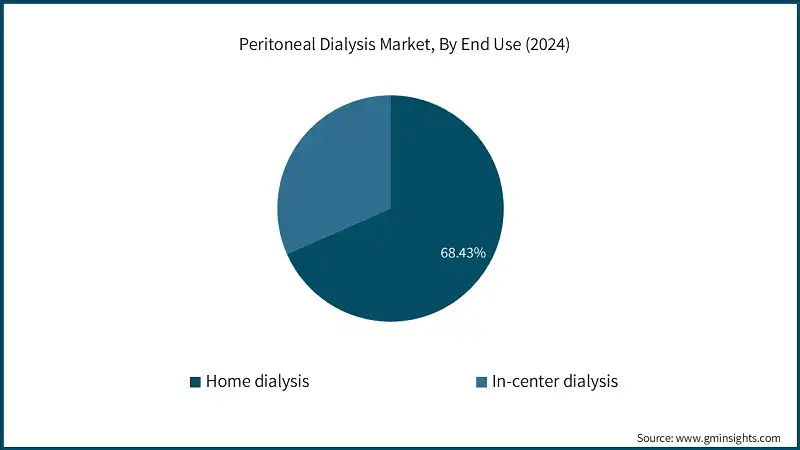
Based on end use, the peritoneal dialysis market is classified into home dialysis and in-center dialysis. The home dialysis segment dominated the market with a revenue share of 68.4% in 2024 owing to the high patient volume for peritoneal dialysis procedures, preference for home based therapies and favorable reimbursement schemes, among other factors.
- The demand for home dialysis in the peritoneal dialysis segment is rising because it offers flexibility, independence, and less reliance on dialysis centers. Many patients now prefer doing peritoneal dialysis at home as it allows them to perform their daily routines and avoid the frequent trips to healthcare facility. For example, according to the USRDS 2024 report, the percentage of incident dialysis patients that opted for home dialysis treatment model increased from 7.5% to 13.4% between 2011 to 2021 in the U.S.
- Moreover, healthcare systems are also encouraging this shift as it eases the workload on in-center dialysis facilities. Advances in technology, such as improved cyclers, easy-to-use supplies, and remote monitoring tools, are making home-based care even more accessible. The COVID-19 pandemic functioned as a catalyst in propelling up the adoption of home dialysis, and this trend has continued because of the convenience and safety it offers.
- Overall, home peritoneal dialysis is becoming a popular choice for both patients and healthcare providers who are looking for a more decentralized and cost-effective way to manage their renal care.
Looking for region specific data?
North America dominated the global peritoneal dialysis market with the highest market share of 33.1% in 2024.
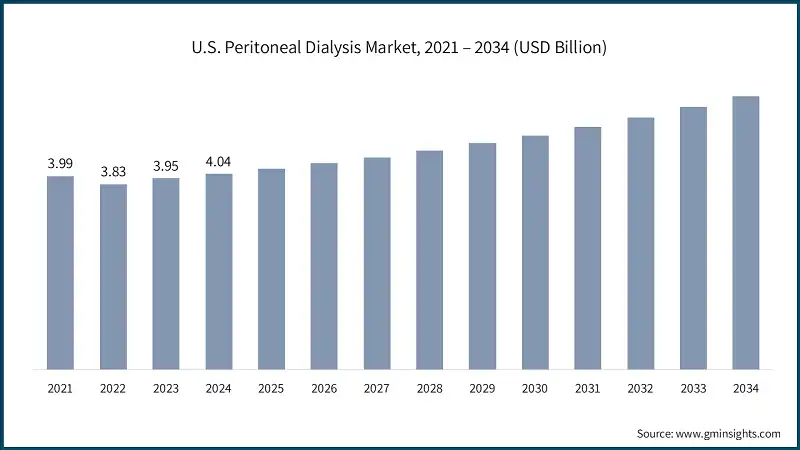
- The U.S. market was valued at USD 3.99 billion and USD 3.83 billion in 2021 and 2022, respectively. The market size reached USD 4.04 billion in 2024, growing from USD 3.95 billion in 2023 and is anticipated to grow at a CAGR of 3.5% between 2025 to 2034 period.
- The demand for peritoneal dialysis (PD) in the U.S. has been steadily growing as more patients and healthcare providers realize its benefits. PD offers patients the freedom to manage their treatment at home, improving their quality of life and providing flexibility in comparison to in-center sessions. In total around 14.5% of the dialysis patients opt for home dialysis model in the U.S. The number of prevalent patients recorded a significant rise of around 37.5% between 2012 to 2022 from 8.8 percent to 12.1 percent.
- Many patients choose PD because it allows them to maintain their independence, stick to regular work schedules, or avoid frequent trips to dialysis centers. Healthcare providers are also increasingly supporting PD, appreciating its cost-effectiveness and its ability to reduce the strain on clinical settings. Efforts such as policy initiatives and educational programs are helping more patients understand that PD can be a practical and effective first-line treatment option. This is highlighted by the numbers reported in the USRDS report, stating a rise of 69% in the incident PD patients in the country from 8.3% to 14% between 2012 and 2022.
- Further, with ongoing advancements in patient training, remote monitoring technologies, and stronger support for home-based therapies, peritoneal dialysis is anticipated to record increased adoption in the U.S. healthcare system.
Europe peritoneal dialysis market accounted for USD 4.1 billion in 2024 and is anticipated to show lucrative growth over the forecast period.
- The growing demand for peritoneal dialysis in Europe is majorly attributed to aging population, an increasing focus on patient-centered care, and the accessibility of universal healthcare systems. Many European countries are encouraging home-based treatments to ease the pressure on public healthcare systems and hospital resources.
- Policies in several regional countries emphasize shared decision-making between patients and healthcare providers, making peritoneal dialysis a more common choice as an initial therapy. The significant patient population in various countries is pushing the regional growth. For example, countries such as Greece, Romania, Portugal, France, and Poland among other have high ESRD incidence in per million population in the region.
- Clinical guidelines by organizations and associations in the space also recommend PD for specific groups, such as patients with vascular access difficulties or cardiac instability. The region’s strong healthcare network and reimbursement systems ensure that more people have access to PD supplies and training.
- Furthermore, efforts to decentralize chronic disease management, especially in rural areas, are further driving the adoption of home dialysis. However, PD adoption rate varies across countries due to differences in clinical practices, physician preferences, and the availability of support services for home therapies.
The Asia Pacific peritoneal dialysis market is anticipated to grow at the highest CAGR of 6.7% during the analysis timeframe.
- The demand for peritoneal dialysis in Asia Pacific is growing due to the high patient population for diabetes, hypertension, and chronic kidney disease, along with limited access to in-center hemodialysis. In many developing countries across the region, PD is seen as a practical and affordable way to manage the rising number of kidney failure cases, especially in rural and underserved communities.
- Additionally, governments in countries such as India and China are making PD more accessible by including it in public health programs. The preference for home-based care, supported by family involvement in caregiving, is also helping more people embrace PD as a treatment option. For instance, according to a published article, more than half of the total PD patients in the world, reside in China, Thailand, the U.S. and Mexico. Presence of two regional countries in the list indicates a significant potential and a treatment pattern to observe and implement for other regional countries.
- Healthcare gaps between urban and rural areas are pushing both patients and policymakers to consider decentralized treatment methods. Since PD requires less expensive infrastructure, it has become a preferable choice in areas with limited resources.
- Further, efforts including medical training programs and partnerships between public and private organizations are increasing awareness and building the skills needed to support peritoneal dialysis. These initiatives result in a solid foundation for the widespread use of PD across the region.
The Latin America peritoneal dialysis market is experiencing robust growth over the analysis timeframe.
- In Latin America, the need for peritoneal dialysis is growing due to challenges such as limited healthcare infrastructure, economic constraints, and the increasing role of public health systems in managing chronic diseases including renal care. Home-based PD has become a more practical and accessible solution for patients located in remote areas as accessing dialysis centers is a challenging task.
- In addition, countries such as Mexico and Brazil have supported adoption of peritoneal dialysis through national programs, focusing on reaching rural and semi-urban communities.
- Additionally, investment by industry players in the region is another pointer supporting the regional growth. For instance, in April 2024, DaVita, a leading dialysis service provider has acquired dialysis business of Fresenius Medical Care in Chile. This is a part of company's expansion in the Latin America region with an investment of around USD 300 million. The expansion covers countries such as Brazil, Colombia, and Ecuador.
- Further, efforts to train caregivers and educate the public, led by nephrology associations, are making a difference by improving acceptance and encouraging long-term use of PD therapy.
Peritoneal Dialysis Market Share
The global market presents a moderately consolidated landscape, led by established medtech giants such as Fresenius Medical Care, Vantive (Baxter), and B. Braun among other players. These top players collectively accounted for approximately 75% of the total market share. These companies maintain a competitive edge through strong product portfolios, global presence, and sustained investment in research and development.
Key players in the market are working to make home-based care solutions more accessible, improve patient-focused technologies, and strengthen distribution networks worldwide. Companies are creating compact and automated cyclers to make home dialysis easier and more user-friendly, especially for elderly patients and those with physical limitations. For example, in April 2022, Fresenius Medical Care North America received the FDA clearance for its Versi PD Cycler System.
Efforts are focused on innovations like remote patient monitoring, integration with digital health platforms, and biocompatible dialysate solutions to ensure safer treatments and better outcomes. For example, in May 2021, Fresenius Medical Care announced the launch of its Kinexus Connected Health Platform for peritoneal dialysis. The product is designed to manage and improve overall productivity of the therapy conducted through its Liberty Select cycler.
Additionally, leading companies are also investing in education and training programs to help both patients and healthcare professionals feel more confident in adopting peritoneal dialysis. They are forming strategic partnerships with healthcare providers and governments to bring these solutions to underserved areas. Companies are prioritizing sustainability and building resilient supply chains to ensure essential items such as dialysate bags, catheters, and tubing sets are always available.
Peritoneal Dialysis Market Companies
Few of the prominent players operating in the peritoneal dialysis industry include:
- Global player
- B. Braun
- BD
- Davita Kidney Care
- Diaverum (M42)
- Fresenius Medical Care
- medCOMP
- Mozarc Medical
- Polymed
- Terumo Corporation
- Utah Medical Products
- Vantive (Baxter)
- Vivance
- Regional players
- Apollo Dialysis
- Mitra Industries
- Newsol Technologies
- Northwest Kidney Centers
- Vantive (Baxter)
Vantive carries forward Baxter’s legacy in PD innovation by focusing on automated cyclers and remote patient monitoring. The company is committed to expanding global access, providing complete PD ecosystems including devices, fluids, and services and promoting PD-first initiatives in healthcare systems.
- Fresenius Medical Care
Fresenius leverages its global care delivery network and a comprehensive product line, which includes PD cyclers and solutions, to improve patient outcomes. The company’s approach emphasizes outcome-based care models, digital integration, and partnerships with payers to make home-based therapies more accessible, cost-effective, and scalable.
- B. Braun
B. Braun is focusing on developing biocompatible dialysis solutions and advanced PD systems that prioritize patient safety and long-term use. The company focuses on building strong clinical partnerships and offering integrated service models to support both hospitals and home-based PD programs.
Peritoneal Dialysis Market Report Attributes
| Key Takeaway | Details |
|---|---|
| Market Size & Growth | |
| Base Year | 2024 |
| Market Size in 2024 | USD 13.1 Billion |
| Forecast Period 2025 - 2034 CAGR | 4.8% |
| Market Size in 2034 | USD 20.9 Billion |
| Key Market Trends | |
| Drivers | Impact |
| Rising number of end stage renal diseases (ESRD) patients | Continues to fuel consistent demand for dialysis, especially in regions with aging populations and high chronic disease burden. |
| Shortage of donor kidneys | Results in patients relying on long-term dialysis as a primary renal replacement therapy due to limited donor availability. |
| Cost advantages over hemodialysis | Encourage healthcare systems, especially in low-income regions, to promote peritoneal dialysis as a cost-effective alternative. |
| Favourable reimbursement scenario for dialysis treatment | Enhances patient access and provider willingness to prescribe PD, particularly in countries with better insurance coverage and home therapy incentives. |
| Growing prevalence of diabetes and hypertension | Results in increasing number of people with kidney failure cases, contributing to higher adoption rates of peritoneal dialysis. |
| Pitfalls & Challenges | Impact |
| Complications in the treatment | Risk of infections such as peritonitis and catheter-related issues limit PD adoption rate. |
| Opportunities: | Impact |
| Growth in home dialysis adoption | Estimated to significantly expand the usage of PD therapy due to increasing preference for tech-enabled, and patient-driven care models. |
| Increasing demand in emerging countries | Expected to boost PD procedure/therapy volume as healthcare infrastructure improves, supported by government initiatives and rising CKD awareness. |
| Market Leaders (2024) | |
| Market Leaders |
38.2% market share |
| Top Players |
Collective market share in 2024 is 75% |
| Competitive Edge |
|
| Regional Insights | |
| Largest Market | North America |
| Fastest growing market | Asia Pacific |
| Emerging countries | India, China, Brazil, Mexico, South Africa |
| Future outlook |
|
What are the growth opportunities in this market?
Peritoneal Dialysis Industry News:
- In April 2024, DaVita, a dialysis service provider, announced that it has acquired the Chilean dialysis business of Fresenius Medical Care for USD 63 million. This development may enable the company to emerge as region's leading dialysis service provider, in line with its plans for expansion in Latin America.
- In April 2023, M42, Abu Dhabi-based healthcare company which was established by G42 Healthcare and Mubadala Health in 2023, completed the acquisition of a leading renal care service provider in the world, Diaverum. This allowed M42 to emerge as the largest healthcare company in the Middle East, as Diaverum has its assets spread across twenty-three countries globally.
- In April 2022, Fresenius Medical Care received the FDA clearance for its Versi PD Cycler System. It is a lightweight and portable automated peritoneal dialysis system provided by the company in the U.S. This product launch enabled it to expand and better its offering, consolidating the key industry position.
The peritoneal dialysis market research report includes an in-depth coverage of the industry with estimates and forecast in terms of revenue in USD Million from 2021 - 2034 for the following segments:
Market, By Category
- Dialysis machines/cyclers
- Consumables
- Peritoneal dialysis solution/dialysate
- Dextrose
- Icodextrin
- Amino acid
- Catheters
- Access products
- Other consumables
- Peritoneal dialysis solution/dialysate
- Services
- Chronic dialysis
- Acute dialysis
Market, By Type
- Continuous ambulatory peritoneal dialysis (CAPD)
- Automated peritoneal dialysis (APD)
Market, By Disease Condition
- End-stage renal disease (ESRD)
- Acute kidney injury (AKI)
- Other conditions
Market, By End Use
- Home dialysis
- In-center dialysis
The above information is provided for the following regions and countries:
- North America
- U.S.
- Canada
- Europe
- Germany
- UK
- France
- Spain
- Italy
- Netherlands
- Asia Pacific
- China
- Japan
- India
- Australia
- South Korea
- Latin America
- Brazil
- Mexico
- Argentina
- Middle East and Africa
- South Africa
- Saudi Arabia
- UAE
Frequently Asked Question(FAQ) :
What is the market size of the peritoneal dialysis market in 2024?
The market size was USD 13.1 billion in 2024, driven by the rising prevalence of kidney disorders and the growing elderly population.
What is the projected value of the peritoneal dialysis industry by 2034?
The peritoneal dialysis market is expected to reach USD 20.9 billion by 2034, growing at a CAGR of 4.8% due to cost-effectiveness and supportive reimbursement policies.
What is the expected market value for peritoneal dialysis in 2025?
The market is projected to reach USD 13.6 billion in 2025, reflecting growing adoption in emerging countries and increasing awareness of home dialysis benefits.
How much revenue did the consumables segment generate in 2024?
The consumables segment accounted for 63.6% market share in 2024, driven by demand for peritoneal dialysis solutions and home-based treatment models.
What was the valuation of the continuous ambulatory peritoneal dialysis (CAPD) segment in 2024?
The CAPD segment was valued at USD 7.6 billion in 2024 and is expected to grow at a CAGR of 4.6% due to its cost-efficiency and minimal infrastructure requirements.
What is the growth outlook for automated peritoneal dialysis (APD) from 2025 to 2034?
The APD segment is projected to grow at a CAGR of 5.1%, driven by overnight dialysis convenience and integration of remote monitoring technologies.
Which region held the largest share of the peritoneal dialysis market in 2024?
North America led the global market with a 33.1% share, with the U.S. alone accounting for USD 4.04 billion due to advanced healthcare systems and growing preference for home-based care.
What is the fastest growing regional market for peritoneal dialysis?
Asia Pacific is the fastest growing market, projected to grow at a CAGR of 6.7%, supported by rising CKD cases, and home-care adoption.
Which segment had the largest share by end use in 2024?
Home dialysis dominated with a 68.4% share in 2024, driven by patient preference, better quality of life, and supportive reimbursement frameworks.
Who are the key players in the peritoneal dialysis market?
Key players include Fresenius Medical Care, Vantive (Baxter), B. Braun, Davita Kidney Care, Diaverum (M42), and BD.
Peritoneal Dialysis Market Scope
Related Reports