Summary
Table of Content

Peptide Antibiotics Market
Get a free sample of this report
Form submitted successfully!
Error submitting form. Please try again.
Thank you!
Your inquiry has been received. Our team will reach out to you with the required details via email. To ensure that you don't miss their response, kindly remember to check your spam folder as well!
Request Sectional Data
Thank you!
Your inquiry has been received. Our team will reach out to you with the required details via email. To ensure that you don't miss their response, kindly remember to check your spam folder as well!
Form submitted successfully!
Error submitting form. Please try again.
Peptide Antibiotics Market Size
The growth of peptide antibiotics industry is propelled by the rising cases of antimicrobial resistance (AMR). For instance, according to the World Health Organization, antibiotic resistance for many pathogens increased by around 40% between 2018-2023. The report estimates that antimicrobial resistance might cause around 10 million deaths by 2050. This has created a need for novel antibiotics which possess unique mechanisms. Specific peptide antibiotics like polymyxins and gramicidin’s destroy multidrug resistant (MDR) microbial life, which makes them important alternatives to conventional antibiotics. Thus, the increased prevalence of antibiotic-resistant bacterial infections, especially within the hospital environment, is increasing the spending on new peptide antibiotics.
Additionally, both government organizations and non-government bodies are providing funding which improves the innovation in these fields. CDC invests in innovative research projects that include peptide antibiotics and other innovative approaches to identify and implement new ways to comprehensively respond to antimicrobial resistance globally. Another important factor is the expanding pipeline of peptide antibiotics due to development of modern technologies in peptide synthesis and drug delivery systems.
Peptide Antibiotics Market Key Takeaways
Market Size & Growth
- 2025 Market Size: USD 5.4 Billion
- 2026 Market Size: USD 5.7 Billion
- 2035 Forecast Market Size: USD 8.9 Billion
- CAGR (2026–2035): 5.2%
Regional Dominance
- Largest Market: North America
- Fastest Growing Region: Asia Pacific
Key Market Drivers
- Increasing prevalence of multi drug resistant (MDR) bacteria.
- Increasing incidence of acute and chronic infectious diseases.
- Technological advancements in peptide synthesis.
- Rising investments in next generation antimicrobial R&D.
Challenges
- High production costs.
- Limited oral bioavailability.
Opportunity
- Expansion of peptide engineered drug delivery systems.
- Growing demand for novel antimicrobial classes for AMR prevention.
Key Players
- Market Leader: Pfizer led with over 12% market share in 2025.
- Leading Players: Top 5 players in this market include Pfizer, AbbVie, Merck, Eli Lilly and Company, Xellia Pharmaceuticals, which collectively held a market share of 42% in 2025.
Get Market Insights & Growth Opportunities
Further, improvements in bioengineering and formulation techniques are increasing the stability, efficacy, and bioavailability of peptide antibiotics, making them very effective for therapeutic use. Furthermore, the enhanced focus on precision medicine and targeted therapies propels the use of peptide antibiotics, as they can be designed to target resistant bacterial forms with minimal side effects.
Key players in the peptide antibiotics market include AbbVie, Eli Lilly and Company, Merck, Pfizer, and Xellia Pharmaceuticals. These leading companies continue to drive their broad expertise in anti‑infective R&D, clinical development capabilities, and solid commercial infrastructure. Their efforts remain critical in addressing the rising burden of antimicrobial resistance (AMR), the need for more effective therapies against multidrug‑resistant pathogens, and the long‑term demand for safe, potent, and structurally stable peptide‑based antibiotics across global healthcare systems.
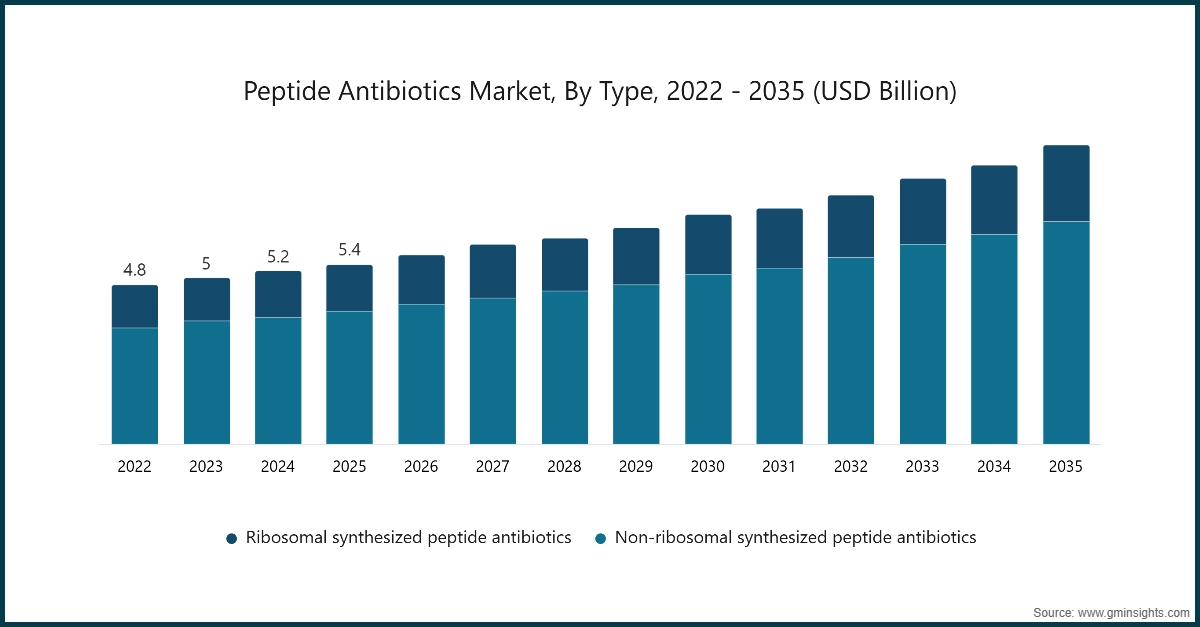
Between 2022 and 2024, the market witnessed steady, demand‑driven growth, supported by increased adoption of complex peptides, sustained clinical focus on AMR‑targeted therapeutics, and growing utilization of hospital‑grade injectable peptide antibiotics. During this period, the global market expanded from an estimated USD 4.8 billion in 2022 to approximately USD 5.2 billion in 2024, underpinned by rising incidence of drug‑resistant infections and expansion of acute‑care hospital capacities.
A peptide antibiotic, also often called an antimicrobial peptide (AMP), is a short chain of amino acids (a peptide) that has the ability to kill or inhibit the growth of microorganisms like bacteria, fungi, and sometimes viruses, by disrupting their cell membranes, interfering with cell wall synthesis, or disrupting essential intracellular processes. These peptides can be found naturally in various organisms or can be synthetically designed in a laboratory.
The global peptide antibiotics market was valued at USD 5.4 billion in 2025. The market is expected to grow from USD 5.7 billion in 2026 to USD 8.9 billion in 2035, at a CAGR of 5.2% during the forecast period, according to the latest report published by Global Market Insights Inc.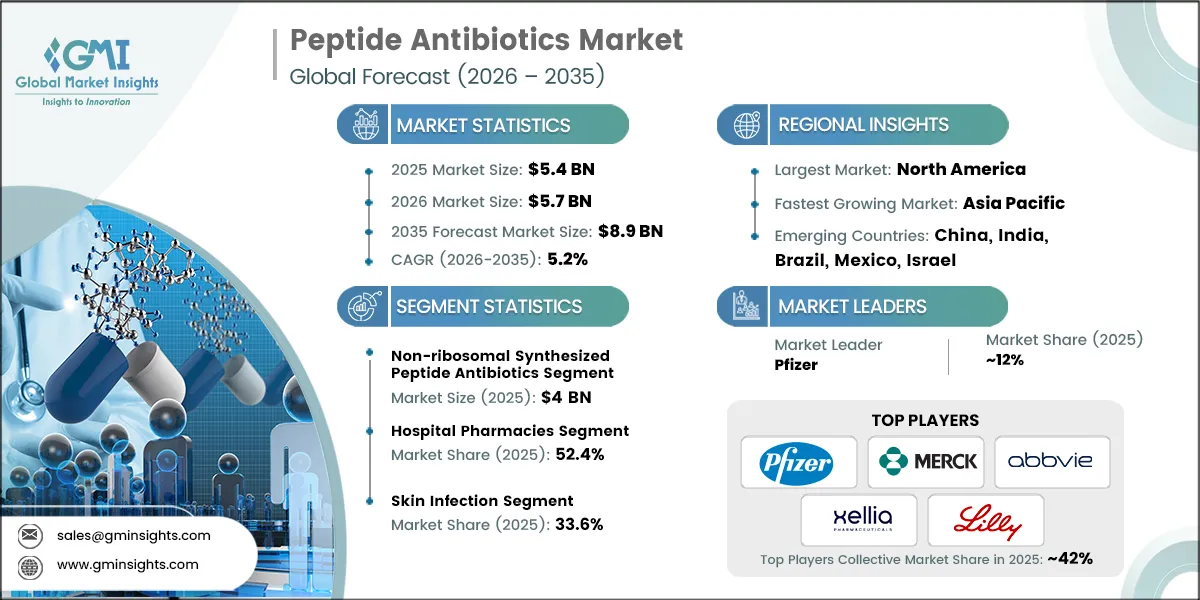
To get key market trends
Peptide Antibiotics Market Trends
- The market is exhibiting growth due to increased cases of antimicrobial resistance (AMR). In 2021, 1.14 million deaths were attributable to bacterial AMR. Similarly, according to a study published in The Lancet, it is estimated that more than 39 million people around the world could die from antibiotic-resistant infections over the next 25 years. Therefore, attention has shifted toward peptide antibiotics because of their ability to disrupt bacterial membranes and other specific actions.
- Healthcare organizations such as the WHO and CDC, as well as governments, are funding AMR initiatives, which are stimulating the development and marketing of peptide antibiotics. For example, in February 2020, CARB-X awarded Lytica Therapeutics up to USD 5.3 million to develop antibacterial peptides with broad activity against multidrug-resistant bacteria.
- Another notable factor in the expansion of the market is increased R&D spending on novel antibiotic peptides. Biotech and pharmaceutical companies are targeting new classes of peptides, such as glycopeptides, lipopeptides, and bacteriocins, to overcome the limitations of modern-day therapies.
- The ability of synthetic biology and peptide engineering to improve the stability, bioavailability, and efficacy of a drug is crucial in the formation of an antibiotic pipeline. Thus, growing initiatives by pharma companies to develop new peptide antibiotics will drive market growth.
- Furthermore, to address the global issue of AMR, the FDA and EMA have been trying to expedite the development and approval of peptide antibiotics. Several peptide-based antibiotics have been granted orphan drug status and priority review, which helps expedite the approval processes.
- A total of 12 peptide-based drugs with antimicrobial properties have received approval from the Food and Drug Administration (FDA). Approximately 22 peptide therapeutics with an antibacterial and antifungal spectrum are currently undergoing various phases of clinical trials, showing promising results. The expectation of further approvals for novel peptide antibiotics in the next few years is supported by the numerous ongoing clinical trials.
Peptide Antibiotics Market Analysis
Learn more about the key segments shaping this market
Based on the type, the global peptide antibiotics market is segmented into ribosomal synthesized peptide antibiotics and non-ribosomal synthesized peptide antibiotics. The non-ribosomal synthesized peptide antibiotics segment accounted for the highest market share and was valued at USD 4 billion in 2025.
- The market is led by the non-ribosomal synthesized peptide antibiotics segment owing to its broad-spectrum activity along with resistance against enzymatic degradation. Unlike ribosomally synthesized peptides, non-ribosomal peptides (NRPs) are synthesized by non-ribosomal peptide synthetases (NRPSs), which permit a much higher structural variability and the use of non-proteinogenic amino acids. This leads to increased stability and potency in the antibiotics, which makes them useful against multi-drug resistant (MDR) bacterial strains.
- The rise of antimicrobial resistance (AMR) and the constant need for new antibiotics increases the demand for non-ribosomal synthesized peptide antibiotics, thus further strengthening their market position.
- Additionally, biotechnology companies and pharmaceutical companies are working towards the discovery and development of new non-ribosomal peptide antibiotics to combat the problem of drug-resistant pathogens. Improvements in synthetic biology and genetic engineering have made it possible to alter the non-ribosomal peptide pathways to generate novel derivatives with better efficacy and lower toxicity.
- Further, the dependence of the hospital and clinical sectors on these antibiotics, especially in ICUs (intensive care units), further enhances the dominance of non-ribosomal synthesized peptides in the market.
Based on the indication, the global peptide antibiotics market is categorized into skin infection, hospital-acquired bacterial pneumonia and ventilator-associated bacterial pneumonia (HABP/VABP), blood stream infections, and other indications. The skin infection segment dominated the market with 33.6% market share in 2025.
- The segment for skin infection has a substantial share in the market owing to an increase in bacterial skin infections such as impetigo, cellulitis, and diabetic foot ulcer. Also, the increasing prevalence of chronic wounds and post-surgical infections has resulted in the growing use of peptide antibiotics because these patients require more effective and specific treatment with less systemic toxicity.
- Increase in antibiotic resistant pathogens like methicillin-resistant Staphylococcus aureus (MRSA) has escalated the consumption of peptide antibiotics, as these antibiotics have highly potent antibacterial action with much lower tendency to develop resistance.
- Additionally, rising elderly demographic along with the growing figure of immunocompromised individuals also contribute to the high market share of the skin infection segment. These groups are more vulnerable to bacterial skin infections, which require treatment alternatives such as peptide antibiotics.
- On the other hand, HABP/VABP is the fastest‑growing segment, stimulated by the rising incidence of severe hospital‑acquired infections, increasing prevalence of multidrug‑resistant pathogens, and the urgent clinical need for potent peptide‑based antibiotics that offer improved efficacy in critical‑care settings.
Based on the route of administration, the global peptide antibiotics market is categorized into injectable, oral, topical, and other routes of administration. The injectable segment dominated the market in 2025 with a market share of 45.8% and is anticipated to witness growth at a CAGR of 5.4% over the forecast years.
- The injectables segment has a large market share due to its greater effectiveness, faster action, and higher bioavailability. Injectable forms allow for immediate systemic absorption, avoiding issues of poor gastrointestinal absorption and extensive enzymatic breakdown that frequently affect the bioavailability of oral peptide antibiotics.
- Also, the treatment of serious infections like bloodstream infections, pneumonia, and skin infections require intravenous delivery of antibiotics, thereby enhancing their dominance in the market.
- The growing share of the injectables market is driven by the increasing number of patients admitted to hospitals who need IV antibiotic treatment, especially in ICUs and post-surgical wards.
- Likewise, topical administration is the fastest‑growing route, stimulated by increasing demand for rising cases of skin and soft‑tissue infections and the growing preference for peptide‑based formulations that deliver high antimicrobial efficacy with reduced systemic exposure.
Learn more about the key segments shaping this market
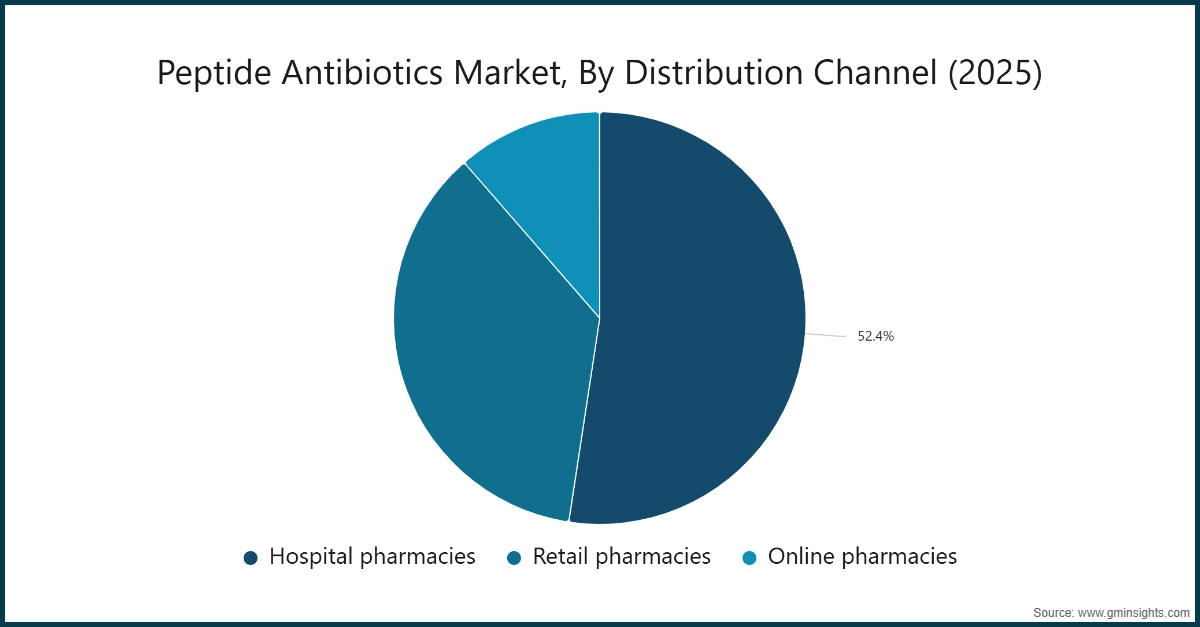
Based on the distribution channel, the peptide antibiotics market is categorized into hospital pharmacies, retail pharmacies, and online pharmacies. The hospital pharmacies segment dominated the market in 2025 with a market share of 52.4%.
- The rising prevalence of multidrug-resistant infections and the need for effective antibiotics have positioned hospital pharmacies as the dominant segment in the antibiotic peptides market.
- Hospital pharmacies primarily dispense critical peptide antibiotics such as polymyxins and vancomycin for treating severe infections, including carbapenem-resistant Enterobacteriaceae (CRE) and methicillin-resistant Staphylococcus aureus (MRSA).
- The high demand for these antibiotics in critical care settings, combined with the increasing cases of hospital-acquired infections drives the growth of this market segment.
- Furthermore, enhanced hospital infrastructure and government initiatives to combat antimicrobial resistance (AMR) have increased peptide antibiotic procurement by hospital pharmacies. Also, the adoption of sophisticated healthcare systems like electronic health record (HER) and automated drug dispensing systems improves the efficiency of hospital pharmacies. This contributes to the domination of this segment in the market.
- The online pharmacies segment is the fastest growing escalated by increasing adoption of digital purchasing platforms, greater convenience in accessing prescription peptide antibiotics and expanding availability of home‑delivery services for critical anti‑infective therapies.
Looking for region specific data?
North America Peptide Antibiotics Market
The North America market dominated the global peptide antibiotics industry with market share of 40.5% in 2025.
- North America leads the global market, due to advanced pharmaceutical research and development, robust regulatory structure, and high spending on healthcare. Also, the existence of several large biotechnology and pharmaceutical companies enables innovation in the development of antibiotic drugs.
- Moreover, government efforts such as funding from various government bodies including National Institutes of Health (NIH) and incentives under Generating Antibiotic Incentives Now (GAIN) Act also aid in initiating research and commercialization activities, thereby strengthening the position of North America in the market.
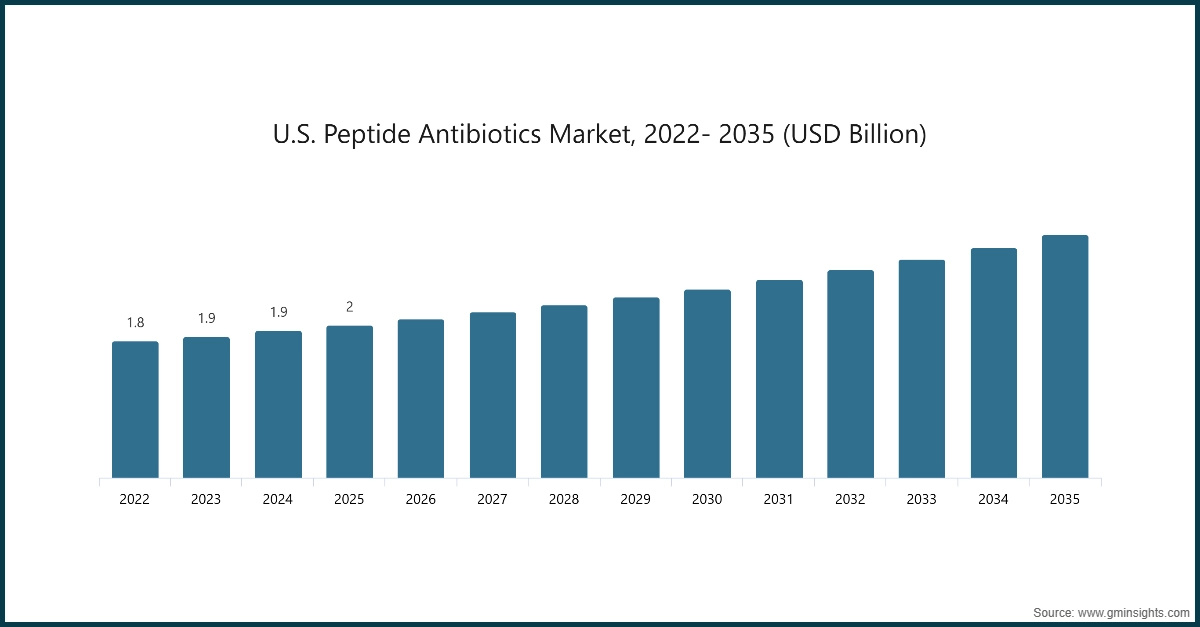
The U.S. peptide antibiotics market was valued at USD 1.79 billion and USD 1.85 billion in 2022 and 2023, respectively. The market size reached USD 2 billion in 2025, growing from USD 1.92 billion in 2024.
- The U.S. stimulates the regional growth due to high hospitalization rates, greater prevalence of severe bacterial infections, and strong reliance on peptide‑based therapies for resistant pathogens.
- The increasing incidence of antimicrobial resistance (AMR) bacterial infections has boosted the need for new peptide antibiotics which are able to provide a more specific treatment with lesser chances of developing resistance. For instance, as per the CDC, more than 2.8 million antimicrobial-resistant infections occur in the U.S. each year, and more than 35,000 people die.
Europe Peptide Antibiotics Market
Europe market accounted for USD 1.4 billion in 2025 and is anticipated to show lucrative growth over the forecast period.
- High prevalence of antibiotic-resistant infections along with the robust pharmaceutical industry in the region aids in high growth of market.
- The region hosts major pharmaceutical and biotechnology companies, which are investing in the creation of novel peptide antibiotics to replace traditional antimicrobial therapies.
- Also, government initiatives and funding programs are facilitating research into combating antibiotic AMR. For example, the EU4Health program and the Horizon Europe program provide funding in the field of AMR. This aids in the creation of peptide antibiotics.
Germany dominates the Europe peptide antibiotics industry, with strong growth potential.
- The growth of Germany’s peptide antibiotics market is being driven by the rising incidence of antimicrobial resistant (AMR) bacterial infection cases in the country along with its well-developed healthcare system.
- In Germany there are over 9,000 deaths attributable to AMR stimulating the need for peptide antibiotic solutions.
- In addition, higher utilization of peptide antibiotics is made possible by the German government’s supportive reimbursement policies and investment in AMR management programs.
Asia Pacific Peptide Antibiotics Market
The Asia Pacific market is anticipated to grow at the highest CAGR of 5.7% during the analysis timeframe.
- The Asia Pacific region has ample growth opportunities in the market, especially with the increasing antibiotic resistance and the growing funding for research on antibiotics.
- Supportive government policies alongside increasing pharmaceutical production capabilities are creating favorable conditions for the development and marketing of peptide antibiotics.
- Furthermore, the region's lower production costs along with the presence of skilled workforce make the Asia Pacific region a preferred hub for the manufacturing of peptide antibiotics.
India peptide antibiotics market is anticipated to witness high growth in Asia Pacific market.
- India has the highest burden of bacterial infection. Therefore, antimicrobial resistance is a major public health challenge in India, as the burden of infectious diseases is high, and consumption of antibiotics is massive and unregulated. For example, in 2019, there were 297,000 deaths attributable to AMR and more than 1 million deaths associated with AMR in India.
- This number is set to increase due to various factors such as increasing cases of bacterial skin infections, growing geriatric population, and high incidence of HAI’s, thereby driving the growth opportunity for market.
- Moreover, supportive government initiatives and price subsidies increase the treatment adoption rates, thereby propelling the overall market growth.
Latin American Peptide Antibiotics Market
Brazil leads the Latin American market, exhibiting remarkable growth during the analysis period.
- Brazil peptide antibiotics industry is anticipated to witness significant growth owing to rising antibiotic resistance in the country. In addition, the investments made by the Brazilian Government in biotechnology and pharmaceutical research, along with the relevant policy encouragement towards innovation of antibiotics, create positive conditions for market development.
- Brazil's developing healthcare infrastructure and the growing industry for pharmaceuticals serve as a strong base for the development and use of novel peptide antibiotics.
Middle East and Africa Peptide Antibiotics Market
Saudi Arabia peptide antibiotics industry is expected to experience substantial growth in the Middle East and Africa market in 2025.
- Factors such as increased expenditure for healthcare and rising investment for advanced therapeutic solutions due to an increase in the resistance to antibiotic treatment is contributing to the rapid growth of the Saudi Arabian market.
- Under the Vision 2030 Program, the government of Saudi is looking to improve the pharmaceutical industry, which will lead to local and foreign biotech companies investing in the development of innovative antibiotics, including the use of peptides.
- Furthermore, the high burden of antibiotic-resistant bacterial diseases in the region is increasing the demand for new-generation antibiotics, which in turn is driving growth in the country level market.
Peptide Antibiotics Market Share
The major players operating in the peptide antibiotics industry include AbbVie, Eli Lilly and Company, Merck, Pfizer and Xellia Pharmaceuticals. These top 5 players account for approximately 42% share of the global market. Their leadership is supported by strong peptide‑focused R&D capabilities, advanced fermentation and synthesis technologies, and extensive hospital‑centric distribution networks.
These companies dominate major therapeutic categories such as hospital‑acquired infections, bloodstream infections, and severe skin and soft‑tissue infections, leveraging expertise in sterile‑injectable formulations, non‑ribosomal peptide production, and next‑generation antimicrobial design. Their broad pipelines spanning improved peptide analogs, engineered antimicrobial peptides, and innovative mechanisms of action continue to play a crucial role in addressing global antimicrobial resistance (AMR) challenges.
Strategic expansion through acquisitions, technology partnerships, and manufacturing scale‑ups is reshaping the competitive dynamics of the market. For example, large players like Pfizer and Merck are strengthening their peptide antibiotic portfolios via targeted collaborations in peptide engineering and antimicrobial discovery platforms, while companies such as Xellia Pharmaceuticals continue to expand their sterile‑injectable and fermentation‑based manufacturing capacity across global sites.
Leading manufacturers are actively advancing clinical pipelines focused on high‑potency peptide antibiotics, including novel formulations for HABP/VABP, drug‑resistant Gram‑negative infections, and critical‑care applications. This innovation surge is driven by the growing global burden of multidrug‑resistant pathogens, expanding hospital infection rates, and increasing demand for potent, precision‑targeted antimicrobial therapies. As the need for advanced anti‑infectives intensifies, peptide antibiotics remain a central focus for companies aiming to deliver more effective solutions in the evolving AMR landscape.
Peptide Antibiotics Market Companies
Prominent players operating in the peptide antibiotics industry are as mentioned below:
- AbbVie
- ANI Pharmaceuticals
- Cumberland Pharmaceuticals
- Eli Lilly and Company
- GSK plc
- JHP Pharmaceuticals
- Merck
- Monarch Pharmachem
- Melinta Therapeutics
- NPS Pharmaceuticals
- Pfizer
- Sanofi
- Sandoz
- Teva Pharmaceuticals
- The Menarini Group
- Xellia Pharmaceuticals
Pfizer holds a leading position in the peptide antibiotics market due to its extensive anti‑infective portfolio, long‑standing expertise in peptide and peptide‑derived therapeutics, and strong presence in hospital‑focused critical‑care segments. The company benefits from large‑scale sterile‑injectable manufacturing capabilities and sustained investment in combating multidrug‑resistant pathogens, allowing it to advance high‑potency peptide antibiotics used across major hospital systems worldwide. Pfizer’s leadership is reinforced by continuous development of new peptide‑based formulations and strategic expansion of its antimicrobial research collaborations, enabling the company to maintain a dominant role in addressing severe bacterial infections and emerging resistance challenges.
AbbVie is engaged in the development of peptide antibiotics based on its capabilities in peptide drug design and manufacturing. The company aims to develop novel peptide-based therapeutics for treatment of resistant bacterial infections. Additionally, Nimble's peptide synthesis, screening, and optimization platform uses proprietary technology to help drive rapid discovery and optimization of oral peptide candidates for a range of targets.
Merck has participated in the development and marketing of peptide antibiotics with an emphasis on solving the problem of antibiotic resistance. Merck’s position is further strengthened by active pipeline expansion, targeted R&D programs, and collaborations aimed at advancing next‑generation peptide antibiotics, supporting its continued influence across critical‑care antimicrobial treatment pathways.
Peptide Antibiotics Market Report Attributes
| Key Takeaway | Details |
|---|---|
| Market Size & Growth | |
| Base Year | 2025 |
| Market Size in 2025 | USD 5.4 Billion |
| Market Size in 2026 | USD 5.7 Billion |
| Forecast Period 2026-2035 CAGR | 5.2% |
| Market Size in 2035 | USD 8.9 Billion |
| Key Market Trends | |
| Drivers | Impact |
| Increasing prevalence of multi drug resistant (MDR) bacteria | The growing global burden of MDR pathogens is accelerating the need for potent peptide based antibiotics capable of addressing resistant strains. |
| Increasing incidence of acute and chronic infectious diseases | Rising rates of hospital acquired infections, bloodstream infections, and chronic bacterial diseases are boosting demand for advanced antimicrobial therapies. |
| Technological advancements in peptide synthesis | Innovations in solid phase peptide synthesis (SPPS), automated peptide assembly, and bio engineered peptide platforms are enabling cost efficient production. |
| Rising investments in next generation antimicrobial R&D | Increased public private funding are supporting the clinical development of novel peptide based antimicrobials targeting high priority pathogens. |
| Pitfalls & Challenges | Impact |
| High production costs | Advances in nanoparticle carriers, lipid based systems, and oral delivery technologies could improve peptide stability. |
| Limited oral bioavailability | Poor stability of peptide molecules in the gastrointestinal tract restricts their use in oral formulations, limiting patient convenience. |
| Opportunities: | Impact |
| Expansion of peptide engineered drug delivery systems | Growing use of digital platforms will enhance access to veterinary advice and routine care especially in underserved areas. |
| Growing demand for novel antimicrobial classes for AMR prevention | As antimicrobial resistance becomes a central global health priority, regulatory agencies and healthcare systems are increasingly supporting development. |
| Market Leaders (2025) | |
| Market Leader |
~12% market share |
| Top Players |
Collective market share is ~42% |
| Competitive Edge |
|
| Regional Insights | |
| Largest Market | North America |
| Fastest growing market | Asia Pacific |
| Emerging countries | China, India, Brazil, Mexico, Israel |
| Future outlook |
|
What are the growth opportunities in this market?
Peptide Antibiotics Industry News
- In August 2025, BioMed X and Novo Nordisk launched a collaboration focused on developing more efficient oral delivery approaches for therapeutic peptides. The partnership used BioMed X’s talent‑sourcing model to advance early‑stage concepts in peptide drug delivery. This collaboration helped both companies strengthen their capabilities in next‑generation oral peptide innovation.
- In February 2025, Cumberland Pharmaceuticals Inc. and SciClone Pharmaceuticals Limited announced the NMPA (National Medical Products Administration) approval of Cumberland's Vibativ (telavancin) injection in China. Vibativ is a once-daily, injectable lipoglycopeptide antibiotic. This approval helped the company expand its sales in China.
- In January 2025, AbbVie completed its acquisition of Nimble Therapeutics. Nimble's lead asset is an investigational oral peptide IL23R inhibitor in preclinical development. This is added to AbbVie’s peptide antibiotics products.
- In September 2024, Beiersdorf and Macro Biologics formed a multi-year partnership aimed at developing antimicrobial peptides with a wide range of potential applications in both skincare and healthcare.
- In September 2022, Revance received FDA approval for its peptide-formulated product, DAXXIFY (DaxibotulinumtoxinA-lanm) injection. This approval is anticipated to drive market growth.
The peptide antibiotics market research report includes in-depth coverage of the industry with estimates and forecast in terms of revenue in USD Million from 2022 – 2035 for the following segments:
Market, By Type
- Ribosomal synthesized peptide antibiotics
- Non-ribosomal synthesized peptide antibiotics
Market, By Indication
- Skin infection
- Hospital-acquired bacterial pneumonia and ventilator-associated bacterial pneumonia (HABP/VABP)
- Blood stream infections
- Other indications
Market, By Route of Administration
- Injectable
- Oral
- Topical
- Other routes of administration
Market, By Distribution Channel
- Hospital pharmacies
- Retail pharmacies
- Online pharmacies
The above information is provided for the following regions and countries:
- North America
- U.S.
- Canada
- Europe
- Germany
- UK
- France
- Spain
- Italy
- Netherlands
- Asia Pacific
- China
- Japan
- India
- Australia
- South Korea
- Latin America
- Brazil
- Mexico
- Argentina
- Middle East and Africa
- Saudi Arabia
- South Africa
- UAE
Frequently Asked Question(FAQ) :
What is the market size of the peptide antibiotics market in 2025?
The market was valued at USD 5.4 billion in 2025, driven by the increasing prevalence of antimicrobial resistance and the growing demand for advanced anti-infective therapies.
What is the current size of the peptide antibiotics industry in 2026?
The industry is projected to reach USD 5.7 billion in 2026, supported by rising investments in antimicrobial research and expanding development of peptide-based therapeutic drugs.
What is the projected value of the peptide antibiotics market by 2035?
The market is expected to reach USD 8.9 billion by 2035, growing at a 5.2% CAGR, supported by advancements in peptide synthesis technologies and increasing focus on developing treatments for multidrug-resistant pathogens.
Which type segment dominates the peptide antibiotics industry?
The non-ribosomal synthesized peptide antibiotics segment dominated the market and was valued at USD 4 billion in 2025, due to its broad-spectrum antimicrobial activity and higher stability against enzymatic degradation.
Which route of administration leads the peptide antibiotics market?
The injectable segment dominated the industry with a 45.8% share in 2025, driven by higher bioavailability, rapid systemic action, and strong clinical demand in hospitals for treating severe infections.
What is the size of the U.S. peptide antibiotics market?
The U.S. market reached USD 2 billion in 2025, increasing from USD 1.92 billion in 2024. The growth of the peptide antibiotics industry in the country is driven by high hospitalization rates, rising prevalence of severe bacterial infections, and strong reliance on peptide-based therapies for resistant pathogens.
Who are the key companies operating in the peptide antibiotics industry?
Major companies in the industry include AbbVie, Eli Lilly and Company, Merck, Pfizer, and Xellia Pharmaceuticals, focusing on anti-infective R&D, peptide drug development, and expanding clinical pipelines targeting antimicrobial resistance.
Peptide Antibiotics Market Scope
Related Reports