Summary
Table of Content

Pedicle Screw Systems Market
Get a free sample of this report
Form submitted successfully!
Error submitting form. Please try again.
Thank you!
Your inquiry has been received. Our team will reach out to you with the required details via email. To ensure that you don't miss their response, kindly remember to check your spam folder as well!
Request Sectional Data
Thank you!
Your inquiry has been received. Our team will reach out to you with the required details via email. To ensure that you don't miss their response, kindly remember to check your spam folder as well!
Form submitted successfully!
Error submitting form. Please try again.
Pedicle Screw Systems Market Size
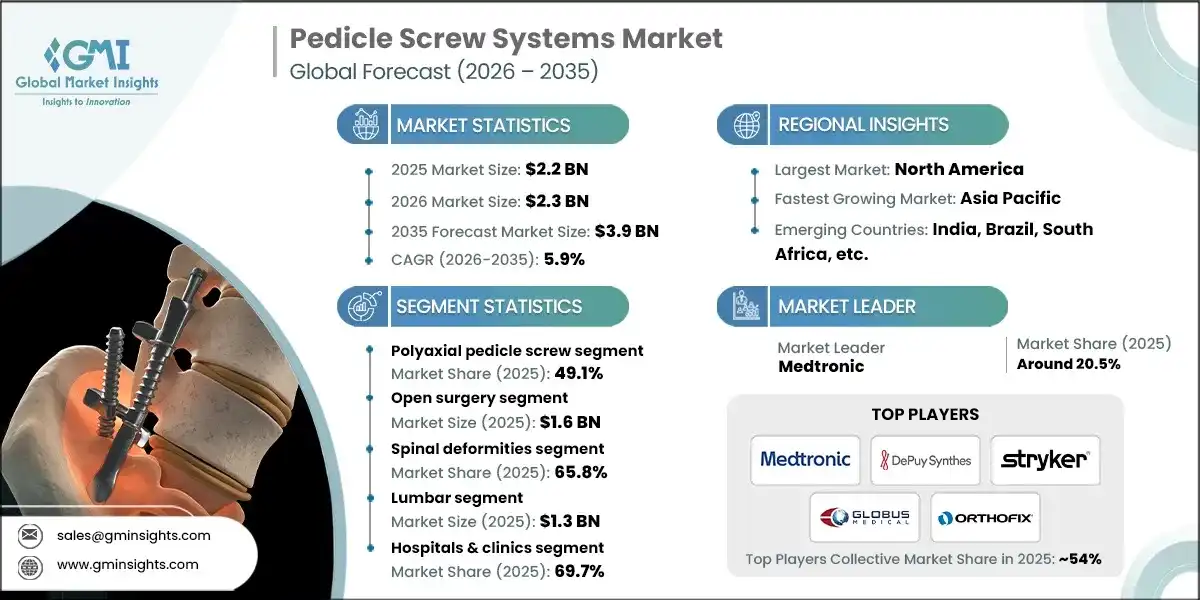
The global pedicle screw systems market was estimated at USD 2.2 billion in 2025. The market is expected to grow from USD 2.3 billion in 2026 to USD 3.9 billion in 2035, at a CAGR of 5.9% during the forecast period, according to the latest report published by Global Market Insights Inc. The market is driven by numerous factors such as the increase in number of accidents and spinal cord injuries, technological advancements in minimally invasive surgery (MIS) technique, rising prevalence of degenerative disease and growing geriatric population, among other factors.
Pedicle Screw Systems Market Key Takeaways
Market Size & Growth
- 2025 Market Size: USD 2.2 Billion
- 2026 Market Size: USD 2.3 Billion
- 2035 Forecast Market Size: USD 3.9 Billion
- CAGR (2026–2035): 5.9%
Key Market Drivers
- Increase in number of accidents and spinal cord injuries.
- Technological advancements in minimally invasive surgery (MIS) technique.
- Rising prevalence of degenerative disease.
- Growing geriatric population.
Challenges
- High cost of pedicle screw systems and spinal surgeries.
- Risk of post-surgical complications.
Opportunity
- Development of bioresorbable and 3D-printed pedicle screws.
- Integration of AI and navigation systems for precision surgery.
Key Players
- Market Leader: Medtronic led with over 20.5% market share in 2025.
- Leading Players: Top 5 players in this market include Medtronic, DePuy Synthes, Stryker, GLOBUS MEDICAL, ORTHOFIX, ~ 54%, which collectively held a market share of 54% in 2025.
Get Market Insights & Growth Opportunities
Rising medical tourism for spine surgeries, increased awareness and diagnosis of spinal conditions, and growing adoption of robotic-assisted spinal surgeries are expected to propel the industry demand. Medtronic, DePuy Synthes, Stryker, GLOBUS MEDICAL, and ORTHOFIX are among the leading players operating in the market. These players mainly focus on product innovation, geographic expansion, adoption of the latest technologies in devices, and collaboration with local or regional healthcare providers, among others.
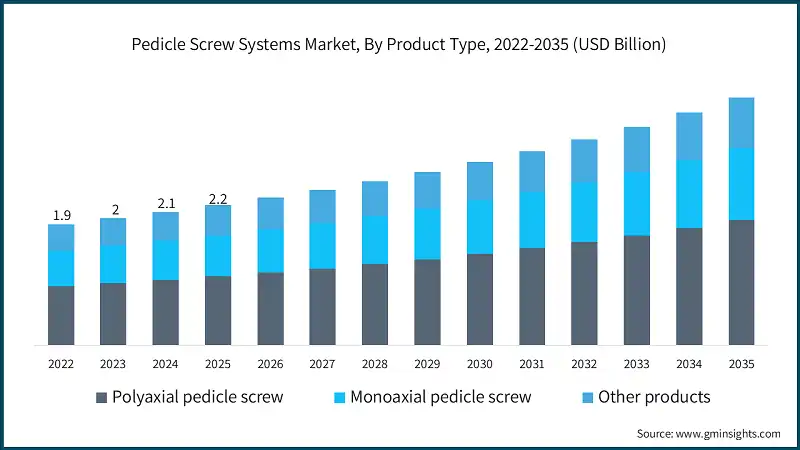
The pedicle screw systems market has increased from USD 1.9 billion in 2022 and reached USD 2.1 billion in 2024, with the historic growth rate of 5%. One of the key factors supporting the market growth is the increase in the number of accidents and spinal cord injuries. The rising incidence of road traffic accidents, sports injuries, and workplace accidents has led to a substantial increase in spinal trauma cases requiring surgical intervention. According to the World Health Organization, road traffic injuries result in approximately 1.35 million deaths annually, with spinal injuries accounting for a significant portion of severe trauma cases. This growing patient population directly drives demand for pedicle screw systems as the primary fixation method in trauma surgeries.
Additionally, the increasing incidence of degenerative spinal conditions such as degenerative disc disease, spinal stenosis, and spondylolisthesis is creating sustained demand for spinal fusion surgeries utilizing pedicle screw systems. The aging global population, combined with sedentary lifestyles and obesity, has accelerated the prevalence of these conditions. For instance, as per the reported data, the prevalence of symptomatic lumbar spinal stenosis increases from 1.7% in individuals aged 50-59 years to around 10.3% in those aged 70-79 years, highlighting the strong correlation with aging demographics, thereby pushing the industry growth.
Further, the evolution of minimally invasive surgical approaches has transformed spinal surgery practices, with MIS techniques now accounting for over 25% of all spinal fusion procedures globally. These advanced techniques utilize specialized pedicle screw systems designed for percutaneous insertion through small incisions, typically 1-2 cm compared to 10-15 cm in traditional open surgery. Major medical device manufacturers have invested significantly and continue to invest in developing MIS-compatible pedicle screw systems with enhanced visualization and insertion mechanisms. Furthermore, sustainability and environmental considerations are emerging as factors in product development and procurement decisions, particularly in western markets.
Pedicle screw systems are orthopedic and spinal fixation devices used primarily in spinal surgeries to stabilize and support the spine. They are commonly employed in procedures such as spinal fusion, fracture repair, and correction of deformities such as scoliosis.
To get key market trends
Pedicle Screw Systems Market Trends
Integration of AI and navigation systems for precision surgery, rising medical tourism for spine surgeries, and development of bioresorbable and 3D-printed pedicle screws are among the key trends shaping the market growth.
- Bioresorbable screws made from polymers (i.e., PLLA or PLGA) designed to degrade over 18-36 months are one of the major advances in spinal surgery over the last decade. Thus, this type of screw no longer requires removal once the patient has healed.
- In addition, titanium alloy 3D-printed pedicle screws with porous and lattice structures have demonstrated significantly superior osseointegration than standard solid pedicle screws, as evidenced by a rate of bone ingrowth that is approximately 40% faster than has been seen with solid screws in preclinical studies.
- Further, robotic systems used in conjunction with artificial intelligence and navigational systems have transformed the nature of spinal surgery to a data-based approach from a traditional experience-based method depending upon the skill set of the surgeon.
- Nowadays, majority of the navigation systems use CT or MRI imaging taken prior to surgery and integrate this information with the use of real-time fluoroscopic imaging or 3D imaging during surgery to produce a specialized anatomical map that may allow for the correct placement of the pedicle screws within 1 mm of exact placement.
- Moreover, the changing environment where a considerable percentage of the spinal fusions are performed in the outpatient setting versus hospital inpatient settings that has been a key growth factor. Furthermore, continued innovation in minimally invasive surgical techniques, improved pain management protocols, and enhanced recovery pathways have enabled single- and two-level fusion procedures to be performed safely in outpatient settings.
Pedicle Screw Systems Market Analysis
Learn more about the key segments shaping this market
In 2022, the market was valued at USD 1.9 billion and grew to USD 2 billion in 2023, reaching USD 2.1 billion by 2024. Increased awareness and diagnosis of spinal conditions is a key factor contributing to industry growth.
Based on product, the global pedicle screw systems market is segmented into polyaxial pedicle screw, monoaxial pedicle screw and other product types. The polyaxial pedicle screw segment accounted for a majority share of 49.1% in 2025. Increasing trend of personalized implants is anticipated to fuel the segmental growth. The segment is expected to reach USD 2 billion by 2035, growing at a CAGR of 6.2% during the forecast period.
- The polyaxial pedicle screw head has a ball-and-socket mechanism that allows for multi-directional angulation anywhere from 25 to 40 degrees in each direction. It provides flexibility to surgeons, allowing for different options on how to position rods and assemble the total construct.
- This flexibility is extremely important during the correction of complex deformities, as well as during many revisions, especially since previous hardware or anatomical variances can complicate the placement of the rod. Further, clinical studies have shown that polyaxial screws reduce the length of the operation in more complicated cases. The surgeons report average savings of 15-25% over monoaxial systems when performing multi-level fusions on patients with extreme variation in their anatomy.
- The monoaxial screws segment was valued at USD 645.2 million in 2025. Monoaxial screws employ a fixed-angle head, allowing for each screw to accommodate a rod in only one predetermined position; as such, precise placement of the screws is required to obtain appropriate rod alignment.
- The design of the monoaxial screws provides maximum stiffness and load capacity, thus becoming the first choice for trauma cases and osteoporotic bone procedures, where the highest level of stiffness in the construct is necessary.
- Monoaxial systems also offer significant financial savings compared to polyaxial systems. Monoaxial systems are approximately 20-30% more economical than their alternatives, therefore making them an attractive option for healthcare systems constrained by their budgets and for uncomplicated fusion cases where the added versatility of polyaxial systems does not provide significant clinical advantages.
Based on surgery, the global pedicle screw systems market is segmented into open surgery and minimally invasive surgery. The open surgery segment accounted for a leading share and was valued at USD 1.6 billion in 2025.
- The traditional method of performing an open surgery, which is through a large incision between 8 and 15 cm, has been the standard way of correcting many complex spinal deformities, revisions due to extensive instrumentation removal, or the need for wide decompression of the spinal cord and surrounding nerves.
- With an open surgery, surgeons can visualize the complete anatomy of the spine, giving them more control and flexibility over the surgical procedure. This is especially important if a patient has any anatomical variations, such as previous surgical scarring or unexpected intraoperative findings.
- Additionally, it is also possible to accomplish a complete decompression of nerve roots and/or the spinal cord with an open procedure that may be more difficult to achieve with a minimally invasive approach depending on the anatomy.
- The minimally invasive surgery segment held a revenue of USD 594.2 million in 2025. With minimally invasive surgery (MIS), the use of a specialized pedicle screw system allows for the insertion of screws through small (1-3 cm) percutaneous incisions under fluoroscopic or navigation guidance.
- In addition, by dilating rather than cutting the paraspinal muscles (alongside the spine), MIS preserves these muscle structures and, therefore, decreases postoperative pain and blood loss and decreases length of stay (LOS) in the hospital, among others.
- Further, when combined with expandable interbody cages, advanced imaging, and specialized instrumentation, a complete MIS ecosystem has been created that allows for greater complexity in surgical procedures performed using this technique.
Based on indication, the global pedicle screw systems market is segmented into spinal deformities, spinal degeneration, and spinal trauma. The spinal deformities segment accounted for a majority share of 65.8% in 2025.
- Deformity correction is complex and requires high variability in pedicle screw systems; therefore, polyaxial screws, special reduction screws, and comprehensive instrumentation sets are typically preferred.
- For example, deformity correction surgeons often use various screw types within a single construct, depending on bone quality, the type of correction required, and the biomechanical properties at each vertebral level. These factors influence the final screw design selected by the surgeon.
- Additionally, deformity correction surgery has experienced significant advances through technical developments such as computer-assisted planning, patient-specific rod bending, and intraoperative navigation. Therefore, these advances have improved surgical outcomes for numerous patients and increased the number of patients eligible for surgery.
- The spinal degeneration segment held a revenue of USD 446 million in 2025. Spinal degeneration includes degenerative disc disease, spinal stenosis, facet joint arthritis, and degenerative spondylolisthesis that results due to the gradual process of aging, mechanical stress in combination with a person's predisposition to degeneration over time.
- Patients with degenerative spine disorders typically undergo one- to three-level spinal fusions with 4 to 12 pedicle screws per procedure. While the per-case revenue is lower than for the deformities segment, the volume of procedures performed is much greater.
- The spinal trauma segment held a revenue of USD 306.7 million in 2025. Vertebral fractures caused by high-energy trauma from motor vehicle accidents, falls, or sports injuries are categorized as spinal trauma. Low-energy osteoporotic compression fractures are also included in this category.
- Monaxial screws or trauma screws that have been designed for maximum strength and load-bearing ability in fractured bone are the primary support systems for the spinal trauma segment.
- The development of augmentative cement techniques for use with osteoporotic fractures has increased the application of fenestrated screws, which permit over-injection of PMMA as a means of enhancing fixation strength in osteoporotic bone.
Based on application, the global pedicle screw systems market is segmented into lumbar, thoracolumbar, and cervical fusion. The lumbar segment accounted for a leading share and was valued at USD 1.3 billion in 2025.
- Lumbar pedicle screws are typically larger in diameter (5.5-7.5 mm) and longer (40-55 mm) compared to screws used in other spinal regions, reflecting the larger vertebral anatomy and greater load-bearing requirements.
- In addition, lumbar fusion procedures are supported by long-established surgical techniques and clinical research documenting the effectiveness of fusions for these conditions, as well as broad insurance reimbursement for medically necessary procedures.
- Further, pedicle-screw-assisted lumbar fusion is considered the gold standard for treating most degenerative conditions, deformities, and instabilities.
- The thoracolumbar segment held a revenue of USD 603.9 million in 2025. The thoracolumbar applications include both the thoracic spine (mid-back) and thoracolumbar junction (T10 L2), which are commonly associated with deformity correction, trauma, and some degenerative conditions.
- In addition, the introduction of modern pedicle screw designs, which offer smaller diameters (4 mm to 5 mm), improved instruments for insertion, and navigation to assist with pedicle screw placement, has increased the safety and reliability of thoracic screw insertion to enable an all-screw construct providing superior biomechanical stability.
- Furthermore, the segment growth is attributed majorly to the adult spinal deformity correction surgery being performed in the thoracic region, spinal trauma resulting in fractured thoracolumbar vertebrae, and certain degenerative spinal conditions involving the thoracic spine.
- The cervical fusion segment held a revenue of USD 306 million in 2025. The cervical spine (neck) presents unique anatomical challenges for pedicle screw placement due to small pedicle dimensions, variable anatomy, and proximity to the vertebral artery and spinal cord.
- Moreover, cervical pedicle screws are used to correct complex deformities, trauma, and revision surgeries.
Learn more about the key segments shaping this market
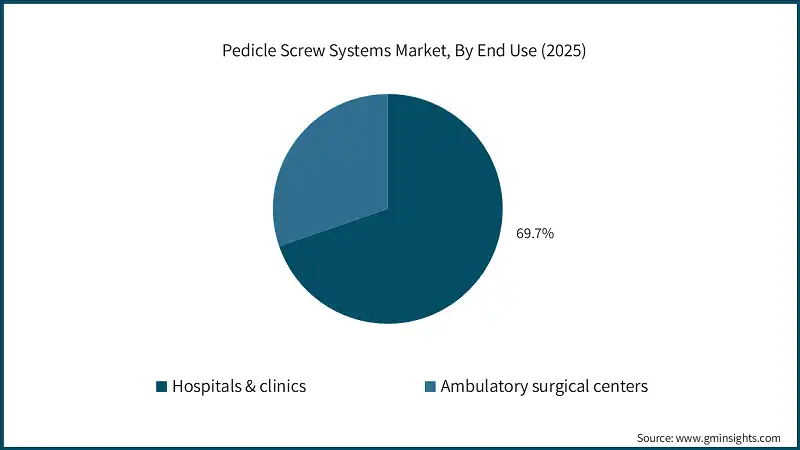
Based on end use, the pedicle screw systems market is segmented into hospitals & clinics and ambulatory surgical centers. The hospitals & clinics segment accounted for the leading market share of 69.7% in 2025.
- Complex multi-level fusions, revisions, deformity corrections, and medically complex patients needing extended support and monitoring are typically only performed by hospitals or specialty clinics.
- Additionally, many large academic medical centers and specialty spine hospitals have developed comprehensive spinal programs with dedicated spine surgeons, specialized nursing, advanced imaging, and multidisciplinary support teams to achieve optimal outcomes in the treatment of complicated spinal conditions.
- Furthermore, hospitals are partnering with community hospitals to expand geographic access to specialized spinal surgery in underserved areas and are developing satellite surgical facilities in some jurisdictions.
- The ambulatory surgical centers segment was valued at USD 666.8 million in 2025. ASCs perform primarily single- and two-level lumbar fusions in healthy patients, utilizing minimally invasive techniques that enable same-day or overnight discharge.
- Moreover, due to the lower facility charges, streamlined operations, and efficient use of resources associated with outpatient surgery centers, the cost of performing a procedure at an outpatient surgery center can be 30-50% less compared to a hospital setting.
- However, the growth of outpatient surgery centers for spinal fusion has been limited by regulatory requirements, proper insurance coverage, and limited patient selection criteria, which have restricted the number of patients who can undergo spinal fusions in ASC settings.
Looking for region specific data?
North America Pedicle Screw Systems Market
North America market accounted for majority share of 61.9% in 2025 in the global market and is anticipated to show notable growth over the forecast period.
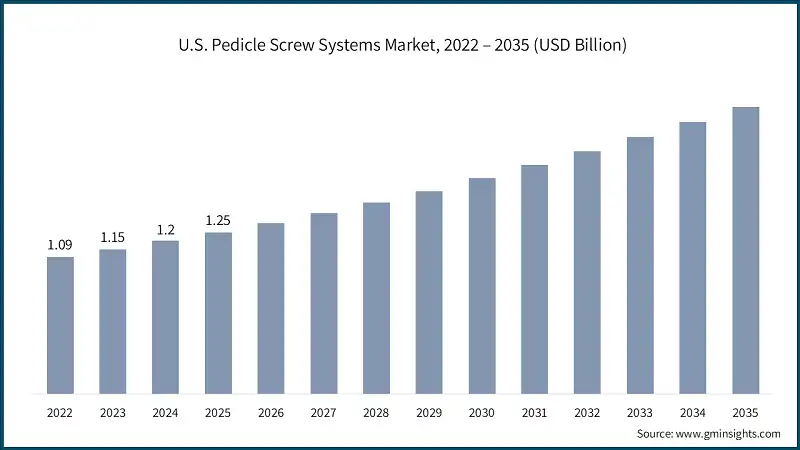
- The U.S. pedicle screw systems industry was valued at USD 1.09 billion and USD 1.15 billion in 2022 and 2023, respectively. In 2025 the market size was valued at USD 1.25 billion from USD 1.2 billion in 2024. Rise in number of trauma cases in the country is projected to fuel the market growth.
- The North American market has several key advantages, including Medicare, Medicaid, and private health insurance companies that provide well-established reimbursement structures for medically necessary spinal fusions with predictable coverage and payment.
- Additionally, the region has the highest concentration of skilled surgeons performing spinal surgeries, with over 4,000 orthopedic and neurosurgeons performing complex surgical interventions. These surgeons also conduct comprehensive training programs and provide opportunities to new surgeons in the region.
- Moreover, the presence of leading global medical device companies such as Medtronic, GLOBUS Medical, Stryker, and DePuy Synthes allows for quick transitions from innovations developed by such companies to new technologies used in clinical practices.
Europe Pedicle Screw Systems Market
Europe accounted for a significant share of the global market and was valued at USD 420.3 million in 2025.
- The growing European market results from increasing acceptance among patients and clinicians of spinal fusion surgery as an effective treatment option for degenerative spinal conditions. In addition, significant improvements in accessibility to new and improved technologies (e.g., navigation systems) and minimally invasive techniques for performing spinal fusion surgeries are contributing to industry growth.
- Further, the European region is at the forefront of implementing outpatient fusion surgery protocols. In some of the regional countries, approximately 30% to 40% of patients receive outpatient single-level fusions, as an alternative to inpatient fusion is becoming widespread.
- However, the introduction of regulatory harmonization associated with the MDR has resulted in initial challenges for product manufacturers; long-term benefits are expected, including enhanced quality and safety standards for all products.|
Asia Pacific Pedicle Screw Systems Market
The Asia Pacific market accounted for a substantial share of the market and was valued at USD 289.1 million in 2025.
- Asia Pacific represents the most rapidly growing regional market, accomplishing this through continued expansion of healthcare infrastructure, including hospitals and skilled nursing facilities, rising disposable income and health insurance penetration, coupled with growing awareness about advanced spinal treatment options.
- Additionally, the regional growth trajectory reflects multiple trends that include significantly increased levels of investment in healthcare infrastructure (e.g., new hospitals and surgical centers), a greater number of medical tourists from around the world, and increased training of surgeons in advanced methods, among others.
- An additional trend contributing to the continued growth of the Asia Pacific region is the development of local manufacturing capabilities. Regional and local companies manufacture cost-effective pedicle screw systems based on the price points of the region's consumers.
- Overall, the future for the Asia Pacific market is anticipated to remain robust owing to growing procedural volume, a rise in trauma injuries, and advancements in spinal products by manufacturers.
Latin America Pedicle Screw Systems Market
The Latin American market is anticipated to exhibit remarkable growth during the analysis period.
- The Latin America pedicle screw systems industry is experiencing steady growth driven by increases in the elderly population along with the growing prevalence of spinal diseases. Brazil and Mexico represent the largest markets in the region and have developed strong healthcare systems coupled with high rates of spinal surgical procedures.
- Additionally, medical tourism in Brazil to perform spinal surgery at affordable rates is becoming a growing trend as patients seek treatment at a lower cost.
- Government support for modernizing hospitals, as well as improved training for surgeons, may continue to support the growth of the market in Latin America.
- Further, manufacturers focusing on providing lower-cost implant solutions and improving surgical training programs for surgeons may gain a competitive advantage in this region.
Middle East and Africa Pedicle Screw Systems Market
The middle east and Africa market is expected to experience substantial growth over the analysis timeframe.
- The growth in the GCC countries, such as Saudi Arabia and the UAE, is driven by the high expenditure on healthcare and the development of advanced medical facilities. This has led to a rise in the demand for pedicle screw systems due to the increased incidence of spinal injuries resulting from road traffic accidents and sporting activities.
- The investments by various regional governments in developing healthcare infrastructures, combined with the introduction of the latest spinal surgery equipment from leading international medical device manufacturers, create new opportunities for the growth of the market.
- Further, the rising awareness of the benefits of minimally invasive spine surgery (MISS) as well as the emergence and expansion of private hospitals in the urban centers of Africa provide the opportunity for increased growth in the MEA market.
Pedicle Screw Systems Market Share
The pedicle screw systems industry is moderately concentrated, with the leading players accounting for significant market share. It indicates a competitive landscape with room for both established leaders, regional manufacturers, and emerging competitors.
Medtronic leads the market due to its broad product offerings, large distribution network, close-working relationships with KOLs, and continuous roadmap for innovative navigation-assisted surgical systems. Similarly, DePuy Synthes (part of Johnson & Johnson's Orthopaedic division) has a key position based on its strong brand, extensive product portfolio, and ability to integrate its products within J&J's overall medical device ecosystem. ORTHOFIX has a notable position in the market with a focus on specialized applications like deformity correction and minimally invasive surgery.
As companies invest heavily in enabling technologies such as navigation, robotics, and 3D printing, among others, the competitive dynamics are expected to intensify as these technologies create barriers to entry and also reinforce the bonds with key accounts. Additionally, merger and acquisition activity remains strong and is expected to increase as larger companies acquire innovative smaller competitors to gain access to new technologies and expand product portfolios.
Pedicle Screw Systems Market Companies
A few of the prominent players operating in the global pedicle screw systems industry include:
- Alphatec Spine
- Altus Spine
- B. Braun
- Boneunion Medical
- Canwell Medical
- CTL AMEDICA
- DePuy Synthes
- Genesys Spine
- GLOBUS MEDICAL
- Medacta International
- Medtronic
- ORTHOFIX
- PRECISION SPINE
- Stryker
- Z-Medical
- Stryker
Expands premium spine portfolios and MIS solutions, leverages enabling technologies and surgeon education, executes bolt-on acquisitions, strengthens global distribution and supply resilience, and focuses on differentiated implants delivering clinical value and operating-room efficiency.
Drives innovation through robotics and navigation technologies, expanding minimally invasive solutions and integrated platforms to enhance surgical precision and patient outcomes, while pursuing global market penetration and strategic acquisitions.
Centers on diversified spine and orthopedic portfolios, emphasizing biologics and bone growth therapies, strategic partnerships, and R&D investments to strengthen presence in complex spine procedures and outpatient care settings.
Pedicle Screw Systems Market Report Attributes
| Key Takeaway | Details |
|---|---|
| Market Size & Growth | |
| Base Year | 2025 |
| Market Size in 2025 | USD 2.2 Billion |
| Market Size in 2026 | USD 2.3 Billion |
| Forecast Period 2026-2035 CAGR | 5.9% |
| Market Size in 2035 | USD 3.9 Billion |
| Key Market Trends | |
| Drivers | Impact |
| Increase in number of accidents and spinal cord injuries | Significantly boosting surgical volumes, especially in trauma centers, creating consistent demand for pedicle screw systems globally. |
| Technological advancements in minimally invasive surgery (MIS) technique | Driving adoption of advanced pedicle screw systems, reducing hospital stays and improving patient recovery rates. |
| Rising prevalence of degenerative disease | Increasing need for spinal stabilization procedures, making pedicle screw systems essential in treatment protocols. |
| Growing geriatric population | Expanding patient base for spinal surgeries due to age-related conditions like osteoporosis and spinal stenosis. |
| Pitfalls & Challenges | Impact |
| High cost of pedicle screw systems and spinal surgeries | Limiting access in low-income regions and slowing adoption despite clinical benefits. |
| Risk of post-surgical complications | Creating caution among patients and surgeons, sometimes leads to preference for non-surgical alternatives. |
| Opportunities: | Impact |
| Development of bioresorbable and 3D-printed pedicle screws | Expected to revolutionize implant customization, reduce revision surgeries, and enhance biocompatibility for better patient outcomes. |
| Integration of AI and navigation systems for precision surgery | Will improve surgical accuracy, reduce complications, and accelerate adoption of advanced pedicle screw systems globally. |
| Market Leaders (2025) | |
| Market Leaders |
Around 20.5% |
| Top Players |
|
| Competitive Edge |
|
| Regional Insights | |
| Largest Market | North America |
| Fastest Growing Market | Asia Pacific |
| Emerging Country | India, Brazil, South Africa, etc. |
| Future Outlook |
|
What are the growth opportunities in this market?
Pedicle Screw Systems Industry News
- In April 2025, Stryker, a leading player in medical technologies, announced that it had completed the sale of its U.S. spinal implants business to Viscogliosi Brothers, LLC, as part of the newly formed company VB Spine, LLC. This acquisition may allow the company to focus on other core categories and better its sales prospects.
- In November 2024, DePuy Synthes launched its VIPER PRIME pedicle screw system featuring ultra-low-profile screw heads designed specifically for minimally invasive surgery applications. This development allowed the company to expand its product offering and also reduce the operating time when used in conjunction with the company's other systems.
- In January 2023, Orthofix Medical Inc. and SeaSpine Holdings Corporation announced the successful completion of their previously announced merger of equals after the approval of each company’s stockholders. The combined Orthofix highlights the company's vision to be a key leader in spine and orthopedics. This development allowed the company to expand its product portfolio, geographic reach, and market position.
The global pedicle screw systems market research report includes an in-depth coverage of the industry with estimates and forecasts in terms of revenue in (USD Million) and volume (Units) from 2022 - 2035 for the following segments:
Market, By Product Type
- Polyaxial pedicle screw
- Monoaxial pedicle screw
- Other product types
Market, By Surgery
- Open surgery
- Minimally invasive surgery
Market, By Indication
- Spinal deformities
- Spinal degeneration
- Spinal trauma
Market, By Application
- Lumbar
- Thoracolumbar
- Cervical fusion
Market, By End Use
- Hospitals & clinics
- Ambulatory surgical centers
The above information is provided for the following regions and countries:
- North America
- U.S.
- Canada
- Europe
- Germany
- UK
- France
- Spain
- Italy
- Netherlands
- Asia Pacific
- China
- Japan
- India
- Australia
- South Korea
- Latin America
- Brazil
- Mexico
- Argentina
- MEA
- South Africa
- Saudi Arabia
- UAE
Frequently Asked Question(FAQ) :
What is the market size of the pedicle screw systems industry in 2025?
The global market was estimated at USD 2.2 billion in 2025, supported by rising spinal trauma cases, growing geriatric population, and expanding adoption of minimally invasive surgical techniques across the healthcare industry.
What is the current pedicle screw systems market size in 2026?
The market is projected to reach USD 2.3 billion in 2026, reflecting steady industry expansion driven by increasing surgical volumes and technological advancements in spinal fixation devices.
What is the projected value of the pedicle screw systems market by 2035?
The global market is expected to reach USD 3.9 billion by 2035, growing at a CAGR of 5.9% from 2026 to 2035, driven by rising prevalence of degenerative spinal diseases and greater adoption of robotic-assisted spine surgery.
Which product segment led the pedicle screw systems market in 2025?
The polyaxial pedicle screw segment accounted for 49.1% market share in 2025 and is expected to reach USD 2 billion by 2035, benefiting from increasing demand for personalized implants and greater surgeon flexibility in complex spinal procedures.
How much revenue did the monoaxial pedicle screw segment generate in 2025?
The pedicle screw systems industry from monoaxial pedicle screw segment was valued at USD 645.2 million in 2025, driven by strong demand in trauma surgeries and osteoporotic cases where high construct stiffness is required.
How much revenue did the open surgery segment generate in 2025?
The open surgery segment generated USD 1.6 billion in 2025, as it remains the preferred approach for complex spinal deformities, multi-level fusions, and revision surgeries in the healthcare industry.
What is the growth outlook for minimally invasive surgery (MIS) in the pedicle screw systems industry?
The MIS segment is gaining traction due to reduced hospital stays, lower blood loss, and faster recovery times, supported by advanced imaging, navigation systems, and expandable interbody cages that enable more complex procedures.
Which region leads the pedicle screw systems market?
North America held 61.9% of the global pedicle screw systems industry in 2025, with the U.S. industry valued at USD 1.25 billion. Growth is driven by high trauma incidence, strong reimbursement policies, and the presence of leading medical device manufacturers in the region.
What are the key trends shaping the pedicle screw systems industry?
Key trends include integration of AI and navigation systems for precision surgery, rising medical tourism for spine procedures, development of bioresorbable and 3D-printed screws, and increasing shift toward outpatient minimally invasive spinal fusion surgeries.
Who are the key players in the pedicle screw systems market?
Key industry players include Medtronic, DePuy Synthes, Stryker, GLOBUS MEDICAL, ORTHOFIX, Alphatec Spine, B. Braun, Medacta International, PRECISION SPINE, and Z-Medical, with the top five collectively holding approximately 54% market share.
Pedicle Screw Systems Market Scope
Related Reports