Summary
Table of Content

North America Sleep Coaching Market
Get a free sample of this report
Form submitted successfully!
Error submitting form. Please try again.
Thank you!
Your inquiry has been received. Our team will reach out to you with the required details via email. To ensure that you don't miss their response, kindly remember to check your spam folder as well!
Request Sectional Data
Thank you!
Your inquiry has been received. Our team will reach out to you with the required details via email. To ensure that you don't miss their response, kindly remember to check your spam folder as well!
Form submitted successfully!
Error submitting form. Please try again.
North America Sleep Coaching Market Size
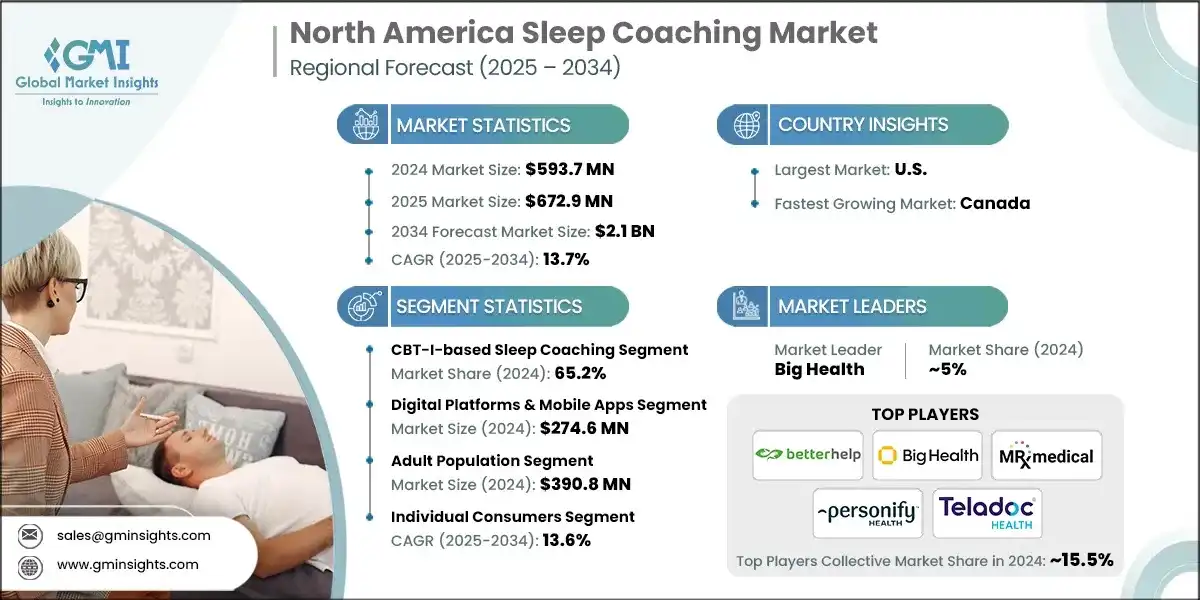
The North America sleep coaching market was valued at USD 593.7 million in 2024. The market is expected to grow from USD 672.9 million in 2025 to USD 2.1 billion in 2034, at a CAGR of 13.7% during the forecast period, according to the latest report published by Global Market Insights Inc. The high market growth is attributed to the high prevalence of sleep disorders, the rise in employer wellness programs, and favorable reimbursement frameworks for sleep coaching in the region, among other factors.
North America Sleep Coaching Market Key Takeaways
Market Size & Growth
- 2024 Market Size: USD 593.7 Million
- 2025 Market Size: USD 672.9 Million
- 2034 Forecast Market Size: USD 2.1 Billion
- CAGR (2025–2034): 13.7%
Regional Dominance
- Largest Market: U.S.
- Fastest Growing Country: Canada
Key Market Drivers
- High prevalence of sleep disorders.
- Technological Advancements.
- Rise in employer wellness programs.
- Favorable reimbursement framework for sleep coaching in the region.
Challenges
- High cost of personalized coaching and diagnostics.
- Limited availability of certified sleep coaches.
Opportunity
- AI-powered sleep coaching platforms.
- Partnerships with insurers and telehealth providers.
Key Players
- Market Leader: Big Health led with over 5% market share in 2024.
- Leading Players: Top 5 players in this market include Better Help, Big Health, MRx, personify HEALTH, Teladoc HEALTH, which collectively held a market share of 15.5% in 2024.
Get Market Insights & Growth Opportunities
Sleep coaching solutions are revolutionizing the behavioral health and wellness space by providing individualized, non-pharmacological methods for enhancing sleep quality in diverse populations. Prominent providers such as Big Health, MRx, Better Help, Personify Health, and Teladoc Health deliver robust portfolios in North America, featuring AI-driven mobile applications, certified coaching programs, and hybrid care models. These services aim to encourage healthy sleep practices, assist with cognitive restructuring, and take advantage of wearable technology to provide real-time data.
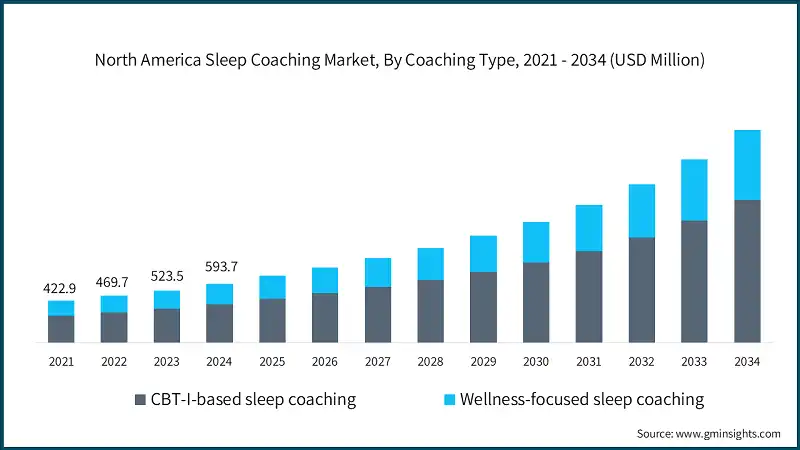
The market has increased from USD 422.9 million in 2021 and reached USD 523.5 million in 2023, with a historic growth rate of 13.7%. This expansion has been driven by the rising prevalence of sleep disorders, the rapid adoption of digital health technologies, growing employer wellness initiatives, and favorable reimbursement policies that have improved accessibility and affordability of sleep coaching solutions.
Favorable reimbursement policies have played a pivotal role in expanding access to sleep coaching services across North America. By covering behavioral sleep interventions under insurance plans, these policies significantly reduce out-of-pocket expenses for consumers, making personalized coaching more affordable. This financial support has encouraged greater adoption among individuals who previously viewed sleep coaching as a premium service. Additionally, reimbursement frameworks have incentivized providers to integrate sleep coaching into broader telehealth and wellness programs, further improving accessibility and driving market growth.
Sleep coaching refers to personalized guidance and behavioral interventions aimed at improving sleep quality, addressing sleep disorders, and promoting healthy sleep habits.
To get key market trends
North America Sleep Coaching Market Trends
Technological innovation is accelerating the adoption of sleep coaching services across North America, supported by strong consumer engagement and public health priorities.
- Wearable devices are becoming mainstream in North America. For instance, according to an article published by Rock Health, in 2024, nearly 44% of American adults were using wearables to track health metrics, including sleep patterns. These devices enable continuous monitoring of sleep duration, quality, and disturbances, allowing coaches to deliver data-driven interventions. Additionally, IoT-enabled smart home ecosystems, such as connected mattresses and bedside sensors, are expanding access to home-based sleep diagnostics, reducing reliance on clinical settings.
- Furthermore, artificial Intelligence (AI) and machine learning are transforming sleep coaching by enabling predictive analytics and personalized care. AI-powered platforms can analyze longitudinal sleep data, forecast insomnia risk, and deliver tailored behavioral strategies, improving engagement and scalability.
- Moreover, telehealth integration has further expanded access to sleep coaching. For instance, the Health Resources & Services Administration reports that behavioral health services accounted for 35% of telehealth visits among Medicare beneficiaries in 2021, with adoption remaining high post-pandemic. Mobile-first platforms offering CBT-I protocols, mindfulness exercises, and gamified engagement tools are improving adherence, while multilingual interfaces cater to North America’s diverse population.
- Combined with cloud-based data storage and remote monitoring, these innovations are making sleep coaching more inclusive, scalable, and outcome-oriented.
North America Sleep Coaching Market Analysis
Learn more about the key segments shaping this market
Based on coaching type, the market is segmented into CBT-I-based sleep coaching and wellness-focused sleep coaching. The CBT-I-based sleep coaching segment accounted for 65.2% of the market in 2024 due to its strong clinical validation, recognition as the gold-standard treatment for chronic insomnia, and rapid integration into digital health ecosystems. The segment is expected to exceed USD 1.4 billion by 2034, growing at a CAGR of 14% during the forecast period.
On the other hand, the wellness-focused sleep coaching segment held a significant market share of 34.8% in 2024, and its growth can be attributed to the rising consumer interest in holistic, lifestyle-oriented approaches to sleep health. This segment emphasizes mindfulness, stress management, and behavioral change rather than clinical protocols, making it highly attractive for health-conscious individuals and corporate wellness programs. The popularity of mobile apps offering guided routines, relaxation techniques, and gamified engagement tools further supports its growth, positioning wellness-focused coaching as a key complement to clinical solutions in North America.
- The growth of the CBT-I segment is further propelled by the growing adoption of AI-powered CBT-I platforms and telehealth delivery models, which have improved accessibility, reduced costs, and enabled personalized interventions, reinforcing its position as the preferred solution for healthcare providers, employers, and individual consumers.
Based on delivery mode, the North America sleep coaching market is segmented into digital platforms & mobile apps, hybrid models, and personalized coaching/face-to-face therapy. The digital platforms & mobile apps segment continues to dominate, accounting for a majority market share valued at USD 274.6 million in 2024.
- The digital platforms & mobile apps segment leads the North America sleep coaching market, driven by the convenience of on-demand access and the growing popularity of mobile-first health solutions. These platforms leverage wearable integration for real-time sleep tracking and personalized feedback, offering scalable and cost-effective solutions for both CBT-I and wellness-focused interventions. Their ability to deliver interactive content, gamified engagement, and multilingual support makes them highly appealing across diverse demographics.
- The hybrid models segment held a revenue of USD 203.9 million in 2024, with projections indicating a steady expansion at 14% CAGR from 2025 to 2034. These models integrate app-based tracking and AI-driven insights with live coaching sessions, group programs, and clinical escalation when necessary. This approach addresses the limitations of purely digital platforms by offering personalized guidance and accountability, making it a preferred choice for individuals with complex sleep needs or those valuing human support.
- The personalized coaching/face-to-face therapy segment held a revenue of USD 115.2 million in 2024, with projections indicating a steady expansion at 11.3% CAGR from 2025 to 2034. The personalized coaching and face-to-face therapy segment remains relevant for high-touch, individualized care. It caters to users requiring intensive support for chronic sleep disorder or behavioral challenges. Direct interaction with certified coaches or clinicians ensures tailored interventions, emotional support, and structured progress monitoring. While less scalable than digital models, this segment benefits from its ability to deliver comprehensive care for personalized cases.
Based on patient, the North America sleep coaching market is segmented into the adult population, geriatric population, and pediatric & adolescent. The adult population segment continues to dominate, accounting for a majority market share valued at USD 390.8 million in 2024.
- This leadership is fueled by the high prevalence of insomnia and lifestyle-related sleep disturbances among working-age individuals. Rising stress levels, demanding work schedules, and growing awareness of sleep’s impact on mental health and productivity have made adults the primary adopters of digital platforms, CBT-I programs, and corporate wellness initiatives. Their strong engagement with mobile-first solutions and telehealth services reinforces their position as the most commercially significant demographic.
- The geriatric population segment held a revenue of USD 149.5 million in 2024, with projections indicating a steady expansion at 14.5% CAGR from 2025 to 2034. This growth is fueled by the increasing incidence of age-related sleep disorders such as insomnia, fragmented sleep, and conditions linked to chronic pain or cognitive decline. Older adults are turning to structured, non-pharmacological interventions as alternatives to sleep medications, and hybrid care models combining digital tools with personalized coaching are gaining traction in this group.
- The pediatric & adolescent segment held a revenue of USD 53.4 million in 2024, with projections indicating a steady expansion at 13.9% CAGR from 2025 to 2034. Rising concerns over screen-time-related disruptions, anxiety-induced insomnia, and behavioral sleep disorders have prompted parents, schools, and pediatricians to adopt preventive and therapeutic coaching solutions. Mobile apps with gamified engagement and parental dashboards are increasingly popular in this demographic, making sleep coaching more accessible for younger populations.
Learn more about the key segments shaping this market
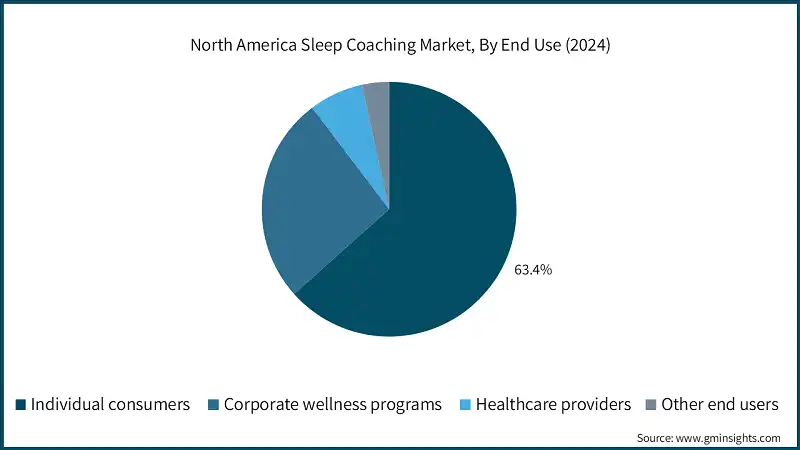
Based on end use, the North America sleep coaching market is segmented into individual consumers, corporate wellness programs, healthcare providers, and other end users. The individual consumers segment accounted for USD 376.4 million in 2024 and is expected to grow at a 13.6% CAGR from 2025 to 2034.
- Growth in this category is fueled by rising awareness of sleep health, increasing prevalence of insomnia and related disorders, and the growing preference for personalized wellness solutions. The integration of wearable technology and mobile-first platforms has made sleep coaching more accessible and interactive, positioning individual consumers as the most influential demand driver in both clinical and lifestyle-focused offerings.
- The corporate wellness programs segment accounted for USD 155.9 million in 2024 and is expected to grow at a 14.4% CAGR from 2025 to 2034. The corporate wellness programs segment is expanding rapidly as employers recognize the impact of sleep on productivity, mental health, and workforce engagement. Organizations are increasingly incorporating sleep coaching into holistic wellness strategies, offering employees access to digital platforms, hybrid models, and stress management programs. This trend reflects a broader shift toward preventive health measures in workplace settings.
- The healthcare providers segment is expected to grow at a substantial pace during the period from 2025 to 2034 at a CAGR of 12.3%. Primary care physicians, mental health specialists, and sleep medicine practitioners are adopting coaching as a complementary approach to traditional therapies, particularly for patients seeking non-pharmacological interventions. Telehealth-enabled delivery and AI-driven tools are further supporting adoption in clinical environments.
- The other end users segment is expected to grow at a substantial pace during the period from 2025 to 2034 at a CAGR of 11%. The other end-user segment, which includes educational institutions, sports organizations, and community health programs, is also growing steadily. Increased recognition of sleep’s role in cognitive performance, athletic recovery, and overall well-being is driving adoption in these settings. Structured coaching programs tailored for students and athletes are becoming more common, supported by digital engagement tools and behavioral health initiatives.
Looking for region specific data?
U.S. Sleep Coaching Market
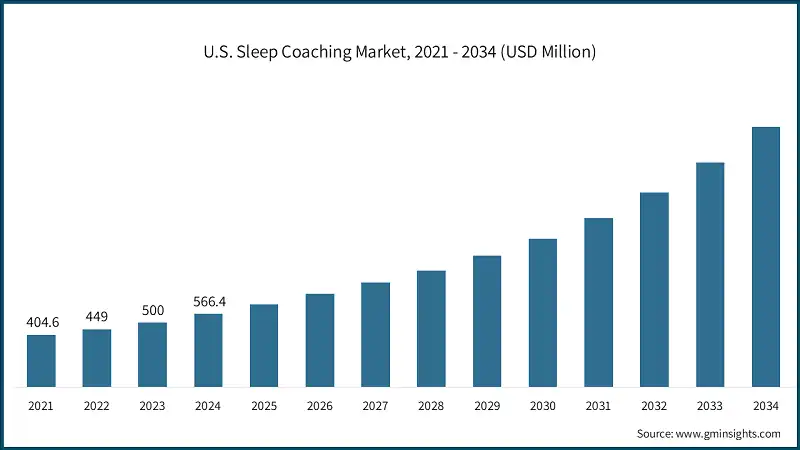
The U.S. Sleep Coaching market was valued at USD 404.6 million and USD 449 million in 2021 and 2022, respectively. The market size reached USD 566.4 million in 2024, growing from USD 500 million in 2023, and is anticipated to grow at a CAGR of 13.6% between 2025 and 2034.
- Growth in the country is supported by advanced healthcare infrastructure, high consumer awareness of sleep health, and widespread adoption of digital health platforms.
- The U.S. faces a significant burden of sleep disorders, with millions affected by insomnia and sleep apnea, driving demand for structured, non-pharmacological interventions.
- Corporate wellness programs and insurance-backed solutions are increasingly incorporating sleep coaching, further accelerating adoption.
- Additionally, the presence of leading digital health startups and established wellness brands, combined with strong integration of wearable technology and AI-powered apps, positions the U.S. as the innovation hub for sleep coaching in North America.
Canada Sleep Coaching Market
The Canada sleep coaching market is anticipated to grow at the highest CAGR of 15.7% during the analysis timeframe.
- Rising awareness of sleep’s impact on mental health and chronic disease management has fueled adoption of both clinical and wellness-focused coaching solutions.
- Telehealth integration and government-backed digital health initiatives have improved accessibility, particularly in remote and underserved regions.
- Canadian consumers are increasingly embracing mobile-first platforms and hybrid care models, while employers are adding sleep coaching to corporate wellness programs to address stress and productivity challenges.
- With strong regulatory support and a tech-savvy population, Canada is emerging as a key growth market for innovative sleep health solutions.
North America Sleep Coaching Market Share
Leading players such as Big Health, MRx, Better Help, Personify Health, and Teladoc Health collectively hold a market share of 13.5% in the market. These companies maintain their leadership through continuous innovation in AI-driven sleep analytics, personalized coaching algorithms, and integration with wearable devices that enhance behavioral interventions and sleep hygiene. Their platforms deliver scalable solutions for individual consumers, corporate wellness programs, and healthcare providers, leveraging data-driven insights and CBT-I protocols to improve sleep outcomes.
Meanwhile, emerging players in North America are differentiating themselves by focusing on cost-effective, tech-enabled solutions tailored to specific demographics, such as pediatric and adolescent sleep care. Strategic collaborations with telehealth providers, insurers, and academic institutions are enabling these companies to address unmet needs like circadian rhythm disruptions, stress-induced insomnia, and screen-time-related sleep issues. Additionally, niche startups are introducing gamified engagement tools, multilingual interfaces, and AI-powered predictive analytics, positioning themselves as agile innovators in a rapidly evolving market.
North America Sleep Coaching Market Companies
A few of the prominent players operating in the North America sleep coaching industry include:
- Better Help
- Big Health
- dawn
- furo.fit
- International Parenting & Health Institute
- MRx
- personify HEALTH
- SLEEP SPACE
- Stanford MEDICINE
- Stellar Sleep
- Teladoc HEALTH
- THE INSOMNIA AND SLEEP INSTITUTE OF ARIZONA
- Big Health
Big Health delivers clinically validated digital therapeutics for sleep and mental health, including its flagship CBT-I program, Sleepio. Its USP lies in evidence-based care delivered entirely through digital platforms, eliminating the need for medication or in-person visits. The company focuses on clinical rigor, AI-driven personalization, and seamless integration with employer wellness programs, making it a trusted partner for preventive health solutions.
Personify Health offers a unified health engagement platform combining wellness, benefits navigation, and care coordination. Its USP creates connected, personalized health experiences at scale, powered by behavioral science and AI insights. By integrating sleep coaching into a broader ecosystem of physical and mental health tools, Personify enables employers and members to manage well-being through a single, streamlined solution.
MRx specializes in prescription digital therapeutics (PDTs) for chronic conditions, including sleep disorders. Its USP is clinical-grade efficacy with regulatory compliance, allowing providers to prescribe MRx solutions as part of standard care. The company emphasizes data-driven personalization, adherence monitoring, and EHR integration, bridging traditional medicine with digital innovation.
North America Sleep Coaching Market Report Attributes
| Key Takeaway | Details |
|---|---|
| Market Size & Growth | |
| Base Year | 2024 |
| Market Size in 2024 | USD 593.7 Million |
| Market Size in 2025 | USD 672.9 Million |
| Forecast Period 2025 - 2034 CAGR | 13.7% |
| Market Size in 2034 | USD 2.1 Billion |
| Key Market Trends | |
| Drivers | Impact |
| High prevalence of sleep disorders | Creates a large addressable market for sleep coaching services, driving consistent demand across consumer and clinical segments. |
| Technological Advancements | Enables scalable, personalized solutions through AI and digital platforms, reducing dependency on in-person sessions. |
| Rise in employer wellness programs | Expands B2B opportunities as corporations invest in employee health, increasing adoption of sleep coaching as part of wellness packages. |
| Favorable reimbursement framework for sleep coaching in the region | Improves affordability and accessibility, accelerating consumer uptake and reducing financial barriers. |
| Pitfalls & Challenges | Impact |
| High cost of personalized coaching and diagnostics | Limits penetration among price-sensitive consumers, slowing adoption despite growing awareness. |
| Limited availability of certified sleep coaches | Creates capacity constraints, hindering scalability and impacting service quality in high-demand areas. |
| Opportunities: | Impact |
| AI-powered sleep coaching platforms | Offers cost-effective, scalable solutions, addressing workforce shortages and enabling hyper-personalization. |
| Partnerships with insurers and telehealth providers | Enhances distribution channels and affordability, driving market expansion and consumer trust. |
| Market Leaders (2024) | |
| Market Leaders |
~5% |
| Top Players |
Collective market share in 2024 is ~15.5% |
| Competitive Edge |
|
| Regional Insights | |
| Largest Market | U.S. |
| Fastest growing market | Canada |
| Future outlook |
|
What are the growth opportunities in this market?
North America Sleep Coaching Industry News:
- In August 2024, Big Health received FDA clearance for its SleepioRx digital therapeutic. The platform offers customized goal setting, detailed sleep diaries, and real-time support content, enabling patients to track progress and receive tailored interventions. This product launch helped the company gain an enhanced customer base.
- In February 2024, Virgin Pulse and HealthComp announced their merger under a new brand name, Personify Health. The combined entity introduces the first-of-its-kind personalized health platform that integrates health plan administration, holistic wellbeing solutions, and comprehensive health navigation into a single, streamlined experience. This merger helped the company gain a competitive edge over its peers.
The North America sleep coaching market research report includes an in-depth coverage of the industry with estimates and forecasts in terms of revenue in USD Million from 2021 - 2034 for the following segments:
Market, By Coaching Type
- CBT-I-based sleep coaching
- Wellness-focused sleep coaching
Market, By Delivery Mode
- Digital platforms & mobile apps
- Hybrid models
- Personalized coaching/Face-to-face therapy
Market, By Patient
- Adult population
- Geriatric population
- Pediatric & adolescent
Market, By End Use
- Individual consumers
- Corporate wellness programs
- Healthcare providers
- Other end use
The above information is provided for the following countries:
- U.S.
- Canada
Frequently Asked Question(FAQ) :
What is the market size of the North America sleep coaching in 2024?
The market size was USD 593.7 million in 2024, with a CAGR of 13.7% expected through 2034, driven by the high prevalence of sleep disorders, employer wellness programs, and favorable reimbursement frameworks.
What is the projected value of the North America sleep coaching market by 2034?
The market is expected to reach USD 2.1 billion by 2034, supported by technological advancements, increasing adoption of digital platforms, and growing awareness of sleep health.
What is the projected size of the North America sleep coaching market in 2025?
The market is expected to grow to USD 672.9 million in 2025.
How much revenue did the CBT-I-based sleep coaching segment generate?
The CBT-I-based sleep coaching segment accounting for 65.2% of the market share, driven by its clinical validation and integration into digital health ecosystems.
What was the valuation of the digital platforms & mobile apps segment?
The digital platforms & mobile apps segment held a significant share, generating USD 274.6 million in 2024.
Which patient segment leads the North America sleep coaching market?
The adult population segment led the market, generating USD 390.8 million in 2024, driven by the rising prevalence of sleep disorders among working-age individuals.
What are the upcoming trends in the North America sleep coaching industry?
Key trends include the adoption of wearable devices for sleep tracking, integration of IoT-enabled smart home ecosystems, and the use of AI and machine learning for predictive analytics and personalized care.
Who are the key players in the North America sleep coaching market?
Prominent players include Better Help, Big Health, dawn, furo.fit, International Parenting & Health Institute, MRx, personify HEALTH, SLEEP SPACE, Stanford MEDICINE, and Stellar Sleep.
North America Sleep Coaching Market Scope
Related Reports