Summary
Table of Content

North America Flexible Endoscopic Surgery Robot Market
Get a free sample of this report
Form submitted successfully!
Error submitting form. Please try again.
Thank you!
Your inquiry has been received. Our team will reach out to you with the required details via email. To ensure that you don't miss their response, kindly remember to check your spam folder as well!
Request Sectional Data
Thank you!
Your inquiry has been received. Our team will reach out to you with the required details via email. To ensure that you don't miss their response, kindly remember to check your spam folder as well!
Form submitted successfully!
Error submitting form. Please try again.
North America Flexible Endoscopic Surgery Robot Market Size
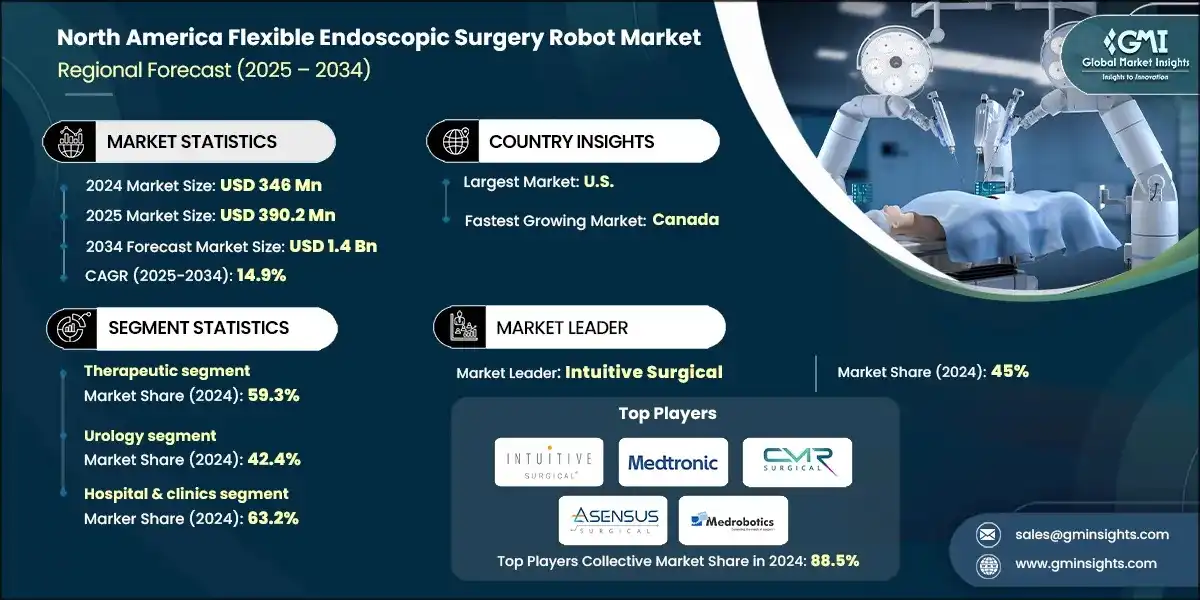
The North America flexible endoscopic surgery robot market was valued at USD 346 million in 2024. The market is expected to reach from USD 390.2 million in 2025 to USD 1.4 billion in 2034, growing at a CAGR of 14.9% during the forecast period, according to the latest report published by Global Market Insights Inc. Growing demand for minimally invasive surgical instruments, continuous advancements in robotic technologies, and the rising volume of surgical procedures.
North America Flexible Endoscopic Surgery Robot Market Key Takeaways
Market Size & Growth
- 2024 Market Size: USD 346 Million
- 2025 Market Size: USD 390.2 Million
- 2034 Forecast Market Size: USD 1.4 Billion
- CAGR (2025–2034): 14.9%
Key Market Drivers
- Growing preference for minimally invasive and scar-less procedures.
- Technological advancements in robotic-assisted endoscopy.
- Rising burden of gastrointestinal and respiratory disorders.
- Integration of AI and data analytics for enhanced precision.
Challenges
- High acquisition and maintenance costs.
- Regulatory and reimbursement challenges.
Opportunity
- Emergence of single-use and modular robotic systems.
- Integration of AI-driven navigation and autonomous functions.
Key Players
- Market Leader: Intuitive Surgical led with over 45% market share in 2024.
- Leading Players: Top 5 players in this market include Intuitive Surgical, Medtronic, CMR Surgical, Asensus Surgical, Medrobotics, which collectively held a market share of 88.5% in 2024.
Get Market Insights & Growth Opportunities
The North America flexible endoscopic surgery robot market delivers advanced robotic-assisted solutions to hospitals, ambulatory surgical centers, and specialty clinics, enabling precise, minimally invasive interventions and improved patient recovery. The market features flexible robotic systems designed for gastrointestinal, urological, gynecological, and pulmonary procedures, supported by AI, imaging, and robotic guidance for both diagnostic and therapeutic use. Key players such as Intuitive Surgical, Medtronic, CMR Surgical, Asensus Surgical, and Medrobotics are driving market leadership through continuous innovation, strategic partnerships, and clinical advancements. Their focus on integrating AI, enhancing system dexterity, and expanding indications aligns with growing demand for safer, faster, and more efficient minimally invasive surgical solutions across North America.
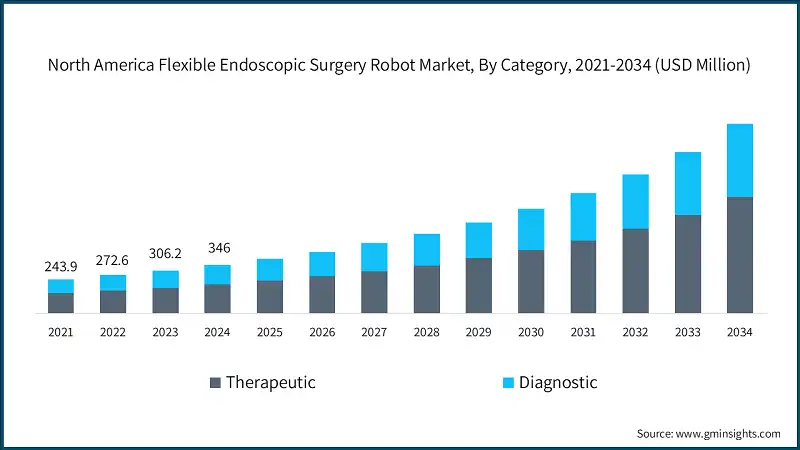
The market has increased from USD 243.9 million in 2021 and reached USD 306.2 million in 2023. The North America flexible endoscopic surgery robot market is witnessing strong growth driven by the rising adoption of minimally invasive surgical techniques, rapid technological advancements in robotic systems, and a growing burden of chronic diseases. The shift toward minimally invasive procedures is one of the most significant growth catalysts, as patients and healthcare providers increasingly prefer surgeries that reduce postoperative pain, shorten hospital stays, and enable faster recovery. Flexible endoscopic robots offer enhanced visualization, precision, and control during complex interventions across gastrointestinal, urological, gynecological, and pulmonary domains, making them a preferred option in modern surgical practice.
Technological innovation remains a key driver, with advancements in robotic articulation, AI-powered navigation, and 3D imaging significantly improving procedural accuracy and safety. The integration of artificial intelligence and machine learning in surgical robotics has enhanced real-time decision-making, enabling surgeons to identify tissue structures, predict outcomes, and optimize surgical trajectories. Companies such as Intuitive Surgical, Medtronic, CMR Surgical, Asensus Surgical, and Medrobotics are investing heavily in R&D to introduce next-generation robotic systems that are more compact, cost-efficient, and user-friendly.
Additionally, the increasing prevalence of chronic diseases such as colorectal cancer, obesity, and respiratory disorders across North America is fueling the need for advanced diagnostic and therapeutic interventions. The region’s well-established healthcare infrastructure, combined with high adoption rates of robotic technologies and favorable clinical outcomes, further supports market expansion. As hospitals and ambulatory surgical centers seek to enhance operational efficiency and patient safety, demand for flexible robotic endoscopy platforms continues to accelerate, positioning the North American market for sustained long-term growth.
A flexible endoscopic surgery robot is a robotic-assisted medical device designed to perform minimally invasive procedures with enhanced precision, dexterity, and control. It combines flexible robotic arms, AI, and high-definition imaging to enable surgeons to access complex anatomical regions, improving patient outcomes, reducing recovery time, and minimizing surgical risks.
To get key market trends
North America Flexible Endoscopic Surgery Robot Market Trends
The growing preference for minimally invasive and scar-less procedures is a major driver propelling the market growth. Over the past few years, both patients and surgeons have increasingly favored minimally invasive surgical (MIS) approaches due to their significant clinical advantages, including reduced postoperative pain, minimal scarring, faster recovery, and shorter hospital stays.
- This shift in preference has driven healthcare facilities across the U.S. and Canada to adopt advanced robotic systems capable of performing complex endoscopic procedures with exceptional accuracy and control. Flexible endoscopic surgery robots enable natural orifice access and smaller incisions, resulting in less trauma to surrounding tissues and superior cosmetic outcomes compared to conventional open or laparoscopic surgeries.
- The surge in elective and outpatient procedures further supports this trend, as patients increasingly demand faster recovery times and less invasive treatment options. Additionally, the rise in chronic gastrointestinal, urological, and pulmonary diseases has increased the need for high-precision, minimally invasive interventions, driving hospitals and ambulatory surgical centers to invest in robotic platforms.
- Furthermore, growing awareness among patients about improved postoperative quality of life and expanding insurance coverage for minimally invasive surgeries have accelerated adoption. As healthcare systems continue prioritizing patient safety, procedural efficiency, and cost-effectiveness, flexible endoscopic surgery robots are becoming integral to modern surgical practice.
- The convergence of patient demand, technological innovation, and favorable clinical outcomes positions minimally invasive and scar-less procedures as a pivotal growth catalyst for the North American market.
North America Flexible Endoscopic Surgery Robot Market Analysis
Learn more about the key segments shaping this market
Based on the category, the market is segmented into therapeutic and diagnostic. The therapeutic segment dominated around 59.3% of the market share in 2024, driven by increasing adoption of minimally invasive procedures, improved precision control, and growing demand for complex surgical interventions. The segment is expected to exceed USD 832 million by 2034, growing at a CAGR of 15.2% during the forecast period.
On the other hand, the diagnostic segment is expected to grow with a CAGR of 14.3%. The growth of this segment can be attributed to growing screening programs, technological advancements in visualization, and early disease detection through robotic-assisted endoscopy.
- The therapeutic segment is primarily driven by the increasing adoption of robotic-assisted minimally invasive procedures for advanced therapeutic interventions. These robotic platforms offer superior dexterity, precise navigation, and enhanced visualization, enabling surgeons to perform complex procedures such as tumor resections, polypectomies, and submucosal dissections with minimal tissue trauma and improved patient outcomes.
- The integration of 3D medical imaging devices, AI-powered motion control, and haptic feedback has significantly advanced surgical precision, reducing operative time and accelerating patient recovery, thereby improving procedural efficiency across hospitals and specialty centers.
- The rising demand for minimally invasive therapies in fields such as gastroenterology, urology, and pulmonology continues to fuel adoption. In parallel, increasing R&D investments by key manufacturers to develop more flexible, compact, and multifunctional robotic systems have further expanded the therapeutic applications of flexible endoscopic robotics.
- Additionally, the growing global shift toward outpatient and ambulatory surgical settings for performing complex therapeutic interventions supports segment growth by improving accessibility and reducing healthcare costs.
- The diagnostic segment crossed USD 140.8 million in 2024, with projections indicating a steady expansion at 14.3% CAGR from 2025 to 2034. The diagnostic segment is experiencing strong growth due to the increasing need for early and accurate detection of diseases, particularly gastrointestinal and pulmonary conditions.
- Flexible robotic endoscopes significantly improve diagnostic precision by offering superior maneuverability and high-definition visualization, enabling clinicians to access and assess complex anatomical regions that are challenging to reach using traditional endoscopy.
- The rising incidence of colorectal cancer, inflammatory bowel disease, and chronic lung disorders has intensified the demand for advanced robotic platforms capable of performing detailed, minimally invasive diagnostic procedures. The integration of advanced imaging modalities, such as optical coherence tomography (OCT) and AI-assisted lesion detection, further enhances the accuracy and reliability of diagnostic outcomes.
- Moreover, the growing adoption of disposable or single-use robotic endoscopes is addressing infection control challenges by reducing cross-contamination risks, ensuring safer diagnostic environments.
Based on application, the North America flexible endoscopic surgery robot market is classified into urology, respiratory applications, gastrointestinal applications, and other applications. The urology segment dominated the market with a revenue share of 42.4% in 2024 and is expected to reach USD 583.6 million by 2034.
- The urology segment in the North America flexible endoscopic surgery robot market is driven by the increasing prevalence of urological conditions such as kidney stones, prostate cancer, and urinary tract obstructions. The widespread adoption of minimally invasive robotic-assisted surgeries including nephrectomy, prostatectomy, and cystectomy has significantly enhanced surgical accuracy, reduced intraoperative trauma, and shortened recovery times.
- Surgeons across the U.S. and Canada benefit from improved dexterity, 3D visualization, and access to anatomically challenging areas, making robotic platforms ideal for performing complex urological interventions.
- Additionally, the aging population in North America, which is more susceptible to urological diseases, continues to boost procedural volumes. Ongoing advancements in flexible robotic arms, haptic feedback, and AI-assisted navigation systems are further improving precision and safety in robotic urological surgeries.
- The respiratory applications segment held a revenue of USD 110.4 million in 2024, with projections indicating a steady expansion at 15.4% CAGR from 2025 to 2034. Growth is primarily driven by the rising incidence of lung cancer, chronic obstructive pulmonary disease (COPD), and other airway disorders.
- The gastrointestinal applications segment held a revenue of USD 69.2 million in 2024, with projections indicating a steady expansion at 13.6% CAGR from 2025 to 2034. The segment’s expansion is driven by the increasing prevalence of gastrointestinal cancers, colorectal polyps, and peptic ulcers in North America.
- Flexible endoscopic robots are increasingly employed in diagnostic and therapeutic procedures such as endoscopic submucosal dissection (ESD), colonoscopy, and gastroscopy, offering superior maneuverability, precision, and safety within the complex digestive anatomy.
Learn more about the key segments shaping this market
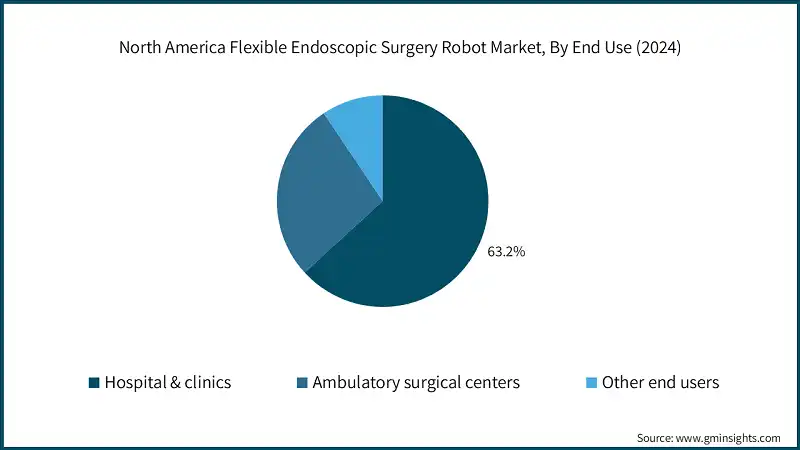
Based on end use, the North America flexible endoscopic surgery robot market is classified into hospital & clinics, ambulatory surgical centers, and other end users. The hospital & clinics segment dominated the market with a revenue share of 63.2% in 2024 and is expected to reach USD 897.6 million within the forecast period.
- The two largest segments accounted for over 90.6% of the total market value. The hospitals and clinics segment accounts for the largest share of the North America flexible endoscopic surgery robot market, driven by the increasing adoption of advanced robotic-assisted systems for complex gastrointestinal, colorectal, and thoracic procedures.
- Large hospitals across the U.S. and Canada possess the infrastructure, financial capacity, and skilled surgical teams necessary to integrate these sophisticated robotic platforms, which offer superior visualization, precision, and control during minimally invasive interventions.
- The rising incidence of gastrointestinal disorders, including colorectal cancer and inflammatory bowel disease, has further accelerated the adoption of flexible endoscopic robotic systems that minimize surgical trauma and shorten patient recovery times.
- The ambulatory surgical centers segment exceeded USD 94.8 million in 2024, with projections indicating a steady expansion at 14.4% CAGR from 2025 to 2034. ASCs are rapidly emerging as a preferred setting for robotic-assisted endoscopic procedures due to the ongoing shift of outpatient surgeries from hospitals to cost-effective, specialized facilities.
- These centers provide greater scheduling flexibility, shorter procedure durations, and reduced hospitalization expenses, aligning with the growing demand for efficient, minimally invasive care.
- The miniaturization of robotic components and advancements in flexible endoscope design have enhanced the suitability of these technologies for outpatient environments, fueling their adoption across North America.
Looking for region specific data?
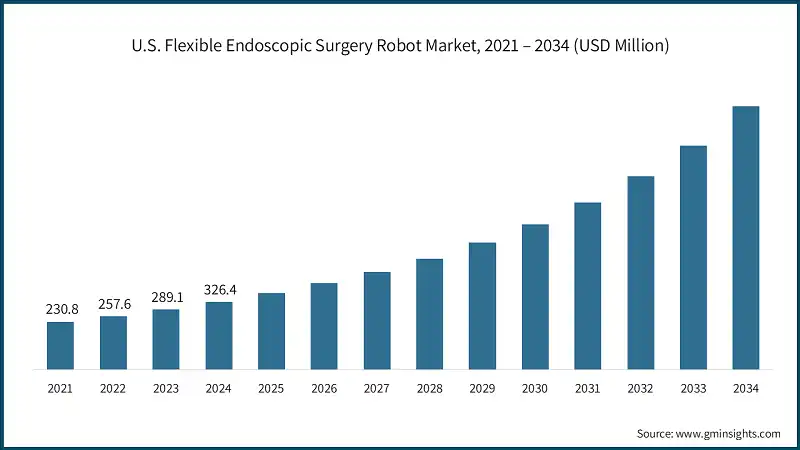
The U.S. flexible endoscopic surgery robot market was valued at USD 230.8 million and USD 257.6 million in 2021 and 2022, respectively. In 2024, the market size grew to USD 326.4 million from USD 289.1 million in 2023.
- The U.S. leads the North American market, driven by high healthcare spending, advanced hospital infrastructure, and early technological adoption. The U.S. market benefits from a strong ecosystem of robotics manufacturers, research institutions, and clinical partnerships that accelerate innovation and commercialization.
- Increasing incidence of gastrointestinal cancers and chronic digestive disorders has boosted demand for minimally invasive, robot-assisted endoscopic procedures offering faster recovery and reduced complications.
- The Centers for Medicare & Medicaid Services (CMS) reimbursement policies favoring robotic-assisted surgeries further promote adoption across hospitals and ambulatory surgical centers.
- Additionally, rising investments in AI-integrated robotic platforms, surgeon training initiatives, and FDA approvals for next-generation systems like Johnson & Johnson’s MONARCH platform contribute significantly to market expansion.
The Canada flexible endoscopic surgery robot market is anticipated to grow at the highest CAGR of 16.6% during the analysis timeframe.
- The Canada market is driven by rising demand for minimally invasive surgical procedures, advancements in robotic-assisted technologies, and increasing prevalence of gastrointestinal and respiratory diseases. Canadian healthcare providers are rapidly adopting flexible endoscopic robotic systems to enhance surgical precision, reduce patient recovery time, and minimize postoperative complications.
- The country’s growing focus on improving surgical outcomes and patient safety has encouraged hospitals and specialty centers to invest in advanced robotic platforms equipped with AI-driven imaging and motion control capabilities.
- Government initiatives supporting the digital transformation of healthcare and increasing funding for medical innovation have further strengthened market expansion. The rising burden of colorectal cancer, obesity-related conditions, and pulmonary disorders has led to higher demand for flexible robotic systems in diagnostic and therapeutic applications.
- Moreover, collaborations between healthcare institutions and global robotic manufacturers such as Intuitive Surgical, Medtronic, Asensus Surgical, and CMR Surgical are improving access to cutting-edge surgical technologies in Canada.
The North America flexible endoscopic surgery robot market is highly competitive, driven by rapid technological advancements, growing clinical adoption, and continuous innovation from leading medical device manufacturers. The increasing preference for minimally invasive and scar-less procedures, coupled with the rising prevalence of gastrointestinal and colorectal disorders, has accelerated the demand for precision-driven, flexible robotic platforms across hospitals and ambulatory surgical centers in the U.S. and Canada.
Key players such as Intuitive Surgical, Medtronic, CMR Surgical, Asensus Surgical, and Medrobotics collectively account for 65.5% of the regional market share, maintaining leadership through robust R&D investment, AI-enabled product innovation, and strategic collaborations with healthcare institutions. These companies are focusing on enhancing system dexterity, visualization, and haptic feedback to improve surgical accuracy and patient outcomes. Their ongoing efforts toward AI integration, real-time analytics, and ergonomic system design continue to set new standards in robotic-assisted endoscopy.
Meanwhile, emerging players are entering the North American market with compact, cost-effective, and modular robotic platforms designed for flexible and outpatient use. Competitive differentiation now revolves around system miniaturization, intuitive control, and cross-specialty compatibility. As technological convergence accelerates, the market is expected to witness intensified competition with increasing emphasis on AI-driven navigation, autonomous functions, and seamless interoperability with digital surgical ecosystems, reinforcing robotics as a core component of next-generation minimally invasive healthcare in North America.
North America Flexible Endoscopic Surgery Robot Market Companies
A few of the prominent players operating in the North America flexible endoscopic surgery robot industry include:
- Asensus Surgical
- CMR Surgical
- Endo Tools Therapeutics
- GI View
- Intuitive Surgical
- Johnson & Johnson
- Medrobotics
- Medtronic
- Intuitive Surgical
Intuitive Surgical leads the North America flexible endoscopic surgery robot market with a share of 45% in 2024. Intuitive Surgical’s unique selling proposition lies in its da Vinci SP system, which offers unparalleled precision, 3D visualization, and single-port flexibility for complex endoluminal and minimally invasive procedures. Its advanced robotic articulation, intuitive surgeon console, and extensive clinical validation make it the global leader in flexible robotic-assisted surgery.
Medtronic’s Hugo Robotic-Assisted Surgery (RAS) system stands out for its modular, portable design and seamless integration with advanced visualization and data analytics tools. It enables enhanced flexibility, cost efficiency, and connectivity for minimally invasive procedures, making it a highly scalable and accessible solution in the North America Flexible Endoscopic Surgery Robot Market.
North America Flexible Endoscopic Surgery Robot Market Report Attributes
| Key Takeaway | Details |
|---|---|
| Market Size & Growth | |
| Base Year | 2024 |
| Market Size in 2024 | USD 346 Million |
| Market Size in 2025 | USD 390.2 Million |
| Forecast Period 2025 - 2034 CAGR | 14.9% |
| Market Size in 2034 | USD 1.4 Billion |
| Key Market Trends | |
| Drivers | Impact |
| Growing preference for minimally invasive and scar-less procedures | Surgeons and patients across North America increasingly prefer minimally invasive and scar-less procedures, driving the adoption of flexible endoscopic robots. This shift has improved recovery times, reduced surgical complications, and elevated patient satisfaction, significantly contributing to market expansion across hospitals and ambulatory centers. |
| Technological advancements in robotic-assisted endoscopy | Innovations in robotic articulation, high-definition imaging, and enhanced control systems have improved surgical precision and dexterity. These advancements have encouraged widespread clinical acceptance, enabling complex procedures with greater safety and efficiency across leading medical institutions. |
| Rising burden of gastrointestinal and respiratory disorders | The growing incidence of gastrointestinal cancers, obesity-related complications, and chronic respiratory diseases has increased the volume of endoscopic surgeries in North America. This has driven healthcare providers to adopt robotic-assisted flexible endoscopy systems for improved diagnostic and therapeutic accuracy. |
| Integration of AI and data analytics for enhanced precision | The integration of AI and real-time data analytics has revolutionized intraoperative visualization, tissue differentiation, and surgical planning. This has strengthened surgeon confidence and improved clinical outcomes, accelerating the adoption of AI-powered robotic systems in advanced care facilities. |
| Pitfalls & Challenges | Impact |
| High acquisition and maintenance costs | The substantial initial investment and ongoing maintenance expenses have restricted the adoption of robotic systems, particularly among mid-sized hospitals and outpatient centers, slowing market penetration in cost-sensitive areas of North America. |
| Regulatory and reimbursement challenges | Complex FDA approval processes and limited reimbursement for robotic-assisted endoscopic procedures have delayed commercialization and reduced financial incentives for healthcare facilities to integrate robotic systems into routine surgical workflows. |
| Opportunities: | Impact |
| Emergence of single-use and modular robotic systems | Single-use and modular robotic systems are expected to revolutionize infection control and operational cost efficiency. Their adoption will expand in outpatient and high-volume surgical environments, promoting broader market access and reducing financial barriers to entry. |
| Integration of AI-driven navigation and autonomous functions | Advanced AI integration will enable predictive analytics, automated navigation, and enhanced intraoperative guidance. This evolution will lead to improved surgical workflow efficiency, reduced procedure time, and a transformative leap toward semi-autonomous robotic surgery in North America. |
| Market Leaders (2024) | |
| Market Leaders |
45% market share |
| Top Players |
Collective market share in 2024 is 88.5% |
| Competitive Edge |
|
| Regional Insights | |
| Largest Market | U.S. |
| Fastest Growing Market | Canada |
| Emerging Country | |
| Future Outlook |
|
What are the growth opportunities in this market?
Flexible Endoscopic Surgery Robot Industry News:
- In May 2025, Olympus Corporation (Japan) received FDA 510(k) clearance for its EZ1500 series endoscopes, featuring Extended Depth of Field (EDOF) technology to improve visualization accuracy and diagnostic performance.
- In January 2025, KARL STORZ SE & Co. KG (Germany) completed the strategic acquisition of its long-term Swiss distributor, ANKLIN, to enhance its direct sales network in Switzerland. This acquisition strengthened customer engagement and optimized customized product and service delivery across the MedTech sector.
- In January 2024, Olympus Corporation (Japan) acquired Taewoong Medical Co., Ltd., a Korea-based medical device manufacturer. This acquisition expanded Olympus’s GI Endo Therapy product portfolio, enhanced its ability to deliver integrated clinical solutions, and advanced patient care standards through improved treatment outcomes.
The North America flexible endoscopic surgery robot market research report includes an in-depth coverage of the industry with estimates and forecast in terms of revenue in USD Million from 2021 – 2034 for the following segments:
Market, By Category
- Therapeutic
- Diagnostic
Market, By Application
- Urology
- Respiratory applications
- Gastrointestinal applications
- Other applications
Market, By End Use
- Hospital & clinics
- Ambulatory surgical centers
- Other end use
The above information is provided for the following countries:
- U.S.
- Canada
Frequently Asked Question(FAQ) :
What is the market size of the North America flexible endoscopic surgery robot in 2024?
The market size was USD 346 million in 2024, with a CAGR of 14.9% expected through 2034 driven by rising demand for minimally invasive procedures, advancements in robotic technology, and an increasing number of surgical operations.
What is the projected value of the North America flexible endoscopic surgery robot market by 2034?
The North America flexible endoscopic surgery robot market is expected to reach USD 1.4 billion by 2034, propelled by AI integration, advanced imaging technologies, and growing preference for scar-less procedures.
What is the current North America flexible endoscopic surgery robot market size in 2025?
The market size is projected to reach USD 390.2 million in 2025.
How much revenue did the therapeutic segment generate by 2034?
The therapeutic segment is expected to exceed USD 832 million by 2034, dominating with 59.3% market share in 2024 and growing at a CAGR of 15.2% during 2025 to 2034.
What was the valuation of the urology application segment in 2024?
Urology application held 42.4% market share in 2024 and is expected to reach USD 583.6 million by 2034, driven by increasing prevalence of urological conditions.
What is the growth outlook for the diagnostic segment from 2025 to 2034?
The diagnostic segment crossed USD 140.8 million in 2024 and is projected to grow at a 14.3% CAGR through 2034, due to early disease detection needs and advanced visualization technologies.
Which country leads the North America flexible endoscopic surgery robot market?
The U.S. leads with USD 326.4 million in 2024, while Canada is the fastest growing market with a CAGR of 16.6%, driven by government initiatives and digital healthcare transformation.
What are the upcoming trends in the North America flexible endoscopic surgery robot market?
Key trends include integration of AI-driven navigation and autonomous functions, emergence of single-use and modular robotic systems, advanced haptic feedback, augmented reality (AR) and virtual reality (VR) integration, and cloud-connected robotic systems for remote surgery assistance.
Who are the key players in the North America flexible endoscopic surgery robot market?
Key players include Intuitive Surgical, Medtronic, CMR Surgical, Asensus Surgical, Medrobotics, Johnson & Johnson, Endo Tools Therapeutics, and GI View.
North America Flexible Endoscopic Surgery Robot Market Scope
Related Reports