Summary
Table of Content

North America Eye Cream Market
Get a free sample of this report
Form submitted successfully!
Error submitting form. Please try again.
Thank you!
Your inquiry has been received. Our team will reach out to you with the required details via email. To ensure that you don't miss their response, kindly remember to check your spam folder as well!
Request Sectional Data
Thank you!
Your inquiry has been received. Our team will reach out to you with the required details via email. To ensure that you don't miss their response, kindly remember to check your spam folder as well!
Form submitted successfully!
Error submitting form. Please try again.
North America Eye Cream Market Size
The North America eye cream market has been identified as one of the most developed and impactful markets in the regional skincare market, backed by the high awareness levels of consumers in the region about the need for specialized eye care, the high demand for anti-aging products, and the well-developed beauty and personal care market in the region. Consumers in the region are increasingly worried about the appearance of aging signs such as fine lines, wrinkles, dark circles, and puffiness, especially due to factors such as prolonged screen time, stress, and environmental factors. As a result, eye creams have become an essential part of the skincare routine, appreciated for their specialized formulations specifically designed for the sensitive area around the eyes. The market is also experiencing steady growth, driven by the strong preference for preventive skincare and scientifically validated products.
North America Eye Cream Market Key Takeaways
Market Size & Growth
- 2025 Market Size: USD 1.3 Billion
- 2026 Market Size: USD 1.4 Billion
- 2035 Forecast Market Size: USD 2.6 Billion
- CAGR (2026–2035): 7.6%
Regional Dominance
- Largest Market: U.S.
- Fastest Growing Country: U.S.
Key Market Drivers
- Rising aging & preventive skincare demand.
- High awareness of ingredient efficacy.
- Strong E‑commerce & DTC penetration.
Challenges
- Market saturation & intense competition.
- Price sensitivity in mass & mid‑range segments.
Opportunity
- Growth of dermocosmetic & clinical eye care.
- Sustainable & clean beauty positioning.
Key Players
- Market Leader: Estée Lauder Companies Inc. led with over 17% market share in 2025.
- Leading Players: Top 5 players in this market include Estée Lauder Companies Inc., L’Oréal Group, Procter & Gamble, Johnson & Johnson Consumer Health, Beiersdorf AG, which collectively held a market share of 50% in 2025.
Get Market Insights & Growth Opportunities
Affordability and long-term value are key factors that influence the purchase decisions of consumers in the North America eye cream market. Although eye creams are considered premium or specialized skincare products, consumers in the U.S. and Canada are increasingly treating them as essential investments rather than luxury items.
Consumers are highly aware of the safety of ingredients, ethical sourcing, animal welfare, and eco-friendly packaging. This has resulted in a growing demand for clean-label products, cruelty-free and vegan products, and sustainably sourced or bio-based ingredients. Moreover, companies in North America are focusing on more recyclable, refillable, and minimal packaging solutions to cater to the growing demands of consumers regarding sustainability and corporate social responsibility.
The use of advanced delivery systems such as encapsulated actives, peptide complexes, time-release systems, and multi-molecular hyaluronic acid has improved the performance and efficacy of products. Additionally, multi-functional eye creams that offer hydration, anti-aging, brightening, and UV protection benefits are gaining immense popularity due to their convenience and high perceived value. Lightweight, fast-absorbing, and non-greasy textures are especially preferred by North American consumers for both day and night applications.
The premium segment of the eye cream market in North America is growing steadily, driven by high disposable income and a preference for dermatologist-recommended and clinically tested eye creams. The average selling price of eye creams in North America has risen as manufacturers have introduced advanced and high-performance ingredients such as retinol alternatives, ceramides, antioxidants, stem cell extracts, and probiotics. The trend of premiumization is most prominent in the United States, where high-end skincare brands, dermocosmetic manufacturers, and cosmeceutical companies are fiercely competing to enhance their market position.
Sustainability-driven initiatives are also proving to be a major growth driver in the North America eye cream market. The key manufacturers in the market are increasingly adopting sustainable manufacturing practices, minimizing water usage, reducing carbon emissions, and increasing supply chain transparency. Many of the established skincare brands in North America have pledged to eliminate harmful chemicals, improve ingredient transparency, and shift to the use of renewable energy sources in their manufacturing facilities. Such initiatives have gained immense popularity among environmentally and socially conscious consumers, further boosting brand loyalty.
The North America eye cream market was estimated at USD 1.3 billion in 2025. The market is expected to grow from USD 1.4 billion in 2026 to USD 2.6 billion in 2035, at a CAGR of 7.6% according to latest report published by Global Market Insights Inc.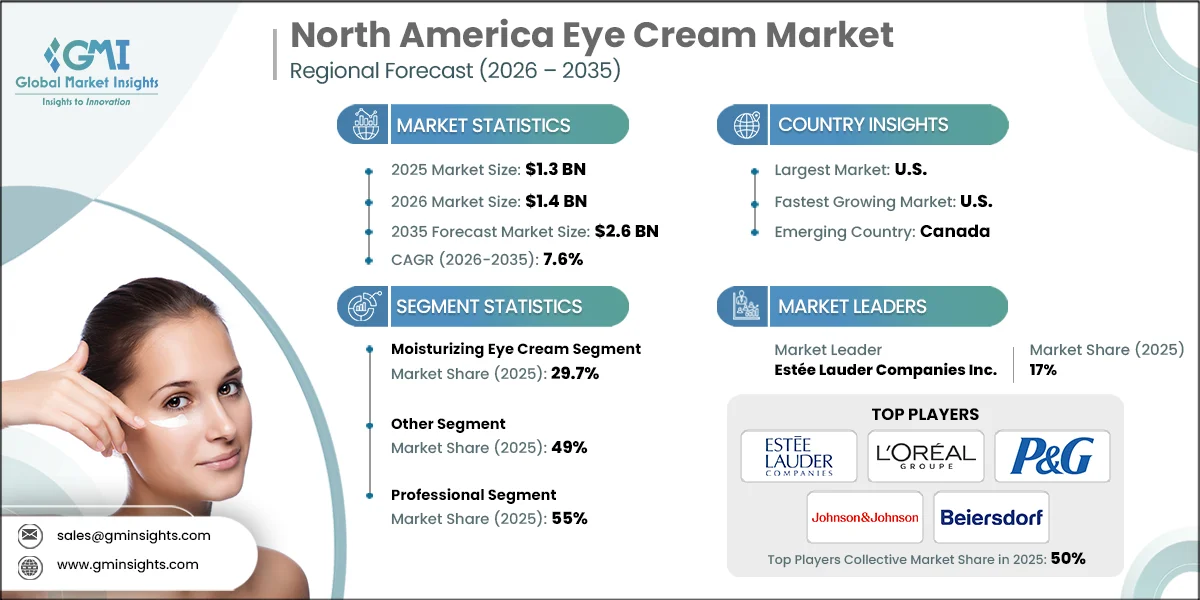
To get key market trends
North America Eye Cream Market Trends
The North America eye cream industry is currently undergoing a dramatic shift from a niche, corrective, and traditional skincare market to a science-based, preventive, and lifestyle-oriented market within the overall beauty and personal care industry. Consumers in North America are increasingly demanding science-backed, dermatologically tested, and multi-functional eye cream products that target both beauty and skin health concerns. Key market players are now focusing on high-performance eye cream products that combine science-backed ingredients, long-term efficacy, and eco-friendliness. Breakthroughs in cosmetic dermatology, ingredient transparency, and the rapid growth of e-commerce platforms are dramatically changing the competitive landscape and consumer demands in the market.
- Technological advancements & product innovation: The North America eye cream market is currently undergoing rapid innovation due to high investments in dermatological research and development. Eye cream manufacturers are increasingly incorporating encapsulated active ingredients, peptide combinations, retinol substitutes, caffeine, ceramides, and multi-molecular hyaluronic acid delivery systems into their products to enhance product performance and minimize irritation. Time-release and micro-encapsulation technologies are also enhancing the stability and penetration of ingredients, making them ideal for the sensitive skin area around the eyes.
- Premiumization & lifestyle integration: The eye cream market in North America is witnessing a trend where eye creams are being positioned as a necessary part of the beauty, wellness, and self-care lifestyle, and not just a corrective skincare product. Premiumization is creating demand for eye creams with clinical-grade formulas, dermatologist endorsement, high-end packaging, and strong branding that focuses on performance and visible outcomes. Consumers are looking for eye creams that can easily be integrated into both day and night skincare routines, providing benefits such as anti-aging, moisturizing, brightening, blue light protection, and protection against environmental pollutants. This trend has increased pricing power in the premium and cosmeceutical segments, especially in the United States, where consumers show a high willingness to pay for innovative skincare solutions.
- Sustainability & clean beauty movement: Sustainability and the clean beauty movement are playing a very important role in influencing purchasing decisions in the eye cream market in North America. Consumers are increasingly demanding clean label, cruelty-free, vegan, and fragrance-free products, and greater transparency about ingredient sourcing and safety. Brands are responding by removing controversial or harsh ingredients, using plant-based or bio-fermented actives, and shifting to recyclable, refillable, or less plastic packaging.
- Supply chain optimization & ingredient innovation: Increased regulatory oversight, ingredient price inflation, and consumer demand for safe and sustainable products have led North American manufacturers to prioritize supply chain optimization and ingredient innovation. Bio-engineered active ingredients, plant-based retinol alternatives, probiotics, and fermented ingredients are emerging as innovation areas as manufacturers seek effective yet gentle solutions. Manufacturers with vertically integrated supply chains, local sourcing, and strong relationships with raw material suppliers are better equipped to ensure product consistency, regulatory compliance, and cost management. These factors are becoming increasingly important for sustained success in the regional market.
- Anti-aging awareness & preventive skincare demand: Increased awareness of preventive skincare and early intervention for aging is a key driver of eye cream sales in North America. Millennials and Gen Z consumers are turning to eye creams at a younger age to prevent fine lines, dark circles, and signs of fatigue, rather than correcting them after they occur. Increased screen time, higher stress levels, lack of sleep, and exposure to pollution have further fueled awareness of under-eye skin health.
North America Eye Cream Market Analysis
Learn more about the key segments shaping this market
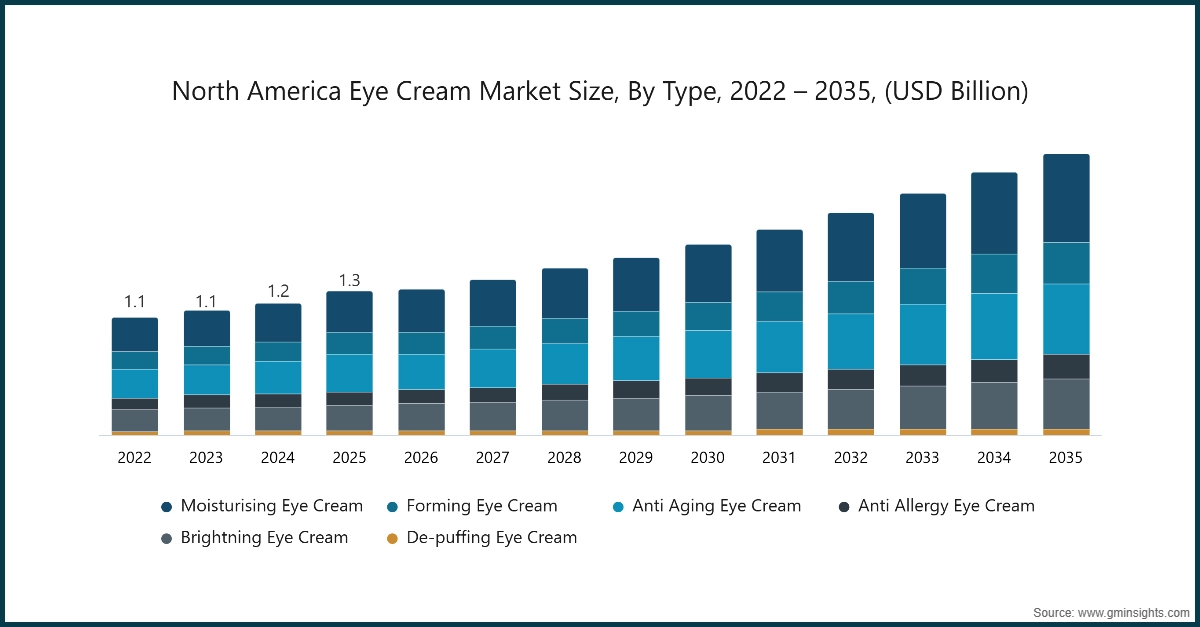
Based on the type, market is segmented into moisturizing eye cream, forming eye cream, anti-aging eye cream, anti-allergy eye cream, brightening eye cream, de-puffing eye cream. The moisturizing eye cream segment dominated the market in 2025, capturing a substantial market share of 29.7% with the revenue of USD 400 million.
- There is strong demand in North America for eye creams increasingly prioritize products that deliver immediate and noticeable tightening effects, contributing to a refreshed and youthful appearance.
- The anti‑aging segment remains robust, driven by increasing concern over fine lines, wrinkles, crow’s feet, and age spots. Eye creams containing retinol and retinol alternatives are especially popular in North America due to their proven ability to stimulate cell turnover and reduce visible signs of aging.
- However, brands are also focusing on buffered and encapsulated retinol formulations to minimize irritation and improve tolerability for daily use.
- With growing consumer awareness of skin sensitivity and ingredient safety, eye cream formulations in North America are increasingly shifting toward fragrance‑free, hypoallergenic, and dermatologist‑tested products.
Learn more about the key segments shaping this market
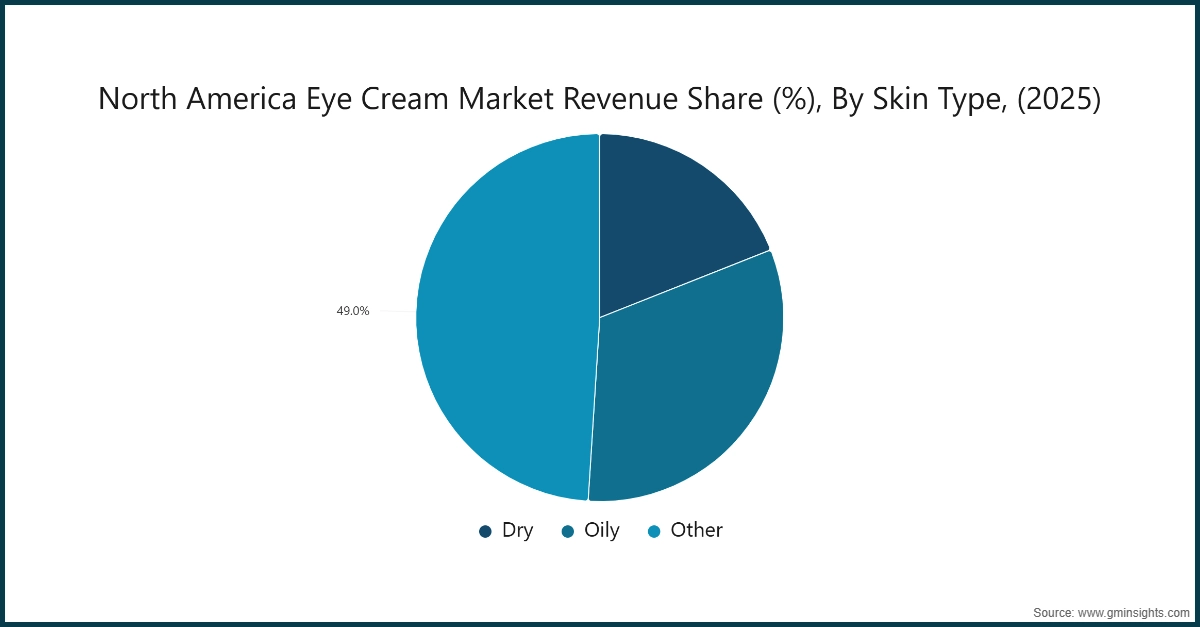
Based on skin type, the North America eye cream markeis divided into dry, oily, others. The other segment dominated the market in 2025, capturing a substantial market share of 49% and anticipated to maintain its lead by 2035.
- Eye creams designed for all skin types, especially sensitive skin, are significantly driving market growth in North America. These versatile and inclusive formulations appeal to a broad consumer base with diverse skin concerns, including dryness, irritation, and aging. As awareness of skin sensitivity and allergies increases, North American consumers actively seek gentle yet high‑performance products, boosting demand for safe and comfortable eye care solutions.
- Such eye creams frequently incorporate soothing and barrier‑supporting ingredients such as chamomile, aloe vera, colloidal oatmeal, ceramides, and hypoallergenic compounds.
- In addition, the widespread influence of dermatologists, beauty influencers, social media platforms, and online reviews has improved skincare education across North America. Consumers are becoming more informed about ingredient safety and the importance of choosing products tailored to specific skin needs, particularly for sensitivity and allergy‑prone skin.
Based on application, the eye cream market is segmented into professional and personal. Professional segments made up 55% of the market in 2025, due to rising demand for specialized skincare treatment.
- Professional eye creams tend to contain more active ingredients and are intended for treatment in controlled conditions under the auspices of skin care professionals. They are sold to customers demanding specialized solutions to targeted issues like deep wrinkles, extreme puffiness, and darker circles. This trend is further driven by consumer demand for custom skin care programs and the apparent effectiveness of professionally administered treatments.
- Personal use trend is guided by the growing consumers' interest in home skincare routines as guided by increased awareness of eye care and the ease of self-care routines. Increased accessibility of different types of eye cream products through the various online retail platforms has also made it easier for consumers to access different varieties of eye creams and make the right choices while in the comfort of their homes.
- Brands are addressing the demand by launching easy-to-use formulations that treat prevalent issues like dark circles, puffiness, and aging signs. Skincare professional Caroline Hirons developed a new eye cream, powered by several actives such as phytosterols, winter cherry, and cucumber seed, Skin Rocks' new eye cream promises to soften and smooth for youthful-looking eyes.
North America Eye Cream Market
Looking for region specific data?
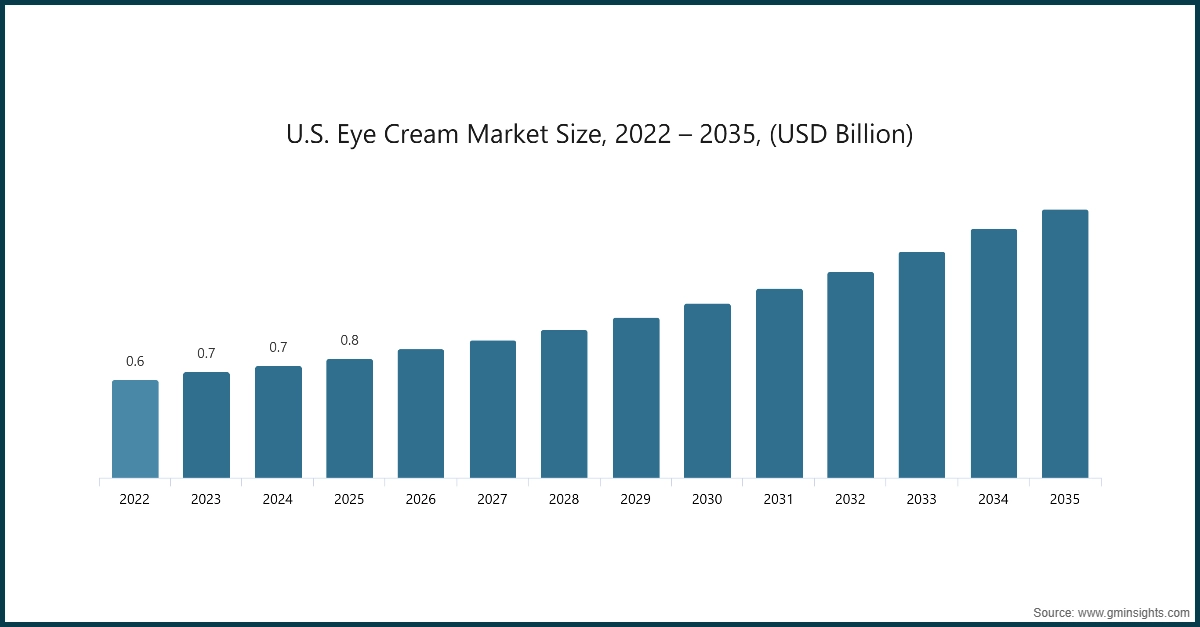
U.S. is the second largest regional market with an estimated value of USD 800 million in 2025 and a projected growth rate of 7.6% through 2035. The North American eye cream market represents one of the most mature, innovation‑driven, and high‑value regional segments, supported by strong consumer awareness of skincare, high disposable incomes, and widespread adoption of premium and dermatologist‑recommended beauty products. The region benefits from a well‑established beauty and personal care ecosystem, advanced retail infrastructure, and strong influence from dermatology, cosmetic science, and social media trends
- The U.S. market is characterized by high penetration of premium and luxury skincare brands, a strong direct‑to‑consumer presence, and a highly developed e‑commerce ecosystem. Ingredient transparency, clean‑label formulations, cruelty‑free claims, and sustainability‑focused packaging play an increasingly important role in purchasing decisions, particularly among millennials and Gen Z consumers.
- Canada represents a steadily growing and climate‑influenced eye cream market, where harsh winters and dry environmental conditions increase demand for deeply hydrating and barrier‑repair eye creams. Canadian consumers prioritize gentle, fragrance‑free formulations, long‑term skin health, and sustainability credentials, supporting demand for premium and dermatologist‑recommended products.
North America Eye Cream Market Report Attributes
| Key Takeaway | Details |
|---|---|
| Market Size & Growth | |
| Base Year | 2025 |
| Market Size in 2025 | USD 1.3 Billion |
| Market Size in 2026 | USD 1.4 Billion |
| Forecast Period 2026-2035 CAGR | 7.6% |
| Market Size in 2035 | USD 2.6 Billion |
| Key Market Trends | |
| Drivers | Impact |
| Rising aging & preventive skincare demand | An increasing aging population combined with younger consumers adopting preventive anti‑aging routines is driving eye cream usage earlier in life. |
| High awareness of ingredient efficacy | Consumers are highly educated about ingredients such as retinol, peptides, caffeine, niacinamide, and hyaluronic acid. |
| Strong E‑commerce & DTC penetration | Well‑developed digital infrastructure, social media marketing, and direct‑to‑consumer brand models support rapid product discovery and repurchase. |
| Pitfalls & Challenges | Impact |
| Market saturation & intense competition | Increases marketing costs, compresses profit margins, and makes brand differentiation more difficult. |
| Price sensitivity in mass & mid‑range segments | Inflationary pressures cause consumers to trade down or delay discretionary skincare purchases. |
| Opportunities: | Impact |
| Growth of dermocosmetic & clinical eye care | Rising dermatologist recommendations and pharmacy‑led sales channels boost demand for sensitive‑skin and clinically tested eye creams. |
| Sustainable & clean beauty positioning | Growing demand for clean labels, eco‑friendly packaging, cruelty‑free formulations, and transparency. |
| Market Leaders (2025) | |
| Market Leader |
17% market share |
| Top Players |
Consolidate share of 50% |
| Competitive Edge |
|
| Regional Insights | |
| Largest Market | U.S. |
| Fastest growing market | U.S. |
| Emerging countries | Canada |
| Future outlook |
|
What are the growth opportunities in this market?
North America Eye Cream Market Share
Estée Lauder Companies Inc. is leading with approximately 17% market share. Estée Lauder Companies Inc., L’Oréal Group, Shiseido company, Unilever PLC, and Beiersdorf collectively hold around 50%, highlighting a market structure where scale, innovation capability, and brand equity provide significant competitive advantages. These leading companies actively pursue strategic initiatives such as ingredient innovation, clinical validation, sustainability investments, omnichannel expansion, and supply‑chain optimization to strengthen their market positioning. Continuous investments in advanced actives, clean and dermatologist‑tested formulations, eco‑friendly packaging, and digital commerce platforms remain central to competitive differentiation, particularly within the premium, cosmeceutical, and anti‑aging eye cream segments.
- Estée Lauder continues to strengthen its leadership position through science‑driven innovation, premium brand portfolios, and strong distribution networks. Flagship brands such as Estée Lauder, La Mer, Clinique, and The Ordinary (via DECIEM) enable the company to address multiple price tiers and consumer needs. Its sustained investment in clinically backed formulations, luxury packaging, and personalized skincare solutions has allowed Estée Lauder to capture a dominant share in the premium and anti‑aging eye cream segments across North America.
- L’Oréal Group maintains a strong and diversified presence in the North America eye cream market through its extensive brand portfolio spanning dermatological, premium, and mass‑market categories. Brands such as Lancôme, Kiehl’s, Vichy, La Roche‑Posay, and L’Oréal Paris enable the company to cater to a wide consumer base. L’Oréal’s focus on dermatological research, ingredient safety, sustainable sourcing, and digital beauty tools has reinforced its competitive position, particularly in clinically oriented and sensitive‑skin eye care products across North America markets.
North America Eye Cream Market Companies
Major players operating in the North America eye cream industry are:
- Alastin Skincare, Inc.
- Amorepacific Corporation
- Beiersdorf AG
- Coty Inc.
- Deciem
- Johnson & Johnson Consumer Health
- L’Oréal Group
- LVMH Moët Hennessy Louis Vuitton
- Murad, LLC
- Proactiv Company
- Procter & Gamble
- Shiseido Company, Limited
- Supergoop! LLC
- The Estée Lauder Companies Inc.
- Unilever PLC
Procter & Gamble continues to expand its footprint by leveraging skincare expertise, advanced formulation technology, and strong regional presence in North America. The company emphasizes lightweight textures, long‑term skin health, and high‑performance anti‑aging solutions, supporting strong demand. Shiseido’s investment in biotechnology‑driven actives and personalized skincare innovations enhances its competitive differentiation in the premium segment.
Beiersdorf (NIVEA) plays a key role in the mass‑premium eye cream segment, supported by strong brand trust, dermatological research, and wide retail penetration. The company’s focus on gentle, effective, and accessible eye care solutions has helped it maintain consistent demand across emerging markets.
North America Eye Cream Industry News
- In 2025, Estée Lauder Companies strengthened its North America eye care portfolio by expanding its direct‑to‑consumer and experiential retail strategy across North America. The company enhanced digital integration across brand websites and physical beauty boutiques, incorporating personalized skincare diagnostics and virtual consultations. This initiative improved consumer engagement, reinforced premium brand positioning, and supported rising demand for high‑performance anti‑aging eye creams within both luxury and dermo cosmetic segments.
- In February 2025, L’Oréal Group announced an expansion of its sustainable formulation and packaging roadmap for eye care products. The company increased the use of responsibly sourced ingredients, bio‑based actives, and recyclable packaging across leading brands such as Lancome, La Roche‑Posay, and L’Oréal Paris. This initiative aligns with L’Oréal’s long‑term sustainability commitments and enhances brand appeal among environmentally conscious consumers in North America.
- In October 2025, Shiseido introduced a new range of lightweight, fast‑absorbing eye creams designed to address urban lifestyle stressors such as fatigue, pollution, and extended screen time. The formulations feature advanced peptide complexes and improved delivery systems optimized for daily use. This launch targets consumers seeking multifunctional eye care solutions for both morning and nighttime routines, reinforcing Shiseido’s leadership in premium and science‑backed skincare.
- In July 2025, Beiersdorf (NIVEA) expanded its dermatologist‑tested eye cream portfolio across additional North America markets. The expansion focused on gentle, fragrance‑free formulations designed for sensitive skin and long‑term hydration. By strengthening its distribution through pharmacies and digital platforms, Beiersdorf enhanced accessibility and consumer trust in mass‑premium and dermatological eye care segments.
- In October 2024, La Roche‑Posay (L’Oréal Group) increased its investment in clinical eye care innovation by launching a new ophthalmologist‑tested eye cream range focused on barrier repair and irritation reduction. Featuring minimal‑ingredient formulas and high tolerance testing, the launch targeted consumers with sensitive skin, post‑procedure care needs, and rising concerns related to digital eye strain.
- In February 2025, Unilever expanded its eye care offerings within its personal care portfolio, focusing on affordable, lightweight, and multifunctional eye creams targeting hydration and anti‑fatigue benefits. The expansion supports Unilever’s strategy to strengthen its presence in the mass and mid‑range eye cream segments, particularly in other emerging markets where price accessibility and daily skincare usage are key demand drivers.
The North America eye cream market research report includes in-depth coverage of the industry with estimates & forecasts in terms of revenue (USD Billion) and volume (Thousand Units) from 2022 to 2035, for the following segments:
Market, by Type
- Moisturizing eye cream
- Forming eye cream
- Anti-aging eye cream
- Anti-allergy eye cream
- Brightening eye cream
- De-puffing eye cream
Market, by Ingredients
- Vitamin E
- Niacinamide
- vitamin A
- Retinol
- Other (hyaluronic Acid, etc.)
Market, by Skin Type
- Dry skin
- Oily skin
- Other (all skin, sensitive skin)
Market, by Price
- Low
- Medium
- High
Market, by Application
- Professional
- Personal
Market, by Sales Channel
- Online
- E-commerce
- Company website
- Offline
- Specialty store
- Mega Retail stores
- Others (Individual Stores, Departmental Stores, etc.)
The above information is provided for the following countries:
- Canada
- U.S.
Frequently Asked Question(FAQ) :
What is the market size of the North America eye cream market in 2025?
The North America eye cream market was estimated at USD 1.3 billion in 2025, growing at a CAGR of 7.6% through 2035, driven by high consumer awareness of specialized eye care, rising demand for anti-aging products,
What is the projected value of the North America eye cream market by 2035?
The market is expected to reach USD 2.6 billion by 2035, fuelled by premiumization, ingredient innovation, and clean beauty demand.
What is the current North America eye cream market size in 2026?
The market size is projected to reach USD 1.4 billion in 2026.
What was the market share of the moisturizing eye cream segment in 2025?
The moisturizing eye cream segment dominated with a 29.7% share, generating approximately USD 400 million in 2025.
What was the market share of the professional application segment in 2025?
The professional segment accounted for 55% of the market in 2025, driven by demand for specialized clinical skincare treatments.
What was the estimated value of the US eye cream market in 2025?
The U.S. eye cream market was estimated at USD 800 million in 2025, projected to grow at 7.6% through 2035.
What are the upcoming trends in the North America eye cream market?
Key trends include clean beauty adoption, ingredient innovation with peptides and retinol alternatives, and growing preventive skincare among younger consumers.
Who are the key players in the North America eye cream market?
Key players include Estée Lauder Companies, L'Oréal Group, Procter & Gamble, Johnson & Johnson Consumer Health, Beiersdorf AG, Shiseido, and Unilever PLC.
North America Eye Cream Market Scope
Related Reports