Summary
Table of Content

Non-Small Cell Lung Cancer Market
Get a free sample of this report
Form submitted successfully!
Error submitting form. Please try again.
Thank you!
Your inquiry has been received. Our team will reach out to you with the required details via email. To ensure that you don't miss their response, kindly remember to check your spam folder as well!
Request Sectional Data
Thank you!
Your inquiry has been received. Our team will reach out to you with the required details via email. To ensure that you don't miss their response, kindly remember to check your spam folder as well!
Form submitted successfully!
Error submitting form. Please try again.
Non-Small Cell Lung Cancer Market Size
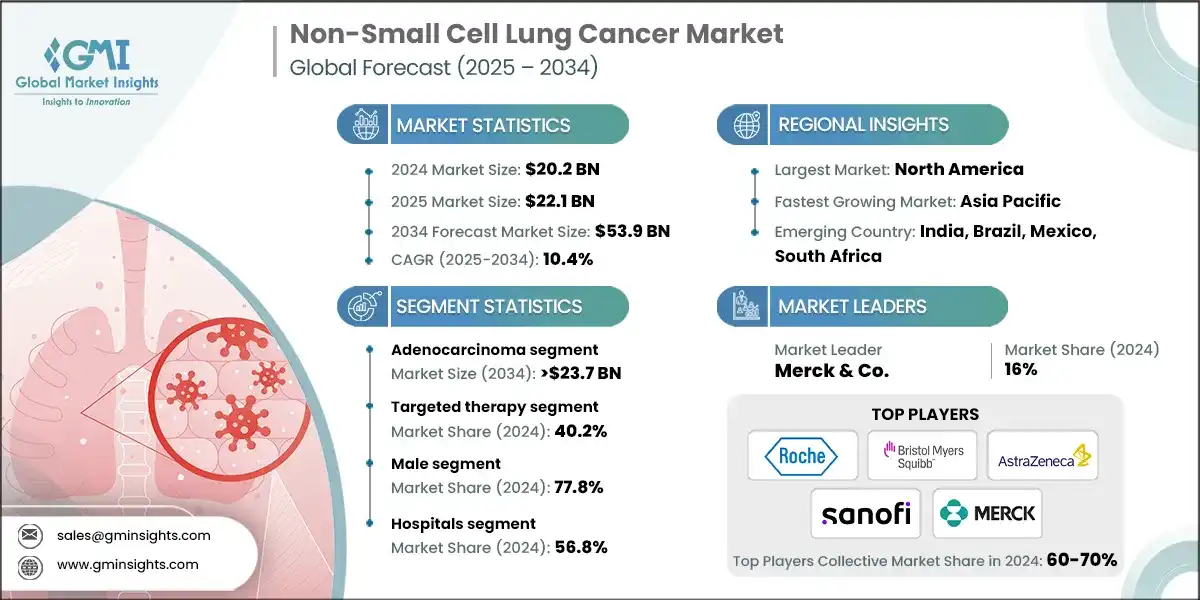
The global non-small cell lung cancer market was estimated at USD 20.2 billion in 2024. The market is expected to grow from USD 22.1 billion in 2025 to USD 53.9 billion in 2034, at a CAGR of 10.4% from 2025 to 2034, according to the latest report published by Global Market Insights Inc.
Non-Small Cell Lung Cancer Market Key Takeaways
Market Size & Growth
- 2024 Market Size: USD 20.2 Billion
- 2025 Market Size: USD 22.1 Billion
- 2034 Forecast Market Size: USD 53.9 Billion
- CAGR (2025–2034): 10.4%
Regional Dominance
- Largest Market: North America
- Fastest Growing Region: Asia Pacific
Key Market Drivers
- Increasing prevalence of non-small cell lung cancer.
- Breakthroughs in immunotherapy and targeted treatments.
- Advancements in diagnostic technologies.
- Growing adoption of personalized medicine.
Challenges
- High cost of advanced therapies.
- Regulatory and diagnostic infrastructure gaps.
Opportunity
- Rising demand in emerging markets.
- Shift toward personalized and combination therapies.
Key Players
- Market Leader: Merck & Co. led with over 16% market share in 2024.
- Leading Players: Top 5 players in this market include F. Hoffmann La Roche, Bristol-Myers Squibb Company, AstraZeneca, Sanofi, Merck & Co, which collectively held a market share of 70% in 2024.
Get Market Insights & Growth Opportunities
The rising cases of lung cancer and increasing demand for oncology solutions are primarily stimulating the growth of the non-small cell lung cancer market. According to the World Health Organization (WHO), lung cancer is the leading cause of deaths among both men and women. Additionally, the World Cancer Research Fund mentions that in 2022, there were almost 2,480,675 new cases of lung cancer.
Non-small cell lung cancer is defined as a type of lung cancer that includes adenocarcinoma, squamous cell carcinoma, and large cell carcinoma, which includes slower progression as compared to small cell lung cancer. The disease is responsible for most of the lung cancer cases and is most commonly diagnosed at later or advanced stages, which requires proper treatment with multimodal treatment strategies. Non-small cell lung cancer therapies include chemotherapy, targeted therapy, immunotherapy drugs, and radiation, that are administered across hospitals, oncology clinics, and specialized cancer centers that also offer solutions such as lung cancer surgery.
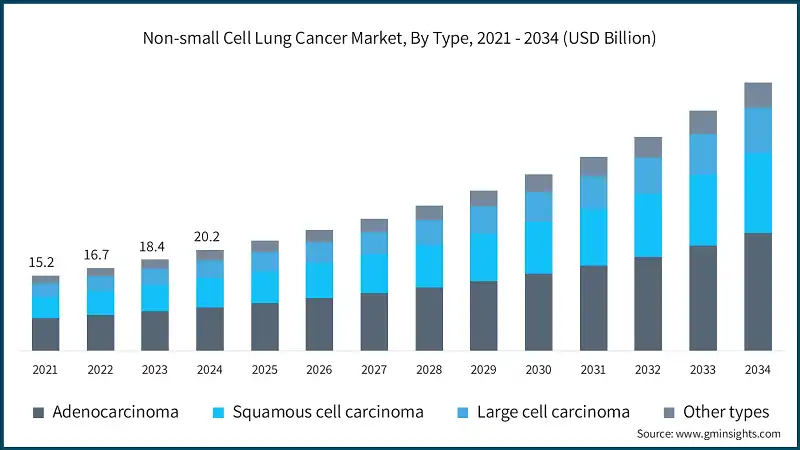
The non-small cell lung cancer market grew from USD 15.2 billion in 2021 to USD 18.4 billion by 2023. The market growth was driven by increasing lung cancer cases due to smoking, pollution, and aging population, along with rising awareness about early diagnosis and personalized treatment. The integration of AI-powered biomarker platforms, liquid biopsy diagnostics, and companion diagnostics expanded the eligible patient pool for targeted therapies and improved treatment outcomes.
The high prevalence of genetic mutations, including EGFR, ALK, ROS1, and MET, in non-small cell lung cancer patients increased the demand for targeted therapies such as osimertinib, alectinib, and amivantamab. Immunotherapy inhibitors are now used in both early and advanced stages, contributing to improved long-term survival rates. The development of novel agents for rare mutations and resistant cases expanded treatment options and improved patient prognosis.
The non-small cell lung cancer market faces challenges, including chemotherapy shortages, reimbursement complexities, and limited access to advanced care in low-income regions. In response, healthcare providers have increased the use of antibody-drug conjugates and radiopharmaceuticals, which deliver targeted treatment with lower systemic toxicity. North America dominates the market, while the Asia-Pacific region shows the highest growth rate due to healthcare infrastructure improvements and increased cancer awareness.
The adoption of digital health records, artificial intelligence-based clinical decision support systems, and real-world evidence platforms has enhanced non-small cell lung cancer care delivery. Market growth is supported by government initiatives and public-private partnerships that focus on expanding lung cancer screening and molecular testing accessibility. Additionally, the increasing occurrence of concurrent conditions, such as COPD, HIV, and diabetes, drives the demand for comprehensive non-small cell lung cancer treatment.
To get key market trends
Non-Small Cell Lung Cancer Market Trends
The market is experiencing significant changes driven by broad shifts in oncology care and advancements in precision medicine. The increasing incidence of lung cancer, particularly among aging population and smokers, is driving the demand for targeted therapies and improved survival outcomes. The market is evolving through next-generation immunotherapies, innovative treatment approaches, and digital oncology platforms, emphasizing enhanced access and patient care.
- Targeted therapies are gaining prominence due to their ability to provide personalized treatment responses. These therapies demonstrate effectiveness in patients with specific genetic mutations and those with comorbidities, such as COPD or cardiovascular conditions. Hospitals and cancer centers across North America, Europe, and Asia-Pacific are incorporating molecular testing and targeted treatment regimens into standard non-small cell lung cancer care protocols.
- Tumor heterogeneity and resistance mechanisms are increasing the need for combination therapies in non-small cell lung cancer treatment. The integration of immunotherapy, chemotherapy, and targeted agents aims to improve progression and reduce relapse rates. These treatment combinations are expected to enhance patient outcomes and decrease treatment costs.
- Personalized oncology approaches, incorporating genetic profiling, tumor staging, and patient lifestyle factors, are contributing to market expansion. The integration of liquid biopsies, AI diagnostics, and real-time monitoring systems is improving non-small cell lung cancer management. This personalized approach enhances treatment effectiveness across diverse patient population and complex cases.
- Lastly, the integration of tele-oncology and mobile health tools is reshaping access and adherence to non-small cell lung cancer treatment. Digital platforms are being used to manage appointments, monitor side effects, and support remote consultations, particularly in underserved regions. These tools are critical for improving continuity of care and enabling timely interventions in patients with limited mobility or access to specialized oncology centers.
Non-Small Cell Lung Cancer Market Analysis
Learn more about the key segments shaping this market
Based on type, the non-small cell lung cancer market is categorized into adenocarcinoma, squamous cell carcinoma, large cell carcinoma and other types. The adenocarcinoma segment held a 43.5% market share in 2024, driven by its distinct molecular characteristics, and response rates to targeted therapies.
The segment's market leadership in non-small cell lung cancer is attributed to advancements in precision medicine, early molecular testing capabilities, and increased access to biomarker-based treatments. The segment is expected to exceed USD 23.7 billion by 2034, growing at a CAGR of 10.5% during the forecast period.
- The adenocarcinoma segment has emerged as the dominant category in lung cancer due to its high prevalence among both smokers and non-smokers, its slower progression, and its responsiveness to targeted therapies. According to the National Center for Biotechnology Information (NCBI), adenocarcinoma is a serious and often deadly form of cancer, with an overall 5-year survival rate of just 12%.
- Furthermore, the National Institutes of Health (NIH) reports that adenocarcinoma accounts for approximately 40% of all lung cancer cases, significantly driving market demand for effective treatments.
- Moreover, the adenocarcinoma segment is strongly supported by advancements in molecular diagnostics, the integration of biomarker testing into routine clinical workflows, and the growing adoption of personalized treatment regimens. These innovations have significantly enhanced the precision and effectiveness of treatment strategies.
- Additionally, the segment benefits from digital health platforms, which facilitate improved patient tracking, real-time treatment monitoring, and data-driven decision-making across healthcare systems. These technologies contribute to better clinical outcomes and more efficient management of lung cancer cases.
- On the other hand, the squamous cell carcinoma segment is projected to grow at a compound annual growth rate (CAGR) of 10.7%. This growth is driven by the rising incidence among both men and women, along with the increased use of immunotherapy and improved access to diagnostic imaging. Squamous non-small cell lung cancer is more prevalent among smokers and typically presents centrally in the lungs, making early detection critical. According to ScienceDirect, the prevalence of squamous cell carcinoma was found to be 18% in men and 8.7% in women.
- Moreover, the large cell carcinoma segment is expected to grow at a CAGR of 10.1%. Although less common, its aggressive nature and poor differentiation make it a key focus for novel drug development. Advances in histological classification and molecular profiling have enabled more accurate diagnosis and the development of targeted treatment options.
Based on the treatment, the non-small cell lung cancer market is segmented into chemotherapy, immunotherapy, targeted therapy and other treatment types. The targeted therapy segment accounted for the highest market share of 40.2% in 2024 due to its rising prevalence in different age groups and rise in personalized medicine.
- The targeted therapy segment has emerged as the dominant category due to its precision in treating specific genetic mutations, offer improved survival rates, reduced toxicity, and better quality of life, making them the preferred choice for both early and advanced stages of non-small cell lung cancer. According to NIH, epidermal growth factor receptor tyrosine kinase inhibitor is often the first line treatment that support quality of life compared to chemotherapy.
- Targeted therapies are increasingly supported by global oncology guidelines and are being integrated into first-line treatment protocols. Their alignment with personalized medicine and molecular diagnostics has positioned them at the core of modern cancer care, particularly within developed healthcare systems.
- The adoption of targeted therapies has been further accelerated by innovations such as companion diagnostics, liquid biopsies, and AI-driven treatment planning. Additionally, emerging technologies like bispecific antibodies and antibody-drug conjugates are expanding the therapeutic landscape, offering new avenues for more effective and tailored cancer treatments.
- On the other hand, the chemotherapy segment continues to serve as a foundational treatment, particularly in regions with limited access to advanced therapies. It is frequently used in combination with immunotherapy or radiation to enhance efficacy and remains a standard option for patients without actionable mutations.
- Meanwhile, the immunotherapy segment is gaining significant momentum, driven by the success of checkpoint inhibitors such as pembrolizumab and nivolumab. These therapies offer durable responses and are increasingly adopted, especially for patients with high PD-L1 expression. Their expanding role in non-small cell lung cancer (NSCLC) management is supported by evolving clinical guidelines and broader access to immuno-oncology drugs.
Based on gender, the non-small cell lung cancer market is segmented into male and female. The male segment accounted for the highest market share of 77.8% in 2024 as they are more susceptible to the disease.
- The male segment has emerged as the dominant category due to higher exposure to risk factors such as tobacco use, occupational hazards, and environmental pollutants. Men are statistically more likely to be diagnosed with non-small cell lung cancer, particularly squamous cell carcinoma, which is strongly associated with long-term smoking habits. According to World Population Review, male smoking rate is 76.2%, whereas the female smoking rate is 3.60%. Additionally, tobacco Atlas mentions, more than 940 million males ages 15 or older are current smokers.
- The dominance of the male segment is further supported by clinical data indicating higher incidence and mortality rates among men. This has led to targeted awareness campaigns, screening programs, and treatment protocols focused on male population.
- Additionally, healthcare systems are increasingly integrating gender-specific approaches to improve early detection and treatment outcomes in men.
- The female segment is gaining increased attention due to rising incidence rates, particularly among non-smokers. Adenocarcinoma is notably more prevalent in women, and research suggests that hormonal and genetic factors may play a role in influencing disease progression.
- Additionally, greater participation in clinical trials and growing awareness of lung cancer in women are contributing to improved diagnosis and enhanced access to personalized therapies.
Learn more about the key segments shaping this market
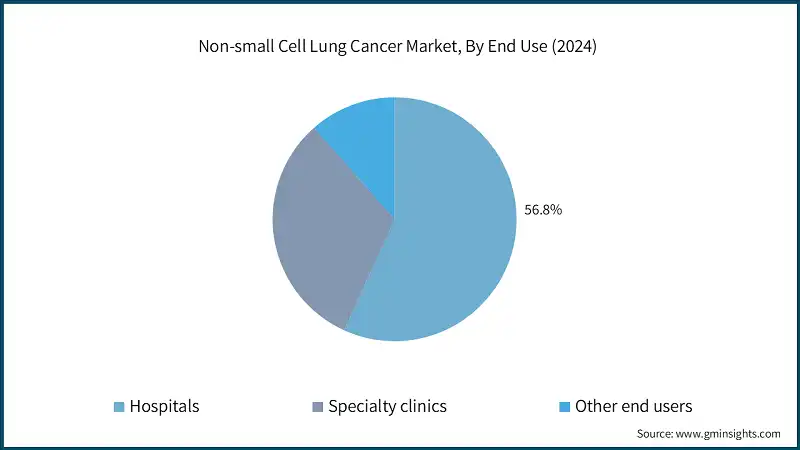
Based on end use, the non-small cell lung cancer market is categorized into hospitals, specialty clinics and other end users. The hospitals segment accounted for the highest market share of 56.8% in 2024.
- Hospitals represent a major end-user segment in lung cancer care due to their centralized infrastructure, access to multidisciplinary teams, and ability to manage both early- and advanced-stage non-small cell lung cancer (NSCLC) cases. They play a critical role in diagnosis, surgical interventions, chemotherapy, and targeted therapy administration, offering comprehensive care under one roof.
- In addition, hospitals support public health initiatives and clinical research by serving as key centers for lung cancer screening and biomarker testing. Their integration with electronic health records (EHRs) and adherence to oncology protocols ensures accurate treatment tracking, effective patient monitoring, and improved outcomes across diverse population.
- On the other hand, specialty clinics contribute significantly to the non-small cell lung cancer market by offering focused care tailored to oncology patients. These clinics provide personalized treatment plans, access to novel therapies, and a more patient-centric environment, which enhances adherence and satisfaction, especially in urban and suburban settings.
- Other end users, such as cancer research centers, academic and research institutes, play a supportive role in early detection and follow-up care. Their accessibility and cost-effectiveness make them valuable for routine imaging, biopsy procedures, and post-treatment monitoring, particularly in resource-limited regions.
Looking for region specific data?
North America Non-Small Cell Lung Cancer Market
The North America market dominated the global market with a market share of 44.4% in 2024. The market is stimulated by the rising incidence of lung cancer and increased investment in oncology research and precision medicine. In addition, advancements in immunotherapy and targeted treatments, along with a growing focus on personalized care, also support market growth.
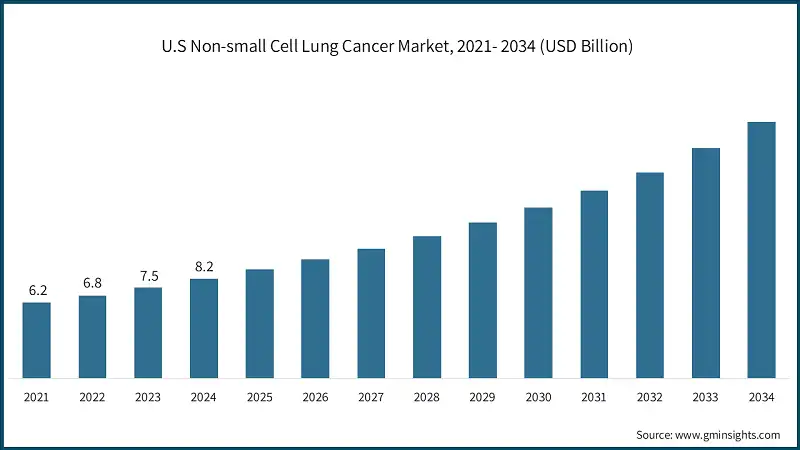
The U.S. non-small cell lung cancer market was valued at USD 6.2 billion and USD 6.8 billion in 2021 and 2022, respectively. The market size reached USD 8.2 billion in 2024, growing from USD 7.5 billion in 2023.
- The rising prevalence of lung cancer in the United States is driving increased demand for advanced non-small cell lung cancer (NSCLC) therapies. According to the Centers for Disease Control and Prevention (CDC), 218,893 new lung cancer cases were reported in 2022.
- With a significant portion of these cases linked to smoking and environmental exposure, the need for effective and personalized treatment options continues to grow. In 2022, approximately 11.6% of U.S. adults about 28.8 million people were current cigarette smokers, further fueling market demand for lung cancer therapies.
- Additionally, the growing incidence of chronic conditions such as diabetes and cardiovascular disease complicates cancer treatment and outcomes. These comorbidities are associated with worse survival rates and often limit treatment options, underscoring the importance of targeted therapies and immunotherapies tailored to high-risk population.
- The high cases related to adenocarcinoma further stimulate market growth. According to CDC, in 2021 adenocarcinoma was the most common cell type in the U.S., accounted for approximately 45% of all lung cancer cases.
Europe Non-Small Cell Lung Cancer Market
Europe market accounted for USD 5.6 billion in 2024 and is anticipated to show lucrative growth over the forecast period.
- Rising awareness and adoption of advanced oncology treatment strategies in the region, along with increasing government initiatives to strengthen healthcare infrastructure, are anticipated to spur growth in the non-small cell lung cancer market in Europe.
- Moreover, advancements in therapeutic technologies, such as combination immunotherapy regimens and biomarker-driven targeted therapies, along with the introduction of scalable and cost-effective treatment options, boost the requirement for non-small cell lung cancer therapies across the European region.
- Lastly, the presence of key pharmaceutical companies in the region strengthens the market. These companies actively participate in innovation through the development of next-generation non-small cell lung cancer treatments, expanded clinical research, and partnerships with oncology networks and public health organizations, thereby advancing market growth.
Germany non-small cell lung cancer market is anticipated to witness considerable growth over the analysis period.
- The increasing incidence of the disease in the country, especially among aging population and smokers, highlights the need for effective and personalized treatment strategies. According to Journal of Thoracic Oncology, lung cancer affected with a prevalence of 52.1% followed by female with 32.7% cases, this further stimulates the market demand.
- The increasing elderly population, who are more vulnerable to cancer due to age-related health condition, drives market growth. This demographic shift leads to higher adoption of immunotherapies and targeted treatments, especially for patients with multiple health conditions. According to NIH, Germany had 18.6 million people aged 65 years and older in 2022, including 6.1 million aged 80 years and older.
- Germany's established network of pharmaceutical companies and research institutions strengthens the market. These organizations develop non-small cell lung cancer therapies, conduct clinical trials, and work with oncology networks and public health authorities to enhance treatment accessibility.
Asia Pacific Non-Small Cell Lung Cancer Market
The Asia Pacific market is anticipated to grow at the highest CAGR of 10.8% during the analysis timeframe.
- The market in the Asia-Pacific region is growing rapidly due to the rise in lung cancer cases, increasing public health awareness, and the improvement of healthcare infrastructure across both urban and rural hospitals and clinics.
- Countries such as China, India, and Japan are adopting non-small cell lung cancer treatment solutions at a faster rate due to enhanced demand for efficient oncology care delivery, government-led cancer control initiatives, and the rise in treatment solutions supporting multi-specialty healthcare practices.
- Additionally, the rapid rise in the number of cancer care centers and healthcare providers, along with government policies aimed at expanding digitalization and integrating oncology into national health strategies, contributes to the rapid growth of the market in the region.
China non-small cell lung cancer market is predicted to grow significantly over the forecast period.
- Growing concerns about treatment resistance and the long-term impact of delayed cancer diagnosis are driving increased emphasis on regular screening and the adoption of advanced non-small cell lung cancer (NSCLC) therapies. Studies show that delays in diagnosis and treatment can significantly worsen prognosis, especially in early-stage NSCLC, where timely intervention is critical to improving survival outcomes.
- China is rapidly adopting personalized medicine approaches for NSCLC, especially for patients with EGFR-sensitive mutations.
- China’s National Medical Products Administration (NMPA) recently approved ivonescimab, a bispecific antibody targeting PD-1 and VEGF, for first-line treatment of PD-L1–positive NSCLC.
- Clinical trials showed superior progression-free survival compared to pembrolizumab, marking a major advancement in immunotherapy options.
Latin America Non-Small Cell Lung Cancer Market
Brazil is experiencing significant growth in the Latin America non-small cell lung cancer market due to the increasing demand for oncology care management and long-term treatment solutions.
- The increasing incidence of lung cancer in Brazil, particularly among aging population and individuals with lifestyle-related risk factors, is driving demand for non-small cell lung cancer therapies. According to NIH data from a cancer registry database in Sao Paulo, Brazil, only 8.8% of the 20,850 registered lung cancer patients are documented in the system. Hospitals and clinics are experiencing higher patient volumes, necessitating the implementation of long-term oncology care strategies to enhance treatment outcomes.
- Government initiatives to digitize healthcare, expand access to cancer treatment, and strengthen regulatory frameworks are increasing the adoption of non-small cell lung cancer therapies across public and private healthcare sectors.
Middle East and Africa Non-Small Cell Lung Cancer Market
Saudi Arabia market is poised to witness substantial growth in Middle East and Africa market during the forecast period.
- The increasing complexity in diagnosing non-small cell lung cancer drives the demand for personalized treatment approaches in Saudi Arabia, contributing to market growth.
- Government initiatives under Vision 2030, combined with digital health infrastructure development and local manufacturing expansion, are increasing demand across public and private healthcare sectors. These initiatives are modernizing healthcare delivery and improving treatment accessibility nationwide.
Non-Small Cell Lung Cancer Market Share
Leading companies such as Merck & Co., F. Hoffmann-La Roche, Bristol-Myers Squibb, Sanofi, and AstraZeneca collectively hold between 60-70% of the global market share. These firms maintain dominance through expansive oncology portfolios, strategic clinical collaborations, regulatory expertise, and continuous innovation. Merck holds a strong competitive advantage with its immunotherapy drug Keytruda, widely adopted across first-line and adjuvant non-small cell lung cancer treatment settings.
F. Hoffmann-La Roche supports global non-small cell lung cancer care with Tecentriq and a robust diagnostics ecosystem, enabling precision medicine and biomarker-driven therapies. Bristol-Myers Squibb has gained market traction with its Opdivo and Yervoy combination, offering durable responses in PD-L1 low patients and expanding its reach in immuno-oncology.
AstraZeneca leads the EGFR-mutated non-small cell lung cancer segment with Tagrisso, supported by expanding indications in early-stage and adjuvant therapy. The company’s focus on targeted therapies and real-world evidence integration strengthens its market position.
New entrants and niche players such as Xcovery, Merus, Janssen Biotech, and Takeda are disrupting the market with innovative molecules and combination regimens. Their emphasis on mutation-specific therapies and regional trial networks positions them as agile competitors in the evolving landscape of personalized oncology. Meanwhile, Eli Lilly, AbbVie, and Sanofi contribute to broader non-small cell lung cancer categories, supporting expanded therapeutic options and access initiatives.
Non-Small Cell Lung Cancer Market Companies
Few prominent players operating in the non-small cell lung cancer industry includes:
- AbbVie
- Astellas Pharma
- AstraZeneca
- Bristol-Myers Squibb Company
- Eli Lilly
- F. Hoffmann La Roche
- Janssen Biotech
- Merck & Co.
- Merus
- Novartis
- Pfizer
- Sanofi
- Sun Pharmaceutical
- Takeda
- Xcovery
- Merck & Co.
Merck leads the non-small cell lung cancer market with its flagship immunotherapy Keytruda, which is widely adopted across multiple NSCLC treatment lines. Its strength lies in clinical depth, regulatory approvals, and integration with biomarker-driven care. Merck’s commitment to precision oncology, real-world evidence, and scalable treatment models makes it a trusted partner for hospitals and cancer centers globally.
F. Hoffmann-La Roche holds a strong position with its immunotherapy Tecentriq and advanced diagnostic platforms. Its dual focus on treatment and testing enables personalized non-small cell lung cancer care. Roche’s strategic collaborations, emphasis on early detection, and leadership in biomarker innovation enhance its appeal among oncology networks and public health systems.
Bristol-Myers Squibb drives market growth with its combination immunotherapy Opdivo and Yervoy, offering durable responses in PD-L1 low non-small cell lung cancer patients. Its approach to immuno-oncology, supported by global trials and patient-centric models, positions it as a leader in long-term cancer management and survivorship strategies.
AstraZeneca dominates the EGFR-mutated non-small cell lung cancer segment with Tagrisso, backed by expanding indications in early-stage and adjuvant therapy. Its focus on targeted therapies, digital health integration, and real-world data analytics strengthens its competitive edge in personalized lung cancer care.
Non-Small Cell Lung Cancer Market Report Attributes
| Key Takeaway | Details |
|---|---|
| Market Size & Growth | |
| Base Year | 2024 |
| Market Size in 2024 | USD 20.2 Billion |
| Market Size in 2025 | USD 22.1 Billion |
| Forecast Period 2025 - 2034 CAGR | 10.4% |
| Market Size in 2034 | USD 53.9 Billion |
| Key Market Trends | |
| Drivers | Impact |
| Increasing prevalence of non-small cell lung cancer | Increasing smoking rates, pollution, and aging population are stimulating non-small cell lung cancer diagnosis. |
| Breakthroughs in immunotherapy and targeted treatments | Checkpoint inhibitors and EGFR/ALK therapies are improving survival and reshaping treatment protocols. |
| Advancements in diagnostic technologies | Liquid biopsies and AI-powered biomarker platforms are enabling earlier and more precise treatment. |
| Growing adoption of personalized medicine | Molecular profiling is guiding tailored therapies, enhancing efficacy and reducing side effects. |
| Pitfalls & Challenges | Impact |
| High cost of advanced therapies | Premium pricing of immunotherapies and targeted drugs limits access in low-income regions. |
| Regulatory and diagnostic infrastructure gaps | Emerging markets face delays due to limited biomarker testing and stringent approval processes. |
| Opportunities: | Impact |
| Rising demand in emerging markets | Large patient pools and relaxed regulatory pathways are driving growth in emerging regions. |
| Shift toward personalized and combination therapies | Integrating immunotherapy with chemotherapy is showing improved outcomes and expanding treatment options. |
| Market Leaders (2024) | |
| Market Leaders |
16% market share |
| Top Players |
Collective Market Share is 60-70% |
| Competitive Edge |
|
| Regional Insights | |
| Largest Market | North America |
| Fastest Growing Market | Asia Pacific |
| Emerging Countries | India, Brazil, Mexico, South Africa |
| Future outlook |
|
What are the growth opportunities in this market?
Non-Small Cell Lung Cancer Industry News
- In October 2024, Innovent Biologics and Jiangsu Aosaikang Pharmaceutical (ASK Pharm) entered a strategic collaboration for limertinib, a third-generation EGFR TKI for lung cancer treatment. Innovent secured exclusive commercialization rights in mainland China, while ASK Pharm retained manufacturing responsibilities. The agreement expanded Innovent’s oncology portfolio and strengthened its commercial presence in the Chinese non-small cell lung cancer market.
- In October 2024, the FDA approved Novocure’s Optune Lua for use with PD-1/PD-L1 inhibitors or docetaxel in adult patients with metastatic non-small cell lung cancer who progressed after platinum-based chemotherapy. The approval was based on the Phase 3 LUNAR trial, which showed the first significant improvement in median overall survival in over eight years for this patient group. In the same month, Novocure advanced its position in the metastatic lung cancer treatment landscape.
- In August 2024, AstraZeneca’s Imfinzi in combination with chemotherapy was approved in the U.S. for treating resectable early-stage non-small cell lung cancer before and after surgery, based on AEGEAN Phase III trial results showing a 32% reduction in recurrence, progression, or death compared to chemotherapy alone. The regimen demonstrated improved pathologic complete response and maintained surgical feasibility.
- In September 2022, Roche’s VENTANA PD-L1 Assay received CE IVD approval as a companion diagnostic to identify patients with locally advanced and metastatic non-small cell lung cancer eligible for Libtayo monotherapy, based on the Phase III EMPOWER-Lung 1 study. This approval enabled broader access to immunotherapy for NSCLC patients in CE-mark-accepting countries.
The non-small cell lung cancer market research report includes in-depth coverage of the industry with estimates and forecast in terms of revenue in USD Million from 2021 - 2034 for the following segments:
Market, By Type
- Adenocarcinoma
- Squamous cell carcinoma
- Large cell carcinoma
- Other types
Market, By Treatment
- Chemotherapy
- Immunotherapy
- Targeted therapy
- Other treatment types
Market, By Gender
- Male
- Female
Market, By End Use
- Hospitals
- Specialty clinics
- Other end use
The above information is provided for the following regions and countries:
- North America
- U.S.
- Canada
- Europe
- Germany
- UK
- France
- Italy
- Spain
- Netherlands
- Asia Pacific
- China
- Japan
- India
- Australia
- South Korea
- Latin America
- Brazil
- Mexico
- Argentina
- Middle East and Africa
- South Africa
- Saudi Arabia
- UAE
Frequently Asked Question(FAQ) :
What was the market size of the non-small cell lung cancer in 2024?
The market size was USD 20.2 billion in 2024, with a CAGR of 10.4% projected from 2025 to 2034, driven by advancements in precision medicine and increasing lung cancer incidence.
What is the projected value of the non-small cell lung cancer market by 2034?
The market is expected to reach USD 53.9 billion by 2034, fueled by next-generation immunotherapies, targeted treatments, and digital oncology platforms.
What is the projected size of the non-small cell lung cancer market in 2025?
The market is expected to reach USD 22.1 billion in 2025.
How much revenue did the adenocarcinoma segment generate?
The adenocarcinoma segment holding a 43.5% market share, driven by advancements in biomarker-based treatments and precision medicine.
What was the valuation of the targeted therapy segment?
The targeted therapy segment held a 40.2% market share in 2024, driven by its effectiveness in personalized medicine.
Which region leads the non-small cell lung cancer market?
North America led the market with a 44.4% share in 2024. The region's dominance is attributed to rising lung cancer cases, investments in oncology research, and advancements in targeted therapies.
What are the upcoming trends in the non-small cell lung cancer industry?
Key trends include the adoption of next-generation immunotherapies, molecular testing for personalized treatments, and the integration of digital oncology platforms to enhance patient care.
Who are the key players in the non-small cell lung cancer market?
Key players include AbbVie, Astellas Pharma, AstraZeneca, Bristol-Myers Squibb Company, Eli Lilly, F. Hoffmann-La Roche, Janssen Biotech, Merck & Co., Merus, Novartis, and Pfizer.
Non-Small Cell Lung Cancer Market Scope
Related Reports