Summary
Table of Content

Negative Pressure Wound Therapy Market
Get a free sample of this report
Form submitted successfully!
Error submitting form. Please try again.
Thank you!
Your inquiry has been received. Our team will reach out to you with the required details via email. To ensure that you don't miss their response, kindly remember to check your spam folder as well!
Request Sectional Data
Thank you!
Your inquiry has been received. Our team will reach out to you with the required details via email. To ensure that you don't miss their response, kindly remember to check your spam folder as well!
Form submitted successfully!
Error submitting form. Please try again.
Negative Pressure Wound Therapy Market Size
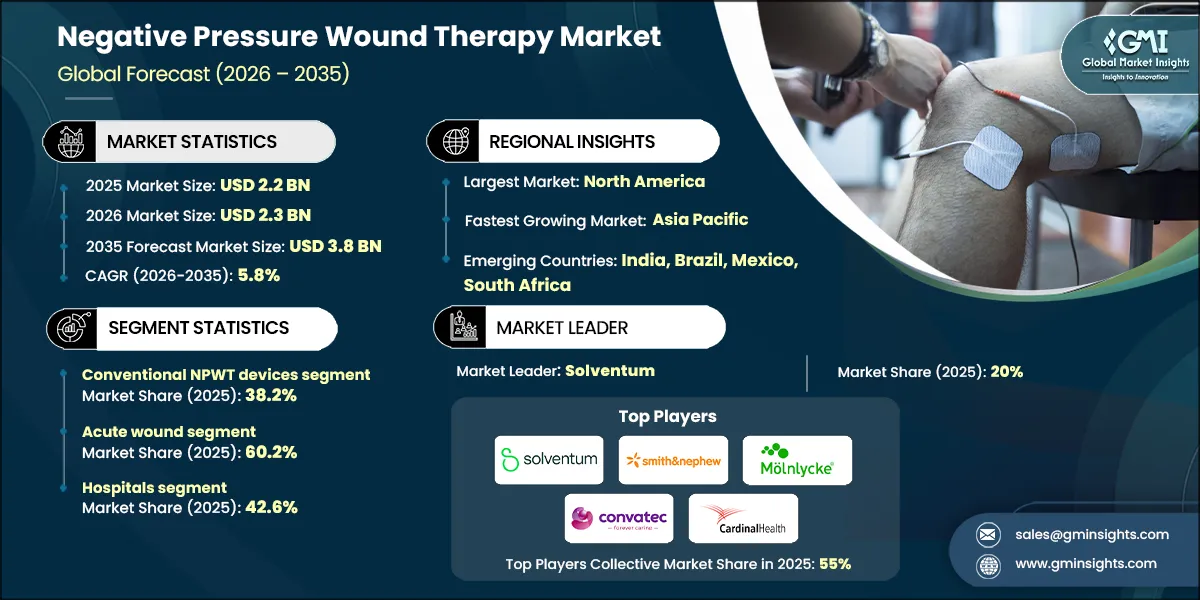
The global negative pressure wound therapy market was valued at USD 2.2 billion in 2025. The market is expected to grow from USD 2.3 billion in 2026 to USD 3.8 billion in 2035, growing at a CAGR of 5.8%, according to the latest report published by Global Market Insights Inc.
Negative Pressure Wound Therapy Market Key Takeaways
Market Size & Growth
- 2025 Market Size: USD 2.2 Billion
- 2026 Market Size: USD 2.3 Billion
- 2035 Forecast Market Size: USD 3.8 Billion
- CAGR (2026–2035): 5.8%
Regional Dominance
- Largest Market: North America
- Fastest Growing Region: Asia Pacific
Key Market Drivers
- Rising prevalence of chronic and acute wounds.
- Increasing prevalence of diabetes.
- Increasing number of surgical procedures globally.
- Technology advancements in negative pressure wound therapy.
Challenges
- Stringent regulatory scenario.
- Availability of alternative therapies.
Opportunity
- Regional expansion in emerging markets.
Key Players
- Market Leader: Solventum led with over 20% market share in 2025.
- Leading Players: Top 5 players in this market include Solventum, Smith+Nephew, Mölnlycke, Convatec, Cardinal Health, which collectively held a market share of 55% in 2025.
Get Market Insights & Growth Opportunities
The steady growth of the market is driven by factors such as the rising prevalence of diabetes, growing technological advancements in negative pressure wound therapy, an increasing number of surgical procedures, and the rising burden of chronic and acute wounds. The top five major companies in the industry include Smith & Nephew, Solventum, Molnlycke Health Care, Convatec Group, and Cardinal Health.
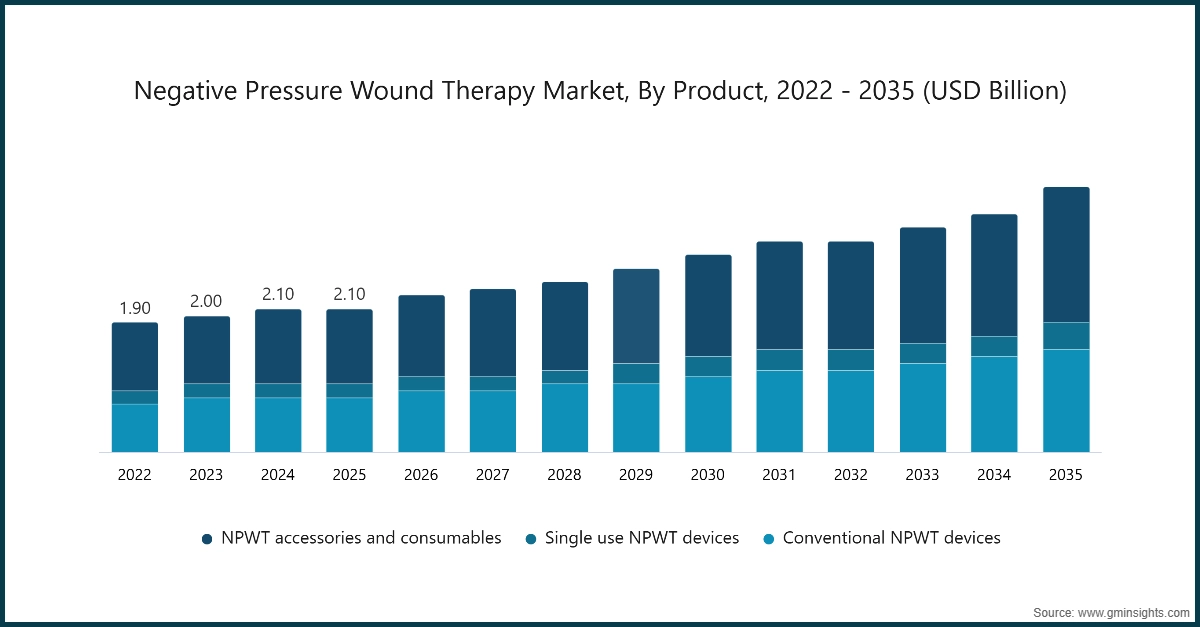
The global market increased from USD 1.9 billion in 2022 to USD 2.1 billion in 2024. The rising prevalence of diabetes is a crucial factor driving market growth. For instance, according to the International Diabetes Federation Atlas, the number of people with diabetes is expected to increase from 463 million in 2019 to 578 million by 2030 and an estimated 700 million by 2045. This underscores the rising demand for effective wound care solutions, particularly NPWT systems, as diabetic patients are highly susceptible to chronic wounds such as diabetic foot ulcers. NPWT helps accelerate healing, reduce infection risk, and improve clinical outcomes, making it an essential therapy in managing complications associated with diabetes.
Additionally, technological advancements in negative pressure wound therapy (NPWT) have significantly transformed wound care, improved patient outcomes, and accelerated healing. Modern NPWT systems are now more compact, portable, and equipped with smart features such as IoT-enabled sensors and real-time pressure monitoring, enabling clinicians to track wound progress remotely and ensure consistent therapy delivery. Innovations such as single-use NPWT devices and integrated automated pressure control enhance convenience for home-based care while reducing infection risks.
For example, Smith & Nephew’s RENASYS EDGE system offers advanced pressure management and intuitive interfaces, while 3M’s V.A.C. Therapy incorporates proprietary foam dressings and automated adjustments for optimal healing. These advancements are driving substantial growth in the NPWT market by improving efficiency, reducing hospital stays, and supporting the shift toward decentralized wound care.
Negative pressure wound therapy (NPWT) is an advanced wound care technique that uses controlled sub-atmospheric pressure to promote healing in acute and chronic wounds. The therapy involves placing a sealed dressing over the wound and connecting it to a vacuum pump that continuously or intermittently applies negative pressure.
To get key market trends
Negative Pressure Wound Therapy Market Trends
The rise in surgical procedures worldwide has emerged as a key catalyst driving the growth of the global NPWT market. As healthcare systems advance and surgical interventions become more accessible, the demand for effective postoperative wound care solutions, including NPWT, is increasing rapidly. Globally, millions of elective and emergency surgeries are performed each year, including trauma cases, accidents, and acute medical conditions. These procedures require advanced wound management to prevent complications and accelerate healing. NPWT systems play a critical role in these processes by reducing infection risks, promoting granulation tissue formation, and minimizing hospital stays.
For instance, estimates suggest that the U.S. performs more than 4,297,000 elective procedures, including both surgical and non-surgical interventions, every month. Among these procedures, 46.6% are surgical in nature, requiring the use of operation rooms. The increasing volume of surgical interventions, combined with the rising prevalence of chronic wounds such as diabetic foot ulcers and pressure ulcers, is expected to significantly boost NPWT adoption across hospitals and home-care settings. Furthermore, NPWT not only addresses immediate postoperative needs but also supports long-term recovery, making it an essential component of modern wound care strategies worldwide.
Negative Pressure Wound Therapy Market Analysis
Learn more about the key segments shaping this market
Based on product, the global negative pressure wound therapy market is segmented into conventional NPWT devices, single use NPWT devices, and NPWT accessories and consumables. The NPWT conventional NPWT devices segment accounted for a revenue share of 38.2% in 2025.
- Accessories and consumables in NPWT systems are crucial for effective therapy delivery and wound management. Accessories include components such as canisters, tubing sets, connectors, and carrying cases, which ensure safe exudate collection, secure connections, and portability for patients.
- Canisters and tubing systems are key NPWT accessories. For example, the sterile 3M V.A.C. Canister with Gel for the 3M V.A.C. Ulta Therapy System is available in sizes such as 500 mL and 1,000 mL and features gel-based solidifiers to prevent leakage and simplify disposal.
- Tubing and connectors, including 3M V.A.C. Canisters with integrated SensaT.R.A.C. Tubing, provide leak-proof connections between the dressing and pump, maintaining consistent negative pressure for optimal wound healing.
- Additionally, consumables refer to wound-contact and sealing materials that require regular replacement. These include foam or gauze dressings, adhesive drapes, and complete dressing kits, which are essential for maintaining an airtight seal and promoting granulation tissue formation, thus driving market growth.
Based on wound type, the global negative pressure wound therapy market is segmented into chronic wound and acute wound. Further, acute wound segment is bifurcated into surgical wounds, traumatic wounds, and burns. The acute wound segment was valued at USD 1.3 billion in 2025 and held a significant market share of 60.2%.
- Acute wounds, including surgical incisions, traumatic injuries, and burns, are emerging as a key application area within the market. The increasing volume of surgical procedures, particularly complex and emergency cases, is driving the adoption of NPWT systems to accelerate healing and minimize complications.
- NPWT devices are being increasingly utilized for acute wound management due to their ability to promote faster tissue granulation, reduce edema, and lower infection risks compared to traditional dressings.
- Burn injuries remain a significant challenge, with over 450,000 cases reported annually in the U.S., according to the American Burn Association, creating demand for NPWT solutions tailored for severe burns and complex traumatic wounds.
- Additionally, rising awareness of advanced wound care protocols, coupled with increased healthcare expenditure and improved access to NPWT technology in hospitals and outpatient settings, is strengthening the growth of this segment.
Learn more about the key segments shaping this market
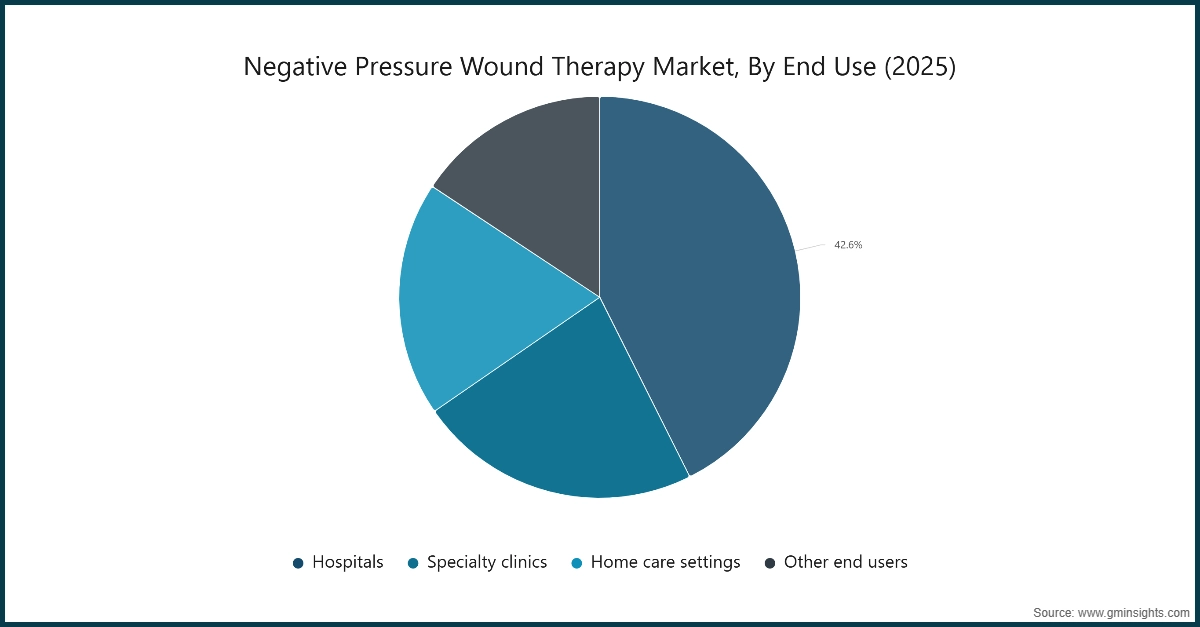
Based on end use, the global negative pressure wound therapy market is segmented into hospitals, specialty clinics, home care settings, and other end users. The hospitals segment held a significant market share of 42.6% in 2025.
- Hospitals serve as the primary end users in the negative pressure wound therapy (NPWT) market, ensuring the consistent availability of NPWT systems and accessories, even during emergencies or periods of high patient inflow. Their robust inventory management and ability to deliver timely interventions make hospitals a critical setting for NPWT adoption.
- With advanced infrastructure and streamlined procurement processes, hospitals provide an optimal environment for NPWT application in acute wounds, where rapid treatment is essential to prevent infection and accelerate healing. The integration of portable and technologically advanced NPWT systems further enables clinicians to deliver efficient care in critical situations.
- Moreover, government initiatives aimed at improving wound care standards have strengthened NPWT adoption in hospitals through enhanced training, infrastructure upgrades, and stringent infection control protocols. These efforts have significantly improved patient safety and clinical outcomes, reinforcing hospital’s dominance in wound care delivery and driving overall market growth.
North America Negative Pressure Wound Therapy Market
Looking for region specific data?
The North America dominated the market with a market share of 36.6% in 2025. The negative pressure wound therapy market in North America is experiencing robust expansion, driven by the region’s advanced healthcare infrastructure and technological advancements
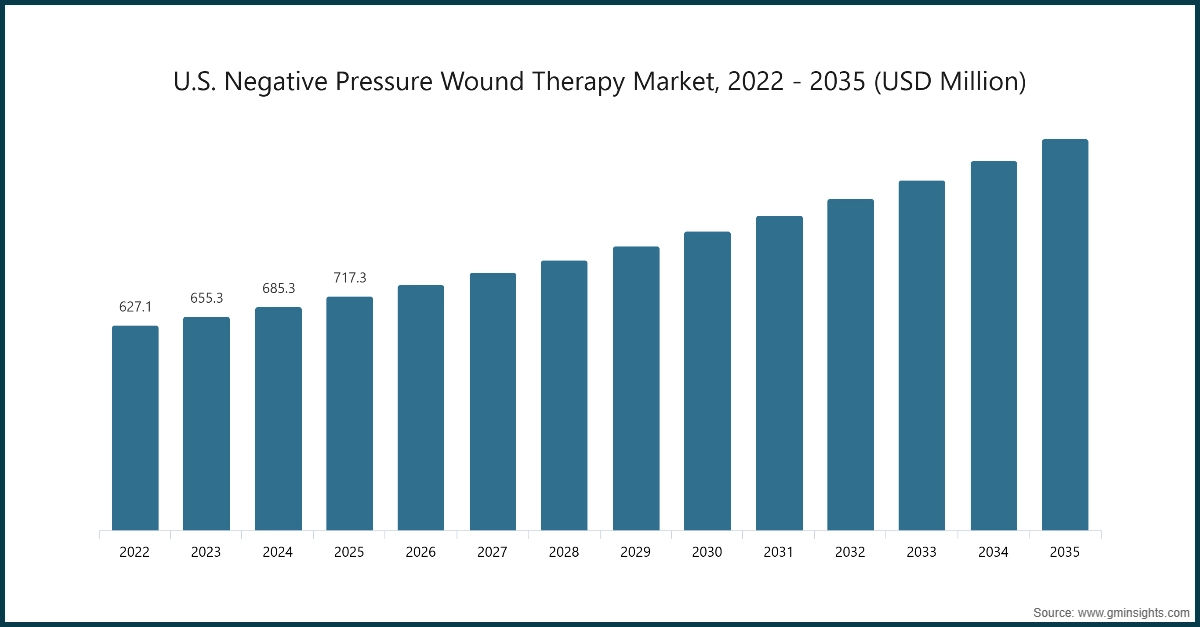
- The U.S. market was valued at USD 627.1 million and USD 655.3 million in 2022 and 2023, respectively. In 2025 the market size increased to USD 717.3 million from USD 685.3 million in 2024.
- The increasing prevalence of chronic wounds is the key driver for the growth of the market in the U.S.
- For instance, according to the American Academy of Home Care Medicine, each year in the U.S., chronic wounds affect an estimated 6.5 million people, roughly 1 in every 38 adults, costing about USD 28.1 to 96.8 billion. Thus, the demand for efficient wound care products is increasing in the U.S.
- Additionally, the U.S. has one of the most advanced healthcare infrastructures in the world, with strong networks of hospitals, clinics, and specialized care centers.
Europe Negative Pressure Wound Therapy Market
Europe market accounted for USD 634.7 million in 2025 and is anticipated to show lucrative growth over the forecast period.
- The rising incidence of chronic and acute wounds in Europe, coupled with increasing government initiatives to improve advanced wound care standards and promote NPWT adoption, is expected to drive market growth in the region.
- Additionally, the strong presence of leading NPWT manufacturers and healthcare technology companies in Europe reinforces the region’s competitive advantage. These players are actively investing in research and development to introduce innovative NPWT solutions, further accelerating market expansion.
The negative pressure wound therapy market in Germany is expected to experience significant and promising growth from 2026 to 2035.
- The growing aging population in Germany is a key driver for NPWT adoption, as older individuals are more prone to chronic and acute wounds, including surgical site complications and pressure ulcers. For instance, according to Statista, in 2024, individuals aged 40–59 represent the largest age group at approximately 22.3 million, while those aged 65 and older account for around 19 million. This demographic trend significantly increases the need for advanced wound care solutions such as NPWT to promote faster healing and reduce infection risks.
- Germany is emerging as a major market for NPWT, supported by its advanced healthcare infrastructure, strong clinical expertise, and increasing integration of NPWT systems in hospitals, outpatient facilities, and home care settings. The country’s focus on improving wound care standards and adopting innovative technologies further accelerates market growth.
Asia Pacific Negative Pressure Wound Therapy Market
The Asia Pacific market is anticipated to grow at the CAGR of 6.4% during the analysis timeframe.
- The NPWT market in Asia Pacific is expanding rapidly due to the increasing prevalence of chronic wounds, traumatic injuries, and surgical site complications. This growth is further supported by rising health awareness and the adoption of advanced wound care solutions.
- Significant improvements in healthcare infrastructure, including the establishment of new hospitals and specialized wound care centers, along with the geographic expansion of leading NPWT manufacturers, are driving demand for innovative NPWT systems across the region.
- Additionally, supportive government policies aimed at improving wound care standards and promoting advanced treatment technologies are contributing to the growth of NPWT adoption in Asia Pacific.
China negative pressure wound therapy market is anticipated to witness lucrative growth between 2026 – 2035.
- China’s rapidly aging population is a major driver for NPWT adoption, as older individuals are more susceptible to chronic wounds, surgical site complications, and pressure ulcers. This demographic trend significantly increases the demand for advanced wound care solutions such as NPWT to improve healing outcomes and reduce infection risks.
- For instance, according to WHO estimates, China had approximately 254 million people aged 65 and above in 2019, and this number is projected to rise sharply, reaching around 402 million individuals over 60 by 2040. This surge in the elderly population underscores the growing need for effective wound management technologies.
- Government initiatives to strengthen healthcare infrastructure, combined with rising investments in advanced wound care technologies such as portable NPWT systems and integrated digital monitoring, are accelerating adoption across hospitals, emergency care, and home healthcare settings, driving substantial market growth in China.
Latin America Negative Pressure Wound Therapy Market
The Brazil market is expected to experience significant and promising growth from 2026 to 2035.
Brazil’s commitment to improving healthcare infrastructure, supported by both public and private investments, is driving the adoption of advanced wound care, which is estimated to reach USD 27.5 billion by 2034, technologies such as NPWT. The establishment of modern hospitals and specialized wound care centers is creating a strong foundation for market growth. This expansion is further fueled by the rising prevalence of chronic wounds and surgical site complications, along with an increasing focus on advanced treatment solutions. Brazil’s growing emphasis on innovative healthcare practices and technology integration significantly boosts demand for NPWT systems across hospitals and home care settings.
Middle East and Africa Negative Pressure Wound Therapy Market
The Saudi Arabia market is expected to experience significant and promising growth from 2026 to 2035.
- The increasing demand for surgical interventions in Saudi Arabia has significantly boosted the adoption of NPWT systems for effective post-surgical wound management. According to the Saudi Ministry of Health, approximately 290,000 surgeries were performed across the country in 2022, highlighting the growing need for advanced wound care solutions.
- Additionally, the rising prevalence of chronic conditions such as diabetes, coupled with the presence of advanced medical infrastructure and growing awareness of modern wound care technologies, is driving NPWT market growth. A February 2024 study published by the National Institutes of Health reported that diabetic foot complications are among the most common chronic health issues in Saudi Arabia, with foot ulcers contributing to nearly 81% of cases, underscoring the critical role of NPWT in improving clinical outcomes.
Negative Pressure Wound Therapy Market Share
- The top five players in the NPWT market, Solventum, Smith+Nephew, Mölnlycke, Convatec, and Cardinal Health, collectively hold a 55% share of the global market. These companies continue to strengthen their positions through innovation, regulatory compliance, and strategic collaborations. Leading players are heavily investing in research and development to introduce next-generation NPWT systems with enhanced portability, digital monitoring, and infection control features.
- Solventum maintains a strong position in the NPWT segment through its advanced portfolio of wound care solutions, including portable NPWT systems designed for both hospital and home care settings. The company focuses on integrating smart technologies, such as real-time pressure monitoring and connectivity features, to improve clinical outcomes and patient convenience.
- Manufacturers are adopting value-based pricing strategies to penetrate cost-sensitive markets, particularly in emerging economies. Leading players are addressing clinical needs by launching compact, lightweight NPWT devices and disposable canister systems, ensuring reliability and convenience for both inpatient and outpatient care. These advancements aim to enhance wound healing efficiency, reduce infection risks, and improve accessibility.
- Emerging trends in the NPWT market include integration with digital health platforms for remote monitoring, AI-driven analytics for predictive wound healing, and cloud-enabled connectivity for real-time reporting. There is also a growing focus on sustainability, with manufacturers developing energy-efficient NPWT devices and eco-friendly consumables to minimize environmental impact.
Negative Pressure Wound Therapy Market Companies
Some of the eminent market participants operating in the global negative pressure wound therapy industry include:
- 4L Health & Foryou Medical Electronics
- ATMOS MedizinTechnik
- Cardinal Health
- Carilex Medical
- Convatec
- DeRoyal Industries
- Genadyne Biotechnologies
- Lohmann & Rauscher International
- Medaxis
- Mölnlycke
- PAUL HARTMANN
- Smith+Nephew
- Solventum
- Talley Group
- Weigao Group
Smith & Nephew holds a strong position in the NPWT market with its advanced portfolio of negative pressure wound therapy systems. The company focuses on delivering clinically proven NPWT solutions designed to accelerate healing in complex and chronic wounds, including diabetic foot ulcers and venous leg ulcers.
ConvaTec Group is a prominent player in the NPWT segment, offering cost-effective and innovative negative pressure wound therapy systems. The company prioritizes accessibility and ease of use, catering to both acute care facilities and home healthcare environments.
Molnlycke Health Care has expanded its presence in the NPWT market through strategic partnerships and product innovations. The company provides a comprehensive range of NPWT solutions designed for effective management of chronic wounds, including pressure ulcers and surgical wounds.
Negative Pressure Wound Therapy Market Report Attributes
| Key Takeaway | Details |
|---|---|
| Market Size & Growth | |
| Base Year | 2025 |
| Market Size in 2025 | USD 2.2 Billion |
| Market Size in 2026 | USD 2.3 Billion |
| Forecast Period 2026-2035 CAGR | 5.8% |
| Market Size in 2035 | USD 3.8 Billion |
| Key Market Trends | |
| Drivers | Impact |
| Rising prevalence of chronic and acute wounds | NPWT systems are witnessing increased demand as they accelerate healing and reduce the risk of infection in complex wounds, such as pressure ulcers, burns, and traumatic injuries. |
| Increasing prevalence of diabetes | The adoption of NPWT is rising for managing diabetic foot ulcers, which are among the most common and severe complications of diabetes. |
| Increasing number of surgical procedures globally | Boosts NPWT usage for post-surgical wound management to minimize complications and improve recovery outcomes. |
| Technology advancements in negative pressure wound therapy | Enables development of portable, single-use NPWT devices and smart systems with real-time monitoring, supporting home-based care and improving patient compliance. |
| Pitfalls & Challenges | Impact |
| Stringent regulatory scenario | Complex approval processes and compliance requirements delay product launches and increase costs, creating barriers for new entrants and slowing innovation. |
| Availability of alternative therapies | Creates competitive pressure, as traditional dressings and advanced wound care products may be preferred in cost-sensitive markets. |
| Opportunities: | Impact |
| Regional expansion in emerging markets | Offers significant growth potential due to rising healthcare infrastructure investments, increasing prevalence of chronic wounds, and growing awareness of advanced wound care solutions in Asia-Pacific and Latin America. |
| Market Leaders (2025) | |
| Market Leader |
20% market share |
| Top Players |
Collective market share in 2025 is 55% |
| Competitive Edge |
|
| Regional Insights | |
| Largest Market | North America |
| Fastest growing market | Asia Pacific |
| Emerging countries | India, Brazil, Mexico, South Africa |
| Future outlook |
|
What are the growth opportunities in this market?
Negative Pressure Wound Therapy Industry News:
- In October 2024, Smith & Nephew announced the launch of RENASYS EDGE NPWT System, a novel system for treating chronic wounds which is designed with patient convenience in mind. The system comes with a canister that is not only discreet and operates in a non-obtrusive manner while the patients carry on with their daily activities.
The global negative pressure wound therapy market research report includes an in-depth coverage of the industry with estimates and forecast in terms of revenue in USD Million from 2022 - 2035 for the following segments:
By Product
- Conventional NPWT devices
- Single use NPWT devices
- NPWT accessories and consumables
By Wound Type
Chronic wound
- Diabetic foot ulcers
- Pressure ulcers
- Venous leg ulcers
- Other chronic wounds
- Acute wound
- Surgical wounds
- Traumatic wounds
- Burns
By End Use
- Hospitals
- Specialty clinics
- Home care settings
- Other end users
The above information is provided for the following regions and countries:
- North America
- U.S.
- Canada
- Europe
- Germany
- UK
- France
- Italy
- Spain
- Netherlands
- Asia Pacific
- Japan
- China
- India
- Australia
- South Korea
- Latin America
- Brazil
- Mexico
- Argentina
- Middle East and Africa
- South Africa
- Saudi Arabia
- UAE
Frequently Asked Question(FAQ) :
What was the market size of the negative pressure wound therapy market in 2025?
The market size was USD 2.2 billion in 2025, with a CAGR of 5.8% expected through 2035, driven by the increasing demand for advanced wound care solutions and rising surgical procedures globally.
What is the projected value of the negative pressure wound therapy market by 2035?
The market is expected to reach USD 3.8 billion by 2035, fueled by advancements in healthcare systems, technological innovations, and the growing need for effective postoperative wound management.
What is the projected size of the negative pressure wound therapy market in 2026?
The market is expected to reach USD 2.3 billion in 2026.
How much revenue did the conventional NPWT devices segment generate?
The conventional NPWT devices segment accounted for a revenue share of 38.2% in 2025.
What was the valuation of the acute wound segment?
The acute wound segment was valued at USD 1.3 billion in 2025, holding a significant market share of 60.2%.
Which end-use segment led the negative pressure wound therapy market?
The hospitals segment led the market in 2025, holding a market share of 42.6%.
Which region dominated the negative pressure wound therapy industry?
North America dominated the market with a 36.6% share in 2025, driven by advanced healthcare infrastructure and technological advancements in the region.
What are the key trends in the negative pressure wound therapy market?
Key trends include the rising number of surgical procedures, increasing adoption of single-use NPWT devices, and advancements in wound care technologies to reduce infection risks and hospital stays.
Negative Pressure Wound Therapy Market Scope
Related Reports