Summary
Table of Content

mRNA Therapeutics Market
Get a free sample of this report
Form submitted successfully!
Error submitting form. Please try again.
Thank you!
Your inquiry has been received. Our team will reach out to you with the required details via email. To ensure that you don't miss their response, kindly remember to check your spam folder as well!
Request Sectional Data
Thank you!
Your inquiry has been received. Our team will reach out to you with the required details via email. To ensure that you don't miss their response, kindly remember to check your spam folder as well!
Form submitted successfully!
Error submitting form. Please try again.
mRNA Therapeutics Market Size
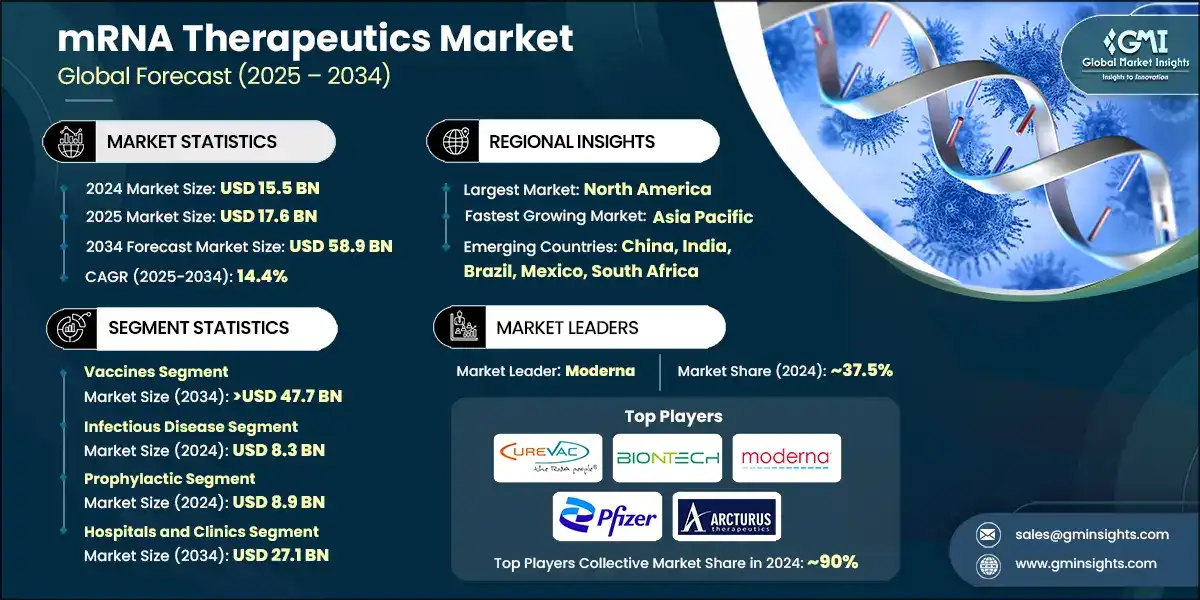
The global mRNA therapeutics market was valued at USD 15.5 billion in 2024. The market is expected to grow from USD 17.6 billion in 2025 to USD 58.9 billion in 2034, at a CAGR of 14.4% during the forecast period, according to the latest report published by Global Market Insights Inc. This growth is attributed to the rapid development and global deployment of mRNA-based COVID-19 vaccines by companies such as Moderna and BioNTech that showcased the technology’s potential.
mRNA Therapeutics Market Key Takeaways
Market Size & Growth
- 2024 Market Size: USD 15.5 Billion
- 2025 Market Size: USD 17.6 Billion
- 2034 Forecast Market Size: USD 58.9 Billion
- CAGR (2025–2034): 14.4%
Regional Dominance
- Largest Market: North America
- Fastest Growing Region: Asia Pacific
Key Market Drivers
- Advancements in delivery technologies.
- Expanding applications beyond vaccines.
- Growing investment in biotechnology research and development.
- Faster and scalable manufacturing.
Challenges
- Immunogenicity and safety concerns.
- Manufacturing and scalability issues.
Opportunity
- Expansion into protein replacement therapies.
- Integration with AI and genomics.
Key Players
- Market Leader: Moderna led with over 37.5% market share in 2024.
- Leading Players: Top 5 players in this market include CureVac, BioNtech, Moderna, Pfizer, Arcturus Therapeutics, which collectively held a market share of 90% in 2024.
Get Market Insights & Growth Opportunities
These vaccines demonstrated high efficacy, scalability, and adaptability, leading to increased public and regulatory trust. In addition, innovations in lipid nanoparticles (LNP) delivery systems have significantly improved stability, bioavailability, and targeted delivery of mRNA molecules. These advancements address previous challenges such as degradation and immune system activation, making mRNA therapeutics safer and more effective.
While initially focused on vaccines, mRNA technology is now being explored for treating a wide range of conditions including cancer, rare genetic diseases, autoimmune disorders, and cardiovascular diseases. Its ability to encode virtually any protein allows for tailored therapies, making it a powerful tool in personalized medicine. This versatility is a major driver of market expansion, that further contributes to market growth.
Messenger RNA (mRNA) therapy enables the body to make the proteins the person needs to prevent, treat, or cure diseases. Unlike traditional biologics, mRNA therapeutics are large, delicate molecules that are produced using in vitro transcription (IVT) and need to be protected by lipid nanoparticles (LNPs) before they reach target cells. Major players in the industry are Moderna, Pfizer, Arcturus Therapeutics, CureVac, and BioNtech. These players dominated the market by adopting various strategies such as product expansion and establishing global distribution networks.
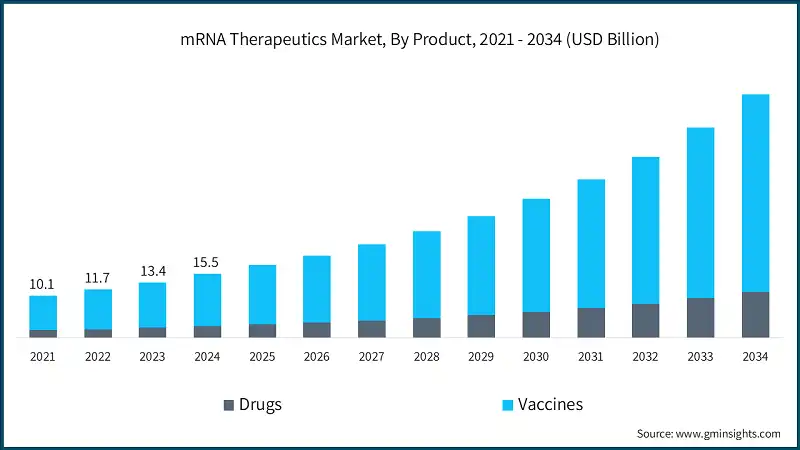
mRNA therapeutics market has witnessed steady growth, growing from USD 10.1 billion in 2021 to USD 13.4 billion in 2023. Governments, pharmaceutical companies, and venture capitalists are increasingly investing in mRNA research and development. Strategic collaborations and funding initiatives have accelerated clinical trials and commercialization efforts. This influx of capital supports innovation, infrastructure development, and regulatory approvals, fueling the growth of the mRNA therapeutics market.
Additionally, mRNA therapeutics offer a faster and more scalable manufacturing process compared to traditional biologics. Since mRNA is synthesized in vitro without the need for cell cultures, production timelines are significantly reduced. This efficiency is especially valuable during pandemics or for personalized treatments, making mRNA platforms attractive for pharmaceutical companies.
mRNA technology is increasingly being integrated with gene editing tools like CRISPR to enable precise genetic modifications. This synergy allows for temporary expression of editing enzymes, reducing long-term risks associated with DNA-based approaches. Additionally, mRNA-based genetic reprogramming is being explored for regenerative medicine, offering potential in tissue repair and stem cell therapies. These innovations expand the therapeutic scope of mRNA beyond traditional vaccines.
To get key market trends
mRNA Therapeutics Market Trends
- The market growth is driven by increasing demand for rapid-response vaccines, rising prevalence of chronic and infectious diseases, and global investment in biotechnology. For instance, the World Health Organization (WHO) reported that infectious diseases caused 13.6 million deaths globally in 2023, representing 21% of all deaths worldwide. The focus on pandemic preparedness by governments and health organizations supports mRNA platforms because of their flexibility and rapid development capabilities.
- In addition, governments and health organizations are prioritizing pandemic preparedness, which favors mRNA platforms due to their adaptability and speed, that further contributes to market growth.
- Moreover, companies are focusing on personalized medicine, especially in oncology, where mRNA vaccines are tailored to individual tumor profiles. There's also a surge in rare disease applications, with mRNA enabling protein replacement therapies. Clinical trials are expanding rapidly, with over 235 mRNA drug candidates in development. Startups and established players are forming strategic partnerships to accelerate research and development and commercialization, while AI is being used to optimize mRNA sequence design and delivery.
- Emerging technologies include self-amplifying mRNA (saRNA) and trans-amplifying mRNA, which require lower doses and offer longer-lasting effects. Circular mRNA is also gaining traction for its enhanced stability and reduced immunogenicity. Innovations in lipid nanoparticle (LNP) delivery systems are improving tissue targeting and reducing side effects.
- Regulatory bodies such as the U.S. FDA and EMA are adapting frameworks to accommodate mRNA therapeutics. While mRNA vaccines are regulated as biologics, there’s ongoing debate about classifying mRNA drugs as gene therapy due to their mechanism of action.
- mRNA products are evolving from vaccines to therapeutics targeting cancer, genetic disorders, and autoimmune diseases. Technology now supports individualized neo-antigen therapies, enzyme replacement, and gene editing.
- Advances in mRNA structures such as modified nucleosides and optimized untranslated regions are enhancing stability and translation efficiency. AI tools are being used to design mRNA sequences that reduce immunogenicity and improve protein expression, paving the way for next-gen therapeutics.
- Manufacturing is shifting from pandemic-scale production to flexible, small-batch GMP-grade facilities for personalized therapies. Innovations in base modification and purification processes are improving yield and reducing immunogenicity.
- CDMOs are investing in modular, automated systems to support both large-scale vaccine production and niche therapeutic batches. The FDA’s platform technology designation program may further streamline manufacturing approvals. Maintaining scalability while ensuring quality and regulatory compliance is a key focus for the industry.
mRNA Therapeutics Market Analysis
Learn more about the key segments shaping this market
Based on product, the global mRNA therapeutics market is divided into drugs and vaccines. The vaccines segment accounted for 81.9% of the market in 2024. The segment is expected to exceed USD 47.7 billion by 2034, growing at a CAGR of 14.3% during the forecast period.
- mRNA vaccines can be produced faster than traditional vaccines due to their cell-free synthesis process. This flexibility allows for quick adaptation to emerging pathogens and variants. Modular manufacturing systems and continuous lipid nanoparticle production are improving scalability and reducing costs, making mRNA vaccines more accessible globally.
- Innovations in lipid nanoparticle (LNP) delivery systems have enhanced the stability and effectiveness of mRNA vaccines. These systems protect mRNA from degradation and facilitate efficient cellular uptake. Continuous improvements in delivery technologies are expanding the range of diseases that can be targeted and improving vaccine efficacy.
- Further, regulatory agencies such as the FDA and EMA are streamlining approval processes for mRNA vaccines through platform designations and fast-track programs. These frameworks reduce development timelines and encourage innovation. Countries like Japan and Singapore are also adopting similar schemes, facilitating global expansion of mRNA vaccine products.
Based on the application, the mRNA therapeutics market is segmented into infectious disease, oncology, rare genetic disorders, respiratory disease, and other applications. The infectious disease segment dominated the market in 2024 with a revenue of USD 8.3 billion.
- The rapid development, high efficacy, and global deployment of these vaccines validated mRNA as a reliable platform. This success has encouraged governments and pharmaceutical companies to invest in mRNA-based solutions for other infectious diseases such as RSV, influenza, and Zika, accelerating research and commercialization.
- Significant funding from governments and health organizations is fueling the development of mRNA vaccines for infectious diseases. For example, Moderna received USD 176 million in federal funding to develop a bird flu vaccine. Such financial support enhances research and development capabilities, speeds up clinical trials, and strengthens infrastructure, making mRNA therapeutics more viable for infectious disease prevention.
- In addition, mRNA platforms allow for quick design and production of vaccines in response to emerging pathogens. Unlike traditional vaccine development, which can take years, mRNA vaccines can be developed within weeks. This agility is crucial for pandemic preparedness and outbreak containment, making mRNA a preferred choice for infectious disease applications.
- The oncology segment of the mRNA therapeutics market is projected to grow rapidly due to increase in cancer incidence, which is driving demand for innovative treatments. mRNA therapeutics offer a flexible and scalable solution for various cancer types, including melanoma, lung, breast, and prostate cancers. Their adaptability to different tumor profiles and rapid development timelines make them ideal for addressing the growing oncology burden.
- Pharmaceutical companies are investing heavily in mRNA oncology research, forming strategic partnerships with academic institutions and biotech firms. For example, CureVac partnered with MD Anderson to advance mRNA-based cancer vaccines. These collaborations accelerate innovation, clinical trial execution, and regulatory approvals, boosting market growth.
Based on type, the mRNA therapeutics market is classified into prophylactic and therapeutic. The prophylactic segment dominated the market in 2024 with USD 8.9 billion and is growing with a CAGR of 14.2% during the forecast period.
- Prophylactic mRNA vaccines currently dominate the market, accounting for over 57.4% of the total market share. This is driven by the increasing need for preventive solutions against infectious diseases and the growing awareness of vaccine-preventable illnesses. The demand for seasonal and pandemic vaccines continues to rise, supporting sustained growth in this segment.
- mRNA vaccines benefit from a cell-free, in vitro manufacturing process that allows for faster production compared to traditional vaccines. This scalability is crucial during outbreaks and pandemics. Modular manufacturing systems and continuous production technologies are being adopted to meet global demand efficiently.
- The therapeutics segment grew with a CAGR of 14.6% during the analysis period. The therapeutics segment is growing as mRNA technology moves beyond vaccines into treatments for cancer, rare genetic disorders, and autoimmune diseases. Unlike traditional therapies, mRNA drugs can transiently express therapeutic proteins without altering DNA, offering a safer and more flexible approach. This versatility is attracting significant research and development investment and expanding the clinical pipeline for mRNA-based drugs.
- Innovations in lipid nanoparticle (LNP) and polymeric nanoparticle delivery systems are enhancing the stability, targeting, and bioavailability of mRNA therapeutics. These advancements reduce immunogenicity and improve therapeutic outcomes, making mRNA drugs more viable for chronic and complex conditions. Improved delivery is a key enabler for expanding therapeutic applications.
Learn more about the key segments shaping this market
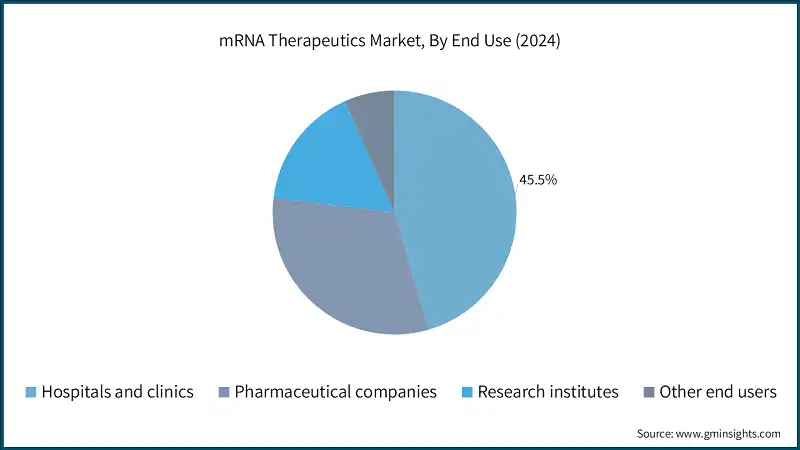
Based on end use, mRNA therapeutics market is classified into hospitals and clinics, pharmaceutical companies, research institutes and other end users. The hospitals and clinics segment dominated the market in 2024 and is expected to reach USD 27.1 billion by 2034.
- Hospitals and clinics are the primary settings for administering mRNA-based vaccines and therapeutics, especially for complex or personalized treatments. Their infrastructure supports cold chain logistics, trained personnel, and patient monitoring, which are essential for mRNA therapies. As mRNA applications expand into oncology and rare diseases, the need for specialized care settings further boosts the role of hospitals and clinics.
- As mRNA therapeutics evolve toward personalized treatments, hospitals and clinics play a crucial role in genomic profiling, patient-specific vaccine administration, and real-time monitoring. Their ability to deliver tailored care aligns with the precision medicine model, making them central to the future of mRNA-based healthcare.
- Modern hospitals and clinics are equipped with advanced diagnostic and therapeutic technologies, enabling them to support mRNA-based treatments. Their ability to handle intravenous infusions, monitor immune responses, and manage side effects makes them suitable for both prophylactic and therapeutic mRNA applications. This infrastructure advantage drives their dominance in the market.
Looking for region specific data?
North America mRNA Therapeutics Market
The North America market dominated the market with a market share of 42.4% in 2024.
- North America is home to major mRNA innovators like Moderna, Pfizer, and BioNTech (via U.S. partnerships), which have led the global rollout of mRNA vaccines and therapeutics. These companies possess advanced research and development capabilities, robust pipelines, and manufacturing infrastructure. Their leadership in clinical trials and commercialization has positioned North America as the epicenter of mRNA innovation, driving sustained market growth.
- North America’s well-established healthcare system, including hospitals, clinics, and research institutions, facilitates the adoption and distribution of mRNA therapies. These facilities support cold chain logistics, clinical trials, and personalized medicine, making them ideal for administering both prophylactic and therapeutic mRNA products.
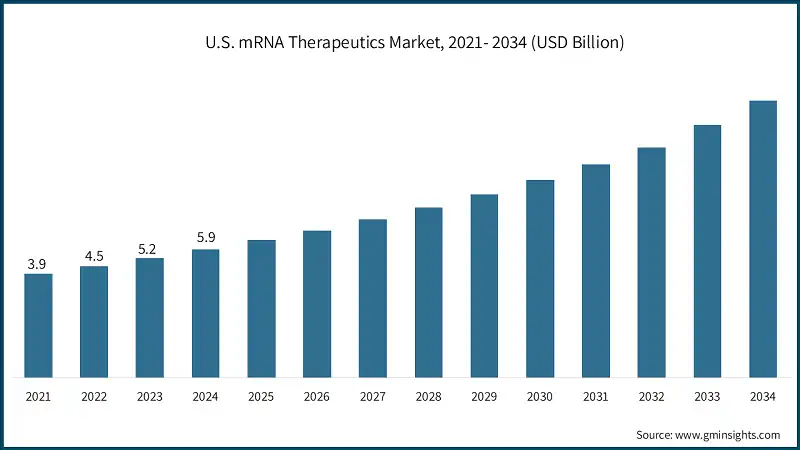
The U.S. mRNA therapeutics market was valued at USD 3.9 billion and USD 4.5 billion in 2021 and 2022, respectively. The market size reached USD 5.9 billion in 2024, growing from USD 5.2 billion in 2023.
- The rising prevalence of chronic diseases, infectious diseases, and cancer in the U.S., coupled with an aging population, is increasing demand for innovative treatments. mRNA therapeutics offer targeted, personalized solutions that address unmet medical needs, especially in oncology and rare genetic disorders.
- The U.S. healthcare system supports mRNA adoption through hospitals, clinics, and research institutions equipped for cold chain logistics, patient monitoring, and personalized medicine. These facilities enable efficient delivery and follow-up care for both prophylactic and therapeutic mRNA products.
Europe mRNA Therapeutics Market
Europe market accounted for USD 4.2 billion in 2024 and is anticipated to show lucrative growth over the forecast period.
- Europe is home to pioneering mRNA companies like BioNTech (Germany), CureVac (Germany), and etherna (Belgium), which were among the first to initiate clinical trials for mRNA-based therapies. Their leadership and innovation are central to Europe’s growing influence in the global mRNA therapeutics market.
- Governments and private investors across Europe are increasing funding for biotech and mRNA research. Countries like Germany, France, and the UK are investing in manufacturing facilities, talent development, and academic-industry collaborations. These investments are strengthening Europe’s position as a hub for mRNA innovation and production.
- Europe boasts a robust research ecosystem with world-class universities, biotech clusters, and clinical trial networks. This environment fosters innovation in mRNA design, delivery systems, and therapeutic applications. Collaborative efforts between academia and industry are key to translating mRNA science into market-ready products.
Germany dominates the European mRNA therapeutics market, showcasing strong growth potential.
- Germany has a robust academic and research infrastructure, with institutions collaborating closely with biotech firms. These partnerships drive innovation in mRNA design, delivery systems, and therapeutic applications. The integration of academia and industry accelerates the translation of mRNA science into clinical solutions.
- There is increasing demand in Germany for targeted therapies that align with the principles of personalized medicine. mRNA therapeutics, which can be tailored to individual genetic profiles, are well-suited to meet this need. This trend is particularly strong in oncology and rare disease treatment, driving market growth.
Asia Pacific mRNA Therapeutics Market
The Asia Pacific market is anticipated to grow at the highest CAGR of 14.7% during the analysis timeframe.
- Asia Pacific countries like China, India, Japan, and South Korea are investing heavily in biotechnology infrastructure, including mRNA research and manufacturing facilities. This expansion is supported by government initiatives, public-private partnerships, and foreign investments. The region is becoming a hub for contract development and manufacturing organizations (CDMOs), which are essential for scaling mRNA production and supporting global supply chains.
- Governments across Asia Pacific are actively funding mRNA research and development to strengthen pandemic preparedness and healthcare innovation. Countries like India and China are launching national biotech missions and offering grants to accelerate mRNA vaccine and drug development. This policy support is crucial for market growth.
China mRNA therapeutics market is estimated to grow with a significant CAGR, in the Asia Pacific market.
- The Chinese government is actively supporting biotechnology innovation through funding programs, infrastructure development, and favorable policies. These initiatives aim to strengthen domestic capabilities in mRNA research, manufacturing, and clinical trials. Streamlined regulatory frameworks are also being introduced to facilitate faster approvals and market entry for mRNA-based products.
- Chinese companies like Fosun Pharma and Walvax Biotechnology are leading the development of mRNA vaccines and therapeutics for diseases such as cancer, influenza, and genetic disorders. Collaborations with global pharmaceutical firms are enhancing technology transfer, accelerating product development, and expanding China’s footprint in the global mRNA landscape.
Latin American mRNA Therapeutics Market
Brazil leads the Latin American market, exhibiting remarkable growth during the analysis period.
- Brazil faces a significant burden of infectious diseases such as dengue, Zika, and influenza. The mRNA platform’s ability to rapidly develop vaccines for emerging pathogens makes it highly attractive for public health initiatives. Infectious diseases are currently the largest revenue-generating application segment in Brazil’s mRNA therapeutics market.
- Brazil is witnessing increased interest in applying mRNA technology to oncology and rare genetic disorders. Personalized cancer vaccines and protein replacement therapies are gaining traction, supported by clinical research and international collaborations. These applications are expected to drive future growth in the therapeutic segment of Brazil’s mRNA market.
Middle East and Africa mRNA therapeutics Market
Saudi Arabia market to experience substantial growth in the Middle East and Africa mRNA therapeutics market in 2024.
- Saudi Arabia’s Vision 2030 initiative is a major catalyst for mRNA therapeutics growth. The government is investing heavily in healthcare modernization, biotechnology infrastructure, and local manufacturing capabilities. With over USD 15 billion allocated to healthcare in 2023, the country is fostering innovation, research, and strategic partnerships to reduce reliance on imported treatments and build a self-sufficient biotech ecosystem.
- Saudi Arabia is building state-of-the-art research centers and biomanufacturing facilities to support the full lifecycle of RNA therapeutics from gene sequencing to large-scale production. These facilities are equipped with advanced technologies and are designed to meet international quality standards, enabling the country to become a regional leader in RNA-based medicine.
mRNA Therapeutics Market Share
The mRNA therapeutics industry presents a dynamic and moderately consolidated competitive landscape, shaped by a blend of established pharmaceutical giants and emerging biotech innovators. Leading players such as Moderna, BioNTech, Pfizer, CureVac, and Arcturus Therapeutics collectively account for approximately 90% of the market share. Their dominance is driven by strategic investments in research and development, global expansion, regulatory alignment, and the development of patient-centric therapies targeting a wide range of diseases including cancer, infectious diseases, and rare genetic disorders.
To strengthen their market position, these companies are leveraging multi-pronged strategies such as mergers and acquisitions, strategic alliances, and value-based pricing models. These approaches aim to enhance access to advanced mRNA treatments, improve affordability, and address unmet clinical needs across diverse geographies.
Meanwhile, emerging biotech firms are contributing to market development through innovations in drug delivery systems, including self-amplifying mRNA, oral and inhaled formulations, and AI-integrated design platforms. Their influence is particularly notable in regions like Asia-Pacific, Latin America, and the Middle East, where improving healthcare infrastructure and rising awareness of mRNA technologies are accelerating adoption.
As competition intensifies and treatment options diversifies, companies are evolving their product portfolios to meet global demand for effective, scalable, and personalized mRNA therapies, fueling continued growth and innovation in the market.
mRNA Therapeutics Market Companies
Prominent players operating in the mRNA therapeutics industry are as mentioned below:
- CureVac
- BioNtech
- Ethris
- Moderna
- Pfizer
- GlaxoSmithKline
- Translate Bio
- Arcturus Therapeutics
- Sanofi
- AstraZeneca
- Chimeron Bio
- Tiba Biotech
- VaxEquity
- StemiRNA Therapeutics
- Immorna Biotech
- Moderna
Moderna leads the mRNA therapeutics market with a share of ~37.5% in 2024. Moderna’s competitive edge lies in its extensive mRNA platform, rapid development capabilities, and robust manufacturing infrastructure, allowing it to scale quickly and diversify across multiple therapeutic areas.
BioNTech leverages deep expertise in immuno-oncology and AI-driven mRNA design, offering highly personalized cancer therapies and maintaining a strong pipeline across infectious diseases and rare conditions.
Pfizer benefits from global reach, regulatory strength, and its strategic partnership with BioNTech, enabling swift mRNA vaccine deployment and expansion into broader therapeutic applications.
mRNA Therapeutics Market Report Attributes
| Key Takeaway | Details |
|---|---|
| Market Size & Growth | |
| Base Year | 2024 |
| Market Size in 2024 | USD 15.5 Billion |
| Market Size in 2025 | USD 17.6 Billion |
| Forecast Period 2025 - 2034 CAGR | 14.4% |
| Market Size in 2034 | USD 58.9 Billion |
| Key Market Trends | |
| Drivers | Impact |
| Advancements in delivery technologies | Improve efficacy, safety, and expand therapeutic reach across diverse disease targets. |
| Expanding applications beyond vaccines | Drives innovation in oncology, rare diseases, and personalized medicine. |
| Growing investment in biotechnology research and development | Accelerates clinical trials, product development, and global commercialization. |
| Faster and scalable manufacturing | Enables rapid response to health crises and supports global supply chain efficiency. |
| Pitfalls & Challenges | Impact |
| Immunogenicity and safety concerns | Trigger adverse immune responses, limiting repeat dosing and long-term use. |
| Manufacturing and scalability issues | Hinder consistent production, increase costs, and delay widespread therapeutic availability. |
| Opportunities: | Impact |
| Expansion into protein replacement therapies | Enables treatment of genetic disorders with safer, non-DNA-based solutions. |
| Integration with AI and genomics | Accelerates personalized drug design and improves therapeutic precision and development speed. |
| Market Leaders (2024) | |
| Market Leaders |
~37.5% market share. |
| Top Players |
Collective market share in 2024 is ~90% |
| Competitive Edge |
|
| Regional Insights | |
| Largest Market | North America |
| Fastest growing market | Asia Pacific |
| Emerging countries | China, India, Brazil, Mexico, South Africa |
| Future outlook |
|
What are the growth opportunities in this market?
mRNA Therapeutics Industry News
- In August 2025, Pfizer Inc. and BioNTech announced the U.S. Food and Drug Administration (FDA) has approved the supplemental Biologics License Application (sBLA) for the companies’ LP.8.1-adapted monovalent COVID-19 vaccine for use in adults ages 65 years and older, as well as in individuals ages 5 through 64 years with at least one underlying condition that puts them at high risk for severe outcomes from COVID-19.
- In September 2024, Primrose Bio, a leading biotechnology company specializing in technologies that improve the manufacturing of next-generation therapeutics, and ExPLoRNA Therapeutics, a pioneering biotechnology company advancing mRNA technologies, vaccines, and therapeutics, announced a strategic partnership aimed at jointly developing and marketing products for mRNA medicines.
- In July 2024, GSK plc and CureVac N.V. announced they have restructured their existing collaboration into a new licensing agreement, allowing each company to prioritize investment and focus their respective mRNA development activities.
- In December 2022, Moderna, Inc., a biotechnology company pioneering messenger RNA (mRNA) therapeutics and vaccines, and Merck, known as MSD, outside of the U.S. and Canada, announced that the Phase 2b KEYNOTE-942/mRNA-4157-P201 trial of mRNA-4157/V940, an investigational personalized mRNA cancer vaccine, in combination with KEYTRUDA.
- In January 2022, Pfizer Inc. and Acuitas Therapeutics, a company focused on developing lipid nanoparticle (LNP) delivery systems to enable messenger RNA (mRNA)-based therapeutics, announced they have entered into a Development and Option agreement under which Pfizer will have the option to license, on a non-exclusive basis, Acuitas’ LNP technology for up to 10 targets for vaccine or therapeutic development.
The mRNA therapeutics market research report includes in-depth coverage of the industry with estimates and forecast in terms of revenue in USD Billion from 2021 - 2034 for the following segments:
Market, By Product
- Drugs
- Therapeutic mRNA proteins
- Other mRNA-based drugs
- Vaccines
- Self-amplifying mRNA vaccines
- Conventional non-amplifying mRNA vaccines
Market, By Application
- Infectious disease
- Oncology
- Rare genetic disorders
- Respiratory disease
- Other applications
Market, By Type
- Prophylactic
- Therapeutic
Market, By End Use
- Hospitals and clinics
- Pharmaceutical companies
- Research institutes
- Other end use
The above information is provided for the following regions and countries:
- North America
- U.S.
- Canada
- Europe
- Germany
- UK
- France
- Spain
- Italy
- Netherlands
- Asia Pacific
- China
- India
- Japan
- Australia
- South Korea
- Latin America
- Brazil
- Mexico
- Argentina
- Middle East and Africa
- South Africa
- Saudi Arabia
- UAE
Frequently Asked Question(FAQ) :
What is the market size of the mRNA therapeutics in 2024?
The market size was valued at USD 15.5 billion in 2024, with a CAGR of 14.4% expected through 2034, driven by the rapid development and deployment of mRNA-based COVID-19 vaccines and increasing global investment in biotechnology.
What is the projected value of the mRNA therapeutics market by 2034?
The market is expected to reach USD 58.9 billion by 2034, fueled by advancements in mRNA technology, rising demand for rapid-response vaccines, and focus on pandemic preparedness.
What is the projected size of the mRNA therapeutics market in 2025?
The market is expected to reach USD 17.6 billion in 2025.
How much revenue did the vaccines segment generate?
The vaccines segment accounting for 81.9% of the market share, and is projected to exceed USD 47.7 billion by 2034.
What was the valuation of the prophylactic segment?
The prophylactic segment held a revenue of USD 8.9 billion in 2024 and is expected to grow at a CAGR of 14.2% during the forecast period.
Which region leads the mRNA therapeutics market?
North America dominated the market with a 42.4% share in 2024, driven by strong biotechnology infrastructure, significant R&D investments, and government support for mRNA technology.
What are the upcoming trends in the mRNA therapeutics industry?
Key trends include the increasing adoption of mRNA platforms for pandemic preparedness, rising prevalence of chronic and infectious diseases, and advancements in mRNA technology for oncology and rare genetic disorders.
Who are the key players in the mRNA therapeutics market?
Key players include CureVac, BioNTech, Ethris, Moderna, Pfizer, GlaxoSmithKline, Translate Bio, and Arcturus Therapeutics.
mRNA Therapeutics Market Scope
Related Reports