Summary
Table of Content

Medical Oxygen Concentrators Market
Get a free sample of this report
Form submitted successfully!
Error submitting form. Please try again.
Thank you!
Your inquiry has been received. Our team will reach out to you with the required details via email. To ensure that you don't miss their response, kindly remember to check your spam folder as well!
Request Sectional Data
Thank you!
Your inquiry has been received. Our team will reach out to you with the required details via email. To ensure that you don't miss their response, kindly remember to check your spam folder as well!
Form submitted successfully!
Error submitting form. Please try again.
Medical Oxygen Concentrators Market Size
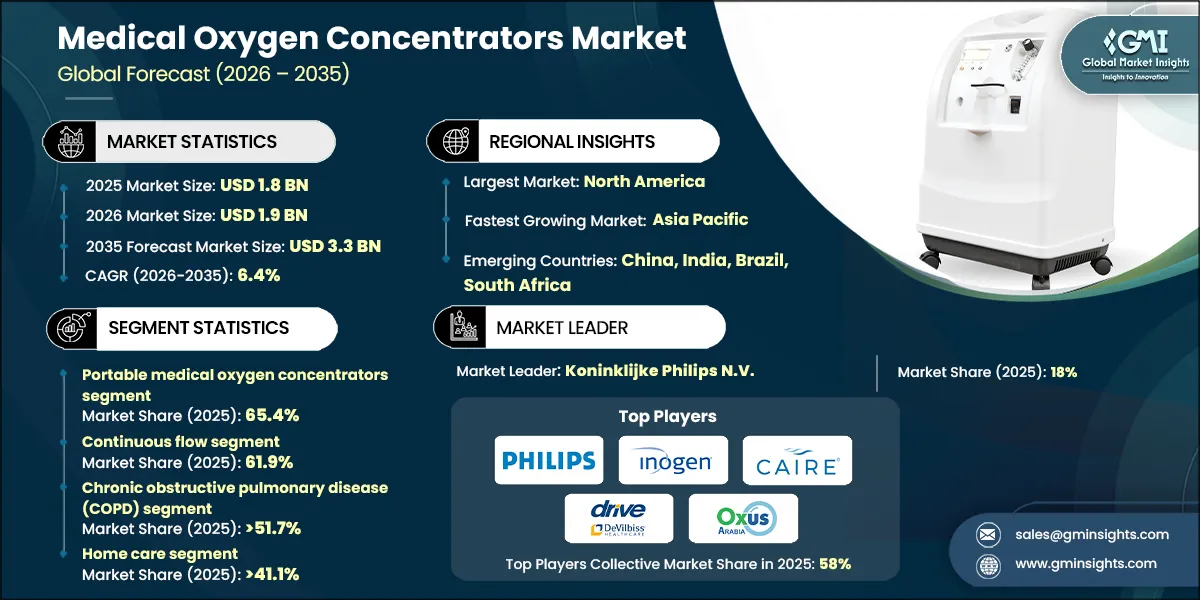
The global medical oxygen concentrators market was valued at USD 1.8 billion in 2025. The market is expected to grow from USD 1.9 billion in 2026 to USD 3.3 billion in 2035, at a CAGR of 6.4% during the forecast period, according to the latest report published by Global Market Insights Inc. The market for medical oxygen concentrators has been growing significantly worldwide due to an increasing number of people prone to chronic respiratory disease and an escalating demand for effective oxygen therapeutic solutions. With a surge in the global prevalence of an aging population, an increasing number of people with chronic obstructive pulmonary disease (COPD), and a growing need for cost-effective health care solutions, oxygen concentrators have become an essential part of respiratory care.
Medical Oxygen Concentrators Market Key Takeaways
Market Size & Growth
- 2025 Market Size: USD 1.8 Billion
- 2026 Market Size: USD 1.9 Billion
- 2035 Forecast Market Size: USD 3.3 Billion
- CAGR (2026–2035): 6.4%
Regional Dominance
- Largest Market: North America
- Fastest Growing Region: Asia Pacific
Key Market Drivers
- Globally increasing elderly population base.
- Rising COPD prevalence worldwide.
- Increasing awareness of home healthcare solutions.
- Technological innovations in oxygen concentrators.
Challenges
- Stringent regulatory landscape.
- High cost of the device.
Opportunity
- Integration with digital home‑care ecosystems.
Key Players
- Market Leader: Koninklijke Philips N.V. led with over 18% market share in 2025.
- Leading Players: Top 5 players in this market include Koninklijke Philips N.V., Inogen, CAIRE, Drive DeVilbiss Healthcare, OXUS, which collectively held a market share of 58% in 2025.
Get Market Insights & Growth Opportunities
One major factor contributing to market expansion is the ever-increasing aging population worldwide, which is more susceptible to chronic respiratory diseases. As estimated by the World Health Organization, the rate of aging population escalation is rising, and it has been predicted that 80% of the elderly population in 2050 will be found in low and middle-income countries. Interestingly, the year 2020 saw more people aged 60+ than the number of people below five years. This increase in the aging population, coupled with the rising incidence of COPD globally because of increased cigarette smoking, air pollution, and occupational exposures, has helped drive the oxygen concentrators market steadily. The major players in this market are Koninklijke Philips N.V., Inogen, CAIRE, Drive DeVilbiss Healthcare, OXUS.
The medical oxygen concentrators market is witnessing growth, expanding from USD 1.7 billion in 2022 to USD 1.8 billion in 2024. The growth of the market is strongly linked to the escalating global burden of chronic obstructive pulmonary disease (COPD), a condition that significantly impairs respiratory function and often necessitates long-term oxygen therapy. According to the World Health Organization (WHO), COPD is the fourth leading cause of death worldwide, responsible for 3.5 million deaths in 2021, which accounts for approximately 5% of all global deaths. This alarming statistic highlights the critical need for accessible and reliable oxygen delivery solutions. Oxygen concentrators are proving essential in managing COPD patients by ensuring continuous oxygen supply, reducing hospital admissions, and enabling cost-effective care in home settings, particularly in regions with limited access to centralized oxygen systems or specialized respiratory care.
A medical oxygen concentrator is a device that provides patients with a steady supply of oxygen when they have trouble breathing due to conditions like COPD, asthma, or other respiratory illnesses. Instead of storing oxygen in heavy cylinders, the concentrator takes in air from the surroundings, removes nitrogen, and delivers concentrated oxygen to the patient through a mask or nasal cannula.
To get key market trends
Medical Oxygen Concentrators Market Trends
- In the medical oxygen concentrators industry, a noticeable transformation is underway, driven by a combination of public health initiatives, technological advancements, and changing patient preferences.
- Governments and healthcare organizations are increasingly promoting awareness about chronic respiratory diseases and home-based care. For example, global programs focusing on COPD management and aging population health emphasize early intervention and home oxygen therapy, creating a strong foundation for market growth.
- Building on this momentum, the rising demand for home healthcare solutions is reshaping respiratory care. Patients now seek convenient, portable, and cost-effective oxygen delivery systems that allow them to maintain independence and reduce reliance on hospital visits.
- This shift in behavior is further accelerated by rapid technological innovations in oxygen concentrators. Modern devices are lighter, more energy-efficient, and equipped with smart features for remote monitoring. For instance, Philips SimplyGo Mini, a portable oxygen concentrator (POC), offers patients an excellent choice for mobility and comfort, combining lightweight design with reliable oxygen delivery. Such advancements make oxygen therapy more accessible and user-friendly, aligning with the global trend toward personalized and home-based care.
Medical Oxygen Concentrators Market Analysis
Learn more about the key segments shaping this market
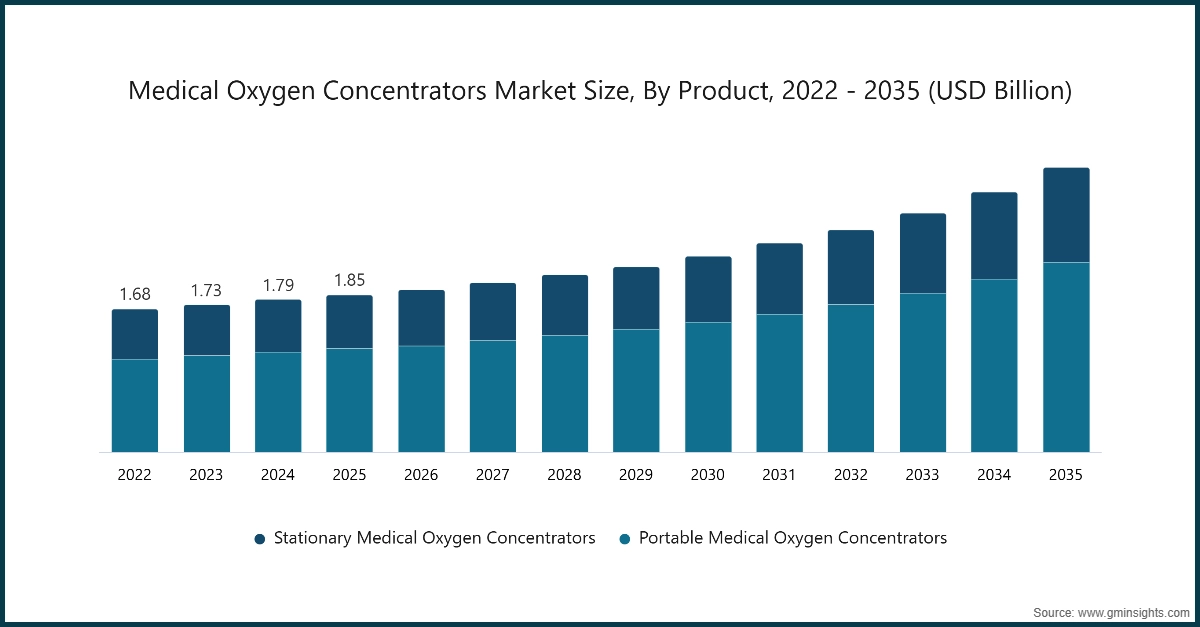
In 2022, the global medical oxygen concentrators industry was valued at USD 1.68 billion. The following year, it saw a slight rise to USD 1.73 billion, and by 2024 the market further climbed to USD 1.79 billion.
The market by product is categorized into portable medical oxygen concentrators and stationary medical oxygen concentrators. The portable medical oxygen concentrators segment held a significant market share of 65.4% in 2025. The segment is expected to exceed USD 2.2 billion by 2035, growing with a CAGR of 6.6% during the forecast period. On the other hand, stationary medical oxygen concentrators segment is expected to grow with a CAGR of 6%.
- The portable medical oxygen concentrators (POC) are designed to deliver reliable oxygen support in a lightweight, travel-friendly format, enabling patients to manage chronic respiratory conditions conveniently at home or on the go.
- Technology innovation is a critical driver of growth in this segment. Leading manufacturers are introducing advanced features such as smart oxygen delivery, extended battery life, and connectivity options for remote monitoring. For example, Drive DeVilbiss iGo2 Portable Oxygen Concentrator incorporates SmartDose Technology, which adjusts oxygen delivery based on patient activity, ensuring optimal therapy and conserving battery life.
- These advancements are transforming oxygen therapy into a more patient-centric solution, reducing dependency on heavy cylinders and frequent hospital visits. As COPD prevalence rises globally and home healthcare adoption accelerates, portable concentrators are evolving into connected, efficient, and user-friendly devices, positioning them as a cornerstone of modern respiratory care.
The medical oxygen concentrators market by technology is categorized into continuous flow and pulse flow. The continuous flow segment held a significant market share of 61.9% in 2025. On the other hand, pulse flow segment is expected to grow fastest with a CAGR of 6.7%.
- Continuous flow systems deliver a steady stream of oxygen, which is essential for patients requiring consistent oxygen therapy, particularly during sleep or in cases of severe respiratory impairment. This technology is widely preferred in hospital settings and home care for its reliability and ability to support higher oxygen flow rates.
- A notable example is the MICROTEK Continuous Flow Oxygen Concentrator, designed to provide consistent oxygen delivery for patients with chronic respiratory conditions.
- Its robust build and dependable performance make it ideal for home healthcare, ensuring patients receive uninterrupted oxygen therapy without relying on heavy cylinders.
- Devices like MICROTEK exemplify the segment’s focus on efficiency, safety, and patient comfort, reinforcing the dominance of continuous flow technology in the market.
Based on application, the market is segmented into chronic obstructive pulmonary disease (COPD), asthma, respiratory distress syndrome and other applications. The chronic obstructive pulmonary disease (COPD) segment accounted for over 51.7% business share in 2025 and is anticipated to witness significant growth during the forecast period.
- The COPD segment dominates the medical oxygen concentrators market globally and is expected to retain its leading position during the forecast period. This dominance is largely due to the continuously increasing burden of COPD across the world. According to the World Health Organization (WHO), COPD is the eighth leading cause of poor health worldwide, measured by disability-adjusted life years (DALYs), and remains a major contributor to global mortality and morbidity.
- Nearly 90% of COPD deaths in individuals under 70 years of age occur in low- and middle-income countries (LMICs), highlighting the disproportionate impact on resource-limited regions. Tobacco smoking accounts for over 70% of COPD cases in high-income countries, while in LMICs, smoking contributes to 30–40% of cases, with household air pollution being a significant additional risk factor.
- The increasing prevalence of COPD, combined with growing awareness of home-based oxygen therapy and technological advancements in concentrators, positions this segment as a key driver of market growth. As healthcare systems prioritize early intervention and cost-effective respiratory care, the adoption of advanced oxygen concentrators especially portable models will continue to accelerate, reinforcing the segment’s dominance in the global market.
Learn more about the key segments shaping this market
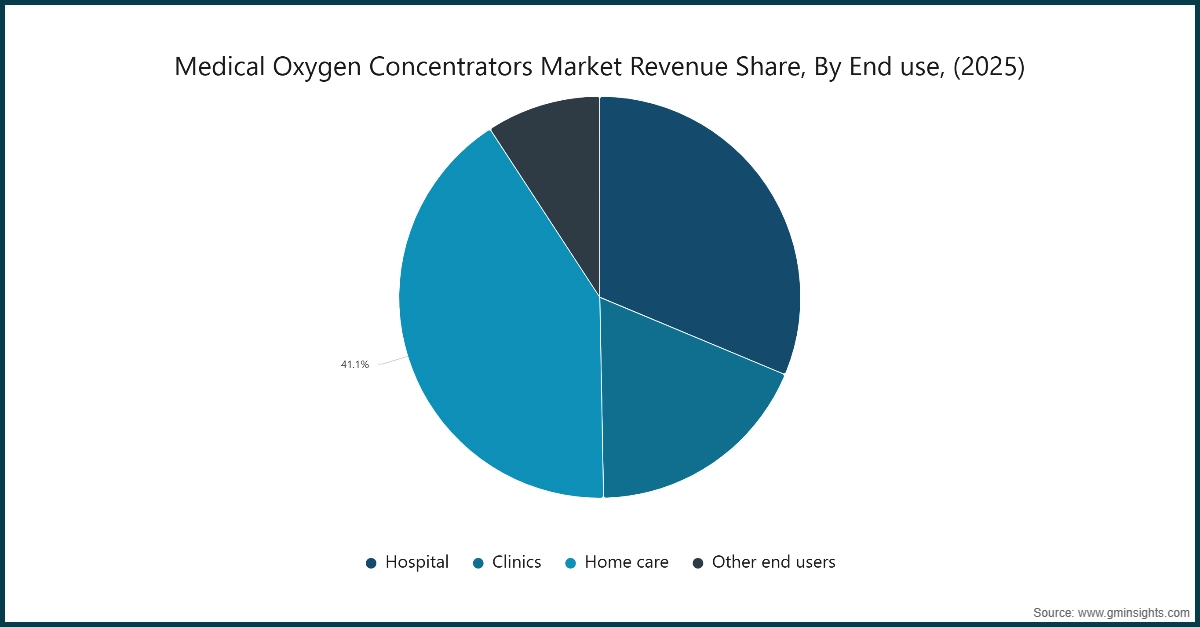
Based on end use, the medical oxygen concentrators market is segmented into hospitals, clinics, home care and other end users. The home care segment accounted for over 41.1% market share in 2025 and is anticipated to witness significant growth during the forecast period.
- Hospitals remain primary end user of medical oxygen concentrators due to the high volume of patients requiring oxygen therapy for acute and chronic respiratory conditions, including COPD, asthma exacerbations, pneumonia, and post-operative recovery.
- Hospitals prefer oxygen concentrators as a cost-effective and reliable alternative to traditional oxygen cylinders, especially in wards without centralized oxygen supply or during emergencies.
- These devices ensure uninterrupted oxygen delivery, reduce logistical challenges associated with cylinder refills, and improve operational efficiency. Additionally, the growing incidence of respiratory diseases and the need for backup oxygen systems in critical care units further drive adoption.
- As healthcare infrastructure expands globally and hospitals prioritize efficient oxygen management, the segment is poised for steady growth.
Looking for region specific data?
North America Medical Oxygen Concentrators Market
- North America remains the leading region in the global medical oxygen concentrators industry, primarily due to the high prevalence of chronic respiratory diseases such as COPD and the strong adoption of advanced healthcare technologies. COPD is a treatable yet progressive lung disease that affects more than 2 million Canadians, with estimates suggesting up to one million more undiagnosed cases.
- Globally, COPD ranks as the third-leading cause of death, and in Canada, it is the second-leading cause of hospitalization, underscoring the urgent need for effective oxygen therapy solutions.
- The region’s well-established healthcare infrastructure, combined with a proactive approach toward home healthcare adoption and technological innovation, further accelerates market growth. Portable oxygen concentrators, such as Philips SimplyGo Mini and Drive DeVilbiss iGo2, are gaining popularity for their lightweight design and smart oxygen delivery features, enabling patients to maintain mobility and independence.
- Additionally, increased awareness about respiratory health, supported by government-led initiatives and educational programs, ensures widespread adoption of oxygen concentrators in both clinical and home settings. As North America prioritizes personalized care and remote monitoring, the integration of oxygen concentrators with telehealth platforms and connected health ecosystems is expected to strengthen the region’s leadership position.
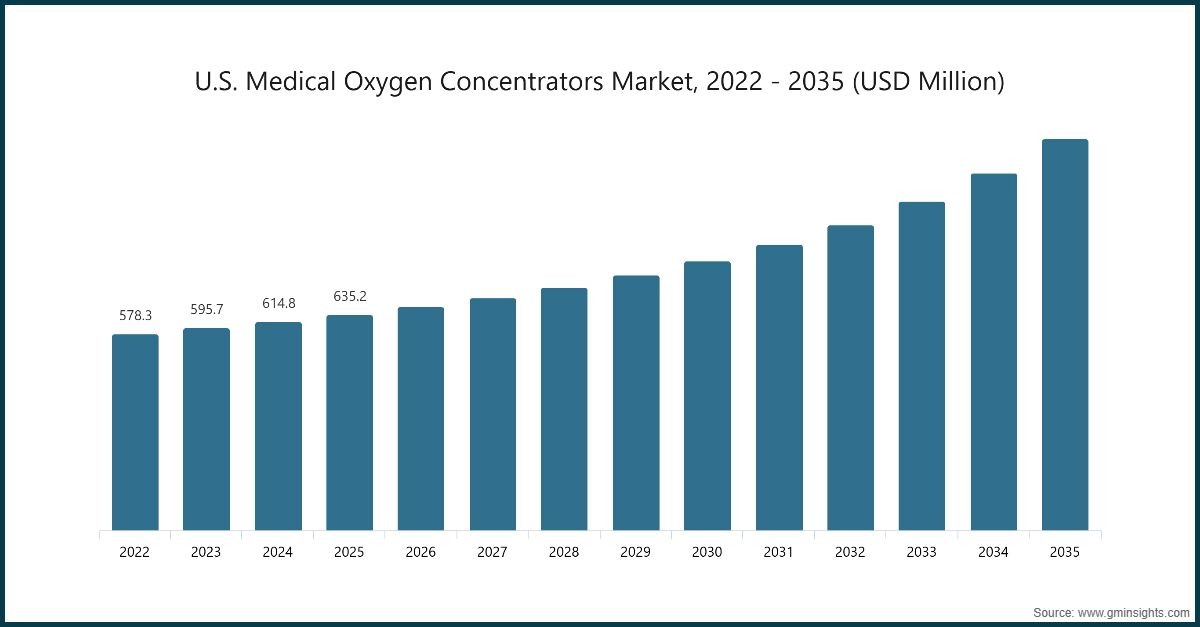
The U.S. medical oxygen concentrators market was valued at USD 578.3 million and USD 595.7 million in 2022 and 2023, respectively. The market size reached USD 635.2 million in 2025, growing from USD 614.8 million in 2024.
- The U.S. represents one of the most advanced and mature markets for medical oxygen concentrators globally, driven by a robust healthcare infrastructure, widespread insurance coverage, and strong emphasis on chronic respiratory disease management.
- The country’s leadership in digital health adoption, including telehealth platforms, remote patient monitoring, and integrated care models, has accelerated the integration of oxygen concentrators into routine clinical workflows and home-based care settings.
- A major demographic and epidemiological factor shaping market growth is the high prevalence of COPD across the U.S. According to the Centers for Disease Control and Prevention (CDC), nearly 16 million U.S. adults are living with COPD, making it one of the top 10 causes of death in the country.
- This significant disease burden underscores the critical need for reliable, portable, and user-friendly oxygen concentrator solutions to support long-term oxygen therapy and improve patient outcomes.
- With strong frameworks and regulatory support for home-based respiratory care, the U.S. is set to remain a dominant force in the global market throughout the forecast period.
Europe Medical Oxygen Concentrators Market
Europe market accounted for USD 497.7 million in 2025 and is anticipated to show lucrative growth over the forecast period.
- Europe plays a pivotal role in the global medical oxygen concentrators industry, supported by its advanced healthcare systems, strong public investment in chronic respiratory disease management, and a rapidly aging population. The region’s well-established public health infrastructure and national strategies for respiratory care have driven widespread adoption of oxygen concentrators across hospitals, clinics, and home-care settings.
- The growing prevalence of chronic respiratory diseases (CRDs), particularly COPD and asthma, remains a key driver for market expansion. According to the World Health Organization (WHO), COPD and asthma are the most prevalent CRDs, and nearly 80% of CRD-related deaths occur in the WHO European Region. Furthermore, with an aging population and multiple intertwined health crises, COPD cases are projected to increase by 23% globally by 2050, signaling a significant rise in oxygen therapy demand.
- European healthcare providers are actively promoting home-based oxygen therapy as part of integrated care pathways, supported by initiatives from organizations. Thus, as awareness grows and digital maturity strengthens, Europe is expected to remain a key contributor to the global market, driven by sustained efforts to expand access, improve care delivery, and leverage technology for better respiratory health outcomes.
Germany dominates the Europe medical oxygen concentrators market, showcasing strong growth potential.
- Germany represents a key segment of the European market, supported by its advanced healthcare infrastructure, strong public investment in chronic respiratory disease management, and commitment to improving home-based care.
- The country’s well-established statutory health insurance system and emphasis on preventive and long-term care have created a favorable environment for widespread adoption of oxygen therapy solutions in hospitals, clinics, and home settings.
- COPD prevalence is a major growth driver. According to the Robert Koch Institute, the annual prevalence of COPD in Germany is 5.8%, affecting men and women in roughly equal numbers. This significant disease burden underscores the critical need for reliable and efficient oxygen concentrators to support continuous therapy and reduce hospital admissions.
- As Germany continues to prioritize preventive and personalized respiratory care, oxygen concentrators are expected to play a central role in improving disease management, reducing complications, and supporting sustainable healthcare delivery.
Asia Pacific Medical Oxygen Concentrators Market
The Asia Pacific market is anticipated to grow at the highest CAGR during the analysis timeframe.
- The Asia-Pacific region is emerging as one of the fastest-growing markets for medical oxygen concentrators, driven by a combination of rising respiratory disease burden, worsening air quality, and expanding healthcare infrastructure. Air pollution has become a leading environmental risk factor for poor health in Asia, contributing significantly to chronic respiratory conditions such as COPD, asthma, and other pulmonary disorders.
- Residents across Central, Southeast, and South Asia are routinely exposed to pollution levels far exceeding World Health Organization (WHO) guidelines, creating an urgent need for reliable oxygen therapy solutions.
- According to global health estimates, air pollution is responsible for millions of premature deaths annually in Asia, impacting all age groups from newborns to the elderly. This escalating health crisis underscores the critical role of oxygen concentrators in both acute and long-term respiratory care.
- The demand is further amplified by the region’s vast and aging population, which faces heightened vulnerability to respiratory complications.
- As healthcare systems evolve and awareness of respiratory health improves, the Asia-Pacific region is poised to become a major contributor to global oxygen concentrator adoption. The market offers immense potential for scalability, innovation, and improved patient outcomes, supported by government initiatives to combat air pollution and strengthen home healthcare infrastructure.
India medical oxygen concentrators market is estimated to grow with a significant CAGR, in the Asia Pacific market.
- India is a cornerstone of the Asia-Pacific medical oxygen concentrators industry, driven by its vast population, high respiratory disease burden, and severe air pollution challenges. The country faces one of the worst air quality crises globally, making oxygen therapy an essential component of healthcare delivery.
- The scale of air pollution in India is alarming. Of the world’s 30 cities with the worst air pollution, 17 are in India, and the capital, New Delhi, ranks as the most polluted capital city worldwide. Concentrations of particulate matter (PM2.5) in Delhi are nearly 10 times higher than World Health Organization (WHO) guidelines, exposing millions to chronic respiratory risks.
- This environmental health crisis significantly increases the prevalence of conditions such as COPD, asthma, and other pulmonary disorders, creating strong demand for oxygen concentrators in both hospital and homecare settings.
- India’s healthcare infrastructure is rapidly evolving, with growing emphasis on home-based care and portable oxygen solutions. Modern concentrators featuring energy-efficient technology, portability, and smart connectivity are gaining traction, enabling continuous oxygen delivery and remote monitoring.
- These innovations are particularly critical in rural and semi-urban areas, where access to advanced respiratory care remains limited. Also, the COVID-19 pandemic further highlighted the importance of oxygen availability, prompting investments in oxygen therapy devices across public and private healthcare facilities.
- With its scale, urgent healthcare needs, and increasing focus on homecare solutions, India is poised to remain a strategic growth driver in the Asia-Pacific market.
Latin America Medical Oxygen Concentrators Market
Brazil leads the Latin America medical oxygen concentrators industry, exhibiting remarkable growth during the analysis period.
- Brazil is emerging as a critical market for medical oxygen concentrators in Latin America, driven by escalating air pollution levels, rising respiratory disease burden, and growing investments in healthcare infrastructure.
- Air pollution kills thousands of Brazilians every year, and the numbers continue to rise due to a combination of industrial emissions, an aging vehicle fleet, and increasingly frequent wildfires. These factors have pushed pollutant levels in many regions to alarming highs, creating a severe public health challenge.
- In Brazil, the health consequences extend far beyond fatalities, contributing to acute and chronic conditions such as cardiovascular diseases, respiratory disorders, heart attacks, diabetes, cognitive decline, dementia, and cancer. The impact on children is especially alarming: global air pollution causes over 700,000 deaths annually in children under five, highlighting the desperate need for prevention and treatment.
- Government initiatives to strengthen healthcare access and improve air quality, combined with rising awareness of respiratory health, are accelerating adoption. Brazil’s large and aging population further amplifies demand for long-term oxygen therapy solutions, positioning the country as a strategic growth engine for the Latin American market.
Middle East and Africa Medical Oxygen Concentrators Market
Saudi Arabia medical oxygen concentrators industry is expected to experience substantial growth in the Middle East and Africa market in 2025.
- Saudi Arabia is emerging as a strategic market for medical oxygen concentrators in the Middle East, driven by its expanding healthcare infrastructure, robust public health initiatives, and alignment with Vision 2030 goals for preventive, personalized, and technology-enabled care. The country’s healthcare transformation emphasizes digital health integration, remote monitoring, and chronic disease management, creating fertile ground for oxygen therapy adoption.
- The rising burden of respiratory diseases is a key growth driver. Saudi Arabia faces increasing prevalence of conditions such as COPD, asthma, and other pulmonary disorders, fueled by urbanization, lifestyle changes, and environmental factors including dust storms and industrial emissions. This trend underscores the urgent need for oxygen concentrators to support acute and long-term respiratory care, particularly for vulnerable populations such as the elderly and those with chronic illnesses.
- Government-backed programs such as the Health Sector Transformation Program (HSTP) have prioritized digitalization, early diagnosis, and integrated care pathways. Hospitals and regional health authorities are actively adopting portable oxygen concentrators, telehealth platforms, and IoT-enabled monitoring systems to enhance accessibility and efficiency.
- With strong government support, rising awareness of respiratory health, and growing emphasis on smart healthcare solutions, Saudi Arabia is positioning itself as a regional hub for advanced respiratory care. These factors make the country a key growth engine for the Middle East market.
Medical Oxygen Concentrators Market Share
The global medical oxygen concentrators industry is shaped by a mix of established leaders and emerging innovators, creating a dynamic and rapidly evolving competitive environment. The top five companies Koninklijke Philips N.V., Inogen, CAIRE, Drive DeVilbiss Healthcare, and OXUS collectively account for a 58% share, driven by their strong product portfolios, advanced technology features, and strategic partnerships across healthcare ecosystems.
To strengthen their market positions, these leading firms are pursuing multi-pronged strategies, including collaborations with hospital networks, partnerships with home healthcare providers, and expansion into high-growth regions such as Asia-Pacific, Latin America, and the Middle East. Their focus on portable oxygen concentrators, energy-efficient systems, and smart connectivity solutions is enabling continuous oxygen delivery, remote monitoring, and improved patient outcomes.
Overall, the market is witnessing intensified competition and greater technological diversity, as both established and emerging players continue to innovate and scale their offerings to meet global demand for affordable, portable, and connected oxygen therapy solutions.
Medical Oxygen Concentrators Market Companies
Prominent players operating in the medical oxygen concentrators industry are as mentioned below:
- BESCO Medical
- BPL Medical Technologies
- CAIRE
- Daikin Industries
- Drive DeVilbiss Healthcare
- ESAB Corporation
- Foshan Keyhub Electronic Industries
- Inogen
- Jiangsu Yuyue Medical Equipment & Supply (Yuwell)
- Koninklijke Philips N.V.
- O2 Concepts
- OXUS
- Precision Medical
- React Health
- Teijin Limited
Koninklijke Philips N.V. is a leading player in the global medical oxygen concentrators market, recognized for its advanced respiratory care solutions and strong presence in both hospital and homecare segments. The company’s flagship product, SimplyGo Mini, is a next-generation portable oxygen concentrator (POC) designed to deliver continuous and pulse flow oxygen therapy in a lightweight, user-friendly format. Its compact design, long battery life, and intuitive interface make it ideal for patients seeking mobility and convenience.
Drive DeVilbiss Healthcare is a prominent player in the market, known for its innovative portable oxygen solutions that enhance patient independence and quality of life. The company’s flagship product, iGo2, is a smart portable oxygen concentrator featuring SmartDose Technology. This advanced feature ensures optimal oxygen therapy while maximizing battery efficiency, making it a preferred choice for active patients.
OXUS is a key player in the global oxygen therapy market, recognized for its focus on high-performance portable oxygen concentrators. The company offers advanced oxygen concentrator solutions designed for reliability, portability, and ease of use. OXUS devices are engineered to deliver consistent oxygen flow with energy-efficient technology, catering to both homecare and travel needs. Their commitment to innovation positions OXUS as a strong competitor in the growing portable oxygen segment.
Medical Oxygen Concentrators Market Report Attributes
| Key Takeaway | Details |
|---|---|
| Market Size & Growth | |
| Base Year | 2025 |
| Market Size in 2025 | USD 1.8 Billion |
| Market Size in 2026 | USD 1.9 Billion |
| Forecast Period 2026-2035 CAGR | 6.4% |
| Market Size in 2035 | USD 3.3 Billion |
| Key Market Trends | |
| Drivers | Impact |
| Globally increasing elderly population base | The rapid rise in the 60 population increases the pool of patients with chronic respiratory conditions and hypoxemia, expanding long?term oxygen therapy (LTOT) demand in home and institutional settings. |
| Rising COPD prevalence worldwide | COPD’s high mortality and morbidity translate into sustained demand for oxygen delivery, especially in regions with high smoking rates and air pollution. |
| Increasing awareness of home healthcare solutions | Payers and providers shift care to the home to lower costs and improve patient comfort, supporting concentrator penetration in home care and community programs. |
| Technological innovations in oxygen concentrators | Lighter form factors, longer battery life, improved sieve technology, and smart connectivity enhance safety and convenience, raising adoption and adherence. |
| Pitfalls & Challenges | Impact |
| Stringent regulatory landscape | Compliance with standards and regional device registrations increases time to market and cost. |
| High cost of the device | Advanced portable units with dual?mode delivery and connectivity carry premium pricing, limiting access in low?resource settings. |
| Opportunities: | Impact |
| Integration with digital home‑care ecosystems | Pairing concentrators with telehealth, RPM platforms, and caregiver apps enables real‑time saturation/usage data, early intervention, and value‑based care models |
| Market Leaders (2025) | |
| Market Leader |
18% market share |
| Top Players |
Collective market share is 58% in 2025 |
| Competitive Edge |
|
| Regional Insights | |
| Largest Market | North America |
| Fastest growing market | Asia Pacific |
| Emerging countries | China, India, Brazil, South Africa |
| Future outlook |
|
What are the growth opportunities in this market?
Medical Oxygen Concentrators Industry News
- In June 2025, Inogen introduced the Voxi 5 Stationary Oxygen Concentrator, a new solution designed to combine affordability and durability while setting a new standard in oxygen therapy. This launch aims to improve access to high-quality oxygen therapy for long-term care patients in the U.S., reinforcing Inogen’s commitment to advancing respiratory care through innovative and patient-centric solutions.
- In January 2025, CAIRE announced the addition of the IntenOxy 5 Stationary Oxygen Concentrator to its respiratory care portfolio at its global manufacturing headquarters north of Atlanta. This advanced device delivers effective oxygen therapy with up to 95.5% concentration and flow settings ranging from 0.5 to 5 liters per minute (LPM), addressing a wide range of prescription needs and reinforcing CAIRE’s commitment to innovation in long-term respiratory care.
The medical oxygen concentrators market research report includes in-depth coverage of the industry with estimates and forecast in terms of revenue in USD million from 2022 - 2035 for the following segments:
Market, By Product
- Portable medical oxygen concentrators
- Stationary medical oxygen concentrators
Market, By Technology
- Continuous flow
- Pulse flow
Market, By Application
- Chronic obstructive pulmonary disease (COPD)
- Asthma
- Respiratory distress syndrome
- Other applications
Market, By End Use
- Hospitals
- Clinics
- Home care
- Other end users
The above information is provided for the following regions and countries:
North America
- U.S.
- Canada
Europe
- Germany
- UK
- France
- Spain
- Italy
- Netherlands
Asia Pacific
- China
- India
- Japan
- Australia
- South Korea
Latin America
- Brazil
- Mexico
- Argentina
Middle East and Africa
- South Africa
- Saudi Arabia
- UAE
Frequently Asked Question(FAQ) :
What is the medical oxygen concentrators market size in 2025?
The market size for medical oxygen concentrators was valued at USD 1.8 billion in 2025. The increasing prevalence of chronic respiratory diseases and the aging population are key factors driving market growth.
What is the market size of the medical oxygen concentrators industry in 2026?
The market size for medical oxygen concentrators reached USD 1.9 billion in 2026, reflecting steady growth driven by rising demand for cost-effective respiratory care solutions.
What is the projected value of the medical oxygen concentrators market by 2035?
The market size for medical oxygen concentrators is expected to reach USD 3.3 billion by 2035, growing at a CAGR of 6.4%. This growth is fueled by technological advancements, increasing adoption of home healthcare solutions, and the rising prevalence of COPD.
What was the market share of the portable medical oxygen concentrators segment in 2025?
The portable medical oxygen concentrators segment accounted for 65.4% of the market in 2025. Its dominance is supported by the growing demand for mobility-focused oxygen therapy and advancements in lightweight, portable designs.
What is the growth outlook for the stationary medical oxygen concentrators segment from 2026 to 2035?
The stationary medical oxygen concentrators segment is projected to grow at a CAGR of 6% during the forecast period. Increasing use in institutional settings and advancements in continuous flow technology are driving this growth.
Which technology segment is expected to grow the fastest in the medical oxygen concentrators market?
The pulse flow technology segment is expected to grow at the fastest rate, with a CAGR of 6.7% during the forecast period. Its growth is driven by increasing adoption in portable devices and advancements in energy-efficient delivery systems.
What was the market size of the U.S. medical oxygen concentrators industry in 2025?
The U.S. medical oxygen concentrators market was valued at USD 635.2 million in 2025, reflecting steady demand supported by rising respiratory disorders and increased adoption of home healthcare solutions.
What are the upcoming trends in the medical oxygen concentrators industry?
Key trends include advancements in portable oxygen concentrators, integration with telehealth platforms, smart connectivity features, and the development of energy-efficient devices. Increasing focus on home-based healthcare and real-time monitoring solutions is also shaping the market.
Who are the key players in the medical oxygen concentrators market?
Prominent players include Koninklijke Philips N.V., Inogen, CAIRE, Drive DeVilbiss Healthcare, OXUS, BESCO Medical, BPL Medical Technologies, Daikin Industries, ESAB Corporation, Foshan Keyhub Electronic Industries, Jiangsu Yuyue Medical Equipment & Supply (Yuwell), O2 Concepts, Precision Medical, React Health, and Teijin Limited.
Medical Oxygen Concentrators Market Scope
Related Reports