Summary
Table of Content

Male Hypogonadism Market
Get a free sample of this report
Form submitted successfully!
Error submitting form. Please try again.
Thank you!
Your inquiry has been received. Our team will reach out to you with the required details via email. To ensure that you don't miss their response, kindly remember to check your spam folder as well!
Request Sectional Data
Thank you!
Your inquiry has been received. Our team will reach out to you with the required details via email. To ensure that you don't miss their response, kindly remember to check your spam folder as well!
Form submitted successfully!
Error submitting form. Please try again.
Male Hypogonadism Market Size
The rising incidence of hypogonadism is a major driving factor for the growth of the market. For example, based on the Baltimore Aging Longitudinal study, low testosterone levels impact 10% of men in their 50s, 20% in their 60s, and 30% in their 70s. Therefore, these numbers demonstrate the rising demand for diagnostic and treatment solutions and awareness to mitigate their effects on overall health and wellness.
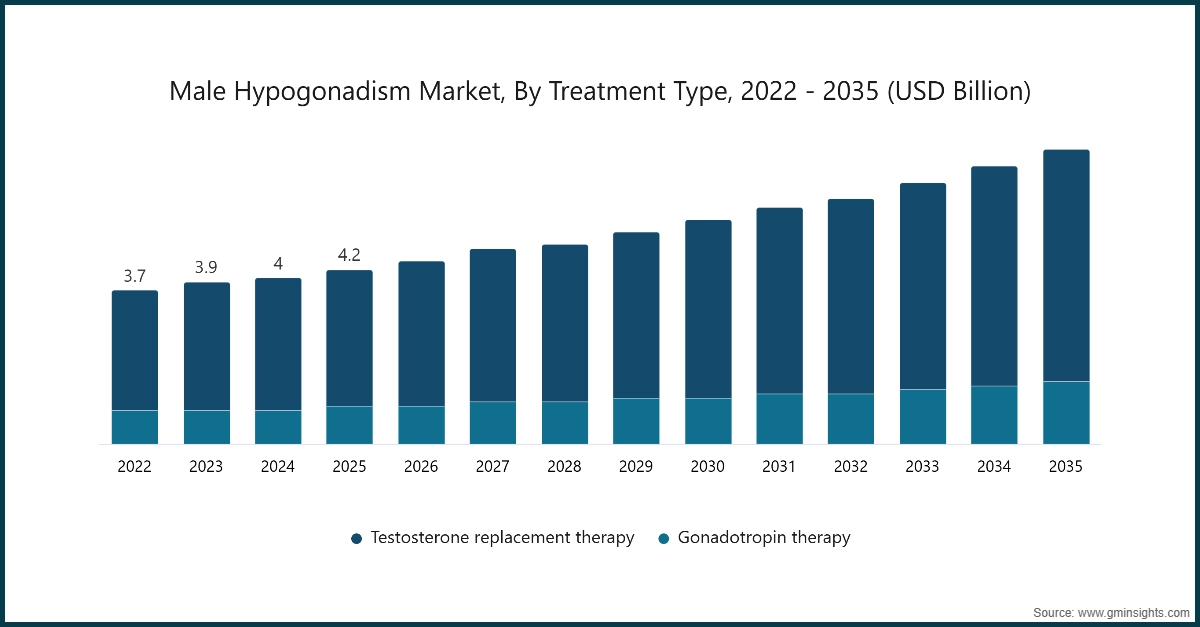
The market has expanded from USD 3.7 billion in 2022 to USD 4 billion in 2024. The rising global aging population is fueling the rising incidence of late-onset hypogonadism. For example, based on the World Health Organization (WHO), the population aged 80 years and older is projected to triple between 2020 and 2050, reaching 426 million. With older men being more prone to the symptoms of low testosterone, this rising population is fueling the demand for diagnostic testing and treatment solutions, which is significantly affecting the healthcare requirements for the management of male hypogonadism.
Additionally, the growing awareness of men’s health and wellness has led to expanded initiatives that are focusing on male hypogonadism diagnosis and treatment. Thus, healthcare providers, government agencies, and private organizations are focusing on spreading awareness, investing in education campaigns, and organizing preventive care programs to address these hormonal imbalances in men. For instance, the National Institutes of Health (NIH) and the American Urological Association (AUA) have introduced guidelines and awareness programs regarding the early detection and management of testosterone deficiency. Moreover, the top 5 players in this market are Bayer AG, Besins Healthcare, Pfizer, Merck, and Endo Pharmaceuticals.
Male Hypogonadism Market Key Takeaways
Market Size & Growth
- 2025 Market Size: USD 4.2 Billion
- 2026 Market Size: USD 4.4 Billion
- 2035 Forecast Market Size: USD 7.1 Billion
- CAGR (2026–2035): 5.4%
Regional Dominance
- Largest Market: North America
- Fastest Growing Region: Asia Pacific
Key Market Drivers
- Increasing awareness and diagnosis.
- Rising incidence of hypogonadism.
- Advancements in testosterone replacement therapies (TRT).
- Growth in men’s health and wellness programs.
Challenges
- Safety concerns and side effects.
- Stringent regulatory compliance.
Opportunity
- Expansion of telemedicine‑based TRT platforms.
Key Players
- Market Leader: Besins Healthcare led with over 12% market share in 2025.
- Leading Players: Top 5 players in this market include Bayer AG, Besins Healthcare, Pfizer, Merck, Endo Pharmaceuticals, which collectively held a market share of 42% in 2025.
Get Market Insights & Growth Opportunities
Male hypogonadism is a type of medical condition where the body produces an insufficient amount of testosterone or experiences impaired testicular function. The testis is responsible for making testosterone and generating sperm. If they fail to perform these functions appropriately, it leads to physical, sexual, and psychological symptoms.
The global male hypogonadism market was estimated at USD 4.2 billion in 2025. The market is expected to grow from USD 4.4 billion in 2026 to USD 7.1 billion by 2035 at a CAGR of 5.4%, according to the latest report published by Global Market Insights Inc.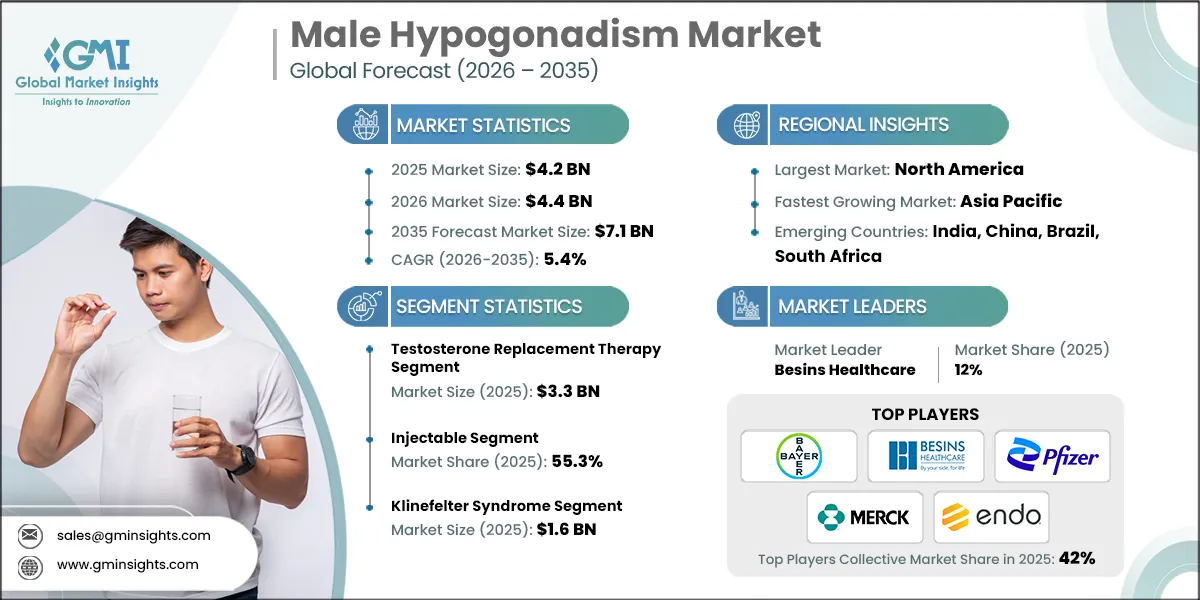
To get key market trends
Male Hypogonadism Market Trends
- Testosterone replacement therapy (TRT) has experienced significant innovations in recent years, which provide effective, safer, and convenient treatment options for individuals suffering from male hypogonadism. Advancements in drug formulations, delivery methods, personalized treatment plans, and digital health integration are transforming the management of testosterone deficiency.
- Pharmaceutical companies are developing new testosterone formulations and treatments that provide long-lasting effects and improved absorption. For instance, in March 2022, the FDA approved testosterone undecanoate by Antares Pharma, Inc., for testosterone replacement therapy (TRT) for conditions associated with a deficiency or absence of endogenous testosterone, or hypogonadism in adult patients.
- Additionally, innovative delivery methods are expanding the convenience and effectiveness of TRT. Subcutaneous implants, a notable example of this is FDA-approved Testopel, which provides sustained testosterone release for up to six months, minimizing the need for frequent administration.
- Similarly, intranasal testosterone, such as Natesto, provides a quick and discreet option, bypassing skin absorption and reducing the risk of accidental transfer to others. These delivery advancements allow for greater flexibility in treatment.
- Further, the individualization of TRT is becoming more common, with microdosing strategies and tailored treatment plans improving patient adherence while minimizing side effects, which include erythrocytosis and cardiovascular risks, thus contributing to the market growth.
Male Hypogonadism Market Analysis
Learn more about the key segments shaping this market
Based on treatment type, the market is bifurcated into testosterone replacement therapy and gonadotropin therapy. The testosterone replacement therapy held revenue of USD 3.3 billion in 2025, and the segment is poised for significant growth at a CAGR of 5.5% during the forecast period.
- Testosterone plays a vital role in male sexual health, which influences libido, erectile function, and overall sexual satisfaction. Thus, testosterone replacement therapy (TRT) helps to restore normal testosterone levels, which improves sexual drive, enhances better erectile function, and orgasmic response.
- Additionally, healthcare policies and regulatory frameworks that support TRT availability have boosted market access and encouraged research and development initiatives.
- For instance, in August 2022, the Food and Drug Administration (FDA) approved Kyzatrex (testosterone undecanoate) for testosterone replacement therapy in adult males with conditions related to a deficiency or absence of endogenous testosterone. This regulatory support has strengthened the foundation for continued therapeutic advancement in testosterone therapy.
- Further, testosterone is influential in fat metabolism and helps in fat redistribution. Thus, low testosterone levels are linked to increased visceral fat accumulation. So, testosterone replacement therapy has shown positive results in minimizing body fat percentage and also improves metabolic function, which helps in enhancing insulin sensitivity.
- Moreover, research into testosterone's effects on various health conditions and its therapeutic applications has enabled the development of improved treatments, such as testosterone replacement therapy. These research developments have contributed to more targeted and effective treatment approaches for patients with testosterone deficiency.
Based on the route of administration, the male hypogonadism market is segmented into injectable, topical, and oral. The injectable segment accounted for a revenue share of 55.3% with revenue of USD 2.3 billion in 2025.
- Injectable testosterone ensures stable hormone levels, minimizing mood swings, fatigue, and libido fluctuations compared to the oral or topical form.
- Injectable therapies such as testosterone enanthate and testosterone cypionate have shown effectiveness in restoring testosterone levels. Their reliability and proven results ensure their steady use among patients and healthcare providers.
- Additionally, injectable testosterone allows for precise dosage adjustments, which helps physicians to treat patients according to their specific needs. This flexibility helps in optimizing testosterone levels while reducing the associated side effects.
- Further, research into testosterone therapy benefits and new injectable formulations help to drive the market expansion. For instance, in October 2023, Aurobindo Pharma received approval from the US Food and Drug Administration (FDA) to manufacture and market Testosterone Cypionate injection in concentrations of 100 mg/mL and 200 mg/mL in multi-dose vials, as well as 200 mg/mL in single-dose vials.
- Thus, this product was indicated for replacement therapy in males with primary hypogonadism and hypogonadotropic hypogonadism. Such approvals are expected to significantly boost the growth of the injectable segment over the forecast period.
Learn more about the key segments shaping this market
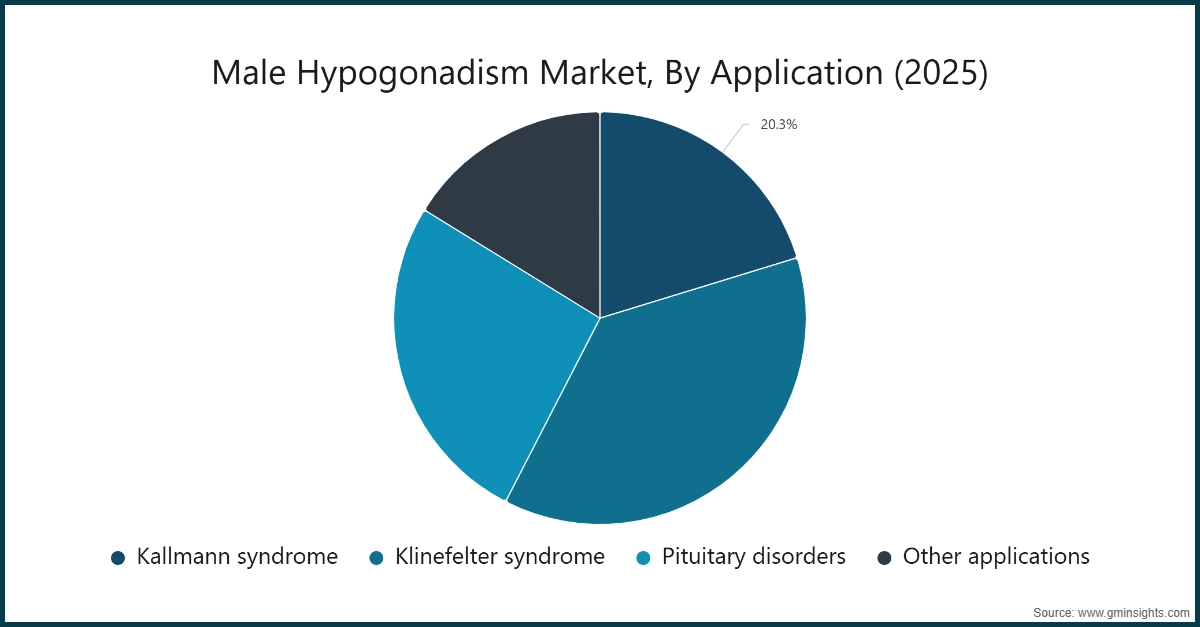
- Klinefelter syndrome is a genetic condition in which males have an extra X chromosome, which leads to testosterone deficiency and symptoms associated with it.
- For instance, according to the March 2024 article of the National Organization for Rare Disorders, Klinefelter syndrome, specifically the 47, XXY variant, is the most common chromosomal abnormality in males, occurring in approximately 1 out of every 500 males, indicating an increasing demand for treatment options.
- In addition, increased awareness of Klinefelter syndrome and its link to hypogonadism has led to higher diagnosis rates, as healthcare providers are now better able to recognize symptoms and implement appropriate treatments.
- Moreover, innovations in testosterone replacement therapy (TRT) formulations and delivery methods have increased treatment options for patients with Klinefelter syndrome. These advanced treatments provide improved safety and effectiveness, accelerating greater adoption of therapy among affected individuals.
Looking for region specific data?
North America Male Hypogonadism Market
The North America male hypogonadism industry is accounted for USD 1.8 billion in revenues in 2025, forecasted to reach USD 3.3 billion by 2035.
- North America accounted for the largest share of the global male hypogonadism market in 2024, driven by strong clinical awareness, high utilization of testosterone replacement therapies (TRT), and widespread availability of advanced hormonal diagnostic services. The region benefits from mature men’s health ecosystems, including urology clinics, endocrinology centers, and expanding telehealth‑based TRT programs.
- A well‑established healthcare infrastructure, extensive coverage for hormone testing, and a robust presence of key pharmaceutical manufacturers contribute to the region’s leadership.
- Advanced delivery options, including transdermal gels, long‑acting injectables, and subcutaneous implants, are widely adopted in both primary care and specialty settings across the U.S. and Canada.
- With rising awareness of men’s hormonal health, ongoing innovation in testosterone formulations, and increasing adoption of digital health–enabled hormone management, North America is expected to maintain its leading position in the global male hypogonadism market throughout the forecast period.
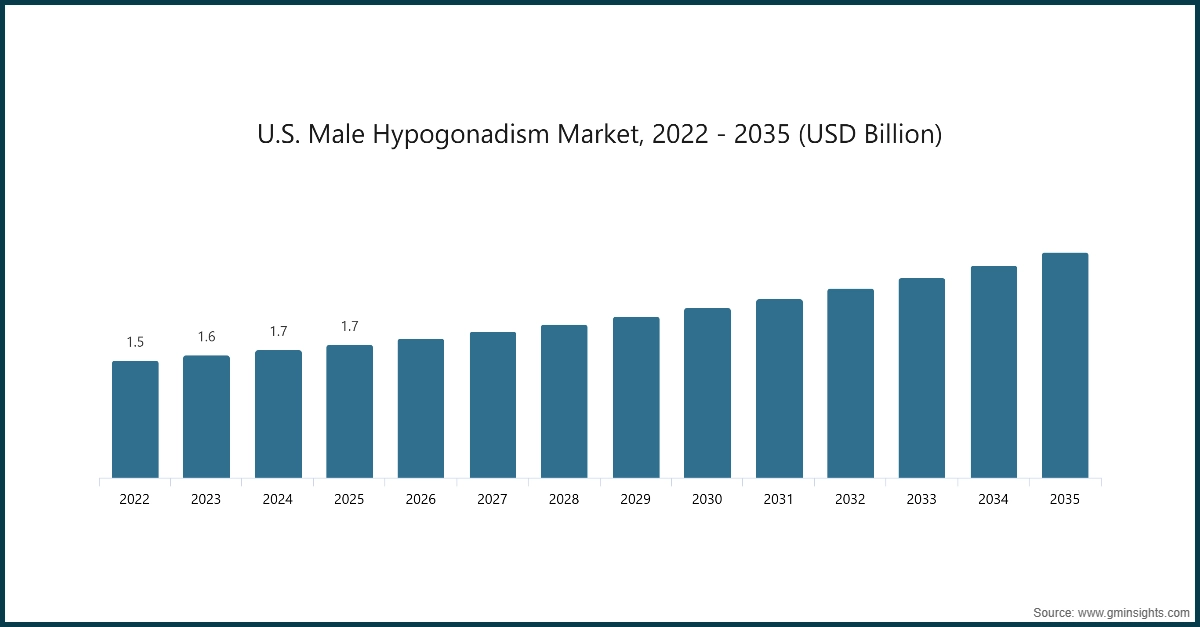
The U.S. dominated the North America market with the largest revenue of USD 1.7 billion in 2025.
- This growth is largely attributed to the rising aging U.S. population, particularly men over 40 years, experiencing significant hormonal changes.
- For instance, according to the U.S. Census Bureau, the number of individuals in the U.S. aged 65 and older is projected to reach 77 million by 2034, representing a substantial demographic shift. This demographic trend suggests a sustained increase in hypogonadism diagnosis and treatment requirements.
- In addition to this, the U.S. Food and Drug Administration (FDA) has implemented rigorous standards for treatment options such as testosterone replacement therapy or other pharmaceutical solutions, driving the development of high-quality products with enhanced safety, efficacy, and stability to meet the growing demand for effective treatments.
Europe Male Hypogonadism Market
- Europe accounted for a significant share of the global male hypogonadism industry in 2024 and is projected to witness steady growth over the forecast period.
- Europe holds a strong and influential position in the global market, supported by advanced healthcare infrastructure, established clinical practice guidelines for testosterone deficiency, and widespread access to hormone testing and testosterone replacement therapies (TRT).
- The region’s structured approach to primary and specialty care enables consistent diagnosis and management of testosterone deficiency across diverse patient populations.
- A key factor driving TRT demand in Europe is the rising burden of age‑related hypogonadism, obesity, metabolic syndrome, and chronic diseases. Additionally, with Europe’s rapidly aging population, the prevalence of symptomatic testosterone deficiency is expected to continue rising.
- With increasing focus on healthy aging, expanding access to modern testosterone delivery systems, and the region’s strong healthcare infrastructure, Europe is expected to maintain a robust and growing presence in the global market throughout the forecast period.
The male hypogonadism market in the UK is expected to experience significant and promising growth from 2026 to 2035.
- The improved access to healthcare services, including primary care and endocrinology, enables better diagnosis and management of male hypogonadism. The availability of testosterone replacement therapy through the National Health Service (NHS) has increased patient access to treatment.
- Additionally, collaborations between pharmaceutical companies in the region have increased the demand for male hypogonadism treatments. For instance, in September 2024, Marius Pharmaceuticals announced a partnership with Numan, a prominent UK-based digital health platform, to integrate KYZATREX (testosterone undecanoate) CIII capsules into Numan's product portfolio. These partnerships have enhanced treatment accessibility and improved patient outcomes in the region.
Asia Pacific Male Hypogonadism Market
The Asia Pacific region is projected to exhibit lucrative growth of around 5.8% during the forecast period.
- Asia Pacific is emerging as one of the fastest-growing regions in the global male hypogonadism market, driven by a rapidly expanding aging male population, rising prevalence of metabolic disorders, and increasing awareness of testosterone deficiency symptoms. Improving access to diagnostic endocrine services is enabling earlier identification and clinical management of hypogonadism.
- A significant catalyst for hypogonadism prevalence in Asia Pacific is the rising burden of obesity, diabetes, and lifestyle-related metabolic dysfunction. These conditions are strongly associated with declining testosterone levels in adult men. As national screening programs and health checkup participation increase, more men are being evaluated for hormonal imbalances, strengthening demand for TRT.
- Countries such as Japan, South Korea, China, and Thailand have rapidly aging male populations, increasing the number of individuals at risk for late-onset hypogonadism. This demographic shift is expected to support long-term market expansion.
Japan male hypogonadism market is anticipated to witness lucrative growth between 2026 - 2035.
- Japan has a massive aging society; according to Statista, as of November 2023, around 36.35 million people in Japan were estimated to be over 65 years of age.
- Therefore, it is expected that an aging society will heavily affect the disease burden in Japan in the near future and correlate with increased cases of late-onset hypogonadism, generating higher demand for diagnostic and therapeutic solutions.
- Additionally, the Japanese pharmaceutical market has adopted advanced testosterone replacement therapy (TRT) options, including formulations that offer heightened safety and patient compliance. These advancements have gained acceptance among patients and healthcare providers, contributing to market expansion.
Latin America Male Hypogonadism Market
Brazil is experiencing significant growth in the male hypogonadism industry.
- The growing burden of metabolic diseases is a major driver of hypogonadism prevalence in Brazil. High rates of obesity, type 2 diabetes, hypertension, and sedentary lifestyles contribute to declining testosterone levels among adult men. As routine health checkups and hormone testing become more common, more men are being clinically diagnosed with testosterone deficiency, increasing demand for TRT.
- Demographic shifts are significantly amplifying TRT demand. Brazil’s population is aging rapidly, and older adults are more likely to experience age‑related testosterone decline. As the proportion of men aged 50 and above continues to rise, the long‑term requirement for hypogonadism diagnosis and treatment is expected to grow. This trend is reinforced by expanding access to private healthcare and increased spending on men’s wellness.
- With a large addressable patient base, growing awareness of men’s hormonal health, rising prevalence of metabolic disorders, and continued improvements in healthcare delivery infrastructure, Brazil is expected to remain a key growth market for male hypogonadism therapies throughout the forecast period.
Middle East and Africa Male Hypogonadism Market
The male hypogonadism industry in Saudi Arabia is expected to experience significant and promising growth from 2026 to 2035.
- Saudi Arabia is also experiencing a shift in population demographics. For instance, the number of people aged 60+ is expected to increase five times from 2 million (5.9% of the total population) in 2020, reaching 10.5 million by 2050.
- Thus, this demographic trend suggests a sustained increase in hypogonadism diagnosis and treatment requirements.
- Additionally, the Saudi Vision 2030 initiative highlights healthcare infrastructure development, which improves access to specialized endocrine care. This includes increased funding and resources for diagnosing and treating conditions such as hypogonadism.
Male Hypogonadism Market Share
The male hypogonadism industry is highly competitive, driven by pharmaceutical companies developing advanced testosterone replacement therapies (TRT) and next‑generation hormone‑modulating treatments. Leading players are strengthening their market positions through diversified product portfolios, innovation in delivery systems, strategic collaborations, and awareness‑building initiatives focused on men’s hormonal health and early diagnosis.
Major companies in the market include Bayer AG, Besins Healthcare, Pfizer, Merck, and Endo Pharmaceuticals, and several emerging regional players. These firms collectively account for a significant share of the global market and continue to invest in improving testosterone formulations, expanding treatment options, and optimizing patient convenience. Their portfolios include transdermal gels, intramuscular injectables, oral formulations, and long‑acting delivery systems to address varying patient needs.
With continuous innovation in delivery systems, deepening clinical partnerships, and rising consumer interest in men’s hormonal health, top players such as Pfizer and Eli Lilly are expected to maintain strong competitive positions. Their focus on product differentiation, advanced formulations, and educational outreach will remain central to driving broader adoption and improving long‑term management outcomes for male hypogonadism.
Male Hypogonadism Market Companies
Some of the eminent market participants operating in the male hypogonadism industry include:
- Antares Pharma
- Acerus Pharmaceuticals
- Aspen Pharmacare
- Aurobindo Pharmaceutical
- Bayer AG
- Besins Healthcare
- Bharat Serums and Vaccines
- Eli Lilly and Company
- Endo Pharmaceuticals
- Lupin Pharmaceuticals
- Merck
- Simple Pharma
- Pfizer
- Teva Pharmaceutical Industries
- Viatris
- Pfizer
Pfizer is a major force in the male hypogonadism market through Depo‑Testosterone, one of the most widely prescribed intramuscular testosterone cypionate formulations globally. The product’s long clinical history, broad prescriber familiarity, and flexible dosing schedule (100–200 mg/mL strengths) reinforce its role as a dependable therapy for restoring testosterone levels in both primary and secondary hypogonadism. Pfizer’s large‑scale manufacturing capacity and extensive distribution network strengthen Depo‑Testosterone’s availability across hospitals, specialty clinics, and retail pharmacies.
Merck holds a strategic advantage in the male hypogonadism landscape through its flagship recombinant gonadotropin GONAL‑f (follitropin alfa), a cornerstone therapy for men with hypogonadotropic hypogonadism requiring stimulation of spermatogenesis. GONAL‑f is FDA‑approved for inducing sperm production in conjunction with hCG therapy, positioning Merck as the leading innovator in hormone‑based fertility and pituitary‑related hypogonadism treatments.
Endo Pharmaceuticals has strengthened its position in the testosterone replacement therapy market through a diversified men’s health portfolio that includes both Fortesta and AVEED, enabling the company to compete across multiple treatment segments.
Male Hypogonadism Market Report Attributes
| Key Takeaway | Details |
|---|---|
| Market Size & Growth | |
| Base Year | 2025 |
| Market Size in 2025 | USD 4.2 Billion |
| Market Size in 2026 | USD 4.4 Billion |
| Forecast Period 2026-2035 CAGR | 5.4% |
| Market Size in 2035 | USD 7.1 Billion |
| Key Market Trends | |
| Drivers | Impact |
| Increasing awareness and diagnosis | Growing public education around men’s hormonal health, digital health platforms, and routine wellness checkups is leading to earlier detection of testosterone deficiency, expanding the patient pool eligible for treatment. |
| Rising incidence of hypogonadism | An aging population, higher obesity levels, and rising prevalence of chronic diseases are increasing the number of men experiencing testosterone deficiency. |
| Advancements in testosterone replacement therapies (TRT) | Development of safer, more convenient, and long‑acting formulations such as transdermal gels, buccal tablets, auto‑injectors, and subcutaneous implants improves treatment adherence and outcomes. |
| Growth in men’s health and wellness programs | Increasing focus on preventive health and lifestyle optimization is strengthening demand for hormone testing and therapy as part of holistic men’s wellness. |
| Pitfalls & Challenges | Impact |
| Safety concerns and side effects | These safety concerns lead to slower adoption, heightened monitoring requirements, and reduced willingness among some patient groups to initiate TRT. |
| Stringent regulatory compliance | Testosterone products face strict regulatory scrutiny to ensure safety, appropriate labeling, and controlled distribution, increasing development and compliance costs for manufacturers. |
| Opportunities: | Impact |
| Expansion of telemedicine‑based TRT platforms | Virtual men’s health clinics simplify screening, prescription, and follow-up, making therapy accessible to underserved or reluctant patient groups. |
| Market Leaders (2025) | |
| Market Leader |
12% market share |
| Top Players |
Collective Market Share is 42% |
| Competitive Edge |
|
| Regional Insights | |
| Largest Market | North America |
| Fastest growing market | Asia Pacific |
| Emerging countries | India, China, Brazil, South Africa |
| Future outlook |
|
What are the growth opportunities in this market?
Male Hypogonadism Industry News
- In March 2022, Antares Pharma announced that the U.S. Food and Drug Administration approved TLANDO (testosterone undecanoate), an oral treatment for testosterone replacement therapy (TRT). This approval marked a significant milestone for the company, expanding its product portfolio and reinforcing its position in the TRT market.
- In February 2021, Simple Pharma acquired Testavan (transdermal testosterone gel 2%) for male hypogonadism and Vitaros (alprostadil cream) for erectile dysfunction (ED) from Ferring Pharmaceuticals, strengthening its portfolio in male health therapies.
The male hypogonadism market research report includes in-depth coverage of the industry with estimates and forecast in terms of revenue in USD Million from 2022 – 2035 for the following segments:
Market, By Treatment Type
- Testosterone replacement therapy
- Gonadotropin therapy
Market, By Route of Administration
- Injectable
- Topical
- Oral
Market, By Application
- Kallmann syndrome
- Klinefelter syndrome
- Pituitary disorders
- Other applications
The above information is provided for the following regions and countries:
- North America
- U.S.
- Canada
- Europe
- Germany
- UK
- France
- Spain
- Italy
- Netherlands
- Asia Pacific
- China
- Japan
- India
- Australia
- South Korea
- Latin America
- Brazil
- Mexico
- Argentina
- Middle East and Africa
- South Africa
- Saudi Arabia
- UAE
Frequently Asked Question(FAQ) :
What is the market size of the male hypogonadism in 2025?
The market size was USD 4.2 billion in 2025, with a CAGR of 5.4% expected through 2035, driven by rising incidence of testosterone deficiency, an aging global population, and growing awareness of men's hormonal health.
What is the projected value of the male hypogonadism industry by 2035?
The male hypogonadism market is expected to reach USD 7.1 billion by 2035, propelled by advancements in testosterone replacement therapies, expansion of telemedicine-based TRT platforms, and increasing adoption of long-acting and personalized treatment formulations.
What is the current male hypogonadism industry size in 2026?
The market size is projected to reach USD 4.4 billion in 2026.
How much revenue did the testosterone replacement therapy segment generate in 2025?
The testosterone replacement therapy segment held revenue of USD 3.3 billion in 2025 and is poised to grow at a CAGR of 5.5% during the forecast period, driven by regulatory support, innovations in drug delivery, and increasing clinical adoption across diverse patient populations.
What was the market share of the injectable route of administration segment in 2025?
The injectable segment accounted for a revenue share of 55.3%, generating USD 2.3 billion in 2025, supported by stable hormone delivery, precise dosage adjustment capabilities, and proven clinical effectiveness of formulations such as testosterone enanthate and cypionate.
Which application segment dominated the male hypogonadism market in 2025?
The Klinefelter syndrome segment dominated the market with the largest revenue of USD 1.6 billion in 2025, driven by its high prevalence as the most common chromosomal abnormality in males and rising diagnosis rates due to increased clinical awareness.
Which region leads the male hypogonadism market 2025?
North America leads the market, accounting for USD 1.8 billion in revenues in 2025 and forecasted to reach USD 3.3 billion by 2035, supported by strong clinical awareness, mature men's health ecosystems, and widespread availability of advanced hormonal diagnostic services.
What are the key trends shaping the male hypogonadism market?
Key trends include innovation in testosterone delivery systems such as long-acting injectables, transdermal gels, and subcutaneous implants, rising adoption of telemedicine-based TRT platforms, personalized microdosing strategies, and growing integration of digital health tools for hormone management.
Who are the key players in the male hypogonadism market?
Key players include Antares Pharma, Acerus Pharmaceuticals, Aspen Pharmacare, Aurobindo Pharmaceutical, Bayer AG, Besins Healthcare, Bharat Serums and Vaccines, Eli Lilly and Company, Endo Pharmaceuticals, Lupin Pharmaceuticals, Merck, Simple Pharma, Pfizer, Teva Pharmaceutical Industries, and Viatris.
Male Hypogonadism Market Scope
Related Reports