Summary
Table of Content

Lions Mane Mushroom Supplements Market
Get a free sample of this report
Form submitted successfully!
Error submitting form. Please try again.
Thank you!
Your inquiry has been received. Our team will reach out to you with the required details via email. To ensure that you don't miss their response, kindly remember to check your spam folder as well!
Request Sectional Data
Thank you!
Your inquiry has been received. Our team will reach out to you with the required details via email. To ensure that you don't miss their response, kindly remember to check your spam folder as well!
Form submitted successfully!
Error submitting form. Please try again.
Lions Mane Mushroom Supplements Market Size
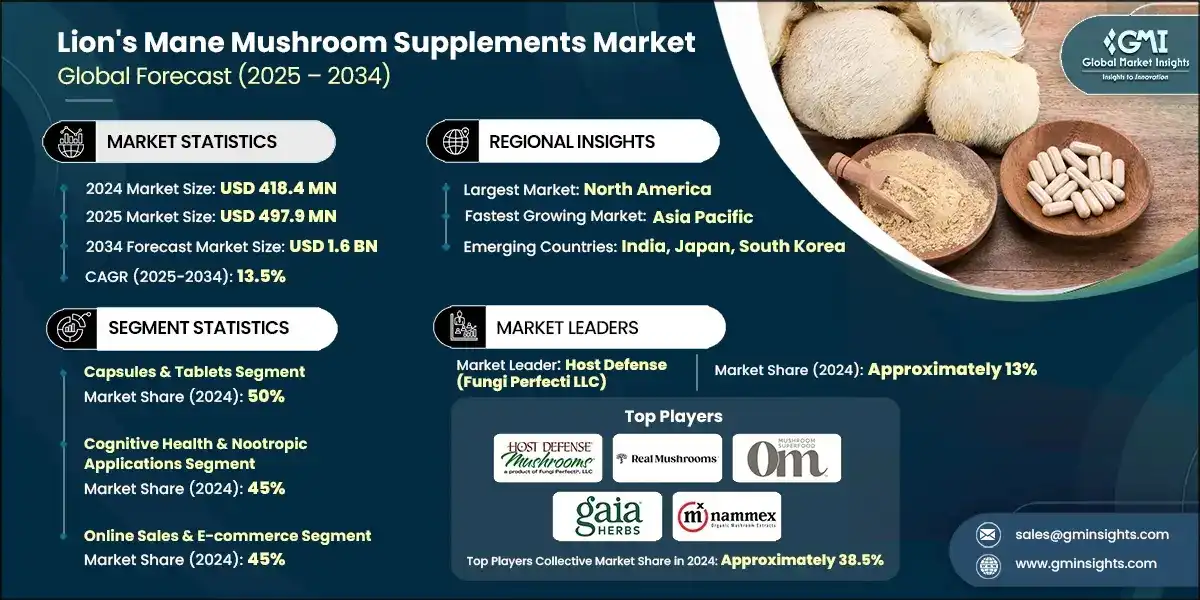
The global lions mane mushroom supplements market size was valued at USD 418.4 million in 2024. The market is expected to grow from USD 497.9 million in 2025 to USD 1.6 billion in 2034, at a CAGR of 13.5%, according to latest report published by Global Market Insights Inc.
Lions Mane Mushroom Supplements Market Key Takeaways
Market Size & Growth
- 2024 Market Size: USD 418.4 Million
- 2025 Market Size: USD 497.9 Million
- 2034 Forecast Market Size: USD 1.6 Billion
- CAGR (2025–2034): 13.5%
Regional Dominance
- Largest Market: North America
- Fastest Growing Region: Asia Pacific
Key Market Drivers
- Rising demand for cognitive health and nootropic supplements.
- Increasing scientific validation and clinical research.
- Expansion of functional foods and beverage applications.
Challenges
- Limited large-scale clinical evidence and standardization.
- High production costs and supply chain complexity.
Opportunity
- Product innovation in delivery formats and formulations.
- Strategic partnerships and clinical research investment.
Key Players
- Market Leader: Host Defense (Fungi Perfecti LLC) led with over 13% market share in 2024.
- Leading Players: Top 5 players in this market include Host Defense (Fungi Perfecti LLC), Real Mushrooms, Om Mushroom Superfood, Gaia Herbs, Nammex (North American Medicinal Mushroom Extracts), which collectively held a market share of 38.5% in 2024.
Get Market Insights & Growth Opportunities
- Lions mane mushroom supplements are derived from Hericium erinaceus, a medicinal mushroom with a long history of use in traditional Asian medicine. These supplements contain bioactive compounds including hericenones (found in fruiting bodies) and erinacines (found in mycelium), which have been shown in preclinical studies to stimulate nerve growth factor (NGF) synthesis and support neuronal health.
- The supplements also contain polysaccharides (β-glucans), ergothioneine, and other bioactive metabolites that contribute to their health-promoting properties. Lions mane supplements are increasingly recognized for their potential cognitive health benefits, neuroprotective effects, and support for mental wellness, making them popular ingredients in nootropic formulations, functional foods, and wellness products.
- The growing consumer interest in natural cognitive health solutions is a primary driver of market expansion. According to research published by the National Institutes of Health and academic institutions, lions mane compounds promote neurite outgrowth, enhance neurotrophic signaling pathways (NGF, BDNF), and exhibit antioxidant and anti-inflammatory properties in preclinical models.
- While human clinical evidence remains limited to small pilot studies, early randomized controlled trials have reported improvements in mild cognitive impairment and mood parameters, generating significant consumer and industry interest. The aging global population and rising prevalence of cognitive decline concerns are accelerating demand for preventive and supportive nutritional interventions.
- Lions mane is among the most popular species, particularly for cognitive and mood support applications. The convergence of wellness trends increased scientific research, social media influence, and product innovation (including convenient formats such as gummies, beverages, and advanced delivery systems) is driving mainstream adoption beyond traditional supplement users.
- Technological advances in cultivation, extraction, and standardization are improving product quality and consistency. Liquid fermentation methods enable rapid production of mycelium enriched with erinacines, while advanced extraction techniques (enzymatic hydrolysis, supercritical fluid extraction, membrane filtration) enhance bioactive compound concentration and bioavailability. Companies are increasingly investing in standardized extracts with quantified levels of key compounds (erinacines, hericenones, β-glucans) to support quality claims and differentiate products in a competitive market. However, the lack of certified analytical standards and regulatory frameworks for health claims remains a challenge for the industry
To get key market trends
Lions Mane Mushroom Supplements Market Trends
- The lions mane mushroom supplements industry is experiencing dynamic growth fueled by scientific research, consumer wellness trends, and product innovation. Advances in extraction and processing technologies—including dual-extraction methods (water and alcohol), enzymatic hydrolysis, supercritical CO2 extraction, and liquid fermentation for mycelium production—are enabling manufacturers to produce high-potency extracts with enhanced bioavailability and standardized bioactive profiles. These technologies improve the concentration of key compounds such as erinacines, hericenones, and beta-glucans, which are linked to cognitive and neuroprotective benefits in preclinical studies.
- Regulatory and quality standards are shaping market dynamics and consumer trust. While lions mane supplements are generally marketed as dietary supplements under frameworks such as the U.S. Dietary Supplement Health Education Act (DSHEA) and are classified as novel foods or traditional herbal products in various international markets, the lack of harmonized regulatory standards for health claims and bioactive content specifications presents both challenges and opportunities.
- Leading companies are proactively adopting third-party testing, transparent labeling (specifying fruiting body vs. mycelium content, extraction ratios, and beta-glucan percentages), and certifications (organic, non-GMO, GMP) to build consumer confidence and differentiate in a crowded market. Regulatory scrutiny is increasing, particularly regarding substantiation of cognitive health claims, driving demand for clinical evidence and standardized extracts.
- Product innovation is a defining trend as manufacturers develop diverse formulations and delivery formats to meet evolving consumer preferences. Beyond traditional capsules and powders, the market is seeing rapid growth in functional beverages (mushroom coffee, teas, ready-to-drink nootropic shots), gummies (appealing to younger demographics and those seeking convenient, palatable options), liposomal and nano-encapsulated formulations (designed to enhance absorption and bioavailability), and combination products (blending lions mane with other adaptogens, nootropics, or vitamins for synergistic effects).
- The incorporation of lions mane into mainstream food products—protein bars, snack foods, and plant-based meat alternatives—is expanding its reach beyond the supplement aisle. Sustainable sourcing practices, including the use of organic cultivation substrates and upcycling of agricultural by-products, resonate with environmentally conscious consumers and align with broader sustainability goals in the natural products industry.
Lions Mane Mushroom Supplements Market Analysis
Learn more about the key segments shaping this market
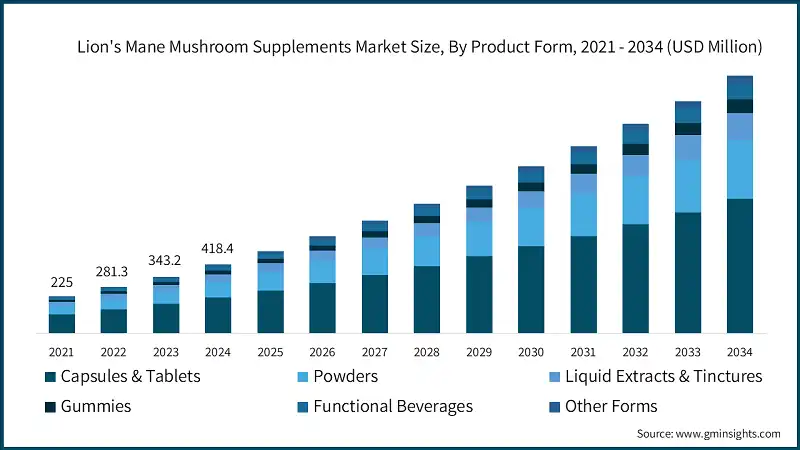
Based on product form, the lions mane mushroom supplements market is segmented into capsules & tablets, powders, liquid extracts & tinctures, gummies, functional beverages, and other forms. Capsules & tablets dominated the market with an approximate market share of 50% in 2024 and is expected to grow with a CAGR of 13.3% till 2034.
- Capsules & Tablets hold the largest share of the lions mane mushroom supplements market. These formats are preferred by consumers due to their convenience, precise dosing, portability, and long shelf life. Capsules and tablets are particularly popular among health-conscious adults seeking daily cognitive support and neuroprotective benefits without the taste or preparation requirements of other formats.
- The format allows for standardized extract delivery, often featuring dual-extracted lions mane (combining water and alcohol extraction) with quantified beta-glucan content and bioactive compounds. Encapsulation technology also enables the inclusion of complementary ingredients such as other nootropics, vitamins, or adaptogens in combination formulas. The established consumer familiarity with capsule and tablet supplements, coupled with their suitability for subscription models and online distribution, reinforces their market dominance.
- Powders accounted for approximately 22% of the lions mane mushroom supplements market share in 2024. This format appeals to consumers seeking versatility and value, as powders can be easily incorporated into smoothies, coffee, teas, protein shakes, and functional foods. Powder formulations are popular in the wellness and biohacking communities, where users prefer customizable dosing and the ability to blend multiple supplements.
- lions mane powders are available in various forms including whole fruiting body powder, pure mycelium powder, and concentrated extracts with standardized polysaccharide or erinacine content. The format is cost-effective for manufacturers and often positioned at accessible price points, making it attractive for budget-conscious consumers and bulk purchasers. However, the earthy, slightly bitter taste of lions mane can be a barrier for some users, driving innovation in flavored powder blends and encapsulation alternatives.
- Liquid Extracts & Tinctures represented approximately 10% of the lions mane mushroom supplements market in 2024. These formats offer rapid absorption and flexible dosing, appealing to consumers seeking fast-acting cognitive support or those who prefer sublingual administration. Tinctures typically use alcohol or glycerin as extraction solvents, concentrating bioactive compounds including hericenones and polysaccharides. The liquid format is favored by herbalists, naturopaths, and consumers familiar with traditional herbal medicine practices. Premium liquid extracts often feature dual or triple extraction processes and are marketed with detailed potency specifications.
- Gummies, Functional Beverages, and Advanced Delivery formats are emerging high-growth segments. Gummies (5% market share in 2024) are gaining traction among younger consumers and those seeking a palatable, convenient alternative to traditional supplements. Functional Beverages (6% market share) including mushroom coffee, ready-to-drink nootropic shots, and adaptogenic teas are expanding lions mane accessibility beyond the supplement category into mainstream wellness beverages. Others (3% market share) represent the premium segment, utilizing nanotechnology, liposomal encapsulation, or other bioavailability-enhancing technologies to improve absorption of lions mane bioactives across the blood-brain barrier.
Learn more about the key segments shaping this market
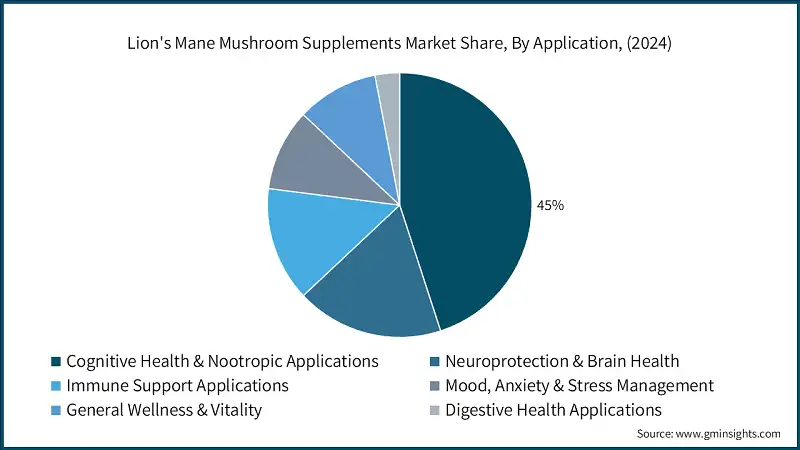
Based on application, the lions mane mushroom supplements market is segmented into cognitive health & nootropic applications, neuroprotection & brain health, immune support applications, mood, anxiety & stress management, general wellness & vitality, and digestive health applications. Cognitive Health & Nootropic Applications dominated the market with an approximate market share of 45% in 2024 and is expected to grow with a CAGR of 13.7% up to 2034.
- Cognitive Health & Nootropic Applications hold the largest share of the lions mane mushroom supplements market. This dominance is driven by growing consumer awareness of brain health, the aging population, and increasing cognitive concerns including memory decline and focus challenges. lions mane is positioned as a natural nootropic due to its bioactive compounds—hericenones and erinacines—which stimulate nerve growth factor (NGF) synthesis and support neuroplasticity in preclinical studies.
- These supplements are widely used by students, professionals, and knowledge workers seeking enhanced mental clarity, improved focus, and better memory retention. The segment benefits from published research documenting neurotrophic mechanisms and preliminary clinical evidence of cognitive improvements in mild cognitive impairment.
- Neuroprotection & Brain Health accounted for approximately 18% of the market share in 2024. This segment targets consumers concerned with long-term brain health, neurodegenerative disease prevention, and age-related cognitive decline. lions mane supplements support neuroprotective mechanisms including antioxidant activity, anti-inflammatory effects, and promotion of neuronal survival. The segment appeals to older adults (50+ years) and individuals with family histories of Alzheimers or Parkinsons disease. Products often feature high-potency extracts standardized for erinacine content and combination formulas with complementary neuroprotective ingredients such as omega-3 fatty acids or curcumin.
- Immune Support Applications represented approximately 14% of the lions mane mushroom supplements market in 2024, with a moderate CAGR of 6.8%. lions mane contains beta-glucan polysaccharides with immunomodulatory properties, including activation of macrophages and natural killer cells. This segment grew during the COVID-19 pandemic but has moderated as competition from other medicinal mushrooms (reishi, turkey tail, chaga) with stronger immune-focused positioning intensifies. lions mane immune products are often included in multi-mushroom blends rather than standalone formulations.
- Mood, Anxiety & Stress Management is a high-growth segment with approximately 10% market share in 2024 and a CAGR of 16.3%. Small pilot studies reporting reductions in depression and anxiety scores, along with preclinical research demonstrating antidepressant-like effects via BDNF/neurogenesis pathways, are driving rapid adoption. This segment appeals to consumers seeking natural alternatives for mild-to-moderate mood concerns and stress resilience. Products combine lions mane with adaptogens (ashwagandha, rhodiola) or L-theanine, marketed with messaging around calm focus and mood balance.
Based on distribution channel, the lions mane mushroom supplements market is segmented into online sales & e-commerce, specialty stores, health food stores, pharmacies & drugstores, supermarkets & hypermarkets, direct-to-consumer & subscription, and other distribution channels. Online Sales & E-commerce dominated the market with an approximate market share of 45% in 2024 and is expected to grow with a CAGR of 13.5% through 2034.
- Online Sales & E-commerce hold the largest share of the lions mane mushroom supplements market. This dominance reflects broader consumer shopping trends, particularly for specialty health products and supplements. E-commerce platforms including Amazon, iHerb, Vitacost, and brand-owned websites offer extensive product selection, competitive pricing, detailed product information, customer reviews, and convenient home delivery. The channel is particularly effective for lions mane supplements due to the educational content required to communicate cognitive health benefits and differentiate between extract types (fruiting body vs. mycelium, standardization levels).
- Digital marketing, influencer partnerships, and social media education drive online discovery and purchase. Subscription models within e-commerce enable recurring revenue and customer retention. The COVID-19 pandemic accelerated online supplement purchasing habits that have largely persisted.
- Specialty Stores accounted for approximately 18% of the market share in 2024. These include dedicated supplement retailers, vitamin shops, and natural products stores where knowledgeable staff provide personalized recommendations and education about lions mane benefits, dosing, and quality differences. Specialty retailers often carry premium and practitioner-grade brands with higher standardization and third-party testing. The channel appeals to consumers seeking expert guidance and those who prefer to examine products before purchase.
- Health Food Stores represented approximately 12% of the lions mane mushroom supplements market in 2024. Natural and organic grocery stores such as Whole Foods, Sprouts, and independent health food retailers stock lions mane supplements alongside functional foods and wellness products. This channel benefits from the halo effect of healthy shopping environments and appeals to health-conscious consumers already engaged in natural wellness practices. In-store sampling, educational events, and integration with food products enhance visibility.
Looking for region specific data?
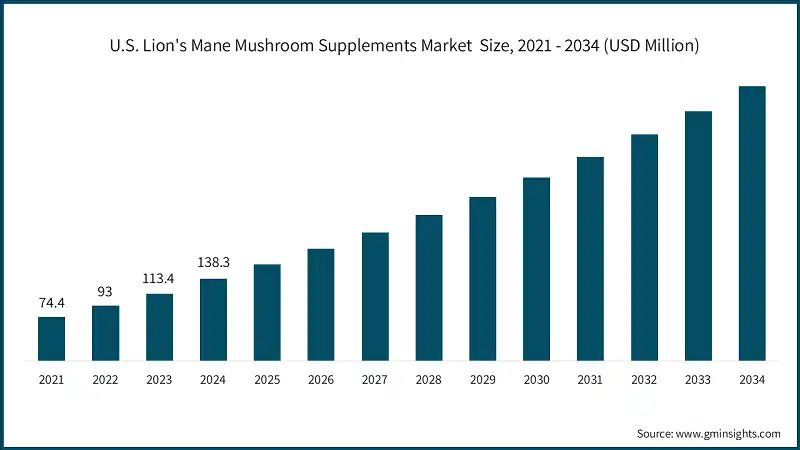
The North America lions mane mushroom supplements market is the largest globally with a market share of 38% in 2024 and is expected to grow at a CAGR of 13.6% through 2034.
- The North American market is experiencing robust growth driven by increasing consumer awareness of cognitive health, the nootropics trend, and growing interest in natural brain-supporting supplements. The region benefits from strong health and wellness culture, high disposable incomes, and widespread adoption of functional supplements. The expanding biohacking and performance optimization communities, along with aging Baby Boomers concerned about cognitive decline, are key consumer segments. Digital marketing, influencer endorsements, and e-commerce accessibility accelerate market penetration. Regulatory frameworks supporting dietary supplements and growing scientific research from U.S. institutions enhance consumer confidence.
U.S. dominates the North America lions mane mushroom supplements market, showcasing strong growth potential.
- The U.S. market is rapidly expanding, fueled by the cognitive health supplement boom and mainstream acceptance of medicinal mushrooms. Consumer demand for clean-label, natural nootropics is driving adoption across demographics—from students and professionals seeking focus enhancement to older adults pursuing brain longevity. The proliferation of mushroom coffee brands, functional beverages, and innovative supplement formats (gummies, shots) is expanding market reach beyond traditional supplement users. Strong presence of leading brands, extensive distribution networks, and investment in clinical research support continued growth.
Europe lions mane mushroom supplements market is the second largest with revenue of USD 117.2 million in 2024 and is anticipated to show steady growth over the forecast period.
- The European market demonstrates steady growth driven by increasing interest in natural health solutions, preventive wellness, and holistic approaches to cognitive health. European consumers prioritize quality, sustainability, and evidence-based products, favoring organic certifications and transparent sourcing. Stringent regulations under Novel Food frameworks and EFSA health claim requirements ensure product safety but limit marketing claims, creating opportunities for brands emphasizing quality and scientific backing. Growing awareness of functional mushrooms through wellness media and natural health practitioners supports adoption.
Germany dominates the European lions mane mushroom supplements market, showcasing strong growth potential.
- Germany leads Europe due to its strong natural health products sector, consumer preference for high-quality supplements, and emphasis on preventive health. The countrys aging population and high health consciousness drive demand for cognitive support supplements. German consumers favor products with organic certification, third-party testing, and clear ingredient specifications. The presence of established natural products retailers (Reformhaus, Apotheken) and growing online supplement market facilitate distribution.
The Asia Pacific lions mane mushroom supplements market is anticipated to grow at a CAGR of 12.4% during the analysis timeframe.
- The Asia Pacific market is experiencing dynamic growth driven by traditional knowledge of medicinal mushrooms, rising health consciousness, increasing disposable incomes, and urbanization. Countries including China, Japan, South Korea, and emerging markets in Southeast Asia show strong demand. The region benefits from cultural familiarity with mushroom-based medicine and growing integration of traditional and modern wellness practices. Expanding middle class, aging populations, and increasing prevalence of lifestyle-related cognitive concerns drive supplement adoption.
China lions mane mushroom supplements market is estimated to grow with a significant CAGR of 12.7% in the Asia Pacific region.
- Chinas market is experiencing rapid expansion due to deep cultural roots in traditional Chinese medicine (TCM), where Hericium erinaceus (Hou Tou Gu) has been used for centuries. Growing middle class, rising health awareness, and increasing stress-related cognitive concerns among urban professionals drive demand. China is also a major producer and exporter of lions mane mushroom extracts, supporting domestic market development. E-commerce platforms (Tmall, JD.com) and integration into functional foods accelerate accessibility. Government support for TCM modernization and wellness industries further supports growth.
Latin America lions mane mushroom supplements accounted for 8% market share in 2024 and is anticipated to show robust growth with a CAGR of 12.3% over the forecast period.
- The Latin American market is emerging rapidly as health consciousness increases, and natural supplement adoption grows. Rising middle-class populations, urbanization, and increasing awareness of cognitive health drive demand. The regions growing wellness industry and expanding distribution networks support market development. Consumer interest in natural, plant-based health solutions aligns with lions mane positioning.
Brazil leads the Latin American lions mane mushroom supplements market, exhibiting remarkable growth during the analysis period with a CAGR of 12.6%.
- Brazil is the dominant market in Latin America due to its large population, growing health and wellness sector, and increasing consumer sophistication regarding supplements. Rising disposable incomes, urbanization, and health consciousness among middle-class consumers drive adoption of cognitive health supplements. The countrys expanding e-commerce infrastructure and presence of international supplement brands facilitate market access.
Middle East & Africa lions mane mushroom supplements accounted for 4% market share in 2024 and is anticipated to show the highest growth with a CAGR of 12.4% over the forecast period.
- The Middle East & Africa region represents an emerging high-growth market driven by rising disposable incomes, increasing health awareness, and expanding wellness industries. Countries including UAE, Saudi Arabia, and South Africa are leading adoption. Growing expatriate populations familiar with functional supplements, increasing lifestyle-related health concerns, and government wellness initiatives support market development. The regions young, tech-savvy population and growing e-commerce penetration facilitate rapid adoption of new supplement categories.
Saudi Arabia lions mane mushroom supplements industry is experiencing substantial growth in the Middle East and Africa market.
- Saudi Arabias market is expanding rapidly driven by Vision 2030 initiatives promoting health and wellness, rising health consciousness, and increasing focus on preventive healthcare. Growing affluent consumer base, high smartphone and internet penetration, and expanding retail infrastructure support supplement market growth. Increasing prevalence of lifestyle-related health concerns and cognitive stress among urban professionals drive demand for natural cognitive support solutions.
Lions Mane Mushroom Supplements Market Share
The top 5 companies in the lions mane mushroom supplements industry include Host Defense (Fungi Perfecti LLC), Real Mushrooms, Om Mushroom Superfood, Gaia Herbs, and Nammex (North American Medicinal Mushroom Extracts). These are prominent companies operating in their respective regions covering approximately 38.5% of the market share in 2024. These companies hold strong positions due to their extensive experience in medicinal mushroom cultivation, extraction, and formulation. Their diverse product portfolios, backed by robust quality control systems, scientific research, and distribution networks, enable them to meet the rising demand across various regions.
- Host Defense (Fungi Perfecti LLC) is a pioneering company in the medicinal mushroom industry, founded by renowned mycologist Paul Stamets. The company has established market leadership through its commitment to organic cultivation, mycelium-based formulations, and extensive product range covering cognitive health, immune support, and general wellness applications. With its focus on sustainable cultivation practices, rigorous quality testing, and science-backed formulations, Host Defense has built strong brand recognition and consumer trust. The companys educational initiatives and research collaborations have positioned it as an authority in functional mushroom supplements.
- Real Mushrooms has emerged among a leading player in the lions mane supplements market, distinguished by its emphasis on 100% fruiting body extracts and transparent quality standards. The company differentiates itself through third-party testing, verified beta-glucan content, and clear labeling of extraction ratios. Real Mushrooms commitment to quality and transparency resonates with informed consumers seeking authentic, potent lions mane products. The companys strong online presence and direct-to-consumer model have driven significant market share growth.
- Om Mushroom Superfood is a major producer and marketer of organic mushroom supplements and functional foods. The company prides itself on whole food mushroom powders, innovative product formats (including powders, capsules, and drink mixes), and integration into mainstream wellness channels. Current market demand is escalating as Om Mushroom expands distribution through natural retailers, e-commerce platforms, and strategic partnerships with functional food brands. The companys focus on organic certification and sustainable cultivation supports its growth trajectory.
Lions Mane Mushroom Supplements Market Companies
The major players operating in Lions mane mushroom supplements industry include:
- Host Defense (Fungi Perfecti LLC)
- Real Mushrooms
- Om Mushroom Superfood
- Gaia Herbs
- Nammex (North American Medicinal Mushroom Extracts)
- M2 Ingredients
- Mushroom Science
- North Spore
- Hifas da Terra
- Oriveda BV
- SuperFeast
- Life Cykel
- Xian Sost Biotech Co., Ltd.
- Hericium Labs
- The Functional Mushroom Company
Lions Mane Mushroom Supplements Market Report Attributes
| Key Takeaway | Details |
|---|---|
| Market Size & Growth | |
| Base Year | 2024 |
| Market Size in 2024 | USD 418.4 Million |
| Market Size in 2025 | USD 497.9 Million |
| Forecast Period 2025 – 2034 CAGR | 13.5% |
| Market Size in 2034 | USD 1.6 Billion |
| Key Market Trends | |
| Drivers | Impact |
| Rising demand for cognitive health and nootropic supplements | Growing consumer awareness of brain health and the aging population drive demand for natural cognitive support ingredients. Lions manes scientifically supported neurotrophic properties position it as a leading nootropic supplement. |
| Increasing scientific validation and clinical research | Emerging clinical evidence from pilot trials showing cognitive and mood benefits enhances consumer confidence and supports product claims, accelerating market adoption and investment in research. |
| Expansion of functional foods and beverage applications | Lions mane is increasingly incorporated into ready-to-drink beverages, coffee alternatives, protein powders, and snack bars, broadening consumer access beyond traditional capsule formats and driving volume growth. |
| Pitfalls & Challenges | Impact |
| Limited large-scale clinical evidence and standardization | The lack of robust, large-scale randomized controlled trials and standardized extract specifications limits regulatory health claims and may constrain adoption by healthcare professionals and cautious consumers. |
| High production costs and supply chain complexity | Cultivation, extraction, and quality control processes are resource intensive. Variability in bioactive content across strains, substrates, and processing methods complicates standardization and increases costs. |
| Opportunities: | Impact |
| Product innovation in delivery formats and formulations | Development of advanced delivery systems (liposomal, nano-encapsulation), combination formulas (with other nootropics or adaptogens), and convenient formats (gummies, beverages) expands market reach and consumer appeal. |
| Strategic partnerships and clinical research investment | Collaborations between supplement companies, research institutions, and ingredient suppliers to conduct clinical trials and develop standardized extracts will strengthen evidence base, support regulatory pathways, and enhance brand credibility. |
| Market Leaders (2024) | |
| Market Leaders |
13% |
| Top Players |
Collective market share in 2024 is 38.5% |
| Competitive Edge |
|
| Regional Insights | |
| Largest Market | North America |
| Fastest growing market | Asia Pacific |
| Emerging countries | India, Japan, South Korea |
| Future outlook |
|
What are the growth opportunities in this market?
Lions Mane Mushroom Supplements Industry News
- In October 2025, Monterey Nutra has introduced ManeFocus, a premium Lions mane extract powder developed with an optimal blend of hardwood-grown fruiting bodies and mycelium. Standardised to 1% total metabolites, the ingredient offers improved solubility, bioavailability and taste for use in beverages, gummies, capsules and more. The launch coincides with the companys relocation to a larger facility in Watsonville, California, expanding capacity tenfold to support growing demand for functional mushroom ingredients.
- In March 2025, UK-grown Lions Mane mushrooms have entered UK supermarkets for the first time, with organic producer Urban Farm-It is launching 200g packs in selected Sainsburys stores for about USD 6.40. Grown and hand-harvested in Kent, the gourmet mushroom is prized for its delicate flavour and naturally meaty texture, making it a favourite in vegan and plant-based recipes. Founder Elliot Webb called the launch a major milestone, bringing this once-rare ingredient to mainstream shoppers in recyclable packaging.
The Lions mane mushroom supplements market research report includes in-depth coverage of the industry with estimates & forecast in terms of revenue (USD Million) & (Kilo Tons) from 2021 to 2034, for the following segments:
Market, By Product Form
- Capsules & tablets
- Powders
- Liquid extracts & tinctures
- Gummies
- Functional beverages
- Other forms
Market, By Application
- Cognitive health & nootropic applications
- Immune support applications
- Mood, anxiety & stress management
- Neuroprotection & brain health
- Digestive health applications
- General wellness & vitality
Market, By Distribution Channel
- Online sales & e-commerce
- Specialty stores
- Pharmacies & drugstores
- Health food stores
- Supermarkets & hypermarkets
- Direct-to-consumer & subscription models
- Other distribution channels
The above information is provided for the following regions and countries:
- North America
- U.S.
- Canada
- Europe
- UK
- Germany
- France
- Italy
- Spain
- Rest of Europe
- Asia Pacific
- China
- India
- Japan
- South Korea
- Australia
- Rest of Asia Pacific
- Latin America
- Brazil
- Mexico
- Argentina
- Rest of Latin America
- MEA
- UAE
- Saudi Arabia
- South Africa
- Rest of Middle East and Africa
Frequently Asked Question(FAQ) :
What is the market size of the lion's mane mushroom supplements in 2024?
The market size was valued at USD 418.4 million in 2024, with a CAGR of 13.5% expected through 2034. Increasing consumer awareness of cognitive health and advancements in extraction technologies are driving market growth.
What is the projected value of the lion's mane mushroom supplements market by 2034?
The market is poised to reach USD 1.6 billion by 2034, driven by product innovation, rising demand for nootropic formulations, and growing interest in natural wellness products.
What is the expected size of the lion's mane mushroom supplements industry in 2025?
The market size is projected to reach USD 497.9 million in 2025.
How much revenue did the capsules & tablets segment generate in 2024?
The capsules & tablets segment generated approximately 50% of the market share in 2024 and is expected to grow at a CAGR of 13.3% through 2034.
What was the market share of cognitive health & nootropic applications in 2024?
Cognitive health & nootropic applications held a 45% market share in 2024, with a projected CAGR of 13.7% up to 2034.
What is the growth outlook for online sales & e-commerce from 2024 to 2034?
Online sales & e-commerce accounted for 45% of the market share in 2024 and is set to expand at a CAGR of 13.5% till 2034.
Which region leads the lion's mane mushroom supplements sector?
North America leads the market with a 38% share in 2024, led by strong health and wellness culture, high disposable incomes, and increasing consumer interest in cognitive health.
What are the upcoming trends in the lion's mane mushroom supplements market?
Trends include advancements in extraction technologies, sustainable sourcing practices, diverse product formulations and increasing regulatory scrutiny driving demand for clinical evidence and standardized extracts.
Who are the key players in the lion's mane mushroom supplements industry?
Key players include Host Defense, Real Mushrooms, Om Mushroom Superfood, Gaia Herbs, Nammex, M2 Ingredients, Mushroom Science, North Spore, Hifas da Terra, Oriveda BV, and SuperFeast.
Lions Mane Mushroom Supplements Market Scope
Related Reports