Summary
Table of Content

Leather Dyes Market
Get a free sample of this report
Form submitted successfully!
Error submitting form. Please try again.
Thank you!
Your inquiry has been received. Our team will reach out to you with the required details via email. To ensure that you don't miss their response, kindly remember to check your spam folder as well!
Request Sectional Data
Thank you!
Your inquiry has been received. Our team will reach out to you with the required details via email. To ensure that you don't miss their response, kindly remember to check your spam folder as well!
Form submitted successfully!
Error submitting form. Please try again.
Leather Dyes Market Size
- The leather industry uses special leather dyes which improve the visual appearance of leather products by creating various color options and different texture effects. The dyes deliver essential functions which determine how leather products appear and feel and their permanent durability. The global market is experiencing strong expansion because people are increasingly choosing high-quality leather goods which include automobile interior components. The automotive sector uses high-quality leather to improve its interior design but needs dyes which can deliver bright colors that will last for a long time.
- The rising demand for leather in vehicles has resulted in increased requests for specific dyes which mainly include environmentally friendly solutions. The increased demand shows how consumers are now choosing environmentally friendly leather dyeing methods which focus on sustainability. People now prefer leather products which use sustainable dyeing methods to create their products because they have become more environmentally aware. The shift has prompted the development of water-based and non-toxic dyes which have a reduced environmental impact compared to traditional dyeing methods.
- The luxury goods and fashion industries use high-quality leather products which help to develop this trend. The demand for these groundbreaking dyes comes from high-end brands which focus on providing sustainable products while maintaining their premium quality standards. The market is thriving because three key factors, namely product quality, environmental responsibility, and modern fashion trends, drive ongoing business growth.
The global leather dyes market was valued at USD 5.1 billion in 2025. The market is expected to grow from USD 5.4 billion in 2026 to USD 8.6 billion in 2035, at a CAGR of 5.3% according to latest report published by Global Market Insights Inc.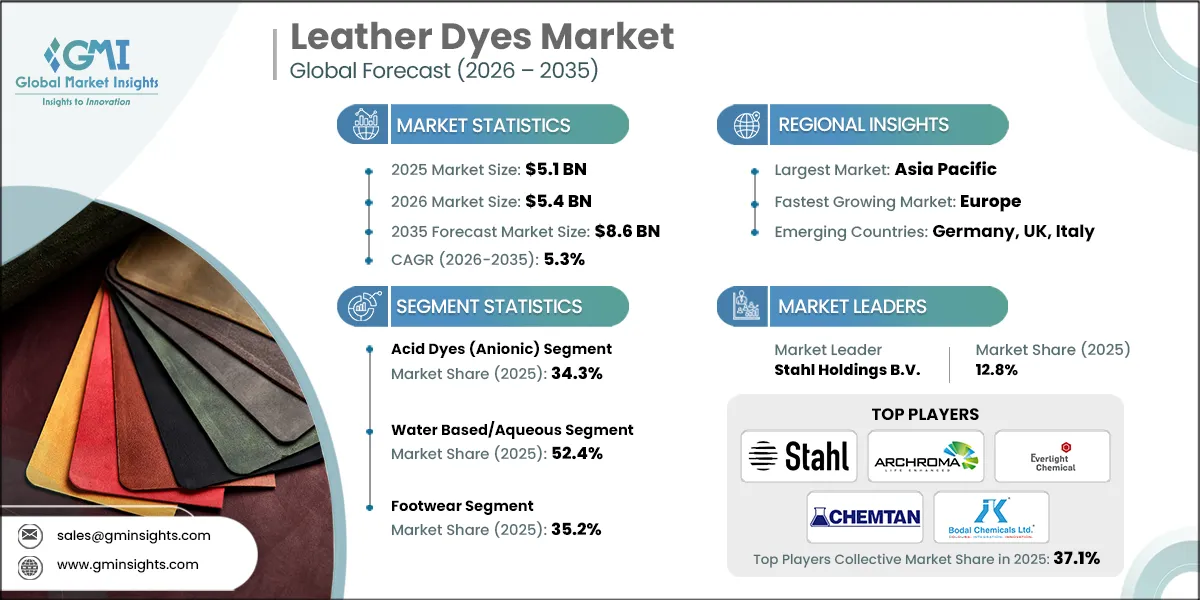
Leather Dyes Market Key Takeaways
Market Size & Growth
- 2025 Market Size: USD 5.1 Billion
- 2026 Market Size: USD 5.4 Billion
- 2035 Forecast Market Size: USD 8.6 Billion
- CAGR (2026–2035): 5.3%
Regional Dominance
- Largest Market: Asia Pacific
- Fastest Growing Region: Europe
Key Market Drivers
- Increasing demand for luxury and fashion products.
- Growing automotive industry.
- Advancements in dyeing technology.
Challenges
- Environmental regulations.
- Volatility in raw material prices.
Opportunity
- Development of eco-friendly dyes.
- Customization and specialty dyes.
Key Players
- Market Leader: Stahl Holdings B.V. led with over 12.8% market share in 2025.
- Leading Players: Top 5 players in this market include Stahl Holdings B.V., Archroma Management GmbH, Everlight Chemical, Chemtan Company Inc., Bodal Chemicals Ltd., which collectively held a market share of 37.1% in 2025.
Get Market Insights & Growth Opportunities
To get key market trends
Leather Dyes Market Trends
- The global market progresses through specific key trends which determine its development. The trend shows increasing use of water-based and bio-based leather dyeing solutions because of growing environmental sustainability concerns. The production process of eco-friendly alternatives uses traditional solvent-based dyes which produce more harmful emissions while consuming less water. Fashion and automotive consumers who want special and superior leather goods drive a major trend towards creating custom and personalized products. The manufacturing industry needs advanced dyeing techniques because they create complex designs which produce new color options for their products.
- Digital dyeing technologies have achieved increased adoption because they enable accurate color application while reducing material waste. The fast fashion industry requires this trend because it needs quick reactions to changes in consumer preferences. The market for dyeing solutions which cater to non-animal leather products has expanded because vegan leather and alternative materials have become increasingly popular.
Leather Dyes Market Analysis
Learn more about the key segments shaping this market
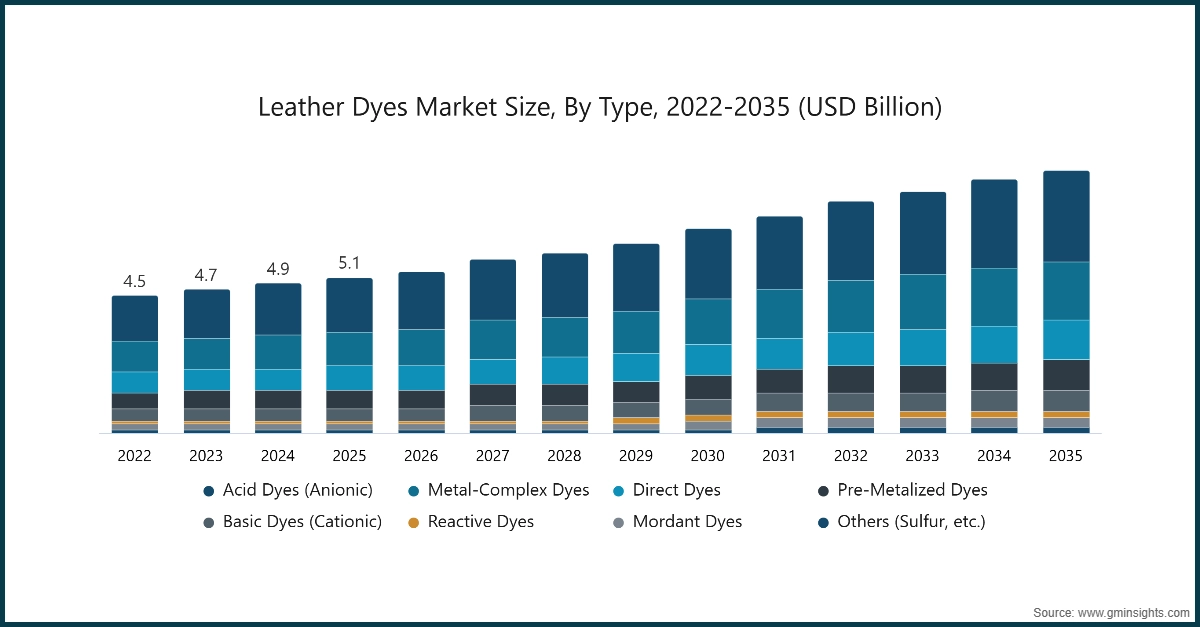
- The leather dye market is experiencing active transformations throughout its different market segments. Acid dyes (anionic) maintain their popularity because they deliver excellent color matching with protein fibers, which produce bright and long-lasting colors that particularly benefit footwear and upholstery applications. Metal-complex dyes have started to become more popular because their colorfastness properties combined with their washing resistance make them ideal for use in advanced leather products. Direct dyes have become popular among manufacturers because these users can apply the dyes quickly, which helps them manage production costs, which leads to increasing demand in mass production factories. Pre-metalized dyes have developed into a specialized market, which delivers better fastness and color consistency for high-end leather goods. Basic dyes (cationic) have gained popularity in the fashion and accessory sectors because they deliver bright colors and fast dyeing capabilities.
- The growing popularity of reactive dyes results from their environmental safety combined with their ability to create permanent bonds with leather fibers, which protects against washing and rubbing damage while supporting eco-friendly practices. Mordant dyes continue to find use in specific applications which need distinct color results and special fixation characteristics, even though their market demand has not changed. The trend across all market segments shows a movement toward environmentally safe high-performance dyes, which provide better fastness properties, because regulatory requirements and consumer demand for sustainable leather products have increased. The development of dye chemistry and the progress of application methods drive innovation and market expansion through their impact on these market segments.
Learn more about the key segments shaping this market
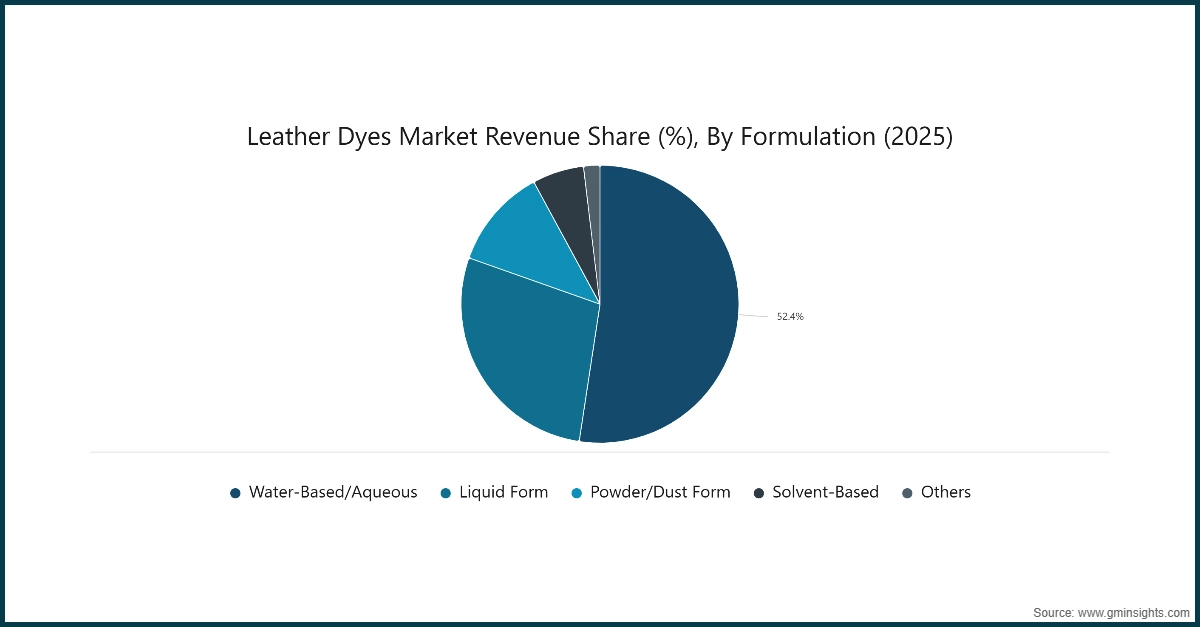
Based on formulation, the leather dyes market is segmented into water-based/aqueous, liquid form, powder/dust form, solvent-based, others. Water based/aqueous held the largest market share of 52.4% in 2025 and is expected to grow at a CAGR of 5.5% during 2026-2035.
- The leather dye market is experiencing notable shifts across different application forms. Water-based aqueous dyes are becoming the preferred choice because they offer environmental benefits and their VOC emissions stay below the requirements of strict environmental regulations. This trend is especially prominent in regions with strict environmental policies which create incentives for businesses to adopt sustainable manufacturing methods. The market is dominated by liquid form dyes because they provide simple application and rapid dyeing and achieve dependable results which make them suitable for use in automated production systems.
- Powder/dust form dyes are preferred for their long shelf life and cost efficiency, especially in large-scale industrial settings, though they require proper handling and dispersion techniques. The environmental impact of solvent-based dyes has caused a slight decrease in their usage, yet they remain important for specialized applications that require fast drying and deep color penetration and high color intensity in premium leather products. The market is moving toward water-based and liquid formulations because customers prefer sustainably produced and safe-to-use products, while solvent-based dyes still have specific applications in high-performance industries.
Based on application, the leather dyes market is segmented into footwear, automotive, furniture upholstery, garments & apparel, bags & luggage, industrial leather, gloves & accessories, equestrian products, others (book binding, etc. Footwear segments dominated the market with an approximate market share of 35.2% in 2025 and is expected to grow with a CAGR of 5.5% by 2035.
- The leather dye market for footwear continues to experience robust growth because consumers increasingly demand customized and stylish footwear designs. Brands implement advanced dyeing techniques which include water-based and eco-friendly dyes to achieve sustainability targets and minimize their environmental footprint. The fashion industry is driving manufacturers to develop new dye formulations which provide long-lasting color retention and environmental sustainability while the industry is moving towards sustainable materials and practices.
- The market for high-performance dyes shows increasing demand in automotive and furniture upholstery & various industrial uses because these dyes create strong adhesion and maintain color integrity while resisting both physical damage & environmental exposure. The demand for aesthetically appealing and long-lasting leather products in automotive interiors and furniture is propelling the adoption of solvent-based & aqueous dyes.
- The growing luxury vehicle and premium vehicle market along with custom furniture demand is causing manufacturers to search for high-quality and vibrant dye solutions. The market for garments and bags and luggage and gloves and accessories and equestrian products is expanding through sustainable and innovative dye solutions which fulfill both functional and aesthetic requirements. The leather dye market is moving toward sustainable dye solutions which provide durable and flexible performance for all applications in the industry.
Looking for region specific data?
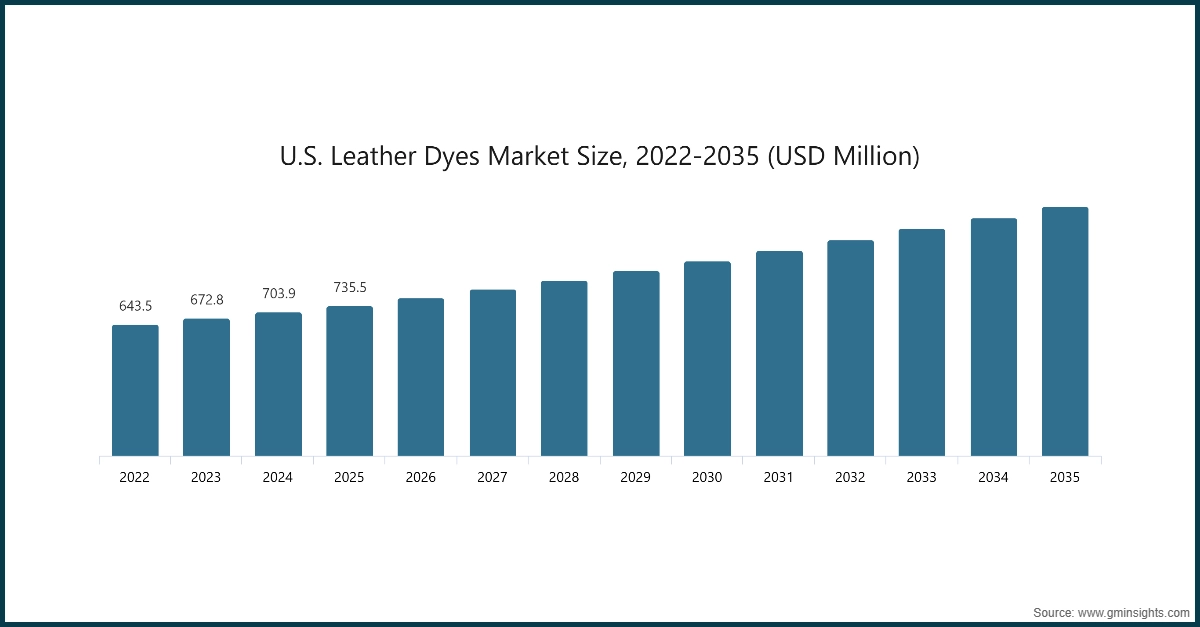
The North America leather dyes market is growing rapidly on the global level with a market share of 17.9% in 2025.
- North America maintains its position as a strong player in leather dye market because its automotive footwear and furniture sectors create established leather dye markets. The rising demand for sustainable development and environmentally friendly products pushes manufacturers to use water-based dyes and natural dyes. Companies implement dyeing technologies that create low environmental effects because of the strict regulations which control both VOC emissions and chemical usage. The fashion and automotive industries experience growth in demand for advanced dyes which deliver outstanding color retention and durability because customers prefer premium leather products.
Europe leather dyes market leads the industry with revenue of USD 1.4 billion in 2025 and is anticipated to show lucrative growth over the forecast period.
- The European leather dye market demonstrates a strong commitment to sustainability through eco-friendly manufacturing methods and compliance with European Union regulations. The region's fashion and luxury goods and automotive industries utilize advanced dye solutions which fulfill their strict environmental requirements. Europe advances its technological capabilities through the development of water-based and solvent-free dyes which reduce their environmental footprint. The presence of prominent fashion brands and a well-established automotive sector continuously drive the demand for high-quality, vibrant, and durable leather dyes.
The Asia Pacific leather dyes market is anticipated to grow at a CAGR of 5.4% during the analysis timeframe.
- The growing leather dye market in the Asia Pacific region is driven by expanding manufacturing capacity and rising consumer demand for leather products including footwear and bags and apparel. Major production centers in China and India focus on developing sustainable and cost-effective dyeing solutions which fulfill the requirements of their local markets and international trade. The rising trend of luxury and branded leather goods is also pushing manufacturers toward investing in innovative dye technologies that ensure colorfastness and long-lasting appeal.
Latin America leather dyes market accounted for 7% share in 2025 and is anticipated to show steady growth over the forecast period.
- Latin America has emerged into a potential leather dye market because increasing leather production and export activities support its growth. Brazil has established itself as a major market player because its fashion industry has expanded and consumers now demand superior leather goods. Environmental awareness together with stricter regulations has caused the market to shift toward using eco-friendly water-based dyes. The combination of affordable raw materials and growing middle-class income has increased demand for vibrant, durable dyes which are needed in footwear and apparel and furniture products.
Middle East & Africa leather dyes accounted for USD 245.9 million market size in 2025 and is anticipated to show lucrative growth over the forecast period.
- The leather dye market in the Middle East and Africa region is growing slowly because luxury fashion and automotive and furniture industries are establishing their presence in the UAE and South Africa and Turkey. The market shows an increasing demand for sustainable dye solutions which fulfill both international standards and customer requirements. The growing need for premium leather products has resulted from increased investments in infrastructure and luxury real estate developments which have driven the demand for leather dye.
Leather Dyes Market Share
The top 5 companies in leather dyes industry include Stahl Holdings B.V., Archroma Management GmbH, Everlight Chemical, Chemtan Company Inc., Bodal Chemicals Ltd. These are prominent companies operating in their respective regions covering approximately 37.1% of the market share in 2025. These companies hold strong positions due to their extensive experience in market. Their diverse product portfolios, backed by robust production capabilities and distribution networks, enable them to meet the rising demand across various regions.
- Stahl established itself as a major force in the leather dye industry by developing superior dye products which meet the requirements of leather manufacturers. The company develops environmentally friendly products, which help it maintain sustainable practices that match current global environmental regulations and consumer market trends. The company retains its market leadership through technological research and development activities and its business partnerships with leading industry firms.
- Archroma stands out for its commitment to sustainability and environmentally friendly products within the leather dye sector. The company offers a wide range of dyes and colorants that are designed to reduce environmental impact, such as low-VOC and water-based formulations. Archroma establishes its business platform between its innovative product solutions and its global distribution network which serves major leather manufacturers.
- Everlight Colorants is recognized for its cost-effective and innovative dye formulations suitable for various leather applications. The company specializes in producing high-quality dyes which deliver exceptional color fastness paired with bright colors and consistent results. Everlight provides clients with fast technical assistance and customized solutions through its international distribution system.
- Chemtan Company operates as an established company which manufactures a wide range of dyes and tanning chemicals used in the leather industry. The company provides an extensive range of products which includes dyes that meet quality requirements for different leather materials. Chemtan stays competitive through its research-based product development and its long-lasting customer relationships which include technical support and quality control.
- Bodal Chemicals Ltd. produces specialized dye products and chemical solutions which manufacturers use in leather tanning and dyeing activities. The company focuses on creating environmentally safe dyes and chemicals which meet international environmental regulations. Bodal achieves its competitive advantage through its sustainable business approach and continuous development of new products, which allow it to serve diverse customers throughout multiple regions.
Leather Dyes Market Companies
Major players operating in the leather dyes industry include:
- Alliance Organics LLP
- American Enterprises Pvt Ltd
- Archroma Management GmbH
- Atul Limited
- Bodal Chemicals Ltd.
- Burboya
- Chemtan Company Inc.
- Colourtex Industries
- Ebro Chemicals
- Everlight Chemical
- Kiri Industries Ltd.
- Kolorjet Chemicals Pvt Ltd
- Krishna Industries
- Stahl Holdings B.V.
Leather Dyes Market Report Attributes
| Key Takeaway | Details |
|---|---|
| Market Size & Growth | |
| Base Year | 2025 |
| Market Size in 2025 | USD 5.1 Billion |
| Market Size in 2026 | USD 5.4 Billion |
| Forecast Period 2026-2035 CAGR | 5.3% |
| Market Size in 2035 | USD 8.6 Billion |
| Key Market Trends | |
| Drivers | Impact |
| Increasing demand for luxury and fashion products | Rising consumer preference for premium leather products boosts dye consumption. |
| Growing automotive industry | Expansion in vehicle manufacturing using leather interiors drives the need for leather dyes. |
| Advancements in dyeing technology | Innovation in eco-friendly and high-performance dyes enhances market growth. |
| Pitfalls & Challenges | Impact |
| Environmental regulations | Stricter rules on chemical usage in dyes hinder market expansion. |
| Volatility in raw material prices | Fluctuations in the cost of chemicals and raw materials impact profitability. |
| Opportunities: | Impact |
| Development of eco-friendly dyes | Growing demand for sustainable and biodegradable leather dyes presents new market prospects. |
| Customization and specialty dyes | Growing need for unique, color-specific finishes offers niche market opportunities. |
| Market Leaders (2025) | |
| Market Leader |
Market Share 12.8% |
| Top Players |
Collective Market Share of 37.1% in 2025 |
| Competitive Edge |
|
| Regional Insights | |
| Largest Market | Asia Pacific |
| Fastest growing market | Europe |
| Emerging countries | Germany, UK, Italy |
| Future outlook |
|
| Companies covered: | 14 |
| Tables, Charts & Figures: | 205 |
| Countries covered: | 18 |
| No of Pages: | 190 |
What are the growth opportunities in this market?
Leather Dyes Industry News
- In April 2024, researchers at Imperial College London engineered bacteria to grow animal- and plastic-free leather that dyed itself. This breakthrough in synthetic biology aimed to reduce the environmental impact of dyeing, advancing sustainable fashion with self-dyed vegan leather.
- In July 2022, Sustainable designers, like Ian Greer and Denise Focil, embraced natural dyes and recycled leather scraps in their collections. Greer advocated for natural dyes' evolving role, while Focil incorporated recycled leather and chrome-free dyes, promoting sustainability through innovative practices and partnerships.
This leather dyes market research report includes in-depth coverage of the industry, with estimates & forecasts in terms of revenue (USD Billion) and volume (Kilo Tons) from 2026 to 2035, for the following segments:
Market, by Type
- Acid dyes (anionic)
- Metal-complex dyes
- Direct dyes
- Pre-metalized dyes
- Basic dyes (cationic)
- Reactive dyes
- Mordant dyes
- Others (sulfur, etc.)
Market, by Formulation
- Water-based/aqueous
- Liquid form
- Powder/dust form
- Solvent-based
- Others
Market, by Application
- Footwear
- Automotive
- Furniture upholstery
- Garments & apparel
- Bags & luggage
- Industrial leather
- Gloves & accessories
- Equestrian products
- Others (book binding, etc.)
The above information is provided for the following regions and countries:
- North America
- U.S.
- Canada
- Europe
- Germany
- UK
- France
- Spain
- Italy
- Rest of Europe
- Asia Pacific
- China
- India
- Japan
- Australia
- South Korea
- Rest of Asia Pacific
- Latin America
- Brazil
- Mexico
- Argentina
- Rest of Latin America
- Middle East and Africa
- Saudi Arabia
- South Africa
- UAE
- Rest of Middle East and Africa
Frequently Asked Question(FAQ) :
What is the market size of the leather dyes market in 2025?
The global market size for leather dyes was valued at USD 5.1 billion in 2025, driven by rising demand for premium leather goods in automotive interiors.
What is the projected value of the leather dyes market by 2035?
The market is expected to reach USD 8.6 billion by 2035, growing at a CAGR of 5.3% from 2026 to 2035, supported by increasing adoption of eco-friendly dyeing technologies.
What will be the leather dyes market size in 2026?
The market is projected to grow to USD 5.4 billion in 2026, reflecting steady growth in automotive leather usage and rising demand for sustainable dye formulations.
Which dye type segment leads the market?
The acid dyes (anionic) segment dominated the market with a 34.3% share in 2025 and is expected to grow at a CAGR of 5.5% through 2035.
Which formulation segment holds the largest share?
The water-based/aqueous segment accounted for 52.4% of the market share in 2025 and is projected to grow at a CAGR of 5.5%.
Which application segment dominates the market?
The footwear segment held the largest share at 35.2% in 2025, supported by growing consumer preference for stylish, customized, and sustainably manufactured footwear products.
How large is the North America leather dyes market?
North America accounted for 17.9% of the global market share in 2025, supported by strong demand from automotive.
Who are the key players in the leather dyes market?
Major companies include Stahl Holdings B.V., Archroma Management GmbH, Everlight Chemical, Chemtan Company Inc., and Bodal Chemicals Ltd., collectively accounting for approximately 37.1% of the market share in 2025.
Leather Dyes Market Scope
Related Reports