Summary
Table of Content

Interventional Cardiology and Peripheral Vascular Devices Market
Get a free sample of this report
Form submitted successfully!
Error submitting form. Please try again.
Thank you!
Your inquiry has been received. Our team will reach out to you with the required details via email. To ensure that you don't miss their response, kindly remember to check your spam folder as well!
Request Sectional Data
Thank you!
Your inquiry has been received. Our team will reach out to you with the required details via email. To ensure that you don't miss their response, kindly remember to check your spam folder as well!
Form submitted successfully!
Error submitting form. Please try again.
Interventional Cardiology and Peripheral Vascular Devices Market Size
This considerable growth is driven by numerous factors such as growing prevalence of vascular diseases worldwide, technological advancements in peripheral vascular devices, rising adoption of minimally invasive procedures, and increasing government spending pertaining to cardiovascular diseases burden.
Interventional cardiology and peripheral vascular devices help treat heart and blood vessel problems using minimally invasive techniques. These devices, such as stents, balloons, and catheters, open blocked arteries and improve blood flow without major surgery. They reduce recovery time, lower risks, and make procedures safer and more effective, playing an important role in managing heart disease and peripheral artery conditions. Major companies in the interventional cardiology and peripheral vascular devices market include Abbott, Boston Scientific, Medtronic, B. Braun Melsungen AG, Becton, Dickinson and Company.
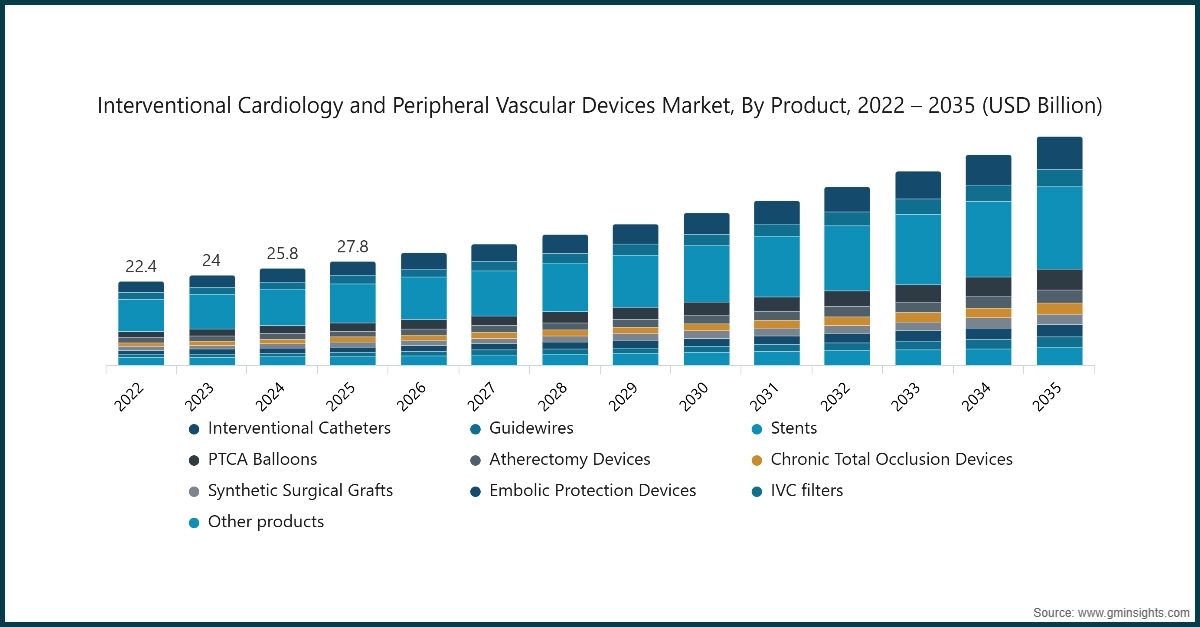
The market grew from USD 22.4 billion in 2022 to USD 25.8 billion in 2024. The growing prevalence of vascular diseases worldwide is significantly driving the market growth. According to WHO, cardiovascular diseases (CVDs) including coronary heart disease, stroke, and peripheral arterial disease (PAD) remain the leading cause of mortality globally, accounting for 19.8 million deaths in 2022, or about 32% of all global deaths. Furthermore, the disease burden continues to rise, with approximately 612 million people living with CVD in 2021 and an age-standardized prevalence of 7,178 per 100,000 population. This surge in cases is linked to aging populations, sedentary lifestyles, and increasing rates of diabetes and obesity, which heighten the risk of vascular complications. As a result, healthcare systems are prioritizing minimally invasive interventions such as angioplasty, stent placement, and endovascular therapies to manage these conditions effectively. Therefore the demand for advanced interventional devices is accelerating, creating substantial growth opportunities for manufacturers and healthcare providers in this market.
Additionally, increasing government spending to address the growing cardiovascular disease burden is a significant driver for the interventional cardiology and peripheral vascular devices market. Public health programs and reimbursement policies are enabling wider adoption of minimally invasive procedures, reducing patient out-of-pocket costs and encouraging healthcare providers to invest in advanced technologies. For instance, according to the HHS Office of Inspector General, Medicare paid over USD 600 million in 2022 for minimally invasive peripheral vascular procedures including atherectomy and angioplasty, with or without stents to treat peripheral arterial disease. This substantial financial commitment underscores the government’s role in promoting access to innovative interventions, thereby accelerating market growth and creating opportunities for device manufacturers to expand their offerings.
Interventional Cardiology and Peripheral Vascular Devices Market Key Takeaways
Market Size & Growth
- 2025 Market Size: USD 27.7 Billion
- 2026 Market Size: USD 29.8 Billion
- 2035 Forecast Market Size: USD 60.8 Billion
- CAGR (2026–2035): 8.2%
Regional Dominance
- Largest Market: North America
- Fastest Growing Region: Asia Pacific
Key Market Drivers
- Growing prevalence of vascular diseases worldwide.
- Technological advancements in peripheral vascular devices.
- Rising adoption of minimally invasive procedures.
- Increasing government spending pertaining to cardiovascular diseases burden.
Challenges
- Stringent regulatory framework.
- Post-procedural complications associated with devices.
Opportunity
- Growth in outpatient and ambulatory surgical centers.
- Increasing use of robotics in interventions.
Key Players
- Market Leader: Boston Scientific Corporation led with over 18% market share in 2025.
- Leading Players: Top 5 players in this market include Abbott Laboratories, Boston Scientific Corporation, Medtronic, B. Braun Melsungen AG, Becton, Dickinson and Company, which collectively held a market share of 60% in 2025.
Get Market Insights & Growth Opportunities
Peripheral vascular and interventional cardiology devices are tools used by healthcare professionals to assist them in performing minimally invasive procedures. There are several types of interventional devices, including catheters and stents, as well as imaging systems that can be used to restore blood flow through arteries that are blocked or narrowed, thus improving the health of both the heart and the vascular system without performing open surgery. These devices decrease the time required to recover from these procedures, lower the risks associated with these procedures, and improve patient outcomes for coronary artery disease, peripheral artery disease, and various other vascular disorders.
The global interventional cardiology and peripheral vascular devices market was valued at USD 27.7 billion in 2025 and is projected to grow from USD 29.8 billion in 2026 to USD 60.8 billion by 2035, expanding at a CAGR of 8.2%, according to the latest report published by Global Market Insights Inc.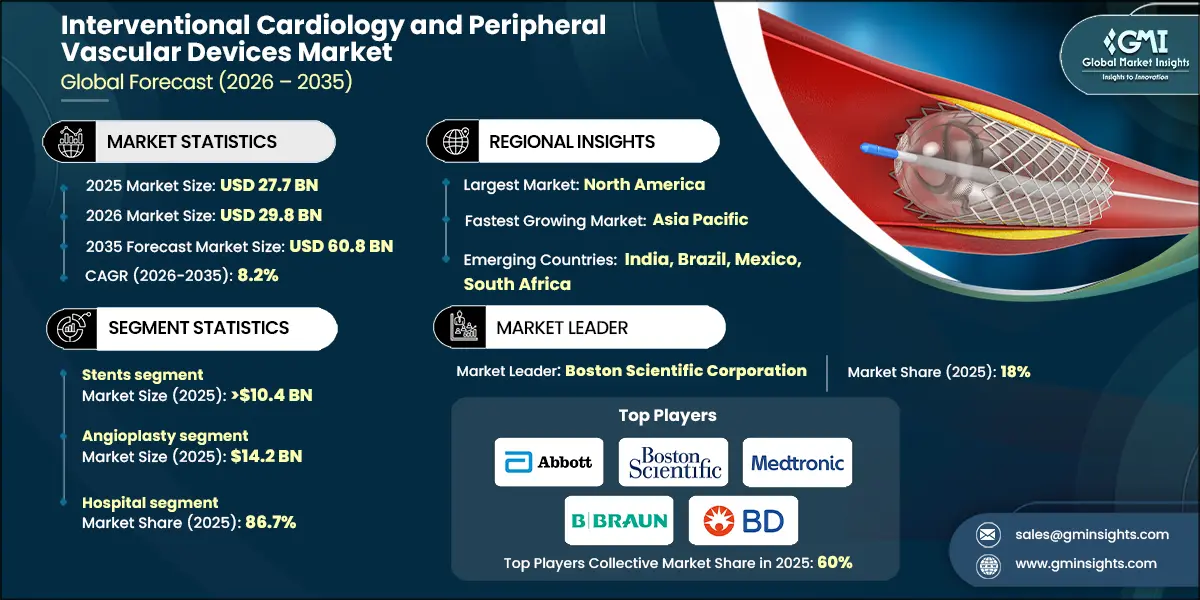
To get key market trends
Interventional Cardiology and Peripheral Vascular Devices Market Trends
- Technological advancements in peripheral vascular devices have become a key driver for market growth, enabling safer, more effective, and minimally invasive treatments for complex vascular conditions. These innovations are transforming clinical outcomes and expanding the scope of endovascular interventions.
- Drug-eluting technologies, including drug-eluting stents (DES) and drug-coated balloons (DCB), are reducing restenosis rates and improving long-term vessel patency. For example, Medtronic’s IN.PACT Admiral DCB and Boston Scientific’s Ranger DCB are widely adopted for treating femoropopliteal lesions, offering superior efficacy compared to plain angioplasty.
- Bioresorbable scaffolds represent a breakthrough in device technology by eliminating permanent implants while maintaining vessel support during healing. Abbott’s Esprit BTK scaffold, approved by the FDA is designed for below-the-knee interventions, addressing the needs of diabetic and critical limb ischemia patients.
- Advanced imaging integration, such as intravascular ultrasound (IVUS) and optical coherence tomography (OCT), enhancing procedural precision and device selection. Companies like Abbott and Boston Scientific are leading in OCT and IVUS solutions, enabling real-time visualization for optimized stent placement and improved patient outcomes.
- Collectively, these advancements are reshaping the interventional cardiology and peripheral vascular devices industry by improving clinical efficacy, reducing complications. This convergence of device innovation and minimally invasive techniques is driving strong adoption globally.
Interventional Cardiology and Peripheral Vascular Devices Market Analysis
Learn more about the key segments shaping this market
By product, the market is segmented into interventional catheters, guidewires, stents, PTCA balloons, atherectomy devices, chronic total occlusion devices, synthetic surgical grafts, embolic protection devices, IVC filters, and other products. The stents segment accounted for over USD 10.4 billion in 2025.
- Stents are small expandable mesh tubes that are designed to restore blood flow in narrowed or blocked arteries. Stents can be utilized for both the treatment of coronary and peripheral artery disease (CAD) by means of coronary and peripheral interventions.
- The stents segment dominates the market because it offers minimally invasive treatment with strong, consistent clinical results. Drug‑eluting stents (DES) reduce restenosis, repeat procedures and shorten recovery time compared with surgery. Their reliability, broad indications, and continuous design improvements make stents the preferred choice in many cardiovascular and peripheral interventions.
- For instance, Medtronic’s Resolute Onyx Drug‑Eluting Stent is a leading example, featuring advanced CoreWire technology and a thin‑strut design for superior deliverability and long‑term safety. It is widely used in complex coronary interventions and supported by strong clinical evidence, making it a benchmark in stent innovation.
- Therefore, the continuous advancement of stent technology, combined with the rising prevalence of cardiovascular diseases and the increasing adoption of minimally invasive procedures, is fueling market growth.
Based on application, the interventional cardiology and peripheral vascular devices market is segmented into congenital heart defect correction, coronary thrombectomy, angioplasty, valvuloplasty, percutaneous valve repair, and other applications The angioplasty segment dominated the market with the largest revenue of USD 14.2 billion in 2025 and is expected to grow at a lucrative CAGR of 8.3% over the forecast period.
- Angioplasty is a minimally invasive procedure that involves inflating a balloon inside the artery to open the vessel, often followed by stent placement. It is primarily performed for coronary artery disease and peripheral artery disease, reducing the need for open-heart surgery and enabling faster recovery.
- The growing prevalence of cardiovascular diseases and the preference for less invasive treatments have made angioplasty one of the most common interventional procedures globally. According to Eurostat, in 2021, across 25 EU countries, there were approximately 1.1 million transluminal coronary angioplasty procedures performed, indicating widespread adoption of this technique in modern cardiovascular care. This high procedural volume reflects the critical role angioplasty plays in managing heart disease and improving patient outcomes.
- Technological advancements have further strengthened the angioplasty segment. Innovations such as drug-coated balloons, imaging-guided interventions, and improved catheter designs have enhanced procedural safety and efficacy. Leading companies like Medtronic, Abbott, and Boston Scientific offer advanced angioplasty solutions integrated with stent systems, ensuring optimal results in complex lesions.
- Overall, the increasing burden of cardiovascular diseases, coupled with continuous innovation and strong procedural demand, positions angioplasty as a dominant application segment driving growth in the interventional cardiology and peripheral vascular devices market.
Learn more about the key segments shaping this market
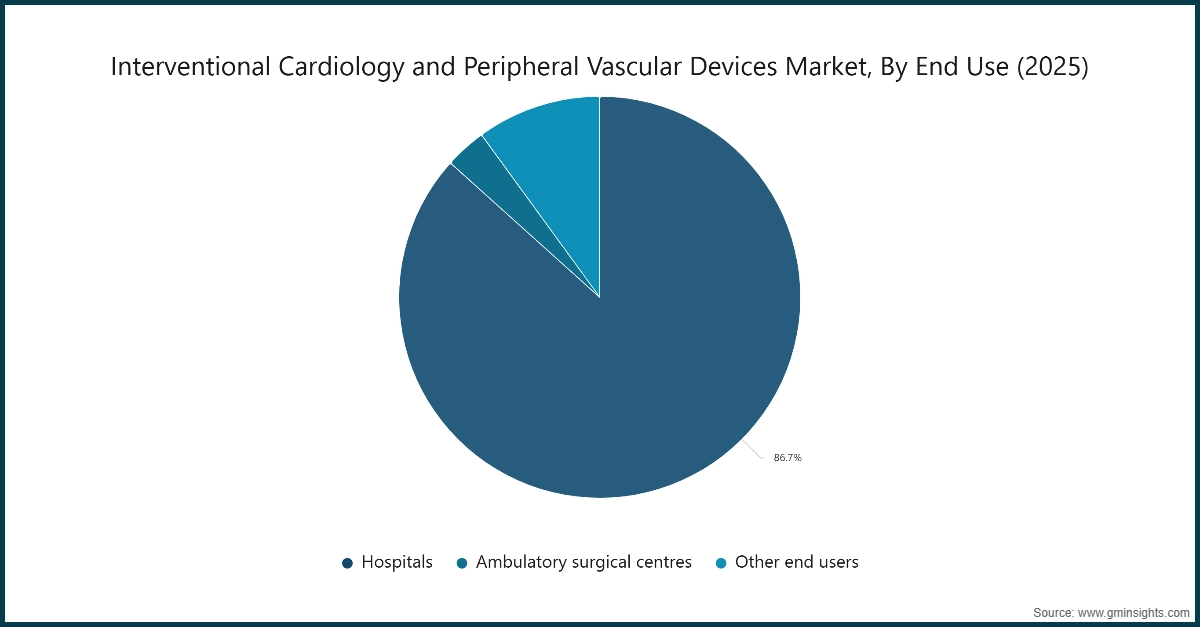
Based on end use, the market is divided into hospitals, ambulatory surgical centres and other end users. The hospital segment accounted for around 86.7% market share in 2025.
- Hospitals represent the largest end-user segment for interventional cardiology and peripheral vascular devices, driven by their advanced infrastructure and ability to perform complex procedures. These facilities are equipped with catheterization labs, hybrid operating rooms, and skilled specialists, making them the primary setting for angioplasty, stent placement, and structural heart interventions.
- The dominance of hospitals is supported by the high volume of cardiovascular and peripheral vascular procedures performed in inpatient settings. Patients with severe coronary artery disease, peripheral artery disease, and other vascular complications often require comprehensive care, which hospitals can provide through integrated diagnostic and therapeutic services.
- Hospitals also benefit from favorable reimbursement policies and government funding for cardiovascular care, enabling them to adopt cutting-edge technologies such as drug-eluting stents, imaging systems, and robotic-assisted platforms. Leading device manufacturers often prioritize partnerships with hospitals to ensure product availability and training for complex interventions.
- Overall, hospitals play a critical role in driving market growth by offering advanced treatment options, ensuring patient safety, and supporting the adoption of innovative interventional devices.
Looking for region specific data?
North America Interventional Cardiology and Peripheral Vascular Devices Market
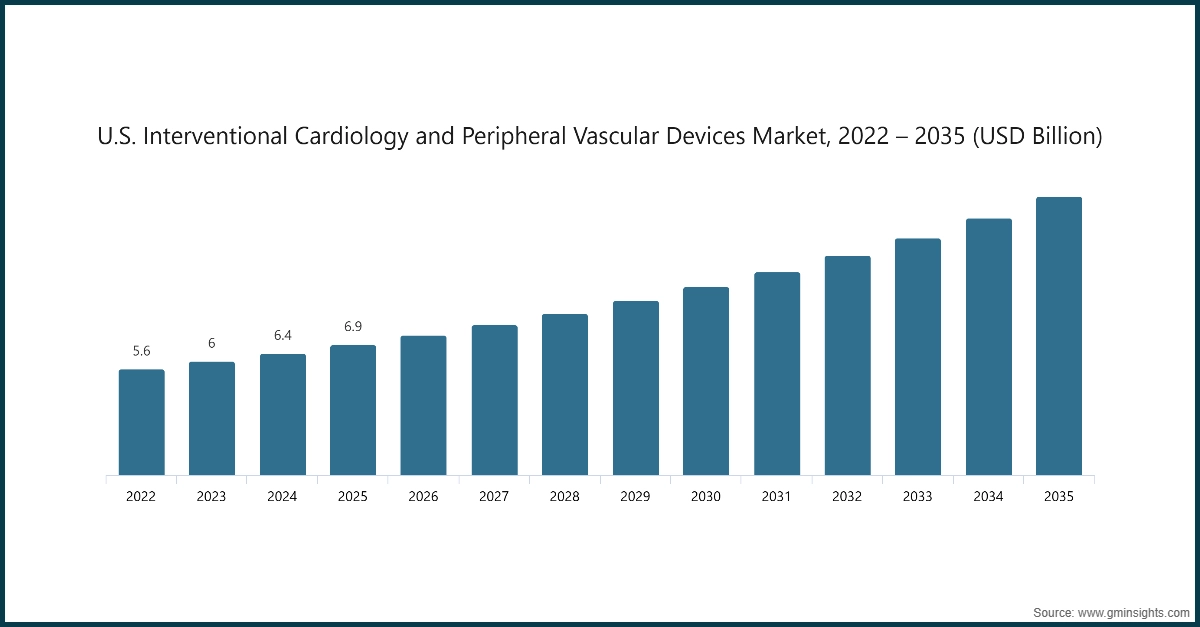
North America is a leading region in the global interventional cardiology and peripheral vascular devices industry, with a revenue share of 28% in 2025.
- North America holds a dominant position in the market, driven by the high prevalence of coronary artery disease and cardiovascular conditions. According to the CDC, coronary heart disease is the most common type of heart disease, causing 371,506 deaths in 2022. About 1 in 20 adults aged 20 and older have coronary artery disease (approximately 5%), and 805,000 U.S. population experience a heart attack each year, including 200,000 repeat cases. These alarming figures highlight the growing need for advanced interventional solutions such as angioplasty, stent placement, and peripheral vascular therapies to manage complex cases and reduce mortality rates.
- The region benefits from well-established healthcare infrastructure, favorable reimbursement policies, and rapid adoption of minimally invasive technologies. Leading companies like Medtronic, Abbott, and Boston Scientific have strong market penetration in North America, offering innovative products such as drug-eluting stents, imaging systems, and atherectomy devices. The increasing burden of cardiovascular diseases, combined with technological advancements and patient preference for less invasive procedures, continues to fuel market growth, positioning North America as a key region in this sector.
Europe Interventional Cardiology and Peripheral Vascular Devices Market
Europe market accounted for USD 6.2 billion in 2025 and is anticipated to show lucrative growth over the forecast period.
- Cardiovascular disease (CVD) continues to be the leading cause of mortality in Europe, creating significant healthcare challenges. According to Eurostat, in 2022, diseases of the circulatory system caused 1.68 million deaths in the EU, accounting for 32.7% of all deaths, surpassing cancer at 22.3%. CVD represents approximately one in three deaths and affects around 62 million people in the EU, highlighting its widespread prevalence.
- Additionally, the economic burden of CVD exceeds EURO 280 billion annually, driving governments and healthcare providers to adopt preventive strategies and invest in advanced technologies. Initiatives such as salt reduction programs, hypertension management, and the integration of digital health solutions are improving disease monitoring and treatment outcomes. Additionally, advancements in minimally invasive procedures and telecardiology are enhancing patient care and accessibility. These developments, coupled with rising awareness and healthcare spending, are creating strong demand for innovative solutions, thus increasing market growth.
Germany interventional cardiology and peripheral vascular devices market is projected to experience steady growth between 2026 and 2035.
- Germany faces a significant burden of coronary heart disease (CHD), which continues to drive demand for advanced cardiovascular interventions. In 2023, 119,795 people died due to CHD in Germany corresponding to an age-standardised mortality rate of 120 per 100,000 persons. The high prevalence of CHD, coupled with an aging population and increasing incidence of lifestyle-related risk factors, underscores the need for effective treatment options. These trends are fueling adoption of interventional cardiology devices such as stents, catheters, and balloon angioplasty systems to manage coronary artery blockages and improve patient outcomes.
- Peripheral vascular disease is also a growing concern, particularly among elderly patients and those with diabetes or hypertension. Rising cases of peripheral artery disease (PAD) are boosting demand for minimally invasive solutions, including atherectomy devices, drug-coated balloons, and vascular stents. These factors, along with increasing healthcare expenditure and patient awareness, are creating strong growth opportunities for interventional cardiology and peripheral vascular devices in Germany, thus increasing market growth.
Asia Pacific Interventional Cardiology and Peripheral Vascular Devices Market
The Asia Pacific region was valued at USD 9.4 billion in 2025.
- The Asia-Pacific region is witnessing significant growth in interventional cardiology and peripheral vascular devices, driven by the escalating burden of cardiovascular diseases (CVDs) and peripheral arterial disease (PAD). According to NIH-backed data, in 2021, CVDs affected 341.6 million people and accounted for 12.0 million deaths across the region. This high prevalence underscores the urgent need for advanced treatment options such as minimally invasive procedures, including angioplasty, stenting, and atherectomy, which are increasingly preferred for managing complex vascular conditions.
- China exemplifies this growing demand, recording 2.45 million new PAD cases and 28.5 million prevalent cases in 2021. The surge in PAD incidence, coupled with rising rates of diabetes, hypertension, and aging populations, is fueling adoption of peripheral vascular devices like drug-eluting stents, covered stents, and embolization systems. Government initiatives promoting local manufacturing and reimbursement, along with technological advancements such as bioresorbable scaffolds and intravascular lithotripsy, are expected to accelerate market growth, making Asia-Pacific a key region for strategic investments in interventional cardiology and peripheral vascular solutions.
Japan interventional cardiology and peripheral vascular devices market is poised to witness lucrative growth between 2026 – 2035.
- Japan’s market is expanding steadily, driven by the high burden of cardiovascular diseases (CVDs) and an aging population. According to the World Heart Federation, 371,917 deaths were attributed to CVD in 2021, making it one of the leading causes of mortality in the country. This significant disease prevalence has increased demand for minimally invasive procedures such as angioplasty, stenting, and atherectomy, which offer faster recovery and reduced complications compared to traditional surgeries.
- Technological advancements, including drug-eluting stents, bioresorbable scaffolds, and intravascular imaging systems, are further propelling market growth. With a rapidly aging population and rising incidence of coronary artery disease and peripheral arterial disease, Japan remains a key market for global players investing in innovative interventional solutions.
Latin America Interventional Cardiology and Peripheral Vascular Devices Market
- Brazil faces a significant cardiovascular disease burden, making it a key market for interventional cardiology and peripheral vascular devices. In 2021, the country reported 374,765 CVD-related deaths, with a crude mortality rate of 170 per 100,000 and an age-standardized mortality rate of 154 per 100,000, highlighting the urgent need for advanced treatment solutions. The growing prevalence of coronary artery disease and peripheral arterial disease, combined with risk factors such as diabetes and hypertension, is driving demand for effective interventions.
- A major market driver is the growing preference for minimally invasive procedures, including angioplasty, stenting, and atherectomy, which offer shorter recovery times, reduced complications, and improved patient outcomes compared to traditional surgeries. This trend, supported by technological advancements like drug-eluting stents and bioresorbable scaffolds, positions Brazil as a growing market.
Middle East and Africa Interventional Cardiology and Peripheral Vascular Devices Market
The interventional cardiology and peripheral vascular devices industry in Saudi Arabia is expected to experience significant and promising growth from 2026 to 2035.
- Saudi Arabia’s interventional cardiology and peripheral vascular devices industry is expanding rapidly, driven by the growing prevalence of coronary artery disease and peripheral arterial disease. Lifestyle factors such as diabetes, hypertension, and obesity, combined with an aging population, are increasing the need for advanced cardiovascular care. Hospitals and specialty clinics are adopting minimally invasive procedures like angioplasty, stenting, and atherectomy to improve patient outcomes and reduce recovery times.
- Government initiatives under Vision 2030, coupled with significant investments in healthcare infrastructure, are fostering the adoption of cutting-edge technologies such as drug-eluting stents, bioresorbable scaffolds, and intravascular imaging systems. The rising preference for minimally invasive interventions, along with supportive reimbursement policies and partnerships with global device manufacturers, positions Saudi Arabia as a high-potential market for innovative interventional solutions.
Interventional Cardiology and Peripheral Vascular Devices Market Share
- The top players in the market include Abbott, Boston Scientific Corporation, Medtronic, B. Braun Melsungen AG, and Becton, Dickinson and Company significantly accounting for market share of 60% of the total global market.
- These companies dominate through comprehensive product portfolios, advanced stent and catheter technologies, and strong distribution networks that ensure timely availability of devices for hospitals and specialty clinics.
- Leading players are enhancing operational efficiency by integrating digital platforms for procedure planning, leveraging AI-driven imaging and navigation systems, and expanding minimally invasive solutions to improve patient outcomes and reduce recovery times.
- Geographic expansion and strategic partnerships with healthcare providers and government agencies remain key strategies, particularly in emerging regions where demand for advanced cardiovascular interventions is rising due to increasing prevalence of coronary artery disease and peripheral arterial disease.
- Collaborations enable these organizations to co-develop next-generation devices, integrate real-time monitoring systems, and strengthen compliance with international regulatory standards. By combining technological innovation, regional penetration, and patient-centric initiatives, these players are positioned for sustained growth in the global market.
Interventional Cardiology and Peripheral Vascular Devices Market Companies
Few of the prominent players operating in the interventional cardiology and peripheral vascular devices industry include:
- Abbott Laboratories
- AngioDynamics
- B. Braun Melsungen AG
- Becton, Dickinson and Company
- Biotronik SE & Co. KG
- Boston Scientific Corporation
- Cardinal Health
- Cook Medical
- Cordis
- Endologix
- iVascular.
- Medtronic Plc
- Teleflex Inc.
- Terumo Corporation
- W.L. Gore & Associates, Inc.
·Boston Scientific Corporation
Boston Scientific has built a comprehensive portfolio spanning both interventional cardiology and peripheral vascular devices. In cardiology, its offerings include drug-eluting and bare-metal stents, balloon catheters, guidewires, embolic protection systems, and rotational atherectomy tools designed for complex coronary interventions. In the peripheral vascular space, the company’s products address peripheral artery disease with drug-eluting stents, drug-coated balloons, atherectomy systems, and duplex support for endovascular procedures.
Medtronic supports both interventional cardiology and peripheral vascular treatments with a full suite of devices. For cardiology, their portfolio includes coronary stents, guidewires, balloons, imaging tools, atherectomy systems, embolic protection devices, transcatheter valve systems, and technology to support complex PCI procedures. In the peripheral domain, Medtronic offers drug-coated balloons, directional and orbital atherectomy systems, embolic coils and plugs, thrombectomy devices, vascular access tools, and venous stents.
Abbott delivers integrated solutions across interventional cardiology and peripheral vascular therapies. Its cardiology range includes drug-eluting stents, guidewires, dilatation catheters, intravascular imaging (such as OCT with AI-powered Ultreon), and physiology systems. It also supports structural heart interventions like transcatheter valves. For peripheral vascular disease, Abbott offers carotid stent systems, embolic protection devices, atherectomy systems, balloons, stents, and vascular closure tools, enabling a comprehensive workflow from access to closure.
Interventional Cardiology and Peripheral Vascular Devices Market Report Attributes
| Key Takeaway | Details |
|---|---|
| Market Size & Growth | |
| Base Year | 2025 |
| Market Size in 2025 | USD 27.7 Billion |
| Market Size in 2026 | USD 29.8 Billion |
| Forecast Period 2026-2035 CAGR | 8.2% |
| Market Size in 2035 | USD 60.8 Billion |
| Key Market Trends | |
| Drivers | Impact |
| Growing prevalence of vascular diseases worldwide | Drives higher demand for interventional cardiology and peripheral vascular devices to treat coronary artery disease and peripheral arterial disease effectively. |
| Technological advancements in peripheral vascular devices | Encourages adoption of next-generation stents, atherectomy systems, and imaging tools, improving procedural outcomes and expanding market penetration. |
| Rising adoption of minimally invasive procedures | Boosts utilization of catheter-based interventions such as angioplasty and stenting, reducing hospital stays and accelerating recovery, thereby increasing device demand. |
| Increasing government spending pertaining to cardiovascular diseases burden | Facilitates improved access to advanced interventional technologies through reimbursement programs and infrastructure investments. |
| Pitfalls & Challenges | Impact |
| Stringent regulatory framework | Slows product approvals and market entry, increasing compliance costs for manufacturers and delaying innovation adoption. |
| Post-procedural complications associated with devices | Raises concerns among clinicians and patients, potentially limiting uptake and necessitating additional safety measures. |
| Opportunities: | Impact |
| Growth in outpatient and ambulatory surgical centers | Expands the use of minimally invasive interventional procedures in cost-effective settings, driving demand for portable and easy-to-use devices. |
| Increasing use of robotics in interventions | Creates opportunities for advanced robotic-assisted systems that enhance precision, reduce operator fatigue, and improve patient outcomes. |
| Market Leaders (2025) | |
| Market Leader |
Market Share of Boston Scientific Corporation is 18% |
| Top Players |
Top 5 Players Collective Market Share is 60% |
| Competitive Edge |
|
| Regional Insights | |
| Largest Market | North America |
| Fastest growing market | Asia Pacific |
| Emerging countries | India, Brazil, Mexico, South Africa |
| Future outlook |
|
What are the growth opportunities in this market?
Interventional Cardiology and Peripheral Vascular Devices Industry News:
- In April 2024, Abbott Laboratories achieved a major milestone with FDA approval of the Esprit BTK Everolimus-Eluting Resorbable Scaffold System, a first-of-its-kind dissolving stent designed for below-the-knee peripheral artery disease (BTK). This device provides temporary vessel support and then naturally resorbs, restoring normal vessel function and reducing long-term complications. The subsequent CE mark in August 2025 expanded its availability to European markets, reinforcing Abbott’s leadership in innovative vascular solutions and setting a new benchmark for advanced PAD treatment.
- In July 2025, Cook Medical announced the U.S. launch of its Zenith Iliac Branch Device (ZBIS), following FDA approval. This device is engineered to treat complex aortoiliac aneurysms while preserving blood flow to the internal iliac artery, offering a minimally invasive alternative to traditional surgical repair. The first patients have already been treated successfully, marking a significant advancement in endovascular therapy and strengthening Cook Medical’s position as a key innovator in vascular intervention technologies.
The interventional cardiology and peripheral vascular devices market research report includes an in-depth coverage of the industry with estimates and forecast in terms of revenue in USD Million and from 2022 – 2035 for the following segments:
Market, By Product
- Interventional catheters
- Guidewires
- Stents
- Bioabsorbable stents
- Drug eluting stents
- Bare metal stents
- Other stents
- PTCA balloons
- Atherectomy devices
- Chronic total occlusion devices
- Synthetic surgical grafts
- Embolic protection devices
- Inferior vena cava filters
- Other products
Market, By Application
- Congenital heart defect correction
- Coronary thrombectomy
- Angioplasty
- Valvuloplasty
- Percutaneous valve repair
- Other applications
Market, By End Use
- Hospitals
- Ambulatory surgical centers
- Other end users
The above information is provided for the following regions and countries:
- North America
- U.S.
- Canada
- Europe
- Germany
- UK
- France
- Italy
- Spain
- Netherlands
- Asia Pacific
- China
- India
- Japan
- Australia
- South Korea
- Latin America
- Brazil
- Mexico
- Argentina
- Middle East and Africa
- Saudi Arabia
- South Africa
- UAE
Frequently Asked Question(FAQ) :
What is the market size of the interventional cardiology and peripheral vascular devices in 2025?
The market size was USD 27.7 billion in 2025, with a CAGR of 8.2% expected through 2035 driven by growing prevalence of vascular diseases worldwide.
What is the projected value of the interventional cardiology and peripheral vascular devices market by 2035?
The interventional cardiology and peripheral vascular devices market is expected to reach USD 60.8 billion by 2035, propelled by increasing government spending on cardiovascular disease burden.
What is the current interventional cardiology and peripheral vascular devices market size in 2026?
The market size is projected to reach USD 29.8 billion in 2026.
How much revenue did the stents segment generate in 2025?
The stents segment generated over USD 10.4 billion in 2025, dominating the market due to minimally invasive treatment with strong clinical results and continuous design improvements.
What was the market value of the angioplasty segment in 2025?
The angioplasty segment exceeded USD 14.2 billion in 2025 and is expected to grow at a CAGR of 8.3% over the forecast period, driven by growing prevalence of cardiovascular diseases and preference for less invasive treatments.
What was the market share of the hospitals segment in 2025?
The hospitals segment held approximately 86.7% market share in 2025, representing the largest end-user segment due to advanced infrastructure and ability to perform complex procedures.
Which region leads the interventional cardiology and peripheral vascular devices market?
North America leads with a revenue share of 28% in 2025, driven by high prevalence of coronary artery disease and well-established healthcare infrastructure.
What are the upcoming trends in the interventional cardiology and peripheral vascular devices market?
Key trends include advancement of drug-eluting technologies including drug-eluting stents and drug-coated balloons for reducing restenosis, development of bioresorbable scaffolds that eliminate permanent implants.
Who are the key players in the interventional cardiology and peripheral vascular devices market?
Key players include Abbott Laboratories, Boston Scientific Corporation, Medtronic, B. Braun Melsungen AG, Becton, Dickinson and Company, AngioDynamics, Biotronik SE & Co. KG, Cardinal Health, Cook Medical, Cordis, Endologix, iVascular, Teleflex Inc., Terumo Corporation, and W.L. Gore & Associates, Inc.
Interventional Cardiology and Peripheral Vascular Devices Market Scope
Related Reports