Summary
Table of Content

Insulin Pen Market
Get a free sample of this report
Form submitted successfully!
Error submitting form. Please try again.
Thank you!
Your inquiry has been received. Our team will reach out to you with the required details via email. To ensure that you don't miss their response, kindly remember to check your spam folder as well!
Request Sectional Data
Thank you!
Your inquiry has been received. Our team will reach out to you with the required details via email. To ensure that you don't miss their response, kindly remember to check your spam folder as well!
Form submitted successfully!
Error submitting form. Please try again.
Insulin Pen Market Size
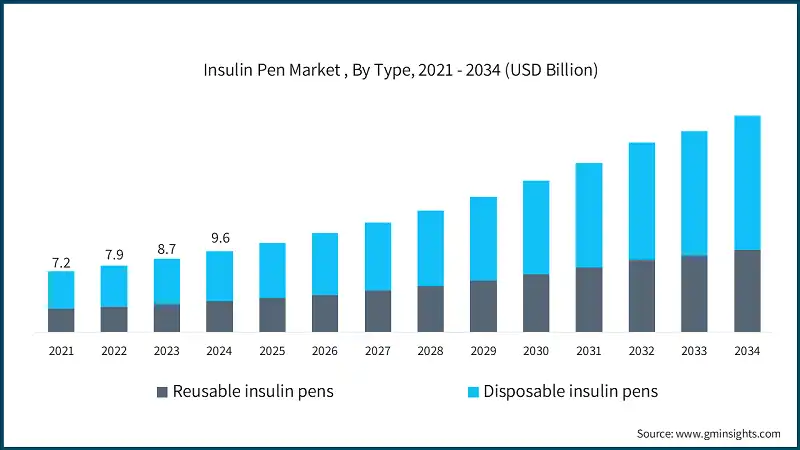
The global insulin pen market was valued at USD 9.6 billion in 2024. The market is expected to grow from USD 10.6 billion in 2025 to USD 25.6 billion in 2034, at a CAGR of 10.3% from 2025 to 2034, according to the latest report published by Global Market Insights Inc. This growth is attributed to the rising prevalence of diabetes, ongoing technological advancements in insulin pens, and increasing awareness around self-management of diabetes. Additionally, the demand for user-friendly, portable, and precise insulin delivery solutions further supports market expansion.

To get key market trends
The insulin pen industry is the segment of the diabetes care market concerning devices that deliver insulin in a convenient, precise, and easy-to-use format. Pens are crucial in enhancing treatment compliance and facilitating effective self-care of diabetes in various patient populations. The industry players comprise Novo Nordisk, Eli Lilly, Sanofi, Becton, Dickinson and Company, and Ypsomed. These companies dominate the market through continuous innovation in pen technology, strategic collaborations, and robust global distribution networks.
The insulin pen market is witnessing steady growth, growing from USD 7.2 billion in 2021 to USD 8.7 billion in 2023. The expansion of the market is triggered by the increase in global diabetes prevalence. Based on the World Health Organization (WHO) report in 2024, the number of diabetic individuals rose from 200 million in 1990 to 830 million in 2022. Its spread has been increasing more quickly in low- and middle-income nations compared to high-income countries. Diabetes, in 2021, was the direct reason behind 1.6 million deaths, with 47% of them happening before the age of 70. The rise in cases has dramatically increased demand for easy-to-use and efficient insulin delivery systems. Insulin pens, due to their ease of use, precision, and patient-friendly mechanism, are now becoming the first choice over conventional syringes, thus revolutionizing the future of diabetes control.
Moreover, increasing initiatives by global health organizations and national governments are contributing significantly to the growth of the insulin pen market. The World Health Organization (WHO) launched the Global Diabetes Compact with a vision to reduce the risk of diabetes and ensure equitable, comprehensive, affordable, and quality treatment for all diagnosed individuals. As part of this program, WHO has outlined five global coverage targets to be achieved by 2030, aimed at improving diagnosis, treatment, and access to essential diabetes care. These efforts, along with growing regulatory support and public-private collaborations, are driving the adoption of insulin pens as a preferred method for insulin delivery worldwide.
The market refers to the segment of the diabetes care industry focused on manufacturing and distributing pen-shaped devices used to inject insulin. These devices are designed to simplify the process of insulin administration for people with diabetes, offering greater convenience, accuracy, and ease of use compared to traditional syringes.
Insulin Pen Market Report Attributes
| Key Takeaway | Details |
|---|---|
| Market Size & Growth | |
| Base Year | 2024 |
| Market Size in 2024 | USD 9.6 Billion |
| Market Size in 2025 | USD 10.6 Billion |
| Forecast Period 2025 - 2034 CAGR | 10.3% |
| Market Size in 2034 | USD 25.6 Billion |
| Key Market Trends | |
| Drivers | Impact |
| Rising prevalence of diabetes | The growing number of diabetes cases globally, especially in low- and middle-income countries, is driving demand for insulin delivery solutions. |
| Technological advancements in insulin pens | Continuous improvements in pen design, such as dose accuracy, ease of use, and portability, are enhancing patient experience and encouraging wider adoption. These innovations are also helping healthcare providers offer more personalized and efficient care. |
| Enhanced awareness of self-management of diabetes | Increasing education and awareness campaigns are empowering patients to take control of their condition. As a result, more individuals are opting for insulin pens over traditional syringes due to their simplicity and user-friendly features. |
| Pitfalls & Challenges | Impact |
| High cost of insulin pens | The relatively high price of insulin pens, especially branded or advanced models, can limit access for patients in low-income regions. This cost barrier may slow market penetration and shift demand toward more affordable alternatives. |
| Limited penetration in low-income regions | Despite growing demand, insulin pens remain underutilized in many developing countries due to a lack of awareness, limited healthcare infrastructure, and affordability issues. This creates a gap in equitable access to modern diabetes care. |
| Opportunities: | Impact |
| Integration of smart features and digital platforms | The integration of digital tools with insulin pens, such as dose tracking and connectivity with health apps, presents a major growth opportunity. These features can improve treatment adherence, enable remote monitoring, and support data-driven healthcare decisions. |
| Market Leaders (2024) | |
| Market Leaders |
30% market share. |
| Top Players |
Collective Market Share is 54% |
| Competitive Edge |
|
| Regional Insights | |
| Largest Market | North America |
| Fastest Growing Market | Asia Pacific |
| Emerging Countries | China, India, Brazil, Mexico, South Africa |
| Future outlook |
|
What are the growth opportunities in this market?
Insulin Pen Market Trends
- The global market is undergoing significant evolution, driven by the rising global burden of diabetes and the growing need for convenient, accurate, and patient-friendly insulin delivery solutions. As more patients shift toward self-management, insulin pens are becoming the preferred choice over traditional syringes.
- Innovation is a key stimulator, with companies continuously enhancing pen design to improve dosing precision, ease of use, and patient comfort. Many pens now feature simplified mechanisms, ergonomic grips, and prefilled cartridges to reduce user error and improve adherence. For instance, the Admelog SoloStar insulin pen from Sanofi offers a prefilled, disposable option designed for ease of use and accurate dosing, supporting better glycemic control in patients managing mealtime insulin needs.
- Emerging markets in Asia Pacific, Latin America, and Africa are becoming increasingly influential, with growing diabetic populations, improving healthcare infrastructure, and rising awareness of modern diabetes care. Local manufacturing and strategic partnerships are helping companies expand their footprint in these regions.
- Affordability and accessibility remain key challenges, particularly in underserved regions. High costs and limited distribution networks can hinder adoption, prompting manufacturers to explore cost-effective models and localized production strategies.
- The market is also responding to the need for efficiency in clinical and home settings, with prefilled and disposable pens reducing preparation time and minimizing dosing errors. These devices are especially valuable in resource-constrained environments where ease of use and reliability are critical.
- Regulatory bodies are encouraging the adoption of safer, more standardized insulin delivery devices, aligning with broader healthcare goals to reduce complications and improve long-term outcomes for people with diabetes.
Insulin Pen Market Analysis
Learn more about the key segments shaping this market
Based on type, the global insulin pen market is divided into reusable and disposable insulin pens. The reusable insulin pens segment accounted for 37.7% of the market in 2024 due to their cost-effectiveness over long-term use, environmental sustainability, and compatibility with replaceable insulin cartridges. The segment is expected to exceed USD 9.8 billion by 2034, growing with the fastest CAGR of 10.5% during the forecast period.
On the other hand, the disposable insulin pen segment is expected to grow with a slightly lower CAGR of 10.3%. The growth of this segment is driven by its ease of use, convenience, and minimal maintenance requirements, making it especially suitable for elderly patients and those newly diagnosed with diabetes.
- Disposable insulin pens continue to dominate the insulin delivery market, offering a prefilled, ready-to-use format that simplifies daily insulin administration. These pens are particularly favoured by patients seeking convenience, minimal maintenance, and reduced handling complexity. Their single-use design ensures hygiene, reduces dosing errors, and supports better compliance, especially among elderly individuals and those newly diagnosed with diabetes.
- Ease of use and accessibility make disposable pens the most widely adopted insulin delivery devices globally. Their intuitive design lowers the training barrier for patients and caregivers, making them suitable for both clinical and home settings. This widespread familiarity, combined with support from public health programs, reinforces their market leadership.
- Product innovation continues to enhance the appeal of disposable pens. For example, Sanofi’s Admelog SoloStar and Apidra SoloStar offer rapid-acting insulin in compact, prefilled formats designed for mealtime glucose control. Meanwhile, Novo Nordisk’s Fiasp FlexTouch delivers ultra-fast insulin, improving dosing accuracy and patient comfort. These products reflect ongoing efforts to improve usability, reduce injection force, and support better glycemic outcomes.
- Manufacturers are investing in ergonomic designs, smoother injection mechanisms, and clearer dose indicators, making disposable pens more user-friendly and reliable. These enhancements support consistent treatment outcomes and make the devices suitable for a wide range of patient needs.
- While reusable pens offer long-term cost and environmental benefits, disposable pens maintain a strong market position due to their simplicity, portability, and compatibility with large-scale distribution models. Their role in public health initiatives and insurance-covered treatment plans ensures sustained demand and continued innovation.
Based on the indication, the insulin pen market is segmented into type 1 diabetes, type 2 diabetes, and gestational diabetes. The type 1 diabetes segment dominated the market in 2024 with a revenue of USD 5.6 billion.
- Type 1 diabetes patients require consistent and lifelong insulin therapy, making insulin pens a vital tool for daily management. Their ease of use, dosing accuracy, and portability make them especially suitable for individuals who need multiple injections per day.
- According to the Centers for Disease Control and Prevention (CDC), as reported in 2024, approximately 352,000 children and adolescents under the age of 20 in the U.S. had diagnosed diabetes, including 304,000 with type 1 diabetes. This high prevalence among youth highlights the importance of accessible and user-friendly insulin delivery options.
- The dominance of this segment is further supported by the availability of specialized products tailored for type 1 diabetes management. In addition to Sanofi’s Admelog SoloStar and Apidra SoloStar, and Novo Nordisk’s Fiasp FlexTouch, other notable offerings include Eli Lilly’s Basaglar KwikPen, which provides long-acting insulin in a disposable format. These products are designed to enhance dosing precision, improve treatment adherence, and support better glycemic outcomes.
Learn more about the key segments shaping this market
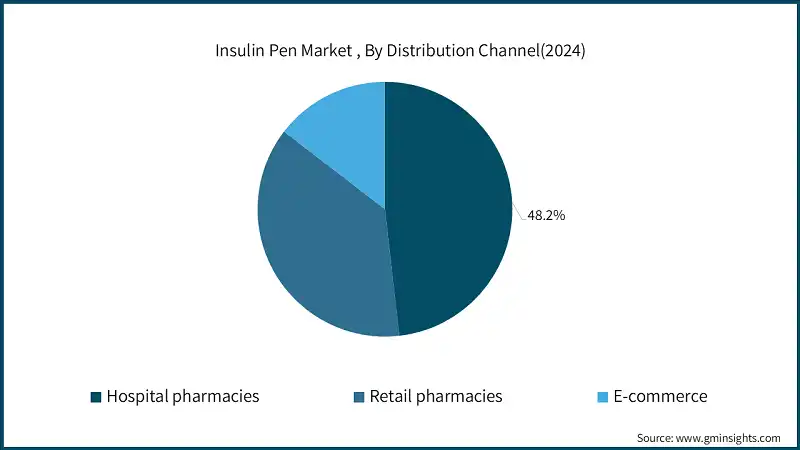
Based on distribution channels, the insulin pen market is classified into hospital pharmacies, retail pharmacies, and e-commerce. The hospitals pharmacies segment dominated the market in 2024 and is expected to reach 12.2 billion within the forecast period.
- Hospital pharmacies serve as primary distribution hubs for insulin pens, especially for newly diagnosed patients and those undergoing inpatient diabetes management. These settings are equipped to handle complex treatment protocols, ensuring accurate dosing and timely administration, which reinforces the demand for reliable insulin delivery devices.
- Hospitals often manage high volumes of insulin prescriptions, particularly for patients with type 1 diabetes and those requiring intensive glycemic control. This consistent demand supports bulk procurement and formulary inclusion of insulin pens, contributing to the segment’s dominant market share.
- Institutional purchasing practices in hospitals favor standardized, easy-to-administer devices, making disposable insulin pens a preferred choice. Their prefilled format and minimal training requirements align well with hospital workflows, reducing administration time and improving patient safety.
- Leading hospital networks and healthcare systems are investing in streamlined supply chains and centralized procurement, which facilitates large-scale distribution of insulin pens. This infrastructure supports consistent availability and rapid deployment of insulin pens across departments, ensuring uninterrupted diabetes care.
Looking for region specific data?
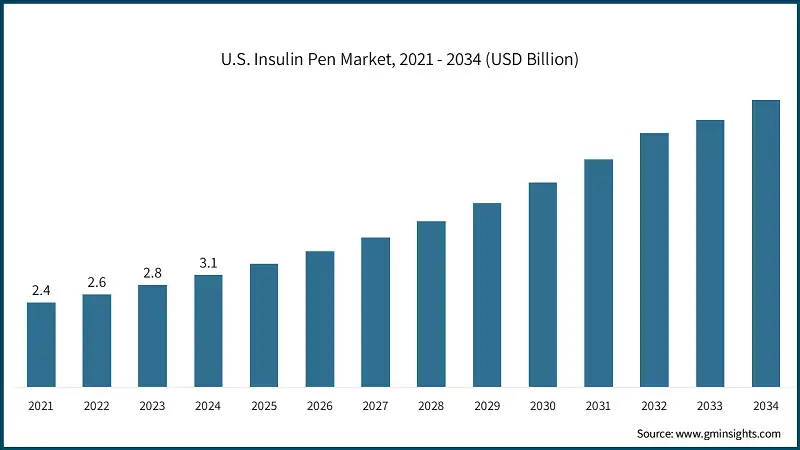
North America Insulin Pen Market The U.S. insulin pen market was valued at USD 2.4 billion and USD 2.6 billion in 2021 and 2022, respectively. The market size reached USD 3.1 billion in 2024, growing from USD 2.8 billion in 2023. Europe market accounted for USD 2.7 billion in 2024 and is anticipated to show lucrative growth over the forecast period. Germany dominates the European insulin pen market, showcasing strong growth potential. The Asia Pacific insulin pen market is anticipated to grow at the highest CAGR of 10.5% during the analysis timeframe. China insulin pen market is estimated to grow with a significant CAGR in the Asia Pacific market. Brazil leads the Latin American market, exhibiting remarkable growth during the analysis period. The Saudi Arabia market is expected to experience substantial growth in the Middle East and Africa market in 2024. The insulin pen market is shaped by a mix of established global leaders and emerging innovators, creating a dynamic and moderately consolidated competitive landscape. Novo Nordisk leads the market with an estimated ~30% market share, followed by other top players including Eli Lilly, Sanofi, Ypsomed, and Becton, Dickinson and Company. Collectively, these five companies account for approximately 54% of the global market share. Their dominance is maintained through strategic investments in research and development, geographic expansion, and regulatory compliance, while also tailoring insulin delivery solutions to meet the evolving needs of patients across diverse healthcare systems. To strengthen their market positions, leading firms are adopting multi-pronged strategies, including acquisitions, partnerships, and competitive pricing. These efforts aim to make insulin pens more accessible and cost-effective while also addressing unmet clinical needs in both developed and emerging markets. In addition to these dominant players, companies such as Owen Mumford, Medtronic, and Biocon Biologics are contributing to the market’s growth through technological innovation, precision delivery systems, and region-specific strategies. Their presence is particularly notable in Asia-Pacific, Latin America, and the Middle East, where rising diabetes prevalence and expanding healthcare infrastructure are driving increased adoption of insulin delivery solutions. Overall, the market is witnessing intensified competition and greater diversity, as both established and emerging players continue to evolve their offerings and strategies to meet the global demand for effective and efficient insulin pen devices. Prominent players operating in the insulin pen industry are as mentioned below: Ypsomed is a key player in the insulin delivery space, known for its innovation in self-injection systems and pen technology. The company offers a wide range of customizable pen injectors and smart insulin pens that support digital health integration. With a strong focus on user-centric design, sustainability, and partnerships with major insulin manufacturers, Ypsomed continues to expand its global footprint. Becton, Dickinson and Company is a global leader in medical technology, with a robust portfolio of pen needles and injection systems. The company’s strength lies in its precision engineering, safety innovations, and broad distribution network. Becton, Dickinson and Company’s commitment to diabetes care is reflected in its continuous development and integrated delivery solutions, making it a trusted partner for both patients and healthcare providers worldwide. Owen Mumford specializes in innovative injection devices, including auto-injectors and pen injectors designed for ease of use and patient comfort. The company is recognized for its ergonomic designs, reusable pen platforms, and sustainability initiatives. With a strong presence and growing partnerships in emerging markets, Owen Mumford plays a vital role in expanding access to affordable and user-friendly insulin delivery solution.Europe Insulin Pen Market
Asia Pacific Insulin Pen Market
Latin American Insulin Pen Market
Middle East and Africa Insulin Pen Market
Insulin Pen Market Share
Insulin Pen Market Companies
Insulin Pen Industry News
The insulin pen market research report includes in-depth coverage of the industry with estimates and forecast in terms of revenue in USD Million from 2021 – 2034 for the following segments:
Market, By Type
- Reusable insulin pens
- Disposable insulin pens
Market, By Indication
- Type 1 diabetes
- Type 2 diabetes
- Gestational diabetes
Market, By Distribution Channel
- Hospital pharmacies
- Retail pharmacies
- E-commerce
The above information is provided for the following regions and countries:
- North America
- U.S.
- Canada
- Europe
- Germany
- UK
- France
- Spain
- Italy
- Netherlands
- Asia Pacific
- China
- India
- Japan
- Australia
- South Korea
- Latin America
- Brazil
- Mexico
- Argentina
- Middle East and Africa
- South Africa
- Saudi Arabia
- UAE
Frequently Asked Question(FAQ) :
What is the market size of the insulin pen market in 2024?
The market size was USD 9.6 billion in 2024, driven by the rising prevalence of diabetes, technological advancements in insulin pens, and increasing awareness of diabetes self-management.
Who are the key players in the insulin pen market?
Key players include Becton, Dickinson and Company, Biocon Biologics, Dongbao Pharmaceutical, Eli Lilly and Co, Gan & Lee Pharmaceuticals, Haselmeier, Julphar, Medmix, Medtronic, Novo Nordisk, and Owen Mumford.
What are the key trends in the insulin pen industry?
Key trends include the shift toward self-management of diabetes, innovations in pen design for improved dosing precision and user comfort, and the growing adoption of prefilled and disposable insulin pens.
What was the valuation of the type 1 diabetes segment?
The type 1 diabetes segment generated USD 5.6 billion in revenue in 2024, dominating the market by indication.
What was the valuation of the U.S. insulin pen market in 2024?
The U.S. market was valued at USD 3.1 billion in 2024, growing from USD 2.8 billion in 2023.
What is the projected size of the insulin pen market in 2025?
The market is expected to reach USD 10.6 billion in 2025.
How much revenue did the reusable insulin pen segment generate?
The reusable insulin pen segment accounted for 37.7% of the market in 2024 and is projected to exceed USD 9.8 billion by 2034, growing at the fastest CAGR of F during the forecast period.
What is the projected value of the insulin pen market by 2034?
The market is expected to reach USD 25.6 billion by 2034, growing at a CAGR of 10.3% from 2025 to 2034, supported by demand for user-friendly and precise insulin delivery solutions.
Insulin Pen Market Scope
Related Reports