Summary
Table of Content

Insulin Delivery Devices Market
Get a free sample of this report
Form submitted successfully!
Error submitting form. Please try again.
Thank you!
Your inquiry has been received. Our team will reach out to you with the required details via email. To ensure that you don't miss their response, kindly remember to check your spam folder as well!
Request Sectional Data
Thank you!
Your inquiry has been received. Our team will reach out to you with the required details via email. To ensure that you don't miss their response, kindly remember to check your spam folder as well!
Form submitted successfully!
Error submitting form. Please try again.
Insulin Delivery Devices Market Size
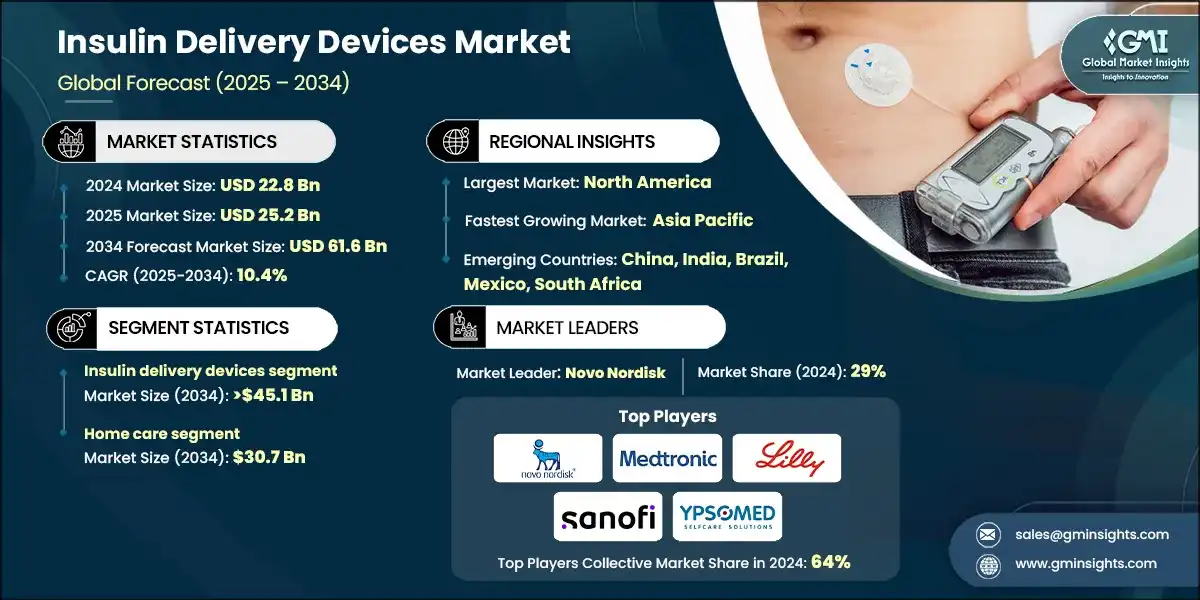
The global insulin delivery devices market was valued at USD 22.8 billion in 2024. The market is expected to grow from USD 25.2 billion in 2025 to USD 61.6 billion in 2034, at a CAGR of 10.4% during the forecast period, according to the latest report published by Global Market Insights Inc. The insulin delivery device market is witnessing robust growth, driven by the rising prevalence of diabetes, continuous technological innovation, and increasing awareness around self-management of the condition. The demand for user-friendly, portable, and precise insulin delivery solutions such as insulin pens, pumps, and patch devices is expanding rapidly, as patients seek more convenient and effective ways to manage their glucose levels.
To get key market trends
This market segment plays a critical role in enhancing treatment adherence and enabling personalized diabetes care across diverse patient populations. Leading companies such as Novo Nordisk A/S, Ypsomed Holdings AG, Medtronic plc, Tandem Diabetes Care, and Sanofi are at the forefront of this industry. These players maintain their competitive edge through continuous innovation in device technology, strategic partnerships, and strong global distribution networks, all aimed at improving patient outcomes and simplifying diabetes management.
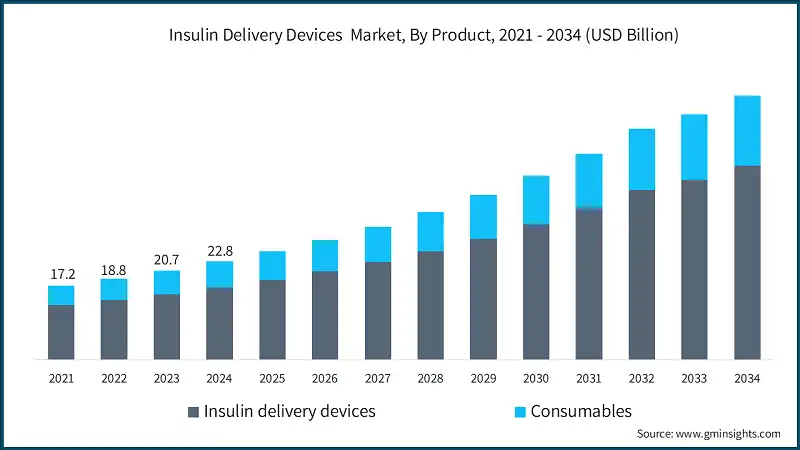
Insulin delivery devices market is witnessing sharp growth, growing from USD 17.2 billion in 2021 to USD 20.7 billion in 2023. The expansion of the market is triggered by the increase in global diabetes prevalence. Based on the World Health Organization (WHO) report in 2024, the number of diabetic individuals rose from 200 million in 1990 to 830 million in 2022. Its spread has been increasing more quickly in low- and middle-income nations compared to high-income countries. Diabetes, in 2021, was the direct reason behind 1.6 million deaths, with 47% of them happening before the age of 70. The rise in cases has dramatically increased demand for easy-to-use and efficient insulin delivery systems.
Moreover, increasing initiatives by global health organizations and national governments are contributing significantly to the growth of the insulin delivery devices market. The World Health Organization (WHO) launched the Global Diabetes Compact with a vision to reduce the risk of diabetes and ensure equitable, comprehensive, affordable, and quality treatment for all diagnosed individuals. As part of this program, WHO has outlined five global coverage targets to be achieved by 2030, aimed at improving diagnosis, treatment, and access to essential diabetes care. These efforts, along with growing regulatory support and public-private collaborations, are driving the adoption of insulin delivery devices worldwide.
Insulin delivery devices are medical tools designed to administer insulin to individuals with diabetes in a safe, accurate, and convenient manner. These devices play a critical role in diabetes management by helping patients maintain optimal blood glucose levels, especially when the body is unable to produce sufficient insulin naturally.
Insulin Delivery Devices Market Report Attributes
| Key Takeaway | Details |
|---|---|
| Market Size & Growth | |
| Base Year | 2024 |
| Market Size in 2024 | USD 22.8 billion |
| Market Size in 2025 | USD 25.2 billion |
| Forecast Period 2025 - 2034 CAGR | 10.4% |
| Market Size in 2034 | USD 61.6 billion |
| Key Market Trends | |
| Drivers | Impact |
| Rising prevalence of diabetes | The growing number of diabetes cases globally, especially in low- and middle-income countries, is driving demand for insulin delivery solutions. |
| Technological advancements in insulin delivery devices | Innovations such as smart insulin pens, tubeless patch pumps, and Bluetooth-enabled devices are improving dosing accuracy, enhancing patient convenience, and enabling integration with digital health platforms. |
| Increasing diabetes care expenditure | Higher healthcare spending is enabling broader access to modern insulin delivery technologies, with patients and providers increasingly opting for devices that support self-management and reduce long-term complications. |
| Favourable device insurance and reimbursement policies | Supportive reimbursement frameworks across regions, especially in Europe and North America, are making advanced insulin delivery devices more accessible, encouraging adoption among both newly diagnosed and long-term patients. |
| Adoption of facilitative initiatives | Government and non-profit programs promoting diabetes awareness, education, and digital health integration are accelerating the uptake of insulin delivery devices, particularly in underserved communities. |
| Pitfalls & Challenges | Impact |
| High cost of insulin delivery devices | The premium pricing of insulin pumps and smart pens can restrict access for patients in low-income regions, potentially slowing market growth and shifting demand toward more affordable alternatives. |
| High out-of-pocket expenditure in developing countries | Limited insurance coverage and high out-of-pocket costs in many developing nations hinder widespread adoption of insulin delivery devices, creating disparities in diabetes care. |
| Stringent government regulations | Regulatory hurdles related to device approval, safety standards, and data privacy can delay product launches and increase compliance costs for manufacturers, affecting market agility. |
| Opportunities: | Impact |
| Integration with digital health platforms | The rise of connected health ecosystems allows insulin delivery devices to sync with mobile apps, glucose monitors, and cloud-based platforms. This enhances real-time monitoring, personalized dosing, and remote patient management, improving outcomes and adherence. |
| Development of smart and wearable devices | Innovations such as smart pens, patch pumps, and closed-loop systems are transforming diabetes care. These devices offer automation, data tracking, and minimal user intervention, making them attractive to tech-savvy and younger patient populations. |
| Market Leaders (2024) | |
| Market Leaders |
29% market share. |
| Top Players |
Collective Market Share is 64% |
| Competitive Edge |
|
| Regional Insights | |
| Largest market | North America |
| Fastest growing market | Asia Pacific |
| Emerging countries | China, India, Brazil, Mexico, South Africa |
| Future outlook |
|
What are the growth opportunities in this market?
Insulin Delivery Devices Market Trends
- The global insulin delivery device market is undergoing a transformative evolution, driven by the rising burden of diabetes and the growing demand for convenient, accurate, and patient-friendly solutions. As more individuals transition toward self-management of diabetes, devices such as insulin pens, pumps, and patch systems are becoming preferred alternatives to traditional syringes due to their ease of use and improved dosing precision.
- Technological innovation is a key catalyst for market growth. Companies are continuously enhancing device design to improve comfort, safety, and usability. Features such as ergonomic grips, prefilled cartridges, and automated dosing mechanisms are helping reduce user error and improve treatment adherence. The integration of digital diabetes management technologies including Bluetooth connectivity and mobile app integration is offering patients and healthcare providers real-time access to insulin therapy data, enabling more personalized and efficient care.
- For instance, Insulet Corporation’s Omnipod DASH Insulin Management System, approved by the U.S. FDA, exemplifies this trend. It features bluetooth-enabled connectivity and a personal diabetes manager, allowing seamless access to therapy information via smartphone apps such as Omnipod Display and Omnipod View. These innovations are reshaping how patients interact with their treatment regimens.
- Emerging markets in Asia-Pacific, Latin America, and Africa are becoming increasingly influential. Rising diabetes prevalence, improving healthcare infrastructure, and growing awareness of modern diabetes care are creating fertile ground for market expansion. Local manufacturing and strategic partnerships are helping companies penetrate these regions more effectively, while also addressing affordability concerns.
Insulin Delivery Devices Market Analysis
Learn more about the key segments shaping this market
In 2021, the global market was valued at USD 17.2 billion. The following year, it saw a slight increase to USD 18.8 billion, and by 2022, the market further climbed to USD 20.7 billion in 2023.
Based on product, the global insulin delivery devices market is divided into insulin delivery devices and consumables. The insulin delivery devices segment accounted for 73.5% of the market in 2024 primarily due to their technological sophistication, long-term usability, and growing preference among patients and healthcare providers. The segment is expected to exceed USD 45.1 billion by 2034, growing with the fastest CAGR of 10.4% during the forecast period. On the other hand, consumables segment is expected to grow with slightly higher CAGR of 10.5%. The growth of this segment is primarily driven by the recurring demand for essential components such as insulin cartridges, infusion sets, reservoirs, and needles.
- The device segment is the leading part of the global insulin delivery device market, holding a major share thanks to its advanced technology, long-term usability, and strong patient preference. This segment is further divided into insulin delivery devices, which include insulin pens, pumps, and others each designed to make insulin administration more accurate, convenient, and user-friendly.
- These devices are popular because they’re easy to use, portable, and often connect with digital health platforms, making them ideal for both patients and healthcare professionals. They help people manage their diabetes more independently, reduce mistakes in dosing, and improve overall treatment results.
- Innovation is a key growth driver in this segment. Companies are focusing on features such as automated dosing, Bluetooth connectivity, and comfortable designs to make insulin delivery simpler and more effective. For example, Novo Nordisk’s NovoPen 6 and NovoPen Echo Plus are smart insulin pens that automatically track doses and connect to diabetes apps, helping patients and doctors monitor treatment more easily.
- These improvements are especially useful in clinical and home settings, where reliability and ease of use are essential. Devices are also being designed for specific groups such as children, older adults, and people with limited hand movement, making them more accessible to a wider range of users.
Learn more about the key segments shaping this market
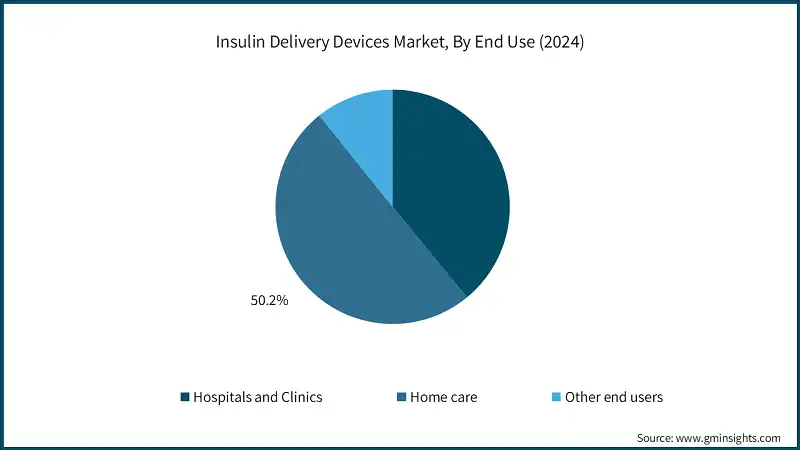
Based on end use, insulin delivery devices market is classified into hospitals and clinics, home care, and other end users. The home care segment dominated the market in 2024 and is expected to reach USD 30.7 billion by 2034.
- The home care segment is emerging as a key growth area in the insulin delivery device market, driven by rising patient preference for managing diabetes in familiar, comfortable settings. This shift is supported by the availability of user-friendly devices, growing awareness around self-management, and facilitative policies introduced by public health organizations.
- Patients are increasingly opting for portable and easy-to-use insulin delivery devices that simplify daily administration and reduce the need for frequent hospital visits. Devices such as disposable insulin pens and wearable pumps are particularly popular in-home settings due to their convenience, minimal training requirements, and reliable performance.
- Public initiatives are playing a major role in this trend. For example, the American Diabetes Association’s Diabetes Self-Management Support (DSMS) program and the Diabetes Support Initiative aim to educate and empower patients to manage their condition independently. Similarly, the Building Community Supports for Diabetes Care initiative promotes home-based care to reduce healthcare costs and improve patient comfort.
- As a result, demand for insulin delivery devices suited for home use is rising steadily. These devices not only improve treatment adherence but also align with broader healthcare goals of cost reduction, patient empowerment, and decentralized care delivery. Manufacturers are responding by designing products that are intuitive, hygienic, and compatible with digital monitoring tools, making them ideal for home-based diabetes management.
Looking for region specific data?
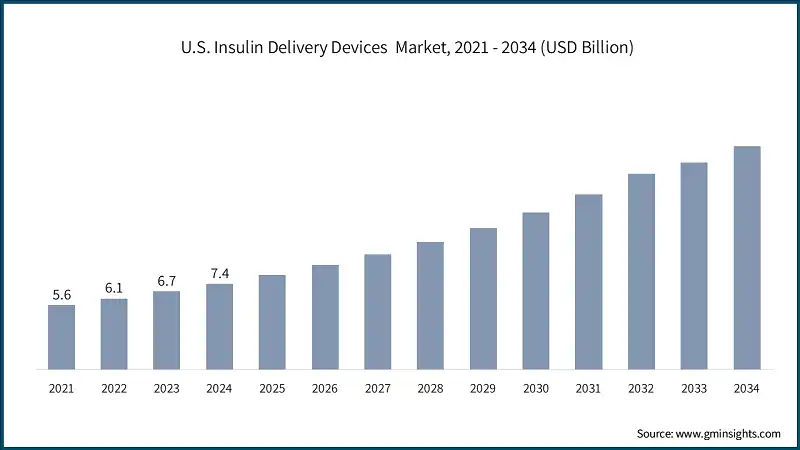
North America Insulin Delivery Devices Market The U.S. insulin delivery devices market was valued at USD 5.6 billion and USD 6.1 billion in 2021 and 2022, respectively. The market size reached USD 7.4 billion in 2024, growing from USD 6.7 billion in 2023. Europe market accounted for USD 6.5 billion in 2024 and is anticipated to show lucrative growth over the forecast period. Germany dominates the European insulin delivery devices market, showcasing strong growth potential. The Asia Pacific market is anticipated to grow at the highest CAGR during the analysis timeframe. China insulin delivery devices market is estimated to grow with a significant CAGR, in the Asia Pacific market. Brazil leads the Latin American market, exhibiting remarkable growth during the analysis period. Saudi Arabia insulin delivery devices industry to experience substantial growth in the Middle East and Africa market in 2024. The insulin delivery devices industry is characterized by a blend of established global leaders and emerging regional players, resulting in a moderately consolidated yet increasingly competitive landscape. Novo Nordisk leads the market with the highest share, followed by other key players such as Eli Lilly, Sanofi, Medtronic, and Ypsomed. Collectively, these five companies account for a significant portion of the global market at 64%, driven by their strong product portfolios, global distribution networks, and continuous investment in innovation. To strengthen their market positions, leading firms are adopting multi-pronged strategies including acquisitions, partnerships, and competitive pricing. These efforts aim to make insulin pens more accessible and cost-effective, while also addressing unmet clinical needs in both developed and emerging markets. In addition to these dominant players, companies such as Owen Mumford, Medtronic, Biocon Biologics are contributing to the market’s growth through technological innovation, precision delivery systems, and region-specific strategies. Their presence is particularly notable in Asia Pacific, Latin America, and the Middle East, where rising diabetes prevalence and expanding healthcare infrastructure are driving increased adoption of insulin delivery solutions. Overall, the market is witnessing intensified competition and greater diversity, as both established and emerging players continue to evolve their offerings and strategies to meet the global demand for effective and efficient insulin pen devices. Prominent players operating in the insulin delivery devices industry are as mentioned below: Ypsomed is a key contributor to the insulin delivery devices market, known for its focus on self-administration technologies and patient-centric solutions. The company offers a diverse range of customizable delivery systems and maintains strong partnerships with leading pharmaceutical firms. Ypsomed’s emphasis on sustainability, usability, and global expansion supports its growing influence across both mature and emerging healthcare markets. Medtronic is a prominent player in the insulin delivery devices market, recognized for its long-standing expertise in diabetes care and medical technology. The company’s global presence, commitment to innovation, and focus on integrated care solutions have positioned it as a leader in delivering effective and reliable insulin delivery systems. Medtronic continues to invest in expanding access and improving patient outcomes through strategic collaborations and technology-driven approaches. Owen Mumford plays a vital role in the insulin delivery devices market through its innovative and ergonomic injection solutions. The company is recognized for its commitment to accessibility, comfort, and environmental responsibility. With a growing presence in emerging regions and a focus on affordability, Owen Mumford continues to support broader access to insulin therapies and enhances the overall patient experience.Europe Insulin Delivery Devices Market
Asia Pacific Insulin Delivery Devices Market
Latin American Insulin Delivery Devices Market
Middle East and Africa Insulin Delivery Devices Market
Insulin Delivery Devices Market Share
Insulin Delivery Devices Market Companies
Insulin Delivery Devices Industry News
The insulin delivery devices market research report includes in-depth coverage of the industry with estimates and forecast in terms of revenue in USD Million from 2021 - 2034 for the following segments:
Market, By Product
- Insulin delivery devices
- Insulin pumps
- Tubed pumps
- Tubeless pumps
- Pens
- Reusable
- Disposable
- Other insulin delivery devices
- Insulin pumps
- Consumables
- Testing strips
- Pen needles
- Standard
- Safety
- Syringes
- Insulin pumps consumables
Market, By End Use
- Hospitals and Clinics
- Home care
- Other end use
The above information is provided for the following regions and countries:
- North America
- U.S.
- Canada
- Europe
- Germany
- UK
- France
- Spain
- Italy
- Netherlands
- Asia Pacific
- China
- India
- Japan
- Australia
- South Korea
- Latin America
- Brazil
- Mexico
- Argentina
- Middle East and Africa
- South Africa
- Saudi Arabia
- UAE
Frequently Asked Question(FAQ) :
What is the growth outlook for the consumables segment from 2025 to 2034?
The consumables segment is expected to grow at a CAGR of 10.5% through 2034, fueled by recurring demand for pen needles, cartridges, infusion sets, and related components
What are the upcoming trends in the insulin delivery devices industry?
Key trends include the rise of Bluetooth-enabled smart pens and pumps, integration with digital health platforms, development of wearable and closed-loop systems, and expansion in emerging markets
Who are the key players in the insulin delivery devices market?
Key players include Novo Nordisk, Medtronic plc, Eli Lilly & Company, Sanofi, Ypsomed Holdings, Becton Dickinson, Insulet Corporation, Terumo Corporation, Owen Mumford, and Biocon Biologics
Which region leads the insulin delivery devices market?
The U.S. market was valued at USD 7.4 billion in 2024. Growth is supported by a high diabetes burden, strong healthcare infrastructure, and broad insurance coverage that ensures accessibility of advanced delivery devices
What was the valuation of the home care segment in 2024?
The home care segment dominated the market in 2024 and is projected to reach USD 30.7 billion by 2034, driven by patient preference for comfort, ease of use, and supportive public health initiatives
How much revenue did the insulin delivery devices segment generate in 2024?
Insulin delivery devices accounted for 73.5% share in 2024, supported by their advanced technology, usability, and growing preference among patients and providers
What is the current insulin delivery devices market size in 2025?
The market size is projected to reach USD 25.2 billion in 2025
What is the projected value of the insulin delivery devices market by 2034?
The market size for insulin delivery devices is expected to reach USD 61.6 billion by 2034, fueled by adoption of smart insulin pens, patch pumps, and connected devices that enhance patient convenience and treatment adherence
What is the market size of the insulin delivery devices industry in 2024?
The market size was USD 22.8 billion in 2024, with a CAGR of 10.4% expected through 2034, driven by rising diabetes prevalence, continuous innovation, and growing adoption of self-management solutions
Insulin Delivery Devices Market Scope
Related Reports