Summary
Table of Content

Industrial Safety Gloves Market
Get a free sample of this report
Form submitted successfully!
Error submitting form. Please try again.
Thank you!
Your inquiry has been received. Our team will reach out to you with the required details via email. To ensure that you don't miss their response, kindly remember to check your spam folder as well!
Request Sectional Data
Thank you!
Your inquiry has been received. Our team will reach out to you with the required details via email. To ensure that you don't miss their response, kindly remember to check your spam folder as well!
Form submitted successfully!
Error submitting form. Please try again.
Industrial Safety Gloves Market Size
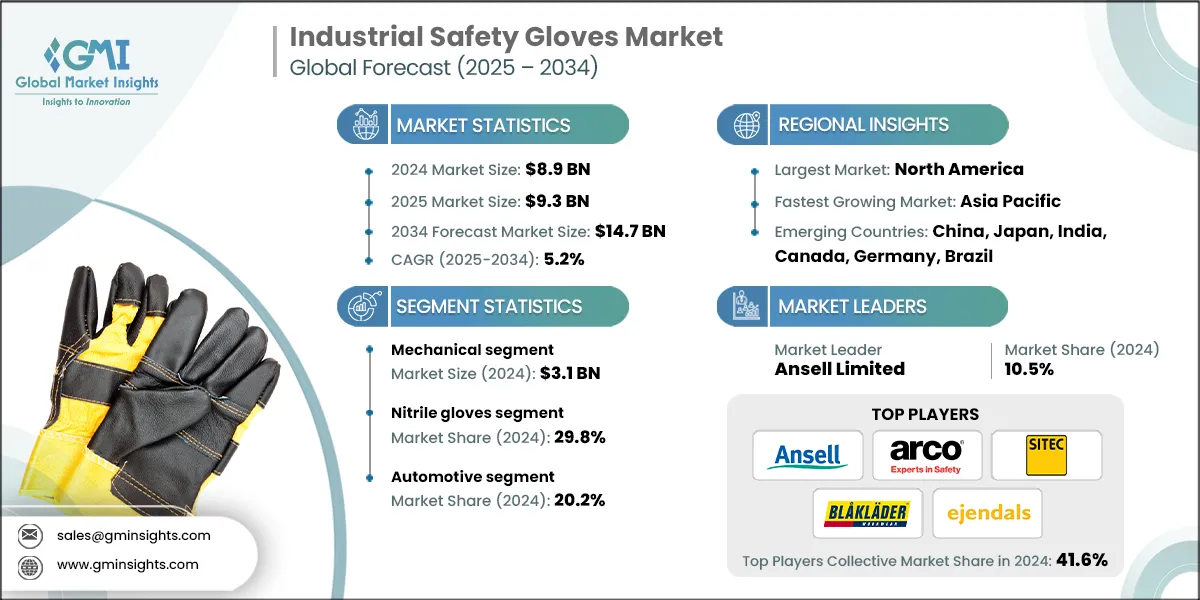
The global industrial safety gloves market was estimated at USD 8.9 billion in 2024. The market is expected to grow from USD 9.3 billion in 2025 to USD 14.7 billion in 2034, at a CAGR of 5.2% according to the latest report published by Global Market Insights Inc.
To get key market trends
- The global industrial safety gloves market is poised for significant growth, driven by a confluence of factors that underscore the increasing emphasis on worker safety, technological advancements, and evolving industrial landscapes. One of the primary growth drivers is the escalating emphasis on occupational health and safety regulations across industries worldwide. Governments and regulatory bodies are implementing stricter safety standards to protect workers from hazards such as chemical exposure, mechanical injuries, and biological risks. For instance, regulations mandating the use of protective gloves in manufacturing, construction, and healthcare sectors compel organizations to invest in high-quality safety gear, thereby boosting market demand.
- Industrialization and infrastructural development in emerging economies significantly contribute to the market’s growth. Rapid urbanization in countries like India, China, and Southeast Asian nations leads to increased construction activities, manufacturing units, and chemical industries. These sectors inherently require specialized safety gloves to safeguard workers from physical, chemical, and biological risks. As these economies continue to develop, their demand for industrial safety equipment, including gloves, is expected to rise correspondingly.
- Advancements in materials technology have played a pivotal role in expanding the market. The development of innovative materials such as Kevlar, nitrile, neoprene, and thermoplastic elastomers has resulted in gloves that offer superior protection, comfort, and durability. These technological improvements encourage industries to adopt more effective safety solutions, thereby driving market growth.
- Furthermore, the rising awareness about workplace safety and the health risks associated with inadequate protection contribute significantly to market expansion. Organizations are increasingly recognizing that investing in high-quality safety gloves not only ensures regulatory compliance but also enhances worker productivity and reduces downtime caused by injuries. This awareness is particularly prominent in chemical, pharmaceutical, and electrical industries, where the risks are substantial.
- North America is the leading region in this market because of the blooming nations like U.S. and Canada.
- Asia Pacific is the fastest growing region owing to increasing urbanization and a growing demand in different sectors.
Industrial Safety Gloves Market Report Attributes
| Key Takeaway | Details |
|---|---|
| Market Size & Growth | |
| Base Year | 2024 |
| Market Size in 2024 | USD 8.9 Billion |
| Forecast Period 2025 - 2034 CAGR | 5.2% |
| Market Size in 2034 | USD 14.7 Billion |
| Key Market Trends | |
| Drivers | Impact |
| Stringent safety regulations globally | Boosts demand for compliant safety gloves across industries |
| Rising industrialization in emerging economies | Increases the need for protective gear in construction and manufacturing |
| Technological advancements in glove materials | Leads to safer, more durable, and comfortable gloves, encouraging adoption |
| Pitfalls & Challenges | Impact |
| High costs of advanced glove materials | Can limit adoption among small and medium-sized enterprises. |
| Counterfeit and low-quality products in the market | Undermines safety standards and damages brand reputation. |
| Opportunities: | Impact |
| Increasing demand in healthcare and food industries | Expands the market for disposable and specialized safety gloves. |
| Adoption of smart and sensor-enabled gloves | Opens new avenues for safety and productivity enhancement. |
| Market Leaders (2024) | |
| Market Leaders |
10.5% market share |
| Top Players |
Collective market share of 41.6% in 2024 |
| Competitive Edge |
|
| Regional Insights | |
| Largest Market | North America |
| Fastest growing market | Asia Pacific |
| Emerging countries | China, Japan, India, Canada, Germany, Brazil |
| Future outlook |
|
What are the growth opportunities in this market?
Industrial Safety Gloves Market Trends
Industrial safety gloves industry trends are shaped by a combination of technological innovations, evolving regulatory standards, and shifting customer expectations, all contributing to a dynamic landscape.
One of the most significant trends is the integration of advanced materials and smart technology into glove manufacturing. Innovations such as nanotechnology, touchscreen-compatible fabrics, and enhanced chemical resistance are enabling gloves to offer superior protection while maintaining dexterity and comfort. For example, the development of cut-resistant gloves using high-performance fibers like Kevlar or Dyneema, combined with nanotech coatings, has significantly improved safety standards. Smart gloves embedded with sensors that monitor environmental conditions or worker health are also emerging, providing real-time data to enhance safety management. These technological advancements are not only improving the protective capabilities of gloves but also aligning with Industry 4.0 trends that emphasize automation and data-driven safety protocols.
Secondly, regulatory standards and safety compliance requirements are becoming increasingly stringent across industries. Governments and safety organizations worldwide are enforcing stricter regulations concerning the quality, testing, and certification of protective gloves. This regulatory shift compels manufacturers to innovate and ensure their products meet higher safety benchmarks, fostering the development of more reliable and effective gloves. For example, the adoption of standards such as EN 388 and ANSI/ISEA 105 guides the design and testing process, ensuring gloves offer adequate protection against mechanical, chemical, and thermal hazards. This regulatory environment drives product innovation and quality assurance, ultimately benefiting end-users by providing safer protective gear.
Changing customer expectations also play a vital role in shaping the market. Workers and safety managers now prioritize comfort, ergonomics, and reusability alongside safety features. Customers are seeking gloves that facilitate longer wear without discomfort, especially in industries requiring prolonged use such as construction, manufacturing, and healthcare. This demand has led to the development of lightweight, breathable, and ergonomic glove designs that do not compromise safety. Additionally, there is a growing preference for sustainable and eco-friendly materials, reflecting a broader shift towards environmental responsibility. Manufacturers are responding by exploring biodegradable materials and sustainable manufacturing processes, aligning product offerings with modern consumer values.
Industrial Safety Gloves Market Analysis
Learn more about the key segments shaping this market
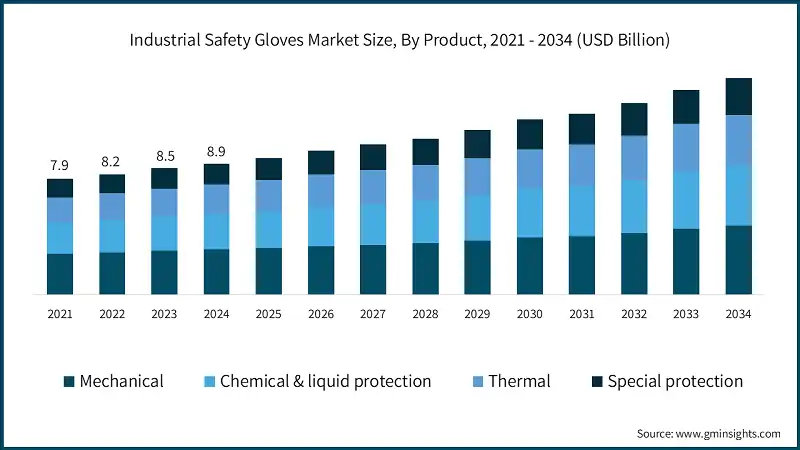
Based on product the market is segmented into mechanical, chemical & liquid protection, thermal and special protection. The mechanical segment reached USD 3.1 billion in 2024 and is set to register at a 4.5% CAGR through 2034. Mechanical gloves are the largest segment, primarily designed to protect workers from cuts, abrasions, and impact hazards. Their growth is fueled by increasing automation and mechanization across industries, which heightens the need for durable, high-performance gloves. Innovations such as cut-resistant fibers like Kevlar and Dyneema, along with ergonomic designs, enhance both safety and comfort, making them more appealing.
- Chemical & liquid protection gloves are critical in sectors like chemical manufacturing, healthcare, and oil & gas. Their growth is driven by stringent safety regulations and the increasing complexity of chemical handling. Technological advancements such as multi-layered coatings, nitrile and neoprene innovations, and textured surfaces improve chemical resistance and grip. However, these gloves often face pricing pressures due to the high cost of specialized materials and manufacturing processes. Additionally, achieving the right balance between chemical resistance, flexibility, and affordability remains a challenge for manufacturers.
- Thermal gloves protect workers from heat, cold, and thermal hazards. Their growth is influenced by expansion in industries such as steel, glass manufacturing, and firefighting. Innovations focus on high-performance insulating materials, heat-resistant fibers, and ergonomic designs that improve dexterity without compromising protection. However, thermal gloves tend to be more expensive due to specialized materials, which can limit adoption in cost-sensitive markets. Ensuring durability under extreme conditions and maintaining comfort over prolonged use are ongoing challenges.
- Special protection gloves cater to niche applications such as electrical safety, hazardous environments, or specific industrial tasks. Their development is driven by ultra-high safety standards and the need for customized solutions. Innovations include electrically insulated gloves, gloves with embedded sensors, and materials resistant to unique hazards. Pricing can be high due to the specialized nature of these products, and market growth depends on the adoption of advanced safety protocols. The challenge lies in balancing performance with cost and ensuring compliance with complex regulatory requirements.
Learn more about the key segments shaping this market
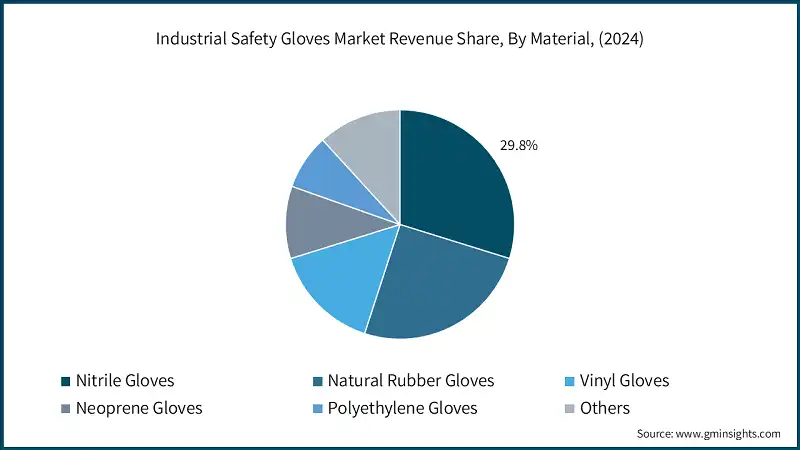
Based on material the industrial safety gloves market is segmented into nitrile gloves, natural rubber gloves, vinyl gloves, neoprene gloves, polyethylene gloves and others. The nitrile gloves command the major market share of 29.8% in 2024 and expected to grow at a CAGR of over 5% from 2025 to 2034. The prominence of nitrile gloves is driven by their unique blend of performance, safety, and versatility, while other materials each have specific advantages and challenges influencing their market trajectories.
- Nitrile gloves are favored for their superior chemical resistance, puncture durability, and hypoallergenic properties, making them suitable for medical, industrial, and chemical handling applications. Innovations such as textured surfaces for enhanced grip, powder-free formulations to reduce contamination risks, and advancements in manufacturing processes have strengthened their market position. Despite their high performance, nitrile gloves tend to be priced higher than alternatives like vinyl or polyethylene, which can impact cost-sensitive sectors. The ongoing development of more cost-effective nitrile formulations and sustainable production methods is crucial to maintaining growth momentum. Additionally, supply chain disruptions of raw materials like butadiene can pose challenges, potentially impacting pricing and availability.
- Natural rubber gloves have historically been a preferred choice due to their excellent elasticity, comfort, and biodegradability. However, their growth is constrained by allergy concerns, which have led to increased regulatory scrutiny and a shift toward alternative materials. Innovations in hypoallergenic treatments and blending technologies aim to mitigate allergy issues, but the market share for natural rubber remains relatively stable, facing stiff competition from synthetic variants.
- Vinyl gloves are generally the most economical option, offering good chemical resistance and flexibility. Their lower cost makes them attractive for short-term or disposable applications, especially in food handling and general maintenance. However, compared to nitrile and latex, vinyl gloves often provide lower durability and chemical resistance, limiting their suitability for high-risk environments. Price competitiveness continues to support their steady demand, but ongoing innovations aim to enhance their performance to expand their use cases.
- Neoprene gloves offer excellent chemical and thermal resistance, making them suitable for specialized industrial applications. Their higher cost and limited availability restrict widespread adoption. Innovation efforts focus on reducing manufacturing costs and improving flexibility to broaden their application scope.
- Polyethylene gloves are among the most affordable, primarily used for low-risk, disposable tasks. Their simplicity and low cost support steady demand in food service and light industrial applications, although performance limitations restrict their use in more hazardous environments.
Based on application the industrial safety gloves market is segmented into automotive, chemical, machinery & equipment, metal fabrication, oil & gas, mining and others. Automotive commands the major market share of 20.2% in 2024 and is expected to grow at a CAGR of over 5.6% from 2025 to 2034. This sector’s dominance is driven by increasing automation, complex assembly processes, and stringent safety regulations, which necessitate durable, high-performance gloves to protect workers during manufacturing, assembly, and maintenance activities.
- In automotive manufacturing, the demand for gloves that offer superior chemical resistance, cut protection, and dexterity is high, prompting innovations such as nitrile-based formulations and ergonomic designs. The integration of electronics and lightweight materials in vehicles also pushes the need for gloves that accommodate sensitive components without compromising safety. As the automotive industry accelerates its shift toward electric vehicles, the need for specialized gloves resistant to new electrical hazards further stimulates innovation and growth within this application.
- The chemical sector is another significant application area, driven by strict safety standards and the handling of aggressive substances. Gloves used in this industry must withstand a broad spectrum of chemicals, leading to continuous innovation in material formulations like nitrile and neoprene, which offer enhanced chemical resistance. Growth in this application is supported by increasing environmental regulations and safety protocols, which compel industries to adopt more protective gloves, thereby fueling market expansion.
- Machinery and equipment manufacturing, along with metal fabrication, contribute to the market through the need for gloves that provide abrasion and impact protection. The ongoing advancements in material technology—such as multi-layered gloves with enhanced grip and protection—are driven by demands for increased safety and productivity. These applications also push innovation in ergonomic design to reduce fatigue during prolonged use.
- In oil & gas and mining, the demand for rugged, high-resistance gloves is driven by hazardous working environments. The growth in these sectors encourages the development of gloves with enhanced thermal and chemical resistance, often incorporating advanced materials and coatings to improve durability and safety. These industries’ safety standards are continually evolving, prompting constant innovation in glove design to meet stricter specifications.
- Others, including industries like food processing, pharmaceuticals, and electronics, contribute to the market's diversification. These sectors demand specialized gloves that combine safety with hygiene, flexibility, and comfort, spurring innovations in antimicrobial coatings, lightweight materials, and seamless designs.
Looking for region specific data?
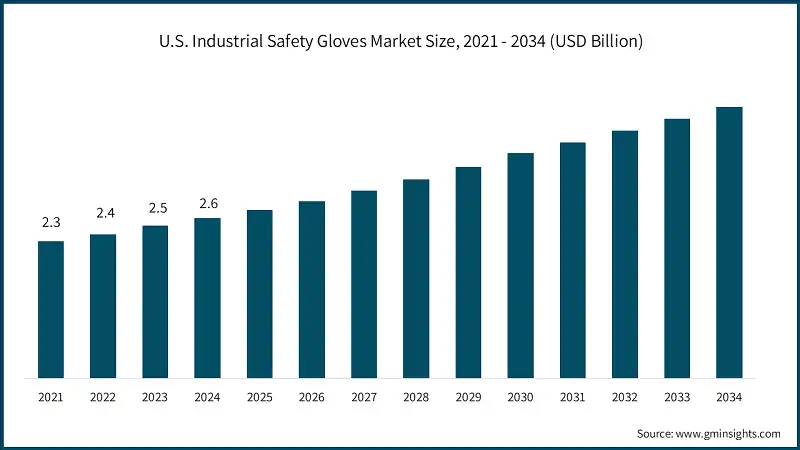
U.S. dominated the industrial safety gloves market in North America with around 86.5% share and generated USD 2.6 billion in revenue in 2024.
- U.S. benefits significantly from the country’s large, highly developed manufacturing sector, extensive infrastructure, and stringent safety regulations. The emphasis on worker safety and regulatory compliance drives the demand for advanced protective gloves across diverse industries such as automotive, chemical, and construction. The U.S. industry’s focus on innovation—particularly in developing gloves with enhanced chemical resistance, cut protection, and ergonomic designs—propels technological advancements and product diversification.
- Canada, while smaller in market size, is experiencing steady growth in the industrial safety gloves sector, primarily fueled by increasing safety awareness, rising industrial activity, and stricter occupational health regulations. Sectors like mining, oil & gas, and manufacturing are expanding, creating a rising demand for high-performance safety gloves. Canadian industry players are increasingly adopting innovative materials such as nitrile and neoprene to meet safety standards while addressing environmental concerns.
The industrial safety gloves market in Germany is anticipated to experience substantial and promising growth from 2025 to 2034, driven by increasing industrial activities, stricter safety regulations, and a growing emphasis on workplace safety standards. Germany’s focus on technological innovation and high-quality manufacturing processes encourages the adoption of advanced safety gloves with enhanced cut, chemical, and impact protection.
- Across Europe, the industrial safety gloves market is set to grow significantly from 2025 to 2034, propelled by increasing safety standards, technological advancements, and a rising emphasis on worker health and environmental considerations. The European region’s focus on sustainable manufacturing practices encourages the adoption of gloves made from environmentally friendly materials, such as biodegradable and recycled composites, to reduce ecological impact.
- In the UK, the industrial safety gloves market is poised for steady growth, driven by the expansion of manufacturing and construction industries, coupled with a strong regulatory framework emphasizing worker safety. The UK’s push towards sustainability and innovation encourages the adoption of gloves with enhanced durability, chemical resistance, and ergonomic features. Government initiatives supporting workplace safety, along with increasing awareness about occupational health, are key factors supporting market development.
- France remains a key player in Europe’s industrial safety gloves market, emphasizing safety compliance and sustainable practices. The country’s robust manufacturing, automotive, and construction sectors demand high-performance gloves that offer protection, comfort, and environmental sustainability. Policies promoting eco-friendly manufacturing and the use of sustainable materials are fostering innovation in glove products, aligning safety with environmental responsibility.
- Italy’s market growth is driven by increasing industrial activities, especially in manufacturing, automotive, and construction sectors. The country’s focus on supporting local industries and sustainable practices encourages the development and adoption of advanced, eco-friendly safety gloves. Consumer demand for high-quality protective equipment, combined with regulatory efforts to enhance workplace safety, continues to fuel growth and innovation within Italy’s industrial safety gloves industry.
The industrial safety gloves market in China is expected to experience significant and promising growth from 2025 to 2034, driven by the country’s expanding manufacturing sector, increasing industrial safety standards, and rising awareness of worker protection. China’s large and diverse industrial base—including automotive, construction, electronics, and textiles—fuels demand for high-quality, durable safety gloves that meet strict safety and environmental regulations.
- Across the Asia-Pacific region, the industrial safety gloves market is rapidly expanding, with a CAGR of around 5%, due to increasing safety regulations, technological advancements, and heightened awareness about occupational health.
- In India, growth is driven by expanding industrial infrastructure, a large and growing manufacturing sector, and increasing focus on worker safety. The rise in industrial activities such as construction, automotive, and textiles necessitates high-performance safety gloves.
- Japan’s market is characterized by advanced safety standards, stringent regulations, and a focus on environmentally sustainable practices. The country’s mature industrial sectors, including electronics, automotive, and manufacturing, demand high-quality safety gloves that incorporate innovative materials and technologies.
The industrial safety gloves market in Brazil is expected to experience significant and promising growth from 2025 to 2034, driven by the country’s expanding industrial activities, rising workplace safety standards, and increasing emphasis on worker protection.
- Brazil’s large manufacturing, construction, and agricultural sectors demand high-performance safety gloves that meet evolving safety and environmental regulations. The government’s focus on improving occupational health and safety, coupled with a growing awareness of sustainable and eco-friendly materials, supports the adoption of innovative glove technologies.
- Across Latin America, the industrial safety gloves market is steadily expanding, fueled by increasing safety regulations, industrial growth, and a rising focus on worker health and safety. Countries like Brazil and Mexico are leading this growth, with their large industrial bases and efforts to improve safety standards driving demand for high-quality, durable, and sustainable safety gloves.
- In Mexico, market growth is driven by a burgeoning industrial sector, including manufacturing, construction, and automotive industries, which require advanced protective equipment. The country’s increasing focus on occupational health, safety regulations, and sustainable practices further promote the adoption of premium safety gloves.
The industrial safety gloves market in South Africa is projected to grow significantly from 2025 to 2034, driven by the expanding industrial and manufacturing sectors and increasing safety regulations across various industries.
- Demand for industrial safety gloves is rising across the Middle East and Africa due to rapid industrialization, growth in construction, mining, and manufacturing activities, and a heightened focus on worker safety. South Africa and Saudi Arabia are key markets propelling this growth.
- South Africa’s robust industrial sector, increasing workforce, and stricter safety standards are boosting demand for safety gloves. Similarly, Saudi Arabia’s expanding construction, oil and gas industries, government safety regulations, and focus on workplace safety are further fueling the demand for industrial safety gloves in the region.
Industrial Safety Gloves Market Share
Top 7 companies include Ansell Limited, Arco Limited, ATG Sitec GmbH, Blaklader B.V., Ejendals AB, Ekastu Safety GmbH, and Hartalega Holdings Berhad. These are prominent companies within the market operating in their respective regions and accounting for a market share of 41.6%. These companies hold strong positions globally due to their extensive experience in the industrial safety gloves market. Their diverse product portfolios, backed by robust production capabilities and distribution networks, enable them to meet the rising demand for industrial safety gloves across various regions.
- Ansell Limited: Ansell Limited leverages innovation and strategic partnerships to introduce high-performance gloves tailored to emerging safety standards. The company has market a share of 10.5% in 2024. The company invests heavily in R&D to develop advanced materials that enhance durability and protection, addressing unmet needs in specialized industries. Additionally, Ansell focuses on expanding its distribution networks and forming alliances with key industrial players to increase market penetration.
- Arco Limited: Arco Limited emphasizes aggressive pricing strategies and comprehensive after-sales support to differentiate itself in the competitive landscape. The company also invests in expanding its product portfolio to include ergonomic and sustainable gloves, aligning with rising demand for eco-friendly safety solutions. Its focus on customer-centric approaches helps secure customer loyalty and market share growth.
- ATG Sitec GmbH: ATG Sitec GmbH adopts a targeted approach by expanding its product range to include gloves with enhanced grip and chemical resistance, catering to specific industrial needs. The company is exploring strategic mergers and acquisitions to broaden its regional presence and diversify its offerings. Its focus on innovation and customization provides a competitive edge in niche markets.
- Blaklader B.V.: Blaklader B.V. emphasizes product quality and durability, leveraging its strong brand reputation. The company invests in R&D to develop innovative features like increased flexibility and comfort, which appeal to end-users. Strategic collaborations with safety equipment distributors help expand its reach across Europe and beyond.
- Ejendals AB: Ejendals AB focuses on technological advancements and premium product development to serve high-end industrial clients. The company actively engages in market research to identify unmet needs, such as gloves suited for emerging industries like renewable energy. Its emphasis on innovation and quality helps maintain a competitive advantage.
- Ekastu Safety GmbH: Ekastu Safety GmbH adopts a customer-focused approach by offering tailored solutions to meet specific safety standards and regulations across different regions. The company invests in strengthening its supply chain and distribution channels to enhance service delivery and capture new market segments.
- Hartalega Holdings Berhad: Hartalega Holdings Berhad leverages its advanced manufacturing capabilities and focus on sustainable production to increase market share. The company invests in R&D to develop next-generation gloves with features like improved tactile sensitivity and environmental friendliness. Strategic expansion into emerging markets and partnerships with global distributors further bolster its competitive position.
Industrial Safety Gloves Market Companies
Major players operating in the industrial safety gloves industry are:
- Ansell Limited
- Arco Limited
- ATG Sitec GmbH
- Blaklader B.V.
- Ejendals AB
- Ekastu Safety GmbH
- Hartalega Holdings Berhad
- Honeywell International, Inc.
- Kächele Cama Latex GmbH
- Kossan Rubber Industries Bhd
- Atlas Safety Products
- Lebon Protection Industrielle
- MAPA Professional
- MCR Safety (Shelby Group International, Inc.)
- Showa Glove Co.
Industrial Safety Gloves Industry News:
- In May 2025, Wadi Surgicals, India’s leading nitrile glove manufacturer based in Hyderabad, announced the launch of India’s first accelerator-free nitrile gloves under its Enliva brand. Developed through extensive R&D and global collaboration, these gloves eliminate common chemical accelerators known to cause allergies, offering a safer, skin-friendly alternative for healthcare workers, industrial users, and various industries. Certified under international safety standards like EN 455 and EN ISO 374, the new range includes multiple variants such as Enliva Pro, Premium Nitrile, QuickDraw, and UrbanShield, making high-quality, allergy-free gloves more accessible and affordable in India.
- In June 2025, Canada's Midas Safety announced the launch of its new CutXprt ISO D, ASTM A4 Series gloves, a groundbreaking line of cut-resistant PPE designed specifically for medium-risk tasks. These innovative gloves set a new standard in personal protective equipment, combining enhanced safety, durability, and comfort to meet the demanding needs of workers handling potentially hazardous materials.
The industrial safety gloves market research report includes an in-depth coverage of the industry with estimates and forecast in terms of revenue (USD Billion) and (Million Units) in volume from 2021 - 2034 for the following segments:
Market, By Product
- Mechanical
- Chemical & liquid protection
- Thermal
- Special protection
Market, By Material
- Nitrile gloves
- Natural rubber gloves
- Vinyl gloves
- Neoprene gloves
- Polyethylene gloves
- Others
Market, By Application
- Automotive
- Chemical
- Machinery & equipment
- Metal fabrication
- Oil & gas
- Mining
- Others
The above information is provided for the following regions and countries:
- North America
- U.S.
- Canada
- Europe
- Germany
- UK
- France
- Italy
- Spain
- Rest of Europe
- Asia Pacific
- China
- India
- Japan
- Australia
- South Korea
- Rest of Asia Pacific
- Latin America
- Brazil
- Mexico
- Argentina
- Rest of Latin America
- Middle East & Africa
- Saudi Arabia
- South Africa
- UAE
- Rest of Middle East & Africa
Frequently Asked Question(FAQ) :
Who are the key players in the industrial safety gloves market?
Key players include Ansell Limited, Arco Limited, ATG Sitec GmbH, Blaklader B.V., Ejendals AB, Ekastu Safety GmbH, Hartalega Holdings Berhad, Honeywell International, Inc., Kächele Cama Latex GmbH, Kossan Rubber Industries Bhd, Atlas Safety Products, Lebon Protection Industrielle.
Which region leads the industrial safety gloves market?
U.S. dominated the industrial safety gloves market in North America with around 86.5% share and generated USD 2.6 billion in revenue in 2024.
What are the upcoming trends in the industrial safety gloves market?
Key trends include integration of smart technology with sensors, nanotechnology innovations, touchscreen-compatible fabrics, enhanced cut-resistant materials like Kevlar and Dyneema, and growing demand for sustainable and eco-friendly materials.
What was the market share of nitrile gloves segment in 2024?
Nitrile gloves commanded the major market share of 29.8% in 2024.
What is the growth outlook for the automotive application segment from 2025 to 2034?
The automotive segment commands 20.2% market share in 2024 and is expected to grow at a CAGR of over 5.6% from 2025 to 2034, driven by increasing automation and stringent safety regulations.
How much revenue did the mechanical gloves segment generate in 2024?
Mechanical gloves generated USD 3.1 billion in 2024, leading the market as the largest product segment steady growth expected by 2034.
What is the current industrial safety gloves market size in 2025?
The market size is projected to reach USD 9.3 billion in 2025.
What is the market size of the industrial safety gloves market in 2024?
The market size was USD 8.9 billion in 2024, with a CAGR of 5.2% expected through 2034 driven by rising workplace safety focus and technological advancements.
What is the projected value of the industrial safety gloves market by 2034?
The industrial safety gloves market is expected to reach USD 14.7 billion by 2034, propelled by stringent safety regulations, industrialization in emerging economies, and material technology innovations.
Industrial Safety Gloves Market Scope
Related Reports