Summary
Table of Content

Hybrid Plant-Animal Protein System Market
Get a free sample of this report
Form submitted successfully!
Error submitting form. Please try again.
Thank you!
Your inquiry has been received. Our team will reach out to you with the required details via email. To ensure that you don't miss their response, kindly remember to check your spam folder as well!
Request Sectional Data
Thank you!
Your inquiry has been received. Our team will reach out to you with the required details via email. To ensure that you don't miss their response, kindly remember to check your spam folder as well!
Form submitted successfully!
Error submitting form. Please try again.
Hybrid Plant-Animal Protein System Market Size
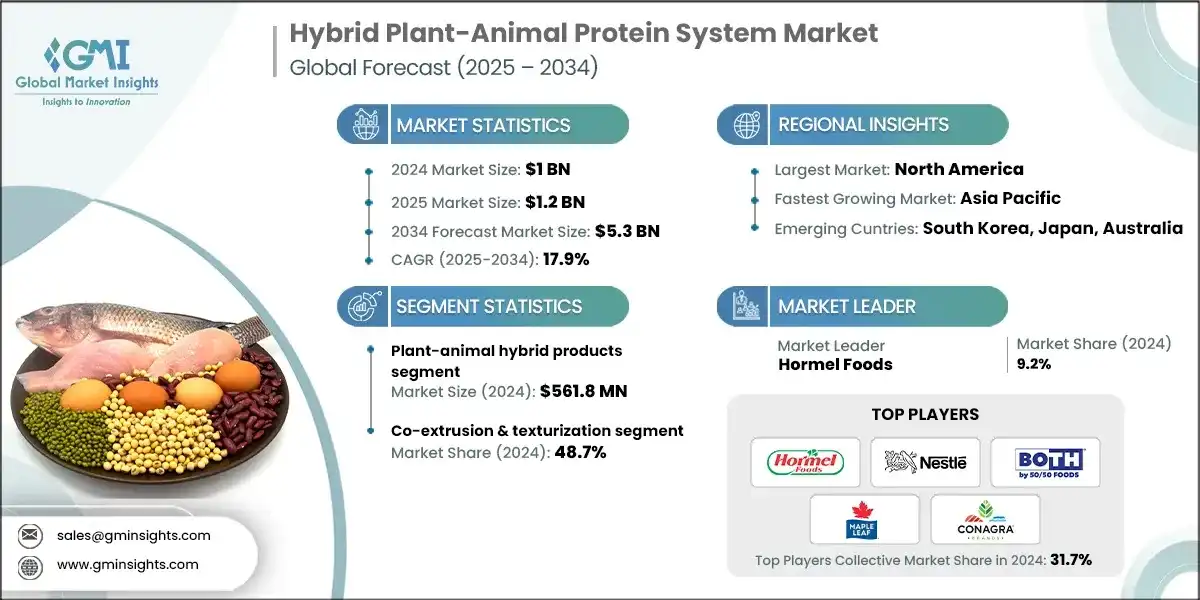
The global hybrid plant-animal protein system market size was valued at USD 1 billion in 2024. The market is expected to grow from USD 1.2 billion in 2025 to USD 5.3 billion in 2034, at a CAGR of 17.9%, according to latest report published by Global Market Insights Inc.
Hybrid Plant-Animal Protein System Market Key Takeaways
Market Size & Growth
- 2024 Market Size: USD 1 Billion
- 2025 Market Size: USD 1.2 Billion
- 2034 Forecast Market Size: USD 5.3 Billion
- CAGR (2025–2034): 17.9%
Regional Dominance
- Largest Market: North America
- Fastest Growing Region: Asia Pacific
Key Market Drivers
- Rising global protein demand & food security concerns.
- Consumer shift toward flexitarian & reducetarian diets.
- Sustainability & climate change mitigation goals.
Challenges
- High production costs & price premium challenges.
- Consumer skepticism & acceptance barriers.
Key Players
- Leading Players: Top 5 players in this market include Hormel Foods, Nestlé S.A., 50/50 Foods, Inc, Maple Leaf Foods, Conagra Brands, which collectively held a market share of 31.7% in 2024.
Get Market Insights & Growth Opportunities
- The hybrid plant-animal protein system is a formulation of food preparation that combines plant-based proteins with animal-derived proteins to create healthy, sustainable, and efficient protein sources in the future. This is aimed at fulfilling the demand for proteins that would increase because of the rise in population globally alongside issues of food security.
- The meat consumption forecast by the Food and Agriculture Organization (FAO) shows that it will increase to about 14% by 2030 globally. This clearly indicates the need for sustainable alternatives. The growing concern of people over built environmental hazards associated with conventional animal agriculture such as greenhouse gas emissions, water use, and land degradation, among others, has made sustainability and climate change mitigation major drivers in the uptake of hybrid systems.
- Governments are currently intensifying their efforts toward the promotion of green practices in the production of food. These efforts are aligned with the climate commitments like the Paris Agreement to foster development within a favored region of food production. Consumers are moving toward the flexitarian and reducetarian movements, in which they include a variety of different plant-based foods into their diets while still incorporating some animal products. This, therefore, directly supports the growth of the market.
- Currently, the North American region is the leader in uptake because of the advanced infrastructure in manufacturing, along with the favorable regulatory policies it has, while Asia Pacific is rapidly emerging as the fastest-growing market owing to the changes in urbanization, high disposable incomes, and concern for sustainability. Thus, the demand generated among consumers, policymakers, and industries creates a solid foundation for the hybrid plant-animal protein system, while technological innovations and investments accelerate this as the hybrid protein market expands worldwide.
To get key market trends
Hybrid Plant-Animal Protein System Market Trends
- Flexitarian diets are in their rising trend where the consumer population intends to minimize meat in their diet while consuming it occasionally. This trend has significantly enhanced the hybridization plant-animal protein products in the market. This movement is interested in health, ethics, and the environment, which makes consumers search for alternative, innovative protein sources, hence enabling manufacturers to produce novel hybrid products to meet this flexible dietary behaviour and build market reach and consumer acceptance.
- Technologies for food processing and manufacturing have all matured with hybrid plant-animal proteins scalable production. Innovation comes with precision fermentation, extrusion, and cell culturing techniques making hybrid formulations economical and quality filled. All these technological advancements strengthen mass production and ensure quality and availability consistency, thereby speeding up commercialization and keeping the growth potential of the market.
- Compelling environmental concerns and climate change are bringing up sustainable food solutions into the forefront of corporate and government priorities. Hybrid plant-animal proteins are greener alternatives to traditional animal agriculture, reducing greenhouse gas emissions, water consumption, and land use. The sustainability imperative is encouraging companies and favourable government policies, instigating innovation, funding, and uptake of hybrid products around global climate goals.
- Consumer awareness and acceptance have increased, and retail channels have begun including hybrid plant-animal protein products in mainstream distribution. This distribution is part of a broad international effort to promote the visibility and accessibility of these products, stimulating their interface with the mass market. Retailers' marketing and placement support becomes therefore critical in demonstrating that hybrid proteins are fit for regular diets and not just niche substitutes; thus, propelling market growth further.
Hybrid Plant-Animal Protein System Market Analysis
Learn more about the key segments shaping this market
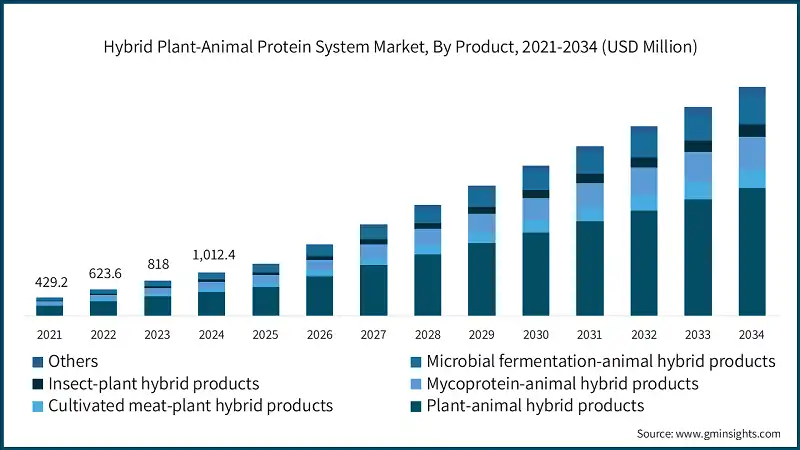
Based on product, the hybrid plant-animal protein system market is segmented into plant-animal hybrid products, cultivated meat-plant hybrid products, mycoprotein-animal hybrid products, insect-plant hybrid products, microbial fermentation-animal hybrid products and others. Plant-animal hybrid products generated USD 561.8 million revenue in 2024.
- The plant-animal hybrid products segment, with its inherent flexibility and ability to attract consumer attention, dominates the market. The hybrid appeal caters to an entire demographic that is seeking sustainable yet familiar for adoption at a very fast pace. The considerable investment in R&D and technological advancement also supports the mixing of plant and animal proteins enhancing the taste, texture, and nutritional profile amongst all other stuff that underpins their strongest position in the market.
- Cultivated meat-plant hybrid products offer huge prospects for growth by putting cultivated meat and plant proteins together to afford cleaner labels and sustainability. However, at present, it holds small market share due to high cost of production and technical problems. As production gains momentum and prices decrease, this segment is likely to grow further with rising consumer acceptance of lab-grown meat.
- Mycoprotein-animal hybrid products appeal to many health-conscious consumers owing to their higher protein credentials and environmental sustainability. These hybrids are primarily used in specialized areas, such as meat alternatives or functional foods.
- Insect-plant hybrid products represent an environmentally viable, but thus far a niche market, with very limited consumer acceptance. Hence, the growth of this segment largely depends on approvals from the regulators and transformed perspectives about the edible insects. Microbial fermentation-animal hybrid products emerge through innovative biotechnological processes whereby proteins are produced through fermentation, incorporating microbial and animals' elements.
Learn more about the key segments shaping this market
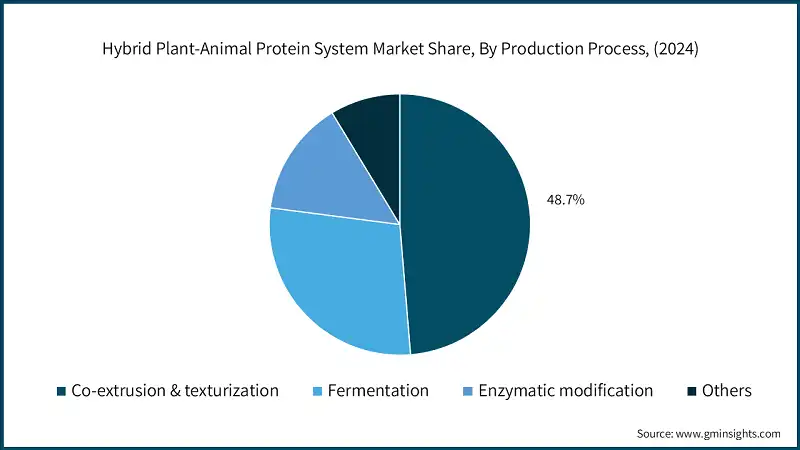
Based on production process, the hybrid plant-animal protein system market is segmented into co-extrusion & texturization, fermentation, enzymatic modification and others. Co-extrusion & texturization accounted for 48.7% of market share in 2024.
- Co-extrusion and texturization are leading processes in the market due to their versatility and ability to fabricate a very-realistic meat texture, something highly favourable to consumers. This fibrous structure production involves the seamless combination of plant and animal proteins to improve the taste and appearance of hybrid products compared to traditional meat. Their scalability and suitability for multiple ingredients further adds to their selection among manufacturers intending to work on a high-volume production basis, facilitating market growth.
- Fermentation is gaining popularity for flavor generation complexities and for functionalizing the protein. Fermentation is sought especially for clean-label products, with minimal or no additives, since this is something health-conscious consumers would prefer. With fermentation, nutrient profiles can be customized meticulously; however, the productions cost and time stand as barriers to widespread application.
- The method of enzymatic modification is mainly used for the improvement in digestibility and the functional properties of hybrid proteins. Though it offers specificity in terms of modification, its use remains more niche requiring highly specific enzymes and expertise. In general, this method is mainly used in those products that are highly specialized and target specific health claims, such as allergen reduction or nutrient enhancement.
- The other category includes the emerging niche specialization in extrusion with novel techniques or novel enzymatic and microbial methods, which are still in the development phase but may represent significant opportunities for future market growth. These niche applications are galvanizing technological development and capturing consumer attention to unique, functional, and sustainable hybrid protein products.
Based on application, the hybrid plant-animal protein system market is segmented into whole muscle analog hybrids, ground / minced hybrid products, processed hybrid products, ingredient hybrid systems, ready-to-eat hybrid meals and others.
- Ground/minced hybrid products lead the market, mainly due to their versatility and ease of use in most food categories, such as burgers, meatballs, and sausages. Moreover, it has the benefit of resembling traditional minced meat but contains plant-based materials to attract flexitarian consumers looking for sustainable alternatives with the familiar touch. Also, the production technology of minced hybrid products has matured and made it possible to make these products economically at scale, showing yet another reason for their prevalence in the market.
- Whole muscle analog hybrids have shown steady growth due to growing interest from consumers on alternative products resembling traditional meat cuts regarding texture and appearance. Whole muscle analog hybrids are also popular in premium food segments and specialty markets in which authenticity and sensory experience are featured.
- Processed hybrid products like ready-to-eat or convenience foods have started to gain popularity with a developing trend. With consumers looking for healthy meal solutions in minimal possible time, these foods are very much in demand. Availing these quick foods with nutritional benefits supports growth in urban markets, but only because these proportions are very small compared to minced hybrids. This is because they are costlier to produce, plus technologies have not yet been developed but only face challenges in developing textures that are consistent and appealing.
- Ingredient hybrid systems are used mainly in food manufacturing and ingredient formulations. They provide functional benefits, such as better texture or flavor or an enhanced nutritional profile. These systems, therefore, become essential building blocks in the development of new hybrid products and form an important part of innovation and customization in the industry.
- This newest addition that ready-to-eat hybrid meals is tapping on is a particular niche aimed at busy consumers who want healthy, sustainable options with no preparation time. Though still a developing segment, their growth is driven by the consumers' increasing preference for more convenient, plant-forward, and hybrid meal options, adding to the diversity in the market landscape.
Looking for region specific data?
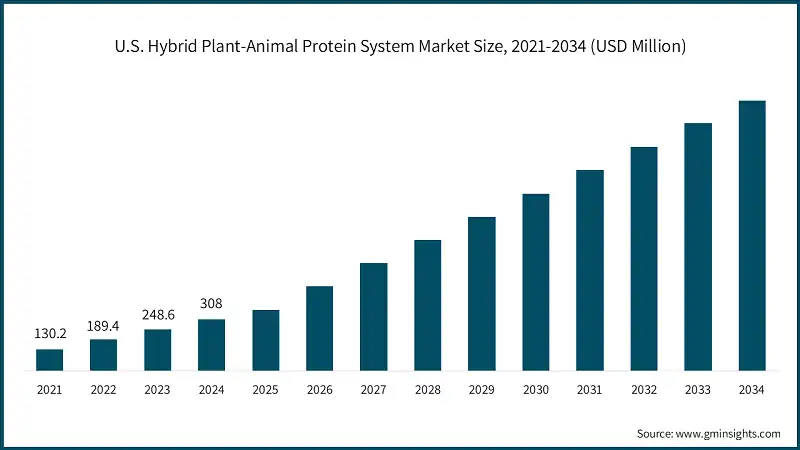
The North America hybrid plant-animal protein system market will grow at a CAGR from approximately 17.9% between 2025 and 2034.
- Increasing consumer consciousness about food production methods relating to sustainability and fairness is the core driver behind the demand for hybrid protein systems making the combination of that of animal-derived and plant-based ingredients to uphold nutritional as well as sensory expectations.
- The rise of flexitarian diets and the preference for clean-label and natural products have encouraged food manufacturers into new developments regarding hybrid systems that offer health advantages, improved texture, and taste, supporting the growth of the market.
- Advances in processing technologies, such as high-moisture extrusion and fermentation, are paving the way for the creation of more realistic and appetizing hybrid meat analogs, thereby promoting their adoption in both retail and foodservice channels.
- Development of hybrid protein systems as alternative sources for sustainability in complement to regional sustainability objectives is promoted by increased emphasis on environmental effect and reduction of greenhouse gas emissions from the traditional sources of meat production.
The hybrid plant-animal protein system markets in Europe, especially in a few countries like Germany, are expected to grow with a rapid pace in the coming years, especially from 2025 to 2034, with CAGR of 17.7%.
- Heavy governmental regulations on the environment combined with a strong emphasis on principles of circular economy have translated into the acceptance of sustainable, eco-friendly hybrid protein solutions, particularly in the highly progressive food industry in Germany.
- Ongoing R&D efforts aspiring to optimization of processing methods, such as fermentation and extrusion, are expanding areas of application in natural extracts, pharmaceuticals, and organic food sectors.
- Rising consumer demand for clean label, allergen-free, and vegan products pushes companies to advance and develop hybrid systems that combine plant and animal proteins with environment- and health-conscious formulations.
The hybrid plant-animal protein system market in China and India is expected to have lucrative growth between 2025 and 2034, with CAGR 18% in the Asia Pacific region.
- Fast urbanization and growing disposable incomes have increased the demand for nutritious, sustainable protein sources, including hybrid systems which provide added sensory and health benefits.
- Substantial government initiatives and investments are directed into hybrid protein remedy technology development through policies emphasizing sustainability, organic farming, and eco-friendly food processing.
- Expanding healthcare as well as wellness sectors enhanced by growing consumer acceptance of natural, functional everyday foods are emerging as promising opportunities for innovation-adoption of hybrid plant-animal protein formulations in dietary supplements and functional foods.
Between 2025 and 2034, the hybrid plant-animal protein system market in the Middle East is projected to grow significantly during this period.
- On-going rise in tourism, hospitality, and wellness leads to even greater knowledge of quality, high-end, and eco-friendly nutrition and relates to current interest in hybrid protein system that fit health and environmental trends in the region.
- Government initiatives in green energy, sustainable food production, and healthier lifestyles are supporting the adaptation of hybrid protein solutions into the food, dietary, and cosmetic markets.
- Reduced costs and improved feasibility of hybrid systems in regional applications are boosted further by advancements in biological and thermal processing technology.
Between 2025 and 2034, a promising expansion of the hybrid plant-animal protein system sector is foreseen in the Latin America.
- The increasing levels of environmental consciousness and awareness of sustainability encourage consumer and industry adoption of hybrid protein solutions that are eco-friendly, particularly with the cosmetics and functional foods sectors.
- Policies with a favorable legislative framework on sustainable farming, natural extraction methods, and eco-conscious manufacturing foster the development of hybrid systems, particularly by innovations like supercritical fluid extraction, inactivating specific processes of biodegradation.
- Rising disposable incomes and more scientific research into natural and functional ingredients are increasing demand for hybrid plant-animal protein systems in food, dietary supplements, and personal care products, which in turn drives regional market growth.
Hybrid Plant-Animal Protein System Market Share
- Hybrid plant-animal protein system industry is moderately consolidated with players like Hormel Foods, Nestlé S.A., 50/50 Foods, Inc, Maple Leaf Foods and Conagra Brands accounted for 31.7% market share in 2024.
- The hybrid plant-animal protein system market consists of such leading companies operating mostly in their regional areas. Their long years of experience with hybrid plant-animal protein system allow these companies to maintain a strong market position worldwide. Their product offerings are diverse and majorly supported by production capacities and distribution networks, which can serve the increasing demand for hybrid plant-animal protein system in various regions.
Hybrid Plant-Animal Protein System Market Companies
Major players operating in the hybrid plant-animal protein system industry includes:
- 50/50 Foods, Inc
- Cargill
- Conagra Brands
- Hormel Foods
- ITC Limited
- JBS
- Maple Leaf Foods
- Momentum Foods
- Nestlé S.A.
- Rügenwalder Mühle
- Tyson Foods
- Vion Food Group
50/50 Foods, Inc, the entire business model is built around hybrid plant-to-animal protein products, clearly positioning itself in branding as someone who specializes in blended formulations targeting flexitarian consumers. Its intent is clearly to target the considerable flexitarian consumer segment-people who desire to reduce meat consumption but not completely eliminate it-as that represents a pragmatic positioning that could be more broadly accepted than the products designed for ultimate meat elimination.
Conagra Brands competes primarily by means of Gardein, which is well-equipped with retail presence and sales. When Conagra acquired Gardein, it presented an already established brand with a portfolio of products that could be scaled by the company through its distribution relationships and marketing capabilities. In June 2025, Conagra launched over 50 new frozen foods, including plant-based options-another manifestation of continued product development momentum for the company.
Hormel has multiple brands like Applegate and Jennie-O to serve different consumer segments. The expertise developed by the company over time in the traditional form of meat processing translates quite readily into that for alternative proteins. R&D spending supports innovation across the portfolio. Protein-centric innovation is the strategy adopted by Hormel, thus preparing it for alternate means of serving consumers searching for diversified protein alternatives.
Maple Leaf Foods has invested the most aggressively into the alternative protein capacity, for plant-based facilities. The merger of the meat and plant-protein divisions effective February 2024 into one protein business is a clear portal into strategic integration rather than separate business units: the most advantageous but never-possible approach for presenting hybrid products along with standard meat could overcome barriers of consumer resistance.
Nestle S.A., the patent-protected process by which Nestlé creates dairy-versus-plant protein blends provides a competitive edge and gives barriers to imitate. The company's launches in Chile (Maggi Rindecarne, Maggi Veg) and Nigeria (NIDO SoyPow) are an indication of the company's willingness to test innovations in many markets. Nestlé's acquisition of Orgain and development of precision fermentation protein powder indicates a multi-pronged approach using different technologies and product categories.
Hybrid Plant-Animal Protein System Market Report Attributes
| Key Takeaway | Details |
|---|---|
| Market Size & Growth | |
| Base Year | 2024 |
| Market Size in 2024 | USD 1 Billion |
| Market Size in 2025 | USD 1.2 Billion |
| Forecast Period 2025 – 2034 CAGR | 17.9% |
| Market Size in 2034 | USD 5.3 Billion |
| Key Market Trends | |
| Drivers | Impact |
| Rising global protein demand & food security concerns | Increases demand for hybrid plant-animal protein systems as a sustainable solution to meet growing protein needs and ensure food security |
| Consumer shift toward flexitarian & reducetarian diets | Boosts adoption of hybrid protein systems by aligning with consumer preferences for flexible and reduced meat consumption |
| Sustainability & climate change mitigation goals | Accelerates market growth as hybrid systems are perceived as environmentally friendly options supporting climate targets |
| Pitfalls & Challenges | Impact |
| High production costs & price premium challenges | Hinders broader market penetration due to affordability issues, limiting consumer adoption of hybrid proteins |
| Consumer skepticism & acceptance barriers | Restricts market expansion as skepticism towards hybrid systems reduces consumer willingness to try and accept these products |
| Market Leaders (2024) | |
| Market Leaders |
9.2 % Market Share |
| Top Players |
Collective market share in 2024 is 31.7% |
| Competitive Edge |
|
| Regional Insights | |
| Largest Market | North America |
| Fastest growing market | Asia Pacific |
| Emerging countries | South Korea, Japan, Australia |
| Future outlook |
|
What are the growth opportunities in this market?
Hybrid Plant-Animal Protein System Industry News
- In October 2025, Cargill unveiled its multi-source protein toolkit; by providing plant solutions, fermentation-based ingredients, and hybrids, they are catering to flexitarian demand while improving sensory appeal and thus advancing the cause of sustainable yet accessible alt-protein innovation for the future foodscape.
- In June 2025, the new product line launched includes more than 50 new frozen foods in the Conagra Brands lineup, including single-serve or multi-serve meals and vegetable sides and plant-based options to enhance convenience, flavor, and variety in the names of leading brands to ever-shifting consumer demands.
- In July 2024, Nestlé presented Maggi Rindecarne in Chile, a plant-based meat extender that creates a nutritious, affordable, and versatile product by combining soy with spices, in line with its vision of promoting sustainable and balanced diets.
The hybrid plant-animal protein system market research report includes an in-depth coverage of the industry with estimates and forecast in terms of revenue in USD Million and volume in terms of Kilo Tons from 2021–2034 for the following segments:
Market, By Product
- Plant-animal hybrid products
- Cultivated meat-plant hybrid products
- Mycoprotein-animal hybrid products
- Insect-plant hybrid products
- Microbial fermentation-animal hybrid products
- Others
Market, By Production Process
- Co-extrusion & texturization
- Fermentation
- Enzymatic modification
- Others
Market, By Application
- Whole muscle analog hybrids
- Steak & fillet analogs
- Cutlet & chop formats
- Others
- Ground / minced hybrid products
- Burger patties
- Sausages & links
- Meatballs & crumbles
- Others
- Processed hybrid products
- Nuggets & tenders
- Formed patties & cutlets
- Strips & bites
- Others
- Ingredient hybrid systems
- Protein isolates & concentrates
- Texturized vegetable protein (TVP) blends
- Functional protein ingredients
- Others
- Ready-to-eat hybrid meals
- Frozen meal formats
- Refrigerated prepared meals
- Shelf-stable options
- Meal kit
- Others
- Others
The above information is provided for the following regions and countries:
- North America
- U.S.
- Canada
- Europe
- Germany
- UK
- France
- Spain
- Italy
- Rest of Europe
- Asia Pacific
- China
- India
- Japan
- Australia
- South Korea
- Rest of Asia Pacific
- Latin America
- Brazil
- Mexico
- Argentina
- Rest of Latin America
- Middle East and Africa
- Saudi Arabia
- South Africa
- UAE
- Rest of Middle East & Africa
Frequently Asked Question(FAQ) :
What was the market size of the hybrid plant-animal protein system in 2024?
The market size was valued at USD 1 billion in 2024, with a CAGR of 17.9% expected through 2034. The growing demand for sustainable and efficient protein sources is driving market growth.
What is the projected value of the hybrid plant-animal protein system market by 2034?
The market is poised to reach USD 5.3 billion by 2034, driven by advancements in food processing technologies, sustainability initiatives, and increasing consumer acceptance.
What is the expected size of the hybrid plant-animal protein system industry in 2025?
The market size is projected to reach USD 1.2 billion in 2025.
How much revenue did the plant-animal hybrid products segment generate in 2024?
The plant-animal hybrid products segment generated USD 561.8 million in revenue in 2024, due to its flexibility and strong consumer appeal.
What was the market share of co-extrusion and texturization processes in 2024?
Co-extrusion and texturization processes accounted for 48.7% of the market share in 2024, owing to their ability to create realistic meat textures and their scalability for high-volume production.
Which region leads the hybrid plant-animal protein system sector?
The North American market is expected to grow at a CAGR of approximately 17.9% between 2025 and 2034, led by increasing consumer awareness of sustainable food production methods.
What are the upcoming trends in the hybrid plant-animal protein system market?
Trends include the rise of flexitarian diets, advanced processing via precision fermentation and cell culture, sustainability-driven innovation, and wider retail adoption of hybrid products.
Who are the key players in the hybrid plant-animal protein system industry?
Key players include 50/50 Foods, Inc., Cargill, Conagra Brands, Hormel Foods, ITC Limited, JBS, Maple Leaf Foods, Momentum Foods, Nestlé S.A., Rügenwalder Mühle, Tyson Foods, and Vion Food Group.
Hybrid Plant-Animal Protein System Market Scope
Related Reports