Summary
Table of Content

Hot Sauce Market
Get a free sample of this report
Form submitted successfully!
Error submitting form. Please try again.
Thank you!
Your inquiry has been received. Our team will reach out to you with the required details via email. To ensure that you don't miss their response, kindly remember to check your spam folder as well!
Request Sectional Data
Thank you!
Your inquiry has been received. Our team will reach out to you with the required details via email. To ensure that you don't miss their response, kindly remember to check your spam folder as well!
Form submitted successfully!
Error submitting form. Please try again.
Hot Sauce Market Size
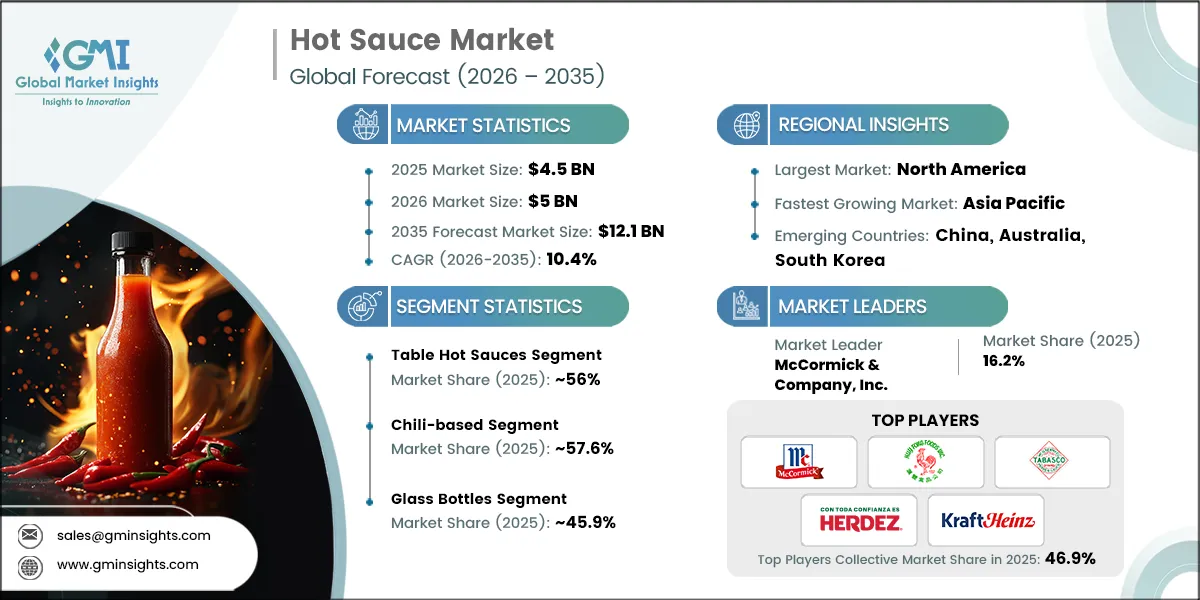
The global hot sauce market size was valued at USD 4.5 billion in 2025. The market is expected to grow from USD 5 billion in 2026 to USD 12.1 billion in 2035, at a CAGR of 10.4% according to latest report published by Global Market Insights Inc.
Hot Sauce Market Key Takeaways
Market Size & Growth
- 2025 Market Size: USD 4.5 Billion
- 2026 Market Size: USD 5 Billion
- 2035 Forecast Market Size: USD 12.1 Billion
- CAGR (2026–2035): 10.4%
Regional Dominance
- Largest Market: North America
- Fastest Growing Region: Asia Pacific
Key Market Drivers
- Rising consumer preference for bold and spicy flavors.
- Expansion of E-commerce and global distribution channels.
- Increasing demand for premium, organic, and clean-label products Pushing manufacturers to innovate with healthier, high-quality ingredients, elevating the overall market standards and consumer expectations.
Challenges
- Fluctuations in raw material prices and supply chain disruptions.
- Intense market competition and brand saturation May result in reduced market share for individual brands, necessitating differentiation through unique flavors or branding strategies.
Opportunity
- Developing unique, artisanal hot sauce flavors to target niche markets and gourmet food lovers Create niche market opportunities, allowing brands to stand out and attract gourmet and specialty food consumers.
- Creating personalized or customizable hot sauce brands for restaurants, gift sets, or online retail.
Key Players
- Leading Players: Top 5 players in this market include McCormick & Company, Inc., McIlhenny Company, The Kraft Heinz Company, Huy Fong Foods, Inc, Grupo Herdez, which collectively held a market share of 46.9% in 2025.
Get Market Insights & Growth Opportunities
- Growth drivers in this market consist of rising focus on organic and natural ingredients, unique and fusion flavors, and sustainable production methods. The global hot sauce industry is continually evolving to meet changing consumer tastes. Over the last few years, the hot sauce market has been rapidly growing as consumers seek more exciting and spicy tastes, along with an expanding multicultural population and an increase in demand for convenient off-shelf sauces.
- Hot sauces allow consumers to test their limits, give them an opportunity to show off their daring, and can spark laughter and conversation. According to the cuisine Institute, 74% of American customers now add spicy sauce to their cuisine, with 45% doing so at least once a week. Hot sauce is one of the world’s fastest-growing businesses, according to recent market surveys. In fact, it ranks as the eighth fastest growing industry in the North America and specifically in the U.S. In the coming years revenue is expected to continue rising. This growth may be due to immigration and important demographic changes all over the world.
- Additionally, emerging markets are also bolstered by increased purchasing power and the growing popularity of clean-label or health-oriented products. These markets are setting up new small-scale businesses, which further cater to the growing demand derived from the expanding competition. Furthermore, strategic advertising and endorsements through social media influences and celebrity chefs are making sure the consumers understand the brand and sauce. Unlike the Western markets, this market has a growing appetite for spice-infused flavors in the upcoming period. During recent years, companies are more focused on enhanced availability of products in retail chains, food supermarkets, specialized shops, and other outlets as well, or they can be purchased directly. By providing the food industry with quality pepper products, companies make certain that the consumers continue to enjoy and use the hot sauces.
To get key market trends
Hot Sauce Market Trends
- In the past, consumers used hot sauces to make their food taste better, over the years however, consumers have started to appreciate the aesthetic and flavored hot sauce added to dishes. Hot sauces are no longer just an addition; they have become a staple in every kitchen. Consumers have begun to expand their preferences when it comes to food and flavors. Everyone now is looking for more real and vivid flavors and sauces for their food.
- Sauces such as red-hot sauce are favored in every corner of the world and can be easily found. According to lifestyles survey for consumer values and behavior in the USA in May 2023, roughly 57.0% of consumers seek out new products and services that are tailored to their tastes. Many consumers are also trying cheaper alternatives, yet many still enjoy niche and branded products.
- Recent trends show that hot sauce brands are in the spotlight now more than ever. With the existence of social media such as Instagram and Facebook, among numerous other social media platforms. Consumers from different parts of the world share their love for hot sauce with creative recipes and aesthetic food photos via trendy challenges.
- Hot sauce made from a variety of ingredients can be very beneficial for your health. Even though traditional meals are incomplete without the addition of spices, it is worth mentioning that sauces made from peppers such as capsaicin are beneficial for sore throats, boost metabolism, and reduce inflammation so they are important to include in any healthy diet.
Hot Sauce Market Analysis
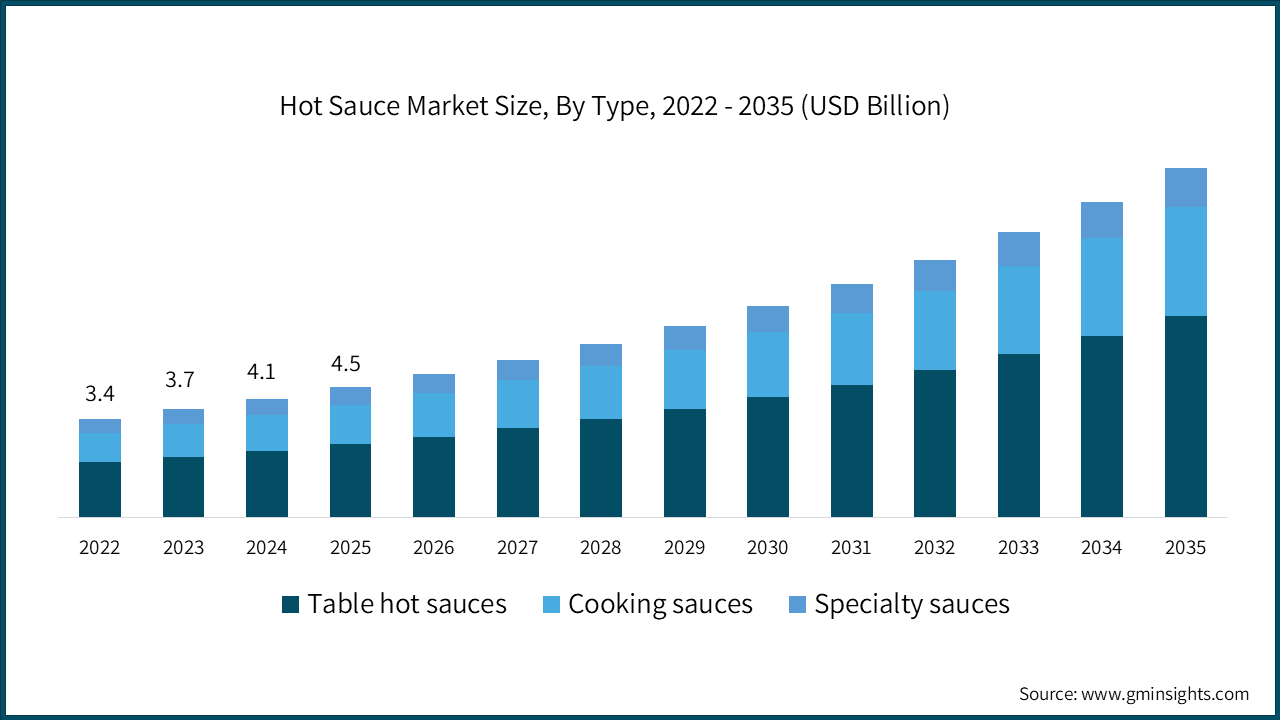
Learn more about the key segments shaping this market
Based on type, the market is segmented into table hot sauces, cooking sauces and specialty sauces. Table hot sauces dominated the market with an approximate market share of 56% in 2025.
- It dominates due to the flexibility of the product, rising worldwide demand, its cultural integration, and continuous product innovation.
- Consumers often require a simple, ready-to-use condiment to add to their food, which is why table hot sauces can be found nearly everywhere, from homes to restaurants and fast-food outlets.
- Additionally, it also helps that table hot sauces come in different flavors and varying intensities, allowing them to attract many consumers, including those who prefer milder tastes.
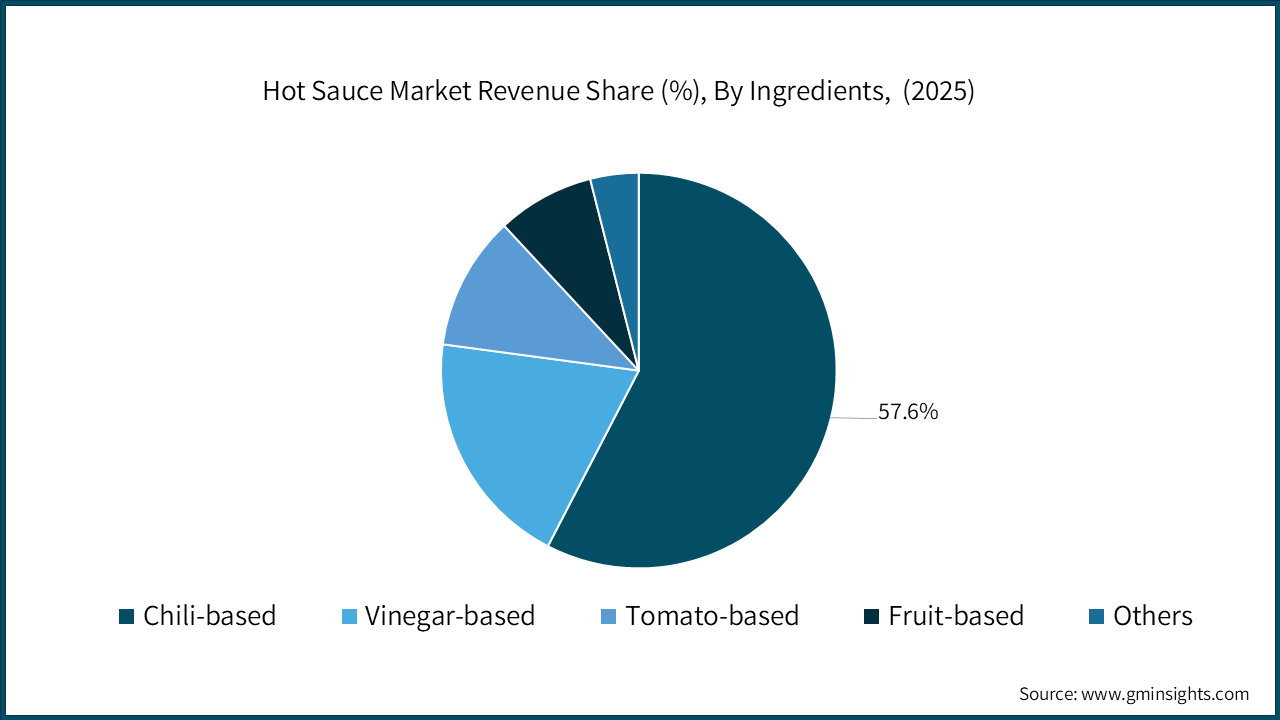
Learn more about the key segments shaping this market
Based on ingredient, the hot sauce market is segmented into chili-based, vinegar-based, tomato-based, fruit-based and others. Chili-based dominated the market with an approximate market share of 57.6% in 2025.
- Chili-based segment dominated the market because consumer preference and health benefits. The sauces use chili peppers as their main ingredient because the peppers create a natural complex flavor with varying heat levels that chili enthusiasts enjoy. The focus on chili-based sauces is also enhanced by their incorporation into traditional cuisines in regions such as Latin America, Asia, and Africa, which makes it a common household and professional kitchen ingredient.
- Chili-based sauces attract a wide audience because people who follow health trends want to eat the sauce which provides health advantages through its chili content that boosts metabolism and supports heart health.
Based on packaging, the hot sauce market is divided into glass bottles, plastic jars, pouches, and others. Glass bottles dominated the market with an approximate market share of 45.9% in 2025.
- Glass bottles offer better flavor preservation along with sustainable advantages. The glass bottle segment led the packaging market because its shipping advantages and package strength and consumers preference for reuse and space-saving packages. Bottles made of glass are believed to be the best containers for hot sauces since they keep the taste and smell intact.
- Hot sauce producers choose glass bottles to package their niche and gourmet sauces because the bottles provide an attractive appearance while being environmentally friendly.
Based on distribution channel, the hot sauce market is segmented into retail stores, online retail, and food service. Retail stores held the largest market share of 69.8% in 2025.
- Consumers obtain hot sauces from supermarkets and hypermarkets and grocery stores which serve as major hot sauce retail outlets that offer multiple hot sauce brands and flavors to customers.
- Retail stores can use their established supply chains together with their manufacturer relationships to achieve continuous product availability. E-commerce platform growth will continue to increase because of their widespread reach which enables consumers to get products immediately.
Based on application, the market is segmented into table condiment/topping, cooking ingredient, wing sauce/coating, dipping sauce, beverage enhancement and others. Table condiment/topping held the largest market share of 47.9% in 2025.
- The hot sauce market is dominated by table condiment topping products because they enhance the taste and appearance of daily meals which restaurants and homes continue to demand throughout the year. Consumers prefer this product because it provides them with quick flavor enhancement through its cultural integration and versatile use in various dishes.
- The cooking ingredient segment holds importance in the market yet it falls short of condiments because hot sauces used in cooking require particular flavor profiles and heat levels which restrict their use as generic table toppings. The segment has experienced growth through the increasing popularity of gourmet cooking and culinary experimentation.
- The wing sauce coating sector maintains a small market share which continues to grow because more North American customers want to try spicy flavors and restaurants introduce new menu items. Customers use the product mainly for wing and fried food preparation yet its demand remains lower than that of everyday condiments which people use throughout their day.
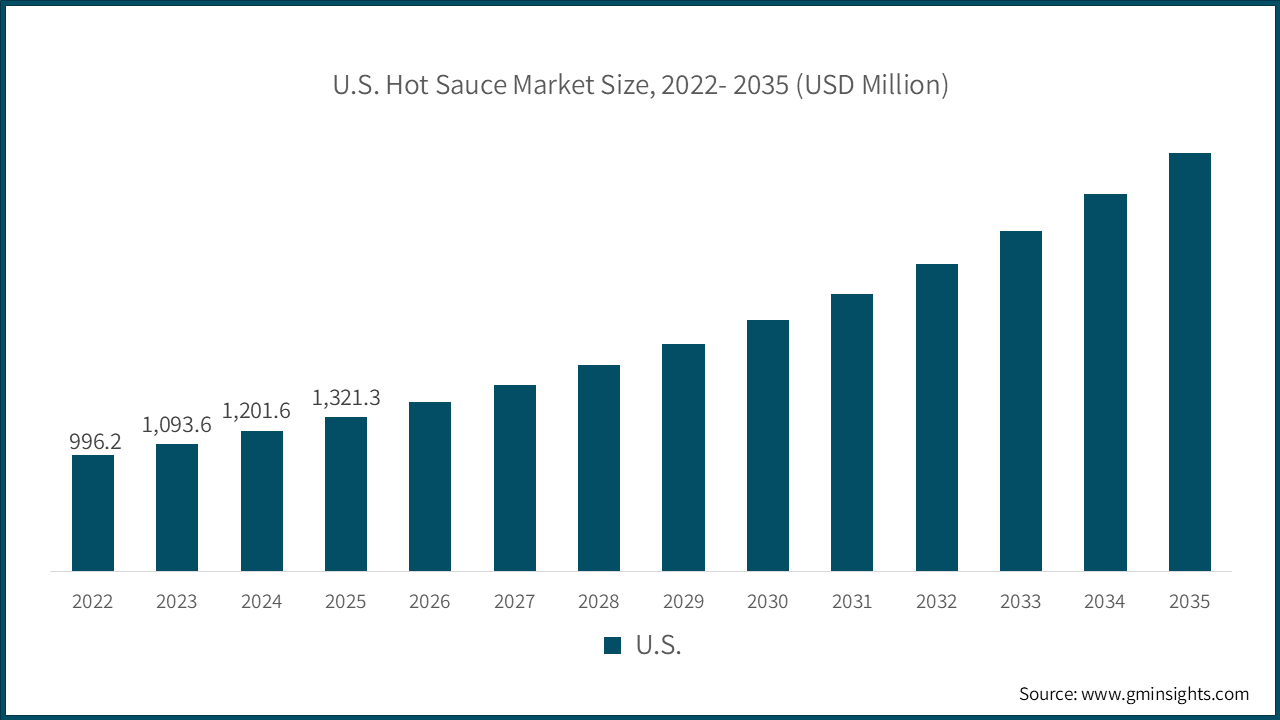
Looking for region specific data?
The hot sauce market in North America will grow at a CAGR from approximately 10.5% between 2026 and 2035.
- The growing consumer demand for organic and natural food items which include spicy flavors leads to the creation of new hot sauce products that meet the needs of health-conscious customers and those seeking flavorful options.
- The rising demand for sustainable packaging solutions and eco-friendly manufacturing methods creates a need for brands to implement environmentally-friendly production methods which meet consumer sustainability demands.
The hot sauce markets in Europe, especially in a few countries like Germany, are expected to grow with a rapid pace in the coming years.
- The food industry faces strict safety regulations which include food safety standards and labeling requirements and sustainability regulations which push manufacturers to create vegan and allergen-free hot sauce products that match consumer demand for clean-label items
- New eco-friendly packaging solutions and sustainable ingredient sourcing methods emerge from the commitment to implement circular economy frameworks and minimize waste.
The hot sauce market in China and India is expected to have lucrative growth between 2026 and 2035, with CAGR 10.3% in the Asia Pacific region.
- The region's scientific research into natural flavors and extracts, combined with rising disposable incomes, has resulted in increased demand for premium and functional hot sauces.
- Eco-conscious manufacturing practices together with waste valorization efforts lead to the creation of new products which meet global sustainability requirements.
Between 2026 and 2035, the market for hot sauce in the Middle East is projected to grow significantly during this period.
- The hospitality and tourism sectors are growing which creates a need for high-quality spicy condiments that match various international cuisines and local culinary traditions.
- Brands are implementing eco-friendly production methods and packaging solutions because consumers now recognize health advantages from natural ingredients and environmentally sustainable practices.
Between 2026 and 2035, a promising expansion of the hot sauce sector is foreseen in the Latin America.
- The rising environmental awareness together with the trend toward sustainable food production and flavoring practices creates demand for hot sauce products which use organic and eco-friendly manufacturing methods.
- The combination of supportive legislation and rising consumer demand for natural and organic products has led to progress in developing green extraction methods along with sustainable ingredient sourcing practices.
Hot Sauce Market Share
Hot sauce industry is moderately consolidated with players like McCormick & Company, Inc., McIlhenny Company, The Kraft Heinz Company, Huy Fong Foods, Inc and Grupo Herdez which accounts for 46.9% market share in 2025.
The hot sauce market consists of such leading companies operating mostly in their regional areas. Their long years of experience with hot sauce have allowed these companies to maintain a strong market position worldwide. Their product offerings are diverse and majorly supported by production capacities and distribution networks, which can serve the increasing demand for hot sauce in various regions.
Hot Sauce Market Companies
Major players operating in the hot sauce industry includes:
- Campbell Soup Company
- Conagra Brands, Inc.
- Grupo Herdez
- Heartbeat Hot Sauce Inc
- Huy Fong Foods, Inc.
- La Costeña
- Marie Sharp’s
- McCormick & Company, Inc.
- McIlhenny Company
- Pepper Palace, Inc.
- The Kraft Heinz Company
- Torchbearer Sauces
- Truff
- Unilever
McCormick & Company, Inc. sells multiple varieties of hot sauces which include Cholula while developing new taste innovations through recipe creation to satisfy customer needs for spicy sauces.
McIlhenny Company produces TABASCO brand pepper sauce which serves as its main product and holds a significant position in international hot sauce distribution while the company maintains its traditional methods and delivers products with consistent quality.
The Kraft Heinz Company offers different types of hot sauces which they use to complete their product range as they serve their retail and foodservice customers through their widely recognized brands.
Grupo Herdez creates Mexican-style hot sauces and salsas which use traditional Mexican taste elements and local product sources to attract a range of customers.
Huy Fong Foods, Inc. operates internationally with Sriracha sauce as its main hot sauce product which people throughout the world recognize for its special taste that has gained popularity among both diners and dining establishments.
Hot Sauce Market Report Attributes
| Key Takeaway | Details |
|---|---|
| Market Size & Growth | |
| Base Year | 2025 |
| Market Size in 2025 | USD 4.5 Billion |
| Market Size in 2026 | USD 5 Billion |
| Forecast Period 2026-2035 CAGR | 10.4% |
| Market Size in 2035 | USD 12.1 Billion |
| Key Market Trends | |
| Drivers | Impact |
| Rising consumer preference for bold and spicy flavors | Rising consumer preference for bold and spicy flavors It is driving increased demand and innovation within the global hot sauce market, encouraging brands to develop more diverse and intense flavor profiles |
| Expansion of E-commerce and global distribution channels | Expansion of E-commerce and global distribution channels Facilitating easier access to hot sauces worldwide, boosting sales and market reach significantly |
| Increasing demand for premium, organic, and clean-label products Pushing manufacturers to innovate with healthier, high-quality ingredients, elevating the overall market standards and consumer expectations | Increasing demand for premium, organic, and clean-label products Pushing manufacturers to innovate with healthier, high-quality ingredients, elevating the overall market standards and consumer expectations |
| Pitfalls & Challenges | Impact |
| Fluctuations in raw material prices and supply chain disruptions | Fluctuations in raw material prices and supply chain disruptions Lead to increased production costs and supply delays, potentially limiting market growth and innovation in the global hot sauce industry |
| Intense market competition and brand saturation May result in reduced market share for individual brands, necessitating differentiation through unique flavors or branding strategies | Intense market competition and brand saturation May result in reduced market share for individual brands, necessitating differentiation through unique flavors or branding strategies |
| Opportunities: | Impact |
| Developing unique, artisanal hot sauce flavors to target niche markets and gourmet food lovers Create niche market opportunities, allowing brands to stand out and attract gourmet and specialty food consumers | Developing unique, artisanal hot sauce flavors to target niche markets and gourmet food lovers Create niche market opportunities, allowing brands to stand out and attract gourmet and specialty food consumers |
| Creating personalized or customizable hot sauce brands for restaurants, gift sets, or online retail | Creating personalized or customizable hot sauce brands for restaurants, gift sets, or online retail Creating personalized or customizable hot sauce brands can enhance customer loyalty and open new revenue streams in retail, gift set, and online markets, fostering market expansion |
| Market Leaders (2025) | |
| Market Leaders |
16.2 Market Share |
| Top Players |
|
| Competitive Edge |
|
| Regional Insights | |
| Largest Market | North America |
| Fastest growing market | Asia Pacific |
| Emerging countries | China, Australia, South Korea |
| Future outlook |
|
What are the growth opportunities in this market?
Hot Sauce Industry News
- In January 2025, Cholula introduced "Cholula Extra Hot," a spicy version of its family recipe, and introduces eight hot sauces, new categories, and McCormick's new products.
- In August 2024, McIlhenny Company, the creators of TABASCO® Sauce, has launched TABASCO Salsa Picante, their first-ever Mexican-style hot sauce. This rich, thick, and spicy sauce is made with the same quality standards as the brand's over 150 years of pepper expertise.
- In October 2023, Vlasic, a Conagra Brands brand has partnered with Frank's RedHot to introduce three hot and spicy Kosher Dill Pickles, perfect for sandwiches, burgers, or snacking, enhancing the flavor of the #1 hot sauce.
- In July 2022, Kraft Heinz introduced a premium line of sauces and spreads under the Heinz 57 banner, aimed at home cooks. The sauces include Infused Honeys, Crunch Sauces, and are inspired by award-winning chefs.
This hot sauce market research report includes in-depth coverage of the industry, with estimates & forecasts in terms of revenue (USD Billion) and volume (Kilo Tons) from 2022 to 2035, for the following segments:
Market, by Type
- Table hot sauces
- Traditional cayenne-based sauces
- Buffalo-style wing sauces
- Sriracha-style sauces
- Green/jalapeño sauces
- Others
- Cooking sauces
- Marinade & cooking sauces
- Simmer sauces
- Stir-fry & Asian-style hot sauces
- Others
- Specialty sauces
Market, by Ingredients
- Chili-based
- Cayenne pepper-based
- Habanero-based
- Jalapeño/green pepper-based
- Others
- Vinegar-based
- Distilled vinegar-based
- Apple cider vinegar-based
- Blended vinegar
- Tomato-based
- Fruit-based
- Mango-based hot sauces
- Pineapple-based hot sauces
- Tamarind & chamoy-style
- Others
Market, by Packaging
- Glass bottles
- Plastic jars
- Pouches
- Others
Market, by Distribution Channel
- Retail stores
- Online retail
- Food service
Market, by Application
- Table condiment/topping
- Cooking ingredient
- Wing sauce/coating
- Dipping sauce
- Beverage enhancement
- Others
The above information is provided for the following regions and countries:
- North America
- U.S.
- Canada
- Europe
- Germany
- UK
- France
- Spain
- Italy
- Rest of Europe
- Asia Pacific
- China
- India
- Japan
- Australia
- South Korea
- Rest of Asia Pacific
- Latin America
- Brazil
- Mexico
- Argentina
- Rest of Latin America
- Middle East and Africa
- Saudi Arabia
- South Africa
- UAE
- Rest of Middle East and Africa
Frequently Asked Question(FAQ) :
What was the market size of the hot sauce in 2025?
The market was valued at USD 4.5 billion in 2025, growing at a CAGR of 10.4% till 2035. The market is driven by increasing demand for organic ingredients, fusion flavors, and sustainable production methods.
What is the projected value of the hot sauce market by 2035?
The market is poised to reach USD 12.1 billion by 2035, due to evolving consumer preferences and rising multicultural influences.
What is the expected size of the hot sauce industry in 2026?
The market size is expected to reach USD 5 billion in 2026.
What was the market share of table hot sauces in 2025?
Table hot sauces dominated the market with an approximate share of 56% in 2025, attributed to their versatility, global demand, cultural integration, and product innovation.
What was the market share of chili-based hot sauces in 2025?
Chili-based hot sauces held a market share of approximately 57.6% in 2025, led by consumer preference for their complex flavors and health benefits, as well as their integration into traditional cuisines.
What was the valuation of the glass bottle packaging segment in 2025?
Glass bottles accounted for approximately 45.9% of the market share in 2025, favored for their flavor preservation, sustainability, and consumer preference for reusable packaging.
What is the growth outlook for the North American hot sauce sector?
The North American market is expected to grow at a CAGR of approximately 10.5% between 2026 and 2035, driven by increasing demand for organic and natural spicy food products.
What are the upcoming trends in the hot sauce market?
Trends include the rising popularity of fusion flavors, health-focused hot sauces with capsaicin benefits, social media-driven brand visibility, and sustainable production practices.
Who are the key players in the hot sauce industry?
Key players include Campbell Soup Company, Conagra Brands, Inc., Grupo Herdez, Heartbeat Hot Sauce Inc, Huy Fong Foods, Inc., La Costeña, Marie Sharp’s, and McCormick & Company, Inc.
Hot Sauce Market Scope
Related Reports