Summary
Table of Content

Hemodynamic Monitoring Devices Market
Get a free sample of this report
Form submitted successfully!
Error submitting form. Please try again.
Thank you!
Your inquiry has been received. Our team will reach out to you with the required details via email. To ensure that you don't miss their response, kindly remember to check your spam folder as well!
Request Sectional Data
Thank you!
Your inquiry has been received. Our team will reach out to you with the required details via email. To ensure that you don't miss their response, kindly remember to check your spam folder as well!
Form submitted successfully!
Error submitting form. Please try again.
Hemodynamic Monitoring Devices Market Size
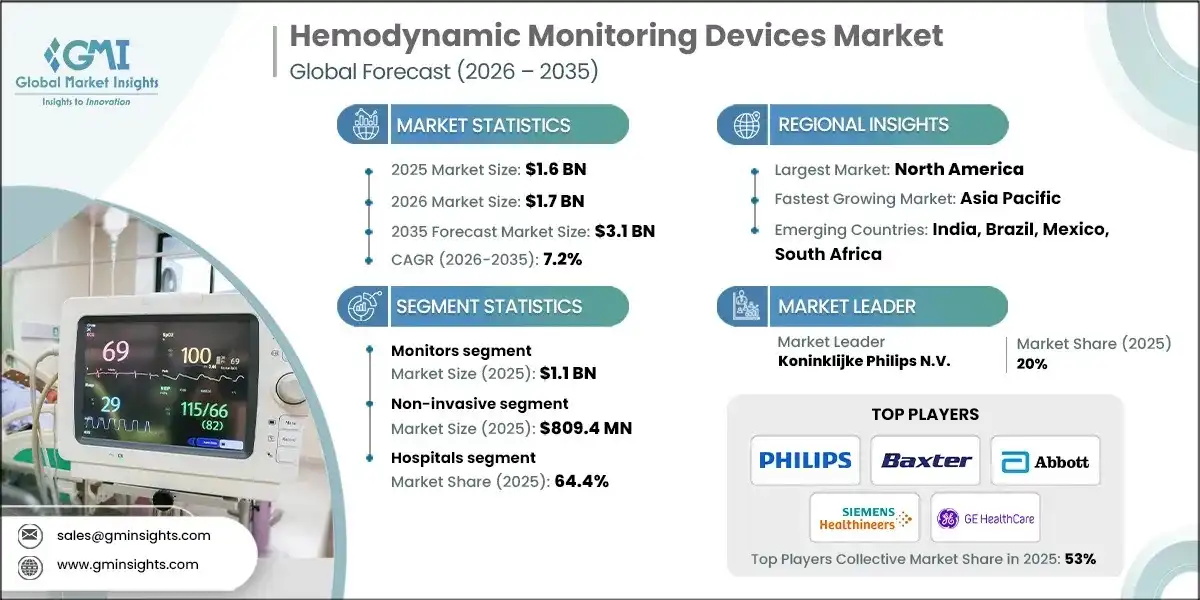
The global hemodynamic monitoring devices market was valued at USD 1.6 billion in 2025 and is projected to grow from USD 1.7 billion in 2026 to USD 3.1 billion by 2035, expanding at a CAGR of 7.2%, according to the latest report published by Global Market Insights Inc. This substantial growth is driven by numerous factors such as rising incidence of chronic diseases across the globe, technological advancements in hemodynamic monitoring devices, increasing preference for telehealth services, and growing number of surgeries.
Hemodynamic Monitoring Devices Market Key Takeaways
Market Size & Growth
- 2025 Market Size: USD 1.6 Billion
- 2026 Market Size: USD 1.7 Billion
- 2035 Forecast Market Size: USD 3.1 Billion
- CAGR (2026–2035): 7.2%
Regional Dominance
- Largest Market: North America
- Fastest Growing Region: Asia Pacific
Key Market Drivers
- Rising incidence of chronic diseases across the globe.
- Technological advancements in hemodynamic monitoring devices.
- Increasing preference for telehealth services.
- Growing number of surgeries.
Challenges
- High cost of patient monitoring devices.
- Stringent regulatory framework.
Opportunity
- Expansion in ambulatory and homecare settings.
- Integration of AI and data analytics.
Key Players
- Market Leader: Koninklijke Philips N.V. led with over 20% market share in 2025.
- Leading Players: Top 5 players in this market include Koninklijke Philips N.V., Baxter International, Abbott Laboratories, Siemens Healthineers, GE HealthCare Technologies Inc., which collectively held a market share of 53% in 2025.
Get Market Insights & Growth Opportunities
Hemodynamic monitoring devices measure blood pressure and flow within the cardiovascular system in order to evaluate circulation and heart function. They offer real time information on variables like blood pressure, vascular resistance, and cardiac output. These devices are frequently used to direct medication and fluid therapy during high-risk surgeries, critical care units, and operating rooms. Additionally, they are used to treat conditions where accurate cardiovascular monitoring is crucial, such as heart failure, shock, and severe trauma. Koninklijke Philips N.V., Baxter International, Abbott Laboratories, Siemens Healthineers, and GE HealthCare Technologies Inc. are some of the top firms in the hemodynamic monitoring devices market. By introducing cutting-edge non-invasive technologies, incorporating AI-driven analytics, and increasing their presence in emerging markets, leading companies in the market are expanding.
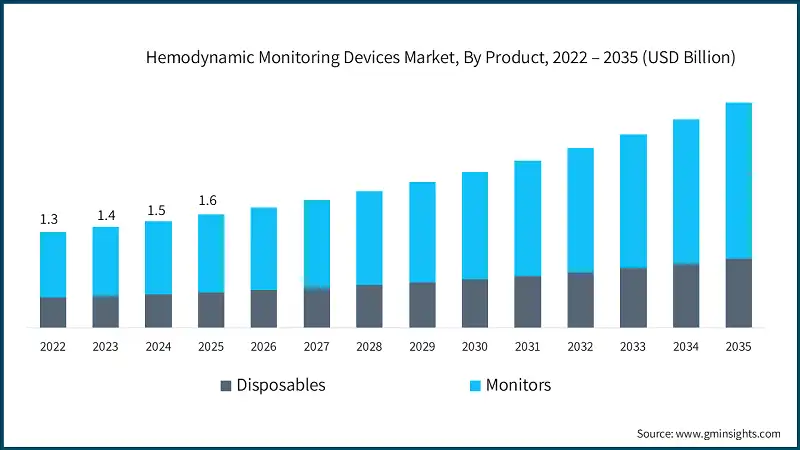
The market grew from USD 1.3 billion in 2022 to USD 1.5 billion in 2024. The rising incidence of chronic diseases worldwide is significantly driving the growth of the market. According to the World Health Organization, noncommunicable diseases (NCDs) caused death of at least 43 million people in 2021, representing 75% of non-pandemic-related deaths globally. Cardiovascular diseases accounted for the largest share with 19 million deaths, followed by cancers (10 million), chronic respiratory diseases (4 million), and diabetes (over 2 million including kidney disease deaths caused by diabetes).
This growing burden of chronic conditions necessitates advanced monitoring solutions to manage hemodynamic parameters effectively, especially in critical care and surgical settings. As these diseases often lead to complications such as heart failure, hypertension, and multi-organ dysfunction, healthcare providers are increasingly adopting hemodynamic monitoring devices to ensure accurate assessment and timely intervention. This adoption is expected to accelerate further with the integration of AI-driven analytics and remote monitoring capabilities, making hemodynamic monitoring an essential component of modern healthcare delivery.
Additionally, the rising volume of surgical procedures is a key factor fueling the growth of the hemodynamic monitoring devices market. These devices are essential for assessing cardiovascular function during complex surgeries, ensuring patient safety and optimizing outcomes. As surgical interventions become more frequent, hospitals and surgical centers are increasingly adopting advanced monitoring systems to manage perioperative risks such as hypotension and cardiac instability.
According to the Agency for Healthcare Research and Quality, U.S. hospital-owned facilities conducted approximately 12.4 million ambulatory surgery encounters in 2022, up from 11.9 million in 2021. This surge in surgical volumes underscores the growing demand for reliable monitoring technologies that can deliver real-time insights into cardiac output, blood pressure, and tissue perfusion. As healthcare systems worldwide expand surgical capacity and prioritize patient safety, the adoption of minimally invasive and advanced hemodynamic monitoring solutions is expected to accelerate, driving market growth over the coming years.
Hemodynamic monitoring devices are a vital part of today's healthcare, providing real-time assessments of cardiovascular parameters including cardiac output, blood pressure, and tissue perfusion. The information recovered from these devices is used to assist clinicians in managing patients who are receiving fluid therapy or undergoing medical treatment during times of surgical or critical care. By using this type of monitoring, clinicians can detect instability in patients' hemodynamic system before severe complications develop, ultimately improving patient outcomes, and providing more individualized treatment plans, making them indispensable in enhancing patient safety and optimizing resource utilization in hospitals and surgical centers.
To get key market trends
Hemodynamic Monitoring Devices Market Trends
- Technological advancements in hemodynamic monitoring devices are one of the most influential drivers accelerating market growth.
- These innovations have significantly enhanced the accuracy, efficiency, and usability of monitoring systems, addressing the growing need for real-time cardiovascular assessment in critical care and surgical settings.
- Modern developments have transformed conventional invasive monitoring into minimally invasive and non-invasive solutions, improving patient safety and comfort. For instance, advanced pulse contour analysis and bioimpedance technologies now enable continuous cardiac output measurement without the need for pulmonary artery catheterization, reducing procedural risks and hospital stay durations.
- Another major area of progress is the integration of wireless and wearable hemodynamic monitoring systems, which allow remote patient tracking and seamless data transmission to clinical dashboards. For example, Edwards Lifesciences’ Acumen IQ sensor provides predictive hemodynamic insights using machine learning algorithms, helping clinicians anticipate hypotensive episodes and optimize fluid management.
- Significant strides have also been made in sensor miniaturization and connectivity, enabling portable devices for ambulatory and home-care settings. These innovations support continuous monitoring for high-risk patients outside hospital environments, reducing readmissions and improving long-term outcomes. For instance, Pulsion Medical Systems’ advanced PiCCO technology combines thermodilution and pulse contour analysis for precise hemodynamic evaluation in critical care units.
- Moreover, the introduction of artificial intelligence (AI) and cloud-based data analysis has changed clinicians interpretation of complex medical data. AI-assisted platforms have improved the ability of users to make predictions regarding future health issues, perform automatic trend analysis on large amounts of clinical data, and provide customized treatment recommendations, thereby reducing the potential for human error and improving efficiencies within the workflow. As a result of these changes, the hemodynamic monitor industry is developing to meet the growing demand for precision medicine in cardiac surgery, trauma, and chronic disease management.
Hemodynamic Monitoring Devices Market Analysis
 Learn more about the key segments shaping this market
Learn more about the key segments shaping this market
Based on product, the market is bifurcated into disposables and monitors. The monitors segment is dominating the market with the largest revenue of USD 1.1 billion in 2025.
- Hemodynamic monitoring devices refer to advanced systems such as bedside monitors, portable units, and integrated platforms that provide continuous assessment of cardiovascular parameters including cardiac output, arterial pressure, and central venous pressure. These monitors are essential for guiding therapeutic decisions and ensuring patient stability in high-acuity settings.
- Hemodynamic monitoring devices are most extensively utilized in critical care environments, particularly ICUs, where continuous cardiovascular assessment is vital for managing critically ill patients. According to the CDC’s National Hospital Ambulatory Medical Care Survey, in 2022, approximately 3.1 million emergency department visits resulted in admission to critical care units, highlighting the sustained and substantial demand for ICU services. This high patient influx directly drives the adoption of advanced monitoring systems, as each ICU bed requires reliable hemodynamic monitoring capabilities.
- Moreover, next-generation hemodynamic monitoring devices also provide users with integrated safety features, easy-to-use touchscreen interfaces, and automated calibration processes. These features decrease the likelihood of human error and improve the quality of patient care in situations where there is a need for continuous monitoring of patients.
- Combined with strong adoption trends toward automated medical systems, increased use of next-generation monitors will create opportunities for growth in the hemodynamic monitoring device market.
Based on system type, the hemodynamic monitoring devices market is segmented into non-invasive, invasive, and minimally invasive. The non-invasive segment dominated the market with the largest revenue of USD 809.4 million in 2025 and is expected to grow at a CAGR of 7.3% over the forecast period.
- The non-invasive segment in hemodynamic monitoring devices focuses on technologies that measure cardiovascular parameters without penetrating the skin or inserting catheters. These systems leverage advanced methods such as Doppler ultrasound, bioimpedance, and bioreactance to deliver accurate cardiac output and fluid status assessments.
- Demand for non-invasive monitoring is accelerating as hospitals and outpatient facilities seek safer, faster, and cost-effective solutions for perioperative and critical care. These devices are increasingly used in emergency departments and during high-risk surgeries where rapid hemodynamic evaluation is essential. The growing emphasis on patient comfort and reduced infection risk has positioned non-invasive systems as a preferred choice in enhanced recovery protocols and minimally invasive surgical workflows.
- A notable example is the ClearSight system by Edwards Lifesciences, which provides continuous non-invasive blood pressure and cardiac output monitoring using a finger cuff and advanced algorithms. This technology enables clinicians to track hemodynamic trends without arterial lines, supporting fluid optimization and early detection of hypotension during major surgeries.
- With advancements in sensor accuracy, wireless connectivity, and predictive analytics, these devices are expected to experience widespread adoption across surgical, critical care, and ambulatory settings, reinforcing their role in improving safety and efficiency in cardiovascular management.
Learn more about the key segments shaping this market
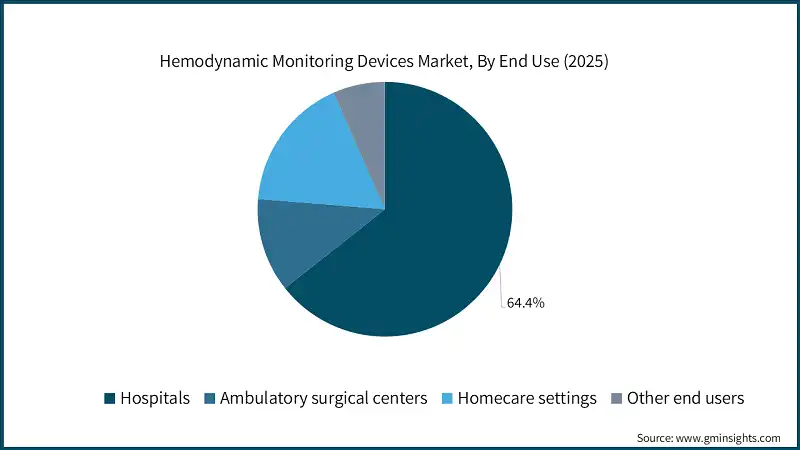
Based on end use, the hemodynamic monitoring devices market is segmented into hospitals, ambulatory surgical centers, homecare settings, and other end users. The hospitals segment dominated the market with the largest revenue share of 64.4% in 2025 and is expected to grow at the fastest CAGR over the forecast period.
- Hospitals remain the most dominant end user for hemodynamic monitoring devices, encompassing a range of settings including intensive care units (ICUs), operating theatres, and emergency departments. These facilities demand a wide spectrum of monitoring solutions from invasive catheters to non-invasive sensors to manage critically ill and perioperative patients.
- The extensive adoption of hemodynamic monitoring in hospitals is partly due to their critically high patient loads. In the U.S., there were approximately 33.36 million hospital admissions in 2020, with community hospitals alone accounting for over 31.39 million admissions. Additionally, these facilities managed over 59,000 medical-surgical ICU beds, with a further 16,000 cardiac ICU beds. Such volume underscores the continuous demand for real-time cardiovascular monitoring across hospital departments, reinforcing the crucial role of hemodynamic devices in maintaining quality care at scale.
- By providing clinicians with reliable, real-time data, these systems help reduce ICU admissions, lower complication rates, and improve mortality outcomes.
- Therefore, the substantial scale of hospital admissions and ICU capacity, coupled with the need for high-precision cardiovascular assessment, solidifies hospitals as the primary growth factor in the market.
Looking for region specific data?
North America hemodynamic monitoring devices market
North America dominated the market with a market share of 36.4% in 2025.
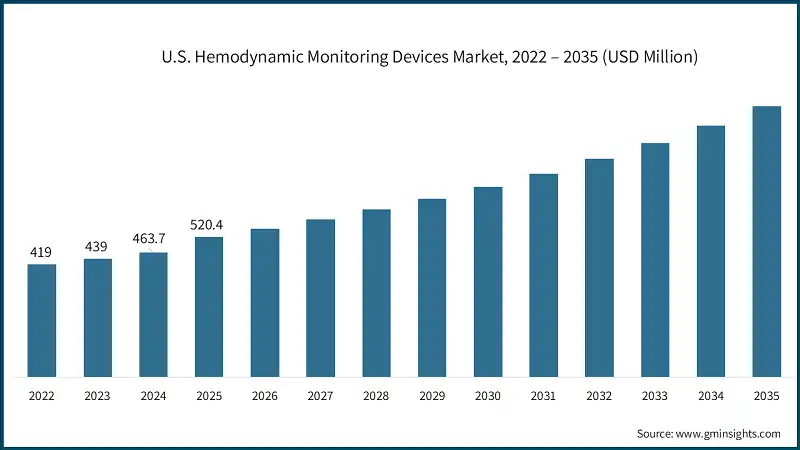
- The U.S. market was valued at USD 419 million and USD 439 million in 2022 and 2023, respectively. In 2025, the market size reached USD 520.4 million from USD 463.7 million in 2024. U.S. dominates the hemodynamic monitoring devices market in North America, primarily driven by the high prevalence of cardiovascular diseases and advanced healthcare infrastructure. Hospitals and critical care units across the region rely heavily on invasive, minimally invasive, and non-invasive monitoring systems to manage patients undergoing cardiac surgeries, trauma care, and complex interventions.
- According to the Centers for Disease Control and Prevention (CDC), heart disease remains the leading cause of death in the U.S., with one person dying every 34 seconds from cardiovascular disease. In 2023 alone, 919,032 people died from cardiovascular disease, and approximately 805,000 individuals experience a heart attack each year. These alarming figures underscore the need for continuous hemodynamic assessment to improve outcomes and reduce mortality rates.
- The region’s growth is further supported by technological advancements, strong adoption of AI-enabled monitoring platforms, and the presence of major market players such as Edwards Lifesciences, GE HealthCare, and Baxter International. With a growing focus on predictive analytics and remote monitoring capabilities, North America is expected to maintain its leadership position in the global hemodynamic monitoring devices market.
Europe Hemodynamic Monitoring Devices Market
Europe market accounted for USD 433.9 million in 2025 and is anticipated to show lucrative growth over the forecast period.
- Europe represents a significant market for hemodynamic monitoring devices, driven by the high burden of cardiovascular diseases and the growing number of minimally invasive procedures. According to Eurostat, cardiovascular diseases remain the leading cause of death in the EU, accounting for 1.7 million deaths in 2020, which is 32.7% of all deaths in the region. This alarming prevalence underscores the critical need for advanced monitoring solutions during cardiac interventions and perioperative care. Hospitals and surgical centers across Europe increasingly rely on hemodynamic monitoring systems to manage patients undergoing complex cardiovascular treatments and major surgeries.
- Additionally, one of the most common procedures linked to cardiovascular disease management is transluminal coronary angioplasty. It is a minimally invasive technique for treating blocked coronary arteries. According to Eurostat, in 2021, approximately 1.1 million angioplasty procedures were performed across 25 EU countries, with Croatia reporting the highest ratio at 553 procedures per 100,000 inhabitants, followed by Germany (390), Latvia (328), Austria (324), and Bulgaria (303). The high procedural volume, combined with the region’s emphasis on patient safety and precision medicine, is fueling growth of market.
Germany hemodynamic monitoring devices market is projected to experience steady growth between 2026 and 2035.
- Germany’s healthcare landscape significantly drives the market, underpinned by high surgical volumes and critical care demands. According to Federal Statistical Office of Germany, in 2023, German hospitals recorded approximately 16.53 million inpatient surgical procedures, highlighting the extensive use of perioperative cardiovascular monitoring during major surgeries such as joint replacements, vascular operations, and organ resections.
- Additionally, with nearly 27,120 adult ICU beds in 2023, Germany’s robust critical care capacity emphasizes continuous hemodynamic monitoring to manage fluid balance, detect hemodynamic instability, and guide interventions in patients with severe medical conditions.
- These figures reflect a significant clinical burden. As Germany continues to enhance its critical care infrastructure and implements advanced therapeutic strategies, demand for hemodynamic monitoring devices is expected to grow steadily.
Asia Pacific Hemodynamic Monitoring Devices Market
The Asia Pacific region is projected to be valued at USD 380.7 million in 2025.
- Asia-Pacific’s market is driven by a substantial and growing burden of cardiovascular diseases and related surgical procedures. According to the Global Burden of Disease study, in 2021 there were approximately 341.6 million affected individuals and 12 million CVD-related deaths across the region, accounting for nearly 62% of global cardiovascular fatalities. This severe clinical burden underscores the need for continuous, accurate cardiovascular monitoring.
- Another important growth driver in this market is the increasing preference for telehealth services, which has accelerated since the pandemic and continues to gain traction across Asia-Pacific. Remote patient monitoring solutions integrated with hemodynamic devices allow clinicians to track cardiac output, blood pressure, and fluid status outside traditional hospital settings. With advancements in wireless connectivity, cloud-based platforms, and AI-driven analytics, telehealth-enabled hemodynamic monitoring is expected to become a cornerstone of patient-centric care, fueling market growth across the region.
Japan hemodynamic monitoring devices market is poised to witness lucrative growth between 2026 - 2035.
- Japan is facing one of the world’s most rapidly aging societies, with 29.1% of its population aged 65 years or older, and projections indicating this will rise to 36.3% by 2045. As elderly patients often require complex perioperative and critical care, there is rising demand for hemodynamic monitoring devices to safely manage fluid balance, cardiac output, and hemodynamic stability during interventions and chronic disease management.
- The aging trend, paired with advanced healthcare infrastructure, drives significant adoption of both hospital-based and ambulatory monitoring tools. Japan has approximately 13.5 ICU beds per 100,000 population, supporting its capacity to manage acute cardiovascular and postoperative care needs, thereby fueling market growth.
Latin America Hemodynamic Monitoring Devices Market
- Brazil faces a substantial cardiovascular health burden, with the World Heart Federation reporting 374,765 deaths from cardiovascular disease in 2021. These figures reflect widespread prevalence of conditions such as hypertension, ischemic heart disease, and heart failure that often require hospitalization and advanced cardiovascular interventions. In response, hospitals and critical care units across Brazil are investing in hemodynamic monitoring devices to constantly assess cardiac output, blood pressure, and tissue perfusion, thereby improving patient management
- The expansion of critical care infrastructure is another key growth driver. Brazil’s ICU bed capacity increased by 52%, rising from 47,846 beds in 2014 to 73,160 in 2024, although availability remains uneven across regions. This surge in ICU capacity has elevated the demand for real-time cardiovascular monitoring solutions essential for patient stabilization in intensive care. As Brazil continues to modernize its public and private healthcare systems by incorporating advanced hemodynamic platforms, the market for these devices is positioned for strong and sustained growth.
Middle East and Africa Hemodynamic Monitoring Devices Market
The market in Saudi Arabia is expected to experience significant and promising growth from 2026 to 2035.
- Saudi Arabia’s hemodynamic monitoring devices market is witnessing strong growth, supported by the country’s rapid digital health transformation and increasing preference for telehealth services. The government’s Vision 2030 initiative emphasizes healthcare modernization, including remote patient monitoring and virtual consultations, which are becoming integral to chronic disease management and post-operative care.
- Hemodynamic monitoring devices integrated with telehealth platforms enable clinicians to track cardiac output, blood pressure, and fluid status remotely, reducing the need for frequent hospital visits and improving access to care in rural and underserved regions.
- As healthcare providers and technology companies collaborate to expand digital infrastructure, the demand for connected hemodynamic monitoring devices is expected to rise significantly.
Hemodynamic Monitoring Devices Market Share
- The top players in the market include Koninklijke Philips N.V., Baxter International, Abbott Laboratories, Siemens Healthineers, and GE HealthCare Technologies Inc., collectively accounting for 53% share of the global market.
- These companies dominate through robust product portfolios, advanced monitoring platforms, and continuous innovation in invasive, minimally invasive, and non-invasive technologies.
- Leading players are aggressively expanding their offerings by introducing AI-enabled predictive monitoring systems and wireless connectivity solutions to meet growing demand for real-time cardiovascular assessment. Edwards Lifesciences focuses on predictive hemodynamic platforms such as the Acumen IQ sensor, while GE HealthCare emphasizes integrated monitoring solutions for critical care and perioperative settings. Siemens Healthineers is advancing minimally invasive technologies that combine precision with patient safety.
- Geographic expansion remains a key growth strategy, with major players targeting emerging markets in Asia-Pacific and Latin America. Strategic collaborations with hospitals and telehealth providers further enhance brand visibility and adoption, especially in regions prioritizing remote monitoring and digital health transformation.
- Partnerships enable companies to co-develop advanced monitoring algorithms and integrate cloud-based analytics for improved clinical decision-making. By combining technological innovation, regional penetration, and patient-centric strategies, these players are positioning themselves for sustained growth in the global market.
Hemodynamic Monitoring Devices Market Companies
Few of the prominent players operating in the hemodynamic monitoring devices industry include:
- Abbott Laboratories
- Baxter International
- Becton, Dickinson and Company (BD)
- Canon Medical Systems Corporation
- Deltex Medical Group
- Edwards Lifesciences Corporation
- GE HealthCare Technologies
- Getinge
- ICU Medical
- Koninklijke Philips N.V.
- Masimo Corporation
- Mindray
- Nihon Kohden Corporation
- OSYPKA MEDICAL
- Siemens Healthineers
- Baxter International
Baxter is a major player in the hemodynamic monitoring devices market, notably through its Starling Fluid Management Monitoring System, which utilizes patented bioreactance technology to deliver noninvasive, real-time cardiac output and fluid responsiveness data. This innovation supports individualized fluid therapy across ICU, ED, OR, and rapid response settings, reducing potential complications from invasive lines and aligning with a broader healthcare trend toward non-invasive patient care. Baxter’s strategic focus on non-invasive solutions positions it strongly in a market that increasingly favors safer, patient-friendly monitoring platforms.
Philips holds a significant position in the interventional hemodynamic monitoring market through its Hemo system with IntelliVue X3. Tailored for catheterization labs, this solution integrates advanced hemodynamic measurements into a touchscreen patient monitor, facilitating seamless table side control and real-time data visualization. This approach aligns with Philips’s commitment to workflow optimization and enhanced clinical decision-making in interventional environments, reinforcing its influence in cathlab hemodynamic monitoring.
GE Healthcare’s Mac Lab Hemodynamic Recording System has long been a cornerstone in cath lab monitoring, with nearly 20 years of trusted use. The system excels at integrating imaging, waveform data, and reporting tools within high-volume cath labs, ensuring data synchronization, interoperability, and streamlined clinician workflows. GE’s deep integration with hospital IT systems and its commitment to documentation efficiency underscore its sustained leadership in invasive hemodynamic monitoring platforms.
Hemodynamic Monitoring Devices Market Report Attributes
| Key Takeaway | Details |
|---|---|
| Market Size & Growth | |
| Base Year | 2025 |
| Market Size in 2025 | USD 1.6 Billion |
| Market Size in 2026 | USD 1.7 Billion |
| Forecast Period 2026-2035 CAGR | 7.2% |
| Market Size in 2035 | USD 3.1 Billion |
| Key Market Trends | |
| Drivers | Impact |
| Rising incidence of chronic diseases across the globe | Drives continuous demand for advanced monitoring solutions to manage cardiovascular complications and improve patient outcomes. |
| Technological advancements in hemodynamic monitoring devices | Enables development of minimally invasive and wireless platforms, enhancing patient comfort and clinical efficiency. |
| Increasing preference for telehealth services | Expands remote monitoring capabilities, creating new revenue streams for device manufacturers and improving accessibility through telehealth services |
| Growing number of surgeries | Boosts adoption of intraoperative and postoperative hemodynamic monitoring systems to reduce surgical risks and optimize recovery. |
| Pitfalls & Challenges | Impact |
| High cost of patient monitoring devices | Limits penetration in cost-sensitive markets, particularly in low- and middle-income regions. |
| Stringent regulatory framework | Extends product approval timelines and increases compliance costs, slowing market entry for innovative solutions. |
| Opportunities: | Impact |
| Expansion in ambulatory and homecare settings | Creates demand for portable and user-friendly monitoring devices, supporting decentralized care models in ambulatory surgical centers |
| Integration of AI and data analytics | Facilitates predictive insights and personalized treatment plans, strengthening clinical decision-making and improving outcomes. |
| Market Leaders (2025) | |
| Market Leaders |
20% market share |
| Top Players |
|
| Competitive Edge |
|
| Regional Insights | |
| Largest Market | North America |
| Fastest Growing Market | Asia Pacific |
| Emerging Countries | India, Brazil, Mexico, South Africa |
| Future outlook |
|
What are the growth opportunities in this market?
Hemodynamic Monitoring Devices Market News:
- In May 2021, Philips launched the Hemo system integrated with IntelliVue X3, combining hemodynamic monitoring with imaging suite controls to streamline operations in catheterization labs. This innovation aimed at improving workflow efficiency and provide clinicians with real-time cardiovascular insights during interventional procedures.
- In July 2024, Getinge introduced Pulsiocare, a mobile and intuitive platform that integrates PiCCO and ProAQT technologies for advanced hemodynamic monitoring in intensive care units and operating rooms. The platform received CE certification, reinforcing compliance with European regulatory standards and positioning it as a next-generation solution for critical care environments.
The hemodynamic monitoring devices market research report includes an in-depth coverage of the industry with estimates and forecast in terms of revenue in USD Million and from 2022 - 2035 for the following segments:
Market, By Product
- Disposables
- Monitors
Market, By System Type
- Non-invasive
- Invasive
- Minimally invasive
Market, By End Use
- Hospitals
- Ambulatory surgical centers
- Homecare settings
- Other End Use
The above information is provided for the following regions and countries:
- North America
- U.S.
- Canada
- Europe
- Germany
- UK
- France
- Italy
- Spain
- Netherlands
- Asia Pacific
- China
- India
- Japan
- Australia
- South Korea
- Latin America
- Brazil
- Mexico
- Argentina
- Middle East and Africa
- Saudi Arabia
- South Africa
- UAE
Frequently Asked Question(FAQ) :
What is the market size of the hemodynamic monitoring devices market in 2025?
The market size was valued at USD 1.6 billion in 2025, with a CAGR of 7.2% expected through 2035, driven by the rising prevalence of chronic diseases, technological advancements, and increasing surgical procedures.
What is the projected value of the hemodynamic monitoring devices market by 2035?
The market is expected to reach USD 3.1 billion by 2035, fueled by innovations in non-invasive monitoring technologies and the growing adoption of telehealth services.
What is the projected size of the hemodynamic monitoring devices market in 2026?
The market is projected to grow to USD 1.7 billion in 2026.
How much revenue did the monitors segment generate?
The monitors segment generated USD 1.1 billion in 2025, dominating the market in terms of revenue.
What was the valuation of the non-invasive segment?
The non-invasive segment held the largest revenue share of USD 809.4 million in 2025 and is expected to grow at a CAGR of 7.3% during the forecast period.
Which region leads the hemodynamic monitoring devices market?
North America led the market with a 36.4% share in 2025, driven by advanced healthcare infrastructure and high adoption of innovative technologies.
What are the upcoming trends in the hemodynamic monitoring devices market?
Key trends include the shift from invasive to minimally invasive and non-invasive monitoring solutions, advancements in bioimpedance and pulse contour analysis technologies, and the integration of real-time cardiovascular assessment tools in critical care settings.
Who are the key players in the hemodynamic monitoring devices market?
Key players include Abbott Laboratories, Baxter International, Becton, Dickinson and Company (BD), Canon Medical Systems Corporation, Deltex Medical Group, Edwards Lifesciences Corporation, GE HealthCare Technologies, Getinge, ICU Medical, and Koninklijke Philips N.V.
Hemodynamic Monitoring Devices Market Scope
Related Reports