Summary
Table of Content

Handheld Echocardiography Devices Market
Get a free sample of this report
Form submitted successfully!
Error submitting form. Please try again.
Thank you!
Your inquiry has been received. Our team will reach out to you with the required details via email. To ensure that you don't miss their response, kindly remember to check your spam folder as well!
Request Sectional Data
Thank you!
Your inquiry has been received. Our team will reach out to you with the required details via email. To ensure that you don't miss their response, kindly remember to check your spam folder as well!
Form submitted successfully!
Error submitting form. Please try again.
Handheld Echocardiography Devices Market Size
This fairly noticable growth is driven by several factors such as increasing demand for remote patient monitoring, advancements in echocardiography technology, rising cardiovascular disease incidence, and increasing aging population and home healthcare trends.
Handheld echocardiography devices play an important role in modern healthcare by enabling real‑time, point‑of‑care cardiac imaging during routine clinical practice. Handheld echocardiography systems offer rapid cardiac screening capabilities, facilitate early detection of disease, assist with clinical triage, and monitor treatment processes in emergency departments, outpatient clinics, primary care facilities, and underserved regions. The growing handheld echocardiography market is being driven by technological advancements in echocardiography, which include better echo quality, miniaturization of devices, improved battery life, wireless transmitting capabilities, and the integration of artificial intelligence for echo interpretation. These technological advancements will allow for greater effectiveness in the areas of diagnostic confidence, efficiency of clinical workflow, and improved user experience for clinically eligible patients, and therefore contribute to a higher rate of utilization in clinical settings.
Handheld Echocardiography Devices Market Key Takeaways
Market Size & Growth
- 2025 Market Size: USD 3.3 Billion
- 2026 Market Size: USD 3.4 Billion
- 2035 Forecast Market Size: USD 5.2 Billion
- CAGR (2026–2035): 4.8%
Regional Dominance
- Largest Market: North America
- Fastest Growing Region: Asia Pacific
Key Market Drivers
- Increasing demand for remote patient monitoring.
- Advancements in echocardiography technology.
- Rising cardiovascular disease incidencemarket demand by increasing the need for rapid, accessible cardiac imaging tools to support early diagnosis, routine screening, and diseas.
- Increasing aging population and home healthcare trends.
Challenges
- Regulatory compliance and standardization.
- Limited diagnostic capability compared to traditional ECG systems.
Opportunity
- Rising adoption in emerging markets.
- Expansion of point‑of‑care diagnostics.
Key Players
- Market Leader: GE HealthCare Technologies Inc. led with over 20% market share in 2025.
- Leading Players: Top 5 players in this market include GE HealthCare Technologies Inc., Koninklijke Philips N.V., Clarius, Butterfly Network, Shenzhen Mindray Bio‑Medical Electronics Co., Ltd., which collectively held a market share of 65% in 2025.
Get Market Insights & Growth Opportunities
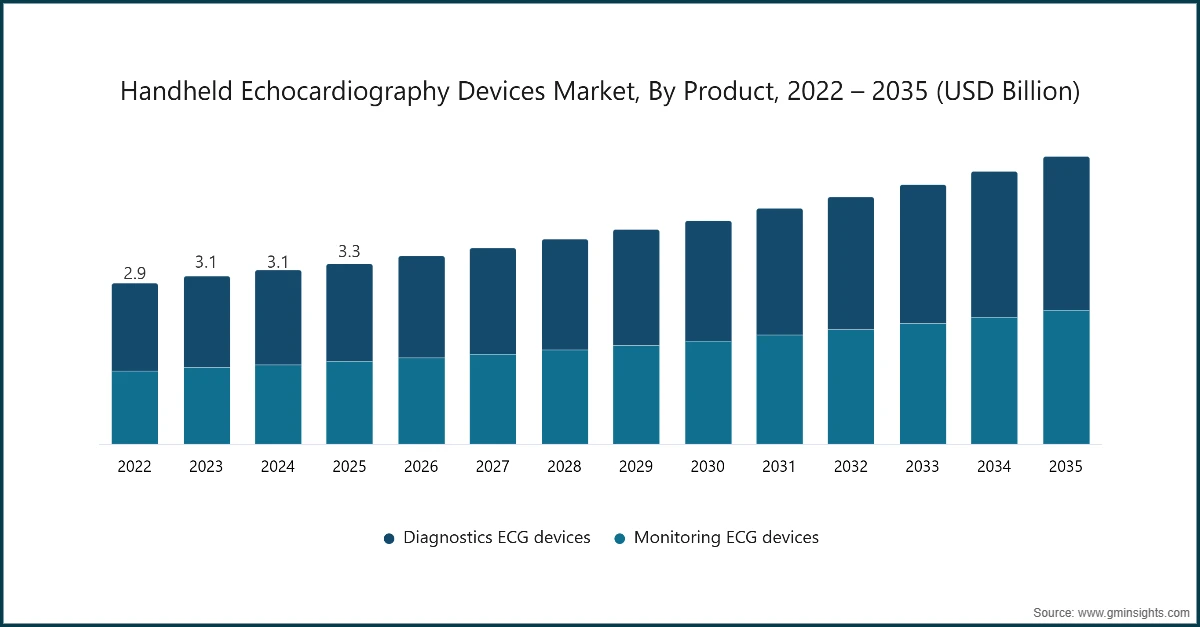
The market grew from USD 2.9 billion in 2022 to USD 3.1 billion in 2024. The rising global incidence of cardiovascular diseases is a key driver supporting the growth of the echocardiography devices market. Cardiovascular diseases remain the leading cause of death worldwide. According to the World Health Organization (WHO), an estimated 19.8 million people died from cardiovascular diseases globally in 2022, representing approximately 32% of all global deaths, with around 85% of these deaths attributed to heart attacks and strokes. As cardiovascular diseases often require detailed evaluation of cardiac structure, function, and blood flow, echocardiography has become an essential diagnostic tool across hospitals, outpatient clinics, and point‑of‑care settings. The increasing prevalence of cardiac disorders is driving higher volumes of initial diagnostic assessments, follow‑up examinations, and therapy monitoring, thereby boosting demand for advanced echocardiography devices. Moreover, the high mortality associated with heart attacks and strokes underscores the importance of timely diagnosis, encouraging healthcare systems to invest in portable, high‑performance, and accessible echocardiography solutions, which is further supporting market growth globally.
Additionally, the rapidly increasing global aging population is significantly driving demand for cardiac diagnostic solutions. According to the World Health Organization (WHO), the proportion of people aged 60 years and older is projected to rise from 12% in 2015 to 22% by 2050, with the elderly population expected to reach 2.1 billion globally. By 2030, one in six people worldwide will be aged 60 years or above, reflecting longer life expectancy and declining fertility rates. As aging is closely associated with a higher incidence of cardiovascular diseases, the need for frequent and accessible cardiac assessment continues to grow. This demographic shift is accelerating the adoption of home healthcare and point‑of‑care diagnostic models, particularly for elderly patients who require ongoing monitoring and non‑invasive evaluation. Handheld echocardiography devices support this trend by offering portable, easy‑to‑use, and cost‑effective cardiac imaging outside traditional hospital settings. The growing emphasis on patient‑centric, home‑based care is therefore contributing to sustained growth in the handheld echocardiography devices market.
Hand-held echocardiography units are portable, compact systems that use ultrasound technology to produce cardiac images on-site. They generate cardiac structure, function, and blood flow images in real time. They are generally light in weight, battery-operated and easy to use; hence suitable for use in hospitals, clinics, emergency departments or at home for remote patient monitoring.
The global handheld echocardiography devices market was valued at USD 3.3 billion in 2025 and is projected to grow from USD 3.4 billion in 2026 to USD 5.2 billion by 2035, expanding at a CAGR of 4.8%, according to the latest report published by Global Market Insights Inc.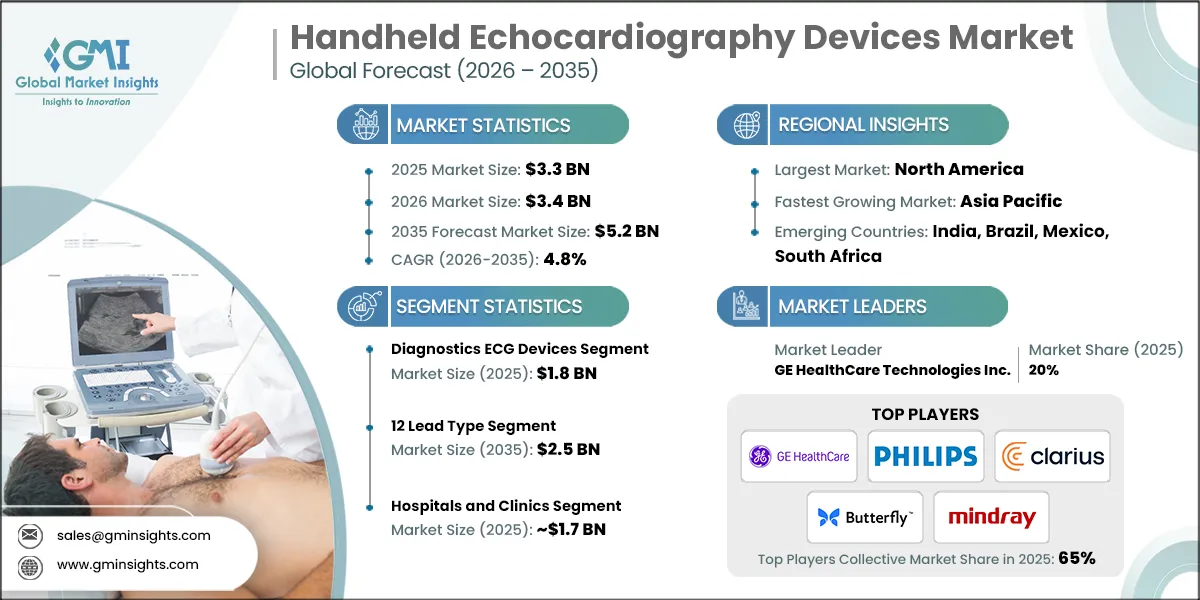
To get key market trends
Handheld Echocardiography Devices Market Trends
- Technological advancements in echocardiography technology have emerged as a major driver for the handheld echocardiography devices industry, enabling faster, more accurate, and point‑of‑care cardiac assessment.
- Innovations in transducer design, miniaturization, wireless connectivity, and image processing have significantly improved diagnostic confidence while maintaining portability, making handheld devices suitable for use in emergency care, outpatient clinics, and home healthcare settings.
- High‑resolution imaging and dual‑probe handheld systems are expanding clinical capabilities, allowing comprehensive cardiac evaluation without the need for cart‑based systems. For instance, GE HealthCare’s Vscan Air SL, equipped with sector and linear transducers, enables rapid cardiac and vascular assessments with advanced doppler functionality, supporting early diagnosis and clinical decision‑making at the point of care.
- AI-enabled echocardiography is enhancing the usability of handheld devices by decreasing the reliance on operators for imaging and improving overall efficiency of the workflow. For example, the Vscan Air with Caption AI offers real-time probe guidance to provide non-experts with reliable diagnostic quality, allowing them to get good quality images of the heart in a decentralised environment.
- Handheld echocardiography systems which are wireless and based on smartphones are enhancing access and connectivity, thus enabling tele-echocardiography and remote consultation. Philips Lumify has a phased-array transducer and supports the sharing of images through the cloud, thereby permitting users to conduct point-of-care cardiac assessments, and upload those imaging data into their respective digital workflow in various clinical locations.
- Collectively, these advancements are reshaping the handheld echocardiography devices industry by improving diagnostic accuracy, reducing examination time, and expanding use beyond cardiology departments into primary care, emergency medicine, and home healthcare. The combination of AI-assisted imaging, portability, and connectivity is accelerating global use and supporting the growing importance of handheld echocardiography being used in modern cardiovascular care.
Handheld Echocardiography Devices Market Analysis
Learn more about the key segments shaping this market
Based on product, the market is classified into diagnostics ECG devices and monitoring ECG devices. The diagnostics ECG devices is sub segmented into resting ECG and stress ECG. The monitoring ECG devices are sub segmented into holter monitors, mobile cardiac telemetry (MCT), wearable ECG devices, and other devices. The diagnostics ECG devices segment held a market size of 1.8 billion in 2025.
- Handheld echocardiography devices are portable ultrasound systems that visualize cardiac anatomy and blood flow in real time at the point of care. They enable rapid screening, diagnosis, and follow‑up for cardiovascular conditions across emergency, outpatient, primary care, and home‑care settings.
- This diagnostics segment holds a strong position in the handheld market because it delivers non‑invasive, timely, and accessible cardiac imaging that can shorten time‑to‑decision and reduce dependence on cart‑based scanners. Advances in miniaturized transducers, wireless connectivity, and app‑based workflows have improved ease‑of‑use and integration into clinical pathways, broadening adoption in decentralized and point‑of‑care models.
- For instance, the Butterfly iQ3 is a handheld, single‑probe ultrasound system that supports cardiac imaging using ultrasound‑on‑chip technology. It integrates AI‑based tools for image optimization and automated cardiac measurements, allowing clinicians to perform echocardiographic assessments using a smartphone or tablet. These platforms illustrate how image quality, durability, and mobile connectivity are elevating handheld echo from focused assessments to broader diagnostic use cases.
- Therefore, continuing advances in handheld echocardiography together with rising cardiovascular disease burden and the shift toward decentralized care, are fueling growth of the diagnostics ECG devices segment.
Based on lead type, the handheld echocardiography devices market is bifurcated into single lead type, 3 lead type, 6 lead type, 12 lead type and other lead types. The 12 lead type segment is estimated to reach USD 2.5 billion by 2035.
- The 12‑lead type segment refers to handheld echocardiography devices that are integrated or compatible with 12‑lead ECG functionality, enabling simultaneous assessment of cardiac structure and electrical activity at the point of care. These devices support more comprehensive cardiac evaluation by combining real‑time echocardiographic imaging with multi‑lead cardiac rhythm data, making them suitable for advanced diagnostic and monitoring applications in clinical settings.
- The dominance of the 12‑lead type segment is driven by the growing demand for diagnostic‑grade, portable cardiac assessment tools across hospitals, emergency departments, and cardiology clinics. Compared to limited‑lead or imaging‑only handheld devices, 12‑lead‑enabled systems offer higher clinical accuracy, broader diagnostic capability, and improved decision‑making, particularly for conditions such as ischemic heart disease, arrhythmias, and acute cardiac events.
- This segment supports market growth by reducing dependence on bulky cart‑based systems, improving workflow efficiency, and enabling faster triage and early diagnosis.
- Overall, the 12‑lead type segment plays a strategic role in advancing the handheld echocardiography devices market by bridging the gap between portability and comprehensive cardiac diagnostics. Its ability to deliver clinically reliable data in real‑time positions as a key contributor to sustained market expansion and technological adoption.
Learn more about the key segments shaping this market
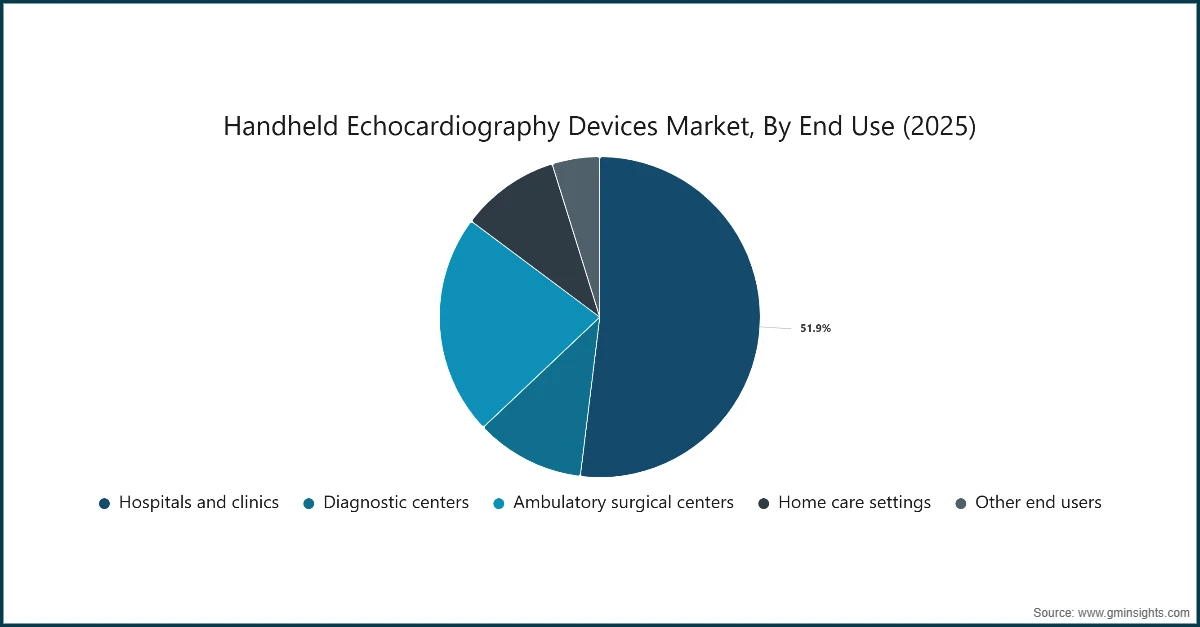
Based on end use, the market is categorized into hospitals and clinics, diagnostic centers, ambulatory surgical centers, home care settings, and other end users. The hospitals and clinics segment accounted for around USD 1.7 billion revenue size in 2025.
- The hospitals and clinics segment includes public and private hospitals, cardiac care centers, emergency departments, and outpatient clinics that use handheld echocardiography devices for bedside and point‑of‑care cardiac assessment. These devices allow clinicians to quickly evaluate heart structure and function during routine examinations, emergency situations, and follow‑up visits, without the need for large, stationary echocardiography systems.
- This segment holds a dominant share of the market due to the high volume of patients requiring cardiac evaluation and the growing need for rapid diagnosis and workflow efficiency. Handheld echocardiography devices help hospitals and clinics reduce examination time, support faster clinical decisions, and improve patient triage, especially in emergency and critical care settings.
- Hospitals and clinics play a major role in driving the adoption of handheld echocardiography devices by prioritizing faster diagnostic workflows, broader access to cardiac imaging, and improved patient care through point‑of‑care technologies, thus increasing market growth.
Looking for region specific data?
North America Handheld Echocardiography Devices Market
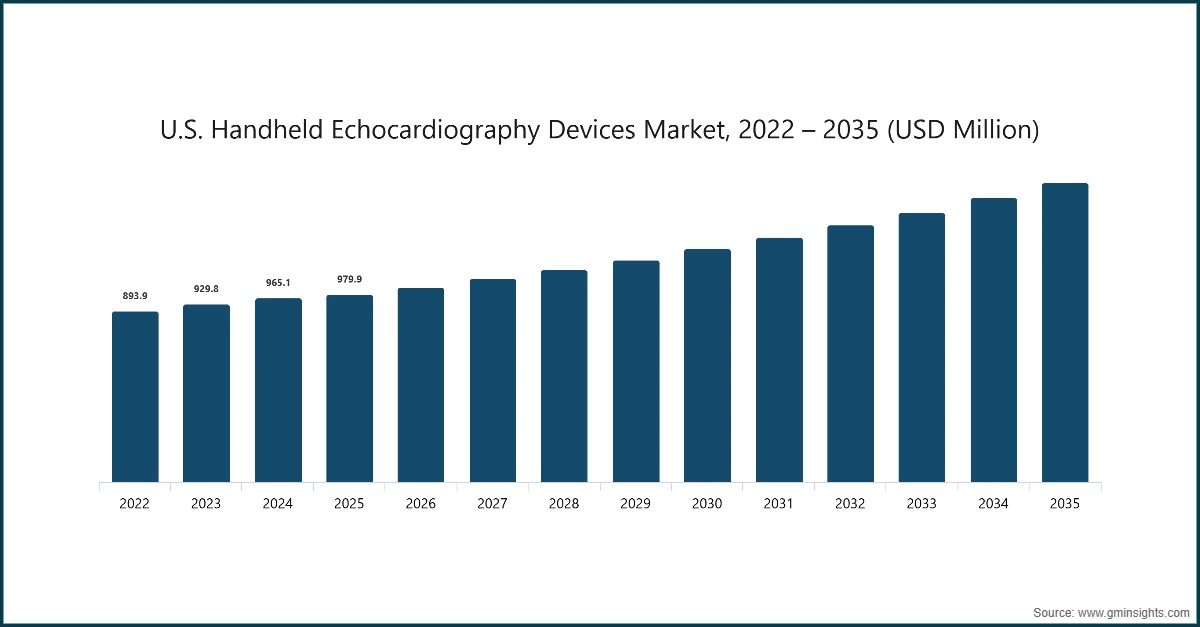
North America dominated the global handheld echocardiography devices industry with a revenue share of 33.6% in 2025.
- North America holds a leading position in the market, driven by the high and persistent burden of cardiovascular diseases across the region. According to CDC, in 2023, heart disease accounted for 680,981 deaths, translating to a mortality rate of 203.3 deaths per 100,000 population, ranking first among all causes of death nationwide. The rising prevalence of cardiac disorders and the need for rapid, point‑of‑care cardiac assessment significantly increase demand for portable and handheld echocardiography solutions in emergency care, outpatient clinics, and primary care settings across North America, supporting early diagnosis and timely clinical decision‑making.
- The region benefits from a well‑established healthcare ecosystem, early adoption of point‑of‑care imaging technologies, and strong presence of leading medical device manufacturers, which collectively accelerate market growth. As healthcare systems seek cost‑effective, scalable diagnostic tools to manage the region’s growing cardiovascular disease burden, handheld echocardiography devices are increasingly positioned as a critical component of routine cardiac care in North America.
Europe Handheld Echocardiography Devices Market
Europe market accounted for 865.2 million in 2025 and is anticipated to show lucrative growth over the forecast period.
- Europe holds a strong position in the handheld echocardiography devices industry, supported by the high and persistent burden of cardiovascular diseases across the region. Cardiovascular disease (CVD) remains the leading cause of mortality in the European Union, posing substantial healthcare challenges for national health systems. According to Eurostat, diseases of the circulatory system caused 1.68 million deaths in the EU in 2022, accounting for 32.7% of all deaths and surpassing cancer, which represented 22.3%. CVD is responsible for approximately one in three deaths and affects around 62 million people across the EU, underlining the extensive need for early diagnosis, routine cardiac assessment, and point‑of‑care imaging solutions across hospitals and outpatient settings.
- The significant economic impact of cardiovascular diseases further accelerates the adoption of cost‑effective diagnostic technologies across Europe. The economic burden of CVD in the EU exceeds EUR 280 billion annually, driven by healthcare expenditures, productivity losses, and long‑term care costs. In response, European healthcare providers are increasingly prioritizing early detection, decentralized diagnostics, and rapid clinical decision‑making to reduce treatment costs and hospitalization rates. Handheld echocardiography devices support these objectives by enabling bedside cardiac imaging, improving access to cardiovascular assessment, and enhancing workflow efficiency, thereby contributing directly to the regional growth.
Germany handheld echocardiography devices market is projected to experience steady growth between 2026 and 2035.
- Germany represents a key market for handheld echocardiography devices, driven by the significant burden of coronary heart disease (CHD) and broader cardiovascular conditions. CHD remains a major cause of mortality in the country, with 119,795 deaths recorded in 2023, corresponding to an age‑standardised mortality rate of 120 per 100,000 population. The high prevalence of CHD, combined with Germany’s aging population and increasing incidence of lifestyle‑related risk factors such as obesity, diabetes, and hypertension, highlights the growing need for early cardiac diagnosis, routine monitoring, and rapid cardiovascular assessment across clinical settings.
- These epidemiological pressures are accelerating the adoption of point‑of‑care cardiac imaging technologies, including handheld echocardiography devices, across Germany’s healthcare system. As healthcare providers increasingly prioritize early intervention, workflow optimization, and cost‑effective diagnostics to manage the rising cardiovascular disease burden, the demand for handheld echocardiography devices continues to increase, thereby supporting sustained market growth in Germany.
Asia Pacific Handheld Echocardiography Devices Market
The Asia Pacific region is projected to be valued at USD 820.9 million in 2025.
- Asia Pacific is emerging as one of the fastest‑growing regions in the market, driven by rapid population aging and a rising cardiovascular disease burden. According to UN ESCAP, Asia’s population aged 65 years and above is projected to increase from approximately 414 million in 2020 to nearly 1.2 billion by 2060, representing more than 60% of the global elderly population. This significant demographic shift is increasing the prevalence of age‑related cardiac conditions across the region, particularly in countries such as Japan, China, South Korea, and Australia, where early cardiac assessment and routine monitoring are becoming essential components of elderly care.
- The growing elderly population is coupled with a substantial cardiovascular disease burden, further supporting demand for point‑of‑care cardiac imaging solutions. According to NIH‑backed data, cardiovascular diseases affected 341.6 million people and accounted for 12.0 million deaths across the Asia‑Pacific region in 2021. Managing this large patient base places pressure on healthcare systems to adopt rapid, accessible, and cost‑effective diagnostic tools. Together, the accelerating aging trend and high CVD prevalence are directly contributing to increased adoption and sustained growth of the handheld echocardiography devices in Asia Pacific.
Japan handheld echocardiography devices market is poised to witness lucrative growth between 2026 – 2035.
- Japan represents a mature and steadily expanding market for handheld echocardiography devices, supported by a high cardiovascular disease burden and one of the world’s most rapidly aging populations. Cardiovascular disease (CVD) remains a major public health concern in the country, and according to the World Heart Federation, 371,917 deaths were attributed to CVD in 2021, making it one of the leading causes of mortality in Japan. The high prevalence of heart failure, ischemic heart disease, and structural heart conditions increases the need for frequent cardiac evaluation and early diagnosis across healthcare settings.
- Handheld echocardiography devices enable rapid bedside assessment, improve access to cardiac diagnostics in outpatient and community settings, and align well with Japan’s focus on preventive care for older adults. As clinicians seek portable, cost‑effective imaging solutions to manage cardiovascular disease in an aging population, these factors are actively contributing to the continued growth of the handheld echocardiography devices in Japan.
Latin America Handheld Echocardiography Devices Market
- Brazil represents an emerging growth market for handheld echocardiography devices, driven by a substantial cardiovascular disease (CVD) burden and increasing demand for accessible cardiac diagnostics. In 2021, Brazil reported 374,765 CVD‑related deaths, with a crude mortality rate of 170 per 100,000 population and an age‑standardized mortality rate of 154 per 100,000, underscoring the severity of cardiovascular conditions across the country. This high mortality burden highlights the growing need for early detection, routine cardiac assessment, and timely clinical intervention, particularly within public hospitals and outpatient care settings.
- These healthcare challenges are accelerating the adoption of point‑of‑care cardiac imaging technologies across Brazil’s healthcare system. Handheld echocardiography devices offer rapid, bedside evaluation of cardiac structure and function, supporting early diagnosis while reducing reliance on large, centralized imaging infrastructure. As Brazil focuses on improving cardiovascular care accessibility, reducing diagnostic delays, and managing rising chronic disease prevalence, the use of portable echocardiography solutions is increasing, thereby contributing to the continued growth of the handheld echocardiography devices in Brazil.
Middle East and Africa Handheld Echocardiography Devices Market
The handheld echocardiography devices in Saudi Arabia is expected to experience significant and promising growth from 2026 to 2035.
- Saudi Arabia is witnessing increasing adoption of remote patient monitoring (RPM), creating a favorable environment for the handheld echocardiography devices industry. The growing prevalence of chronic cardiovascular conditions, coupled with the country’s large patient pool requiring long‑term follow‑up, has accelerated the shift toward remote and home‑based care models.
- Government‑led healthcare transformation initiatives under Vision 2030 are promoting digital health, telemedicine, and continuous monitoring to improve clinical outcomes and reduce pressure on hospital infrastructure. This rising demand for remote monitoring is encouraging the use of portable cardiac imaging tools that support timely assessment outside traditional hospital settings. As Saudi Arabia continues to expand digital healthcare adoption and emphasize decentralized care delivery, the synergy between remote patient monitoring and portable cardiac imaging is directly contributing to the growth of the handheld echocardiography devices in the country.
Handheld Echocardiography Devices Market Share
- Leading companies such as GE HealthCare Technologies Inc., Koninklijke Philips N.V., Clarius, Butterfly Network, and Shenzhen Mindray Bio‑Medical Electronics Co., Ltd. accounted for market share of 65%. They are strengthening their presence in the handheld echocardiography devices industry through continuous product innovation, geographic expansion, and strategic collaborations with hospitals and healthcare providers.
- These players have built strong brand recognition and broad customer reach by offering portable, user‑friendly devices that support point‑of‑care cardiac assessment across emergency care, cardiology, and primary care settings.
- A key strategic focus for market leaders is the integration of artificial intelligence (AI) and advanced software features into handheld echocardiography platforms. AI‑enabled image guidance, automated measurements, and decision‑support tools are helping clinicians improve diagnostic accuracy, reduce operator dependency, and accelerate cardiac assessments. These innovations are making handheld devices more accessible to non‑specialists and expanding their use beyond traditional echocardiography labs.
- In parallel, partnerships with healthcare systems, training institutions, and digital health platforms are central to growth strategies. Companies are working closely with clinicians to enhance usability, support clinical validation, and integrate handheld devices into routine workflows and electronic health record systems. These collaborations are improving adoption rates and expanding the role of handheld echocardiography in early diagnosis and disease monitoring.
- Overall, through ongoing technological advancements and workflow‑driven innovation, leading manufacturers are improving access to cardiac imaging and supporting better clinical decision‑making. The increasing emphasis on portable, AI‑enabled ultrasound solutions is transforming point‑of‑care cardiology and contributing to sustained growth of the handheld echocardiography devices industry globally.
Handheld Echocardiography Devices Market Companies
Few of the prominent players operating in the handheld echocardiography devices industry include:
- AliveCor, Inc.
- Biotronik SE & Co. KG
- Boston Scientific Corporation
- Butterfly Network
- CHISON
- Clarius
- EchoNous Inc.
- Esaote S.p.A.
- Exo Imaging, Inc.
- Fukuda Denshi Co., Ltd.
- GE HealthCare Technologies Inc.
- Hill-Rom Holdings, Inc.
- Koninklijke Philips N.V.
- Medtronic plc
- Shenzhen Mindray Bio-Medical Electronics Co., Ltd.
- GE HealthCare Technologies Inc.
GE HealthCare Technologies Inc. is a global market leader in the handheld echocardiography devices segment through its Vscan Air SL platform, one of the most widely adopted cardiac‑capable handheld ultrasound systems worldwide. The Vscan Air SL is a wireless handheld device featuring a sector‑phased array transducer, making it well‑suited for rapid point‑of‑care echocardiography, including focused cardiac assessments, Color Doppler, Pulsed‑Wave Doppler, and M‑mode imaging.. The company’s strong brand presence, broad installed base, and continuous innovation position GE HealthCare at the forefront of the global handheld echocardiography market.
Koninklijke Philips N.V. holds a significant position in the handheld echocardiography devices market with its Philips Lumify Ultrasound System, particularly the S4‑1 phased‑array transducer designed for cardiac applications. The Lumify platform enables clinicians to perform point‑of‑care echocardiography using smart devices, offering cardiac presets, Color Doppler, and M‑mode imaging for rapid heart function assessment. Backed by Philips’ decades‑long expertise in cardiovascular ultrasound, Lumify combines high‑quality imaging, mobile workflow integration, and cost‑efficient deployment, making it highly attractive for emergency medicine, critical care, and cardiology settings. Philips’ extensive global distribution network and strong presence in hospital and outpatient environments reinforce its role as a key player in the handheld echocardiography market.
Clarius is a leading pure‑play handheld ultrasound manufacturer with a strong focus on premium handheld echocardiography solutions, notably the Clarius PA HD3 and PAL HD3 phased‑array scanners. These wireless handheld devices are specifically engineered for cardiac imaging at the point of care, supporting B‑mode, M‑mode, Color Doppler, and Pulsed‑Wave Doppler to enable focused echocardiographic assessments. With growing adoption across cardiology, critical care, and emergency medicine, Clarius has established itself as a key innovator and competitive participant in the global market.
Handheld Echocardiography Devices Market Report Attributes
| Key Takeaway | Details |
|---|---|
| Market Size & Growth | |
| Base Year | 2025 |
| Market Size in 2025 | USD 3.3 Billion |
| Market Size in 2026 | USD 3.4 Billion |
| Forecast Period 2026-2035 CAGR | 4.8% |
| Market Size in 2035 | USD 5.2 Billion |
| Key Market Trends | |
| Drivers | Impact |
| Increasing demand for remote patient monitoring | Drives demand for handheld echocardiography devices by enabling remote and decentralized cardiac assessments, supporting continuous monitoring and early detection of cardiovascular abnormalities outside hospital settings. |
| Advancements in echocardiography technology | Accelerates adoption of handheld echocardiography devices as improvements in image quality, Doppler functionality, and AI?assisted measurements enhance diagnostic confidence and clinical usability. |
| Rising cardiovascular disease incidencemarket demand by increasing the need for rapid, accessible cardiac imaging tools to support early diagnosis, routine screening, and diseas | Expands e management across diverse care settings. |
| Increasing aging population and home healthcare trends | Supports market growth by driving the use of portable echocardiography devices for elderly patients and home?based care, reducing dependence on hospital?centric diagnostic infrastructure. |
| Pitfalls & Challenges | Impact |
| Regulatory compliance and standardization | Restrains market growth as complex regulatory requirements and lack of standardized clinical guidelines slow product approvals and limit large?scale adoption. |
| Limited diagnostic capability compared to traditional ECG systems | Limits broader replacement of conventional diagnostic platforms, confining handheld echocardiography devices mainly to focused cardiac assessments rather than comprehensive diagnostics |
| Opportunities: | Impact |
| Rising adoption in emerging markets | Creates strong growth opportunities by increasing demand for cost‑effective, portable echocardiography solutions in regions with limited access to advanced cardiac imaging infrastructure |
| Expansion of point‑of‑care diagnostics | Strengthens market potential as point of care ultrasound devices enable faster bedside decision‑making in emergency, critical care, and outpatient settings. |
| Market Leaders (2025) | |
| Market Leader |
20% Market share |
| Top Players |
Collective market share is 65% |
| Competitive Edge |
|
| Regional Insights | |
| Largest market | North America |
| Fastest Growing Market | Asia Pacific |
| Emerging Countries | India, Brazil, Mexico, South Africa |
| Future Outlook |
|
What are the growth opportunities in this market?
Handheld Echocardiography Devices Industry News
- In October 2023, Clarius strengthened its position in the handheld echocardiography devices market with the launch of the Clarius PAL HD3 dual‑array wireless handheld ultrasound scanner, which has gained strong adoption across clinical settings. Designed for point‑of‑care use, the PAL HD3 supports high‑resolution echocardiography at the bedside, improves workflow continuity, and enhances diagnostic efficiency in emergency, critical care, and outpatient environments, reinforcing the growing role of multifunction handheld echocardiography systems in modern clinical practice.
- In April 2024, GE HealthCare launched Caption AI on its Vscan Air SL wireless handheld ultrasound system, marking a major advancement in AI‑enabled handheld echocardiography. This innovation expanded the clinical usability of handheld echocardiography across emergency departments, primary care, and outpatient settings, supporting faster cardiac assessments and accelerating adoption of handheld echocardiography devices globally.
The handheld echocardiography devices market research report includes an in-depth coverage of the industry with estimates and forecast in terms of revenue in USD Million and from 2022 – 2035 for the following segments:
Market, By Product
Diagnostics ECG devices
- Resting ECG
- Stress ECG
- Monitoring ECG devices
- Holter monitors
- Mobile cardiac telemetry (MCT)
- Wearable ECG devices
- Other monitoring ECG devices
Market, By Lead Type
- Single lead type
- 3 lead type
- 6 lead type
- 12 lead type
- Other lead types
Market, By End Use
- Hospitals and clinics
- Diagnostic centers
- Ambulatory surgical centers
- Home care settings
- Other end users
The above information is provided for the following regions and countries:
- North America
- U.S.
- Canada
- Europe
- Germany
- UK
- France
- Italy
- Spain
- Netherlands
- Asia Pacific
- China
- India
- Japan
- Australia
- South Korea
- Latin America
- Brazil
- Mexico
- Argentina
- Middle East and Africa
- Saudi Arabia
- South Africa
- UAE
Frequently Asked Question(FAQ) :
What was the market size of handheld echocardiography devices in 2025?
The market size was USD 3.3 billion in 2025, with a CAGR of 4.8% expected through 2035, driven by advancements in technology, rising cardiovascular disease prevalence, and increasing demand for remote patient monitoring.
What is the projected value of the handheld echocardiography devices market by 2035?
The handheld echocardiography devices market is expected to reach USD 5.2 billion by 2035, supported by trends in home healthcare and decentralized care models.
What is the estimated market size for handheld echocardiography devices in 2026?
The market size is projected to reach USD 3.4 billion in 2026.
How much revenue did the diagnostics ECG devices segment generate in 2025?
The diagnostics ECG devices segment generated USD 1.8 billion in 2025, maintaining a strong position due to its non-invasive and timely cardiac imaging capabilities.
What is the projected value of the 12-lead type segment by 2035?
The 12-lead type segment is expected to reach USD 2.5 billion by 2035, driven by its ability to combine real-time imaging with multi-lead cardiac rhythm data for advanced diagnostics.
Why is the hospitals and clinics segment growing in the handheld echocardiography devices market?
The hospitals and clinics segment accounted for USD 1.7 billion in 2025, with growth driven by the need for rapid diagnosis, workflow efficiency, and broader access to cardiac imaging.
Which region leads the handheld echocardiography devices market?
North America led the market with a 33.6% revenue share in 2025, supported by a high burden of cardiovascular diseases and demand for point-of-care cardiac assessment.
What are the key trends driving the handheld echocardiography devices market?
Key trends include advancements in miniaturized transducers, wireless connectivity, AI-based tools for image optimization, and the shift towards decentralized care models.
Who are the key players in the handheld echocardiography devices market?
Key players include AliveCor, Inc., Biotronik SE & Co. KG, Boston Scientific Corporation, Butterfly Network, CHISON, Clarius, EchoNous Inc., Esaote S.p.A., Exo Imaging, Inc., Fukuda Denshi Co., Ltd., GE HealthCare Technologies Inc., Hill-Rom Holdings, Inc., Koninklijke Philips N.V., Medtronic plc, and Shenzhen Mindray Bio-Medical Electronics Co., Ltd.
Handheld Echocardiography Devices Market Scope
Related Reports