Summary
Table of Content

Hair Growth Supplement and Treatment Market
Get a free sample of this report
Form submitted successfully!
Error submitting form. Please try again.
Thank you!
Your inquiry has been received. Our team will reach out to you with the required details via email. To ensure that you don't miss their response, kindly remember to check your spam folder as well!
Request Sectional Data
Thank you!
Your inquiry has been received. Our team will reach out to you with the required details via email. To ensure that you don't miss their response, kindly remember to check your spam folder as well!
Form submitted successfully!
Error submitting form. Please try again.
Hair Growth Supplement and Treatment Market Size
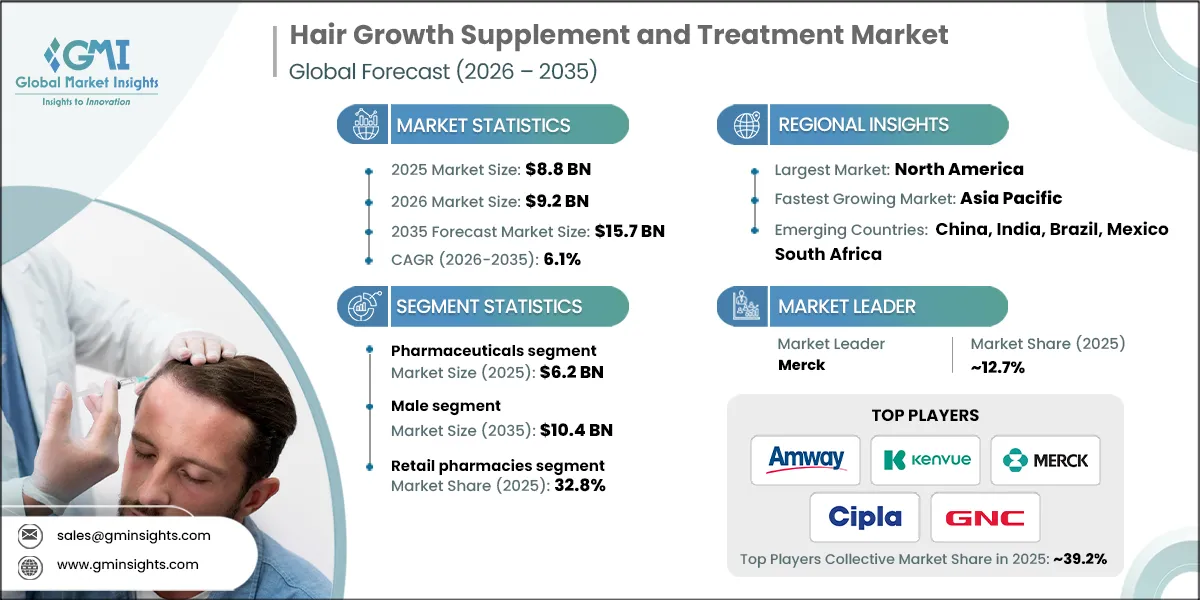
The global hair growth supplement and treatment market was valued at USD 8.8 billion in 2025. The market is expected to grow from USD 9.2 billion in 2026 to USD 15.7 billion in 2035, growing at a CAGR of 6.1% during the forecast period, according to the latest report published by Global Market Insights Inc.
Hair Growth Supplement and Treatment Market Key Takeaways
Market Size & Growth
- 2025 Market Size: USD 8.8 Billion
- 2026 Market Size: USD 9.2 Billion
- 2035 Forecast Market Size: USD 15.7 Billion
- CAGR (2026–2035): 6.1%
Regional Dominance
- Largest Market: North America
Key Market Drivers
- Increasing prevalence of hair loss and alopecia.
- Rising consumer awareness and self-care trends.
- Expansion of e-commerce and direct-to-consumer channels.
- Advancements in treatment technologies and clinical research.
Challenges
- Growing availability of alternative treatment options.
- Concerns associated with pharmacological treatments.
Opportunity
- Rising demand for personalized and precision solutions.
- Growth in combination therapies and adjunct solutions.
Key Players
- Market Leader: Merck led with over ~12.7% market share in 2025.
- Leading Players: Top 5 players in this market include Amway Corporation, Kenvue, Merck, Cipla Limited, GNC Holdings, which collectively held a market share of 39.2% in 2025.
Get Market Insights & Growth Opportunities
The global market is experiencing dynamic growth driven by factors such as the increasing prevalence of hair disorders such as alopecia areata, telogen effluvium, and other scalp conditions, that has heightened the need for effective treatments as people seek to improve their appearance and confidence. As per the report published by the National Alopecia Areata Foundation, alopecia areata affects about 160 million people worldwide and nearly 6.7 million people in the U.S. alone. Although alopecia areata can begin at any age, most individuals develop the disease early in life. More than 80% show signs of the disease before age 40, and 40% experience symptoms by age 20.
Thus, the rapid increase in the prevalence of hair disorders globally is a major factor that is anticipated to increase the demand for hair growth supplements and pharmaceutical dosage forms, thereby boosting market growth. In addition, the demand for these products is driven by the rising prevalence of hair thinning, growing consumer awareness of personal grooming and wellness, and increasing availability of over the counter and clinically supported solutions across retail and online channels.
The hair growth supplement and treatment market comprises products designed to prevent hair loss, stimulate hair regrowth, and improve overall scalp and hair health. This includes oral dietary supplements containing vitamins, minerals, and botanical ingredients, as well as topical and pharmaceutical treatments, including prescription therapies. Key players driving the growth of the market include Amway Corporation, Nature’s Bounty, Viviscal Limited (Church & Dwight), Cipla, Merck, and Kenvue, among others. These companies are driving the growth of the hair growth supplements and treatments market through continuous innovations in their products, developing scientifically validated compositions, forming partnerships, and building their production and distribution reach worldwide.
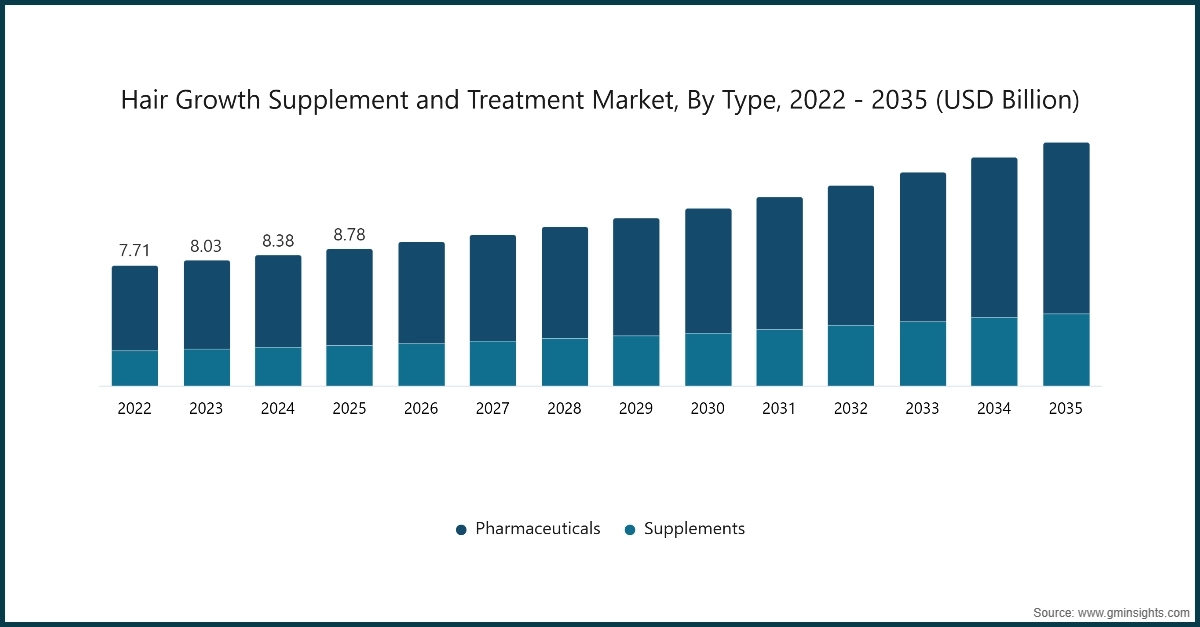
Between 2022 and 2024, the global market experienced significant growth, growing from USD 7.7 billion in 2022 to USD 8.4 billion in 2024, owing to the rising prevalence of hair loss and alopecia across different age groups and genders. This growth was further supported by increasing consumer awareness around hair health and scalp care, along with a growing inclination toward preventive and wellness-oriented solutions that encourage early intervention and long-term hair maintenance.
To get key market trends
Hair Growth Supplement and Treatment Market Trends
- The market is witnessing high growth due to the influence of several key trends, including the increasing prevalence of hair loss amid growing awareness related to hair and scalp health.
- Some of the lifestyle-related factors, such as stress, pollution, diet, and genetics, are the major reasons for hair thinning, which pushes consumers towards safe, effective, and convenient solutions, ranging from nutritional supplements to advanced topical and device-based treatments, to keep their hair healthy and stop further loss.
- For instance, an article by UnitedCare published in May 2024 mentions that an average person loses about 100 hair strands per day. By the age of 30, 25% of men and 12% of women have significant hair loss, and 95% of male hair loss cases are due to androgenetic alopecia, or male pattern baldness. The rise in unhealthy diets, stress, and pollution has made hair loss increasingly common, creating a strong demand for hair growth products and driving market expansion.
- Moreover, there is a rising trend towards natural and organic hair care products, as consumers increasingly prefer supplements and treatments with natural ingredients that are free from harmful chemicals. This demand is stimulating research and development, resulting in the introduction of advanced therapies and innovative formulations that further drive market growth.
- Additionally, the growing influence of social media, beauty influencers, and celebrity endorsements has heightened awareness of hair health, while the expansion of e-commerce and direct-to-consumer channels has improved accessibility and convenience, allowing brands to reach a broader consumer base and accelerate market adoption.
- Further, rising interest in personalized and science-backed solutions is driving growth, as consumers increasingly seek customized hair care regimens based on individual hair concerns and genetic or lifestyle factors.
- Overall, the convergence of increasing awareness, innovative formulations, advanced treatment options, and wider accessibility is expected to sustain strong growth in the market over the coming years.
Hair Growth Supplement and Treatment Market Analysis
Learn more about the key segments shaping this market
Based on the type, the global hair growth supplement and treatment market is segmented into supplements and pharmaceuticals. The pharmaceuticals segment dominated the market and was valued at USD 6.2 billion in 2025. The pharmaceuticals segment is further sub-segmented into oral medications, topical and injectables, and devices.
- The growth of the pharmaceuticals segment is mainly attributable to the massive problem of hair loss and androgenetic alopecia among men and women, which is creating a high demand for clinically proven treatments that offer effective and faster results.
- Advances in oral and topical formulations, such as finasteride, minoxidil, and combination therapies, have enhanced efficacy and patient outcomes and thus, have facilitated a rise in the adoption of these treatments among both men and women.
- Similarly, product developments in device-based therapies, such as low-level laser therapy (LLLT) devices, microneedling at-home kits, and scalp stimulation gadgets, are attracting consumers looking for non-invasive alternatives to traditional therapies.
- Moreover, the segment is also supported by regulatory approvals and product launches that not only amplify consumer confidence but also broaden the range of treatments available.
- On the other hand, the supplements segment is projected to register growth at a CAGR of 6.4% during the forecast period, driven by growing awareness of nutritional deficiencies that contribute to poor hair health.
- Additionally, the segment is benefiting from the growing popularity of personalized hair wellness regimens and preventive hair care measures, thereby supporting the sustained growth of the supplements segment in the hair growth market.
Based on the gender, the global hair growth supplement and treatment market is classified into male and female. The male segment held a dominant position in 2025 and is expected to grow at 5.9% CAGR to reach USD 10.4 billion by 2035.
- This dominance can be attributed primarily to a high incidence rate of androgenetic alopecia (AGA, male pattern baldness). According to the International Society of Hair Restoration Surgery, AGA can affect almost half (up to 50%) of men at the age of 50 and up to 80% at the age of 80; thus, it is the most common type of hair loss in men.
- Additionally, the convenience of over-the-counter supplements, combined with technologically advanced topical and non-invasive device solutions such as laser caps and scalp stimulators, further supports adoption among male consumers, thus paving the way for the overall segmental growth.
- On the other hand, the female segment is anticipated to witness growth at a CAGR of 6.4% over the forecast period. The growth is driven by the rising cases of female pattern hair loss (FPHL) and telogen effluvium, which are largely caused by hormonal changes, stress, and lifestyle factors.
Learn more about the key segments shaping this market
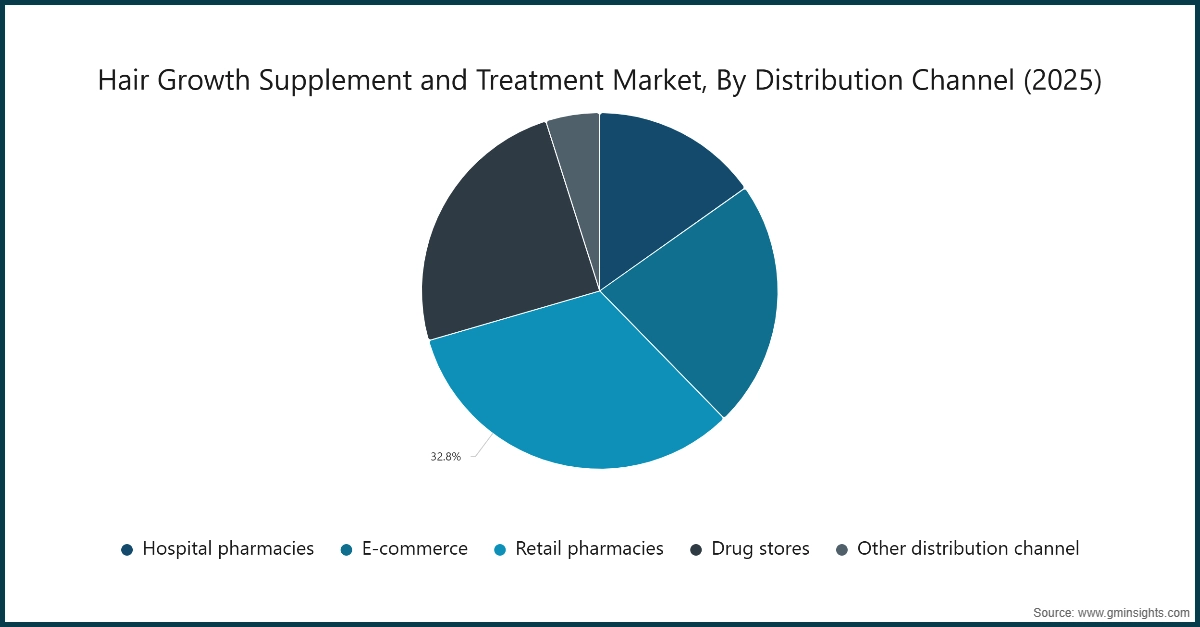
Based on the distribution channel, the global hair growth supplement and treatment market is classified into hospital pharmacies, e-commerce, retail pharmacies, drug stores, and other distribution channels. The retail pharmacies segment held the highest market share of 32.8% of market share in 2025.
- Wide accessibility and convenience make retail pharmacies a preferred choice for consumers seeking over-the-counter hair growth supplements and treatments, thereby driving segment growth.
- Additionally, strong brand presence and trust associated with established pharmacy chains encourage repeat purchases and adoption of clinically backed products, supporting the growth of the segment.
- Further, pharmacist guidance and professional consultation available at retail outlets help consumers select the right products for their hair concerns, thus contributing to segmental growth.
- On the other hand, the e-commerce segment is projected to grow at a CAGR of 6.5% during the forecast period, driven by the growing preference for online shopping due to convenience, home delivery, and easy access to a wide variety of hair growth supplements and treatments.
Looking for region specific data?
North America Hair Growth Supplement and Treatment Market
The North America market dominated the global market with a market share of 44.3% in 2025.
- The high incidence of hair loss in the region is a major reason for the market expansion. For instance, as per the U.S. prevalence estimates, about 35 million men in the U. S. have visible hair loss, and by age 50, 50%–60% show visible recession or thinning. Such a high level of hair loss has generated a robust demand for various solutions that can either prevent or help hair growth.
- In addition, the market is supported by advancements in hair growth pharmaceuticals, supplements, and non-invasive devices, along with a rising preference for natural and clinically backed treatments. Together, these factors are strengthening North America’s leadership in the global market.
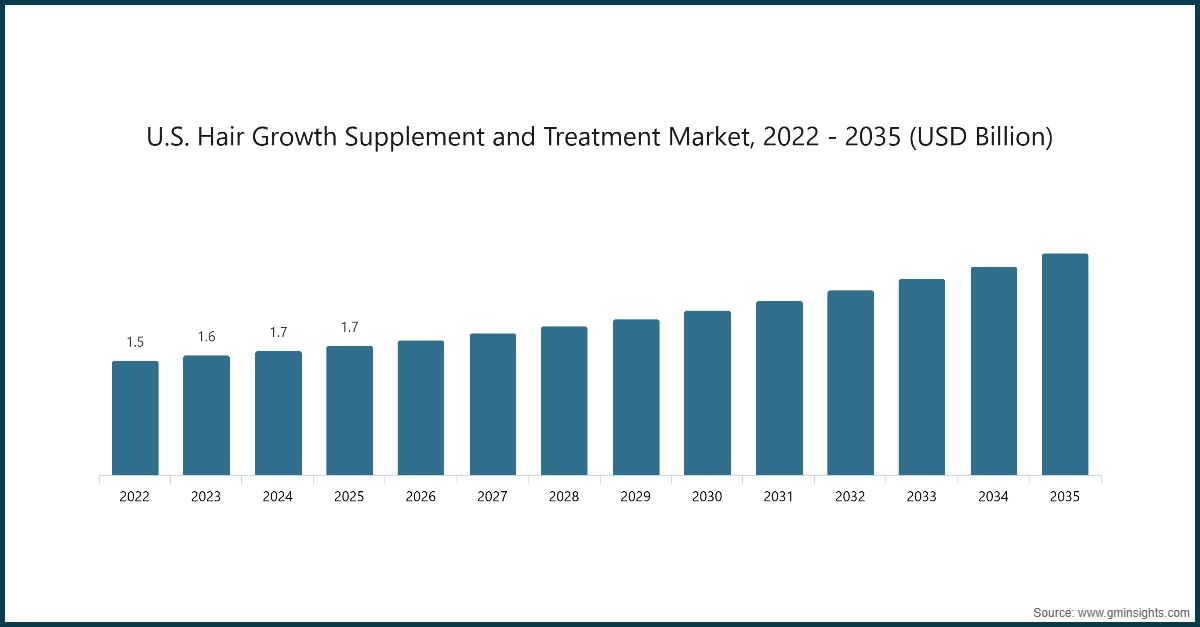
The U.S. hair growth supplement and treatment market was valued at USD 1.53 billion and USD 1.59 billion in 2022 and 2023, respectively. The market size reached USD 1.73 billion in 2025, rising from USD 1.65 billion in 2024.
- A major factor behind the rising demand is the prevalence of hair loss disorders. It is estimated that close to 6.7 million people in the U. S. either suffer from alopecia areata or will acquire it at some point in their lifetime, according to the National Alopecia Areata Foundation (NAAF). Thus, this need for both preventive and treatment solutions is translating into market growth.
- Additionally, ongoing advancements in treatment technologies, including non-invasive devices and innovative topical and oral formulations, are enhancing efficacy and patient confidence, and thereby boosting market growth.
Europe Hair Growth Supplement and Treatment Market
Europe market accounted for USD 2.3 billion in 2025 and is anticipated to show lucrative growth over the forecast period, supported by the high prevalence of hair loss conditions in the region.
- A research article in the National Institutes of Health (NIH) states that Male Pattern Hair Loss (MPHL) is an extremely heritable and common condition that can start at puberty, and 80% of males in Europe may have some degree of MPHL at some point in their lifetime.
- Such high prevalence androgen-dependent hair loss creates a strong consumer demand for clinically proven products and preventive strategies, thus paving the way for the market to grow.
- Moreover, the regional data reveal that Italy is one of the countries with the highest male hair loss prevalence rates, that is, nearly 44.37% of men are either bald or have hair thinning, which shows that there is a substantial demand for effective treatments in the major European markets.
- Such high prevalence rates, combined with increasing consumer awareness of hair health, rising adoption of supplements and treatments, and the availability of innovative product offerings, are creating a favorable environment for sustained growth of the European market.
Germany dominates the Europe hair growth supplement and treatment market, showcasing strong growth potential.
- The country has a high prevalence of hair loss, particularly among aging populations, which drives significant demand for both preventive and therapeutic hair growth solutions.
- Additionally, Germany is currently one of only five super-aged societies in the world, with its population aged 65 and older projected to reach nearly one-third of the total population by 2050, creating a large consumer base seeking age-related hair care treatments. The market is further supported by strong healthcare infrastructure, high consumer awareness, and the presence of leading hair care brands, which facilitate product availability and adoption.
- Rising interest in clinically backed, natural, and non-invasive hair growth solutions, coupled with increasing e-commerce penetration, is also boosting accessibility, thereby reinforcing Germany’s leadership and growth prospects in the European market.
Asia Pacific Hair Growth Supplement and Treatment Market
The Asia Pacific market is anticipated to grow at the highest CAGR of 6.5% during the analysis timeframe.
- The growth is driven by the rising prevalence of hair loss conditions and increasing consumer health awareness across key countries in the region.
- In India, for instance, nearly 50% of men were projected to have hair loss in 2023, with hair loss often beginning in early adulthood and worsening with age, highlighting the widespread nature of the problem.
- Additionally, female hair thinning or severe hair loss affected approximately 20–30% of Indian women in 2020, with rates increasing after menopause, further expanding the addressable market for both supplements and clinical treatments.
- The rapid growth of this market is also supported by changing lifestyles, increased stress levels, pollution, and dietary challenges, which contribute to a higher incidence of hair thinning and loss among both young and middle‑aged populations.
China hair growth supplement and treatment market is estimated to grow with a significant CAGR in the Asia Pacific market.
- The growth is underpinned by the widespread prevalence of hair loss and shifting consumer behaviour.
- According to data from China’s National Health Commission and health surveys, over 250 million people in China, about one in six, are suffering from various stages of hair loss, with the majority aged between 20 and 40 years, indicating both a large current addressable population and growing concern among younger demographics.
- This escalating incidence of hair thinning and loss has created a lucrative opportunity for supplements, topical treatments, and non‑invasive solutions, further supported by increasing consumer awareness of hair health, lifestyle influences such as stress and urban living, and strong e‑commerce penetration enabling broader reach of hair growth products.
Latin American Hair growth supplement and treatment Market
Brazil leads the Latin American market, exhibiting remarkable growth during the analysis period.
- The country has a high prevalence of hair loss and thinning among both men and women, driven by genetic predisposition, pollution, and lifestyle stressors.
- Rising beauty consciousness and strong cultural emphasis on personal grooming make consumers more willing to invest in hair care solutions, from supplements to advanced topical treatments.
- Additionally, increasing penetration of dermatology clinics, hair restoration centers, and aesthetic medicine facilities has improved access to professional-grade treatments.
Middle East and Africa Hair growth supplement and treatment Market
Saudi Arabia market is expected to experience substantial growth in the Middle East and Africa market.
- Rising disposable incomes and stronger consumer spending on personal care are increasing demand for premium nutraceuticals and clinical treatments.
- Additionally, the expansion of e-commerce platforms and modern retail chains further enhances product accessibility, enabling both domestic and international brands to reach a broader consumer base.
- Furthermore, government initiatives supporting healthcare and wellness awareness programs are contributing to a favorable environment for the growth of the market in Saudi Arabia.
Hair Growth Supplement and Treatment Market Share
Leading companies such as Amway Corporation, Kenvue, Merck, GNC Holdings, and Cipla Limited collectively account for a significant portion of 39.2% of the global market. These players are focusing on the development of innovative oral supplements, topical formulations, and non-invasive devices such as laser caps and scalp massagers to address hair thinning, androgenetic alopecia, and scalp health. Product differentiation through clinically backed ingredients, multi-nutrient formulations, and advanced delivery mechanisms is driving consumer adoption and brand loyalty across diverse geographies.
Additionally, strategic collaborations, acquisitions, and partnerships with research institutions are enabling companies to accelerate product innovation and expand their pipelines. Investments in marketing, digital outreach, and e-commerce platforms are improving accessibility and consumer awareness, particularly in younger and wellness-conscious demographics. Companies are also increasingly emphasizing on natural, organic, and chemical-free solutions, reflecting shifting consumer preferences toward safe and holistic hair care, thereby intensifying competition and shaping market growth dynamics.
Hair Growth Supplement and Treatment Market Companies
Prominent players operating in the hair growth supplement and treatment industry are as mentioned below:
- Hair supplements
- Amway Corporation
- GNC Holdings
- HUM Nutrition
- Nature’s Bounty
- Nutraceutical Wellness
- OUAI Healthcare
- Phyto
- Viviscal Limited (Church & Dwight)
- Hair treatment
- Cipla Limited
- Curallux
- Eli Lilly and Company
- ExoCoBio
- Keranique
- Kenvue
- Lexington International
- Merck
- Pfizer
The company accounts for approximately 12.7% market share in the global hair growth supplements and treatment market and has leveraged its pharmaceutical expertise to deliver effective hair growth treatments, especially in prescription and clinical therapy segments. The company focuses on innovation in topical and systemic formulations designed to address underlying causes of hair loss, supported by evidence from clinical studies.
Amway has built a strong foothold in the hair growth supplement segment through its Nutrilite brand, offering science‑backed formulations that combine essential vitamins, minerals, and botanicals to support hair health. The company’s extensive direct‑to‑consumer network and presence in global markets enable broad product accessibility.
Cipla has strategically expanded its presence in both hair growth supplements and treatment categories with clinically validated topical solutions and nutraceuticals targeting hair thinning and androgenetic alopecia. The acquisition of Ivia’s brands, including hair care products like Tugain, has enhanced Cipla’s portfolio and strengthened its position in beauty and personal care segments.
Hair Growth Supplement and Treatment Market Report Attributes
| Key Takeaway | Details |
|---|---|
| Market Size & Growth | |
| Base Year | 2025 |
| Market Size in 2025 | USD 8.8 Billion |
| Market Size in 2026 | USD 9.2 Billion |
| Forecast Period 2026-2035 CAGR | 6.1% |
| Market Size in 2035 | USD 15.7 Billion |
| Key Market Trends | |
| Drivers | Impact |
| Increasing prevalence of hair loss and alopecia | Rising cases of androgenetic alopecia and other hair disorders globally are fueling demand for effective supplements, topicals, and devices, thereby supporting overall market growth. |
| Rising consumer awareness and self-care trends | Growing focus on hair health, wellness, and preventive care is prompting consumers to adopt clinically backed supplements and treatments, driving increased product adoption. |
| Expansion of e-commerce and direct-to-consumer channels | Online sales and direct-to-consumer models improve accessibility and convenience, enabling brands to reach wider audiences, thereby accelerating market penetration and revenue growth. |
| Advancements in treatment technologies and clinical research | Innovation in formulations, non-invasive devices, and clinical evidence-based therapies enhances treatment efficacy and consumer trust, boosting adoption and market credibility. |
| Pitfalls & Challenges | Impact |
| Growing availability of alternative treatment options | The proliferation of herbal, homeopathic, and DIY remedies increases competition, making it challenging for pharmaceuticals and supplements to maintain market share. |
| Concerns associated with pharmacological treatments | Potential side effects, safety issues, and stringent regulatory requirements can limit prescription adoption, slowing growth for clinical hair loss therapies. |
| Opportunities: | Impact |
| Rising demand for personalized and precision solutions | Customizable treatments and supplements tailored to individual hair types and genetic profiles present opportunities for premium offerings and higher consumer engagement. |
| Growth in combination therapies and adjunct solutions | Integrating supplements, topicals, and devices in holistic regimens enhances treatment efficacy, creating cross-selling potential and driving incremental revenue streams. |
| Market Leaders (2025) | |
| Market Leader |
~12.7% market share |
| Top Players |
Collective market share is ~39.2% |
| Competitive Edge |
|
| Regional Insights | |
| Largest Market | North America |
| Fastest-growing market | Asia Pacific |
| Emerging countries | China, India, Brazil, Mexico, South Africa |
| Future outlook |
|
What are the growth opportunities in this market?
Hair Growth Supplement and Treatment Industry News
- In January 2026, Growth Care brand Divi introduced its Hair Growth Vitamins, broadening its product portfolio and reinforcing its role in shaping consumer awareness around scalp health and hair shedding. This launch enabled the company to strengthen brand relevance, attract health-conscious consumers, and capitalize on the growing demand for preventive and nutritional hair care solutions.
- In September 2025, Nutrafol entered into its first multi-year sports partnership with Major League Baseball (MLB), becoming the league’s Official Hair Growth Partner, with the collaboration launching during the 2025 post-season and continuing through the 2026 regular season. This partnership enhanced Nutrafol’s brand visibility and credibility, enabling it to reach a broader audience, strengthen consumer trust, and drive long-term brand engagement and sales growth.
- In April 2024, Cipla Health strengthened its presence in the beauty and personal care segment by acquiring Ivia's brands. The portfolio includes hair care solutions like Tugain, aligning with the growing demand for innovative hair growth treatments. This acquisition allowed the company to expand its hair growth portfolio, strengthen its presence in the personal care segment, and tap into growing consumer demand for innovative hair care solutions.
- In June 2023, Pfizer announced that the U.S. Food and Drug Administration (FDA) has approved LITFULO (ritlecitinib), a once-daily oral treatment, for individuals 12 years of age and older with severe alopecia areata. The approved recommended dose for LITFULO is 50 mg. This strategy enabled the company to expand its product offerings and generate revenue from its sales.
- In June 2022, Eli Lilly and Company and Incyte announced that the U.S. Food and Drug Administration (FDA) has approved OLUMIANT (baricitinib), a once-daily pill, as a first-in-disease systemic treatment for adults with severe alopecia areata (AA), available as 4-mg, 2-mg, and 1-mg tablets. This strategy helped the company to add value to its existing business portfolio.
The hair growth supplement and treatment market research report includes in-depth coverage of the industry with estimates and forecast in terms of revenue in USD Million from 2022 – 2035 for the following segments:
Market, By Type
- Supplements
- Pharmaceuticals
Market, By Gender
- Male
- Female
Market, By Distribution Channel
- Hospital pharmacies
- E-commerce
- Online retailers
- Brand-owned websites
- Retail pharmacies
- Drug stores
- Other distribution channels
The above information is provided for the following regions and countries:
- North America
- U.S.
- Canada
- Europe
- Germany
- UK
- France
- Italy
- Spain
- Netherlands
- Asia Pacific
- China
- Japan
- India
- Australia
- South Korea
- Latin America
- Brazil
- Mexico
- Argentina
- Middle East and Africa
- South Africa
- Saudi Arabia
- UAE
Frequently Asked Question(FAQ) :
What was the market size of the hair growth supplement and treatment market in 2025?
The market size was USD 8.8 billion in 2025, driven by increasing awareness of hair and scalp health and the rising prevalence of hair loss.
What is the projected value of the hair growth supplement and treatment market by 2035?
The market is expected to reach USD 15.7 billion by 2035, growing at a CAGR of 6.1% during the forecast period.
What is the projected size of the hair growth supplement and treatment market in 2026?
The market is expected to grow to USD 9.2 billion in 2026.
What was the market share of the pharmaceuticals segment in 2025?
The pharmaceuticals segment held the largest share, valued at USD 6.2 billion in 2025. This segment includes oral medications, topical and injectable treatments, and devices.
What was the market share of the male segment in 2025?
The male segment dominated the market in 2025 and is projected to grow at a CAGR of 5.9%, reaching USD 10.4 billion by 2035.
Which distribution channel held the largest market share in 2025?
Retail pharmacies held the largest market share, accounting for 32.8% of the market in 2025.
Which region leads the hair growth supplement and treatment market?
North America dominated the market in 2025, holding a 44.3% share, driven by strong consumer awareness and advanced healthcare infrastructure.
Who are the key players in the hair growth supplement and treatment market?
Major players in the market include:Hair Supplements: Amway Corporation, GNC Holdings, HUM Nutrition, Nature’s Bounty, Nutraceutical Wellness, OUAI Healthcare, Phyto, and Viviscal Limited (Church & Dwight).
Hair Growth Supplement and Treatment Market Scope
Related Reports