Summary
Table of Content

Germany Cerebral Palsy Treatment Market
Get a free sample of this report
Form submitted successfully!
Error submitting form. Please try again.
Thank you!
Your inquiry has been received. Our team will reach out to you with the required details via email. To ensure that you don't miss their response, kindly remember to check your spam folder as well!
Request Sectional Data
Thank you!
Your inquiry has been received. Our team will reach out to you with the required details via email. To ensure that you don't miss their response, kindly remember to check your spam folder as well!
Form submitted successfully!
Error submitting form. Please try again.
Germany Cerebral Palsy Treatment Market Size
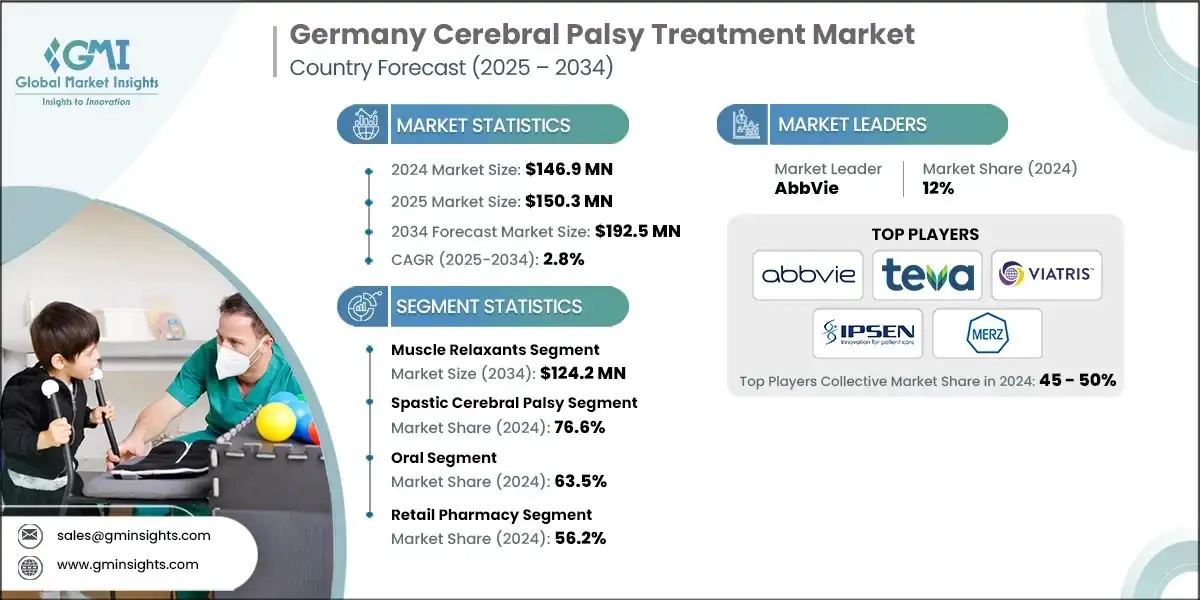
The Germany cerebral palsy treatment market size was estimated at USD 146.9 million in 2024. The market is expected to grow from USD 150.3 million in 2025 to USD 192.5 million in 2034, at a CAGR of 2.8%, according to the latest report published by Global Market Insights Inc. This high growth is attributed to several factors, including rising prevalence of cerebral palsy in the country, a favorable reimbursement landscape, advancements in drug formulations, and growing awareness to focus on early diagnosis of the indication, among other factors.
Germany Cerebral Palsy Treatment Market Key Takeaways
Market Size & Growth
- 2024 Market Size: USD 146.9 Million
- 2034 Forecast Market Size: USD 192.5 Million
- CAGR (2025–2034): 2.8%
Key Market Drivers
- Rising prevalence of cerebral palsy.
- Advancements in drug formulations.
- Increased awareness and early diagnosis.
- Surging investments in research and development activities.
Challenges
- Adverse effects associated with drugs.
Opportunity
- Development of targeted therapies.
- Strategic partnerships between pharma companies and pediatric hospitals.
Key Players
- Market Leader: AbbVie led with over 12% market share in 2024.
- Leading Players: Top 5 players in this market include AbbVie, Teva, VIATRIS, IPSEN, Merz Pharmaceuticals, which collectively held a market share of 50% in 2024.
Get Market Insights & Growth Opportunities
Cerebral palsy (CP) is a brain condition that is diagnosed when a child is in infancy or at a very young age. It affects the movement and control of their muscles throughout their lifetime. Major players in the industry include AbbVie, IPSEN, Merz Pharmaceuticals, Teva Pharmaceuticals, UCB, and VIATRIS. Doctors now prefer using botulinum toxin injections and modern muscle relaxants to help patients manage muscle stiffness. Instead of treatments that affect the entire body, these newer methods focus on specific areas where the intervention is critically necessary.
The rise in the number of people suffering from cerebral palsy in Germany is a key variable driving the industry growth. In order to provide better care to the region's target population, Cerebral Palsy Europe signed an agreement with the European Commission under the EU4Health program. This collaboration is expected to focus on insights pertaining to the latest innovations, novel drug development programs, and improved contribution to regional policymaking efforts, among others.
Favorable reimbursement policies coupled with the adoption of different treatments related to CPs are also supporting the market growth. For instance, in specialized German clinics, stem cell therapy treatment for cerebral palsy is also carried out. Since all the human body organs are formed from stem cells, their additional administration improves brain function and restores damaged nerve endings. A decrease in children's muscle tone and substantial improvements in vision and fine motor skills of the hands, among other benefits, are observed post completing the stem cell therapy treatment.
Moreover, the rise in the target population is resulting in increased therapeutics, thereby improving the demand for drugs in the country. For instance, according to the data reported by The Federal Statistical Office (Destatis), there were around 7.8 million severely disabled people living in Germany in 2022. Thus, in order to provide comprehensive care to such a high population base, the demand for different medications is anticipated to spur over the projected timeframe.
Cerebral palsy is a physical disability that affects movement and posture. It is the most common physical disability condition that children face and is caused when the brain experiences damage either before birth or during early infancy.
To get key market trends
Germany Cerebral Palsy Treatment Market Trends
The Germany market experiences notable transformation driven by key industry trends. Continuous advancements in drug formulations, adoption of digital platforms, and strategic partnerships between pharma companies and healthcare providers are among the key trends that are shaping the market growth positively.
- Germany's cerebral palsy treatment market is adapting to meet individual patient needs through personalized medicine approaches, bringing together targeted therapies and neurorehabilitation technologies.
- Additionally, patients now have access to non-invasive treatment options, such as transcranial stimulation and robotic-assisted therapy. These treatments work by using magnetic fields to stimulate brain cells, helping patients achieve better health outcomes.
- Digital health platforms enhance remote monitoring and therapy adherence. Adoption of several mobile applications enables the healthcare provider to get regular updates of the patient's health.
- Moreover, doctors are increasingly prescribing pediatric-focused drug formulations and extended-release medications that make it easier for patients to follow their treatment plans while providing quick relief from symptoms.
- Further, healthcare providers are working closely with research institutions to develop better treatments while using AI-driven diagnostics and data analysis to identify conditions earlier and create more effective treatment plans. This approach ensures that each patient receives care tailored to their specific needs.
Germany Cerebral Palsy Treatment Market Analysis
Learn more about the key segments shaping this market
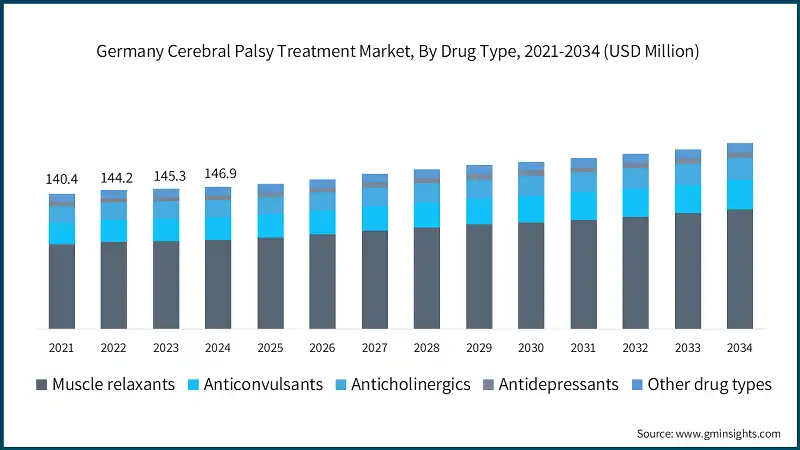
In 2021, the market was valued at USD 140.4 million. The following year, it saw a slight increase to USD 144.2 million, and in 2023 it reached USD 145.3 million. Advancements in drug formulations and supportive reimbursement mechanisms among various other factors are anticipated to fuel the industry growth.
Based on the drug type, the Germany market is segmented into muscle relaxants, anticonvulsants, anticholinergics, antidepressants, and other drug types. The muscle relaxants segment accounted for 62.9% of the market in 2024, as they improve mobility, ease discomfort, and enhance the effectiveness of physical therapy, especially in spastic CP cases. The segment is expected to reach USD 124.2 million by 2034, growing at a CAGR of 3% during the forecast period.
- The muscle relaxants segment is anticipated to witness robust growth over the forecast timeline owing to the rise in the number of the target population that requires long-term medication. The country's well-developed healthcare infrastructure allows patients to have easy access to a wide range of medications, including baclofen, which assists in alleviating the muscle stiffness of the patient.
- As healthcare providers and caregivers better understand how to manage symptoms and improve patients' daily lives, more people are seeking these treatments. This is expected to improve the care landscape of patients with disabilities. For instance, according to the data reported by The Federal Statistical Office (Destatis), the severe-disability rate for the population over 65 years of age was 24.5% in 2022. Thus, the growing awareness levels are projected to spur the treatment landscape in Germany.
- Additionally, new ways to deliver medications and ongoing research are making treatments more effective and easier for patients to use, making muscle relaxants essential for managing cerebral palsy symptoms.
- Further, the anticonvulsants segment reached USD 23.3 million in 2024. These medicines help control seizures, which many cerebral palsy patients experience, by keeping brain activity stable. They help reduce the occurrence of seizures and improve daily life, especially for patients who also have epilepsy.
- The anticholinergics segment is expected to grow steadily and reach USD 22.7 million by 2034. These drugs aid patients with cerebral palsy to control different symptoms such as uncontrolled muscle movements and drooling.
Based on the disease type, the Germany cerebral palsy treatment market is segmented into spastic cerebral palsy, dyskinetic cerebral palsy, ataxic cerebral palsy, and mixed cerebral palsy. The spastic cerebral palsy segment accounted for the highest market share of 76.6% in 2024 as they improve muscle tone and motor control, helping patients achieve better mobility and independence.
- The spastic cerebral palsy segment accounts for the majority share among indication types, establishing it as the most commonly diagnosed form of the condition in the country. Significant focus on improving the neonatal care landscape resulted in a substantial percentage of preterm infants surviving this condition, as these babies face a notable risk of developing spastic cerebral palsy.
- Patients have a wide range of treatment options available, including botulinum toxin injections and physical rehabilitation programs. The growth in this area is strengthened by supportive government healthcare policies, insurance plans that cover long-term therapy, and wider access to personalized treatment approaches and assistive technologies.
- Further, the mixed cerebral palsy segment is anticipated to record the fastest growth with a 3.4% CAGR throughout the analysis timeframe. The mixed category addresses all disease types, including spasticity. The drugs provide comprehensive care, improving the overall ability of the patient, resulting in better coordination of body movements through different therapeutic agents.
Based on route of administration, the Germany cerebral palsy treatment market is segmented into oral and injectables. The oral segment accounted for the highest market share of 63.5% in 2024 as they offer ease of use, especially for children, and support long-term management of cerebral palsy symptoms.
- The oral route continues to be the most widely used method for delivering drugs in cerebral palsy treatment because it is convenient, non-invasive, and easy to administer, especially for children.
- Doctors commonly prescribe oral medications such as muscle relaxants, anticonvulsants, and antispastics. New developments in child-friendly formulations and extended-release tablets help patients take their medicine more regularly by reducing how often they need to take doses.
- In addition, supportive regulations for developing child-friendly drugs and families preferring to give treatment at home have helped this type of medication become more common in the country.
- Further, the injectable segment is anticipated to record higher growth over the forecast period and reach USD 72.3 million by 2034. Injectable medications such as the botulinum toxin help control muscle problems in specific areas of the body. This route of administration offers a faster response, thereby offering better and quicker control of muscle movements throughout the treatment plan.
Learn more about the key segments shaping this market
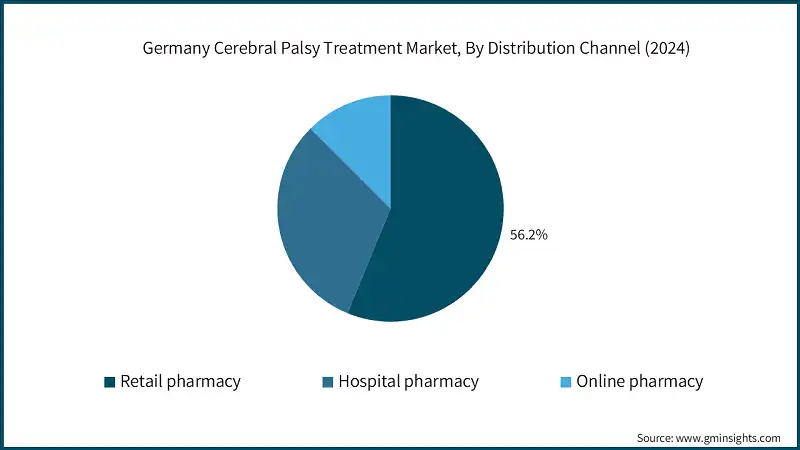
Based on the distribution channel, the Germany cerebral palsy treatment market is segmented into retail pharmacy, hospital pharmacy, and online pharmacy. The retail pharmacy segment accounted for the highest market share of 56.2% in 2024, as they offer personalized guidance and refill services and are integrated into community healthcare, playing a key role in outpatient treatment management.
- Retail pharmacies play a key role in the country's cerebral palsy treatment landscape by providing medication and patient counseling services. Their widespread presence throughout the country provides access to necessary medications easily, especially for outpatient care.
- There is a consistent rise in the percentage of people using retail pharmacies in Germany due to the demand for the outpatient care model and ongoing condition management requirements, coupled with the convenience of digital prescriptions.
- These pharmacies help patients stay on track with their medications through personal guidance and regular check-ins, making them essential for long-term cerebral palsy care. In addition, by working closely with pharmaceutical companies to stock specialized medications, they focus on fulfilling patient needs.
- The online pharmacies segment was valued at USD 18.3 million in 2024 and is projected to witness the fastest growth during the forecast period. Online pharmacies make life easier for caregivers managing chronic conditions by delivering medications to homes, handling digital prescriptions, and offering a wide range of treatment options.
Germany Cerebral Palsy Treatment Market Share
Leading industry players such as AbbVie Inc., VIATRIS, Teva, IPSEN, Merz Pharmaceuticals, and UCB hold between 50% and 60% of the market share in the moderately consolidated Germany market. These companies maintain their leading position by combining strong product lines, business collaborations, and regional expansions, coupled with consistent innovation.
Companies such as AbbVie, Ipsen, Teva, and Merz Pharma are working to develop better neurotherapeutics, especially botulinum toxin and muscle relaxant formulations that help manage spasticity. They are expanding their clinical trials, putting resources into gene and stem cell therapies, and making digital rehabilitation platforms more effective.
Additionally, by working together with hospitals and research institutions, these companies are speeding up drug development, making treatments more accessible, and creating specialized solutions for patients with cerebral palsy.
Further, companies are working to become more competitive by developing new drugs, creating targeted treatments, and expanding into new regions. The market focuses on creating personalized medicine, paying for medications, and better ways to deliver drugs to help patients manage their symptoms and live better lives.
Germany Cerebral Palsy Treatment Market Companies
Few of the prominent players operating in the Germany cerebral palsy treatment industry include:
- AbbVie
- amneal
- CHEPLAPHARM
- Dr. Reddy’s
- GSK
- IPSEN
- Merz Pharmaceuticals
- Novartis
- Roche
- teva
- ucb
- VIATRIS
- AbbVie
AbbVie holds a leading position in the industry with a market share of around 12% in 2024. The company, working through its subsidiary Allergan, helps treat patients with cerebral palsy, with a special focus on managing spasticity. The company creates long-acting formulations and AI-driven diagnostic tools to deliver better personalized care, make treatments more accessible worldwide, and speed up regulatory approvals for minimally invasive neurotherapeutic solutions.
- Ipsen
Ipsen concentrates on its botulinum toxin product, Dysport, to help treat spasticity in people with cerebral palsy. The company works on developing long-acting neurotoxins and broadening its clinical trials. By focusing on innovation, meeting regulatory requirements, and expanding globally in neuroscience, Ipsen strives to build its strength in movement disorder treatments and improve patient outcomes.
- Teva
Teva is moving forward with its Pivot to Growth strategy, shifting from generic medications to innovative therapies, including treatments for movement disorders related to cerebral palsy. The company works on developing treatments like deutetrabenazine while growing its late-stage pipeline. Teva works to balance affordable options with innovation to support long-term growth in neurology and complex generic medications.
Germany Cerebral Palsy Treatment Market Report Attributes
| Key Takeaway | Details |
|---|---|
| Market Size & Growth | |
| Base Year | 2024 |
| Market Size in 2024 | USD 146.9 Million |
| Forecast Period 2025 - 2034 CAGR | 2.8% |
| Market Size in 2034 | USD 192.5 Million |
| Key Market Trends | |
| Drivers | Impact |
| Rising prevalence of cerebral palsy | The growing number of diagnosed cases in Germany is intensifying demand for specialized care, prompting healthcare providers to expand neurorehabilitation services. |
| Advancements in drug formulations | Pharmaceutical firms are introducing refined formulations with improved efficacy, contributing to more consistent treatment outcomes. |
| Increased awareness and early diagnosis | Public health campaigns and pediatric screening programs are enabling earlier identification of cerebral palsy cases, leading to timely therapeutic interventions. |
| Surging investments in research and development activities | Germanys robust biotech ecosystem is channeling significant resources into cerebral palsy research, fostering innovation in both pharmacological and non-pharmacological therapies. |
| Pitfalls & Challenges | Impact |
| Adverse effects associated with drugs | Concerns over side effects such as sedation and muscle weakness are limiting the adoption of certain medications, especially in pediatric populations. |
| Opportunities: | Impact |
| Development of targeted therapies | Precision medicine approaches, including gene editing and neuroregenerative techniques, are expected to redefine cerebral palsy treatment by addressing individual patient profiles. |
| Strategic partnerships between pharma companies and pediatric hospitals | Collaborations are anticipated to streamline clinical trials, accelerate drug approvals, and integrate advanced therapies into routine pediatric care. |
| Market Leaders (2024) | |
| Market Leaders |
12% Market Share |
| Top Players |
Collective market share in 2024 is 45 - 50% |
| Competitive Edge |
|
| Regional Insights | |
| Future outlook |
|
What are the growth opportunities in this market?
Germany Cerebral Palsy Treatment Industry News:
- In July 2025, CHEPLAPHARM, in collaboration with Boryung, announced a partnership to manufacture Zyprexa tablets for distribution across up to 46 countries, including key markets in Europe and North America. This partnership may enhance the company's business prospects across various European countries.
- In March 2022, Proveca Pharma Ltd. partnered with ExCEEd Orphan to commercialize and distribute Sialanar exclusively in Central and Eastern Europe (CEE) countries. The collaboration allowed ExCEEd Orphan to distribute the product within its pediatric indication in CEE countries. This development enabled the company to expand its industry presence in European countries.
- In August 2021, Merz Therapeutics received clearance for the usage of XEOMIN in Europe for symptomatic treatment in children and adolescents aged 2 to 17 years. XEOMIN is used to treat patients with upper and lower limb spasticity, cervical dystonia, blepharospasm or hypersalivation. This development enabled the company to improve its regional presence in the market.
The Germany cerebral palsy treatment market research report includes an in-depth coverage of the industry with estimates and forecast in terms of revenue in USD Million from 2021 -2034 for the following segments:
Market, By Drug Type
- Muscle relaxants
- Anticonvulsants
- Anticholinergics
- Antidepressants
- Other drug types
Market, By Disease Type
- Spastic cerebral palsy
- Hemiplegia
- Diplegia
- Quadriplegia
- Dyskinetic cerebral palsy
- Ataxic cerebral palsy
- Mixed cerebral palsy
Market, By Route of Administration
- Oral
- Injectable
Market, By Distribution Channel
- Retail pharmacy
- Hospital pharmacy
- Online pharmacy
Frequently Asked Question(FAQ) :
What is the market size of the Germany cerebral palsy treatment in 2024?
The market size was USD 146.9 million in 2024, supported by rising prevalence of cerebral palsy, favorable reimbursement policies, and advancements in drug formulations.
What is the projected value of the Germany cerebral palsy treatment market by 2034?
The market is expected to reach USD 192.5 million by 2034, growing at a CAGR of 2.8% from 2025 to 2034, driven by innovation in targeted therapies and growing awareness for early diagnosis.
How much revenue did the muscle relaxants segment generate in 2024?
The muscle relaxants segment accounted for 62.9% of the market in 2024, generating approximately USD 92.3 million, supported by their effectiveness in improving mobility and easing spasticity.
What is the Germany cerebral palsy treatment market size in 2025?
The market size is projected at USD 150.3 million in 2025, with growth supported by increasing R&D investments and strategic partnerships between pharmaceutical firms and pediatric hospitals.
What was the valuation of the oral route of administration segment in 2024?
The oral segment held 63.5% share and generated around USD 93.3 million in 2024, making it the most widely used treatment method due to convenience and pediatric-friendly formulations.
Which segment leads the Germany cerebral palsy treatment market by disease type?
The spastic cerebral palsy segment dominated with a 76.6% share in 2024, supported by widespread prevalence and strong government support for neonatal care.
What is the growth outlook for injectable treatments from 2025 to 2034?
Injectables such as botulinum toxin are projected to grow steadily and reach USD 72.3 million by 2034, driven by their targeted effectiveness in controlling muscle stiffness.
Who are the key players in the Germany cerebral palsy treatment market?
Key players include AbbVie, IPSEN, Merz Pharmaceuticals, Teva, UCB, VIATRIS, Roche, Novartis, CHEPLAPHARM, GSK, Amneal, and Dr. Reddy’s.
Germany Cerebral Palsy Treatment Market Scope
Related Reports