Summary
Table of Content

Gene Synthesis Market
Get a free sample of this report
Form submitted successfully!
Error submitting form. Please try again.
Thank you!
Your inquiry has been received. Our team will reach out to you with the required details via email. To ensure that you don't miss their response, kindly remember to check your spam folder as well!
Request Sectional Data
Thank you!
Your inquiry has been received. Our team will reach out to you with the required details via email. To ensure that you don't miss their response, kindly remember to check your spam folder as well!
Form submitted successfully!
Error submitting form. Please try again.
Gene Synthesis Market Size
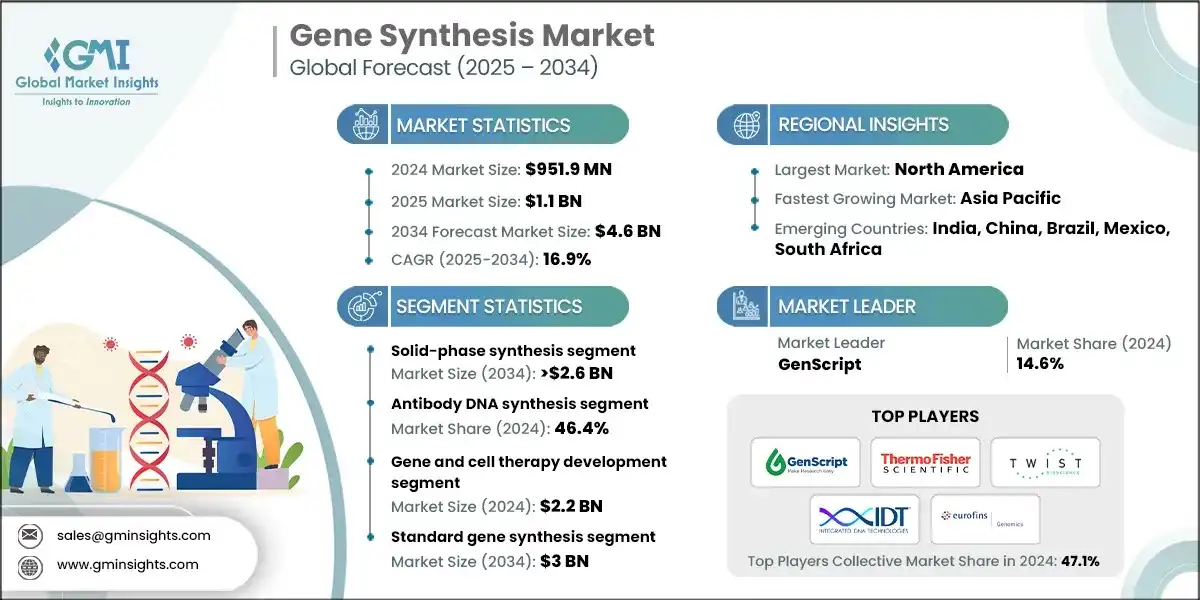
The global gene synthesis market was valued at USD 951.9 million in 2024. The market is expected to reach from USD 1.1 billion in 2025 to USD 4.6 billion in 2034, growing at a CAGR of 16.9% during the forecast period, according to the latest report published by Global Market Insights Inc. The drivers include increased demand for synthetic biology, improvement in DNA synthesis technologies, increasing funding of genomic research, expansion of personalized medicine biomarkers, and applications in pharmaceutical and biotechnology industries.
Gene Synthesis Market Key Takeaways
Market Size & Growth
- 2024 Market Size: USD 951.9 Million
- 2025 Market Size: USD 1.1 Billion
- 2034 Forecast Market Size: USD 4.6 Billion
- CAGR (2025–2034): 16.9%
Regional Dominance
- Largest Market: North America
- Fastest Growing Region: Asia Pacific
Key Market Drivers
- Rapid advancements in DNA synthesis technology.
- Growing investments in gene synthesis projects and synthetic biology R&D.
- Increased prevalence of genetic disorders and chronic disease.
- Rising adoption of gene therapy.
Challenges
- Lack of skilled professionals.
- Complex gene synthesis techniques and high process cost.
Opportunity
- Expansion of CRISPR-based gene editing applications.
- RNA-based vaccines and therapeutics development.
Key Players
- Market Leader: GenScript led with over 14.6% market share in 2024.
- Leading Players: Top 5 players in this market include GenScript, Thermo Fisher Scientific, Twist Bioscience Corporation, Integrated DNA Technologies (IDT) (Danaher), Eurofins Genomics, which collectively held a market share of 47.1% in 2024.
Get Market Insights & Growth Opportunities
The global gene synthesis market provides innovative solutions to biotechnology firms, pharmaceutical companies, academic institutions, and healthcare technology providers to enhance research accuracy, drug discovery services, and genetic analysis efficiency. Solutions include custom gene synthesis, cloning services, and DNA library construction, platforms that support advancements in synthetic biology, genomics, and personalized medicine.
Key players in the market include Thermo Fisher Scientific, GenScript, Twist Bioscience Corporation, Integrated DNA Technologies (IDT) (Danaher), Eurofins Genomics, and Azenta, Inc. These companies maintain a competitive edge through continuous innovation, global expansion, strategic collaborations, and substantial R&D investments to meet growing research demands and strengthen their market presence.
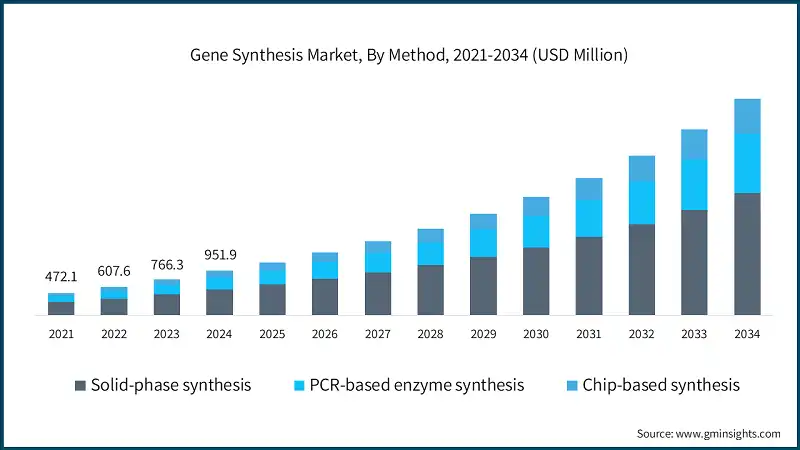
The market has increased from USD 472.1 million in 2021 and reached USD 766.3 million in 2023. The growth of the global gene synthesis market is primarily driven by advancements in synthetic biology, the rapid evolution of DNA synthesis technologies, and increasing demand across the biotechnology and pharmaceutical sectors. One of the major drivers is the expanding field of synthetic biology, which relies heavily on gene synthesis to engineer biological systems, develop novel biomolecules, and create sustainable bio-based products. This is further fueled by the growing focus on personalized medicine, where synthetic genes are used to develop patient-specific therapies, diagnostics, and vaccines.
Technological innovations, such as automated DNA synthesis platforms, error-correction techniques, have significantly improved synthesis accuracy, reduced turnaround time, and lowered costs making gene synthesis more accessible to academic and commercial researchers. Rising government and private funding in genomics and molecular biology research also play a crucial role in supporting large-scale gene synthesis projects for disease modeling, agricultural improvements, and industrial biotechnology.
Furthermore, the increasing application of gene synthesis in drug discovery and development, vaccine production, and antibody engineering continues to propel market growth. The COVID-19 pandemic demonstrated the potential of synthetic genes in accelerating vaccine design and therapeutic development, which continues to drive post-pandemic adoption. Strategic collaborations among leading players such as Thermo Fisher Scientific, GenScript, Twist Bioscience, Integrated DNA Technologies (IDT), Eurofins Genomics, and Azenta, Inc. are fostering innovation and expanding service portfolios. Additionally, the rising trend of outsourcing gene synthesis services by pharmaceutical and biotech companies to specialized providers enhances market scalability. Collectively, these factors are expected to sustain robust growth in the global gene synthesis market throughout the forecast period.
Gene synthesis is a laboratory technique used to artificially design and construct genes by assembling nucleotides (DNA sequences) without relying on a natural template. It enables precise creation of custom genetic material for applications in synthetic biology, drug discovery, genetic engineering, and molecular diagnostics, supporting research, biotechnology innovation, and therapeutic development.
To get key market trends
Gene Synthesis Market Trends
Among the major factors driving the growth of the global market for gene synthesis are the rapid improvements in DNA synthesis technologies. These have greatly transformed research, diagnostics, and therapeutic development. Continuous innovation has driven speed, accuracy, and cost-efficiency into the process of gene synthesis, enabling wider adoption in pharmaceutical, biotechnology, and academic research circles.
- Modern DNA synthesis platforms now integrate automation, next-generation sequencing (NGS), microfluidics, and artificial intelligence (AI) for improved precision, error correction, and scalability. These innovations have drastically reduced turnaround times while enhancing throughput, allowing researchers to design and construct complex genes and pathways that were previously unfeasible.
- One of the most impactful technological advancements is the adoption of enzymatic DNA synthesis, which offers a sustainable, scalable, and high-fidelity alternative to traditional phosphoramidite chemistry. The integration of digital DNA design software and cloud-based bioinformatics tools further streamlines gene assembly, validation, and storage, supporting the increasing demand for customized gene synthesis services.
- These developments have enabled faster drug discovery, vaccine development, and industrial biotechnology processes, strengthening the market’s commercial and scientific relevance.
- On the macroeconomic front, rising government funding for genomics, synthetic biology, and precision medicine programs, particularly in the U.S., Europe, and Asia-Pacific, has boosted demand for gene synthesis technologies. Growing investments by pharmaceutical and biotechnology firms in R&D and personalized medicine also drive adoption, while supportive regulatory frameworks and intellectual property protection encourage innovation.
- At the microeconomic level, increasing competition among market players such as Thermo Fisher Scientific, GenScript, Twist Bioscience, and IDT has led to continuous price optimization and service diversification. Strategic partnerships and mergers further enhance product accessibility and cost-efficiency.
- Together, these technological, macroeconomic, and microeconomic factors are reshaping the global gene synthesis landscape, enabling wider adoption and accelerating the development of next-generation therapies, diagnostics, and biotechnological applications.
Gene Synthesis Market Analysis
Learn more about the key segments shaping this market
Based on the method, the gene synthesis market is segmented into solid-phase synthesis, PCR-based enzyme synthesis, and chip-based synthesis. The solid-phase synthesis segment has asserted its dominance in the market by securing a significant market share of 58.6% in 2024, as it offers high accuracy, scalability, and efficiency for long DNA sequences, making it ideal for large-scale commercial and research applications. The segment is expected to exceed USD 2.6 billion by 2034, growing at a CAGR of 16.5% during the forecast period.
On the other hand, the PCR-based enzyme synthesis segment is expected to grow with a CAGR of 17.7%. The growth of this segment can be attributed to the cost-effective amplification of short DNA fragments with high fidelity, supporting gene cloning and molecular diagnostics.
- The solid-phase synthesis segment dominates the market because of its high accuracy, reliability, and scalability to provide customized DNA sequences. It allows for efficient stepwise addition of nucleotides to a growing DNA chain with a solid support that minimizes errors and enhances purification efficiency.
- Technological advancements such as automated nucleotide synthesizers, enhanced coupling reagents, and improved phosphoramidite chemistry have made this method faster and more cost-effective. Its ability to synthesize long and complex genes with high precision is a key factor driving adoption among pharmaceutical, biotechnology, and academic research laboratories.
- The growing demand for gene-based research, personalized medicine, and synthetic biology applications such as protein engineering and metabolic pathway design has further boosted the segment’s relevance.
- The PCR-based enzyme synthesis segment held a revenue of USD 246.5 million in 2024, with projections indicating a steady expansion at 17.7% CAGR from 2025 to 2034. The PCR-based enzyme synthesis segment is driven by its ability to produce high-fidelity, cost-effective, and error-free DNA sequences rapidly. This method leverages polymerase chain reaction (PCR) to amplify and assemble nucleotides enzymatically, eliminating the need for chemical reagents used in traditional synthesis.
- The growing adoption of PCR-based approaches in molecular biology research, synthetic biology, and genetic engineering contributes to its increasing popularity.
- Technological improvements in high-fidelity DNA polymerases, optimized thermal cycling protocols, and automation have enhanced synthesis accuracy and scalability.
- This has made PCR-based synthesis particularly suitable for small- to medium-scale applications where speed and precision are critical. Additionally, its environmentally friendly nature due to reduced chemical waste aligns with the global push toward sustainable laboratory practices.
Based on services, the gene synthesis market is classified into antibody DNA synthesis, viral DNA synthesis, and other services. The antibody DNA synthesis segment dominated the market with a revenue share of 46.4% in 2024 and is expected to reach USD 2.2 billion within the forecast period.
- The segment of antibody DNA synthesis holds the largest share in the market. This is contributed by the high demand for monoclonal antibodies in therapeutics and diagnostics. Antibody-based therapies are increasingly utilized in treating cancer, autoimmune disorders, infectious diseases, and rare genetic conditions.
- This has fueled the need for custom antibody gene synthesis to accelerate drug discovery, development, and production pipelines. Technological advancements, including high-throughput DNA assembly, error-correction methods, and AI-driven gene design, have enabled the rapid synthesis of antibody genes with improved specificity, affinity, and stability.
- Additionally, the growing trend of personalized medicine has heightened the importance of generating patient-specific antibodies, further driving the adoption of antibody DNA synthesis.
- Increasing collaborations between pharmaceutical companies, contract research organizations (CROs), and academic institutions support large-scale antibody discovery and engineering programs. On the economic front, robust R&D investments and favorable funding policies for biologics development also contribute to market growth.
- The viral DNA synthesis segment held a revenue of USD 323.4 million in 2024, with projections indicating a steady expansion at 17.8% CAGR from 2025 to 2034. The viral DNA synthesis segment is driven by the rising utilization of viral vectors in gene therapy, vaccine development, and viral research. Viral vectors, such as adenoviruses, lentiviruses, and adeno-associated viruses (AAV), are essential for delivering therapeutic genes into target cells, making viral DNA synthesis a critical component of advanced therapies.
- The segment is further supported by increasing applications in mRNA-based vaccines, oncolytic virotherapy, and regenerative medicine.
- Technological advancements in synthetic virology, including automated DNA assembly and error-free synthesis, have enhanced the efficiency and safety of viral DNA production.
- Additionally, regulatory encouragement for gene therapy and viral research programs, especially in North America and Europe, supports investment in viral DNA synthesis infrastructure. Growing prevalence of genetic and infectious diseases has further intensified demand for viral vector-based therapeutics.
Based on application, the gene synthesis market is classified into gene and cell therapy development, disease diagnosis, vaccine development and other applications. The gene and cell therapy development segment dominated the market with a revenue share of 44.1% in 2024 and is expected to reach USD 2.2 billion within the forecast period.
- The gene and cell therapy development segment dominates the market due to the rising adoption of advanced therapies for treating genetic disorders, cancers, and rare diseases. Increasing prevalence of inherited and chronic conditions is driving demand for customized, high-quality synthetic genes used in developing personalized therapies.
- Technological advancements in CRISPR-Cas9, TALENs, and other genome-editing tools are enabling precise modification and insertion of synthetic genes, improving therapeutic efficacy and patient outcomes. Pharmaceutical and biotechnology companies are investing heavily in research and development to expand the pipeline of gene and cell-based therapies, which, in turn, fuels the need for scalable and accurate gene synthesis services.
- Regulatory approvals of novel gene therapies, combined with growing collaborations between research institutions and commercial organizations, are further accelerating market growth. Additionally, government and private funding in gene therapy programs, especially in North America and Europe, is increasing accessibility and reducing barriers for small and mid-sized companies to adopt synthetic genes.
- The disease diagnosis segment held a revenue of USD 245.8 million in 2024, with projections indicating a steady expansion at 16.6% CAGR from 2025 to 2034. The disease diagnosis segment is driven by the growing demand for accurate, rapid, and cost-effective diagnostic solutions for genetic, infectious, and chronic diseases. Advancements in molecular diagnostics, such as PCR, NGS, and microarray-based techniques, rely heavily on synthetic genes and DNA constructs for assay development, calibration, and validation.
- Rising prevalence of genetic disorders, cancer, and infectious diseases globally has increased the need for precise diagnostic tools capable of early detection and monitoring. Gene synthesis facilitates the development of synthetic reference standards, probes, and controls, which improve the reliability and reproducibility of diagnostic tests.
- The expansion of personalized medicine and companion diagnostics also boosts the segment, as synthetic genes enable targeted detection of specific mutations, enhancing treatment outcomes. Additionally, increasing investments by healthcare providers, research laboratories, and diagnostic companies in molecular diagnostic technologies are fueling the demand.
Based on complexity, the gene synthesis market is classified into standard gene synthesis and complex gene synthesis. The standard gene synthesis segment dominated the market with a revenue share of 67.6% in 2024 and is expected to reach USD 3 billion within the forecast period.
- Its growth is driven by the widespread need for rapid, cost-effective, and reliable synthesis of shorter and less complex DNA sequences. Standard gene synthesis is widely used in applications such as basic research, cloning, recombinant protein production, and functional genomics, where precision and turnaround time are crucial.
- Technological advancements, including automated synthesis platforms, error-correction techniques, and integration with bioinformatics tools, have significantly enhanced the speed, accuracy, and scalability of standard gene synthesis services, making them accessible to a broad range of research institutions and small biotech companies.
- Macro-economic factors, such as increasing government funding for genomics research and rising investments in biotechnology startups, further support market expansion. Additionally, the growing prevalence of genetic disorders and demand for cost-efficient drug development solutions drive adoption of standard gene synthesis for early-stage experiments and high-throughput applications.
- The complex gene synthesis segment held a revenue of USD 308 million in 2024, with projections indicating a steady expansion at 18.1% CAGR from 2025 to 2034.
- The complex gene synthesis segment is driven by the growing demand for the construction of longer and highly intricate DNA sequences, including full-length genes, synthetic pathways, and gene clusters.
- These sequences are essential for advanced applications such as synthetic biology, metabolic engineering, gene therapy, and the development of vaccines and therapeutic biologics.
- Technological advancements, including enzymatic synthesis, automated high-throughput platforms, and AI-assisted sequence optimization, have enabled accurate and scalable synthesis of complex genes, overcoming previous limitations related to sequence length, GC content, and repetitive motifs.
Learn more about the key segments shaping this market
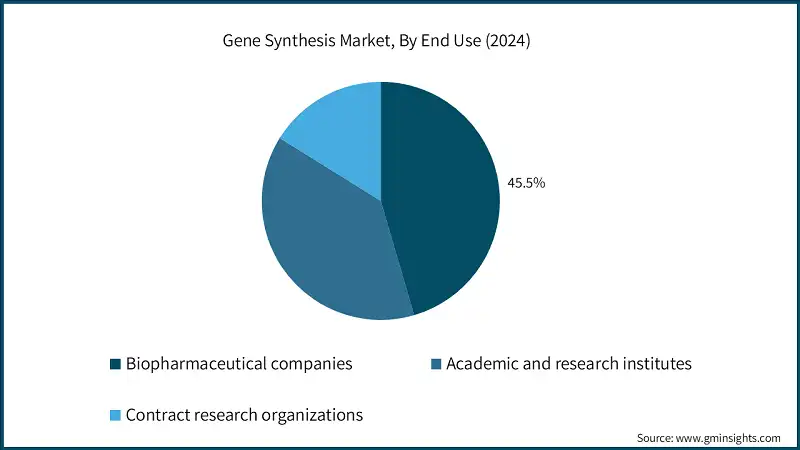
Based on end use, the gene synthesis market is classified into biopharmaceutical companies, academic & research institutes, and contract research organizations. The biopharmaceutical companies segment dominated the market with a revenue share of 45.5% in 2024 and is expected to reach USD 2.3 billion within the forecast period.
- The two largest segments account for over 83.8% of the total market value. The biopharmaceutical companies segment dominates the global gene synthesis market, driven primarily by the growing demand for gene-based therapeutics, vaccines, and biologics. These companies increasingly rely on custom gene synthesis for research, development, and large-scale production of recombinant proteins, monoclonal antibodies, and RNA-based therapeutics.
- Rapid advancements in DNA synthesis technologies, including automation, high-throughput platforms, and next-generation sequencing integration, enable biopharmaceutical firms to accelerate drug discovery timelines and enhance precision in molecular engineering.
- The rising prevalence of genetic disorders, chronic diseases, and the growing emphasis on personalized medicine further increase the need for tailored gene constructs for target-specific therapies.
- The academic and research institutes segment held a revenue of USD 365.2 million in 2024, with projections indicating a steady expansion at 15.7% CAGR from 2025 to 2034. The academic and research institutes segment is a key driver of the global gene synthesis market, fueled by the expanding focus on genomics, synthetic biology, and molecular biology research. Increasing funding from governments, non-profit organizations, and private institutions enables universities and research centers to invest in high-throughput DNA synthesis platforms and gene editing tools, facilitating cutting-edge research in disease modeling, gene function studies, and biotechnology innovation.
- Technological advancements, including automated DNA assembly, error-correction techniques, and computational design software, allow researchers to efficiently construct complex genes, synthetic pathways, and libraries for experimental purposes.
- The growing emphasis on personalized medicine and translational research further drives demand, as academic institutions collaborate with biopharmaceutical firms to develop patient-specific therapies, RNA-based vaccines, and CRISPR-based gene editing applications.
Looking for region specific data?
North America Gene Synthesis Market
North America dominated the gene synthesis market with the highest market share of 40.3% in 2024.
- The presence of leading biotechnology and pharmaceutical companies, along with top-tier academic and research institutions, has accelerated adoption of advanced gene synthesis technologies. Significant investments in genomics, synthetic biology, and personalized medicine programs by governments and private organizations have further propelled market growth.
- Additionally, the region benefits from an established regulatory framework supporting biotechnology research, which facilitates faster product approvals and commercialization of synthetic gene-based solutions.
- Technological advancements, such as high-throughput DNA synthesis, automated platforms, and integration with next-generation sequencing, have enhanced accuracy, reduced turnaround times, and improved scalability, driving widespread adoption among researchers and healthcare companies.
- The increasing prevalence of genetic disorders and chronic diseases in the region has also intensified demand for gene-based diagnostics, therapeutics, and personalized medicine solutions.
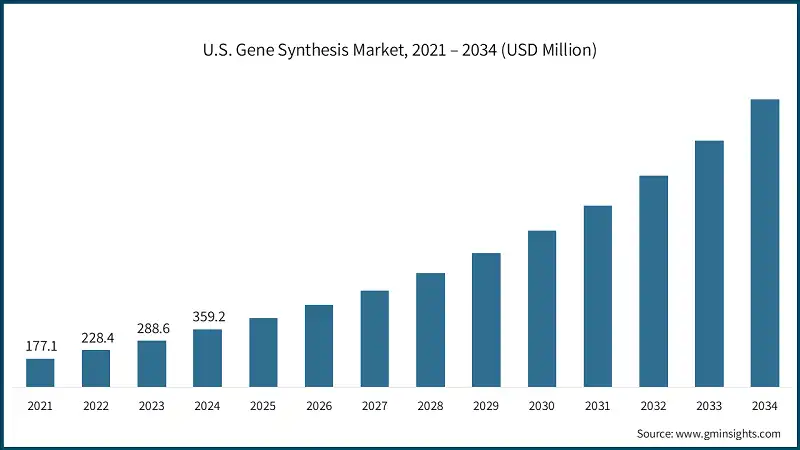
The U.S. gene synthesis market was valued at USD 177.1 million and USD 228.4 million in 2021 and 2022, respectively. In 2024, the market size grew to USD 359.2 million from USD 288.6 million in 2023.
- The U.S. accounted for a substantial portion of North America’s dominance in the market, driven by its advanced biotechnology ecosystem, extensive R&D capabilities, and supportive regulatory environment. The country hosts numerous leading gene synthesis providers, including Thermo Fisher Scientific, GenScript, Twist Bioscience, and Integrated DNA Technologies (IDT), which offer cutting-edge solutions in custom DNA synthesis and gene cloning.
- Strong government initiatives, such as funding from the National Institutes of Health (NIH) and the Department of Energy, have accelerated genomics and synthetic biology research, fostering adoption of synthetic gene technologies.
- Technological innovation is a significant driver in the U.S., with developments in automated DNA synthesis, enzymatic synthesis methods, error-correction systems, and AI-based design tools improving efficiency, accuracy, and cost-effectiveness.
- The rising prevalence of genetic disorders and the expanding focus on personalized medicine further fuel demand for synthetic genes in therapeutic development, diagnostics, and vaccine design.
Europe Gene Synthesis Market
Europe market accounted for USD 271 million in 2024 and is anticipated to show lucrative growth over the forecast period.
- The European market is witnessing significant growth, driven primarily by increasing investments in genomics research, synthetic biology, and personalized medicine. Governments across key European countries are providing substantial funding for genomic research initiatives and biotechnological innovation, enabling academic institutions and biotechnology companies to accelerate gene synthesis projects.
- The rising prevalence of genetic disorders and chronic diseases in the region is further fueling the demand for advanced gene-based diagnostics, therapeutics, and targeted interventions.
- Technological advancements are also contributing to market expansion. Automation in DNA synthesis, high-throughput synthesis platforms, and cloud-based bioinformatics tools have improved accuracy, reduced costs, and enhanced efficiency, making gene synthesis services more accessible to research laboratories and pharmaceutical firms.
- The adoption of gene therapy and RNA-based therapeutics has further increased reliance on synthetic genes, boosting market demand.
Germany dominates the European gene synthesis market, showcasing strong growth potential.
- Germany represents a leading hub for gene synthesis in Europe, driven by its robust biotechnology and pharmaceutical sectors. The country’s strong emphasis on research and development in genomics, synthetic biology, and molecular medicine supports the widespread adoption of advanced gene synthesis technologies.
- Government initiatives and funding programs targeting genetic research and precision medicine are instrumental in accelerating innovation, enabling both academic and industrial research institutions to expand gene synthesis projects.
Asia Pacific Gene Synthesis Market
The Asia Pacific market is anticipated to grow at the highest CAGR of 18.2% during the analysis timeframe.
- The Asia Pacific market is experiencing rapid growth, driven primarily by increasing investments in biotechnology, genomics research, and synthetic biology across the region.
- Rising government funding in countries such as China, India, Japan, and South Korea for genetic research, personalized medicine, and biopharmaceutical development is fueling demand for advanced gene synthesis solutions. The presence of a large pool of skilled researchers and expanding academic and research institutions is further supporting adoption of DNA synthesis technologies.
- The growing prevalence of genetic disorders and chronic diseases is driving the development of targeted therapies, increasing the utilization of synthetic genes.
China gene synthesis market is estimated to grow with a significant CAGR in the Asia Pacific market.
- China’s market is poised for rapid expansion, driven by significant government support, increasing R&D investments, and the country’s strategic focus on becoming a global hub for biotechnology and synthetic biology. National initiatives such as the made in China 2025 plan and large-scale genomics projects have accelerated funding for gene synthesis, personalized medicine, and genomic research, supporting both academic institutions and biopharmaceutical companies.
- Furthermore, China’s growing biotech ecosystem, supported by a skilled workforce and expanding laboratory infrastructure, facilitates increased research output and commercialization of gene-based solutions.
Latin American Gene Synthesis Market
Brazil leads the Latin American market, exhibiting remarkable growth during the analysis period.
- Brazil leads the Latin American market due to increasing investment in biotechnology, genomics research, and personalized medicine. The country has seen significant growth in academic and government-funded initiatives focused on molecular biology, synthetic biology, and precision medicine, which directly drive demand for synthetic genes and associated services.
- Rapid advancements in laboratory infrastructure, high-throughput DNA synthesis platforms, and automation technologies have improved research efficiency, enabling institutions and private biotech companies to undertake complex genetic studies at reduced costs and turnaround times.
- The prevalence of genetic disorders and infectious diseases in Brazil has further fueled the adoption of gene synthesis for diagnostics, vaccine development, and therapeutic research.
- Additionally, rising private-sector investment from pharmaceutical and biotech companies has strengthened the market, with firms increasingly outsourcing gene synthesis services to specialized providers to accelerate drug discovery and biomarker research.
Middle East and Africa Gene Synthesis Market
Saudi Arabia market to experience substantial growth in the Middle East and Africa market in 2024.
- Saudi Arabia’s market is witnessing strong growth, fueled by the government’s Vision 2030 initiative, which emphasizes biotechnology, healthcare innovation, and scientific research.
- Substantial investments in genomic medicine, personalized therapeutics, and molecular diagnostics have created high demand for synthetic genes and advanced DNA synthesis technologies.
- The establishment of state-of-the-art research centers, biotech incubators, and genomics laboratories has improved the country’s research capabilities, enabling local institutions and private firms to engage in complex gene synthesis projects.
- The rising prevalence of genetic disorders, chronic diseases, and rare conditions has increased the need for precision diagnostics, gene therapies, and vaccine development, all of which rely on synthetic gene solutions.
- Moreover, partnerships between Saudi research institutions and international biotechnology companies facilitate technology transfer, access to high-quality gene synthesis services, and adoption of cutting-edge innovations.
Gene Synthesis Market Share
The market is highly competitive, with leading biotechnology and life sciences companies focusing on technological innovation, advanced synthesis platforms, and strategic collaborations to strengthen their market positions. Rising demand for synthetic biology applications, growing investments in genomics research, and increasing adoption of personalized medicine and gene therapies are driving companies to leverage R&D, automation, and next-generation sequencing integration to enhance synthesis accuracy and efficiency. Expanding applications in pharmaceuticals, industrial biotechnology, and academic research also encourage players to develop cost-effective, scalable, and customizable gene synthesis solutions while expanding their presence in emerging markets.
Key players include GenScript, Thermo Fisher Scientific, Twist Bioscience Corporation, Integrated DNA Technologies (IDT) (Danaher), and Eurofins Genomics, collectively accounting for 47.1% of the global market. These companies maintain leadership through extensive product portfolios, high-throughput synthesis capabilities, global distribution networks, and continuous advancements in custom gene synthesis, DNA library construction, and cloning services. Their dominance is further reinforced by strategic collaborations with academic institutions, pharmaceutical firms, and research organizations to enhance accessibility and adoption of advanced gene synthesis services.
Smaller and niche players are also gaining traction by focusing on specialized, high-precision, and cost-efficient synthesis services tailored to specific research or therapeutic applications. Competitive differentiation is increasingly defined by the ability to deliver highly accurate, scalable, and innovative solutions that meet evolving scientific demands. As the market evolves, competition is expected to intensify, with both established leaders and emerging firms pursuing continuous innovation, automation, and strategic partnerships to capture greater market share.
Gene Synthesis Market Companies
A few of the prominent players operating in the gene synthesis industry include:
- Azenta, Inc. (GENEWIZ)
- Bio Basic Inc.
- BIOMATIK
- BIONEER CORPORATION
- Eurofins Scientific SE
- Gene Universal Inc.
- GenScript
- Integrated DNA Technologies, Inc.
- Macrogen, Inc.
- OriGene Technologies, Inc.
- ProMab Biotechnologies, Inc.
- ProteoGenix
- Synbio Technologies
- Thermo Fisher Scientific Inc.
- Twist Bioscience Corporation
- GenScript
GenScript leads the gene synthesis market with a share of 14.6% in 2024. The company offers highly customizable gene synthesis services with rapid turnaround, high-fidelity DNA assembly, comprehensive cloning and expression solutions, global logistics support, and continuous innovation in synthetic biology, enabling researchers to accelerate drug discovery, vaccine development, and molecular biology research efficiently.
Thermo Fisher Scientific combines a broad product portfolio, automated high-throughput gene synthesis platforms, integrated bioinformatics, and global distribution networks, providing scalable, precise, and reliable DNA synthesis solutions for academic, pharmaceutical, and industrial biotechnology applications.
Gene Synthesis Market Report Attributes
| Key Takeaway | Details |
|---|---|
| Market Size & Growth | |
| Base Year | 2024 |
| Market Size in 2024 | USD 951.9 Million |
| Market Size in 2025 | USD 1.1 Billion |
| Forecast Period 2025 – 2034 CAGR | 16.9% |
| Market Size in 2034 | USD 4.6 Billion |
| Key Market Trends | |
| Drivers | Impact |
| Rapid advancements in DNA synthesis technology | Enhance synthesis accuracy, reduce turnaround time and costs, enabling large-scale research, industrial applications, and faster genetic innovation. |
| Growing investments in gene synthesis projects and synthetic biology R&D | Accelerate technological breakthroughs, foster collaboration between academia and industry, and expand commercial availability of custom gene synthesis services. |
| Increased prevalence of genetic disorders and chronic disease | Drives demand for gene-based diagnostics and therapeutics, encouraging innovation in personalized medicine and gene-targeted treatment development. |
| Rising adoption of gene therapy | Boosts utilization of synthetic genes for precise therapeutic applications, supporting market growth in biopharmaceutical development and regenerative medicine. |
| Pitfalls & Challenges | Impact |
| Lack of skilled professionals | Slows adoption of advanced synthesis technologies and limits research scalability, impacting production efficiency and innovation pace. |
| Complex gene synthesis techniques and high process cost | Restrict accessibility for smaller research organizations, reducing market penetration and adoption in developing regions. |
| Opportunities: | Impact |
| Expansion of CRISPR-based gene editing applications | Will revolutionize precision medicine and agricultural biotechnology, driving demand for customized, high-quality synthetic genes. |
| RNA-based vaccines and therapeutics development | Expected to create new avenues for rapid vaccine design and RNA drug development, significantly boosting market growth and innovation. |
| Market Leaders (2024) | |
| Market Leaders |
14.6% |
| Top Players |
Collective market share in 2024 is 47.1% |
| Competitive Edge |
|
| Regional Insights | |
| Largest Market | North America |
| Fastest growing market | Asia Pacific |
| Emerging countries | India, China, Brazil, Mexico, South Africa |
| Future outlook |
|
What are the growth opportunities in this market?
Gene Synthesis Industry News:
- In May 2025, Azenta, Inc. announced a partnership between GENEWIZ and Form Bio to advance AAV gene therapy development through integrated sequencing and AI-powered data analysis. The collaboration combined next-generation sequencing with machine learning for deeper insights into AAV capsid composition.
- In May 2023, GenScript Biotech Corporation announced the launch of its GenTitan Gene Fragments Synthesis service, a breakthrough solution designed to accelerate gene synthesis at reduced costs. The service enabled researchers to obtain high-quality gene fragments quickly and efficiently for various molecular applications.
- In July 2022, Azenta, Inc. announced the opening of its new China headquarters in Suzhou, serving as the central hub for its Asia-Pacific operations. The facility, spanning over 200,000 square feet, consolidated multiple sites and expanded the company’s laboratory capacity.
The gene synthesis market research report includes an in-depth coverage of the industry with estimates and forecast in terms of revenue in USD Million from 2021 – 2034 for the following segments:
Market, By Method
- Solid-phase synthesis
- PCR-based enzyme synthesis
- Chip-based synthesis
Market, By Services
- Antibody DNA synthesis
- Viral DNA synthesis
- Other services
Market, By Application
- Gene and cell therapy development
- Disease diagnosis
- Vaccine development
- Other applications
Market, By Complexity
- Standard gene synthesis
- Complex gene synthesis
Market, By End Use
- Biopharmaceutical companies
- Academic and research institutes
- Contract research organizations
The above information is provided for the following regions and countries:
- North America
- U.S.
- Canada
- Europe
- Germany
- UK
- France
- Spain
- Italy
- Netherlands
- Asia Pacific
- China
- Japan
- India
- Australia
- South Korea
- Latin America
- Brazil
- Mexico
- Argentina
- Middle East and Africa
- South Africa
- Saudi Arabia
- UAE
Frequently Asked Question(FAQ) :
What was the market size of the gene synthesis market in 2024?
The market size was valued at USD 951.9 million in 2024, with a CAGR of 16.9% expected through 2034, driven by advancements in DNA synthesis technologies, increased genomic research funding, and the expansion of personalized medicine biomarkers.
What is the projected value of the gene synthesis market by 2034?
The market is expected to reach USD 4.6 billion by 2034, fueled by innovations in enzymatic DNA synthesis, integration of AI, and growing applications in pharmaceutical and biotechnology industries.
What is the projected size of the gene synthesis market in 2025?
The market is expected to reach USD 1.1 billion in 2025.
How much revenue did the solid-phase synthesis segment generate?
The solid-phase synthesis segment leading the market with a 58.6% share due to its high accuracy, scalability, and efficiency for long DNA sequences.
What was the valuation of the antibody DNA synthesis segment?
The antibody DNA synthesis segment held a 46.4% market share in 2024.
Which region leads the gene synthesis market?
North America dominated the market with a 40.3% share in 2024. The region's leadership is attributed to strong research infrastructure and significant investments in biotechnology and genomics.
What are the upcoming trends in the gene synthesis industry?
Key trends include the adoption of enzymatic DNA synthesis, integration of AI and cloud-based bioinformatics tools, and advancements in automation and next-generation sequencing (NGS) technologies.
Who are the key players in the gene synthesis market?
Prominent players include Azenta, Inc. (GENEWIZ), Bio Basic Inc., BIOMATIK, BIONEER CORPORATION, Eurofins Scientific SE, Gene Universal Inc., GenScript, Integrated DNA Technologies, Inc., Macrogen, Inc., OriGene Technologies, Inc., and ProMab Biotechnologies, Inc.
Gene Synthesis Market Scope
Related Reports