Summary
Table of Content

Food Antimicrobials Market
Get a free sample of this report
Form submitted successfully!
Error submitting form. Please try again.
Thank you!
Your inquiry has been received. Our team will reach out to you with the required details via email. To ensure that you don't miss their response, kindly remember to check your spam folder as well!
Request Sectional Data
Thank you!
Your inquiry has been received. Our team will reach out to you with the required details via email. To ensure that you don't miss their response, kindly remember to check your spam folder as well!
Form submitted successfully!
Error submitting form. Please try again.
Food Antimicrobials Market Size
The market is experiencing robust growth driven by increasing demand for food safety, extended shelf life, and natural preservation solutions across the global food processing industry. Food antimicrobials, encompassing both natural and synthetic substances, are gaining prominence due to their ability to inhibit harmful microorganisms, prevent foodborne illnesses, and maintain product quality throughout the supply chain. The market trends indicate a significant shift toward natural and clean-label antimicrobial solutions, with consumers and manufacturers increasingly prioritizing health-conscious and environmentally responsible ingredients.
Food Antimicrobials Market Key Takeaways
Market Size & Growth
- 2025 Market Size: USD 3 Billion
- 2026 Market Size: USD 3.2 Billion
- 2035 Forecast Market Size: USD 5.2 Billion
- CAGR (2026–2035): 5.4%
Regional Dominance
- Largest Market: Europe
- Fastest Growing Region: Asia Pacific
Key Market Drivers
- Growing demand for natural preservatives in food processing.
- Rising incidences of foodborne illnesses globally.
- Expansion of ready-to-eat and processed food markets.
Challenges
- High production costs of natural food antimicrobial additives.
- Limited shelf life of some antimicrobial agents.
Opportunity
- Technological innovations in antimicrobial packaging.
- Expansion in emerging markets.
Key Players
- Market Leader: Corbion led with over 7.2% market share in 2025.
- Leading Players: Top 5 players in this market include Corbion, DSM-Firmenich, Kerry Group, International Flavors & Fragrances, Kalsec, which collectively held a market share of 45.5% in 2025.
Get Market Insights & Growth OpportunitiesIn the meat and poultry sector, food antimicrobials play a critical role due to the high susceptibility of these products to microbial contamination. Antimicrobial additives are essential for preventing the growth of harmful bacteria such as Salmonella, Listeria, and E. coli, ensuring compliance with stringent food safety regulations while extending shelf life. The growing demand for ready-to-eat and processed meat products has further amplified the need for effective antimicrobial solutions that maintain product integrity without compromising taste or texture.
The versatility of food antimicrobials extends beyond meat applications into bakery and confectionery, dairy and frozen desserts, beverages, and snacks. In bakery products, antimicrobials prevent mold growth and extend freshness, while in dairy applications, they maintain product safety and quality during storage and distribution. The beverages segment benefits from antimicrobials' ability to prevent spoilage without affecting flavor profiles. Emerging applications in functional foods, organic products, and plant-based alternatives showcase the material's adaptability. The natural antimicrobial properties derived from plant extracts, essential oils, and fermentation-based preservatives make them particularly suitable for clean-label products, while synthetic options continue to provide cost-effective and reliable preservation for conventional food processing.
The global food antimicrobials market was valued at USD 3 billion in 2025. The market is expected to grow from USD 3.2 billion in 2026 to USD 5.2 billion in 2035, at a CAGR of 5.4% according to latest report published by Global Market Insights Inc.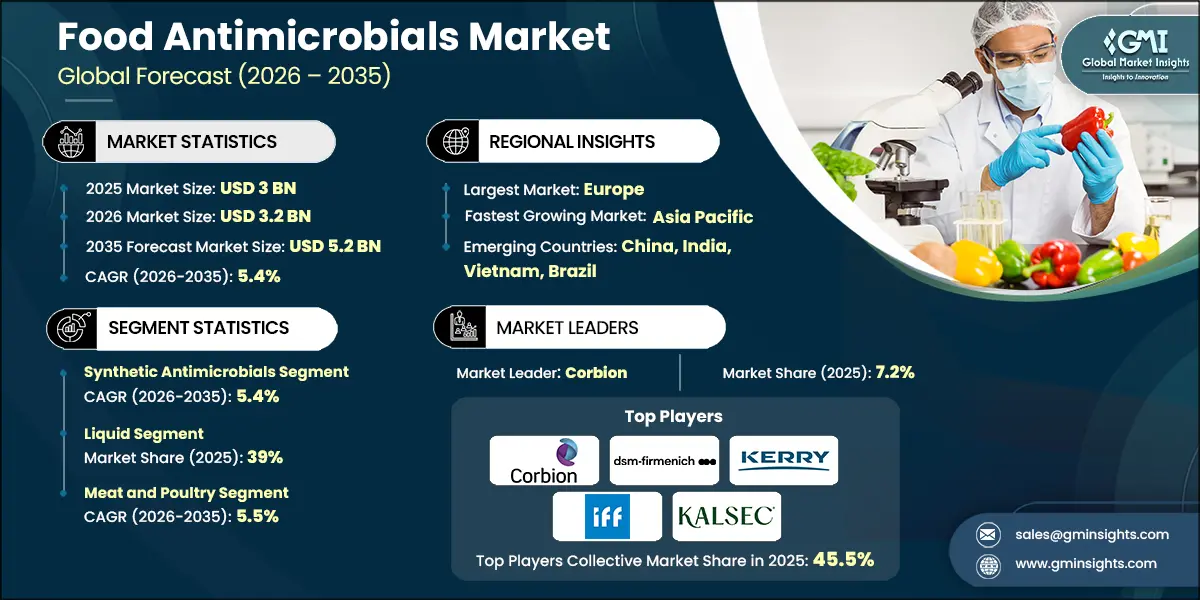
To get key market trends
Food Antimicrobials Market Trends
The food antimicrobials industry is evolving rapidly, shaped by several transformative trends that reflect the industry's commitment to food safety and natural preservation solutions. The most significant development is the accelerating shift toward natural and plant-based antimicrobial agents, driven by consumer demand for clean-label products and transparency in food ingredients. Companies are investing heavily in research to identify and commercialize novel natural preservatives derived from herbs, spices, essential oils, and fermentation processes. Plant extracts such as rosemary, oregano, thyme, and green tea are gaining prominence for their antimicrobial properties, while bacteriocins from lactic acid bacteria and other fermentation-based preservatives offer effective alternatives to synthetic additives.
Regulatory frameworks and food safety standards are playing an increasingly important role in shaping market dynamics. Organizations such as the U.S. Food and Drug Administration (FDA), European Food Safety Authority (EFSA), and Codex Alimentarius Commission establish guidelines for antimicrobial use in food products, ensuring consumer safety while enabling innovation. Stricter regulations on foodborne pathogens, mandatory HACCP (Hazard Analysis and Critical Control Points) implementation, and enhanced traceability requirements are driving food manufacturers to adopt advanced antimicrobial solutions. These frameworks create competitive advantages for companies with robust safety documentation and regulatory expertise while raising barriers for less compliant producers.
Product innovation remains a cornerstone of market development as manufacturers explore new antimicrobial sources and delivery systems. Antimicrobial packaging technologies, including active packaging films incorporating antimicrobial agents and intelligent packaging systems that monitor food freshness, represent a significant innovation frontier. Encapsulation technologies that protect antimicrobial agents and enable controlled release are improving efficacy and extending shelf life. Combination approaches using multiple antimicrobial agents (hurdle technology) are being developed to enhance effectiveness against diverse microbial populations. Nanotechnology applications, including nano-encapsulated antimicrobials and antimicrobial nanoparticles, are emerging as next-generation solutions offering improved stability, targeted delivery, and enhanced antimicrobial activity. The development of antimicrobial coatings for fresh produce, meat products, and seafood is creating new application opportunities beyond traditional food additives.
Food Antimicrobials Market Analysis
Learn more about the key segments shaping this market
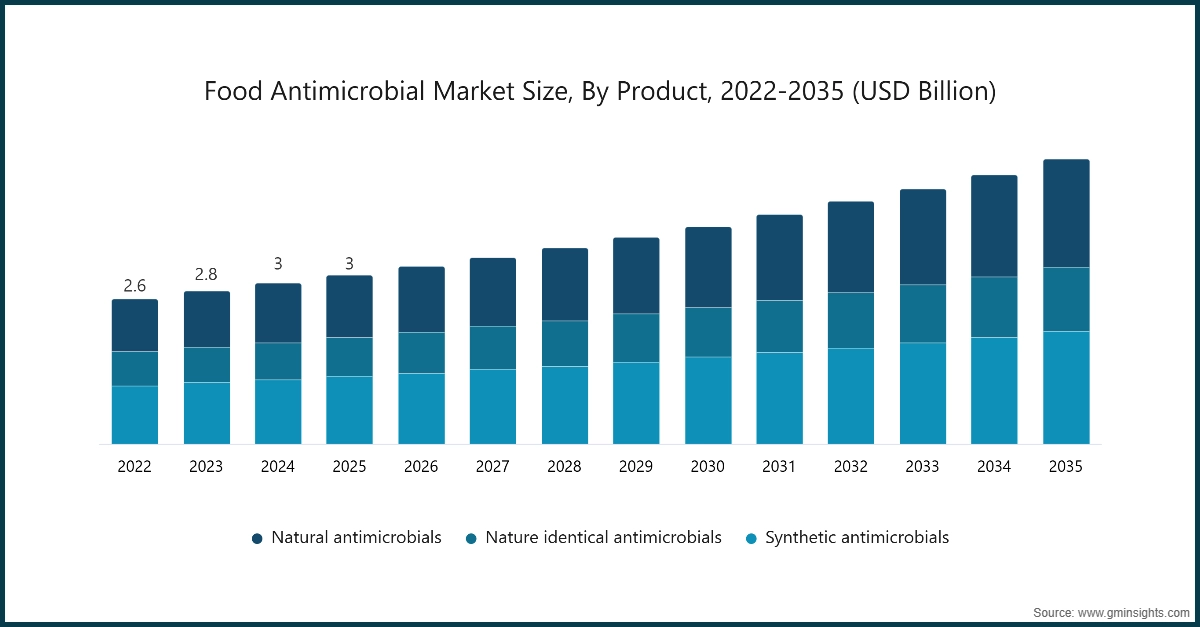
Based on type, the food antimicrobials market is segmented into natural antimicrobials, nature identical antimicrobials, and synthetic antimicrobials. Synthetic antimicrobials dominated the market with an approximate market share of 39.7% in 2025 and is expected to grow with a CAGR of 5.4% by 2035.
Synthetic antimicrobials, encompassing chemically synthesized compounds such as sodium benzoate, potassium sorbate, sodium nitrite, and sulfites, held 39.7% of the market in 2025 with a valuation of USD 1.2 billion. These antimicrobials remain essential in the food industry due to their cost-effectiveness, proven efficacy, consistent performance, and extensive regulatory approval across global markets. Synthetic antimicrobials offer predictable antimicrobial activity, long shelf life, and minimal sensory impact at effective concentrations, making them particularly suitable for mass-market processed foods, beverages, and products requiring extended shelf life.
Despite growing consumer preference for natural alternatives, synthetic antimicrobials continue to dominate in applications where cost, efficacy, and stability are paramount considerations. The segment is expected to reach USD 2 billion by 2035, maintaining a 39.4% market share, as synthetic options remain indispensable for many food processing applications, particularly in developing markets where price sensitivity is high. Manufacturers are focusing on optimizing synthetic antimicrobial formulations, reducing usage levels through synergistic combinations, and improving consumer perception through transparent communication about safety and regulatory approval.
Natural antimicrobials, derived from plant extracts, essential oils, organic acids, and fermentation processes, represent the fastest-growing segment with 37% market share in 2025 and expected to grow at a CAGR of 5.7% to reach USD 1.96 billion by 2035. These antimicrobials include plant-based compounds such as rosemary extract, oregano oil, thyme, cinnamon, and green tea polyphenols, which demonstrate broad-spectrum antimicrobial activity against bacteria, yeasts, and molds. Organic acids like citric acid, lactic acid, and acetic acid, naturally occurring in various foods, provide effective preservation while maintaining clean-label status. Fermentation-based antimicrobials, including bacteriocins like nisin and natamycin, offer targeted antimicrobial action with minimal impact on sensory properties.
The natural antimicrobials segment is experiencing robust growth driven by the global clean-label movement, with consumers actively seeking products with recognizable, natural ingredients. Food manufacturers are reformulating products to replace synthetic preservatives with natural alternatives, responding to consumer demands and differentiating their brands in competitive markets. The segment benefits from ongoing research identifying new antimicrobial compounds from diverse natural sources, including marine organisms, mushrooms, and agricultural byproducts. However, challenges include higher costs, potential sensory impacts, variable efficacy across different food matrices, and the need for higher concentrations compared to synthetic alternatives.
Nature-identical antimicrobials, representing 23.3% market share in 2025 with USD 710 million, occupy a unique position bridging natural and synthetic segments. These compounds are chemically identical to naturally occurring antimicrobials but are produced through synthetic processes, offering the benefits of natural antimicrobials (clean-label appeal, consumer acceptance) with the advantages of synthetic production (consistency, scalability, cost-effectiveness). Nature-identical compounds include synthetically produced organic acids, nature-identical flavoring substances with antimicrobial properties, and chemically synthesized versions of plant-derived antimicrobials. This segment is gaining steady acceptance, projected to reach USD 1.2 billion by 2035 at a CAGR of 5%, as it provides a pragmatic solution for manufacturers seeking to balance clean-label positioning with economic viability and performance requirements.
Based on form, the market is segmented into liquid, powder, and others. Liquid antimicrobials dominated the market with an approximate market share of 39% in 2025 and is expected to grow with a CAGR of 5.6% by 2035.
Liquid antimicrobials, valued at USD 1.2 billion in 2025, represent the largest form segment due to their ease of application, uniform distribution, and compatibility with liquid and semi-liquid food products. Liquid formulations are particularly popular in beverages, sauces, dressings, marinades, dairy products, and liquid food processing applications where homogeneous mixing is essential for consistent antimicrobial activity throughout the product. The high solubility and dispersibility of liquid antimicrobials enable precise dosing and thorough integration into food matrices, ensuring effective preservation without localized concentration variations.
Liquid antimicrobials offer several processing advantages, including compatibility with automated dosing systems, ease of handling in industrial food processing environments, and rapid dissolution without additional processing steps. The segment encompasses various liquid formulations including aqueous solutions, emulsions, suspensions, and encapsulated liquid systems designed for specific food applications. Natural liquid antimicrobials such as essential oils, plant extracts in liquid carriers, and fermentation-derived liquid preservatives are experiencing particularly strong growth within this segment, driven by clean-label trends. The liquid segment is projected to reach USD 2 billion by 2035, maintaining approximately 39.6% market share, supported by expanding beverage markets, growth in liquid food products, and innovations in liquid antimicrobial delivery systems.
Powder antimicrobials, representing 36.1% market share in 2025 with USD 1.1 billion, constitute an important segment particularly suited for dry and packaged food applications. Powder formulations offer advantages including extended shelf life, stability during storage, ease of transportation, and compatibility with dry mixing processes in food manufacturing. Powdered antimicrobials are widely used in bakery products, dry snacks, seasoning blends, powdered beverages, and applications where moisture addition is undesirable. The segment includes spray-dried natural extracts, encapsulated antimicrobial powders, and conventional synthetic antimicrobials in powder form.
Powder antimicrobials provide manufacturers with flexibility in formulation, allowing incorporation during dry mixing stages without affecting product moisture content or texture. Encapsulation technologies are particularly important in this segment, protecting sensitive antimicrobial compounds from degradation, masking undesirable flavors or odors, and enabling controlled release during product storage or consumption. The powder segment is expected to grow to USD 1.8 billion by 2035 at a CAGR of 5.3%, driven by expanding snack food markets, growth in dry food products, and innovations in powder encapsulation and delivery technologies.
Others form segment, including gel-based antimicrobials, paste formulations, and specialized delivery systems, accounted for 24.6% market share in 2025. This segment encompasses innovative antimicrobial formats designed for specific applications, including antimicrobial coatings for fresh produce and meat products, gel-based systems for surface application, and paste formulations for incorporation into semi-solid foods. The segment is projected to reach USD 1.26 billion by 2035 at a CAGR of 5.3%, supported by innovations in antimicrobial packaging, development of novel delivery systems, and expanding applications in fresh and minimally processed foods.
Learn more about the key segments shaping this market
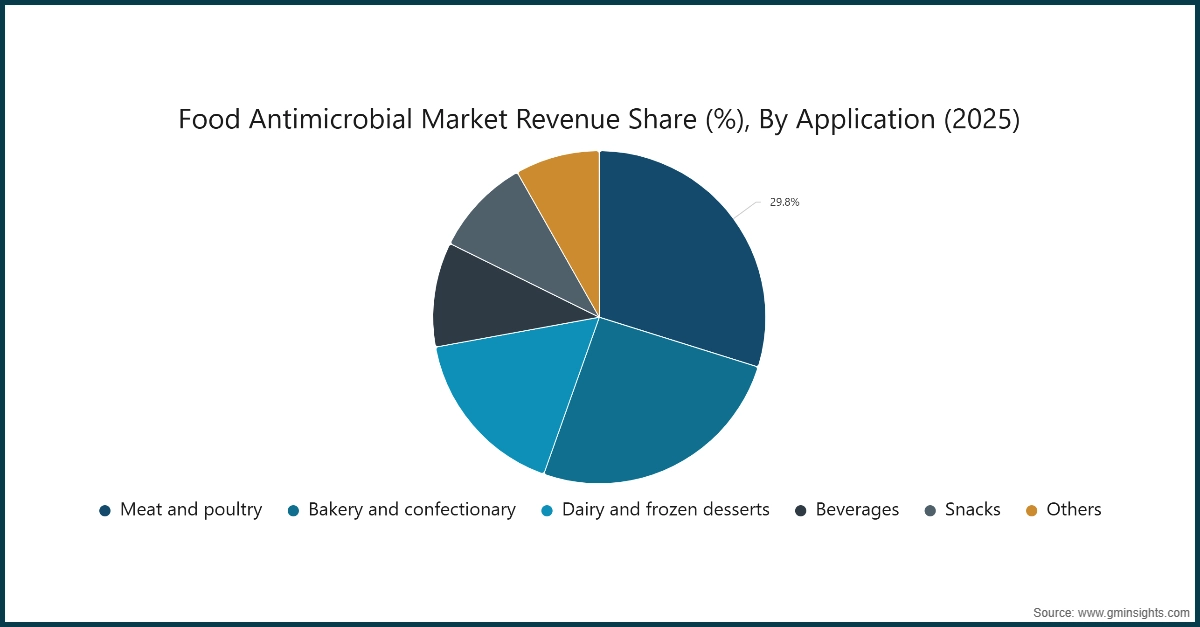
Based on application, the food antimicrobials market is segmented into meat and poultry, bakery and confectionery, dairy and frozen desserts, beverages, snacks, and others. Meat and poultry dominated the market with an approximate market share of 29.8% in 2025 and is expected to grow with a CAGR of 5.5% by 2035.
Meat and poultry represent the largest and most critical application segment for food antimicrobials, valued at USD 910 million in 2025, driven by the high susceptibility of these products to microbial contamination and stringent food safety requirements. These products are particularly prone to pathogenic bacteria including Salmonella, Listeria monocytogenes, Campylobacter, and E. coli, making antimicrobial interventions essential for consumer safety and regulatory compliance. Antimicrobial additives in meat and poultry applications serve multiple functions: inhibiting pathogen growth, extending shelf life, maintaining color and appearance, and reducing spoilage during processing, distribution, and retail display.
The segment encompasses diverse applications including fresh meat and poultry, processed meat products (sausages, deli meats, bacon), ready-to-eat meat products, marinated products, and ground meat. Common antimicrobials used include organic acids (lactic acid, acetic acid), lactates, diacetates, natural plant extracts, and bacteriocins like nisin. The growing demand for ready-to-eat and convenience meat products, particularly in urban markets and among working populations, has significantly increased antimicrobial usage in this segment. The meat and poultry segment is projected to reach USD 1.6 billion by 2035, driven by expanding meat consumption in developing markets, growth in processed and ready-to-eat meat products, stricter food safety regulations, and consumer demand for extended shelf life without compromising quality.
Bakery and confectionery applications, representing 25.6% market share in 2025, constitute the second-largest segment due to the susceptibility of these products to mold growth, yeast spoilage, and bacterial contamination. Antimicrobials in bakery products prevent mold and rope formation, extend shelf life, and maintain product freshness and quality during distribution and retail. Common antimicrobials include calcium propionate, sorbic acid, acetic acid, and natural mold inhibitors derived from cultured wheat, vinegar, and plant extracts.
The bakery segment encompasses bread, cakes, pastries, cookies, and confectionery products, each with specific antimicrobial requirements based on water activity, pH, and storage conditions. The growing trend toward clean-label bakery products is driving demand for natural antimicrobials such as cultured wheat flour, vinegar, and fermentation-based preservatives that can be labeled as natural ingredients. The segment is expected to reach USD 1.4 billion by 2035 at a CAGR of 5.7%, supported by expanding packaged bakery markets, growth in artisan and premium bakery products, increasing demand for extended shelf life, and innovations in natural mold inhibitors.
Dairy and frozen desserts applications, valued at USD 510 million in 2025, represent an important segment where antimicrobials maintain product safety, prevent spoilage, and extend shelf life. Dairy products including milk, cheese, yogurt, and frozen desserts are susceptible to various spoilage organisms and pathogens, requiring effective antimicrobial interventions. Common antimicrobials include nisin for cheese applications, sorbates for yogurt and cultured products, and natural antimicrobials for clean-label dairy products. The segment is projected to grow to USD 880 million by 2035 at a CAGR of 5.7%, driven by expanding dairy consumption in emerging markets, growth in premium and functional dairy products, and increasing demand for natural preservation solutions.
Beverages applications, accounting for 10.2% market share in 2025 with USD 310 million, utilize antimicrobials to prevent microbial spoilage, maintain product stability, and ensure safety throughout shelf life. Antimicrobials in beverages must be effective at low pH levels typical of many drinks while having minimal impact on flavor, color, and clarity. Common antimicrobials include benzoates, sorbates, and natural preservatives such as citrus extracts and fermentation-derived compounds. The segment is expected to reach USD 400 million by 2035 at a CAGR of 5.0%, supported by expanding non-alcoholic beverage markets, growth in functional beverages, and consumer preference for preservative-free or naturally preserved products.
Others applications, including sauces, condiments, seafood, prepared meals, and emerging food categories, accounted for 8.2% market share in 2025.
Looking for region specific data?
The North America food antimicrobials market is growing steadily on the global level with a market share of 29.8% in 2025.
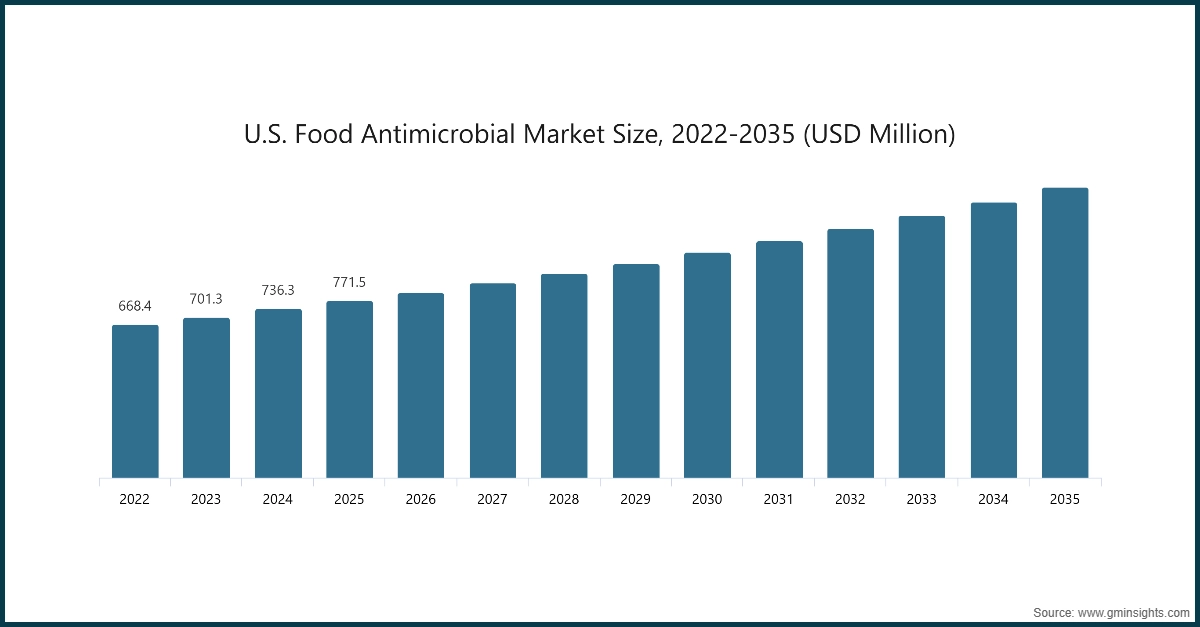
The United States represents the dominant market within North America, accounting for approximately 84.8% of the regional market in 2025, projected to reach USD 1.3 billion by 2035 at a CAGR of 5.1%. The U.S. market is characterized by stringent food safety regulations enforced by the FDA, strong consumer awareness about foodborne illnesses, and increasing demand for clean-label and natural preservatives. The country's advanced food processing sector, encompassing meat processing, bakery, dairy, and beverage industries, creates diverse demand for both natural and synthetic antimicrobial solutions.
North America is witnessing robust demand for food antimicrobials driven by strict regulatory frameworks including FSMA (Food Safety Modernization Act), HACCP requirements, and pathogen reduction standards for meat and poultry. The region's focus on preventing foodborne illness outbreaks, reducing food waste, and extending shelf life is encouraging manufacturers to adopt advanced antimicrobial technologies. Growing consumer preference for natural and organic foods is driving significant investment in natural antimicrobial development, with major food companies reformulating products to replace synthetic preservatives. The region's strong research infrastructure, including universities and private research facilities, supports innovation in antimicrobial technologies and application development.
Europe food antimicrobials market leads the industry with revenue of USD 970 million in 2025 and is anticipated to show lucrative growth over the forecast period.
Europe has established itself as a global leader in food safety standards and clean-label food products, driven by comprehensive EU regulations on food additives, stringent safety assessments by EFSA, and strong consumer demand for natural ingredients. The EU's regulatory framework, including regulations on food additives (EC 1333/2008) and novel foods, establishes clear guidelines for antimicrobial use while encouraging innovation in natural preservation technologies. Consumer demand for organic, clean-label products is particularly strong in Germany, France, UK, Netherlands, and Scandinavian countries, driving food manufacturers to prioritize natural antimicrobial solutions.
Europe's advanced food processing industry, encompassing meat products, dairy, bakery, and specialty foods, creates substantial demand for antimicrobials that meet both efficacy and clean-label requirements. The region's focus on reducing food waste, extending shelf life of fresh products, and maintaining cold chain integrity supports antimicrobial adoption. European research institutions and food technology centers are driving innovations in natural antimicrobials, fermentation-based preservatives, and antimicrobial packaging systems. The market is expected to grow at a CAGR of 4.9%, with particular strength in natural and nature-identical antimicrobials as manufacturers respond to consumer preferences and regulatory encouragement of natural alternatives.
The Asia Pacific food antimicrobials market is anticipated to grow at a CAGR of 6.1% during the analysis timeframe.
Asia Pacific is emerging as the fastest-growing market for food antimicrobials, accounting for 28.5% global market share in 2025, projected to reach USD 1.6 billion by 2035. China, India, Japan, South Korea, Thailand, Vietnam, and Indonesia serve as key markets, with the region experiencing rapid expansion of food processing industries, growing middle-class populations, and increasing awareness of food safety. China leads in market size and growth potential, driven by government initiatives to improve food safety, expanding processed food consumption, and modernization of food manufacturing infrastructure.
The region's diverse food culture, including meat products, seafood, dairy, bakery, and traditional fermented foods, creates varied antimicrobial requirements and application opportunities. Rising incidences of foodborne illnesses, increasing media coverage of food safety issues, and government crackdowns on unsafe food practices are driving demand for effective antimicrobial solutions. The expanding retail sector, growth of modern trade channels, and development of cold chain infrastructure support antimicrobial adoption. Increasing exports of food products to developed markets with stringent safety requirements are encouraging Asian manufacturers to implement international-standard antimicrobial systems. The region benefits from competitive manufacturing costs, growing local production of both natural and synthetic antimicrobials, and increasing investment in food safety technologies.
Latin America food antimicrobials market accounted for 6.6% market share in 2025 and is anticipated to show steady growth over the forecast period.
Latin America is emerging as a strategic growth market driven by expanding food processing industries, growing meat production and exports, and increasing consumer awareness of food safety. Brazil and Mexico represent the largest markets, with significant meat processing, dairy, and bakery sectors requiring antimicrobial solutions. Argentina's meat industry, Chile's seafood sector, and Colombia's growing food processing capabilities contribute to regional demand. The region's abundant agricultural resources, including sources for natural antimicrobials, position it well for both production and consumption growth.
Growing urbanization, rising middle-class populations, and expanding modern retail infrastructure are driving demand for processed and packaged foods with extended shelf life. Improving regulatory frameworks, adoption of international food safety standards, and increasing export requirements are encouraging antimicrobial adoption. The region faces challenges including economic volatility, price sensitivity, and varying regulatory enforcement, but offers significant long-term growth potential as food safety infrastructure develops.
Middle East & Africa food antimicrobials market accounted for USD 100 million market size in 2025 and is anticipated to show lucrative growth over the forecast period.
The MEA region presents emerging opportunities driven by expanding food processing capabilities, growing populations, and increasing focus on food safety and quality. The GCC countries (UAE, Saudi Arabia, Qatar) demonstrate strong demand due to high food import dependence, hot climatic conditions requiring effective preservation, and growing food service sectors. South Africa represents the most developed market in Africa with established food processing industries and regulatory frameworks. Egypt, Nigeria, and Kenya are emerging markets with growing food manufacturing sectors and increasing awareness of food safety.
The region's extreme temperatures and challenging logistics infrastructure create particular need for effective antimicrobial solutions to maintain food quality during distribution. Growing tourism, expanding retail sectors, and increasing adoption of international food safety standards are driving market development. Challenges include limited local production of antimicrobials, import dependencies, economic constraints in some markets, and varying regulatory maturity. However, government initiatives to develop food security, investments in food processing infrastructure, and growing consumer expectations for safe, quality products support long-term market growth.
Food Antimicrobials Market Share
The food antimicrobials industry features a moderately fragmented competitive landscape with key players including Corbion, DSM-Firmenich, Kerry Group, International Flavors & Fragrances, and Kalsec. These companies hold strong positions due to their extensive experience in food preservation technologies, diverse product portfolios, and established relationships with food manufacturers globally.
- Corbion specializes in bio-based food ingredients with a strong focus on natural antimicrobials and fermentation-derived preservation solutions. The company offers a comprehensive portfolio including Verdad® natural antimicrobials, organic acids, lactates, and fermentation-based products for meat, bakery, dairy, and other food applications. Corbion has established its competitive edge through expertise in fermentation technology, commitment to sustainable and clean-label solutions, and strong technical support for food manufacturers. The company's integrated approach combining preservation, shelf life extension, and food safety positions it as a leader in natural antimicrobial solutions.
- Kerry Group engages in taste and nutrition solutions with a substantial portfolio of food protection and preservation technologies. The company offers natural antimicrobials, clean-label preservation systems, and customized solutions for meat, bakery, dairy, and beverage applications. Kerry's competitive advantage lies in its integrated taste and preservation expertise, extensive application knowledge across food categories, global manufacturing and technical support network, and strong innovation capabilities in clean-label solutions. The company's consumer insights and market intelligence inform product development aligned with evolving consumer preferences.
- International Flavors & Fragrances (IFF) provides comprehensive food ingredient solutions including antimicrobial and preservation technologies through its Nourish division. The company offers natural antimicrobials, fermentation-based preservatives, and integrated solutions combining flavor, nutrition, and preservation. IFF's competitive edge includes broad ingredient portfolio enabling multifunctional solutions, strong R&D and biotechnology capabilities, global reach with regional customization, and strategic acquisitions expanding preservation technology platforms. The company's focus on natural, sustainable solutions aligns with market trends toward clean-label products.
- Kalsec specializes in natural spice and herb extracts with antimicrobial properties, focusing exclusively on natural food protection solutions. The company offers proprietary natural antimicrobial extracts including rosemary, oregano, and other plant-based solutions for meat, poultry, seafood, and other applications. Kalsec's competitive advantage lies in its exclusive focus on natural solutions, vertically integrated supply chain from cultivation to extraction, proprietary extraction and formulation technologies, and strong technical expertise in natural antimicrobial applications. The company's commitment to clean-label, natural preservation positions it well in the growing natural antimicrobials segment.
Food Antimicrobials Market Companies
Major players operating in the food antimicrobials industry include:
Celanese
Corbion
DSM-Firmenich
Eastman
Galactic
International Flavors & Fragrances
Jungbunzlauer
Kalsec
Kerry Group
Mitsubishi Chemical
Novonesis
Food Antimicrobials Market Report Attributes
| Key Takeaway | Details |
|---|---|
| Market Size & Growth | |
| Base Year | 2025 |
| Market Size in 2025 | USD 3 Billion |
| Market Size in 2026 | USD 3.2 Billion |
| Forecast Period 2026-2035 CAGR | 5.4% |
| Market Size in 2035 | USD 5.2 Billion |
| Key Market Trends | |
| Drivers | Impact |
| Growing demand for natural preservatives in food processing | Consumer awareness about health and wellness drives adoption of natural antimicrobials derived from plant extracts, essential oils, and fermentation processes, replacing synthetic alternatives with clean-label options. |
| Rising incidences of foodborne illnesses globally | Increasing cases of foodborne pathogens create urgent need for effective antimicrobial solutions, driving manufacturers to implement advanced preservation technologies to ensure food safety and regulatory compliance. |
| Expansion of ready-to-eat and processed food markets | Growth in convenience food consumption, particularly in urban areas, increases demand for antimicrobials that extend shelf life while maintaining product quality and safety standards. |
| Pitfalls & Challenges | Impact |
| High production costs of natural food antimicrobial additives | Extraction, purification, and processing of natural antimicrobials involve higher costs compared to synthetic alternatives, limiting adoption in price-sensitive markets and affecting profit margins. |
| Limited shelf life of some antimicrobial agents | Certain natural antimicrobial agents demonstrate reduced stability and effectiveness over time, creating challenges for long-term food preservation and consistent product quality. |
| Opportunities: | Impact |
| Technological innovations in antimicrobial packaging | Development of active and intelligent packaging systems incorporating antimicrobial agents creates opportunities for enhanced food preservation and quality monitoring throughout the supply chain. |
| Expansion in emerging markets | Growing food processing industries in Asia Pacific, Latin America, and Middle East & Africa present significant opportunities for market expansion driven by rising food safety awareness and regulatory improvements. |
| Market Leaders (2025) | |
| Market Leader |
7.2% market share |
| Top Players |
Collective Market Share of 45.5% in 2025 |
| Competitive Edge |
|
| Regional Insights | |
| Largest Market | Europe |
| Fastest growing market | Asia Pacific |
| Emerging countries | China, India, Vietnam, Brazil |
| Future outlook |
|
What are the growth opportunities in this market?
Food Antimicrobials Industry News
• In October 2024, the U.S. FDA's Center for Veterinary Medicine reported a two percent decline in 2023 antimicrobial sales for food-producing animals compared to 2022, marking a 37 percent decrease since the 2015 peak. This trend reflects ongoing efforts to reduce antimicrobial use in animal agriculture and address antimicrobial resistance concerns.
• In July 2024, EFSA reported that climate change increased the global and European prevalence of antimicrobial-resistant Vibrio bacteria in seafood, particularly in brackish waters, posing heightened public health risks including gastroenteritis and severe infections. This development underscores the growing importance of effective antimicrobial solutions in seafood processing and the need for enhanced food safety measures.
This food antimicrobia market research report includes in-depth coverage of the industry, with estimates & forecasts in terms of revenue (USD Billion) and volume (Kilo Tons) from 2026 to 2035, for the following segments:
Market, By Type
- Natural antimicrobials
- Organic acids
- Bacteriocins
- Essential oils & active compounds
- Plant extracts & polyphenols
- Enzymes
- Chitosan & derivatives
- Antimicrobial peptides
- Microbial biopreservatives
- Others
- Nature-identical antimicrobials
- Vanillin
- Linalool
- Coumarin
- Others
- Synthetic antimicrobials
- Benzoates
- Sorbates
- Nitrites & nitrates
- Sulfites
- Propionates
- Synthetic antioxidants (BHA, BHT, TBHQ, Propyl Gallate)
- Others
Market By Form
- Liquid
- Powder
- Others
Market By Application
- Meat & poultry
- Fresh meat products
- Processed & cured meat
- Poultry products
- Ready-to-eat (RTE) meat products
- Others
- Bakery & confectionery
- Bread & baked goods
- Cakes & pastries
- Confectionery products
- Others
- Dairy & frozen desserts
- Fluid milk
- Cheese products
- Yogurt & fermented dairy
- Ice cream & frozen desserts
- Butter & cream
- Others
- Beverages
- Fruit juices & nectars
- Soft drinks & carbonated beverages
- Alcoholic beverages
- Others
- Snacks
- Savory snacks
- Roasted nuts & peanut butter
- Others
- Others
The above information is provided for the following regions and countries:
- North America
- U.S.
- Canada
- Europe
- Germany
- UK
- France
- Spain
- Italy
- Rest of Europe
- Asia Pacific
- China
- India
- Japan
- Australia
- South Korea
- Rest of Asia Pacific
- Latin America
- Brazil
- Mexico
- Argentina
- Rest of Latin America
- Middle East and Africa
- Saudi Arabia
- South Africa
- UAE
- Rest of Middle East and Africa
Frequently Asked Question(FAQ) :
What was the market size of the food antimicrobials in 2025?
The market was valued at USD 3 billion in 2025, growing at a CAGR of 5.4% till 2035. The market is driven by increasing demand for food safety, extended shelf life, and natural preservation solutions.
What is the projected value of the food antimicrobials market by 2035?
The market is expected to reach USD 5.2 billion by 2035, fueled by advancements in natural and clean-label antimicrobial solutions.
What is the expected size of the food antimicrobials industry in 2026?
The market size is projected to reach USD 3.2 billion in 2026.
What was the market share of synthetic antimicrobials in 2025?
Synthetic antimicrobials held a market share of approximately 39.7% in 2025 and is expected to grow at a CAGR of 5.4% through 2035.
What was the valuation of the liquid antimicrobials segment in 2025?
Liquid antimicrobials accounted for around 39% of the market share in 2025 and is set to expand at a CAGR of 5.6% up to 2035.
What is the growth outlook for the meat and poultry segment from 2026 to 2035?
The meat and poultry segment, which dominated the market with a 29.8% share in 2025, is anticipated to observe around 5.5% through 2035.
Which region leads the food antimicrobials sector?
North America leads the market with a 29.8% share in 2025, led by stringent regulatory frameworks, including FSMA and HACCP requirements, and a focus on reducing foodborne illnesses and food waste.
What are the upcoming trends in the food antimicrobials market?
Key trends include rising use of plant-based antimicrobials, advances in packaging and encapsulation technologies, growing adoption of nanotechnology, and development of antimicrobial coatings for food applications.
Who are the key players in the food antimicrobials industry?
Major players include Celanese, Corbion, DSM-Firmenich, Eastman, Galactic, International Flavors & Fragrances, Jungbunzlauer, Kalsec, Kerry Group, Mitsubishi Chemical, and Novonesis.
Food Antimicrobials Market Scope
Related Reports