Your inquiry has been received. Our team will reach out to you with the required details via email. To ensure that you don't miss their response, kindly remember to check your spam folder as well!
Request Sectional Data
Thank you!
Your inquiry has been received. Our team will reach out to you with the required details via email. To ensure that you don't miss their response, kindly remember to check your spam folder as well!
Form submitted successfully!
Error submitting form. Please try again.
Fish Anthelmintics Drugs Market Size
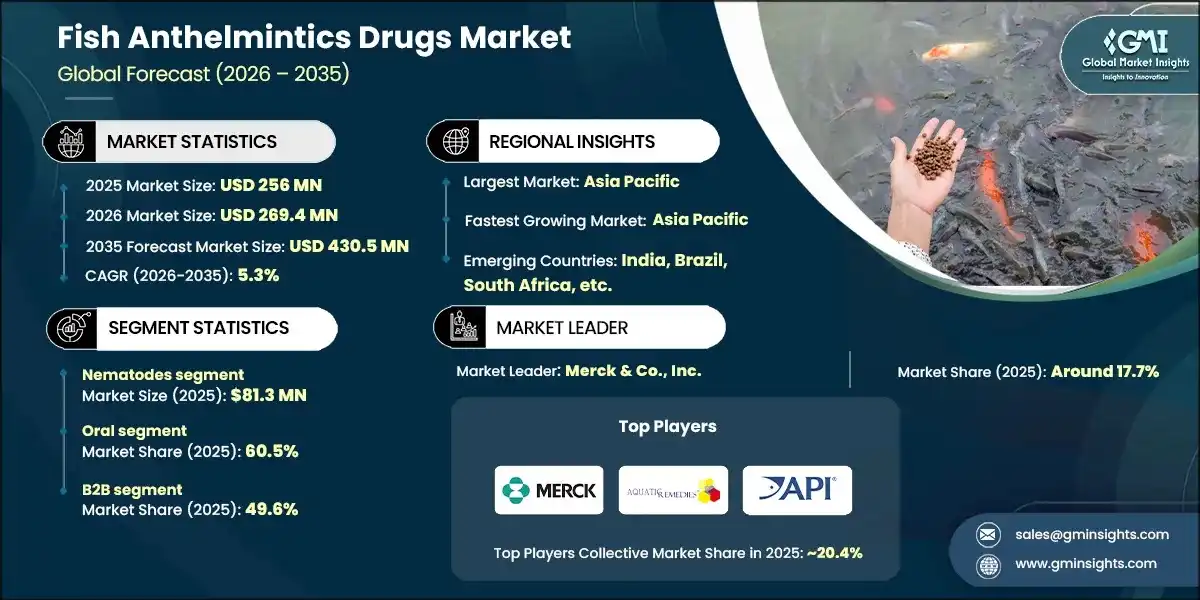
The global fish anthelmintics drugs market size was estimated at USD 256 million in 2025. The market is expected to grow from USD 269.4 million in 2026 to USD 430.5 million in 2035, at a CAGR of 5.3% during the forecast period, according to the latest report published by Global Market Insights Inc. The market is driven by numerous factors such as the rising production of aquaculture, surging prevalence of parasitic diseases, stringent food safety regulations, and development of long-acting formulations and combination therapies, among other factors.
To get key market trends
Emerging markets adopting intensive aquaculture systems and advancements in fish health management practices are among the key factors propelling the industry demand. Merck & Co., Inc., Aquatic Remedies, API, and Syndel are among the leading players operating in the market. These players mainly focus on research and development for innovation in drugs, affordability, geographic expansion, and collaboration with local or regional hatcheries, among others.
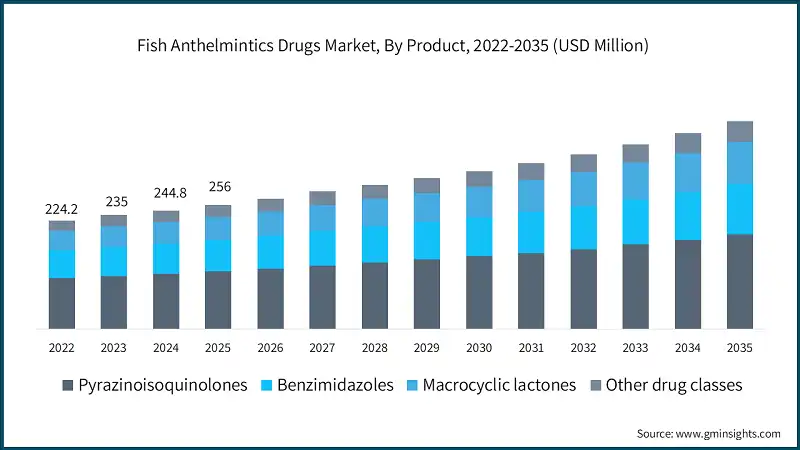
The market has increased from USD 224.2 million in 2022 and reached USD 244.8 million in 2024, with the historic growth rate of 4.5%. The increasing occurrence of parasitic infections in aquaculture species is among the key factors fueling the industry's growth. The intensive practices used in fish farming (especially when taking place in crowded environments) provide favorable conditions for parasitic worm infections (such as flukes, tapeworms, and roundworms) to develop and proliferate. The presence of these parasites has a major effect on the health of fish and leads to decreased growth rates and higher mortality rates, creating an economic burden for farmers. As a result, there is a strong demand for parasite control products in the market.
Further, the global expansion of aquaculture production is one of the major contributors to the aquaculture industry's growth. With wild fish populations declining and seafood consumption on the rise, aquaculture is now playing a vital role in providing the world with sources of protein. As production grows, so does the need for maintaining the health of the fish, which creates a larger need for anthelmintic medications. For instance, as per the data reported by the Food and Agriculture Organization of the United Nations (FAO), the global aquaculture fish production reached 100 million metric tons in 2024 from 61.8 million metric tons in 2011. Moreover, there is a growing desire among consumers for the purchase of healthy, high-quality seafood, which is further supporting this trend due to the stringent regulations of export markets and government agencies for parasites within seafood.
In addition, advances in technology also had a significant impact on drug formulation and how they are delivered. For example, medicated feeds, drugs that can dissolve in water, and combination therapies are leading to improved efficacy and less impact on the environment, making parasite control more accessible and sustainable. There are also government initiatives promoting food security and sustainable aquaculture that encourage producers to implement preventive health measures such as anthelmintics. All such factors and parameters are anticipated to fuel the industry's growth in an upward trajectory over the analysis period.
Fish anthelmintics drugs are veterinary pharmaceutical agents used to prevent and treat parasitic worm infestations in farmed and ornamental fish. These drugs target internal and external helminths such as nematodes, cestodes, and trematodes that impair fish health, growth, and survival. They are administered through medicated feed, immersion, or other controlled delivery methods to support effective parasite management in aquaculture systems.
Fish Anthelmintics Drugs Market Report Attributes
Key Takeaway
Details
Market Size & Growth
Base Year
2025
Market Size in 2025
USD 256 Million
Market Size in 2026
USD 269.4 Million
Forecast Period 2026-2035 CAGR
5.3%
Market Size in 2035
USD 430.5 Million
Key Market Trends
Drivers
Impact
Rising production of aquaculture
Increasing aquaculture volumes intensify parasite risks, boosting immediate demand for reliable anthelmintic treatments to maintain fish health, reduce losses, and ensure stable output.
Surging prevalence of parasitic diseases
Growing parasite outbreaks directly increase treatment frequency, pushing higher utilization of anthelmintics to prevent mortality, protect stock quality, and maintain farm profitability.
Development of long-acting formulations and combination therapies
Newer, more effective formulations improve treatment success, reduce dosing frequency, and strengthen farmer confidence, leading to wider and faster adoption of advanced anthelmintic products.
Stringent food safety regulations
Compliance pressures require farms to maintain parasite-free fish, driving consistent use of approved anthelmintics to meet domestic and export standards.
Pitfalls & Challenges
Impact
Strict approval processes for new veterinary drugs
Lengthy regulatory evaluations slow product availability, limiting innovation speed and reducing the number of new anthelmintic options for farmers.
Concerns regarding residual drugs in water bodies
Environmental worries over drug residues encourage cautious use, restrict excessive dosing, and prompt scrutiny of treatment methods to avoid ecological harm.
Opportunities:
Impact
Rapid aquaculture growth in emerging markets
Expanding fish farming in developing regions will significantly increase demand for accessible, effective anthelmintics, creating strong long‑term market potential.
Integration of smart monitoring systems for parasite detection and targeted drug use
Advanced monitoring technologies will optimize treatment timing, reduce drug waste, and enhance precision parasite management, boosting efficiency and sustainability.
Market Leaders (2025)
Market Leaders
Merck & Co., Inc.
Around 17.7%
Top Players
Merck & Co., Inc.
Aquatic Remedies
API
~ 20.4%
Competitive Edge
Merck & Co., Inc. expands holistic aquatic health solutions by integrating vaccines, biotechnology, and monitoring technologies to enhance fish welfare, sustainability, and operational precision in aquaculture.
Hikari focuses on species‑specific, research‑driven premium diets, maintaining full production control and leveraging decades of breeding expertise to deliver superior nutrition and consistent quality.
Aquatic Remedies develops and markets pharmaceutical formulations and APIs, expanding product reach across domestic and international markets with a focus on diversified healthcare solutions.
Regional Insights
Largest Market
Asia Pacific
Fastest Growing Market
Asia Pacific
Emerging Country
India, Brazil, South Africa, etc.
Future Outlook
Growing global aquaculture expansion, rising parasite resistance challenges, and increasing demand for sustainable, low‑residue treatments will accelerate innovation in advanced formulations, precision‑based parasite management, and eco‑friendly anthelmintic solutions.
Integration of digital monitoring, automated health assessment, and predictive disease‑control technologies will transform parasite management, enabling targeted treatment, reduced drug usage, improved farm productivity, and stronger regulatory compliance worldwide.
What are the growth opportunities in this market?
Fish Anthelmintics Drugs Market Trends
Rising parasite resistance driving advanced treatment approaches, technological integration enhancing monitoring and early detection, expansion of biosecurity frameworks and disease-prevention systems, and adoption of sustainable and alternative parasite-control technologies are among the key trends shaping the industry's growth.
As a result of increasing levels of resistance to conventional parasiticides, the aquaculture industry is transitioning towards developing sustainable, multifaceted parasite-control approaches. Recent studies show that increased levels of resistance are attributable to concentrated aquaculture operations and excessive amounts of chemical usage, thus necessitating the creation of combination therapies and integrated pest management that may preserve the effectiveness of parasite treatment options.
With the advancement of technology, early detection of parasites and timely intervention are becoming increasingly possible through the use of sensors, automated monitors for water quality, and digital systems to monitor aquatic health. These advancements allow for optimal use of medications, reduced mortality, and improved proactive health care management in modern aquaculture systems.
Additionally, various countries are developing and reinforcing their biosecurity protocols with the creation of surveillance, screening, pond disinfection, and strict protocols for disease reporting. The reduction in the spread of parasites, as well as the increased reliance upon the use of regulated anthelmintic products, will assist with the development of comprehensive aquatic health-management programs.
Further, the transition to environmentally friendly practices such as utilizing natural compounds, nanotechnology, immunotherapy, and biosensor technology is witnessing increased adoption. All of these options are projected to help to reduce the drug residue, toxicity, and environmental impact associated with the application of drugs. However, most of them are still at an early stage of research and will require further validation before they can be widely used in commercial applications.
Fish Anthelmintics Drugs Market Analysis
Learn more about the key segments shaping this market
In 2022, the market was valued at USD 224.2 million and grew to USD 235 million in 2023, reaching USD 244.8 million by 2024. Growing awareness about fish welfare and sustainability coupled with growth of global aquaculture production are among the key variables contributing to industry growth.
Based on drug class, the global market is segmented into pyrazinoisoquinolones, benzimidazoles, macrocyclic lactones, and other drug classes. The pyrazinoisoquinolones segment accounted for a majority share of 46.3% in 2025. Technological innovations in drug formulations and delivery is anticipated to fuel the segmental growth. The segment is expected to reach USD 195.5 million by 2035, growing at a CAGR of 5.1% during the forecast period.
Due to pyrazinoisoquinolones' (praziquantel is the most prominent one) effectiveness against trematodes and cestodes, they constitute the largest segment of the fish anthelmintic drugs market. These parasites infest the gills, intestines, and other body tissues of fish, causing serious health problems and significant losses for aquaculture producers.
The mechanism of action for pyrazinoisoquinolones is to disrupt the parasite's tegument, resulting in paralysis and eventual elimination from the host. The broad spectrum of activity against both freshwater and marine fish species makes these drugs especially suitable for high-value fish (e.g., salmon) and ornamental fish.
Additionally, fish aquaculture producers continue to use pyrazinoisoquinolones because they act very quickly, have limited side effects, and can be easily administered either by immersion or in medicated food.
Further, fish aquaculture producers are increasingly using these products to comply with existing international food safety regulations and meet the standards of export markets where fish must be parasite-free when exported.
The benzimidazoles segment was valued at USD 65.5 million in 2025. Benzimidazoles (albendazole and fenbendazole) are very important to the management of nematodes and flukes in aquaculture (particularly the treatment of nematodes) because they disrupt the formation of microtubules in the parasite, thus stopping its metabolism and reproductive cycle.
Furthermore, nematodes cause significant damage to fish by decreasing the amount of food consumed, growth rates, and feed efficiency, which can result in major economic loss for aquaculture facilities.
Moreover, benzimidazoles have many benefits, including their low cost, broad-spectrum activity ability to treat a large range of internal parasites, and efficiency; benzimidazoles can be administered by way of oral ingestion or immersion. Benzimidazoles are used in both the prevention and treatment of internal parasites to improve fish survival rates and productivity.
Based on target parasite, the global fish anthelmintics drugs market is segmented into nematodes, trematodes, mixed infections, and cestodes. The nematodes segment accounted for a leading share and was valued at USD 81.3 million in 2025.
Nematodes significantly affect a fish's productivity and health, as they cause a substantial loss in profit within a culture. They typically infect the intestines of fish, resulting in slower growth, converting less food into greater mass, and being more vulnerable to getting secondary infections.
When fish are raised within a concentrated environment or under high-density farming conditions, the risk of nematodes affecting fish is increased, and as such, effective measures to control outbreaks are needed in order to maximize both profitability and the welfare of the fish while maintaining low levels of environmental impact.
Additionally, the benzimidazole class of drugs, including albendazole and fenbendazole, has been widely used as anthelmintics in aquaculture to manage nematodes. These drugs work by interfering with the parasites' metabolic processes, ultimately resulting in their death.
The oral formulation of these drugs (medicated feed) works very well for treating nematodes, as it enables exact dosing and reduces stress for fish being treated. Newer formulations of the drug, such as pellet-type formulations with a coating, have improved the stability and effectiveness of benzimidazoles and other drugs for treating nematodes.
The trematodes segment held a revenue of USD 79.3 million in 2025. Flukes (trematodes) present a huge challenge to the aquaculture industry, especially where farming is done in high-density areas with warm water. The underbelly of these parasites has an effect by infecting the gills, skin, and internal organs of fish, which results in respiratory troubles, tissue damage, and increased risk for secondary infections.
Further, trematode infections lead to significant losses in aquaculture when not treated. Losses are attributed to increased mortality rates, reduction in growth performance, and decreased product quality. In order to control trematodes effectively, aquaculturists have begun using pyrazinoisoquinolones, specifically praziquantel, which is fast-acting and broad-spectrum. External fluke infestations are treated with immersion treatments, while internal infections are treated with oral formulations.
Furthermore, the mixed infection segment held a revenue of USD 61.5 million in 2025. The presence of mixed infection complicates treatment protocols because of the differences in the life cycles and drug sensitivity of the parasites and the length of time these parasites remain alive in the environment. Integrated chemical and biological therapies are rapidly becoming the most used methods by farms to control the potential for co-infection. The need for more than one treatment option increases the use of versatile anthelmintic products.
Moreover, the impact of multiple infections on growth rate, feed conversion efficiency, and quality of fillet samples is significantly greater than with a single species of infection. Farms experience greater economic losses due to the presence of mixed infections, thus prompting them to use an ongoing, preventative regimen of treatment with multi-class products that are effective against a range of parasite hosts.
Based on formulation, the global fish anthelmintics drugs market is segmented into oral, immersion, and injectable. The oral segment accounted for a majority share of 60.5% in 2025.
The oral formulations segment is an important part of the fish anthelmintics market because they are used to target worms that can live inside the fish body, specifically nematodes and cestodes. Oral formulations are delivered through medicated feed given to fish during the normal feeding process, which is advantageous for aquaculture organizations.
Oral formulations allow for accurate dosing over extended periods of time, making them useful both for preventing infection and treating chronic infections in fish.
In addition, the increased use of oral formulations has also increased as the specialists working in intensive aquaculture systems are adopting oral formulations due to the convenience and low cost associated with using this type of product to control parasites, which are a major threat to the productivity of aquaculture systems.
Further, advances in technology related to the formulation of feeds have allowed for the development of coated pellets and controlled-release formulations, which have improved the stability of actives and reduced the amount that leaches into the water environment during feeding, thereby improving the effectiveness of treatment and reducing the environmental impact of anthelmintic treatments.
Immersion treatment is a standard method of utilizing anthelmintic medication in fish farming that is utilized to treat external parasites (such as monogenean flukes) and the larval stages of internal worms. It involves dissolving the medication in water and placing the fish into this solution for a specified time, which ensures all fish in the population are treated uniformly.
Additionally, the immersion technique is very helpful in high-density fish farming systems, where parasites can quickly spread from one fish to another, so immediate treatment is critical to prevent outbreaks.
One of the main advantages of the immersion treatment method is the stress reduction for fish that would result from administering individual doses; therefore, it can be used readily in large-scale fish farms and hatcheries.
Furthermore, immersion treatment results in a rapid response capability in emergencies, thereby reducing the likelihood of high mortality rates and financial losses.
Learn more about the key segments shaping this market
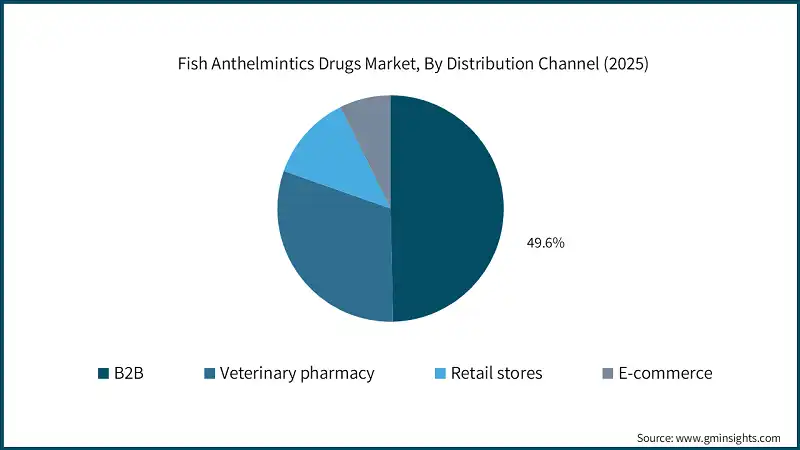
Based on distribution channel, the fish anthelmintics drugs market is segmented into B2B, veterinary pharmacy, retail stores, and E-commerce. The B2B segment accounted for the leading market share of 49.6% in 2025.
The rapid increase in the number of large-scale fish farms and integrated aquaculture companies is creating increased demand from a business-to-business (B2B) perspective for anthelmintic products. This demand for a bulk supply of parasite control products is necessary to keep farms productive and healthy. For instance, many companies that produce farmed salmon or tilapia use long-term contracts to purchase benzimidazole or praziquantel directly from manufacturers or distributors.
In many cases, B2B purchasers prefer to order a large volume of product at once to lower their cost per unit for treatment and to assure a constant supply. Through bulk purchases, farms, hatcheries, and feed manufacturers can reduce their operational costs and maintain a steady flow of parasite control, as shrimp and carp farms often make bulk purchases of medicated feeds via B2B arrangements to achieve low-cost treatments.
Moreover, the increased use of medicated feeds has strengthened the B2B relationships between drug manufacturers and feed mills. The direct incorporation of anthelmintics into manufactured feeds increases the accuracy of dosing and the effectiveness of treatment. For example, praziquantel-treated feeds are provided to commercial farms via feed companies under a B2B relationship.
The veterinary pharmacies segment was valued at USD 78.7 million in 2025. Veterinary pharmacies are a key distribution channel for pharmaceutical products in the fish anthelmintics industry. The veterinary pharmacy is usually affiliated with a veterinary clinic or an Aquaculture Health Center; this allows for specialized services to include the fast and accurate diagnosis of parasitic disease and a prescription of injectable fish anthelmintics.
Additionally, veterinary pharmacies are very important for larger aquaculture facilities and commercially valuable fish, where correct dosing and selection of medication are required to prevent resistance and to follow regulations for food safety.
Further, advanced pharmaceutical formulations and the ability to create therapeutic combinations are also frequently only available through veterinary pharmacies, making them both necessary and important to successfully treating complex cases.
North America Fish Anthelmintics Drugs Market
North America market was valued at USD 6.3 million in 2025 and is anticipated to show notable growth over the forecast period.
The North American fish anti-parasitics market is growing steadily, supported by the region's advanced aquaculture infrastructure and emphasis on fish health management. Regional countries are at the forefront of commercial aquaculture, focusing primarily on salmon and trout, which are both very susceptible to parasitic infections, especially helminth (internal) infections.
Additionally, as consumers continue to demand high-quality, parasite-free seafood, fish farmers are forced to implement both proactive and reactive management strategies to combat helminth infections. In addition to meeting consumer demand, the North American regulatory environment is well-established regarding the regulation of anti-parasitic frameworks to ensure the safety and compliance of approved drugs. Technological advancements in drug formulation and the wide use of medicated feed delivery systems enhance the effectiveness of treatment options and reduce their impact on the environment.
Further, the emphasis on sustainability within North America and biosecurity measures taken by aquaculture producers strongly encourages and supports the use of targeted parasite control strategies. The continued investment by pharmaceutical companies in R&D efforts and project collaboration with fish health specialists remains a driving force in supporting ongoing growth in the regional aquaculture market.
The U.S. fish anthelmintics drugs market was valued at USD 5.2 million in 2025. Expansion of commercial fish farming operations in the country is projected to fuel the market growth.
The aquatic animal health system in the U.S. is robustly structured around national disease management frameworks. The National Aquaculture Health Plan and Standards (NAHP&S) governs reporting and surveillance, biosecurity measures, and standardized diagnostic tests to protect aquaculture's health.
In addition, federal agencies such as USDA-APHIS, NOAA Fisheries, and the U.S. Fish and Wildlife Service work together to regulate the movement of fish, provide health certificates for fish, and coordinate actions to control emerging pathogens.
Further, advanced lab networks and inspection programs enable early diagnosis and monitor quality assurance for domestic food supplies, as well as provide pathogen-free certification for exporting fish. U.S. fish hatcheries and fish health centers use applied science, drug approval programs, and nationwide surveys to regulate the presence of pathogens in both wild and farmed fish systems.
Hence, as an integrated system, the U.S. is capable of providing strong oversight of aquatic health while supporting sustainable aquaculture development and reducing parasite-related risks.
Europe Fish Anthelmintics Drugs Market
Europe accounted for a notable share of the global market and was valued at USD 23.2 million in 2025.
The established aquaculture industry across Europe and comprehensive regulations governing fish health and food safety form the basis of the increasing fish anthelmintic drug market in Europe. Countries such as Norway, Scotland, and Spain had some of the largest numbers of farmed salmon and marine fish in production, with significant numbers of parasites (e.g., flukes) affecting them. For example, as per the data reported in a 2023 report by the Federation of European Aquaculture Producers, the total European production of fish by aquaculture was estimated to be around 2.87 million tons in 2022.
The top five species of farmed freshwater fish include salmon, trout, seabream, seabass, and carp, which account for 94% of the total production. This high quantity of fish production requires the utilization of a variety of different types of anthelmintics to produce healthy fish free of disease, which helps to fuel the growth in the fish anthelmintics drug market in Europe.
Additionally, initiatives at the national level encouraging a more sustainable approach to fish production and disease prevention support the growth of the fish anthelmintics drug market. Pharmaceutical companies operating in Europe are making large investments in the research and development of ecologically safe and residue-free anthelmintics as an alternative to consumer preferences for safe and sustainable seafood consumption.
Lastly, the continual green innovation, regulatory compliance, and environmental sustainability focus may contribute significantly to the expected growth of the fish anthelmintics drug sector throughout the region.
Norway held significant share of the European fish anthelmintics drugs market, showcasing strong growth potential.
With its expansive aquaculture system and regulations in place, Norway is one of the top producers of cultivated salmon globally. To protect fish health, promote environmental integrity, and ensure stable production, a robust regulatory scheme has been established.
The major challenge in Norway's aquaculture industry is sea lice, which have created substantial mortality and animal welfare problems within the production system, as well as contributing to the stress and gill disease problems associated with treatment applications.
Additionally, Norway has implemented a traffic-light regulation to manage growth in aquaculture production through monitoring sea-lice populations across 13 different zones within the country. Any farm located within a green zone can increase production volume, but farms that falls within a red zone must operate under reduced volumes, according to the sea lice in that area.
The Fish Health system utilized by BarentsWatch is an example of the tool used to monitor known diseases, parasite populations, and welfare indicators throughout Norway and provide the data to make informed decisions and maintain oversight throughout the country.
Therefore, the aquaculture system of Norway is focused on monitoring, extensive regulation, and ensuring that long-term success is achieved in managing parasites and protecting animal welfare.
Asia Pacific Fish Anthelmintics Drugs Market
Looking for region specific data?
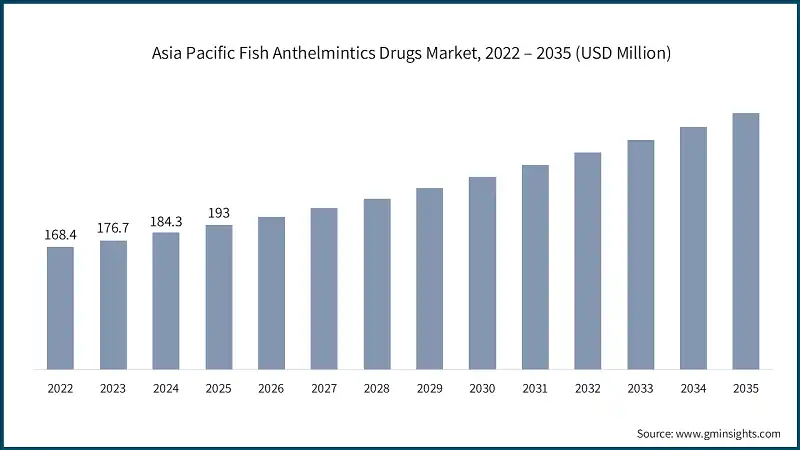
The Asia Pacific market accounted for a majority share of the market and was valued at USD 193 million in 2025.
The developing aquaculture industry has led to a growing demand for fish anthelmintic drugs in the Asia Pacific region due to increased levels of seafood consumption and export demands. The major global fish-producing nations include China, India, Vietnam, and Indonesia, among other regional countries. For example, India's aquaculture production grew from 4.8 (thousand metric tons) in 2015 to 10.2 (thousand metric tons) in 2022 as a result of growing demand.
However, intensive farming practices in these regions increase the risk of parasitic infections, leading to significant economic losses. As a result, fish farmers are using anthelmintics in order to enhance individual fish's survival rates and preserve farm productivity.
The Asia-Pacific region is benefiting from many government programs that support aquaculture growth and disease management and thus is experiencing further acceleration to market adoption of fish anthelmintics.
In addition, the Asia-Pacific region is developing new means of producing veterinary pharmaceuticals at affordable prices, customizing the products to accommodate local species and farming environments. As fish farmers become more familiar with parasite management and the advantages of early treatment, penetration into the market may increase.
China fish anthelmintics drugs market is estimated to grow with a robust CAGR, in the Asia Pacific market.
China’s large aquaculture sector faces significant parasitic and drug-resistance challenges, prompting growing attention to sustainable parasite control strategies. Heavy use of antibiotics and chemical treatments has contributed to environmental pollution and emerging resistance concerns in aquaculture systems.
In addition, the Chinese aquaculture industry frequently encounters parasite-related losses due to high-density farming, with studies documenting widespread metazoan and protistan infestations requiring integrated control strategies.
Further, research efforts increasingly focus on alternative therapies such as natural products, nanotechnology, and immunotherapeutics to reduce chemical dependence and improve long-term sustainability.
Latin America Fish Anthelmintics Drugs Market
Brazil leads the Latin American market, exhibiting remarkable growth during the analysis period.
Brazil’s aquaculture industry experiences substantial economic impact from parasitic infections, including newly recorded species such as Trichodina colisae, which affects farmed pacu and patinga hybrids. Myxozoan parasites are highly diverse in Brazilian waters, with more than 286 taxa documented, many affecting commercially important fish families, highlighting the complexity of disease management in both wild and farmed systems.
Additionally, parasite infestations of fish raised in freshwater production are widespread and driven by the increase in environmental variability and the expansion of the use of intensive farming practices.
Further, effective management of parasites in freshwater production should include the development of more effective diagnostics, targeted treatment programs, improved husbandry practices, and, more importantly, improved surveillance and biosecurity systems to address the losses suffered as a consequence of parasite infestations.
Middle East and Africa Fish Anthelmintics Drugs Market
Egypt market to experience substantial growth in the Middle East and Africa market in 2025.
Egypt is the largest aquaculture producer in Africa, generating around 2 million tons of fish annually, with aquaculture contributing approximately 80% of national production. Nile tilapia dominates farmed output, alongside mullet, carp, sea bream, and catfish.
As production expands, Egypt places increasing emphasis on biosecurity and aquatic animal health, developing strict operational guidelines requiring SOP adherence, pond drying and disinfection, control of vectors, filtration of water sources, worker hygiene, and disinfection protocols for equipment and farm access.
Additionally, to strengthen national preparedness, the country is implementing a national aquatic animal health strategy under a biosecurity governance project supported by the Food and Agriculture Organization of the United Nations (FAO), focusing on surveillance, early warning, laboratory capacity building, and enhanced disease-prevention frameworks.
Further, research partnerships such as Egypt’s renewed collaboration with WorldFish further support innovation in fish health, genetics, feed efficiency, and climate-smart aquaculture practices, positioning Egypt as a regional aquaculture leader.
Fish Anthelmintics Drugs Market Share
The worldwide fish anthelmintic drugs market is fragmented and comprises numerous local and international businesses addressing all varieties of fish farming species and therapy requirements. The expansion of the fish anthelmintics drug market results from growing demand for disease management and increased use of improved medications to enhance fish health and productivity. Merck and Company, Aquatic Remedies, and API are prominent fish anthelmintic medication manufacturers with a large distribution capability and partnerships with veterinarians.
The competition in the anthelmintics market is centered on a combination of innovative formulations, effectiveness against broad ranges of parasitic infestation, environmental protection, and regulatory compliance. The smaller players in the market generally take on a niche approach towards a portion of the market that may have substantial growth potential.
Further, various new and regional players are using localized strategies in conjunction with species-specific formulations. Some of the emerging and regional players include Vitboo, Centurion Healthcare, Fish Industry Institute, SONWU, and VB Pharma Corporation. The collaboration with aquaculture farms, feed companies, and veterinarian networks creates a diverse relationship in the anthelmintics market. With time the overall market is expected to be reshaped to reflect these dynamics, creating opportunities for further differentiation and localization of anthelmintics with the goal of providing effective and safe antiparasitic solutions.
Fish Anthelmintics Drugs Market Companies
A few of the prominent players operating in the global fish anthelmintics drugs industry include:
Merck & Co., Inc. focuses on expanding advanced aquatic health solutions, integrating biotechnology, vaccines, and digital monitoring tools to improve fish welfare, enhance disease prevention, and strengthen global presence in high-value aquaculture sectors.
Aquatic Remedies develops affordable, easy-to-use water treatments and health supplements, targeting small-to-medium farms with practical disease-control products while expanding distribution networks and emphasizing farmer education to boost adoption.
Syndel prioritizes high-quality fish health products including therapeutics, anesthetics, and biosecurity solutions, while strengthening regulatory compliance, global distribution channels, and innovation in safe, effective disease-prevention technologies for diverse aquaculture environments.
Fish Anthelmintics Drugs Industry News
In March 2024, Koi Pharma introduced a portfolio of innovative pond and fish health products aimed at improving aquatic health management. This development strengthened Koi Pharma’s brand visibility and credibility in the fish anthelmintics and pond health market, supporting faster product adoption and channel expansion among hobbyists and professional pond managers. The debut also signaled increasing competition and innovation in preventive parasite and water-quality solutions, positively influencing overall market growth.
In February 2024, Merck Animal Health acquired Elanco Animal Health’s aqua business for USD 1.3 billion, strengthening its aquaculture portfolio and global manufacturing footprint. The deal enhanced company’s capabilities in fish health through expanded medicines, vaccines, and nutritional offerings. This development supported market growth by improving innovation, scale, and access to fish anthelmintic solutions.
The global fish anthelmintics drugs market research report includes an in-depth coverage of the industry with estimates and forecasts in terms of revenue in (USD Million) from 2022 - 2035 for the following segments:
to Buy Section of this Report
Market, By Drug Class
Pyrazinoisoquinolones
Benzimidazoles
Macrocyclic lactones
Other drug classes
Market, By Target Parasite
Nematodes
Trematodes
Mixed infections
Cestodes
Market, By Formulation
Oral
Immersion
Injectable
Market, By Distribution Channel
B2B
Veterinary pharmacy
Retail stores
E-commerce
The above information is provided for the following regions and countries:
North America
U.S.
Canada
Europe
Norway
Turkey
Germany
UK
France
Spain
Italy
Netherlands
Asia Pacific
China
India
Indonesia
Vietnam
Japan
South Korea
Australia
Latin America
Brazil
Mexico
Argentina
MEA
Egypt
South Africa
Saudi Arabia
UAE
Author: Mariam Faizullabhoy, Gauri Wani
Frequently Asked Question(FAQ) :
Who are the key players in the fish anthelmintics drugs market?+
Major players include Merck & Co., Inc., Aquatic Remedies, API (Aquarium Products India), Syndel, Hikari, Kyoritsu Seiyaku Corporation, KOI PHARMA, Centurion Healthcare, and National Fish Pharmaceuticals U.S.A.
Which region leads the fish anthelmintics drugs market?+
Asia Pacific led the global market, valued at USD 193 million in 2025, supported by large-scale aquaculture production, rising seafood consumption, and strong government support for fish farming in countries such as China, India, and Vietnam.
Which target parasite segment leads the market?+
The nematodes segment led the market, generating USD 81.3 million in revenue in 2025, driven by high infection rates in intensive farming systems and strong demand for effective oral treatment options.
Which drug class segment generated the highest revenue in 2025?+
The pyrazinoisoquinolones segment dominated the market with a 46.3% share in 2025, owing to the widespread use of praziquantel for effective treatment of trematodes and cestodes in both freshwater and marine fish species.
What will be the market value of the fish anthelmintics drugs industry in 2026?+
The market is projected to reach USD 269.4 million in 2026, reflecting steady early growth driven by higher treatment adoption in commercial aquaculture systems.
What is the projected value of the fish anthelmintics drugs market by 2035?+
The market is expected to reach USD 430.5 million by 2035, growing at a CAGR of 5.3% from 2026 to 2035, supported by intensive aquaculture practices, and stricter export-oriented food safety regulations.
What is the market size of the fish anthelmintics drugs market in 2025?+
The global market for fish anthelmintics drugs was valued at USD 256 million in 2025, driven by rising aquaculture production, and growing emphasis on fish health management and food safety compliance.

 Learn more about the key segments shaping this market
 Learn more about the key segments shaping this market
 Looking for region specific data?