Summary
Table of Content

Fermenters and Aging Equipment Market
Get a free sample of this report
Form submitted successfully!
Error submitting form. Please try again.
Thank you!
Your inquiry has been received. Our team will reach out to you with the required details via email. To ensure that you don't miss their response, kindly remember to check your spam folder as well!
Request Sectional Data
Thank you!
Your inquiry has been received. Our team will reach out to you with the required details via email. To ensure that you don't miss their response, kindly remember to check your spam folder as well!
Form submitted successfully!
Error submitting form. Please try again.
Fermenters and Aging Equipment Market Size
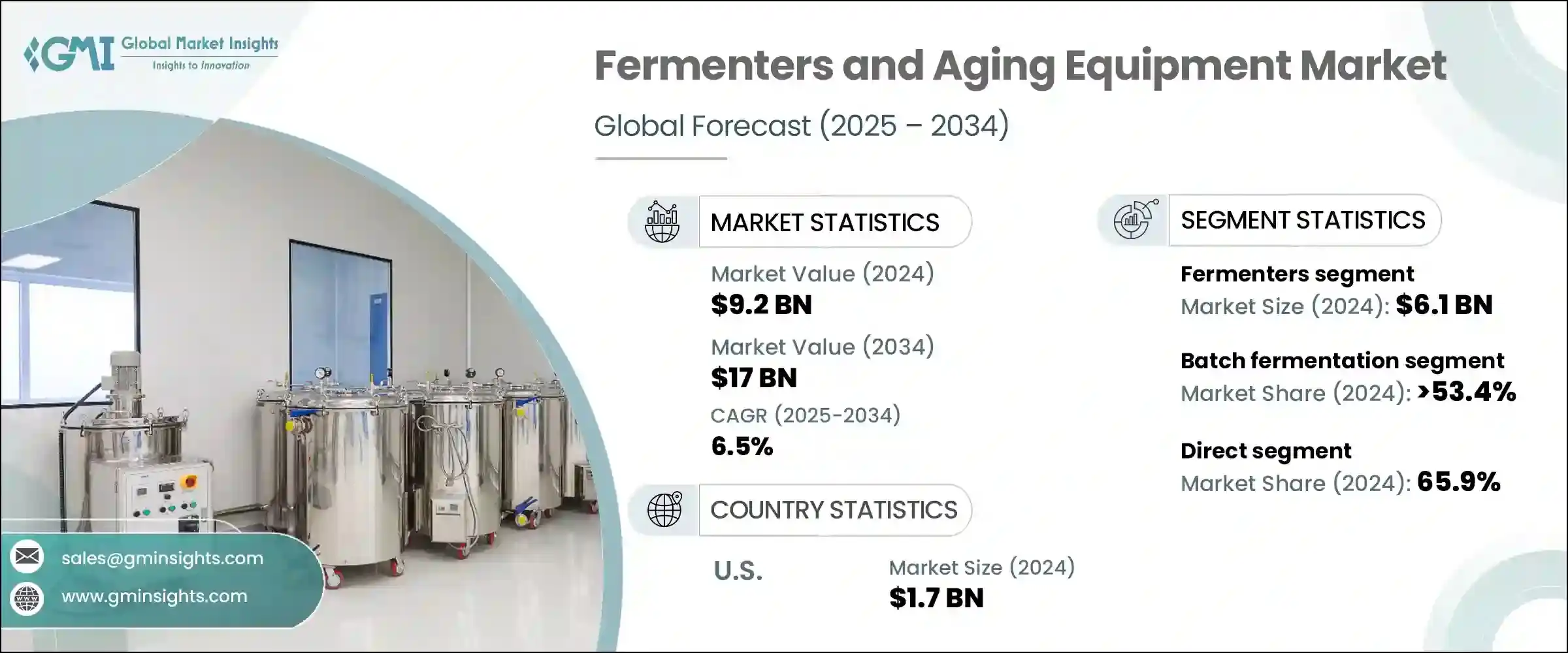
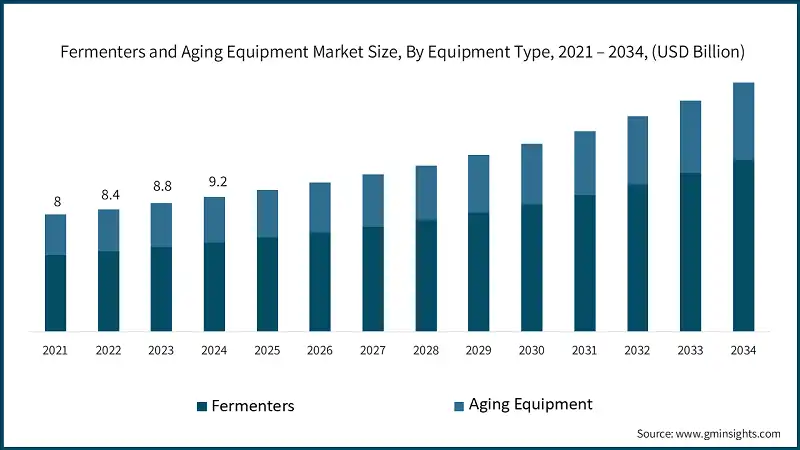
The global fermenters and aging equipment market was estimated at USD 9.2 billion in 2024, and the market is expected to grow from USD 9.7 billion in 2025 to USD 17 billion by 2034, at a CAGR of 6.5%. This is because the applications are growing in industries based on fermentation and aging processes, such as in biopharmaceuticals and food and beverages.
To get key market trends
In 2024, the market share of the biopharmaceutical sector was nearly 40%. The increasing need for biopharmaceutical products such as vaccines, monoclonal antibodies, and biologics has increased the demand for advanced fermentation technologies. According to the World Health Organization (WHO), demand for vaccines in the world has seen over 30% growth over the last ten years, increasing further demand for fermenters. Additionally, chronic diseases and increasing healthcare expenditure globally have fueled investment in improved fermentation systems. Advanced technologies such as single-use fermenters and automation have introduced greater efficiency through lower contamination opportunities and downtime, thus prompting biopharma firms to invest in newer machinery.
The food and beverages sector contributed about 30% to the business. This is a result of rising customer demand for fermented foods and beverages such as beer, wine, alcohol, and dairy products. The Food and Agriculture Organization (FAO) observes that global consumption of dairy grew at an average rate of 1.8% annually between 2015 and 2022, and this has been accompanied by rising demand for fermentation equipment. Higher consumption of craft and premium drinks has also stimulated demand for aging equipment to flavor the products and give them quality credentials. Also, increasing focus on natural and sustainable food processing has resulted in increased application of fermenters and aging technology.
The largest market share in 2024 is APAC, at 38.1%. This is because there has been intense industrialization, increased investment in biopharmaceutical manufacturing, and increased production of food and beverages in China, India, Japan, and South Korea. Health spending in APAC rose 7.5% annually from 2010 to 2022, as per the Asian Development Bank (ADB), thereby promoting demand for vaccines and biologics that are produced through fermentation. Increased disposable income and lifestyle modifications have also powered alcoholic beverages' growth more rapidly, further establishing regional supremacy.
Across the world, the market for fermenters and aging equipment is dominated by major companies that possess robust technology, extensive product lines, and profound sales networks. Sartorius AG, Eppendorf AG, Parker Hannifin Corporation, Thermo Fisher Scientific, GE Healthcare (Cytiva), Applikon Biotechnology, and SPX Flow are the leading companies dominating the industry. Through research and development, the companies enhance the performance of the equipment and satisfy different customer requirements, thereby securing their positions in the industry.
Overall, the market for fermenters and aging equipment is likely to grow with moderate growth through the growth in the biopharmaceutical and food and beverages industries, technological advancements, and industrialization in emerging economies such as APAC. The new entrants of innovative products by prominent global companies also favor the prospects of the market through 2030.
Fermenters and Aging Equipment Market Report Attributes
| Key Takeaway | Details |
|---|---|
| Market Size & Growth | |
| Base Year | 2024 |
| Market Size in 2024 | USD 9.2 Billion |
| Forecast Period 2025 - 2034 CAGR | 6.5% |
| Market Size in 2034 | USD 17 Billion |
| Key Market Trends | |
| Drivers | Impact |
| Rising Demand for Biopharmaceuticals | The growing production of vaccines, monoclonal antibodies, and other biologics necessitates cutting-edge fermentation technology, driving industry growth. |
| Growth of the Food & Beverage Industry | Increased consumer demand for fermented foods like beer, wine, dairy, and other specialty foods contributes to growing demand for sophisticated fermenters and aging equipment to ensure quality and taste. |
| Technological Advancements | Fermenters such as single-use fermenters, automation, and process optimization enhance operational efficiency, reduce the cost of contamination, and reduce expenditure, thus resulting in adoption across diverse industries. |
| Pitfalls & Challenges | Impact |
| High Capital Investment | Capital outlay on sophisticated fermenters and aging machines is likely to be substantial at the start, and this acts as a deterrent to adoption, especially for new firms and small-scale producers. |
| Complexity of Operation and Maintenance | Advanced equipment demands technical staff to work on and operate it, and that is not always possible in low-technology settings. |
| Opportunities: | Impact |
| Growing Demand for Sustainable and Natural Fibers | Rising consumer preference for eco-friendly and biodegradable textiles is boosting wool demand, encouraging investment in modern processing machinery. |
| Automation and Industry 4.0 Adoption | The integration of automation, AI, and IoT in wool processing equipment improves efficiency, reduces labor dependency, and ensures consistent product quality. |
| Market Leaders (2024) | |
| Market Leaders |
3.2% market share |
| Top Players |
Collective Market Share in 2024 is 9% |
| Competitive Edge |
|
| Regional Insights | |
| Largest Market | Asia Pacific |
| Fastest Growing Market | Asia Pacific |
| Emerging Country | China, India, South Korea |
| Future outlook |
|
What are the growth opportunities in this market?
Fermenters and Aging Equipment Market Trends
The fermenter and aging plant equipment market is evolving with the dominance of top trends that are driving innovation and impacting purchasing decisions in industries. These trends are informed by emerging technology, increasing regulation, and sustainability, which are altering manufacturers' strategies for developing and using fermenters and aging systems.
- Single-use technologies are increasingly being utilized is one of the key trends. Single-use equipment and one-time-use fermenters make fermentation easier by minimizing the risk of contamination and the expense of cleaning and sterilization following runs. This is time- and cost-effective, particularly in use such as biopharmaceuticals where flexibility and agility are crucial. These systems also enable batch production on a smaller scale, which benefits the creation of personalized medicine and specialist biologics. As per the Food and Drug Administration (FDA), the biopharmaceutical industry is growing large, with the global market for biologics expected to grow at a compound annual growth rate (CAGR) of 9.2% from 2023-2028.
- Increased adoption of automation and digital technologies in fermenters and maturation gear is another trend. Sophisticated systems with real-time sensors and process monitoring technologies enable control over parameters such as temperature, pH, and oxygen. This enhances product quality and minimizes waste. Computerized aids also assist in predictive maintenance, avoiding sudden equipment failure and increasing equipment lifespan. The U.S. Department of Commerce states that manufacturing automation can enhance production efficiency by up to 20%, and therefore, it is a top priority for most organizations.
- Stricter regulations also influence the market. Governments and regulatory bodies are setting more rigorous rules for the traceability of products, quality, and safety, particularly in the pharmaceutical and food sectors. For instance, compliance with Good Manufacturing Practice (GMP) standards is demanded by the U.S. Food and Drug Administration (FDA) and European Medicines Agency (EMA). This has created more demand for advanced ageing equipment and fermenters conforming to these standards. While this promotes market expansion, it also compels manufacturers to spend more on new technology to meet these requirements.
- Sustainability is the most important issue. Businesses are searching for equipment that requires less energy and water consumption and produces less waste. Such options as energy recovery systems and renewable resources are being considered in new products. The U.S. Department of Energy, by enhancing energy efficiency in industrial processes, could conserve up to 25% of energy use and encourage businesses to embrace sustainable approaches. Increasing numbers of consumers are opting for suppliers with environmentally friendly solutions, driving purchasing decisions across industries.
Fermenters and Aging Equipment Market Analysis
Learn more about the key segments shaping this market
- The fermenters segment leads the market due to its central role in the biopharmaceutical, food processing, and industrial biotechnology industries. Fermenters are utilized to culture cells and microorganisms for vaccine manufacturing, biologics, enzymes, and fermented foods. These diverse applications fuel the demand for fermenters over that for aging equipment, whose applications are limited. Market leaders such as Sartorius, Thermo Fisher Scientific, and Merck KGaA dominate the market. They invest in research and development to come up with new technology such as single-use systems, automation, and high-level process monitoring. They improve efficiency, scalability, and contamination control to help manufacturers be productive and agile.
- The market is growing on the heels of drivers such as increasing healthcare spending, increasing demand for biopharmaceuticals, and increased consumption of fermented foods. For example, United States healthcare spending will grow 5.4% annually from 2022 to 2028, according to estimates by the U.S. Centers for Medicare & Medicaid Services. Alternatively, government policies and regulations are supporting quality production means, thereby propelling the industry even further. Still, sophisticated operations and high start-up costs are part of the problems that remain to be solved. These are being solved by evolving technologies and enhanced opportunities in developing nations.
- PESTLE analysis includes technological advancement, legal severity, and environmentalism as the driving forces that advance the fermenters industry to make it more robust. Porter's Five Forces analysis depicts moderate danger to new entrants and substitute goods but highlights tough buyer and competition forces that push companies to keep innovating their products.
Learn more about the key segments shaping this market
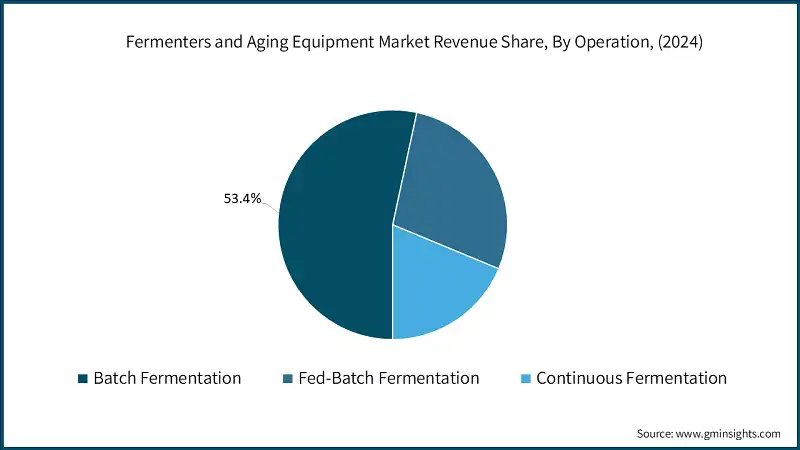
Based on the operation, the fermenters and aging equipment market is segmented into batch fermentation, fed-batch fermentation, and continuous fermentation. In 2024, the batch fermentation segment accounted for over 53.4% and is expected to grow at a rate of 7.3% till 2034.
- Batch fermentation is the most common technique applied in fermenters and equipment for aging due to its easy application, flexibility, and ability to accommodate many applications. It finds extensive applications in the biopharmaceutical, food, and beverage industries. The ingredients are processed within a single batch in this technique, which makes it simple to control and monitor the process of fermentation. The technique is well-suited for the manufacturing of high-value products in low capacities or for sophisticated product lines.
- Batch fermentation, as viewed by SWOT analysis, has its advantages to be minimal control over the process, fewer chances of batch-to-batch contamination, and the ability to produce different products without frequent changeovers. Nevertheless, it also has some disadvantages, such as non-continuity of operation and reduced productivity when compared to the continuous process. Its potential is increased demand for customized drugs and specialty fermented food products, which must be produced in batches. On the contrary, threats are promoting new fermentation techniques and pressure to embrace cheaper continuous operations.
- The competition is high since various firms provide sophisticated batch fermenters with automation and control aspects. The threat of new competitors is medium since, although technical knowledge is required, it is relatively simpler to penetrate this sector as opposed to when working with continuous systems. Supplier power is medium because of the necessity for specialty components, but with varied supply chains. Buyer power is extremely high because they require quality, flexibility, and compliant systems. The threat of substitutes is low to moderate because batch fermentation remains superior in cases where flexibility and accuracy are required.
- Political and regulatory forces are concerned with product quality and safety, and batch fermentation achieves this through controlled processes. Quality and safety procedures must be followed persistently by the U.S. Food and Drug Administration (FDA) to manufacture food and biopharmaceuticals. The drivers of this demand are economic, including rising healthcare expenditures (which increased 2.7% in 2022, as reported by the Centers for Medicare & Medicaid Services) and the growth of the specialty food market. Social influences are the demands for quality, specialty, and personalized products, which are precisely what batch fermentation can accommodate. Technological advancements enhance monitoring and automation, simplifying batch processes. Documentation requirements and compliance demands match the advantages of batch fermentation. Finally, environmental issues support its sustainable usage, and lower runs and cleaning cycles for batch fermentation reduce resource consumption.
Based on the distribution channel, the market is segmented into direct and indirect. The direct segment is expected to hold a major share of 65.9% in 2024.
- Direct market segment drives fermenter and aging equipment for markets via low-cost processes, economy, and wide-range applications. Direct systems with the fermentation medium may be contacted by the equipment directly, and it facilitates faster processing and simpler operation compared to indirect or batch systems. Through efficiency, the food and biopharmaceutical industry manufacturers are capable of enhancing productivity and reducing costs, which are vital towards facilitating production needs.
- Industry managers are upgrading direct systems with the addition of automation, real-time monitoring, and improved integration with other operations. Modernization allows manufacturers to have total control, maximize production capacity, and maintain government compliance with stringent regulations while providing consistent product quality.
- Government figures indicate growth in the direct segment. The U.S. Food and Drug Administration (FDA) reports that in the past five years, the biopharmaceutical industry had a 15% annual rate of approval for biologics, raising the need for efficient fermentation systems. The U.S. Department of Agriculture (USDA) also refers to expanded application of continuous manufacturing to produce food, which aligns with benefits provided by direct systems.
Looking for region specific data?
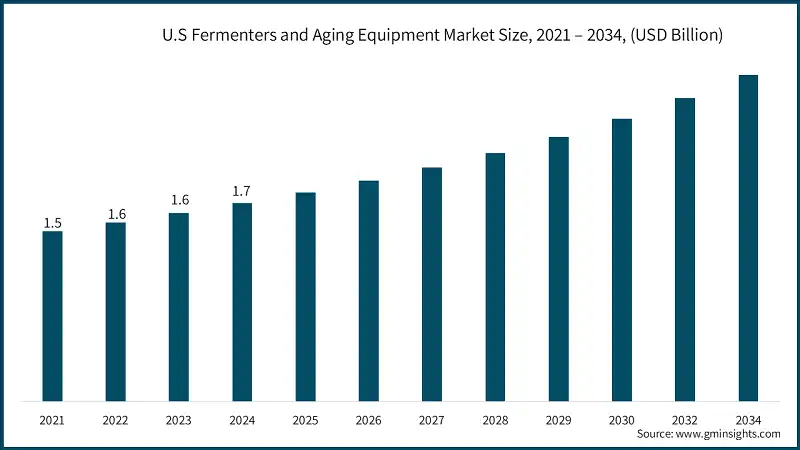
In 2024, the U.S dominated the fermenters and aging equipment market, accounting for around 67.7% of the North American market share and generating around USD 1.7 billion in revenue in the same year.
- United States (Dominant North America): The US dominates the North American market due to its established biopharmaceutical sector, massive research centers, and premier equipment suppliers. The US spent over USD 1.2 trillion on health care in 2023, as projected by the Congressional Budget Office, which will drive innovation for bioprocessing technologies like single-use fermenters. Interest in personalized medicine and biologics manufacturing is also creating the need for advanced fermentation systems.
The European fermenters and aging equipment market in Germany is expected to experience significant and promising growth from 2025 to 2034.
- Germany is the pace setter of the European industry in cutting-edge engineering and manufacturing. The Federal Statistical Office of Germany states that turnover from drugs generated USD 57.4 billion in 2023, which created a need for aging and fermentation equipment. EU product quality and safety standards are high and require very precise fermentation technology. Germany's Industry 4.0 policy also encourages automation and innovation in the industry.
The APAC fermenters and aging equipment market in China is expected to experience significant and promising growth with a 7.5% CAGR from 2025 to 2034.
- China is the APAC leadership with robust industrial growth, favorable government policies for pharma and biotech firms, and a flourishing food and beverage sector. Healthcare spending had already reached USD 1 trillion in 2023, with huge investments in the production of vaccines and biologics, as per the National Bureau of Statistics of China. China's expanding middle class and shifting consumption patterns are driving alcoholic drink and fermented food consumption, which is driving sales of second-hand equipment to increase.
The MEA Fermenters and Aging Equipment market in the UAE is expected to experience significant and promising growth from 2025 to 2034.
- United Arab Emirates (Leading MEA): The UAE is at the lead in the MEA region due to its locational advantage and investment in healthcare facilities. In 2023, the UAE invested USD 1.63 billion in support of food processing and pharmaceutical manufacturing industries, as per the UAE Ministry of Economy. Induction programs of the government for better technology and foreign biopharma companies are creating more demand for fermenters and aging machines within the country.
Fermenters and Aging Equipment Market Share
Sartorius AG, Thermo Fisher Scientific, Merck KGaA (MilliporeSigma), GEA Group AG, and Alfa Laval AB lead with 9% market share. The top 3 companies collectively hold 6% market share, indicating low market concentration.
Over the last 2–3 years, these two companies have grown market share with the growing demand for premium bioprocessing equipment. This is rising with greater biopharmaceutical production and more fermented food products and beverage companies. Both Sartorius and Thermo Fisher have made significant progress on the back of a strategy of emphasizing single-use and automated fermenters, which are in high demand.
Both are well-placed in their way to thrive. Sartorius is a single-use bioreactor and end-to-end bioprocess solutions provider that offers biopharma customers across the globe. Thermo Fisher has product and service-integrated solutions based on life sciences expertise to provide end-to-end process solutions. Merck KGaA (MilliporeSigma) has a focus on reagents and tools for life science, providing high-quality fermentation platforms. GEA Group has specialty large-scale fermentation equipment for food and beverages with advanced automation to complement it. Alfa Laval is the heat transfer, separation, and fluid handling systems leader dedicated to maximizing the efficiency and sustainability of fermentation.
They are growing by growth via acquisitions, product development, and geographically in growth economies. Sartorius bought BIA Separations and Xell AG to enhance its bioprocessing scale. Thermo Fisher bought PPD and invested in bioproduction. Merck set up its M Lab™ Collaboration Centers and developed next-generation fermentation and filtration technology. GEA builds energy-efficient fermentation modules to take advantage of trendy food, and Alfa Laval focuses on equipment digitalization and sustainability.
These companies do have problems, though. Asian start-ups and manufacturers are bringing in lower-cost or specialty products, particularly in flexible and modular equipment. Emerging technologies such as process control using artificial intelligence and continuous fermentation can turn things around if they pan out. Supply chain interruptions and regulatory shifts, particularly environmental requirements and biologic manufacturing, also require continual flexibility. Despite all the aforementioned problems, the dominant strategies, technology, and size of these five companies are overwhelming the fermenter market and aging equipment.
Fermenters and Aging Equipment Market Companies
Major players operating in the fermenters and aging equipment industry are:
- Alfa Laval
- Applikon Biotechnology
- Bioengineering
- Bucher Vaslin
- Danaher Corporation
- Eppendorf
- GEA Group
- Merck
- Paul Mueller Company
- Sartorius
- STS Canada
- Tetra Pak
- Thermo Fisher Scientific
- Ziemann Holvrieka
- JVNW
The leading 15 fermenter and aging equipment manufacturers have a wide range of capabilities, strategic focus, and technological innovation shaping the competitive environment. Alfa Laval uses its capabilities in fluid handling as well as heat exchange technology to provide environmentally friendly and energy-efficient solutions to fermenters, mainly for food and beverage applications. Getinge-held Applikon Biotechnology is a high-performance bioreactor system R&D pioneer that has strengthened its position through tailored small-scale fermentation platforms.
Bioengineering AG is a Switzerland-based company that specializes in made-to-measure fermenter and bioreactor systems for high-end biopharma and R&D laboratories. The company specializes in modular and GMP technologies, making it a preferred point of reference for scale-up solutions. Bucher Vaslin targets mostly the wine sector with its emerging aging technology and fermentation systems, investing in tender processing and precision control systems to ensure flavor integrity. Danaher Corporation, led by subsidiaries such as Cytiva (former GE Life Sciences), has strategically placed itself in the bioprocessing continuum through turnkey fermentation solutions. It continues to expand through acquisition and alliance, its latest acquisition being Precision NanoSystems.
Eppendorf provides well-automated, bench-top fermenters and bioreactors for laboratory applications and targets software integration for data management and remote monitoring. Its user-friendly system design makes it a solid contender in the biotech startup and academic markets. GEA Group is particularly strong in large-capacity fermentation and aging systems, particularly in dairy and beverage markets, and is continuing to advance on energy efficiency and digitalized plant control. Merck KGaA, through MilliporeSigma, has significantly invested in R&D and global growth, including the opening of M Lab™ Collaboration Centers and enhancing its line of scalable, disposable fermenters.
Paul Mueller Company has built a niche around stainless steel tanks and fermenters, particularly in dairy, brewery, and pharma markets. Its local U.S.-based manufacturing and commitment to custom engineering provide it with a unique regional impact. Sartorius has come a long way with acquisitions such as BIA Separations and is committed to single-use technologies and upstream bioprocess automation. STS Canada provides custom fermenter design for industrial biotechnology and is committed to enormous flexibility and optimization of performance.
Tetra Pak, more familiar with food processing, has entered fermentation with end-to-end automation solutions for dairy and plant-based food, with emphasis on its end-to-end approach. Thermo Fisher Scientific offers end-to-end fermentation and aging capabilities as part of its overall life sciences offering, launching new products every month for equipment for bioproduction. Ziemann Holvrieka offers large-volume brewing and aging tanks, still maintaining its global beverage customers with engineering-intensive fermentation systems. Finally, JVNW specializes in North American craft breweries and food processors' custom stainless steel fermenters and emphasizes design freedom and customized customer service as its attributes.
Fermenters and Aging Equipment Industry News
- In June 2025, the Shapiro Administration made more than $21 million in federally funded grants available to 77 farms and food producers to boost capacity, fuel growth, and build opportunities along Pennsylvania's food supply chain. "Pennsylvania is investing to feed our future through a stronger local supply chain, and what that means is healthier communities, expanding businesses, more opportunities for job creation, and greater resilience in hard times," Department of Agriculture Secretary Russell Redding said.
- In June 2025, Danone North America, the largest purpose-driven food and beverage company and one of the world's largest Certified B Corporations®, is delighted to announce the winners of its Annual Gut Microbiome, Yogurt and Probiotic Fellowship Program for 2024-2025. This year's winners are Vanderbilt University's Owen Hale and Rice University's Ella Ramamurthy, both of whom will be awarded $25,000 to support innovative research to continue the science of yogurt, probiotics, and the gut microbiome.
- By 2024, Fermenstation's circular ingredients will be applied across industries, from food, drinks, and cosmetics. Fermentation works together with large companies and research organizations to design products in a circular and sustainable way, so nothing gets wasted. Through cooperation with communities, Fermenstation keeps creating solutions for a more regenerative world.
- In September 2023, the Bio Base Europe Pilot Plant (BBEPP) initiated construction of a 75,000-liter demonstration fermenter. Today, only 14 months later, this sophisticated fermenter, a testament to the engineering prowess of BBEPP, is "available for business." It provides opportunities for innovators to scale up fermentation processes and pilot them at the industrial scale while producing market-fit, food-grade materials at an affordable price.
The fermenters and aging equipment market research report includes in-depth coverage of the industry with estimates & forecasts in terms of revenue ($ Mn/Bn) and shipment (Units) from 2021 to 2034, for the following segments:
Market, By Equipment Type
- Fermenters
- Submerged fermenters (e.g., stirred tank)
- Solid-state fermenters
- Anaerobic fermenters
- Aerobic fermenters
- Aging Equipment
- Aging tanks (e.g., stainless steel, oak, plastic)
- Barrels (e.g., oak barrels, hybrid barrels)
- Bottling and secondary aging systems
- Cellar aging units
Market, By Operation
- Batch fermentation
- Fed-batch fermentation
- Continuous fermentation
Market, By Automation Level
- Manual
- Semi-automatic
- Fully automatic
Market, By Material of Construction
- Stainless steel
- Glass
- Plastic/polymer
- Concrete (for wine/cider aging)
- Wood (primarily for aging)
Market, By Application
- Food & beverage
- Pharmaceuticals
- Biotechnology
- Nutraceuticals
- Cosmetics & personal care
Market, By Distribution Channel
- Direct
- Indirect
The above information is provided for the following regions:
- North America
- U.S.
- Canada
- Europe
- UK
- Germany
- France
- Italy
- Spain
- Russia
- Asia Pacific
- China
- India
- Japan
- Australia
- South Korea
- Latin America
- Brazil
- Mexico
- MEA
- UAE
- South Africa
- Saudi Arabia
Frequently Asked Question(FAQ) :
Who are the key players in the fermenters and aging equipment market?
Key players operating in the market include Alfa Laval, Applikon Biotechnology, Bioengineering AG, Bucher Vaslin, Danaher Corporation, Eppendorf AG, GEA Group, and Merck KGaA.
What are the key trends in the fermenters and aging equipment industry?
Key trends include adoption of single-use technologies, which enhance fermentation processes by reducing contamination risks and eliminating cleaning and sterilization requirements between operations.
What was the market share of the batch fermentation segment?
The batch fermentation segment accounted for 53.4% market share and is expected to grow at a rate of 7.3% till 2034.
Which region leads the fermenters and aging equipment market?
The U.S. dominated the market, accounting for 67.7% of the North American market share and generating around USD 1.7 billion in revenue in 2024.
How much revenue did the fermenters segment generate?
The fermenters segment generated USD 6.1 billion in 2024 and is expected to grow at a CAGR of 6.9% during the forecast period.
What is the current market size of the fermenters and aging equipment market?
The global market was estimated at USD 9.2 billion in 2024, with a CAGR of 6.5% expected through 2034, driven by expanding applications in biopharmaceuticals and food and beverages industries.
What is the projected value of the fermenters and aging equipment market by 2034?
The market is expected to grow from USD 9.7 billion to USD 17 billion by 2034, driven by technological advancements, regulatory requirements, and sustainability considerations.
Fermenters and Aging Equipment Market Scope
Related Reports