Summary
Table of Content

Extracorporeal Membrane Oxygenation Market
Get a free sample of this report
Form submitted successfully!
Error submitting form. Please try again.
Thank you!
Your inquiry has been received. Our team will reach out to you with the required details via email. To ensure that you don't miss their response, kindly remember to check your spam folder as well!
Request Sectional Data
Thank you!
Your inquiry has been received. Our team will reach out to you with the required details via email. To ensure that you don't miss their response, kindly remember to check your spam folder as well!
Form submitted successfully!
Error submitting form. Please try again.
Extracorporeal Membrane Oxygenation Market Size
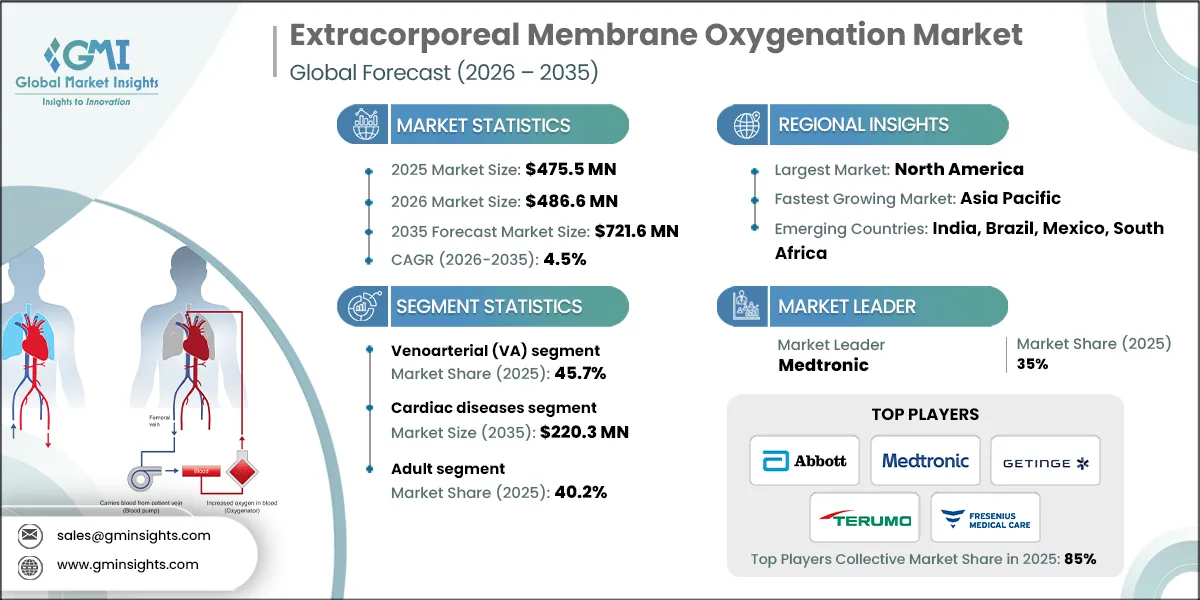
The global extracorporeal membrane oxygenation market was valued at USD 475.5 million in 2025 and is projected to grow from USD 486.6 million in 2026 to USD 721.6 million by 2035, expanding at a CAGR of 4.5%, according to the latest report published by Global Market Insights Inc. This substantial growth is driven by numerous factors such as increase in cases of cardiopulmonary diseases and respiratory failures, technological advancements in ECMO devices, rising patient awareness about benefits delivered by extracorporeal membrane oxygenation devices, and rising government initiatives and programs worldwide.
To get key market trends
Extracorporeal membrane oxygenation (ECMO) devices are advanced life-support systems used for patients with severe heart or lung failure. They work by temporarily taking over the function of the heart and lungs, circulating blood outside the body through an artificial membrane that adds oxygen and removes carbon dioxide. ECMO is typically used in critical care settings when conventional treatments like ventilators are insufficient. These devices provide vital support during recovery or while awaiting transplantation. Leading companies in this field are Abbott Laboratories, Medtronic, Getinge AB, Terumo Corporation, and Fresenius Medical Care AG & Co. KGaA. These leading ECMO device companies are growing through technological innovation, such as developing compact and portable ECMO systems for easier use in critical care. They are also expanding via strategic acquisitions and partnerships to strengthen their global presence and product portfolios.
Extracorporeal Membrane Oxygenation Market Report Attributes
| Key Takeaway | Details |
|---|---|
| Market Size & Growth | |
| Base Year | 2025 |
| Market Size in 2025 | USD 475.5 Million |
| Market Size in 2026 | USD 486.6 Million |
| Forecast Period 2026 - 2035 CAGR | 4.5% |
| Market Size in 2035 | USD 721.6 Million |
| Key Market Trends | |
| Drivers | Impact |
| Increase in cases of cardiopulmonary diseases and respiratory failures | Fuels demand for ECMO systems as life-saving interventions, driving adoption in critical care settings and boosting market growth. |
| Technological advancements in ECMO devices | Enhances device efficiency, portability, and safety, encouraging hospitals to integrate ECMO into treatment protocols and expanding market penetration. |
| Rising patient awareness about benefits delivered by extracorporeal membrane oxygenation devices | Promotes acceptance of ECMO therapy among patients and caregivers, increasing utilization rates and supporting market expansion. |
| Rising government initiatives and programs worldwide | Stimulates investments in advanced critical care infrastructure, creating favorable conditions for ECMO adoption and accelerating market growth. |
| Pitfalls & Challenges | Impact |
| High cost of equipment | Restricts accessibility in low-resource settings, limiting market growth potential in developing regions. |
| Dearth of skilled professionals | Creates operational challenges for ECMO deployment, slowing adoption despite rising demand for advanced life-support technologies. |
| Risks related to ECMO device | Concerns about complications such as bleeding and infection may hinder patient acceptance and cautious adoption by healthcare providers. |
| Opportunities: | Impact |
| Home-based and long-term ECMO solutions | Opens new revenue streams by enabling extended care outside ICU settings, addressing chronic conditions and improving patient convenience. |
| Integration with artificial intelligence and digital monitoring | Optimizes ECMO management through predictive analytics and real-time monitoring, reducing complications and creating a niche for smart ECMO systems. |
| Market Leaders (2025) | |
| Market Leaders |
35% Market Share |
| Top Players |
|
| Competitive Edge |
|
| Regional Insights | |
| Largest Market | North America |
| Fastest Growing Market | Asia Pacific |
| Emerging Countries | India, Brazil, Mexico, South Africa |
| Future outlook |
|
What are the growth opportunities in this market?
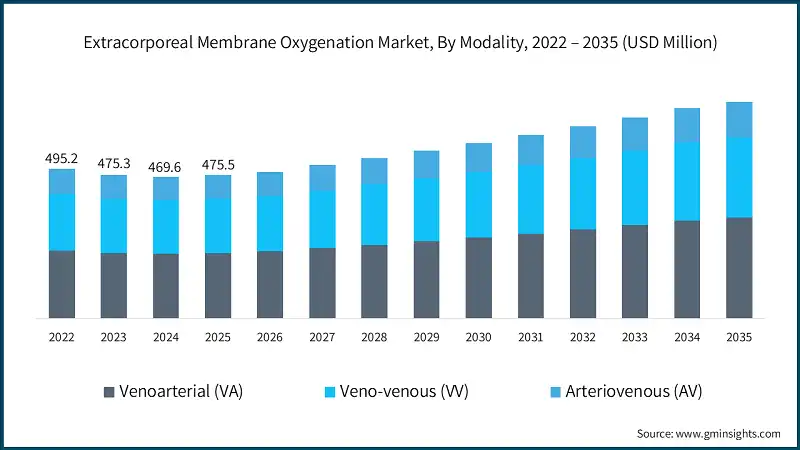
The market grew from USD 495.2 million in 2022 to USD 469.6 million in 2024. The global surge in cardiopulmonary diseases and respiratory failures is significantly driving the growth of the extracorporeal membrane oxygenation (ECMO) market. According to WHO, cardiovascular diseases (CVDs) remain the leading cause of death worldwide, accounting for 19.8 million deaths in 2022, which represents 32% of all global deaths, with 85% of these fatalities caused by heart attacks and strokes. Furthermore, the prevalence of CVD has more than doubled since 1990, reaching 626 million people in 2023, underscoring the escalating demand for advanced cardiac support solutions. Similarly, chronic respiratory diseases (CRDs) pose a severe global health challenge, causing 4.41 million deaths in 2021 and affecting over 454 million individuals, including those suffering from COPD and asthma. These conditions often lead to acute respiratory failure, where conventional ventilation methods are insufficient, creating a critical need for ECMO systems that can provide temporary heart and lung support. As hospitals and critical care centers increasingly adopt ECMO technology to manage life-threatening cases, the market is witnessing robust growth, supported by technological advancements and rising healthcare investments.
Additionally, rising patient awareness about the benefits of extracorporeal membrane oxygenation (ECMO) devices is emerging as a key driver for market growth. As healthcare literacy improves globally and patients become more informed about advanced treatment options, there is a growing acceptance of ECMO as a life-saving intervention for severe cardiac and respiratory failure cases. Awareness campaigns by hospitals, government health agencies, and device manufacturers have highlighted ECMO’s ability to provide temporary heart and lung support when conventional therapies fail, significantly improving survival rates in critical conditions. This increased understanding among patients and caregivers is leading to higher demand for ECMO-equipped facilities and encouraging hospitals to invest in these technologies, thereby accelerating market expansion.
Extracorporeal membrane oxygenation (ECMO) devices are the most advanced life support systems available to help patients that are experiencing severe cardiac or respiratory failure. ECMO temporarily takes the place of both the heart and lungs by pumping blood outside the body through an artificial membrane that adds oxygen to and removes carbon dioxide from the blood.
Extracorporeal Membrane Oxygenation Market Trends
- Technological advancements in ECMO devices are among the most influential drivers accelerating the growth of the extracorporeal membrane oxygenation market. These innovations have significantly improved device efficiency, patient safety, and ease of use, making ECMO a more viable option for critical care settings worldwide.
- One major area of progress is the development of compact and portable ECMO systems, which allow for easier deployment in emergency and transport scenarios. Modern systems are designed with integrated monitoring and automated control features, reducing the complexity of operation and enabling faster response times in critical situations.
- Advances in oxygenator technology have also transformed ECMO performance, with the introduction of polymethylpentene (PMP) hollow fiber membranes that provide superior gas exchange and extended durability. Medtronic’s Affinity Fusion oxygenator is a prime example, designed for improved biocompatibility and longer operational life.
- Smart monitoring and AI integration represent another breakthrough, enabling real-time data analysis for blood flow, oxygenation levels, and pressure monitoring. These systems help clinicians optimize ECMO settings and predict complications early, improving overall patient management.
- Heparin bonding and biocompatibility coatings have further reduced the incidence of clotting and inflammation, thus increasing the safety of ECMO when used for extended periods of time. The Terumo Capiox series is a prime example of heparin-coated circuit innovations intended to decrease risk of thrombosis.
- Thus, as these technological advancements are being developed, ECMO devices are also becoming more effective, dependable, and much more widely available throughout the world, resulting in an increase in the utilization of ECMO in hospitals and specialty care centers.
Extracorporeal Membrane Oxygenation Market Analysis
Learn more about the key segments shaping this market
Based on modality, the market is segmented into venoarterial (VA), veno-venous (VV), and arteriovenous (AV). The venoarterial (VA) segment dominated about 45.7% revenue share in 2025.
- Venoarterial (VA) ECMO provides cardiopulmonary support for patients experiencing severe cardiac failure, often combined with respiratory compromise. VA ECMO is primarily used in cases of cardiogenic shock, cardiac arrest, or as a bridge to heart transplantation, offering life-saving intervention when conventional therapies fail.
- The demand for VA ECMO is rising due to its proven efficacy in managing critical cardiac conditions, especially in patients with severe myocardial dysfunction or post-cardiotomy complications. According to clinical studies, VA ECMO significantly improves survival rates in refractory cardiogenic shock, making it a preferred choice in advanced cardiac care units.
- Technological advancements have further strengthened this segment, with modern VA ECMO systems featuring compact designs, automated flow control, and integrated monitoring for hemodynamic stability. For example, Abiomed’s Impella combined with ECMO support is increasingly used in hybrid approaches to optimize cardiac unloading and oxygenation, reducing complications and improving patient outcomes.
- Therefore, the venoarterial ECMO segment is anticipated to grow substantially, driven by rising incidence of cardiac failure, ongoing innovation in device design, and increasing adoption in tertiary care centers worldwide.
Based on application, the extracorporeal membrane oxygenation market is bifurcated into cardiac diseases, respiratory diseases, and extracorporeal cardiopulmonary resuscitation (ECPR). The cardiac diseases segment accounted for a 29.8% market share in 2025 and is projected to reach USD 220.3 million by 2035.
- The growing burden of cardiac disorders underscores the importance of ECMO in advanced cardiac care, as it offers a life-saving bridge for patients who cannot be stabilized through conventional therapies.
- According to the World Health Organization (WHO), in 2021, 254 million people were living with ischemic heart disease (IHD), the most common cause of heart attacks. Additionally, 67 million people develop cardiovascular disease annually, a figure nearly equal to the population of the UK. These alarming statistics highlight the escalating need for advanced life-support technologies like ECMO, which can stabilize patients during critical episodes of cardiac failure. This growing patient pool is expected to significantly boost the adoption of ECMO systems in cardiac care settings globally.
- Healthcare facilities are increasingly incorporating ECMO into treatment protocols for high-risk cardiac patients, supported by advancements in device portability, biocompatibility, and monitoring systems.
- Hence, as hospitals and cardiac centers strive to reduce mortality rates associated with severe cardiac conditions, the cardiac disease application segment is projected to witness robust growth, driven by rising awareness and investments in critical care infrastructure.
Learn more about the key segments shaping this market
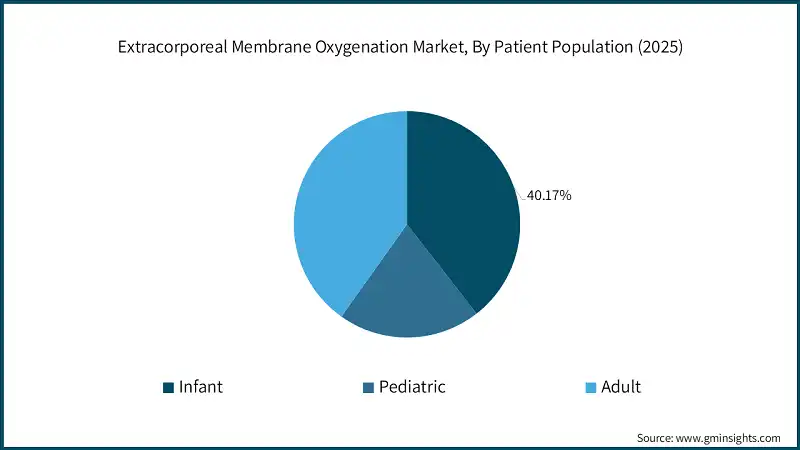
Based on patient population, the extracorporeal membrane oxygenation market is bifurcated into infant, pediatric, and adult. The adult segment accounted for a 40.2% market share in 2025.
- The adult segment represents the largest share of ECMO applications due to the high occurrence of severe cardiac and respiratory conditions in this population because of increasing consumption of tobacco, alcohol, and smoking.
- One of the key factors driving ECMO adoption among adults is the growing preference for advanced critical care solutions in tertiary hospitals. ECMO provides a vital bridge for patients awaiting heart or lung transplantation and offers life-saving support during high-risk cardiac surgeries or severe respiratory failure cases.
- Technological advancements have further strengthened this segment by introducing portable ECMO systems, automated monitoring, and biocompatible circuits. These innovations make ECMO safer, easier to manage, and suitable for emergency transport, ensuring timely intervention for critically ill adult patients.
- As healthcare infrastructure improves and awareness of ECMO benefits grows, the adult segment is expected to maintain its dominance in the market.
Looking for region specific data?
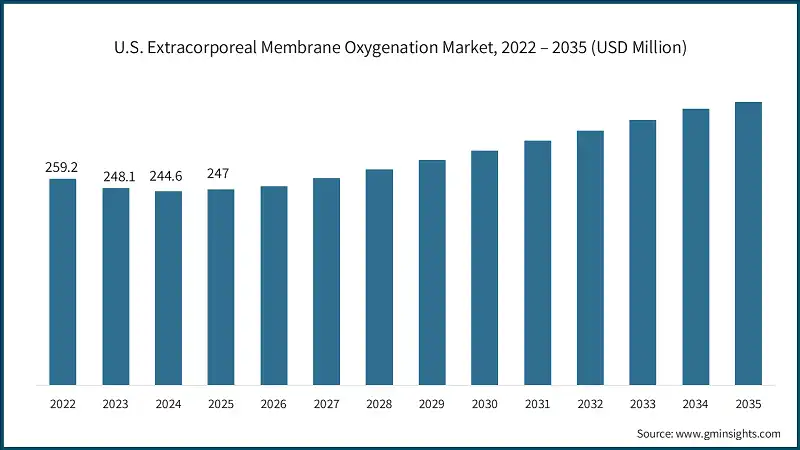
North America dominated the global extracorporeal membrane oxygenation market with a revenue share of 58.2% in 2025.
- The North America market has witnessed significant growth over the past few years, driven by advanced healthcare infrastructure, rising prevalence of cardiopulmonary disorders, and continuous technological innovation.
- In recent years, this upward trend has continued at an impressive pace, supported by the growing burden of cardiovascular disease. According to the Centers for Disease Control and Prevention (CDC), heart disease remains the leading cause of death in the U.S., with one person dying every 34 seconds from cardiovascular disease.
- In 2023 alone, 919,032 people died from cardiovascular disease, and approximately 805,000 U.S. population experience a heart attack each year. These alarming figures underscore the critical need for advanced life-support technologies like ECMO, which provide temporary heart and lung support when conventional treatments fail.
- With strong healthcare investments, high disease prevalence, and continuous innovation, North America is expected to maintain its leadership position in the global ECMO market throughout the forecast period.
Europe extracorporeal membrane oxygenation market accounted for USD 87.1 million in 2025 and is anticipated to show lucrative growth over the forecast period.
- The Europe market has witnessed steady growth, driven by the rising prevalence of chronic respiratory and cardiac disorders, advanced healthcare systems, and increasing adoption of life-support technologies. Growing investments in healthcare infrastructure and favorable government initiatives further support market expansion.
- The burden of respiratory diseases in Europe is a major factor fueling ECMO demand. According to the WHO European Region report, 81.7 million people are living with chronic respiratory diseases (CRDs), including COPD and asthma, and 6.8 million new cases are diagnosed annually. COPD alone accounts for nearly 80% of CRD-related deaths in the region. Beyond the health impact, CRDs impose a significant economic strain, costing the region an estimated USD 21 billion annually in productivity loss, underscoring the urgent need for advanced interventions like ECMO in severe cases.
- Technological advancements, such as portable ECMO systems and biocompatible circuits, have improved patient outcomes and broadened usage across Europe. Countries like Germany, France, and the UK lead in ECMO adoption due to well-established critical care infrastructure and high disease prevalence. With rising awareness, continuous innovation, and strong government support, Europe is expected to remain a key contributor to global ECMO market growth.
Germany extracorporeal membrane oxygenation market is projected to experience steady growth between 2026 and 2035.
- Germany’s ECMO market demonstrates strong growth, supported by an extensive critical-care network and high utilization in large university and tertiary hospitals. National DRG data confirm that hospitals performed 29,929 ECMO runs across 510 facilities between 2010 and 2016, showing widespread adoption of both VA and VV ECMO and a concentration of cases in high-volume centers. This robust infrastructure continues to strengthen capabilities and improve outcomes in severe cardiopulmonary failure cases.
- The growing burden of respiratory disease among adults drive further demand. Germany reported a higher prevalence of chronic respiratory diseases than the EU average. COPD affected 8.5% of adults aged 45 and older and often progressed to acute respiratory failure, where ECMO delivers life-saving support. Respiratory system diseases caused 7% of all deaths in the EU, highlighting the urgent clinical need that ECMO capacity met.
The Asia Pacific extracorporeal membrane oxygenation market size exceeded USD 59.7 million in 2025.
- The Asia Pacific market is witnessing rapid growth, fueled by the rising prevalence of cardiopulmonary disorders, expanding healthcare infrastructure, and increasing adoption of advanced life-support technologies. Countries such as China, India, and Japan are leading this surge, supported by strong investments in critical care facilities and growing awareness among healthcare providers.
- A major cause of this growth is the high burden of chronic diseases. Chronic respiratory conditions, including COPD and asthma, remain widespread, often progressing to acute respiratory failure that requires ECMO intervention. These clinical needs are further amplified by rising government initiatives and programs worldwide, which aim to strengthen critical care capacity, improve access to ECMO technology, and provide training for healthcare professionals.
- Technological advancements, such as portable ECMO platforms and AI-driven monitoring systems, are improving treatment outcomes and accessibility in Asia-Pacific hospitals. With increasing survival rates, supportive government policies, and continuous innovation, the region is expected to remain as a key growth factor in the global ECMO market.
Japan extracorporeal membrane oxygenation market is poised to witness lucrative growth between 2026 – 2035.
- Japan’s ECMO market is expanding steadily, driven by its rapidly aging population and the associated rise in chronic cardiopulmonary conditions. In 2024, Japan’s elderly population reached a record 36.25 million people aged 65 or older, accounting for 29.3% of the total population. This demographic shift has led to an increase in cases of heart failure, severe pneumonia, and acute respiratory distress syndrome (ARDS), conditions where ECMO serves as a critical life-support solution.
- The growing need for advanced critical care, combined with technological innovations such as portable ECMO systems and AI-driven monitoring, is accelerating adoption across Japanese hospitals. With strong government support for healthcare modernization and a focus on improving outcomes for elderly patients, Japan is expected to remain a key contributor to ECMO market growth in Asia-Pacific.
- Brazil’s ECMO market is gaining momentum, driven by the rising burden of cardiovascular diseases and improvements in critical care infrastructure. Cardiovascular disorders remain the leading cause of death in the country, creating a strong need for advanced life-support technologies.
- In 2022, approximately 400,000 people died due to cardiovascular problems in Brazil, with heart attacks and strokes accounting for 76% of these deaths. This alarming trend underscores the importance of ECMO in managing severe cardiac failure and post-myocardial infarction complications, where conventional therapies often fall short.
- Growing investments in tertiary hospitals, coupled with technological advancements such as portable ECMO systems and biocompatible circuits, are improving accessibility and outcomes. As Brazil continues to face a high prevalence of chronic cardiac conditions and an aging population, the adoption of ECMO is expected to rise steadily, positioning the country as a key market in Latin America.
- Saudi Arabia’s ECMO market is expanding rapidly, supported by strong government initiatives aimed at modernizing critical care under Vision 2030. The Health Sector Transformation Program focuses on improving access to advanced healthcare technologies, digital integration, and specialized training for critical care professionals. Programs such as the SEHA Virtual Hospital, launched in 2022, connect over 150 hospitals and provide specialized services, including ECMO support, across the country.
- With rising investments, standardized protocols, and nationwide training, Saudi Arabia is positioning itself as a regional leader in advanced critical care and ECMO adoption.
Extracorporeal Membrane Oxygenation Market Share
- The top five players such as Abbott Laboratories, Medtronic, Getinge AB, Terumo Corporation, and Fresenius Medical Care AG & Co. KGaA, collectively hold a market share of 85% in the global ECMO market, leveraging innovation and strategic expansion to maintain leadership.
- Medtronic continues to dominate through advanced oxygenator technology and integrated ECMO systems designed for improved biocompatibility and patient safety. Its focus on automation and smart monitoring solutions positions the company at the forefront of critical care innovation. Getinge AB, with its flagship Cardiohelp System, has strengthened its presence in portable ECMO solutions, enabling rapid deployment in emergency and transport scenarios.
- Similarly, Fresenius Medical Care AG & Co. KGaA leverages its Xenios platform to deliver specialized ECMO and extracorporeal life support solutions, catering to both cardiac and respiratory failure cases. Xenios, a subsidiary of Fresenius Medical Care, has considerably expanded its capacity to produce Novalung, a heart and lung support system for the treatment of acute respiratory or cardiopulmonary failure.
- Geographic expansion remains a core strategy for these players, with emerging markets in Asia-Pacific and Latin America offering substantial growth opportunities. Additionally, partnerships with leading hospitals and critical care centers help build trust and accelerate adoption. By combining technological innovation, regional expansion, and clinician-focused solutions, these companies are positioning themselves for sustained growth in the global ECMO market.
Extracorporeal Membrane Oxygenation Market Companies
Few of the prominent players operating in the extracorporeal membrane oxygenation industry include:
- Abbott Laboratories
- Abiomed
- Eurosets
- Braile Biomedica
- Edwards Lifesciences Corporation
- Fresenius Medical Care AG & Co. KGaA
- Getinge AB
- Hemovent GmbH
- LivaNova PLC
- Medtronic
- MicroPort Scientific Corporation
- Nipro
- SB-Kawasumi Laboratories, Inc.
- Senko Medical Instrument Mfg. Co., Ltd.
- Spectrum Medical, Terumo Corporation
- Weigao Group Co., Ltd.
- Fresenius Medical Care AG & Co. KGaA
Fresenius Medical Care is a leading provider of advanced heart and lung therapy solutions, with its flagship Novalung ECMO System designed for patients experiencing acute cardiopulmonary or respiratory failure. The Novalung system is FDA-cleared for long-term use beyond six hours and offers safety, simplicity, and portability, making it suitable for intensive care units, operating rooms, and emergency settings.
Getinge offers comprehensive ECMO solutions through its Cardiohelp System, designed to provide extracorporeal life support for critically ill patients with severe cardiac or pulmonary failure. The system combines portability, advanced monitoring, and interoperability, enabling clinicians to stabilize patients during emergencies or transport.
Medtronic delivers innovative ECMO technology through its VitalFlow ECMO System, engineered for simplicity, configurability, and performance. The system features a user-friendly touchscreen interface, integrated sensors for real-time monitoring, and portability for intra-hospital transport.
Extracorporeal Membrane Oxygenation Market News:
- In April 2023, Abbott received FDA clearance for its CentriMag Blood Pump for longer-term use with ECMO, which provided physicians with more time to make critical care decisions. This approval strengthened Abbott's position in the ECMO market, expanded the product’s clinical applications, and increased its potential for adoption.
- In January 2021, Braile Biomedica announced the launch of the SOLIS System, an ECMO-based artificial lung designed to provide life-saving respiratory support for critically ill patients. Developed during the COVID-19 pandemic, the SOLIS System aimed to address severe respiratory failure cases. The product has successfully received ANVISA registration in Brazil, marking a significant milestone in the country’s fight against respiratory complications.
- In July 2021, Xenios AG, a part of Fresenius Medical Care, received approval from the National Medical Products Administration (NMPA) for the XENIOS console and patient kits used in ECMO therapy in China. This approval broadened its product offering in the Chinese market.
The extracorporeal membrane oxygenation market research report includes an in-depth coverage of the industry with estimates and forecast in terms of revenue in USD Million and from 2022 – 2035 for the following segments:
Market, By Modality
- Venoarterial (VA)
- Veno-venous (VV)
- Arteriovenous (AV)
Market, By Application
- Cardiac diseases
- Respiratory diseases
- Extracorporeal cardiopulmonary resuscitation (ECPR)
Market, By Patient Population
- Infant
- Pediatric
- Adult
The above information is provided for the following regions and countries:
- North America
- U.S.
- Canada
- Europe
- Germany
- UK
- France
- Italy
- Spain
- Netherlands
- Asia Pacific
- China
- India
- Japan
- Australia
- South Korea
- Latin America
- Brazil
- Mexico
- Argentina
- Middle East and Africa
- Saudi Arabia
- South Africa
- UAE
Frequently Asked Question(FAQ) :
What was the valuation of the cardiac diseases application segment in 2025?
The cardiac diseases segment accounted for 29.8% market share in 2025 and is projected to reach USD 220.3 million by 2035.
How much revenue did the venoarterial (VA) modality segment generate in 2025?
The venoarterial (VA) segment dominated with approximately 45.7% revenue share in 2025, providing critical cardiopulmonary support for severe cardiac failure cases.
What is the projected value of the extracorporeal membrane oxygenation market by 2035?
The extracorporeal membrane oxygenation market is expected to reach USD 721.6 million by 2035, propelled by technological advancements, rising patient awareness, and government initiatives worldwide.
What is the current extracorporeal membrane oxygenation market size in 2026?
The market size is projected to reach USD 486.6 million in 2026.
What is the market size of the extracorporeal membrane oxygenation market in 2025?
The market size was USD 475.5 million in 2025, with a CAGR of 4.5% expected through 2035 driven by increasing cardiopulmonary cases and advancing ECMO technologies.
Which region leads the extracorporeal membrane oxygenation market?
North America leads with a 58.2% revenue share in 2025. Advanced healthcare infrastructure, high cardiovascular disease prevalence, and continuous technological innovation fuel the region's dominance.
What are the upcoming trends in the extracorporeal membrane oxygenation market?
Key trends include integration of artificial intelligence and digital monitoring for real-time analytics, development of portable and compact ECMO systems, advancement in biocompatible coatings and heparin bonding, and emergence of home-based long-term ECMO solutions.
Who are the key players in the extracorporeal membrane oxygenation market?
Key players include Abbott Laboratories, Medtronic, Getinge AB, Terumo Corporation, Fresenius Medical Care AG & Co. KGaA, Abiomed, Eurosets, Braile Biomedica, Edwards Lifesciences Corporation, Hemovent GmbH, LivaNova PLC, MicroPort Scientific Corporation, Nipro, SB-Kawasumi Laboratories Inc., Senko Medical Instrument Mfg. Co. Ltd., Spectrum Medical, and Weigao Group Co., Ltd.
Extracorporeal Membrane Oxygenation Market Scope
Related Reports